The Future of Work
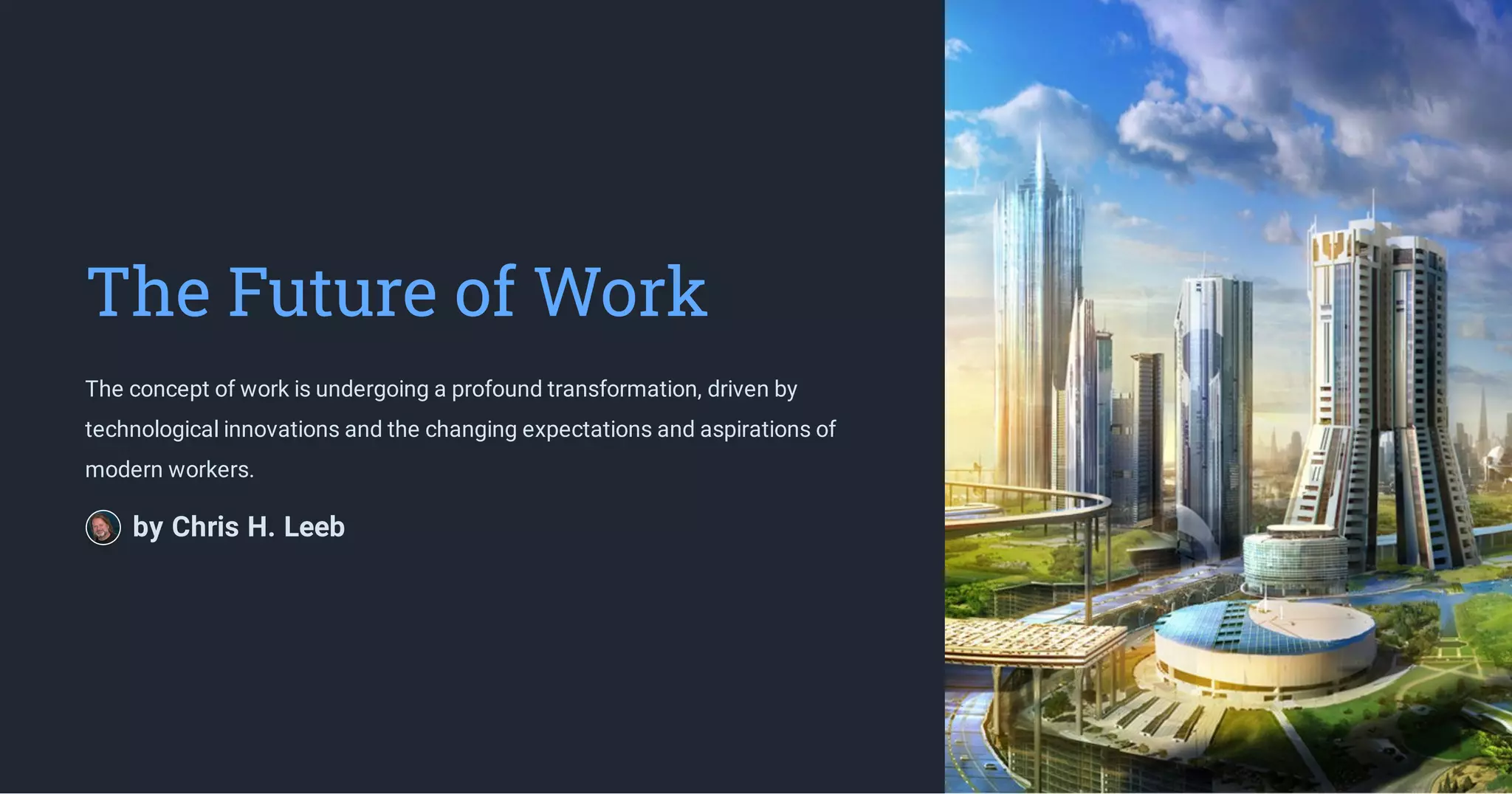
The concept of work is undergoing a profound transformation, driven by
technological innovations and the changing expectations and aspirations of
modern workers.
by Chris H. Leeb
The Changing Nature of Work
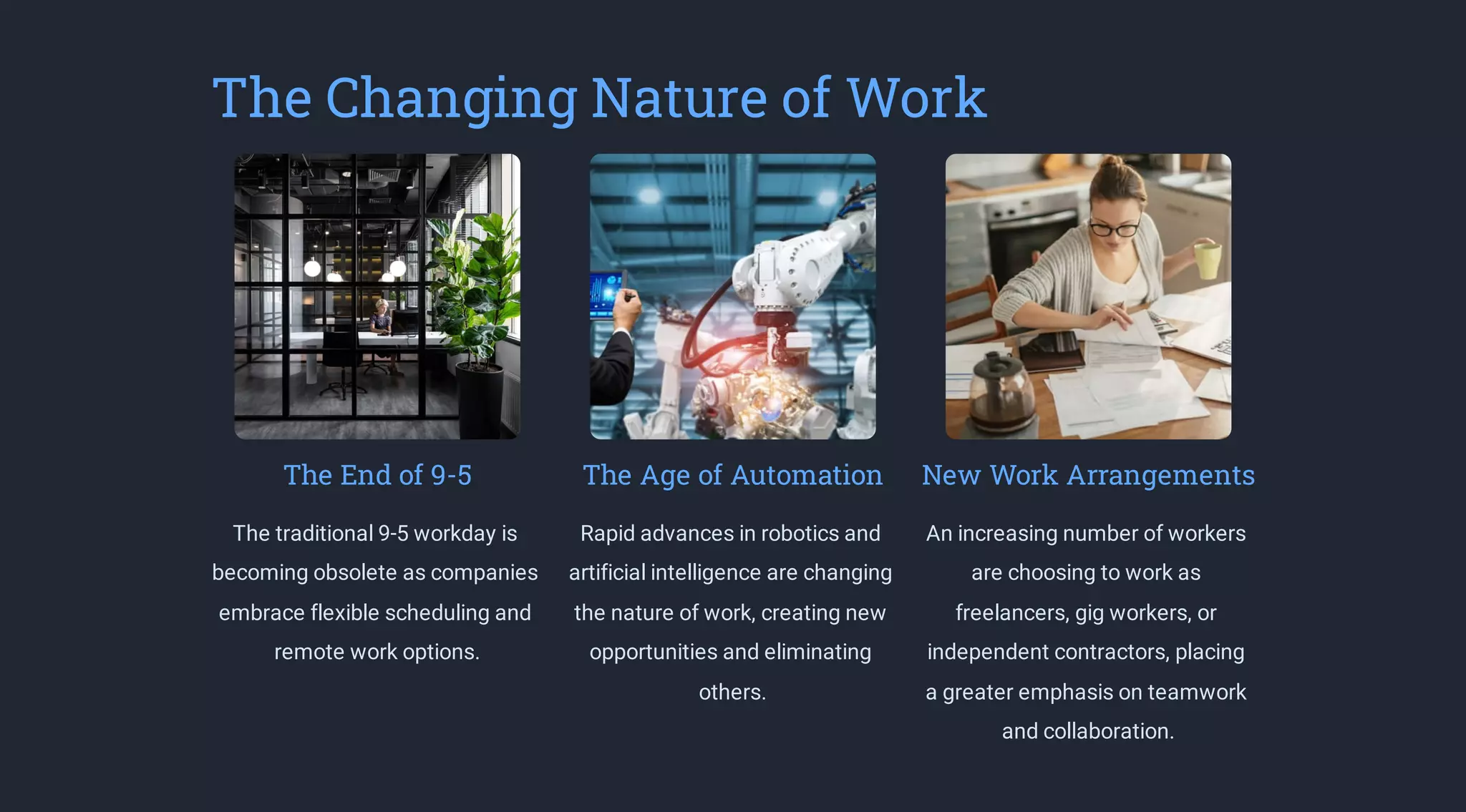
The End of 9-5
The traditional 9-5 workday is
becoming obsolete as companies
embrace flexible scheduling and
remote work options.
The Age of Automation
Rapid advances in robotics and
artificial intelligence are changing
the nature of work, creating new
opportunities and eliminating
others.
New Work Arrangements
An increasing number of workers
are choosing to work as
freelancers, gig workers, or
independent contractors, placing
a greater emphasis on teamwork
and collaboration.
Impact of Technology on the Workplace
Virtual and Augmented Reality
Virtual and augmented reality are changing the
way we interact with our work and collaborate
with colleagues, enabling new forms of
communication and collaboration.
Automation and Robotics
Automation and robotics are streamlining
routine tasks, freeing up human workers to
focus on more complex and creative tasks.
Artificial Intelligence
Artificial intelligence is pushing the boundaries
of what we can achieve in the workplace, from
natural language processing to predictive
analytics.
Big Data
Big data is transforming how we make
decisions, enabling us to make more informed
and data-driven choices across all areas of our
business.
The Rise of Remote Work
1 The Benefits of
Remote Work
Remote work can offer
many benefits, including
increased productivity,
improved work-life
balance, and reduced
costs for employers.
2 Remote Work
Challenges
Remote work is not
without its challenges,
including difficulties with
communication and
collaboration, as well as
potential issues with work-
life balance.
3 The Future of
Remote Work
As technology continues
to evolve, remote work is
likely to become more
common, with businesses
and workers alike reaping
the benefits of this flexible
and dynamic approach to
work.
New Skills and Education Requirements
1
Soft Skills
As technology continues to automate routine
tasks, employers are placing greater emphasis
on soft skills such as communication,
collaboration, and problem-solving.
2
Lifelong Learning
Lifelong learning is becoming a fundamental
requirement for today's workforce, with workers
taking on new skills and knowledge throughout
their careers to stay competitive in a rapidly
evolving job market.
3
New Education Models
New and innovative education models are
emerging, such as online learning, micro-
credentials, and other non-traditional
approaches to education and training.
The Importance of Collaboration and
Creativity
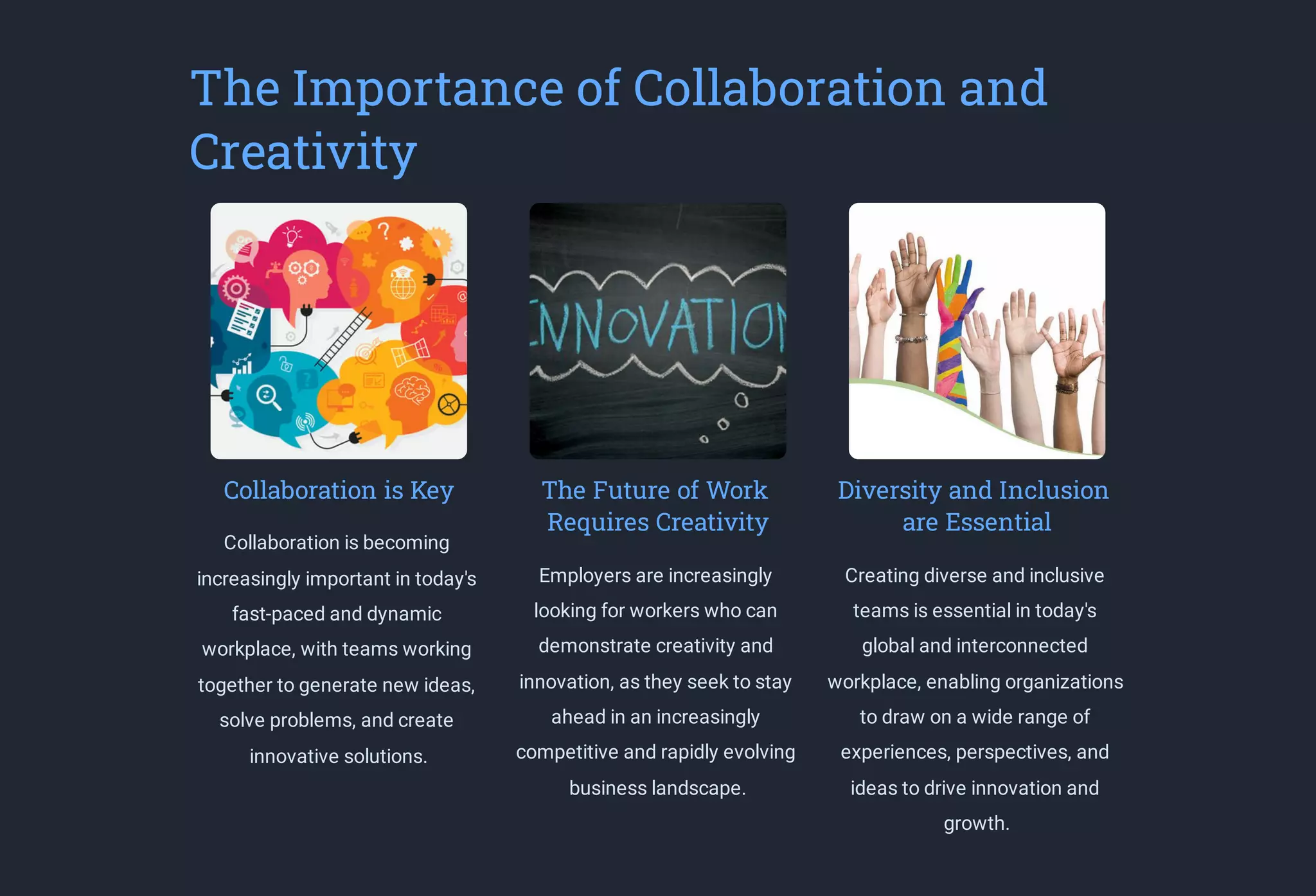
Collaboration is Key
Collaboration is becoming
increasingly important in today's
fast-paced and dynamic
workplace, with teams working
together to generate new ideas,
solve problems, and create
innovative solutions.
The Future of Work
Requires Creativity
Employers are increasingly
looking for workers who can
demonstrate creativity and
innovation, as they seek to stay
ahead in an increasingly
competitive and rapidly evolving
business landscape.
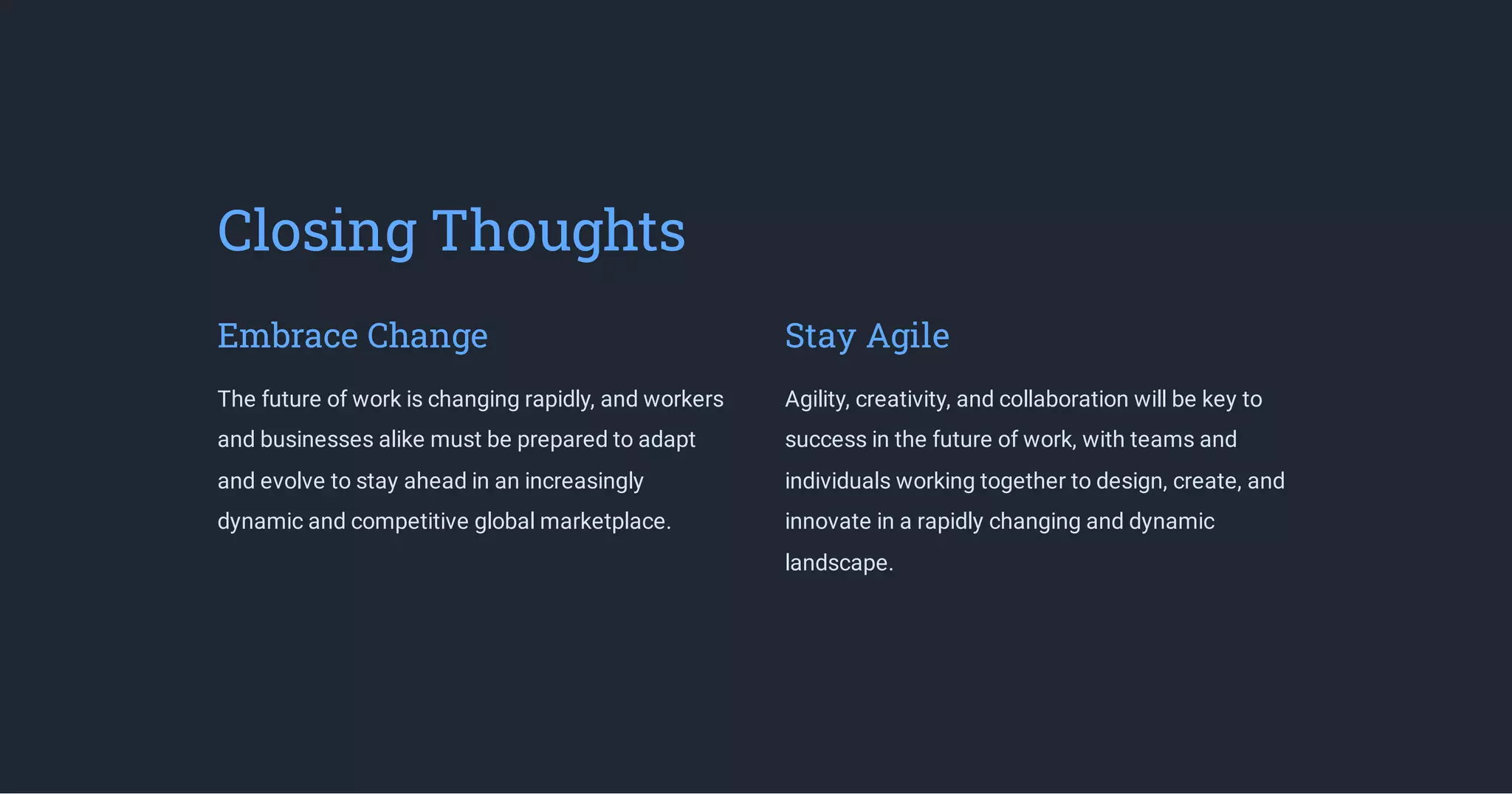
Diversity and Inclusion
are Essential
Creating diverse and inclusive
teams is essential in today's
global and interconnected
workplace, enabling organizations
to draw on a wide range of
experiences, perspectives, and
ideas to drive innovation and
growth.
The Future of Job Security and Benefits
New Opportunities New technological innovations and changing
business models are creating new opportunities
for workers, providing access to new types of
work and employment arrangements.
New Risks At the same time, these changes can also create
new risks for workers, affecting job security,
benefits, and other aspects of employment and
compensation.
The Role of Government In this context, the role of government and policy
in shaping the future of work is becoming
increasingly important, as policymakers seek to
balance the need for flexibility and innovation
with the need for strong labor protections and
benefits.
Closing Thoughts
Embrace Change
The future of work is changing rapidly, and workers
and businesses alike must be prepared to adapt
and evolve to stay ahead in an increasingly
dynamic and competitive global marketplace.
Stay Agile
Agility, creativity, and collaboration will be key to
success in the future of work, with teams and
individuals working together to design, create, and
innovate in a rapidly changing and dynamic
landscape.

The-Future-of-Work.pdf

  • 1.
    The Future ofWork The concept of work is undergoing a profound transformation, driven by technological innovations and the changing expectations and aspirations of modern workers. by Chris H. Leeb
  • 2.
    The Changing Natureof Work The End of 9-5 The traditional 9-5 workday is becoming obsolete as companies embrace flexible scheduling and remote work options. The Age of Automation Rapid advances in robotics and artificial intelligence are changing the nature of work, creating new opportunities and eliminating others. New Work Arrangements An increasing number of workers are choosing to work as freelancers, gig workers, or independent contractors, placing a greater emphasis on teamwork and collaboration.
  • 3.
    Impact of Technologyon the Workplace Virtual and Augmented Reality Virtual and augmented reality are changing the way we interact with our work and collaborate with colleagues, enabling new forms of communication and collaboration. Automation and Robotics Automation and robotics are streamlining routine tasks, freeing up human workers to focus on more complex and creative tasks. Artificial Intelligence Artificial intelligence is pushing the boundaries of what we can achieve in the workplace, from natural language processing to predictive analytics. Big Data Big data is transforming how we make decisions, enabling us to make more informed and data-driven choices across all areas of our business.
  • 4.
    The Rise ofRemote Work 1 The Benefits of Remote Work Remote work can offer many benefits, including increased productivity, improved work-life balance, and reduced costs for employers. 2 Remote Work Challenges Remote work is not without its challenges, including difficulties with communication and collaboration, as well as potential issues with work- life balance. 3 The Future of Remote Work As technology continues to evolve, remote work is likely to become more common, with businesses and workers alike reaping the benefits of this flexible and dynamic approach to work.
  • 5.
    New Skills andEducation Requirements 1 Soft Skills As technology continues to automate routine tasks, employers are placing greater emphasis on soft skills such as communication, collaboration, and problem-solving. 2 Lifelong Learning Lifelong learning is becoming a fundamental requirement for today's workforce, with workers taking on new skills and knowledge throughout their careers to stay competitive in a rapidly evolving job market. 3 New Education Models New and innovative education models are emerging, such as online learning, micro- credentials, and other non-traditional approaches to education and training.
  • 6.
    The Importance ofCollaboration and Creativity Collaboration is Key Collaboration is becoming increasingly important in today's fast-paced and dynamic workplace, with teams working together to generate new ideas, solve problems, and create innovative solutions. The Future of Work Requires Creativity Employers are increasingly looking for workers who can demonstrate creativity and innovation, as they seek to stay ahead in an increasingly competitive and rapidly evolving business landscape. Diversity and Inclusion are Essential Creating diverse and inclusive teams is essential in today's global and interconnected workplace, enabling organizations to draw on a wide range of experiences, perspectives, and ideas to drive innovation and growth.
  • 7.
    The Future ofJob Security and Benefits New Opportunities New technological innovations and changing business models are creating new opportunities for workers, providing access to new types of work and employment arrangements. New Risks At the same time, these changes can also create new risks for workers, affecting job security, benefits, and other aspects of employment and compensation. The Role of Government In this context, the role of government and policy in shaping the future of work is becoming increasingly important, as policymakers seek to balance the need for flexibility and innovation with the need for strong labor protections and benefits.
  • 8.
    Closing Thoughts Embrace Change Thefuture of work is changing rapidly, and workers and businesses alike must be prepared to adapt and evolve to stay ahead in an increasingly dynamic and competitive global marketplace. Stay Agile Agility, creativity, and collaboration will be key to success in the future of work, with teams and individuals working together to design, create, and innovate in a rapidly changing and dynamic landscape.