Navigating the future
of work
Adapting to Transformative Trends
Exploring the digital age`s impact on work
Brief Overview: Welcome to our presentation on the future of work in a digital
age. We will explore the evolution of work, digital transformation, remote work
trends, the gig economy, automation, and AI, skills for the future, workplace
culture, and future predictions. This presentation aims to provide insights and
strategies for navigating the changing landscape of work.
The way we work has undergone significant changes
throughout history. From the industrial revolution to the
digital era, technological advancements and societal shifts
have transformed the workforce and work environments.
Understanding this evolution helps us prepare for future
changes.
Evolution of Work
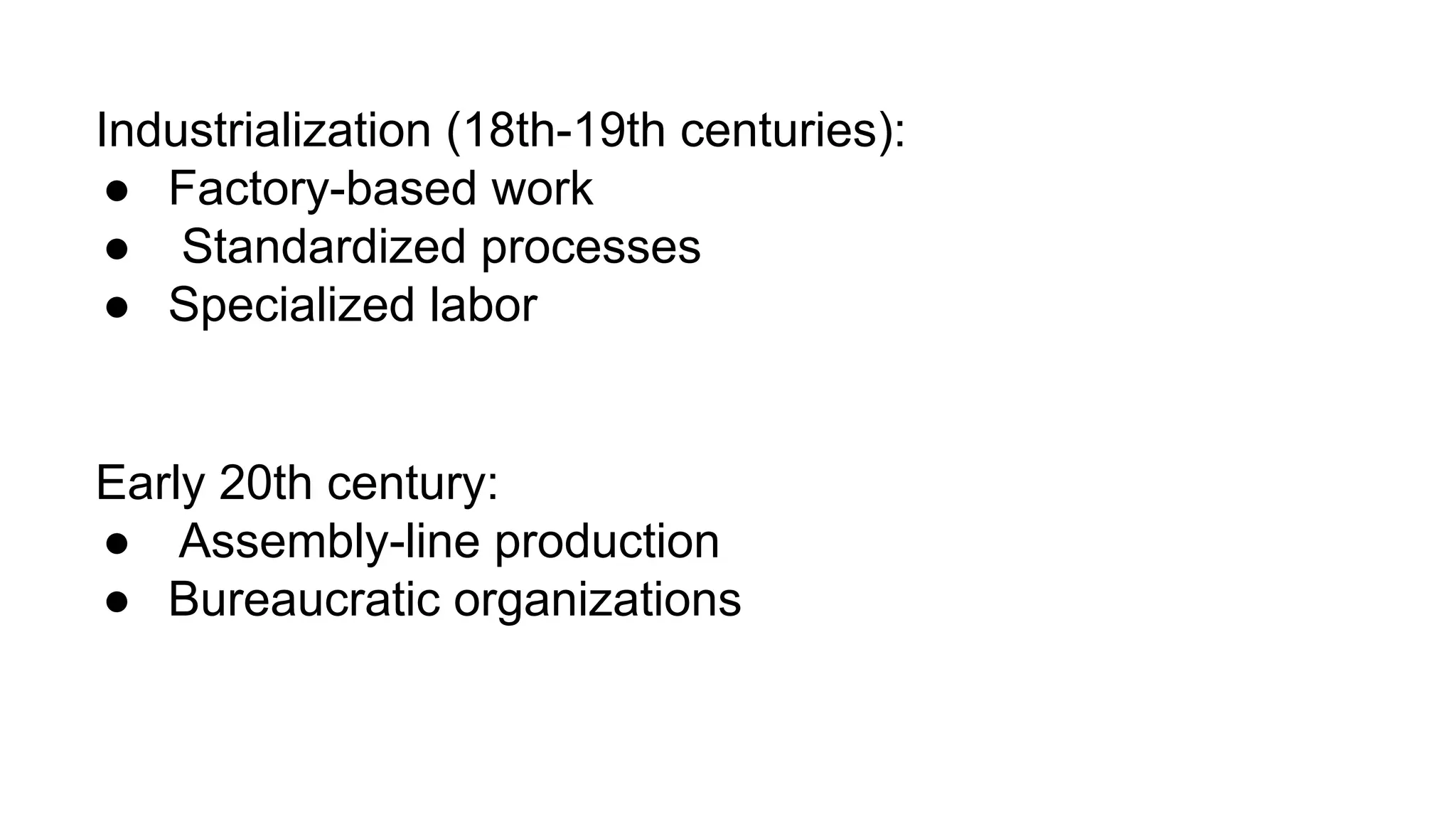
Industrialization (18th-19th centuries):
● Factory-based work
● Standardized processes
● Specialized labor
Early 20th century:
● Assembly-line production
● Bureaucratic organizations
Digital era (21st century):
● Remote work and virtual teams
● Automation and AI
● Gig economy and non-traditional work
Digital Transformation in Workplaces
Digital transformation is the integration of digital
technology into all areas of business, fundamentally
changing how organizations operate and deliver
value to customers. It impacts various aspects of
work, including:
Communication: Enhanced collaboration tools and virtual
communication platforms.
Collaboration: Remote teams and cross-functional partnerships.
Productivity: Automation, workflow streamlining, and data-driven
decision-making.
Innovation: Embracing new technologies and business models.
Remote Work Trends
Remote work has become increasingly prevalent, driven by
technological advancements, globalization, and shifting
workforce expectations. Key aspects of remote work include:
Flexibility and work-life balance
Global talent access and cost savings
Virtual communication and collaboration skills
Cybersecurity and data protection
Work-life balance and self-management
The Gig Economy
The gig economy, also known as non-traditional or
contingent work, encompasses various arrangements
outside traditional employment. This includes freelancing,
contract work, and platform-based jobs. The gig economy
offers:
Flexibility and autonomy
Opportunities for skill development and diversification
Freedom to choose projects and clients
Unpredictable income and lack of benefits
No job security or career progression
Automation and Artificial Intelligence
Automation and AI are revolutionizing work processes,
enhancing efficiency, and transforming industries.
Automation replaces repetitive tasks, while AI drives
decision-making and innovation. The impact of automation
and AI includes:
Job displacement and creation
Enhanced productivity and efficiency
Improved customer experiences
New skill requirements and upskilling needs
Skills for the Future Workplace
As work evolves, new skills are essential for success. These
include:
Digital literacy: Proficiency in digital tools and technologies.
Soft skills: Adaptability, creativity, emotional intelligence, and
collaboration.
Continuous learning: Upskilling and reskilling to stay relevant.
Data analysis and interpretation
Creativity and problem-solving
Building a Digital-Age Workplace Culture
A positive workplace culture is crucial in the digital age. Key
aspects include:
Collaboration tools and virtual communication platforms
Diversity, equity, and inclusion initiatives
Flexible work arrangements and well-being support
Continuous learning and development opportunities
Adaptive leadership and agile decision-making
Predictions for the Future of Work
The future of work holds much promise and uncertainty.
Emerging trends and predictions include:
Hybrid work models: Combining remote and in-office
work.
● Increased automation and AI adoption.
● Continued growth of the gig economy.
● Virtual and augmented reality integration.
● Blockchain and 5G technologies' impact on work.
Embracing Change and Innovation
The future of work requires adaptability, resilience, and a
willingness to learn. Key takeaways from this presentation
include:
Understanding the evolution of work and digital transformation.
Embracing remote work, gig economy, and automation.
Developing skills for the future.
Fostering a positive workplace culture.
Preparing for future predictions and trends.
Thank you for your participation

Navigating the future of work|| learn from technology

  • 1.
    Navigating the future ofwork Adapting to Transformative Trends
  • 2.
    Exploring the digitalage`s impact on work Brief Overview: Welcome to our presentation on the future of work in a digital age. We will explore the evolution of work, digital transformation, remote work trends, the gig economy, automation, and AI, skills for the future, workplace culture, and future predictions. This presentation aims to provide insights and strategies for navigating the changing landscape of work.
  • 3.
    The way wework has undergone significant changes throughout history. From the industrial revolution to the digital era, technological advancements and societal shifts have transformed the workforce and work environments. Understanding this evolution helps us prepare for future changes. Evolution of Work
  • 4.
    Industrialization (18th-19th centuries): ●Factory-based work ● Standardized processes ● Specialized labor Early 20th century: ● Assembly-line production ● Bureaucratic organizations
  • 5.
    Digital era (21stcentury): ● Remote work and virtual teams ● Automation and AI ● Gig economy and non-traditional work
  • 6.
    Digital Transformation inWorkplaces Digital transformation is the integration of digital technology into all areas of business, fundamentally changing how organizations operate and deliver value to customers. It impacts various aspects of work, including:
  • 7.
    Communication: Enhanced collaborationtools and virtual communication platforms. Collaboration: Remote teams and cross-functional partnerships. Productivity: Automation, workflow streamlining, and data-driven decision-making. Innovation: Embracing new technologies and business models.
  • 8.
    Remote Work Trends Remotework has become increasingly prevalent, driven by technological advancements, globalization, and shifting workforce expectations. Key aspects of remote work include:
  • 9.
    Flexibility and work-lifebalance Global talent access and cost savings Virtual communication and collaboration skills Cybersecurity and data protection Work-life balance and self-management
  • 10.
    The Gig Economy Thegig economy, also known as non-traditional or contingent work, encompasses various arrangements outside traditional employment. This includes freelancing, contract work, and platform-based jobs. The gig economy offers:
  • 11.
    Flexibility and autonomy Opportunitiesfor skill development and diversification Freedom to choose projects and clients Unpredictable income and lack of benefits No job security or career progression
  • 12.
    Automation and ArtificialIntelligence Automation and AI are revolutionizing work processes, enhancing efficiency, and transforming industries. Automation replaces repetitive tasks, while AI drives decision-making and innovation. The impact of automation and AI includes:
  • 13.
    Job displacement andcreation Enhanced productivity and efficiency Improved customer experiences New skill requirements and upskilling needs
  • 14.
    Skills for theFuture Workplace As work evolves, new skills are essential for success. These include: Digital literacy: Proficiency in digital tools and technologies. Soft skills: Adaptability, creativity, emotional intelligence, and collaboration. Continuous learning: Upskilling and reskilling to stay relevant. Data analysis and interpretation Creativity and problem-solving
  • 15.
    Building a Digital-AgeWorkplace Culture A positive workplace culture is crucial in the digital age. Key aspects include: Collaboration tools and virtual communication platforms Diversity, equity, and inclusion initiatives Flexible work arrangements and well-being support Continuous learning and development opportunities Adaptive leadership and agile decision-making
  • 16.
    Predictions for theFuture of Work The future of work holds much promise and uncertainty. Emerging trends and predictions include: Hybrid work models: Combining remote and in-office work. ● Increased automation and AI adoption. ● Continued growth of the gig economy. ● Virtual and augmented reality integration. ● Blockchain and 5G technologies' impact on work.
  • 17.
    Embracing Change andInnovation The future of work requires adaptability, resilience, and a willingness to learn. Key takeaways from this presentation include: Understanding the evolution of work and digital transformation. Embracing remote work, gig economy, and automation. Developing skills for the future. Fostering a positive workplace culture. Preparing for future predictions and trends.
  • 18.
    Thank you foryour participation