The Truth
About

Giving
God’s Dare to Give Scripturally
The more you give the happier
you will be! (Acts 20:35)
One Thing You Lack
Mark 10:17-22
1. A life may be completely in line
with God’s word, but if his attitude
toward money is wrong, he can
still be lost.
2. Improper giving is on the same
level as any other sin!
3. We must willing to give it all!
God Says Much about Money
The most frequently discussed
subjects in all of the Scriptures
Money Makes a Miserable Master
Matthew 13:22
“riches are deceitful”
Matthew 6:24
“You cannot serve both God and
money”
I Timothy 6:9-10
Whose
MONEY is it?
The First Principle of Stewardship
EVERYTHING BELONGS TO GOD!
Psalms 50:9-12
Do Not Forget the Lord

Deuteronomy
8:7-18
Don’t Be a Rich Fool

Luke 12:16-21
Malachi 3:8
How Much
DOES GOD
WANT?
Once we determine that all the
money we possess is God’s, the
next practical question to ask is
how much of His money does
God want back?
Willing To Give It All
He wants you to be willing to
give it all. If you are not willing
to give every penny to the Lord
right now, then you love money
more than you love God.
Different Requirements for Different
People
There is no command in the New
Testament as to how much a
Christian is suppose to give.
So what percentage is a good place
to start giving?
10 Percent?
There is no record in the Bible
where God ever accepted less
than 10 percent from any of His
followers.
10 Percent?
The entire book of Hebrews was written to
explain that the New Law is better than
the Old Law.
Better High Priest (4:15)
Better Hope (7:19)
Better Promises (8:6)
Better Atonement (9:12)
10 Percent?
Can you imagine a faithful Old Testament Jew
who had just been converted to Christ
thinking that now since he was a Christian,
he could start giving less to God?
What did the Jews do when they began to be
converted to Christ?
Acts 2:45 – sold their possessions
Acts 4:34-35 – sold house and lands
Even the Gentiles gave to God out of their “deep
poverty” (II Cor. 8:2)
How Much
DOES GOD
WANT?
Why no command?
How much does He want?
10 percent?
The problem with these
questions is that it can lend
itself to pride and works by
salvation.
If there was a verse that said give exactly
10 percent or 15 percent, some people
would give that much – and only that
much – and feel they had paid their
dues.
But giving to God is not a tax.
The proper attitude toward giving is “to
give cheerfully, not grudgingly or of
NECESSITY” (I Cor. 9:7)
What if, instead of asking how much God
wants, we ask how much has God
blessed us and how much do we want
Him to bless us even more?
By the way… I Cor. 16:2
Giving to God
First
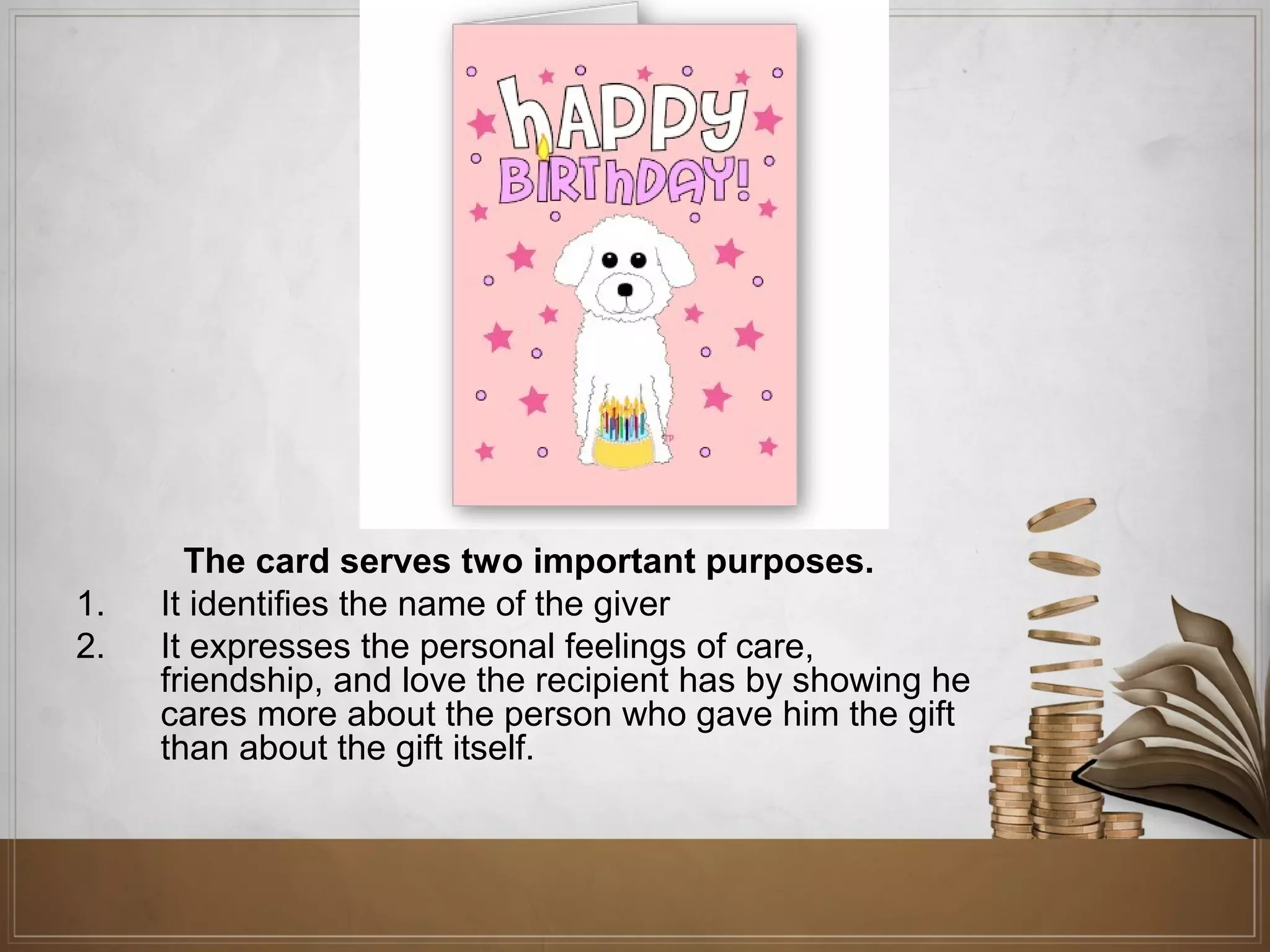
Card first, present second
We are taught that it is polite to read the
card first, then turn to the giver and
acknowledge their kindness by saying
“Thank You.”
1.
2.

The card serves two important purposes.
It identifies the name of the giver
It expresses the personal feelings of care,
friendship, and love the recipient has by showing he
cares more about the person who gave him the gift
than about the gift itself.
Israel and the Harvest
The most anticipated time of the
year!!!
Before the harvest could be enjoyed
the “first fruits” must be given.
Exodus 23:19 – land
Exodus 13:2 - livestock
Proverbs 3:9 – “Honor the Lord with your
possessions, and with the first fruits of all your
increase”
Israel and the Harvest
What was God’s purpose behind this?
By insisting that His people give back to Him first, God
was trying to help them see what was truly important.
The harvest (everything) were His gifts He gave the
Israelites as an expression of His love for them.
By stopping to acknowledge the Giver FIRST, the
Israelites were reminded of what was truly important.
Their relationship to the Giver was what truly mattered.

So What About Today?
Two principles and a warning
The “Better” Principle
If you had been given something better to
replace what you had before… how would
respond?
Job? Car? Home? Health?

The Book of Hebrews is all about how things are
better under the New Law of Christ than under
the Old Law.
Better Messenger (1)
Better Message (2)
Better than Moses (3)
Better Rest (4)
Better High Priest (5)
Better Covenant (8)
Better Sacrifice (9-10)
The “Better” Principle
We live under a new and better law than
the one people lived under before the
coming of Christ. How can we look at
the love of Christ and think that we do
not owe so much more than those
under the Old Testament Law?
If we have been given so many more
blessings under the New Law, what
logical argument could there be for
offering less to God or not offering to
God first?
The “Priority” Principle

Matthew 6:24-34
Luke 12:13-34
Lesson???
We are to seek His kingdom
first – before shelter, food
and clothing!
A Warning About Giving Leftovers
If we are to seek His kingdom first –
before shelter, food and clothing – what
better way can we demonstrate that
attitude than by how we manage our
personal budgets?
Does God come first in your budget or is
He last (planning and practicing)?
A Warning About Giving Leftovers
In almost every budget, the number one item is
the mortgage or rent.
Guess what is number two?
Food!
(Okay, it might fall to number three behind your
car payment)
Then there is utilities and other house comforts…
health spending
Clothing is usually next to the last (fire)
Then if there is any leftover we give to God.
But what did Jesus say? What are our priorities?
A Warning About Giving Leftovers
Malachi 1:6-14
What were the Jews doing?
Offering that which had no value to
them… leftovers… it wasn’t a sacrifice!
Do we not do the same thing when our gift
to God becomes the last thing in our
budget both in planning and practice?

The truth about giving v

  • 1.
  • 2.
    The more yougive the happier you will be! (Acts 20:35)
  • 3.
    One Thing YouLack Mark 10:17-22 1. A life may be completely in line with God’s word, but if his attitude toward money is wrong, he can still be lost. 2. Improper giving is on the same level as any other sin! 3. We must willing to give it all!
  • 4.
    God Says Muchabout Money The most frequently discussed subjects in all of the Scriptures
  • 5.
    Money Makes aMiserable Master Matthew 13:22 “riches are deceitful” Matthew 6:24 “You cannot serve both God and money” I Timothy 6:9-10
  • 6.
  • 7.
    The First Principleof Stewardship EVERYTHING BELONGS TO GOD! Psalms 50:9-12
  • 8.
    Do Not Forgetthe Lord Deuteronomy 8:7-18
  • 9.
    Don’t Be aRich Fool Luke 12:16-21 Malachi 3:8
  • 10.
  • 11.
    Once we determinethat all the money we possess is God’s, the next practical question to ask is how much of His money does God want back?
  • 12.
    Willing To GiveIt All He wants you to be willing to give it all. If you are not willing to give every penny to the Lord right now, then you love money more than you love God.
  • 13.
    Different Requirements forDifferent People There is no command in the New Testament as to how much a Christian is suppose to give. So what percentage is a good place to start giving?
  • 14.
    10 Percent? There isno record in the Bible where God ever accepted less than 10 percent from any of His followers.
  • 15.
    10 Percent? The entirebook of Hebrews was written to explain that the New Law is better than the Old Law. Better High Priest (4:15) Better Hope (7:19) Better Promises (8:6) Better Atonement (9:12)
  • 16.
    10 Percent? Can youimagine a faithful Old Testament Jew who had just been converted to Christ thinking that now since he was a Christian, he could start giving less to God? What did the Jews do when they began to be converted to Christ? Acts 2:45 – sold their possessions Acts 4:34-35 – sold house and lands Even the Gentiles gave to God out of their “deep poverty” (II Cor. 8:2)
  • 17.
  • 18.
    Why no command? Howmuch does He want? 10 percent? The problem with these questions is that it can lend itself to pride and works by salvation.
  • 19.
    If there wasa verse that said give exactly 10 percent or 15 percent, some people would give that much – and only that much – and feel they had paid their dues. But giving to God is not a tax. The proper attitude toward giving is “to give cheerfully, not grudgingly or of NECESSITY” (I Cor. 9:7) What if, instead of asking how much God wants, we ask how much has God blessed us and how much do we want Him to bless us even more? By the way… I Cor. 16:2
  • 20.
  • 21.
    Card first, presentsecond We are taught that it is polite to read the card first, then turn to the giver and acknowledge their kindness by saying “Thank You.”
  • 22.
    1. 2. The card servestwo important purposes. It identifies the name of the giver It expresses the personal feelings of care, friendship, and love the recipient has by showing he cares more about the person who gave him the gift than about the gift itself.
  • 23.
    Israel and theHarvest The most anticipated time of the year!!! Before the harvest could be enjoyed the “first fruits” must be given. Exodus 23:19 – land Exodus 13:2 - livestock Proverbs 3:9 – “Honor the Lord with your possessions, and with the first fruits of all your increase”
  • 24.
    Israel and theHarvest What was God’s purpose behind this? By insisting that His people give back to Him first, God was trying to help them see what was truly important. The harvest (everything) were His gifts He gave the Israelites as an expression of His love for them. By stopping to acknowledge the Giver FIRST, the Israelites were reminded of what was truly important. Their relationship to the Giver was what truly mattered. So What About Today? Two principles and a warning
  • 25.
    The “Better” Principle Ifyou had been given something better to replace what you had before… how would respond? Job? Car? Home? Health? The Book of Hebrews is all about how things are better under the New Law of Christ than under the Old Law. Better Messenger (1) Better Message (2) Better than Moses (3) Better Rest (4) Better High Priest (5) Better Covenant (8) Better Sacrifice (9-10)
  • 26.
    The “Better” Principle Welive under a new and better law than the one people lived under before the coming of Christ. How can we look at the love of Christ and think that we do not owe so much more than those under the Old Testament Law? If we have been given so many more blessings under the New Law, what logical argument could there be for offering less to God or not offering to God first?
  • 27.
    The “Priority” Principle Matthew6:24-34 Luke 12:13-34 Lesson??? We are to seek His kingdom first – before shelter, food and clothing!
  • 28.
    A Warning AboutGiving Leftovers If we are to seek His kingdom first – before shelter, food and clothing – what better way can we demonstrate that attitude than by how we manage our personal budgets? Does God come first in your budget or is He last (planning and practicing)?
  • 29.
    A Warning AboutGiving Leftovers In almost every budget, the number one item is the mortgage or rent. Guess what is number two? Food! (Okay, it might fall to number three behind your car payment) Then there is utilities and other house comforts… health spending Clothing is usually next to the last (fire) Then if there is any leftover we give to God. But what did Jesus say? What are our priorities?
  • 30.
    A Warning AboutGiving Leftovers Malachi 1:6-14 What were the Jews doing? Offering that which had no value to them… leftovers… it wasn’t a sacrifice! Do we not do the same thing when our gift to God becomes the last thing in our budget both in planning and practice?