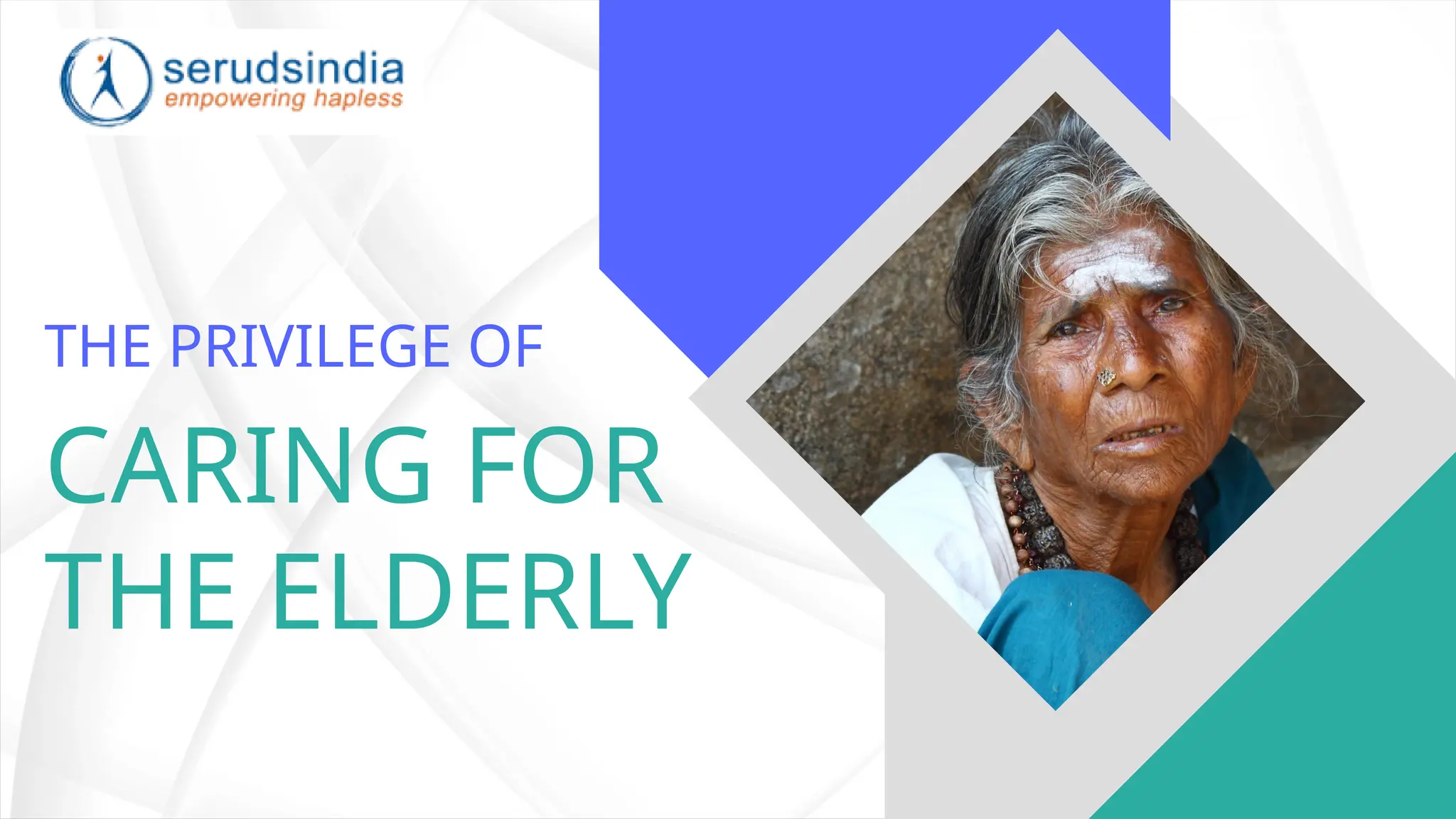
THE PRIVILEGE OF
CARING FOR
THE ELDERLY
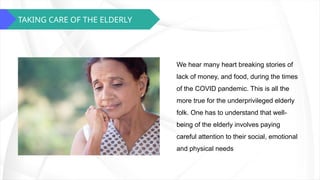
TAKING CARE OF THE ELDERLY
We hear many heart breaking stories of
lack of money, and food, during the times
of the COVID pandemic. This is all the
more true for the underprivileged elderly
folk. One has to understand that well-
being of the elderly involves paying
careful attention to their social, emotional
and physical needs
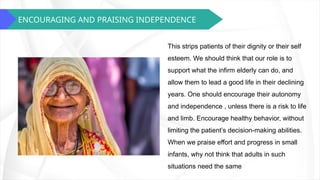
ENCOURAGING AND PRAISING INDEPENDENCE
This strips patients of their dignity or their self
esteem. We should think that our role is to
support what the infirm elderly can do, and
allow them to lead a good life in their declining
years. One should encourage their autonomy
and independence , unless there is a risk to life
and limb. Encourage healthy behavior, without
limiting the patient’s decision-making abilities.
When we praise effort and progress in small
infants, why not think that adults in such
situations need the same
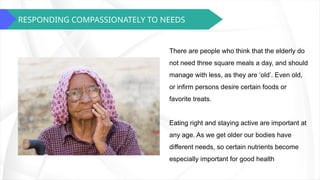
RESPONDING COMPASSIONATELY TO NEEDS
There are people who think that the elderly do
not need three square meals a day, and should
manage with less, as they are ‘old’. Even old,
or infirm persons desire certain foods or
favorite treats.
Eating right and staying active are important at
any age. As we get older our bodies have
different needs, so certain nutrients become
especially important for good health
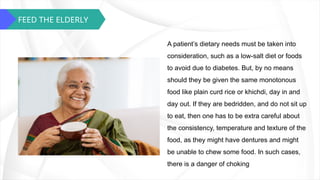
FEED THE ELDERLY
A patient’s dietary needs must be taken into
consideration, such as a low-salt diet or foods
to avoid due to diabetes. But, by no means
should they be given the same monotonous
food like plain curd rice or khichdi, day in and
day out. If they are bedridden, and do not sit up
to eat, then one has to be extra careful about
the consistency, temperature and texture of the
food, as they might have dentures and might
be unable to chew some food. In such cases,
there is a danger of choking
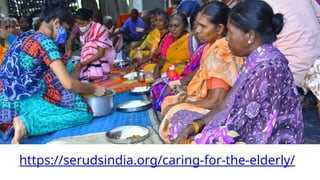
https://serudsindia.org/caring-for-the-elderly/

The Privilege of Caring for the Elderly.

  • 1.
    THE PRIVILEGE OF CARINGFOR THE ELDERLY
  • 2.
    TAKING CARE OFTHE ELDERLY We hear many heart breaking stories of lack of money, and food, during the times of the COVID pandemic. This is all the more true for the underprivileged elderly folk. One has to understand that well- being of the elderly involves paying careful attention to their social, emotional and physical needs
  • 3.
    ENCOURAGING AND PRAISINGINDEPENDENCE This strips patients of their dignity or their self esteem. We should think that our role is to support what the infirm elderly can do, and allow them to lead a good life in their declining years. One should encourage their autonomy and independence , unless there is a risk to life and limb. Encourage healthy behavior, without limiting the patient’s decision-making abilities. When we praise effort and progress in small infants, why not think that adults in such situations need the same
  • 4.
    RESPONDING COMPASSIONATELY TONEEDS There are people who think that the elderly do not need three square meals a day, and should manage with less, as they are ‘old’. Even old, or infirm persons desire certain foods or favorite treats. Eating right and staying active are important at any age. As we get older our bodies have different needs, so certain nutrients become especially important for good health
  • 5.
    FEED THE ELDERLY Apatient’s dietary needs must be taken into consideration, such as a low-salt diet or foods to avoid due to diabetes. But, by no means should they be given the same monotonous food like plain curd rice or khichdi, day in and day out. If they are bedridden, and do not sit up to eat, then one has to be extra careful about the consistency, temperature and texture of the food, as they might have dentures and might be unable to chew some food. In such cases, there is a danger of choking
  • 6.