Payment of wages
Act,1936
Prepared by Luthfi
The payment of wages act,1936 came to force in India on 28th March,1937
This act extend to whole of India including the state of Jammu and Kashmir.
This act is enacted based on the recommendations of the royal committee on
labour.
Objectives of the Act
• To regulate the payment of wages to a certain classes of persons
employed in industries.
• To ensure that the wages must be paid within the time period
prescribed.
• To ensure that wages must be paid without any unjustified deductions.
Applicability of the Act
• Its applicable to persons employed in-
1. Every factory (same as in factories act)
2. Railways
3. Industries or other establishment specified in sec 2 (ii)
• Receiving wages not exceeding Rs. 18000/- p.m.(w.e.f. 12-9-12)
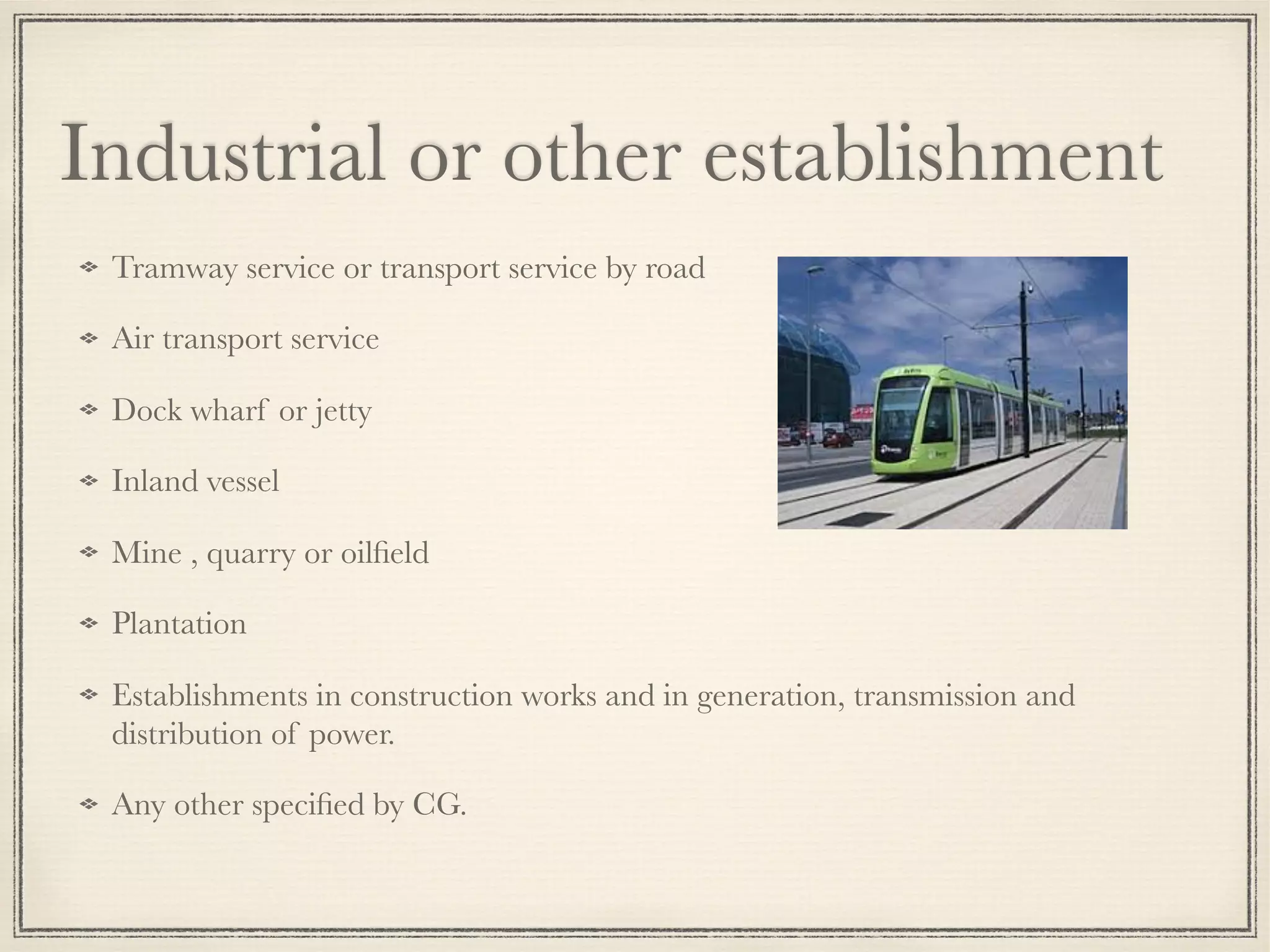
Tramway service or transport service by road
Air transport service
Dock wharf or jetty
Inland vessel
Mine , quarry or oilfield
Plantation
Establishments in construction works and in generation, transmission and
distribution of power.
Any other specified by CG.
Industrial or other establishment
Wages
All remuneration expressed in terms of money in respect of employment.
But does not include-
• Any bonus other than in terms of employment.
• The value of house-accommodation, supply of water, light or other
amenities.
• Any contribution to PF or pension fund.
• Traveling allowance
• Any sum paid to defray expenses met by employee
• Gratuity
!5
Wages means —
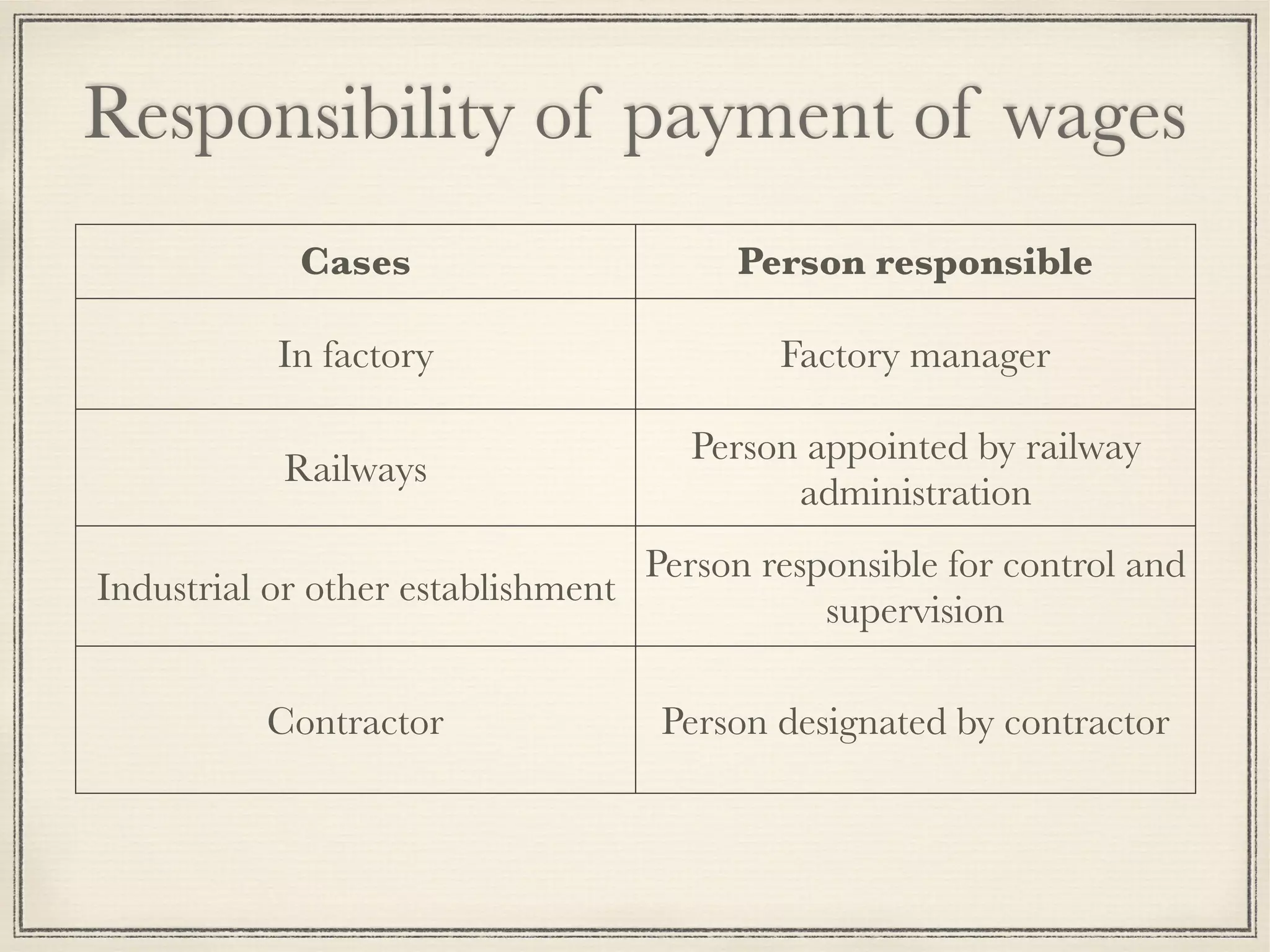
Responsibility of payment of wages
Cases Person responsible
In factory Factory manager
Railways
Person appointed by railway
administration
Industrial or other establishment
Person responsible for control and
supervision
Contractor Person designated by contractor
Time for wage payment
Wages to be paid if,
Wages to be paid before
expiry of 2nd working day
from date of termination.
In case of
Termination of
employment
>1000 workers< 1000 workers
Before 10th dayBefore 7th day
Notes
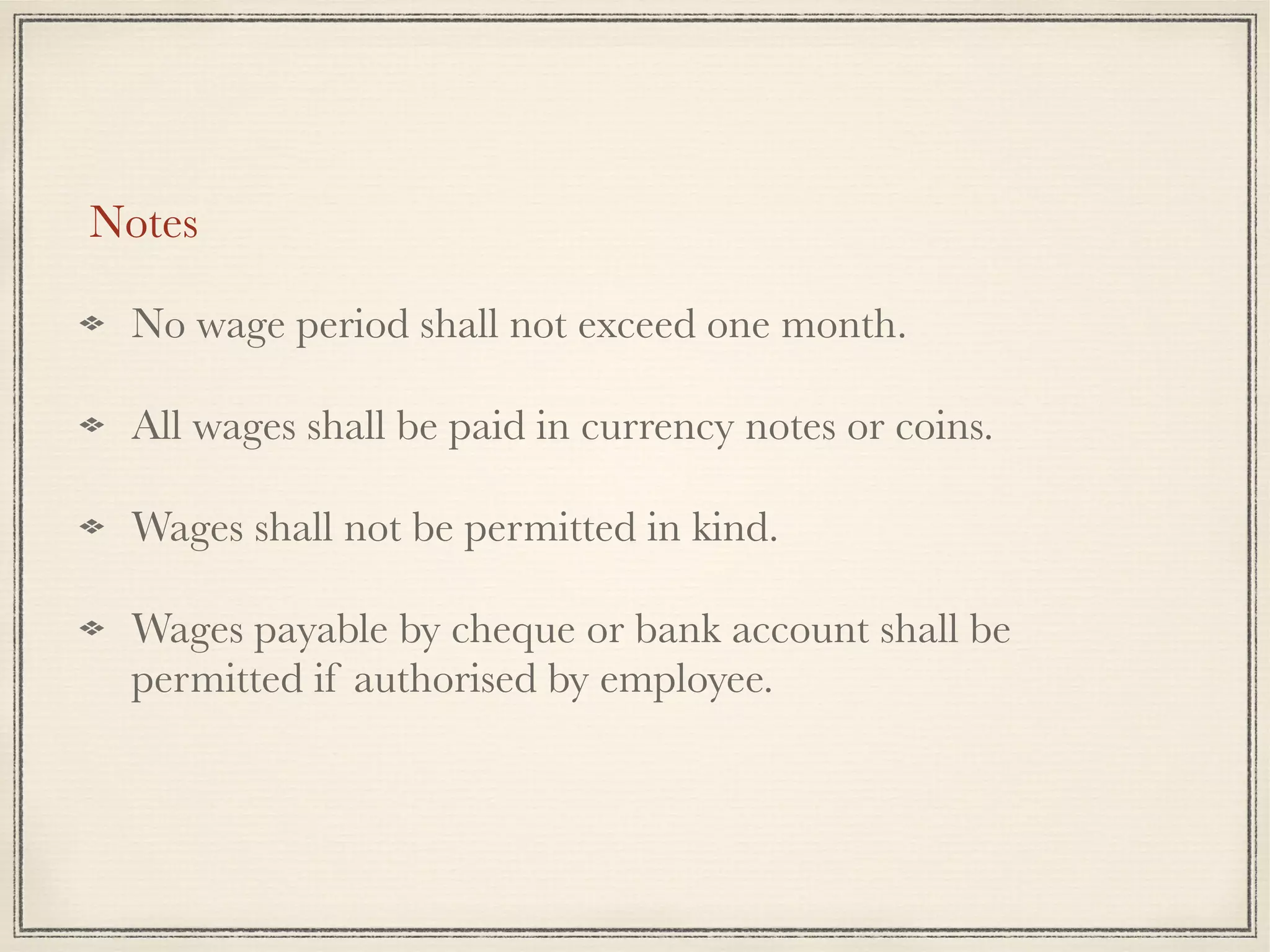
No wage period shall not exceed one month.
All wages shall be paid in currency notes or coins.
Wages shall not be permitted in kind.
Wages payable by cheque or bank account shall be
permitted if authorised by employee.
The wages of a employed person shall be paid to
him without deductions except those authorised
under this Act.
Deduction from wages
Authorised deductions
1. Fines
2. Deductions for absence from duty
3. Deduction for damage or loss of loss, where such
damage or loss is directly attributable to his default
4. Deduction for house accommodation supplied
5. Deduction for amenities supplied by employer.
6. Deduction for recovery of any advances.
7. Deduction for recovery of any loans.
8. Deduction for income tax payable by employed person.
9. Deduction for payment to provident fund.
10. Deduction for payment to co operative societies.
Deduction which can be made with written
authorisation from employee
Premium on his life insurance policy to LIC.
Payment of his contribution to any fund constituted
by employer or a registered trade union for welfare
of employees or their families.
For payment of any membership fees payable to
registered trade union.
For contribution to the PM’s National Relief Fund.
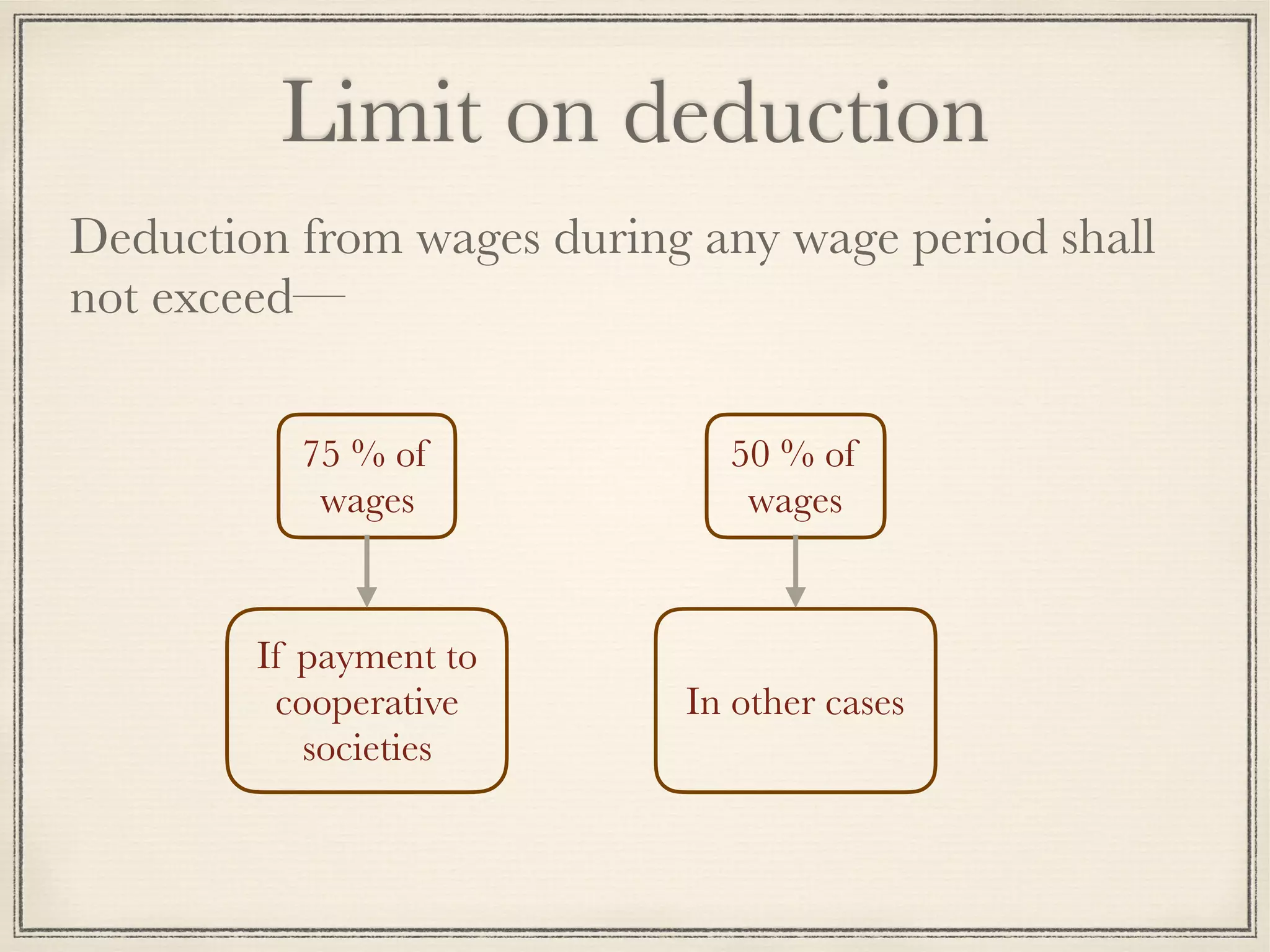
Limit on deduction
Deduction from wages during any wage period shall
not exceed—
If payment to
cooperative
societies
In other cases
50 % of
wages
75 % of
wages
Fines
The total fine imposed in a wage period shall not exceed 3
% of wages payable in such wage period.
No fine shall be imposed from a child (under age of 15)
No fine shall be recovered by instalments or after expiry of
90 days from date on which it was imposed(ie.the day of
default).
All fines shall be recorded in a register by person
responsible for payment of wages.
Minimum wages
Act,1948
Objectives of the Act
The act came to force in India on 15th march 1948.
The act extend to whole of India including Jammu & Kashmir.
It is applicable to all employment specified in schedule.
To ensure that the workers get a minimum rate of wages for their work.
To promote the welfare of workers.
To prevent exploitation of workers.
To empower government in fixing minimum wages and revising it in timely
manner.
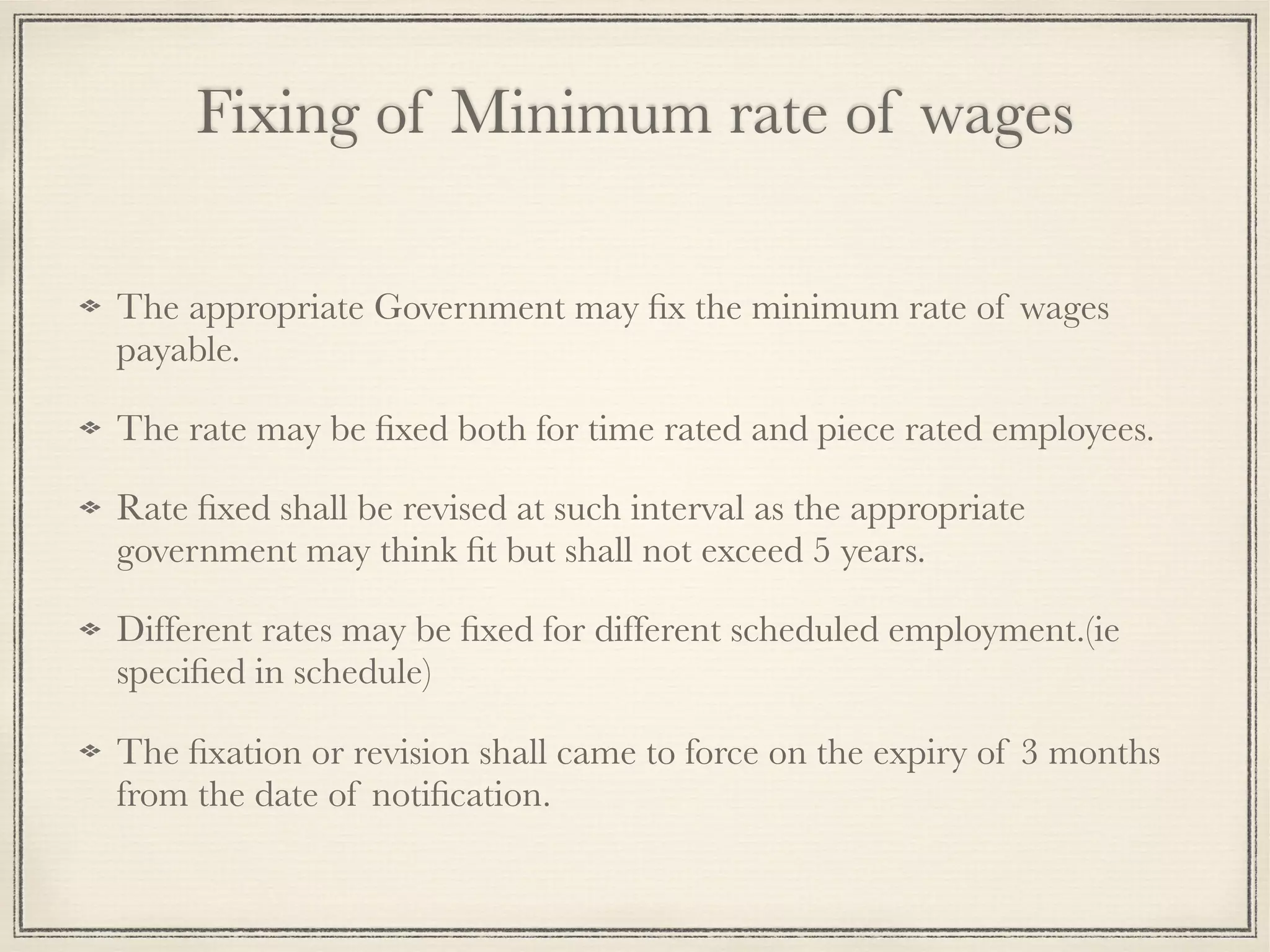
Fixing of Minimum rate of wages
The appropriate Government may fix the minimum rate of wages
payable.
The rate may be fixed both for time rated and piece rated employees.
Rate fixed shall be revised at such interval as the appropriate
government may think fit but shall not exceed 5 years.
Different rates may be fixed for different scheduled employment.(ie
specified in schedule)
The fixation or revision shall came to force on the expiry of 3 months
from the date of notification.
Where in any scheduled employment minimum wages has been
fixed, the employer shall pay wages not less than wages fixed.
Such wages shall not include any unauthorised deductions.
If any employer cannot pay the minimum wages, he has to close
down the undertakings.
Payment of minimum wages

The payment of Wages act,1936

  • 1.
  • 2.
    The payment ofwages act,1936 came to force in India on 28th March,1937 This act extend to whole of India including the state of Jammu and Kashmir. This act is enacted based on the recommendations of the royal committee on labour. Objectives of the Act • To regulate the payment of wages to a certain classes of persons employed in industries. • To ensure that the wages must be paid within the time period prescribed. • To ensure that wages must be paid without any unjustified deductions.
  • 3.
    Applicability of theAct • Its applicable to persons employed in- 1. Every factory (same as in factories act) 2. Railways 3. Industries or other establishment specified in sec 2 (ii) • Receiving wages not exceeding Rs. 18000/- p.m.(w.e.f. 12-9-12)
  • 4.
    Tramway service ortransport service by road Air transport service Dock wharf or jetty Inland vessel Mine , quarry or oilfield Plantation Establishments in construction works and in generation, transmission and distribution of power. Any other specified by CG. Industrial or other establishment
  • 5.
    Wages All remuneration expressedin terms of money in respect of employment. But does not include- • Any bonus other than in terms of employment. • The value of house-accommodation, supply of water, light or other amenities. • Any contribution to PF or pension fund. • Traveling allowance • Any sum paid to defray expenses met by employee • Gratuity !5 Wages means —
  • 6.
    Responsibility of paymentof wages Cases Person responsible In factory Factory manager Railways Person appointed by railway administration Industrial or other establishment Person responsible for control and supervision Contractor Person designated by contractor
  • 7.
    Time for wagepayment Wages to be paid if, Wages to be paid before expiry of 2nd working day from date of termination. In case of Termination of employment >1000 workers< 1000 workers Before 10th dayBefore 7th day
  • 8.
    Notes No wage periodshall not exceed one month. All wages shall be paid in currency notes or coins. Wages shall not be permitted in kind. Wages payable by cheque or bank account shall be permitted if authorised by employee.
  • 9.
    The wages ofa employed person shall be paid to him without deductions except those authorised under this Act. Deduction from wages Authorised deductions 1. Fines 2. Deductions for absence from duty 3. Deduction for damage or loss of loss, where such damage or loss is directly attributable to his default
  • 10.
    4. Deduction forhouse accommodation supplied 5. Deduction for amenities supplied by employer. 6. Deduction for recovery of any advances. 7. Deduction for recovery of any loans. 8. Deduction for income tax payable by employed person. 9. Deduction for payment to provident fund. 10. Deduction for payment to co operative societies.
  • 11.
    Deduction which canbe made with written authorisation from employee Premium on his life insurance policy to LIC. Payment of his contribution to any fund constituted by employer or a registered trade union for welfare of employees or their families. For payment of any membership fees payable to registered trade union. For contribution to the PM’s National Relief Fund.
  • 12.
    Limit on deduction Deductionfrom wages during any wage period shall not exceed— If payment to cooperative societies In other cases 50 % of wages 75 % of wages
  • 13.
    Fines The total fineimposed in a wage period shall not exceed 3 % of wages payable in such wage period. No fine shall be imposed from a child (under age of 15) No fine shall be recovered by instalments or after expiry of 90 days from date on which it was imposed(ie.the day of default). All fines shall be recorded in a register by person responsible for payment of wages.
  • 14.
  • 15.
    Objectives of theAct The act came to force in India on 15th march 1948. The act extend to whole of India including Jammu & Kashmir. It is applicable to all employment specified in schedule. To ensure that the workers get a minimum rate of wages for their work. To promote the welfare of workers. To prevent exploitation of workers. To empower government in fixing minimum wages and revising it in timely manner.
  • 16.
    Fixing of Minimumrate of wages The appropriate Government may fix the minimum rate of wages payable. The rate may be fixed both for time rated and piece rated employees. Rate fixed shall be revised at such interval as the appropriate government may think fit but shall not exceed 5 years. Different rates may be fixed for different scheduled employment.(ie specified in schedule) The fixation or revision shall came to force on the expiry of 3 months from the date of notification.
  • 17.
    Where in anyscheduled employment minimum wages has been fixed, the employer shall pay wages not less than wages fixed. Such wages shall not include any unauthorised deductions. If any employer cannot pay the minimum wages, he has to close down the undertakings. Payment of minimum wages