The Non-clinical Eye Care Employment Option 
OPTICAL TECHNICIAN
Someone who works in a lens lab 
Operates and maintains equipment 
Loads blank lenses into machines 
Supervises the cutting and polishing of lenses 
Mounts finished lenses into frames 
Attaches nose pads and temple pieces 
Ensures that orders have been completed properly 
WHAT IS AN OPTICAL TECHNICIAN?
Generally in large manufacturing facilities 
May be found in small independent labs 
Eye care offices used to have their own in-house lens laboratories but have gradually shifted to sending work orders out to large manufacturing facilities or specialty labs in order to reduce costs and improve efficiency. 
WHERE DO THEY WORK?
High school diploma or GED 
Generally does not require a college degree 
May need to complete in-house training 
Can vary between employers 
Contact employers to learn more 
EDUCATIONAL REQUIREMENTS
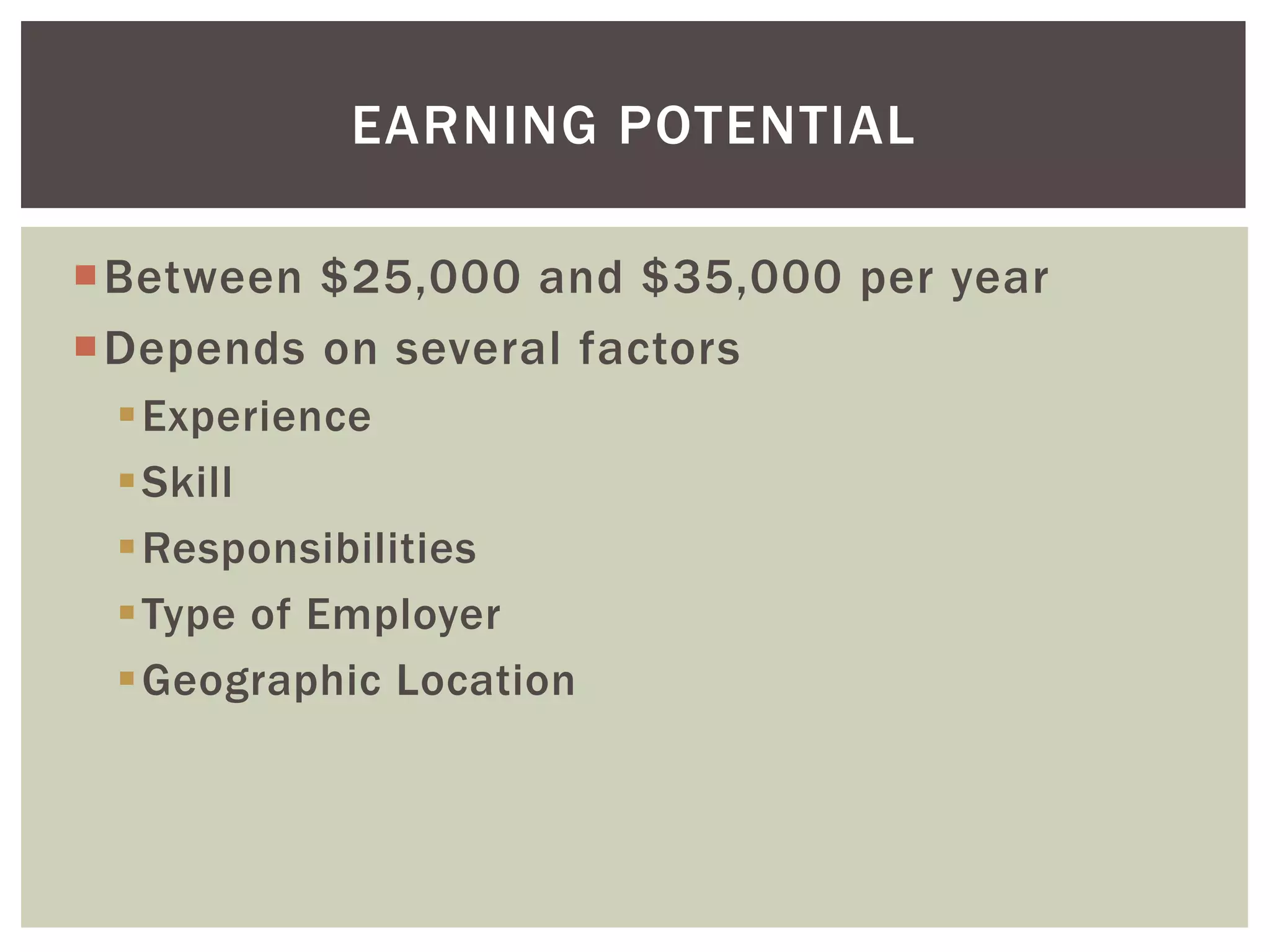
Between $25,000 and $35,000 per year 
Depends on several factors 
Experience 
Skill 
Responsibilities 
Type of Employer 
Geographic Location 
EARNING POTENTIAL
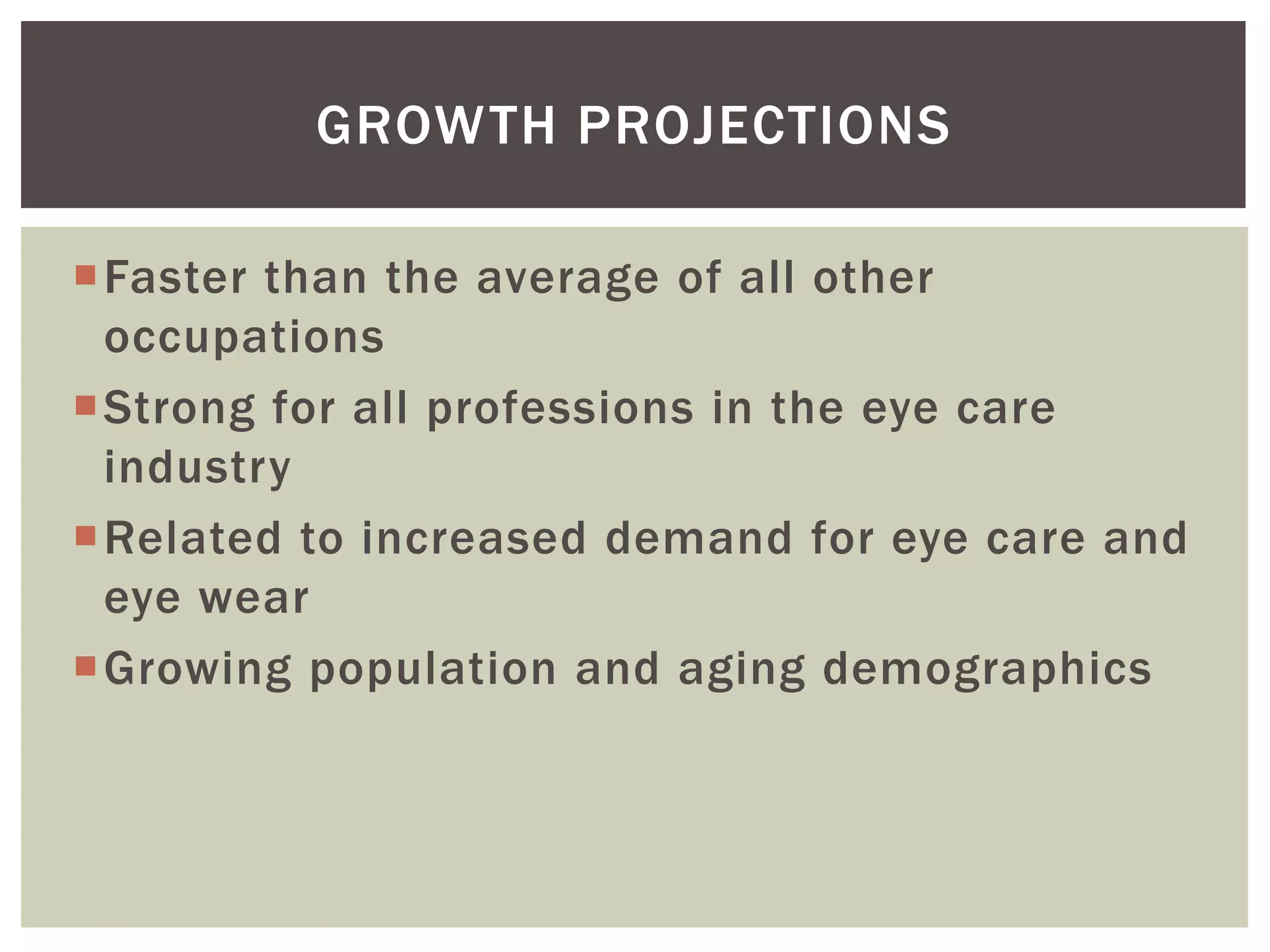
Faster than the average of all other occupations 
Strong for all professions in the eye care industry 
Related to increased demand for eye care and eye wear 
Growing population and aging demographics 
GROWTH PROJECTIONS
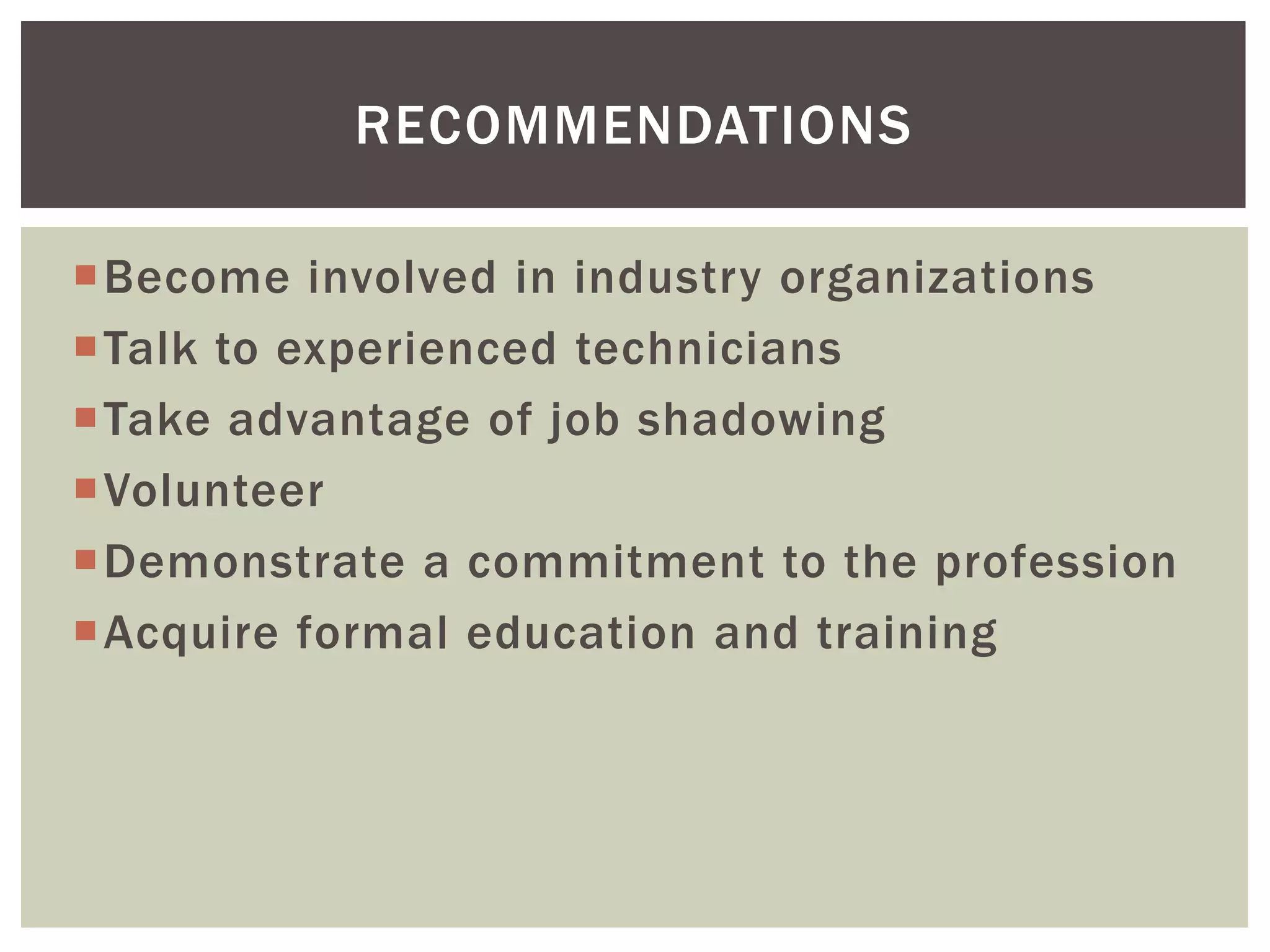
Become involved in industry organizations 
Talk to experienced technicians 
Take advantage of job shadowing 
Volunteer 
Demonstrate a commitment to the profession 
Acquire formal education and training 
RECOMMENDATIONS
Optical Technician 
http://www.opticiantraining.org/ 
SOURCES

The Optical Technician Profession

  • 1.
    The Non-clinical EyeCare Employment Option OPTICAL TECHNICIAN
  • 2.
    Someone who worksin a lens lab Operates and maintains equipment Loads blank lenses into machines Supervises the cutting and polishing of lenses Mounts finished lenses into frames Attaches nose pads and temple pieces Ensures that orders have been completed properly WHAT IS AN OPTICAL TECHNICIAN?
  • 3.
    Generally in largemanufacturing facilities May be found in small independent labs Eye care offices used to have their own in-house lens laboratories but have gradually shifted to sending work orders out to large manufacturing facilities or specialty labs in order to reduce costs and improve efficiency. WHERE DO THEY WORK?
  • 4.
    High school diplomaor GED Generally does not require a college degree May need to complete in-house training Can vary between employers Contact employers to learn more EDUCATIONAL REQUIREMENTS
  • 5.
    Between $25,000 and$35,000 per year Depends on several factors Experience Skill Responsibilities Type of Employer Geographic Location EARNING POTENTIAL
  • 6.
    Faster than theaverage of all other occupations Strong for all professions in the eye care industry Related to increased demand for eye care and eye wear Growing population and aging demographics GROWTH PROJECTIONS
  • 7.
    Become involved inindustry organizations Talk to experienced technicians Take advantage of job shadowing Volunteer Demonstrate a commitment to the profession Acquire formal education and training RECOMMENDATIONS
  • 8.