THE NEW SECURITY Post “9/11” AN INTRODUCTION TO SECURITY ENGINEERING FOR ARCHITECTS
Security Today America is vulnerable to a terrorist attack Implementing proper Security is a challenge There are many types of threats  Countermeasures must be effective
The American Challenge Logistics Geography History Response Cost Threat Level Human Factor Apathy
Post “9/11” The application of New Security requires specialized countermeasures to specific threats  Countermeasures may range from criminal background checks to sophisticated electronic systems such as facial recognition controlled access systems.
Typical Counter Measures Security Management Systems (Access Control) CCTV Camera Surveillance Perimeter Access Control Vehicle Tracking Head End Monitoring Techniques
The New Security Post “9/11” Three Important Aspects Of The New Security:  Vulnerability Assessments (VA’S) Security At Concept Stage Importance Of Security Design Criteria
Vulnerability Assessments What is a Vulnerability Assessment (VA)? A Quick History What is the Purpose? What are the Benefits? Government Security Directives
An Analysis Of A VA Identify Threat Level Identify Critical Assets Assess Present/Planned Security Evaluate Consequences Recommendations On Acceptable Risk
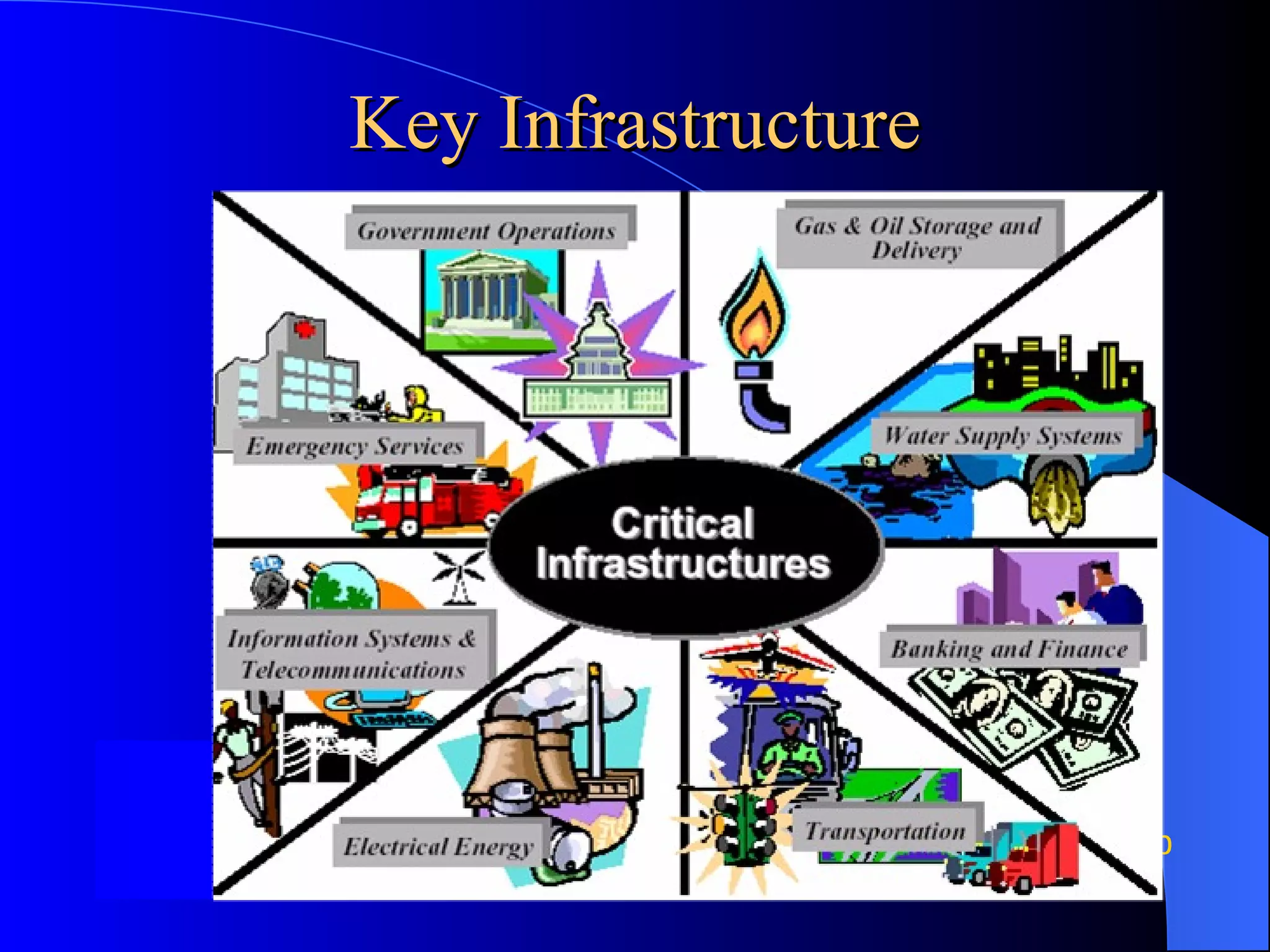
A Quick History 1998 Identification of 8 Key Infrastructure that were considered particularly vulnerable to terrorist attack and which would have significant consequences on the operation of the United States
Key Infrastructure
Federal Action EPA Mandate 2002  State Of New Jersey Attorney General’s Office Homeland Security Federal Level State Level Federal Funding
Purpose Of VA’S A properly performed Vulnerability Assessment will identify the weaknesses of a facility to specific threats.  Threats may be external (terrorists, criminals, etc) or may be internal (employees, contractors, etc)
Industry Quotes “ Every decade, the architecture profession takes on a new responsibility.  In the 1960s, it was urban planning. During the ‘Seventies we took on environmental design, and the ‘Eighties were all about development and design/build.  We had to fully integrate computers and the web into our practices in the ‘Nineties.   In whatever we’re calling this current decade, architects (and their consultants) are now being asked to consider the security of the areas in and around their buildings.  Our designs, and more importantly, their occupants, are vulnerable to not just terrorism, but also crime, and civic/natural disasters. The public is looking to the government and other institutions to assure their safety in the built environment. These entities are turning to their professionals. This is the new imperative for our practices. “
Industry Quote By…. Regan Young, AIA Principal Regan Young England Butera Mt. Holly, New Jersey
Benefits Of A VA In simple terms, the benefits of a VA can be stated as follows: Identification of Appropriate Threat Level Identification of Critical Assets Measurement of Consequences Sound Recommendations Security Improvements Mitigation
Without Performing A VA What is Threat Level? What are the Critical Assets? What is Likely to Happen? What will be the Response? What are the Likely Consequences? Who will be held Responsible?
 
Industry Quotes “ In the light of various incidents following the terrible events of “9/11,” it was felt that this school district should move forward with a major upgrade to its existing security. We were advised to commence with a Vulnerability Assessment (VA) that would, if nothing else, identify our strengths and weaknesses in security from all angles. It was good advice, as the results of the VA provided exceptional insight and important data that has allowed the school district to identify major issues on a priority basis, select systems that will be both cost-effective and functional, and which now provides a Basis of Design for all future school construction.”
Industry Quotes (Cont.) “ There is no question that knowing the relevant threat level, understanding exactly what your critical assets are, assessing the likely risk and consequences, and making intelligent choices based on such information, provides far more effective security than if we had simply relied on a local contractor to install a security system”
Industry Quote By…. Mark Cowell Superintendent Pemberton School District Pemberton, New Jersey
Recommendation It is strongly recommended that every project undertake an appropriate VA  The VA should follow one of the standards RAM, CCPS, ASIS, NFPA, or Industry Best Practices when supervised by experienced and certified  independent  security professionals
Security at the Concept or  Schematic  Stage Apply CPTED principles throughout Don’t build in security problems that have to be overcome with expensive electronic security systems  Consider appropriate circulation routes inside the building to control access  Security Partitioning
Industry Quotes “The cost for security will be significantly reduced with proper architectural design, particularly at the concept stage”
Industry Quote By…. Ronald S. Libengood, CPP CEO SecuraComm Consulting, Inc. Pittsburgh, PA
Security Factors Location CPTED Considerations Environment Structural Design Planned Use Special Circumstances
 
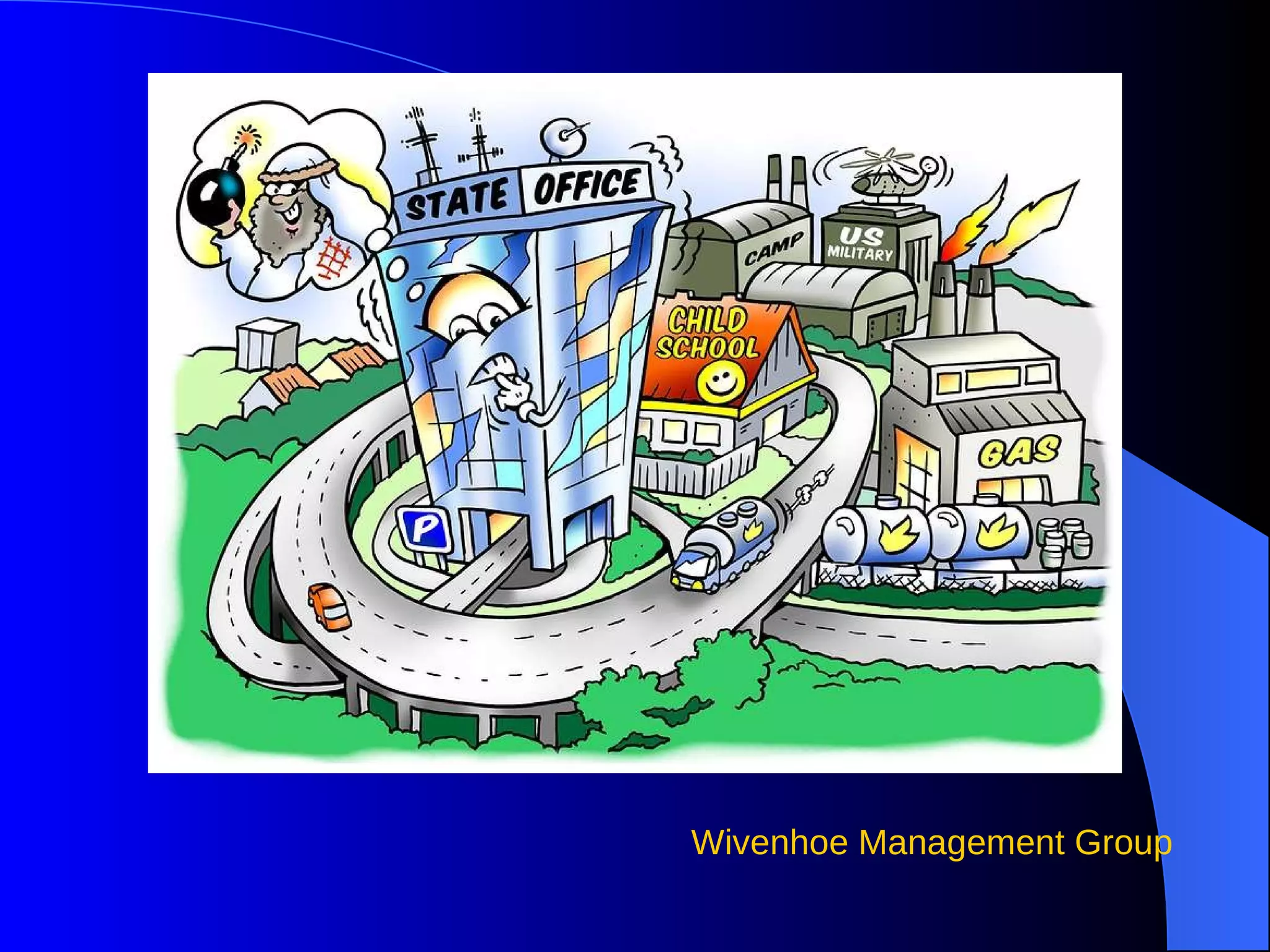
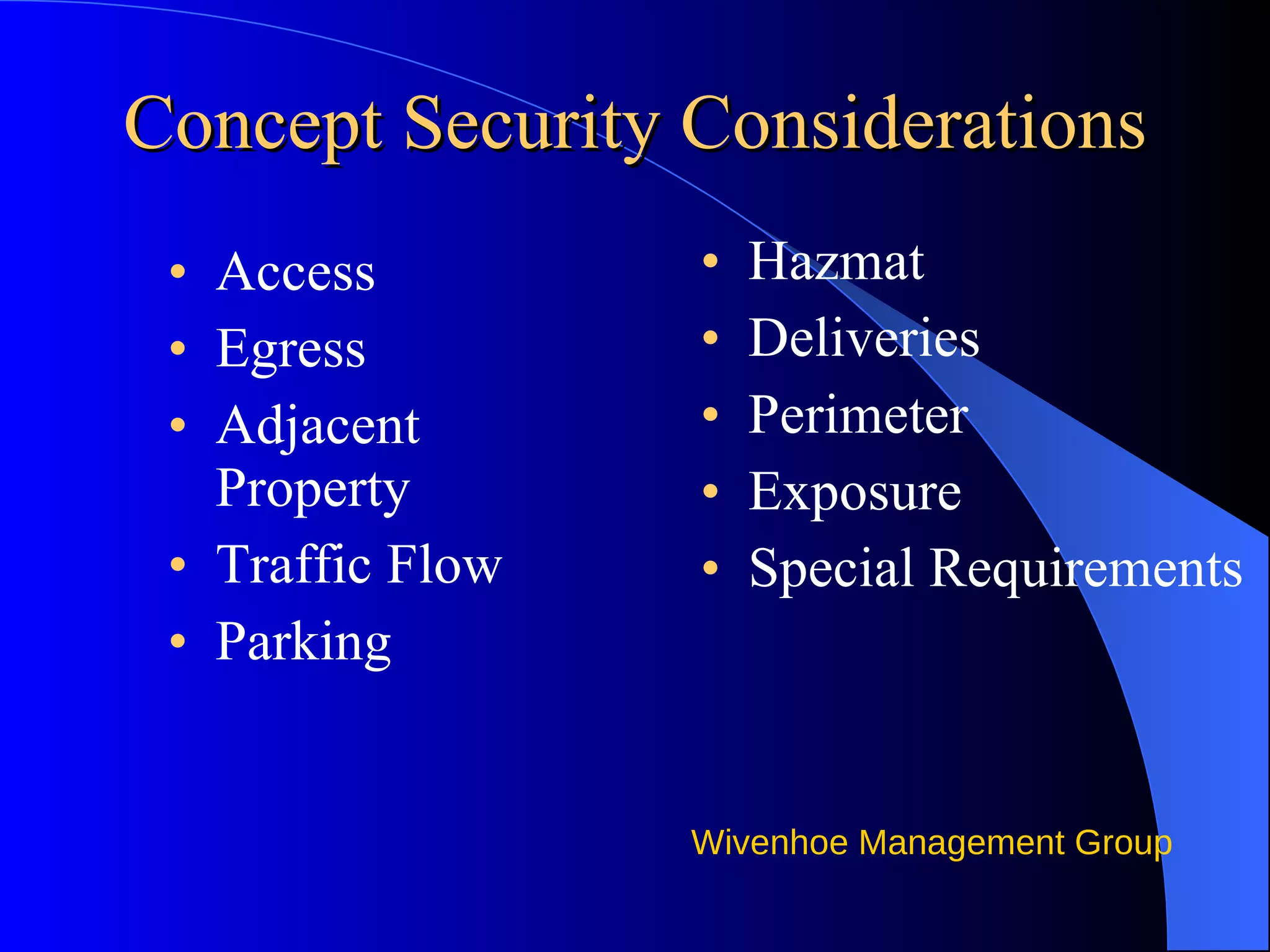
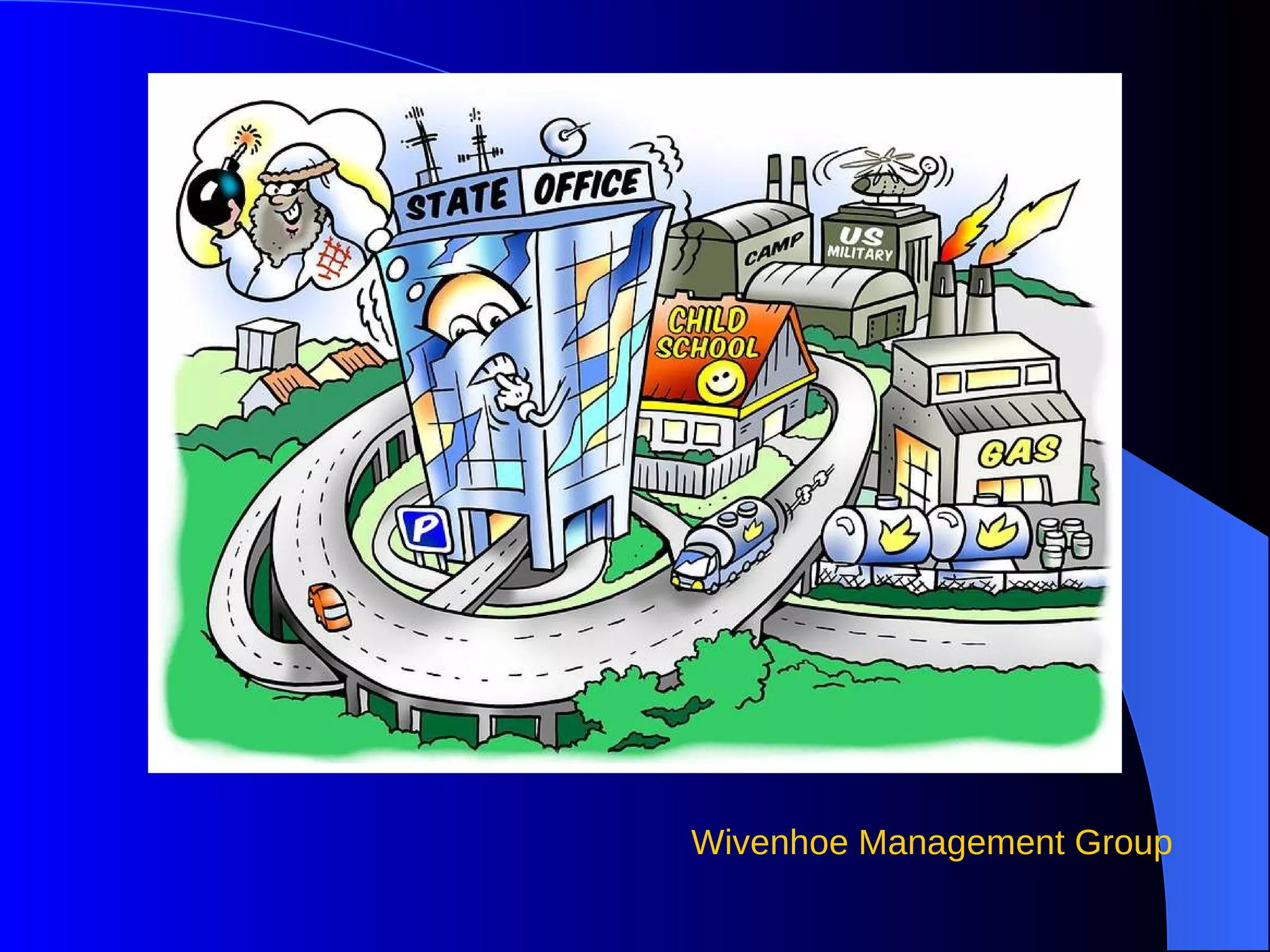
Concept Security Considerations Access Egress Adjacent Property Traffic Flow Parking Hazmat Deliveries Perimeter Exposure Special Requirements
 
Statement It is again strongly recommended that every architect consider bringing-in a Security Professional at the Concept Stage to provide experienced advice on Security
Industry Quotes “ Security design involves more than the application of electronic technology at the end of the architectural process - diverse issues arise during all phases of the project.
Industry Quotes (Cont.) “ Code requirements for means of egress and the architect’s desire for the unimpeded flow of people and materials throughout the building are diametrically opposed to the demands of security. The resolution of this conflict is critical to the success of the project - the key is to solve the right problem at the right time.”
Industry Quote By…. Peter James, AIA Nadaskay Kopelson Architects Morristown, New Jersey
Security Design Criteria Definition The Evaluation of Basic Concepts in Security to Provide the Necessary Level of Protection for the Total Facility Most Important Aspect
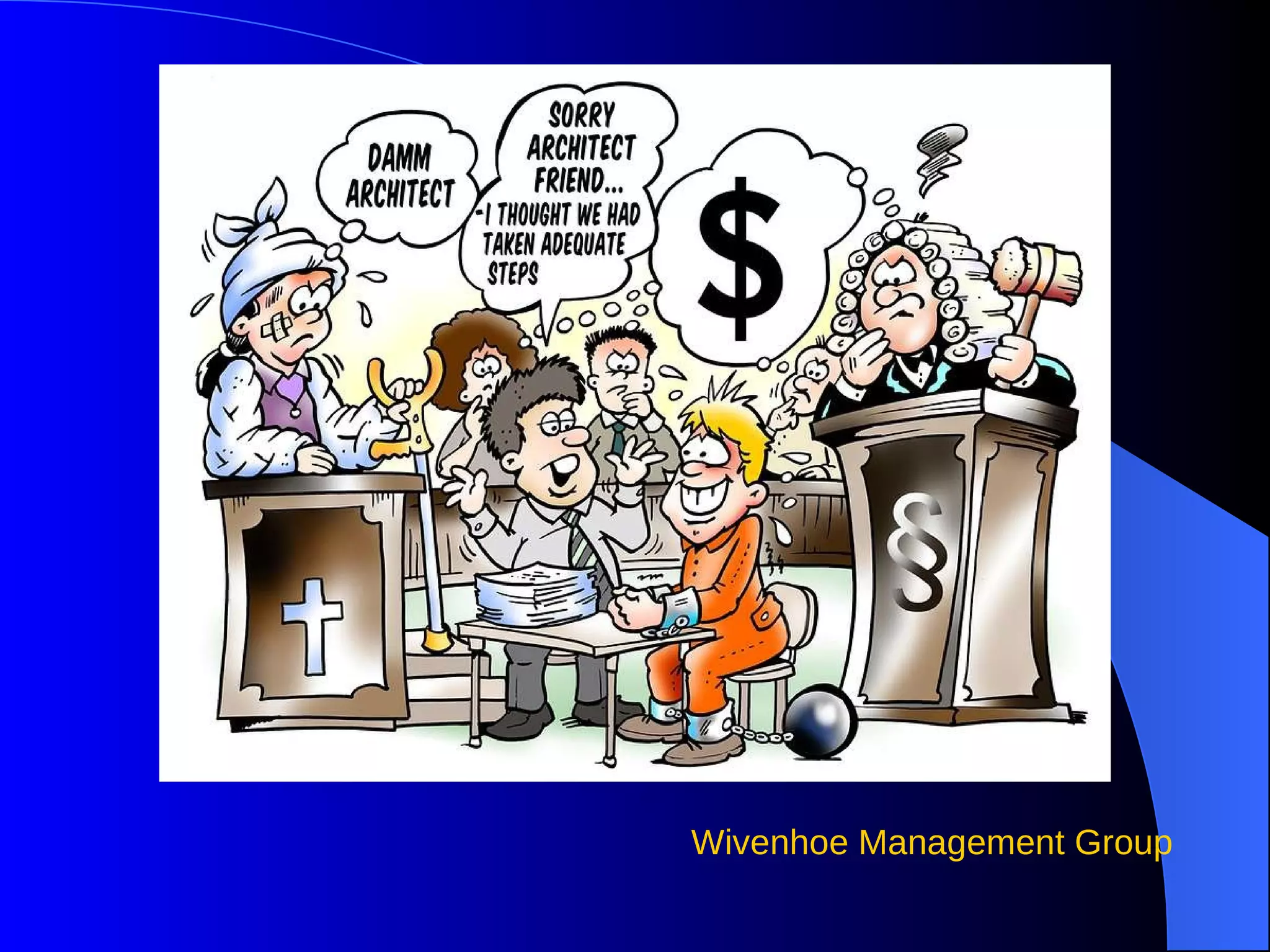
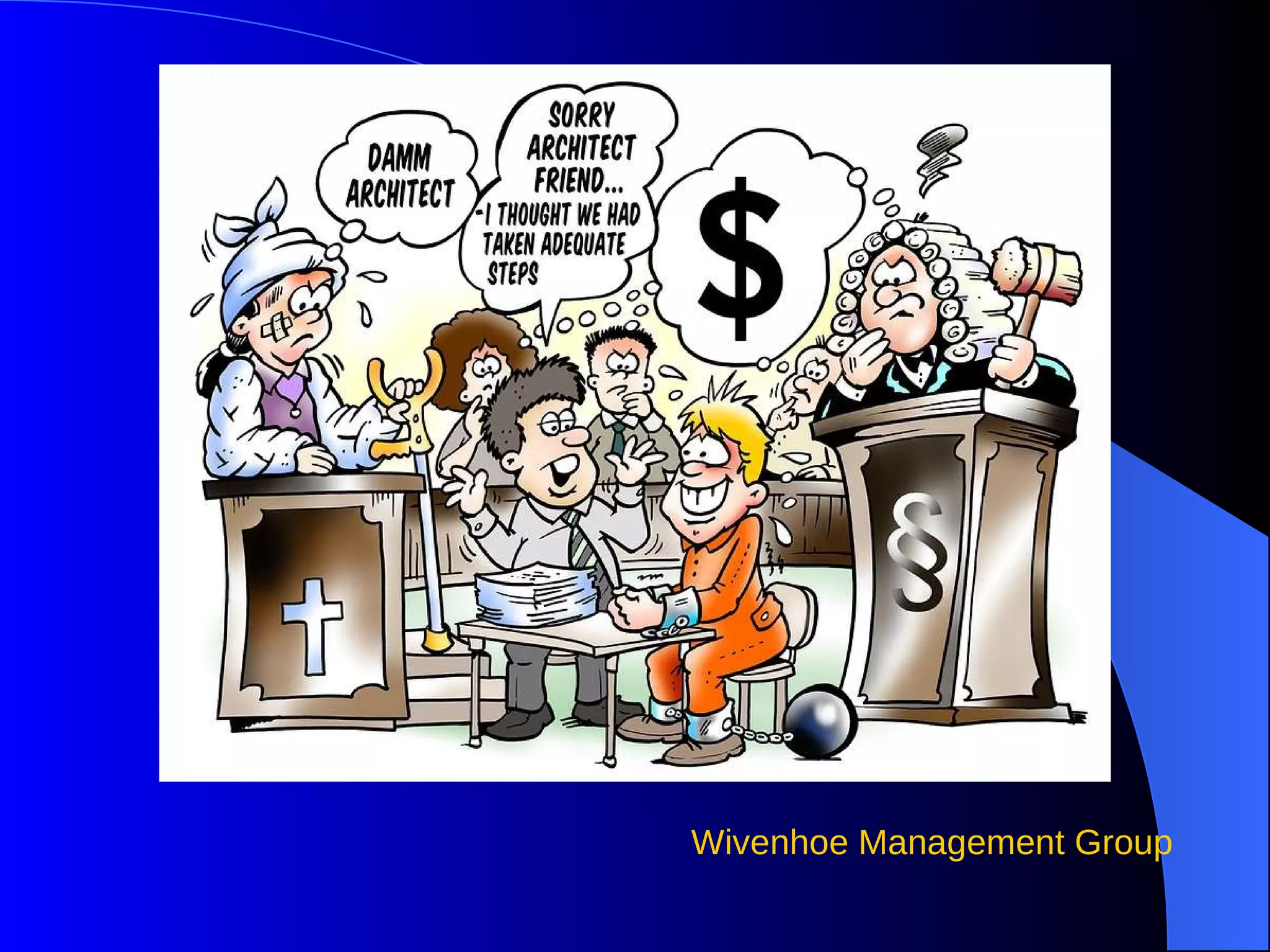
Bad Design Criteria
Good Design Criteria Provides a solid base of reasoning for the actual security design Provides continuity Minimizes liability Avoids negligence
Industry Quotes “ When the difference between a properly designed Security System, and a flawed Security System design can be a person’s life, it is frankly irresponsible for any individual involved in the security design process, to employ anything less than proper security design criteria based on experience, professional understanding, and established risk expertise.”
Industry Quote By…. Steven S. Wilder Principal Sorrenson & Wilder Associates Bradley, IL
Industry Example Recent School District  where No Criteria was established for the CCTV System Camera locations Camera Performance Camera Monitoring
Determining Good Design Criteria Very Simple Utilize security professionals that have substantial experience with Security Industry Requirements, Guidelines, and Individual Client Site/Facility Needs
Presentation Summary Vulnerability Assessments Security at the Concept Stage Importance of Security Design Criteria
FINAL STATEMENT IF WE LEAVE YOU WITH NO OTHER THOUGHT TONIGHT IT SHOULD BE THAT POST “9/11” SECURITY IS A SERIOUS BUSINESS PLEASE DON’T TAKE IT LIGHTLY
Questions Some questions that you might want to consider: 1 What is the Impact of Security on Cost 2 What is the Impact of Security on Building Design 3 What is a Credible Threat
Industry Quote “ We are in fact designing the nervous system of the building.  Its function is the detection of threats so that pain can be avoided or lessened.  The instigation of pro-active or defensive action is often necessary to protect people, property and buildings.  The ramifications of this extend to all aspects of building design, whether it is integrating security systems with other control systems to create a smart building, or increasing the structural strength of the building.”
Summary Slide POST “9/11” SECURITY IS NOW AN INTRINSIC PART OF BUILDING DESIGN

The New Security - Post "9/11"

  • 1.
    THE NEW SECURITYPost “9/11” AN INTRODUCTION TO SECURITY ENGINEERING FOR ARCHITECTS
  • 2.
    Security Today Americais vulnerable to a terrorist attack Implementing proper Security is a challenge There are many types of threats Countermeasures must be effective
  • 3.
    The American ChallengeLogistics Geography History Response Cost Threat Level Human Factor Apathy
  • 4.
    Post “9/11” Theapplication of New Security requires specialized countermeasures to specific threats Countermeasures may range from criminal background checks to sophisticated electronic systems such as facial recognition controlled access systems.
  • 5.
    Typical Counter MeasuresSecurity Management Systems (Access Control) CCTV Camera Surveillance Perimeter Access Control Vehicle Tracking Head End Monitoring Techniques
  • 6.
    The New SecurityPost “9/11” Three Important Aspects Of The New Security: Vulnerability Assessments (VA’S) Security At Concept Stage Importance Of Security Design Criteria
  • 7.
    Vulnerability Assessments Whatis a Vulnerability Assessment (VA)? A Quick History What is the Purpose? What are the Benefits? Government Security Directives
  • 8.
    An Analysis OfA VA Identify Threat Level Identify Critical Assets Assess Present/Planned Security Evaluate Consequences Recommendations On Acceptable Risk
  • 9.
    A Quick History1998 Identification of 8 Key Infrastructure that were considered particularly vulnerable to terrorist attack and which would have significant consequences on the operation of the United States
  • 10.
  • 11.
    Federal Action EPAMandate 2002 State Of New Jersey Attorney General’s Office Homeland Security Federal Level State Level Federal Funding
  • 12.
    Purpose Of VA’SA properly performed Vulnerability Assessment will identify the weaknesses of a facility to specific threats. Threats may be external (terrorists, criminals, etc) or may be internal (employees, contractors, etc)
  • 13.
    Industry Quotes “Every decade, the architecture profession takes on a new responsibility.  In the 1960s, it was urban planning. During the ‘Seventies we took on environmental design, and the ‘Eighties were all about development and design/build.  We had to fully integrate computers and the web into our practices in the ‘Nineties.   In whatever we’re calling this current decade, architects (and their consultants) are now being asked to consider the security of the areas in and around their buildings.  Our designs, and more importantly, their occupants, are vulnerable to not just terrorism, but also crime, and civic/natural disasters. The public is looking to the government and other institutions to assure their safety in the built environment. These entities are turning to their professionals. This is the new imperative for our practices. “
  • 14.
    Industry Quote By….Regan Young, AIA Principal Regan Young England Butera Mt. Holly, New Jersey
  • 15.
    Benefits Of AVA In simple terms, the benefits of a VA can be stated as follows: Identification of Appropriate Threat Level Identification of Critical Assets Measurement of Consequences Sound Recommendations Security Improvements Mitigation
  • 16.
    Without Performing AVA What is Threat Level? What are the Critical Assets? What is Likely to Happen? What will be the Response? What are the Likely Consequences? Who will be held Responsible?
  • 17.
  • 18.
    Industry Quotes “In the light of various incidents following the terrible events of “9/11,” it was felt that this school district should move forward with a major upgrade to its existing security. We were advised to commence with a Vulnerability Assessment (VA) that would, if nothing else, identify our strengths and weaknesses in security from all angles. It was good advice, as the results of the VA provided exceptional insight and important data that has allowed the school district to identify major issues on a priority basis, select systems that will be both cost-effective and functional, and which now provides a Basis of Design for all future school construction.”
  • 19.
    Industry Quotes (Cont.)“ There is no question that knowing the relevant threat level, understanding exactly what your critical assets are, assessing the likely risk and consequences, and making intelligent choices based on such information, provides far more effective security than if we had simply relied on a local contractor to install a security system”
  • 20.
    Industry Quote By….Mark Cowell Superintendent Pemberton School District Pemberton, New Jersey
  • 21.
    Recommendation It isstrongly recommended that every project undertake an appropriate VA The VA should follow one of the standards RAM, CCPS, ASIS, NFPA, or Industry Best Practices when supervised by experienced and certified independent security professionals
  • 22.
    Security at theConcept or Schematic Stage Apply CPTED principles throughout Don’t build in security problems that have to be overcome with expensive electronic security systems Consider appropriate circulation routes inside the building to control access Security Partitioning
  • 23.
    Industry Quotes “Thecost for security will be significantly reduced with proper architectural design, particularly at the concept stage”
  • 24.
    Industry Quote By….Ronald S. Libengood, CPP CEO SecuraComm Consulting, Inc. Pittsburgh, PA
  • 25.
    Security Factors LocationCPTED Considerations Environment Structural Design Planned Use Special Circumstances
  • 26.
  • 27.
    Concept Security ConsiderationsAccess Egress Adjacent Property Traffic Flow Parking Hazmat Deliveries Perimeter Exposure Special Requirements
  • 28.
  • 29.
    Statement It isagain strongly recommended that every architect consider bringing-in a Security Professional at the Concept Stage to provide experienced advice on Security
  • 30.
    Industry Quotes “Security design involves more than the application of electronic technology at the end of the architectural process - diverse issues arise during all phases of the project.
  • 31.
    Industry Quotes (Cont.)“ Code requirements for means of egress and the architect’s desire for the unimpeded flow of people and materials throughout the building are diametrically opposed to the demands of security. The resolution of this conflict is critical to the success of the project - the key is to solve the right problem at the right time.”
  • 32.
    Industry Quote By….Peter James, AIA Nadaskay Kopelson Architects Morristown, New Jersey
  • 33.
    Security Design CriteriaDefinition The Evaluation of Basic Concepts in Security to Provide the Necessary Level of Protection for the Total Facility Most Important Aspect
  • 34.
  • 35.
    Good Design CriteriaProvides a solid base of reasoning for the actual security design Provides continuity Minimizes liability Avoids negligence
  • 36.
    Industry Quotes “When the difference between a properly designed Security System, and a flawed Security System design can be a person’s life, it is frankly irresponsible for any individual involved in the security design process, to employ anything less than proper security design criteria based on experience, professional understanding, and established risk expertise.”
  • 37.
    Industry Quote By….Steven S. Wilder Principal Sorrenson & Wilder Associates Bradley, IL
  • 38.
    Industry Example RecentSchool District where No Criteria was established for the CCTV System Camera locations Camera Performance Camera Monitoring
  • 39.
    Determining Good DesignCriteria Very Simple Utilize security professionals that have substantial experience with Security Industry Requirements, Guidelines, and Individual Client Site/Facility Needs
  • 40.
    Presentation Summary VulnerabilityAssessments Security at the Concept Stage Importance of Security Design Criteria
  • 41.
    FINAL STATEMENT IFWE LEAVE YOU WITH NO OTHER THOUGHT TONIGHT IT SHOULD BE THAT POST “9/11” SECURITY IS A SERIOUS BUSINESS PLEASE DON’T TAKE IT LIGHTLY
  • 42.
    Questions Some questionsthat you might want to consider: 1 What is the Impact of Security on Cost 2 What is the Impact of Security on Building Design 3 What is a Credible Threat
  • 43.
    Industry Quote “We are in fact designing the nervous system of the building. Its function is the detection of threats so that pain can be avoided or lessened. The instigation of pro-active or defensive action is often necessary to protect people, property and buildings. The ramifications of this extend to all aspects of building design, whether it is integrating security systems with other control systems to create a smart building, or increasing the structural strength of the building.”
  • 44.
    Summary Slide POST“9/11” SECURITY IS NOW AN INTRINSIC PART OF BUILDING DESIGN