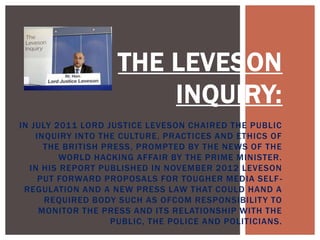
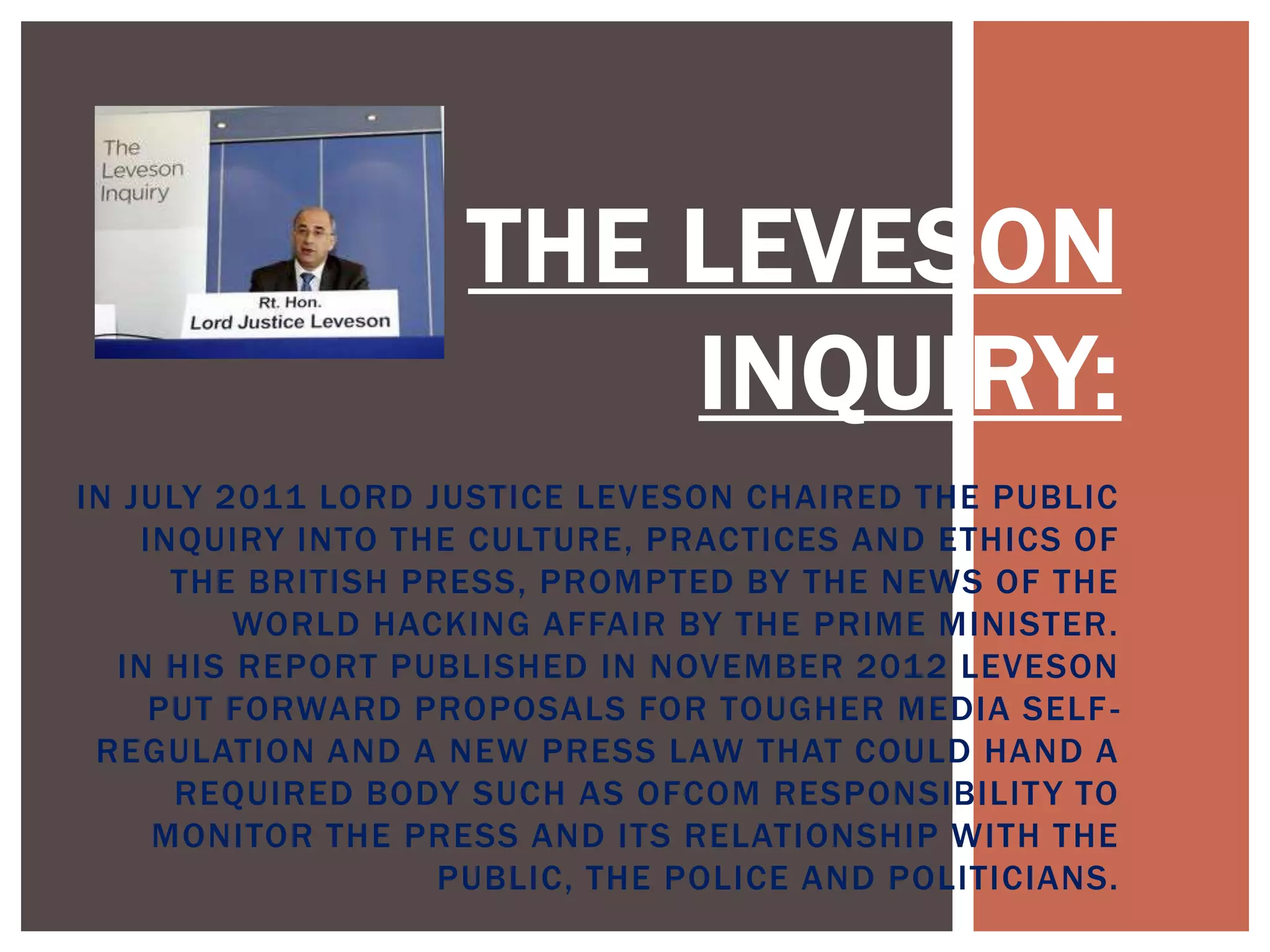
THE LEVESON
INQUIRY:
IN JULY 2011 LORD JUSTICE LEVESON CHAIRED THE PUBLIC
INQUIRY INTO THE CULTURE, PRACTICES AND ETHICS OF
THE BRITISH PRESS, PROMPTED BY THE NEWS OF THE
WORLD HACKING AFFAIR BY THE PRIME MINISTER.
IN HIS REPORT PUBLISHED IN NOVEMBER 2012 LEVESON
PUT FORWARD PROPOSALS FOR TOUGHER MEDIA SELF REGULATION AND A NEW PRESS LAW THAT COULD HAND A
REQUIRED BODY SUCH AS OFCOM RESPONSIBILIT Y TO
MONITOR THE PRESS AND ITS RELATIONSHIP WITH THE
PUBLIC, THE POLICE AND POLITICIANS.
WHAT WAS THE LEVESON INQUIRY?

It was a public, judge-led inquiry set up by
the Prime Minister David Cameron to
examine the culture, practice and ethics of
the press.
It was established in the wake of the phone
hacking scandal at the now defunct News of
the world tabloid.
Lord Justice Leveson has made
recommendations on the future of the press
regulations.
WHAT DID IT LOOK AT?

 It looked at the relationship between the press and the
public, including phone hacking and other potentially illegal
behaviour, and at the relationships between the press and the
police and the politicians.
 Why did Lord Justice Leveson recommend?
 He made broad and complex recommendations relating to how
the press is regulated:
 Newspapers should continue to be self -regulated and the
government should have no power over what they publish.
 There had to be a new press standards body created by the
industry, with a new code of conduct
 That body should be backed by legislation, which would create
a means to ensure the regulation was independent and
effective
 The arrangement would provide the public with confidence that
their complaints would be seriously dealt with and ensure the
press are protected from interference.
WHY DID HE RECOMMEND REWORKING
PRESS REGULATION?
 The current system, where the press is self -regulated voluntarily
through the Press Complaints Commission (PCC), is widely agreed to
be doomed the PCC itself has agreed to move into a "transitional
phase" until a long -term replacement can be established.
 The chairman of the PCC, Lord Hunt, wants a new
"tough, independent regulator with teeth". He told the Leveson inquir y
there was a willingness among publications for a "fresh star t and a
new body" based on legally -enforceable contracts between publishers
and the new body.
 The Free Speech Network , which represents many editor s and
publisher s, is vigorously opposed to any state involvement in press
regulation. It says the press exists to scrutinize those in positions of
power, and it could not do that if those it was scrutinizing had
authority over it.
 But the Hacked Of f campaign, which represents many alleged victims
of phone-hacking, says voluntar y self -regulation has failed and its
said that the Leveson proposals are the way for ward.
WILL HIS RECOMMENDATIONS BE
IMPLEMENTED?
 Prime Minister David Cameron had repor tedly promised to implement
the recommendations, providing they were not "bonkers". But within
hour s of the repor t's publication, he said that he was not convinced
legislation underpinning self -regulation was right.
 Mr Cameron then warned the press the "the clock is ticking" for them
to introduce a self -regulation system with the tough power s set out by
Lord Justice Leveson.
 "That means million -pound fines, proper investigation of
complaints, prominent apologies," he said.
 Deputy Prime Minister Nick Clegg says he backs Leveson, highlighting
a split within the coalition government. Labour leader Ed Miliband
has urged the government to accept the repor t in its entirety.
WHAT ABOUT BROADCASTERS AND THE
INTERNET?
 The inquiry has been specifically into the press, not into the
media more generally.
 Broadcasters are regulated by Ofcom, which is backed by law.
 Other people publishing on the internet, such as bloggers and
tweeters, are not regulated as such, but are covered by laws on
issues such as libel and contempt of court. Some, including MPs
and peers, have questioned the wisdom of bringing more
regulation to the press and not the wider internet. Lord Justice
Leveson himself referred to material on the internet as "the
elephant in the room".

 However, any publisher could sign up to the new legislation backed self-regulator that Lord Justice Leveson envisages.
HOW WAS THE INQUIRY CONDUCTED?

 Witnesses during eight months of hearings included alleged
victims of press intrusion, journalists, newspaper executives and
proprietors, police, communications advisers and politicians.
 They were called to give evidence under oath at the Royal Courts
of Justice in central London. Legally, they could have been
compelled to attend.
 In some cases, specific evidence about phone -hacking
allegations was not heard, to avoid prejudicing on -going criminal
investigations.
 Up to 30 June 2012, the last set of published costs, the inquiry
had cost £3.9m. An inquiry spokesman has estimated that the
overall cost of the inquiry so far could reach £5.6m.

The leveson inquiry.

  • 1.
    THE LEVESON INQUIRY: IN JULY2011 LORD JUSTICE LEVESON CHAIRED THE PUBLIC INQUIRY INTO THE CULTURE, PRACTICES AND ETHICS OF THE BRITISH PRESS, PROMPTED BY THE NEWS OF THE WORLD HACKING AFFAIR BY THE PRIME MINISTER. IN HIS REPORT PUBLISHED IN NOVEMBER 2012 LEVESON PUT FORWARD PROPOSALS FOR TOUGHER MEDIA SELF REGULATION AND A NEW PRESS LAW THAT COULD HAND A REQUIRED BODY SUCH AS OFCOM RESPONSIBILIT Y TO MONITOR THE PRESS AND ITS RELATIONSHIP WITH THE PUBLIC, THE POLICE AND POLITICIANS.
  • 2.
    WHAT WAS THELEVESON INQUIRY? It was a public, judge-led inquiry set up by the Prime Minister David Cameron to examine the culture, practice and ethics of the press. It was established in the wake of the phone hacking scandal at the now defunct News of the world tabloid. Lord Justice Leveson has made recommendations on the future of the press regulations.
  • 3.
    WHAT DID ITLOOK AT?  It looked at the relationship between the press and the public, including phone hacking and other potentially illegal behaviour, and at the relationships between the press and the police and the politicians.  Why did Lord Justice Leveson recommend?  He made broad and complex recommendations relating to how the press is regulated:  Newspapers should continue to be self -regulated and the government should have no power over what they publish.  There had to be a new press standards body created by the industry, with a new code of conduct  That body should be backed by legislation, which would create a means to ensure the regulation was independent and effective  The arrangement would provide the public with confidence that their complaints would be seriously dealt with and ensure the press are protected from interference.
  • 4.
    WHY DID HERECOMMEND REWORKING PRESS REGULATION?  The current system, where the press is self -regulated voluntarily through the Press Complaints Commission (PCC), is widely agreed to be doomed the PCC itself has agreed to move into a "transitional phase" until a long -term replacement can be established.  The chairman of the PCC, Lord Hunt, wants a new "tough, independent regulator with teeth". He told the Leveson inquir y there was a willingness among publications for a "fresh star t and a new body" based on legally -enforceable contracts between publishers and the new body.  The Free Speech Network , which represents many editor s and publisher s, is vigorously opposed to any state involvement in press regulation. It says the press exists to scrutinize those in positions of power, and it could not do that if those it was scrutinizing had authority over it.  But the Hacked Of f campaign, which represents many alleged victims of phone-hacking, says voluntar y self -regulation has failed and its said that the Leveson proposals are the way for ward.
  • 5.
    WILL HIS RECOMMENDATIONSBE IMPLEMENTED?  Prime Minister David Cameron had repor tedly promised to implement the recommendations, providing they were not "bonkers". But within hour s of the repor t's publication, he said that he was not convinced legislation underpinning self -regulation was right.  Mr Cameron then warned the press the "the clock is ticking" for them to introduce a self -regulation system with the tough power s set out by Lord Justice Leveson.  "That means million -pound fines, proper investigation of complaints, prominent apologies," he said.  Deputy Prime Minister Nick Clegg says he backs Leveson, highlighting a split within the coalition government. Labour leader Ed Miliband has urged the government to accept the repor t in its entirety.
  • 6.
    WHAT ABOUT BROADCASTERSAND THE INTERNET?  The inquiry has been specifically into the press, not into the media more generally.  Broadcasters are regulated by Ofcom, which is backed by law.  Other people publishing on the internet, such as bloggers and tweeters, are not regulated as such, but are covered by laws on issues such as libel and contempt of court. Some, including MPs and peers, have questioned the wisdom of bringing more regulation to the press and not the wider internet. Lord Justice Leveson himself referred to material on the internet as "the elephant in the room".  However, any publisher could sign up to the new legislation backed self-regulator that Lord Justice Leveson envisages.
  • 7.
    HOW WAS THEINQUIRY CONDUCTED?  Witnesses during eight months of hearings included alleged victims of press intrusion, journalists, newspaper executives and proprietors, police, communications advisers and politicians.  They were called to give evidence under oath at the Royal Courts of Justice in central London. Legally, they could have been compelled to attend.  In some cases, specific evidence about phone -hacking allegations was not heard, to avoid prejudicing on -going criminal investigations.  Up to 30 June 2012, the last set of published costs, the inquiry had cost £3.9m. An inquiry spokesman has estimated that the overall cost of the inquiry so far could reach £5.6m.