 Definition of partnership 
 Features of partnership 
 Cases where no partnership exists 
 Classification of partnership 
 Types of partners 
 Partnership deed 
 Registration of partnership firm 
 Effects of non-registration 
 Rights of a partner 
 Reconstitution 
 Dissolution
As defined by Partnership Act 1932: 
The relation between the persons who have agreed to share 
the profits of the business carried on by all or any one of them 
acting for all.
 Agreement 
 Association of two or more persons 
 There must be some business 
 There must be sharing of profits 
 Mutual agency
PARTNERSHIP MAY BE CLASSIFIED ON 
THE BASIS OF THE FOLLOWING 
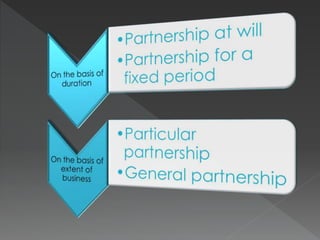
 On the basis of duration 
 On the basis of the extent of the business
The agreement creating a partnership may be implied or 
expressed. However, to avoid further disputes, it is always 
better to have an agreement in writing. Such an 
agreement in writing is called a “partnership deed”
Particulars to be filled in while registration 
 Name of the firm 
 The place or principle place of the business 
 The date on which each partner joined the firm 
 The name(in full) and the permanent address 
of the partners 
 The duration of the firm, if any 
 The application must be signed by all the 
partners.
 No suit against other partners and firm 
 No suit by the firm against third parties 
 No claim to a set off
Right to take part in the conduct of the business 
Right to be consulted 
Right to remuneration 
Right to interest on capital 
Right to interests on advances 
Right to share profits 
Right to access the books of accounts’ 
Right to be indemnified 
Right to be consulted at the time of admission of a new partner 
Right to use partnership property 
Right not to be expelled 
Right to retire 
Right to share subsequent profits
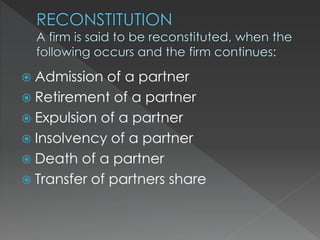
 Admission of a partner 
 Retirement of a partner 
 Expulsion of a partner 
 Insolvency of a partner 
 Death of a partner 
 Transfer of partners share
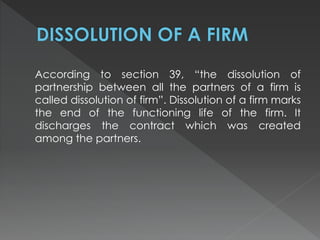
According to section 39, “the dissolution of 
partnership between all the partners of a firm is 
called dissolution of firm”. Dissolution of a firm marks 
the end of the functioning life of the firm. It 
discharges the contract which was created 
among the partners.
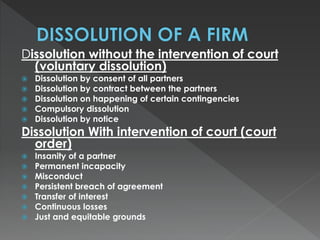
Dissolution without the intervention of court 
(voluntary dissolution) 
 Dissolution by consent of all partners 
 Dissolution by contract between the partners 
 Dissolution on happening of certain contingencies 
 Compulsory dissolution 
 Dissolution by notice 
Dissolution With intervention of court (court 
order) 
 Insanity of a partner 
 Permanent incapacity 
 Misconduct 
 Persistent breach of agreement 
 Transfer of interest 
 Continuous losses 
 Just and equitable grounds
The Indian Partnership Act, 1932

The Indian Partnership Act, 1932

  • 2.
     Definition ofpartnership  Features of partnership  Cases where no partnership exists  Classification of partnership  Types of partners  Partnership deed  Registration of partnership firm  Effects of non-registration  Rights of a partner  Reconstitution  Dissolution
  • 3.
    As defined byPartnership Act 1932: The relation between the persons who have agreed to share the profits of the business carried on by all or any one of them acting for all.
  • 4.
     Agreement Association of two or more persons  There must be some business  There must be sharing of profits  Mutual agency
  • 5.
    PARTNERSHIP MAY BECLASSIFIED ON THE BASIS OF THE FOLLOWING  On the basis of duration  On the basis of the extent of the business
  • 8.
    The agreement creatinga partnership may be implied or expressed. However, to avoid further disputes, it is always better to have an agreement in writing. Such an agreement in writing is called a “partnership deed”
  • 9.
    Particulars to befilled in while registration  Name of the firm  The place or principle place of the business  The date on which each partner joined the firm  The name(in full) and the permanent address of the partners  The duration of the firm, if any  The application must be signed by all the partners.
  • 10.
     No suitagainst other partners and firm  No suit by the firm against third parties  No claim to a set off
  • 11.
    Right to takepart in the conduct of the business Right to be consulted Right to remuneration Right to interest on capital Right to interests on advances Right to share profits Right to access the books of accounts’ Right to be indemnified Right to be consulted at the time of admission of a new partner Right to use partnership property Right not to be expelled Right to retire Right to share subsequent profits
  • 12.
     Admission ofa partner  Retirement of a partner  Expulsion of a partner  Insolvency of a partner  Death of a partner  Transfer of partners share
  • 13.
    According to section39, “the dissolution of partnership between all the partners of a firm is called dissolution of firm”. Dissolution of a firm marks the end of the functioning life of the firm. It discharges the contract which was created among the partners.
  • 14.
    Dissolution without theintervention of court (voluntary dissolution)  Dissolution by consent of all partners  Dissolution by contract between the partners  Dissolution on happening of certain contingencies  Compulsory dissolution  Dissolution by notice Dissolution With intervention of court (court order)  Insanity of a partner  Permanent incapacity  Misconduct  Persistent breach of agreement  Transfer of interest  Continuous losses  Just and equitable grounds