How does Philosophy view the
nature of Man?
How does Philosophy view the nature of Man?
Man is an important subject in
Philosophy and an understanding
of the nature and condition of
man is the foremost goal of the
discipline.
What is Man? Human? Person?
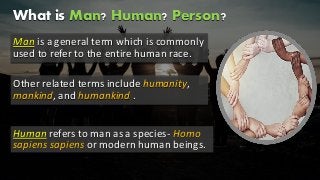
Man is a general term which is commonly
used to refer to the entire human race.
Other related terms include humanity,
mankind, and humankind .
Human refers to man as a species- Homo
sapiens sapiens or modern human beings.
What is Man? Human? Person?
Person is much more complex term which generally
refers to a human being granted recognition of
certain rights, protection, and responsibilities
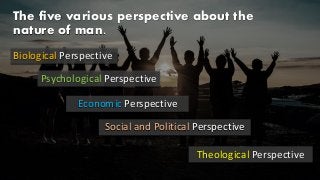
The five various perspective about the
nature of man.
Biological Perspective
Psychological Perspective
Economic Perspective
Social and Political Perspective
Theological Perspective
Biological Perspective
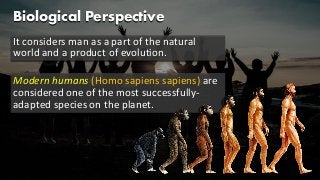
It considers man as a part of the natural
world and a product of evolution.
Modern humans (Homo sapiens sapiens) are
considered one of the most successfully-
adapted species on the planet.
Biological Perspective
Humans are closely related to primates, especially
apes, but have developed distinct physical
features such as…..
bipedalism
highly-developed hands
smaller jaws and teeth
large and more developed brains
Biological Perspective
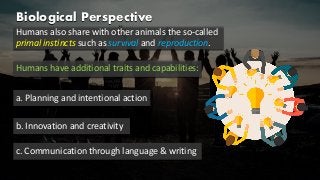
Humans also share with other animals the so-called
primal instincts such as survival and reproduction.
Humans have additional traits and capabilities:
a. Planning and intentional action
b. Innovation and creativity
c. Communication through language & writing
Biological Perspective
Humans have additional traits and capabilities:
d. Technology
e. Symbolic interaction
Ex: religion and art
The development of culture is considered man’s most significant
achievement which sets apart the evolution of humanity from
other species on this planet.
Psychological Perspective
It places emphasis on human behavior and thought processes
in analyzing human nature.
Mental faculties and capabilities of man:
a. psyche- refers to the human mind and is
divided into conscious and unconscious mind.
b. rationality- state of being reasonable, solve
problems, decision making and judgment.
c. intelligence- the ability to perceive information,
store knowledge, and apply it in various situations.
Psychological Perspective
Mental faculties and capabilities of man:
d. introspection- ability to examine one’s own conscious
thoughts, feelings, and capacity for self-reflection.
e. cognition- ability to perceive and
experience reality through the physical
body that enables the self to form one’s
own consciousness.
Economic Perspective
It focuses on man’s ability to engage in productive activities in an effort
to meet his wants and needs.
Homo economicus (economic man) is
driven by rationality and self-interest
in his desire to possess wealth.
The primary role of man is to be
productive and engage in labor.
Social and Political Perspective
It views that no individual is fully self-sufficient. Human being is always
inclined to coexist with others and be part of a community.
Societies were established out of man’s natural
tendency to come together for self-preservation
and meet basic needs.
Human beings integrated themselves into
society to the point they cannot function apart
from it.
Theological Perspective
It considers man as God’s creation.
Man is considered to have a special relationship
with the creator.
Man’s existence was brought about by the
purposive creative act of God.
Ultimate destiny is part of a divine plan.
How does Philosophy define the
Human Person?
Human Person refers to attributes and
characteristics that set him or her apart from other
human beings.
Human Person. Significant concepts related to
human person are the self, identity, and
personhood.
Human possess sentience- the ability to feel and
experience.
Awareness of the self. One of the most unique
traits of human.
How does Philosophy define the
Human Person?
Various views address the issues regarding the self
The self as innate. This view holds that the
self is a natural part of the human being
and self-awareness plays an essential part
in recognizing the innate self.
The self as emergent. This view holds that
awareness of the self is gained through
interaction with the world and other
human beings.
How does Philosophy define the
Human Person?
Various views address the issues regarding the self
The self as integrated and developing.
This view holds that the self is composed
of varied elements that change over time.
The concept of the self is closely tied with
identity and personhood.
Identity- is defined as the distinct
personality of an individual.
Personhood- the recognition of a human
being as a distinct entity of a person.
How does Philosophy define the
Human Person?
Various notions that justify the recognition of a person
The person as an “autonomous being”.
This notion holds that a human being
is considered a person if he or she
possesses the ability to determine
his/her life through “free choice”
How does Philosophy define the
Human Person?
Various notions that justify the recognition of a person
The person as an “unified individual”.
This view asserts that the human
being has the inherent capacity to
function as a person.
Human possesses the means to
achieve his or her capabilities.
How does Philosophy define the
Human Person?
Various notions that justify the recognition of a person
The person in relation to others.
This view asserts that a human being
becomes a person through
interactions with other human beings.
Karol Wojtyla asserts that the person
is defined by his or her actions and
experiences, and through them
achieves self-development and
fulfillment.

THE HUMAN PERSON.pdf

  • 2.
    How does Philosophyview the nature of Man? How does Philosophy view the nature of Man? Man is an important subject in Philosophy and an understanding of the nature and condition of man is the foremost goal of the discipline.
  • 3.
    What is Man?Human? Person? Man is a general term which is commonly used to refer to the entire human race. Other related terms include humanity, mankind, and humankind . Human refers to man as a species- Homo sapiens sapiens or modern human beings.
  • 4.
    What is Man?Human? Person? Person is much more complex term which generally refers to a human being granted recognition of certain rights, protection, and responsibilities
  • 5.
    The five variousperspective about the nature of man. Biological Perspective Psychological Perspective Economic Perspective Social and Political Perspective Theological Perspective
  • 6.
    Biological Perspective It considersman as a part of the natural world and a product of evolution. Modern humans (Homo sapiens sapiens) are considered one of the most successfully- adapted species on the planet.
  • 7.
    Biological Perspective Humans areclosely related to primates, especially apes, but have developed distinct physical features such as….. bipedalism highly-developed hands smaller jaws and teeth large and more developed brains
  • 8.
    Biological Perspective Humans alsoshare with other animals the so-called primal instincts such as survival and reproduction. Humans have additional traits and capabilities: a. Planning and intentional action b. Innovation and creativity c. Communication through language & writing
  • 9.
    Biological Perspective Humans haveadditional traits and capabilities: d. Technology e. Symbolic interaction Ex: religion and art The development of culture is considered man’s most significant achievement which sets apart the evolution of humanity from other species on this planet.
  • 10.
    Psychological Perspective It placesemphasis on human behavior and thought processes in analyzing human nature. Mental faculties and capabilities of man: a. psyche- refers to the human mind and is divided into conscious and unconscious mind. b. rationality- state of being reasonable, solve problems, decision making and judgment. c. intelligence- the ability to perceive information, store knowledge, and apply it in various situations.
  • 11.
    Psychological Perspective Mental facultiesand capabilities of man: d. introspection- ability to examine one’s own conscious thoughts, feelings, and capacity for self-reflection. e. cognition- ability to perceive and experience reality through the physical body that enables the self to form one’s own consciousness.
  • 12.
    Economic Perspective It focuseson man’s ability to engage in productive activities in an effort to meet his wants and needs. Homo economicus (economic man) is driven by rationality and self-interest in his desire to possess wealth. The primary role of man is to be productive and engage in labor.
  • 13.
    Social and PoliticalPerspective It views that no individual is fully self-sufficient. Human being is always inclined to coexist with others and be part of a community. Societies were established out of man’s natural tendency to come together for self-preservation and meet basic needs. Human beings integrated themselves into society to the point they cannot function apart from it.
  • 14.
    Theological Perspective It considersman as God’s creation. Man is considered to have a special relationship with the creator. Man’s existence was brought about by the purposive creative act of God. Ultimate destiny is part of a divine plan.
  • 15.
    How does Philosophydefine the Human Person? Human Person refers to attributes and characteristics that set him or her apart from other human beings. Human Person. Significant concepts related to human person are the self, identity, and personhood. Human possess sentience- the ability to feel and experience. Awareness of the self. One of the most unique traits of human.
  • 16.
    How does Philosophydefine the Human Person? Various views address the issues regarding the self The self as innate. This view holds that the self is a natural part of the human being and self-awareness plays an essential part in recognizing the innate self. The self as emergent. This view holds that awareness of the self is gained through interaction with the world and other human beings.
  • 17.
    How does Philosophydefine the Human Person? Various views address the issues regarding the self The self as integrated and developing. This view holds that the self is composed of varied elements that change over time. The concept of the self is closely tied with identity and personhood. Identity- is defined as the distinct personality of an individual. Personhood- the recognition of a human being as a distinct entity of a person.
  • 18.
    How does Philosophydefine the Human Person? Various notions that justify the recognition of a person The person as an “autonomous being”. This notion holds that a human being is considered a person if he or she possesses the ability to determine his/her life through “free choice”
  • 19.
    How does Philosophydefine the Human Person? Various notions that justify the recognition of a person The person as an “unified individual”. This view asserts that the human being has the inherent capacity to function as a person. Human possesses the means to achieve his or her capabilities.
  • 20.
    How does Philosophydefine the Human Person? Various notions that justify the recognition of a person The person in relation to others. This view asserts that a human being becomes a person through interactions with other human beings. Karol Wojtyla asserts that the person is defined by his or her actions and experiences, and through them achieves self-development and fulfillment.