The Environment and  Your Health Presented by Jeanette R. Harrison, MPH
Test Your Knowledge Climate change is caused by human activities, which are significantly increasing the concentrations of ___________ in the atmosphere. a. Sand debris b. Greenhouse gas emissions c. Fluorescent light d. High grade mercury
2. According to a World Health Organization report, human induced changes in the earth’s climate now lead to at least __________ cases of illness and more than _________ deaths each year. a. 5 million; 150,000 b. 1,000; 2 million c. 25,000; 5,000 d. 1 million; 1,000
3. The United Nations Intergovernmental Panel on Climate Change brings together hundreds of the world’s leading scientists to study the impact of human activities on the Earth’s climate.  Its latest consensus reports notes all of the following except: a. Widespread melting of snow and ice, and rising sea levels b. Development of super-species of plants with more resistance to sunlight c. Increases in global average air and ocean temperatures d. Many dry areas becoming more arid and their soils drying out
4. Americans make up just ____ percent of the world’s population, but we produce about _____ percent of the carbon dioxide pollution. a. 1; 15 b. 5; 50 c. 4; 22 d. 25; 50
5. Our climate is predicted to ______ over the next few decades. a. Slow its pace of change to a virtual halt. b. Stay virtually the same. c. Change at an increasingly rapid rate.
Okay, how does the environment affect your health?
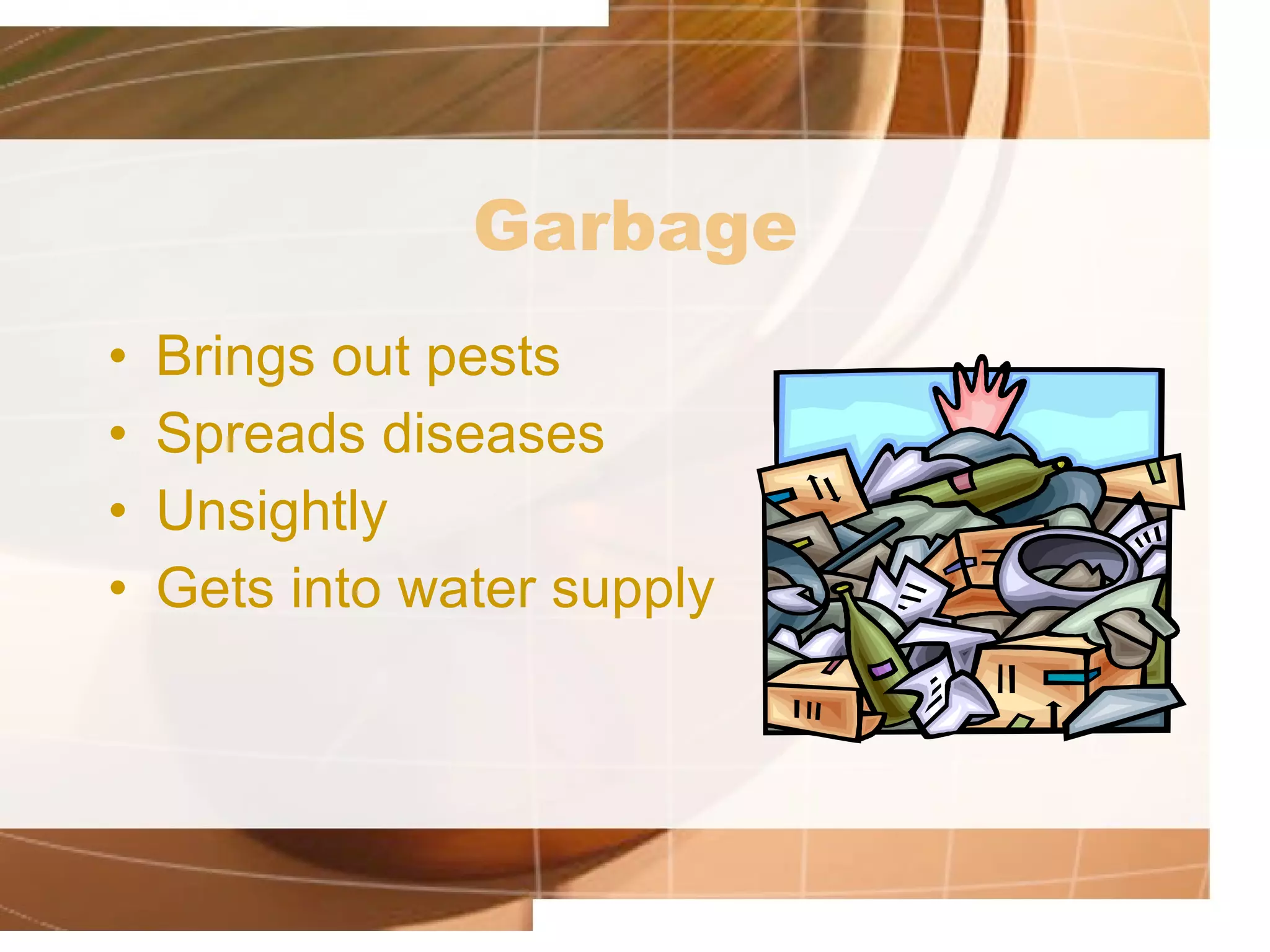
Garbage Brings out pests Spreads diseases Unsightly Gets into water supply
Standing Water Draws mosquitos Attracts other pests Spreads disease Water sitting in bottle can be a breeding ground for bacteria
What about all that gas? Creates CO2 Causes air pollution Harder to breathe Fumes exacerbate asthma
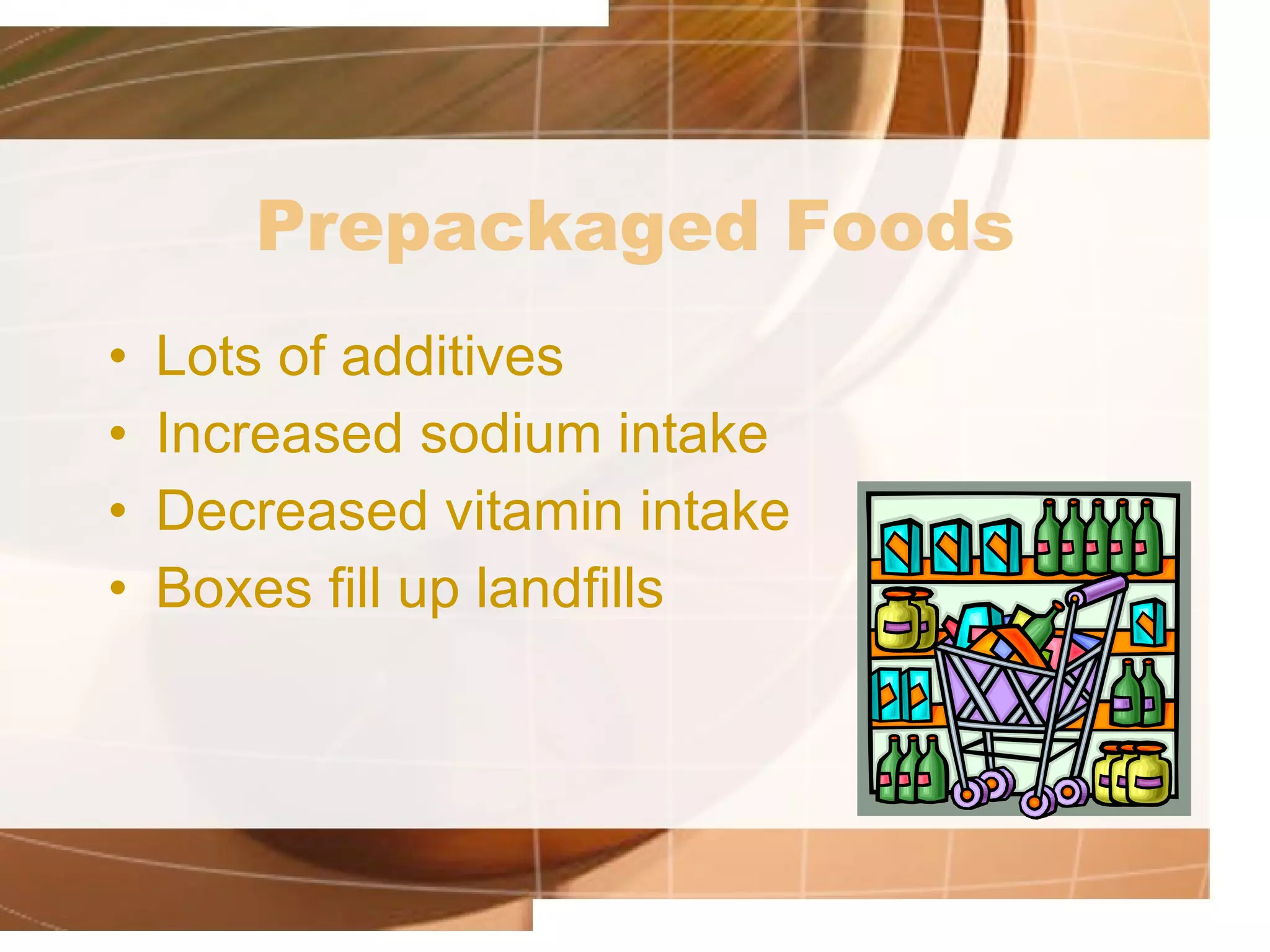
Prepackaged Foods Lots of additives Increased sodium intake Decreased vitamin intake Boxes fill up landfills
What About Bottled Water? Plastic Bottles cause more garbage Some is only tap water, which comes in your home and is regulated Bacteria can breed in bottled water once opened
What Can You Do? Recommendations from the American Public Health Association Be Prepared Travel Differently Eat Differently Green Your Work Green Your Home
Be Prepared Inform Yourself Know Your Community Tell a Friend Talk about the Environment at Your Next Volunteer Meeting or Community Center Lobby Your Representatives
Travel Differently Park the Car Use Public Transportation Walk Bike Combine Trips or Carpool
Eat Differently Eat Meatless at Least One Day a Week Check What’s Currently in Your Kitchen Go to a Farmer’s Market Check Food Labels Plan Meals with Local Food Products
Green Your Work Save Energy When Possible Keep Things Digital Use Green Office Products Telecommute if You Can Buy Recycled Furniture
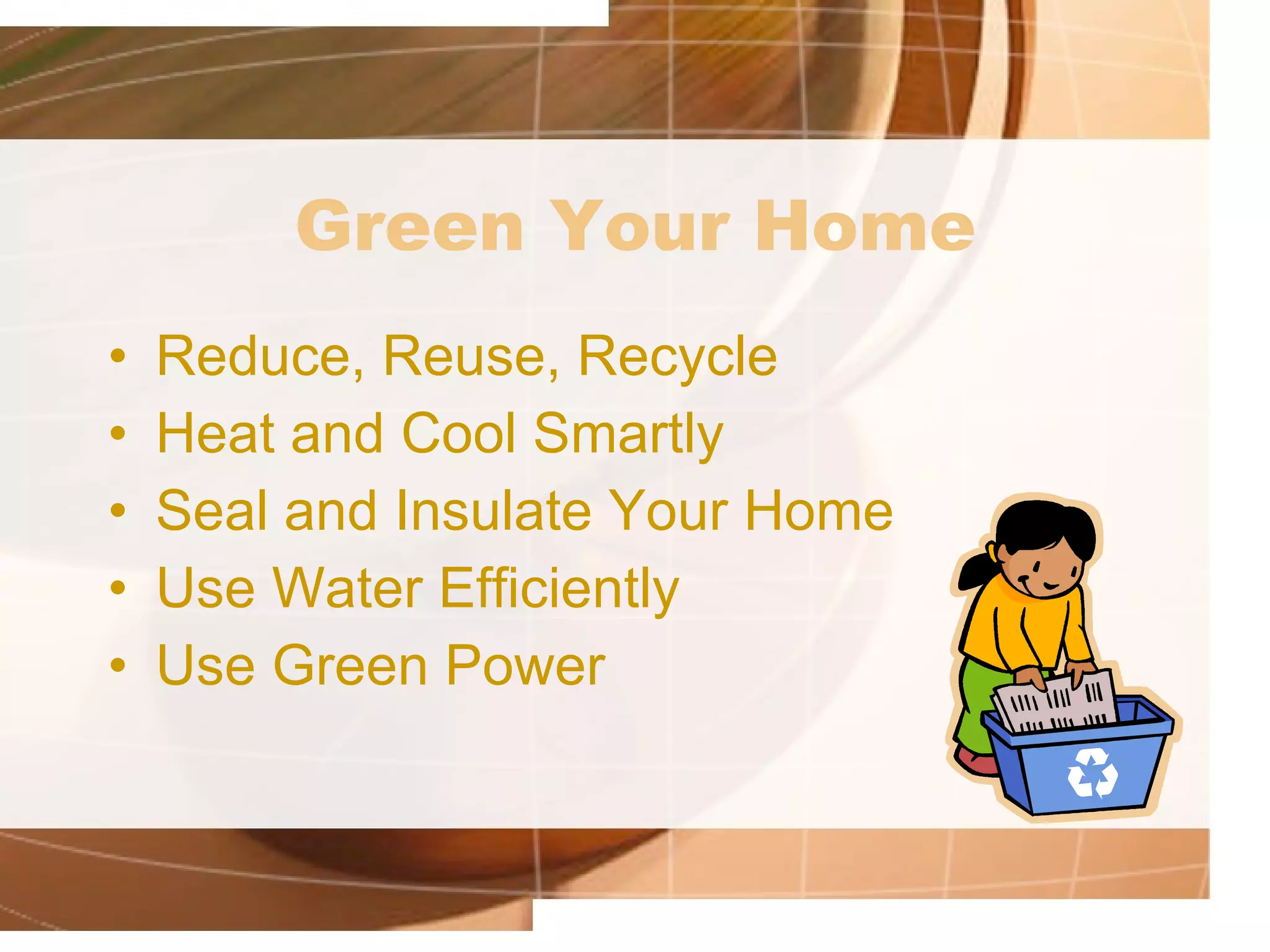
Green Your Home Reduce, Reuse, Recycle Heat and Cool Smartly Seal and Insulate Your Home Use Water Efficiently Use Green Power
Thanks for Coming!!

The Environment And Your Health

  • 1.
    The Environment and Your Health Presented by Jeanette R. Harrison, MPH
  • 2.
    Test Your KnowledgeClimate change is caused by human activities, which are significantly increasing the concentrations of ___________ in the atmosphere. a. Sand debris b. Greenhouse gas emissions c. Fluorescent light d. High grade mercury
  • 3.
    2. According toa World Health Organization report, human induced changes in the earth’s climate now lead to at least __________ cases of illness and more than _________ deaths each year. a. 5 million; 150,000 b. 1,000; 2 million c. 25,000; 5,000 d. 1 million; 1,000
  • 4.
    3. The UnitedNations Intergovernmental Panel on Climate Change brings together hundreds of the world’s leading scientists to study the impact of human activities on the Earth’s climate. Its latest consensus reports notes all of the following except: a. Widespread melting of snow and ice, and rising sea levels b. Development of super-species of plants with more resistance to sunlight c. Increases in global average air and ocean temperatures d. Many dry areas becoming more arid and their soils drying out
  • 5.
    4. Americans makeup just ____ percent of the world’s population, but we produce about _____ percent of the carbon dioxide pollution. a. 1; 15 b. 5; 50 c. 4; 22 d. 25; 50
  • 6.
    5. Our climateis predicted to ______ over the next few decades. a. Slow its pace of change to a virtual halt. b. Stay virtually the same. c. Change at an increasingly rapid rate.
  • 7.
    Okay, how doesthe environment affect your health?
  • 8.
    Garbage Brings outpests Spreads diseases Unsightly Gets into water supply
  • 9.
    Standing Water Drawsmosquitos Attracts other pests Spreads disease Water sitting in bottle can be a breeding ground for bacteria
  • 10.
    What about allthat gas? Creates CO2 Causes air pollution Harder to breathe Fumes exacerbate asthma
  • 11.
    Prepackaged Foods Lotsof additives Increased sodium intake Decreased vitamin intake Boxes fill up landfills
  • 12.
    What About BottledWater? Plastic Bottles cause more garbage Some is only tap water, which comes in your home and is regulated Bacteria can breed in bottled water once opened
  • 13.
    What Can YouDo? Recommendations from the American Public Health Association Be Prepared Travel Differently Eat Differently Green Your Work Green Your Home
  • 14.
    Be Prepared InformYourself Know Your Community Tell a Friend Talk about the Environment at Your Next Volunteer Meeting or Community Center Lobby Your Representatives
  • 15.
    Travel Differently Parkthe Car Use Public Transportation Walk Bike Combine Trips or Carpool
  • 16.
    Eat Differently EatMeatless at Least One Day a Week Check What’s Currently in Your Kitchen Go to a Farmer’s Market Check Food Labels Plan Meals with Local Food Products
  • 17.
    Green Your WorkSave Energy When Possible Keep Things Digital Use Green Office Products Telecommute if You Can Buy Recycled Furniture
  • 18.
    Green Your HomeReduce, Reuse, Recycle Heat and Cool Smartly Seal and Insulate Your Home Use Water Efficiently Use Green Power
  • 19.