Digital marketing has become an essential part of any business strategy in the modern age. As
technology continues to evolve, the ways in which businesses connect with consumers are
constantly changing
The Comprehensive Guideto Digital Marketing:
Strategies, Trends, and Best Practices for Success
2.
Digital marketing hasbecome an essential part of any business strategy in the modern age. As
technology continues to evolve, the ways in which businesses connect with consumers are
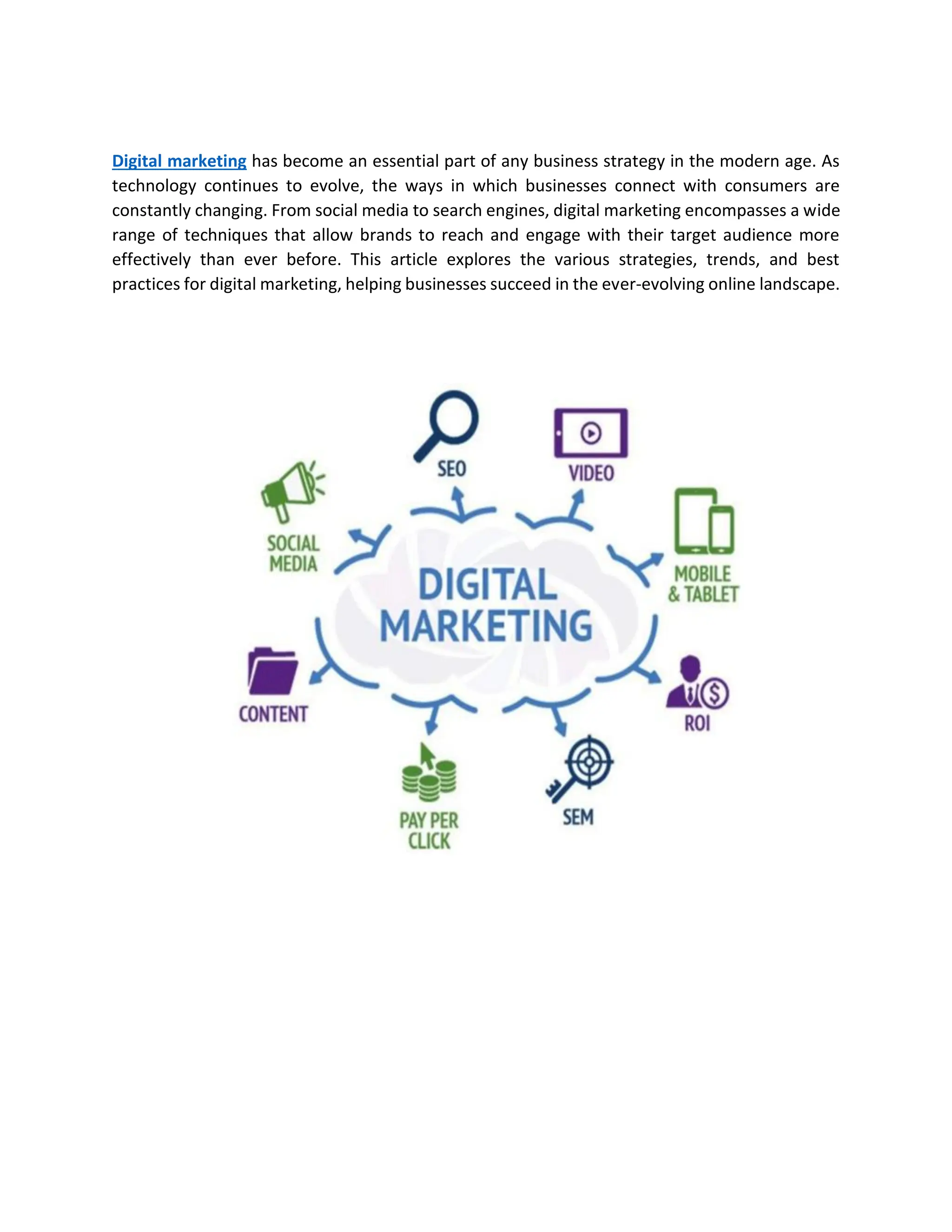
constantly changing. From social media to search engines, digital marketing encompasses a wide
range of techniques that allow brands to reach and engage with their target audience more
effectively than ever before. This article explores the various strategies, trends, and best
practices for digital marketing, helping businesses succeed in the ever-evolving online landscape.
3.
What is DigitalMarketing?
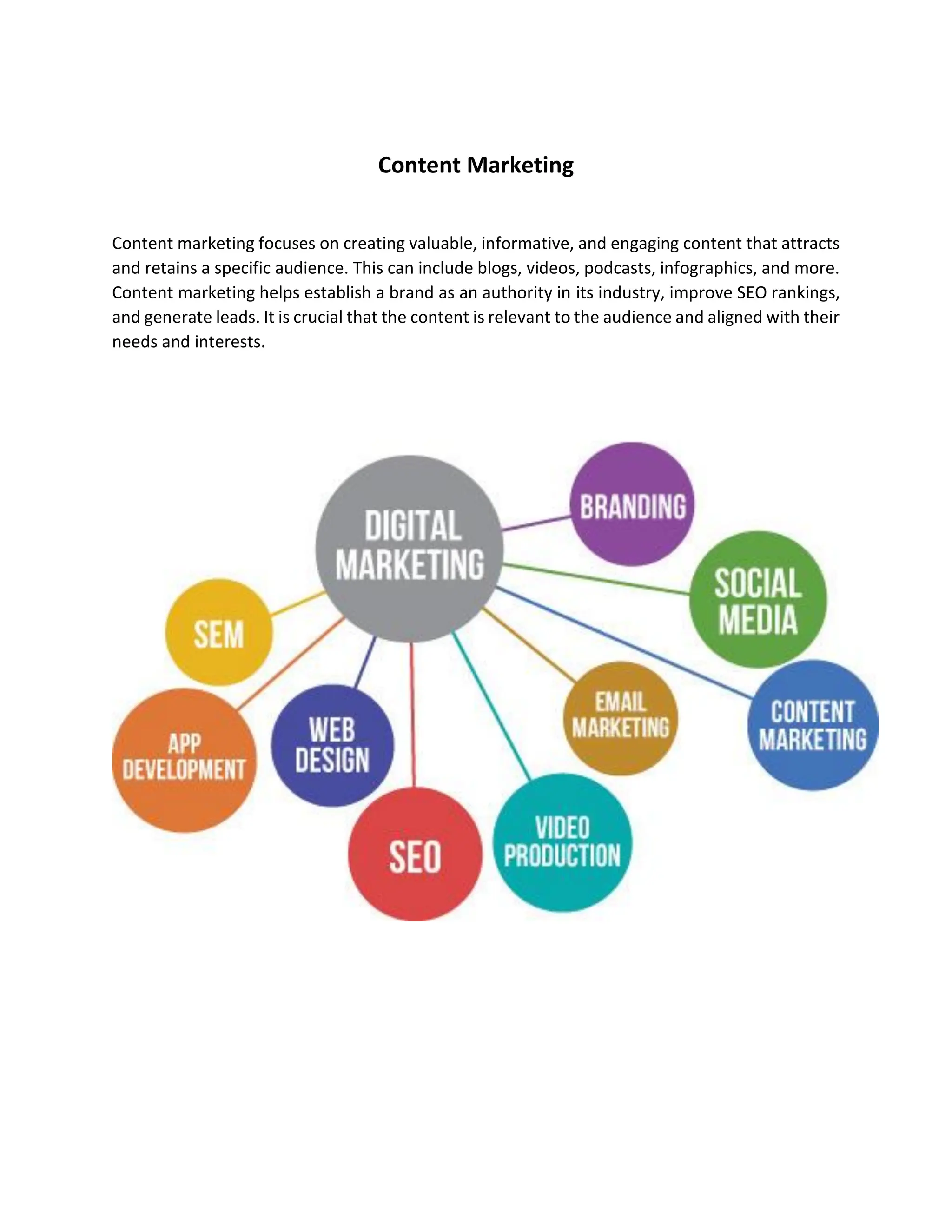
Digital marketing refers to the use of digital channels and technologies to promote and advertise
products or services. Unlike traditional marketing, which relies on offline methods like print,
radio, or television ads, digital marketing leverages the internet and other online platforms. This
can include social media, search engines, email, websites, and more.
The primary goal of digital marketing is to build an online presence, generate leads, and drive
sales through various digital tools and platforms. Some of the most common forms of digital
marketing include content marketing, social media marketing, search engine optimization (SEO),
search engine marketing (SEM), email marketing, and affiliate marketing.
4.
Key Digital MarketingStrategies
Search Engine Optimization (SEO)
SEO is the process of optimizing a website to rank higher in search engine results pages (SERPs).
By improving visibility on search engines like Google, businesses can increase organic traffic to
their website, making it more likely for potential customers to find them. SEO involves strategies
like keyword research, on-page optimization, backlinking, and creating high-quality, relevant
content.
5.
Pay-Per-Click Advertising (PPC)
PPCis a form of online advertising where businesses pay each time a user clicks on their ad.
Common PPC platforms include Google Ads and Bing Ads. PPC campaigns can be highly effective
for driving traffic to a website in the short term. Effective PPC campaigns involve selecting the
right keywords, creating compelling ad copy, and optimizing landing pages to maximize
conversions.
6.
Social Media Marketing
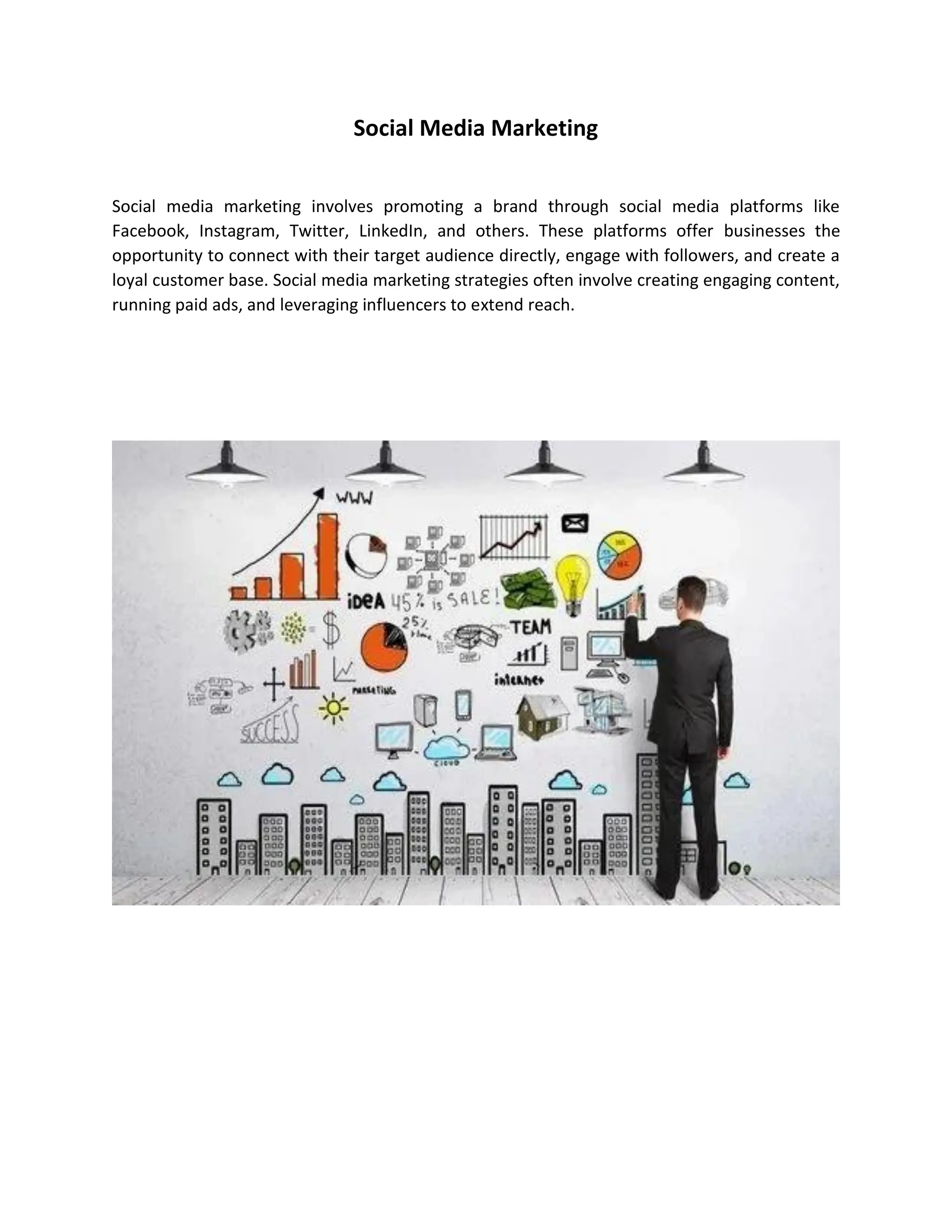
Socialmedia marketing involves promoting a brand through social media platforms like
Facebook, Instagram, Twitter, LinkedIn, and others. These platforms offer businesses the
opportunity to connect with their target audience directly, engage with followers, and create a
loyal customer base. Social media marketing strategies often involve creating engaging content,
running paid ads, and leveraging influencers to extend reach.
7.
Content Marketing
Content marketingfocuses on creating valuable, informative, and engaging content that attracts
and retains a specific audience. This can include blogs, videos, podcasts, infographics, and more.
Content marketing helps establish a brand as an authority in its industry, improve SEO rankings,
and generate leads. It is crucial that the content is relevant to the audience and aligned with their
needs and interests.
8.
Email Marketing
Email marketingremains one of the most effective ways to engage with customers directly. It
involves sending targeted messages to individuals or groups through email, whether for
promotional purposes, newsletters, or product updates. A successful email marketing campaign
requires a well-segmented email list, personalization, compelling subject lines, and a strong call
to action.
Influencer Marketing
Influencer marketing is a strategy that involves collaborating with influencers—individuals with
a large following on social media or other platforms. By partnering with influencers, brands can
reach a wider audience and build trust through authentic endorsements. This strategy is
particularly popular in industries like fashion, beauty, travel, and fitness.
9.
Current Trends inDigital Marketing
As the digital landscape continues to evolve, several trends have emerged that are shaping the
future of digital marketing:
Video Marketing
Video content continues to dominate as one of the most engaging forms of content. Platforms
like YouTube, TikTok, and Instagram have made video marketing a necessity for businesses.
Short-form videos, live streams, and tutorials can help capture the audience's attention and
increase brand visibility.
Artificial Intelligence (AI) and Automation
AI and automation are playing a significant role in enhancing digital marketing strategies. From
chatbots that engage customers 24/7 to predictive analytics that help businesses understand
consumer behavior, AI tools are making marketing efforts more efficient and personalized.
Voice Search Optimization
As voice assistants like Alexa, Siri, and Google Assistant gain popularity, optimizing content for
voice search is becoming increasingly important. Marketers need to consider how users phrase
their voice queries, often opting for longer, conversational keywords.
Personalization
Personalization is key to standing out in a crowded digital marketplace. Consumers expect
personalized experiences, whether through tailored recommendations or targeted advertising.
By using data to understand customer preferences and behaviors, businesses can create more
relevant and impactful marketing campaigns.
10.
Best Practices forDigital Marketing Success
To succeed in digital marketing, businesses must follow a few key best practices:
Define Clear Goals
Before embarking on any digital marketing strategy, it's essential to define clear and
measurable goals. Whether you're looking to increase website traffic, generate leads, or boost
sales, having specific objectives will help guide your campaigns and ensure you stay focused.
Invest in Data Analytics
Data analytics provides invaluable insights into the effectiveness of marketing efforts. By
tracking metrics like website traffic, conversion rates, and customer behavior, businesses can
fine-tune their campaigns and improve ROI.
Stay Agile and Adapt
Digital marketing is an ever-changing field, so businesses must remain flexible and open to new
trends and tools. By staying agile and continually optimizing campaigns, businesses can keep up
with changes in consumer behavior and technology.
11.
Conclusion
Digital marketing isa dynamic and essential aspect of business strategy today. By utilizing the
right tools, staying up-to-date with trends, and following best practices, companies can
significantly improve their chances of success in the online marketplace. Whether you're a small
business or a global brand, embracing digital marketing will help you build stronger connections
with customers, enhance brand awareness, and ultimately drive growth.
Read More