Basics of Native Advertising
A short presentation by
Joy Srivastava,
MBA DMS,
Pondicherry University
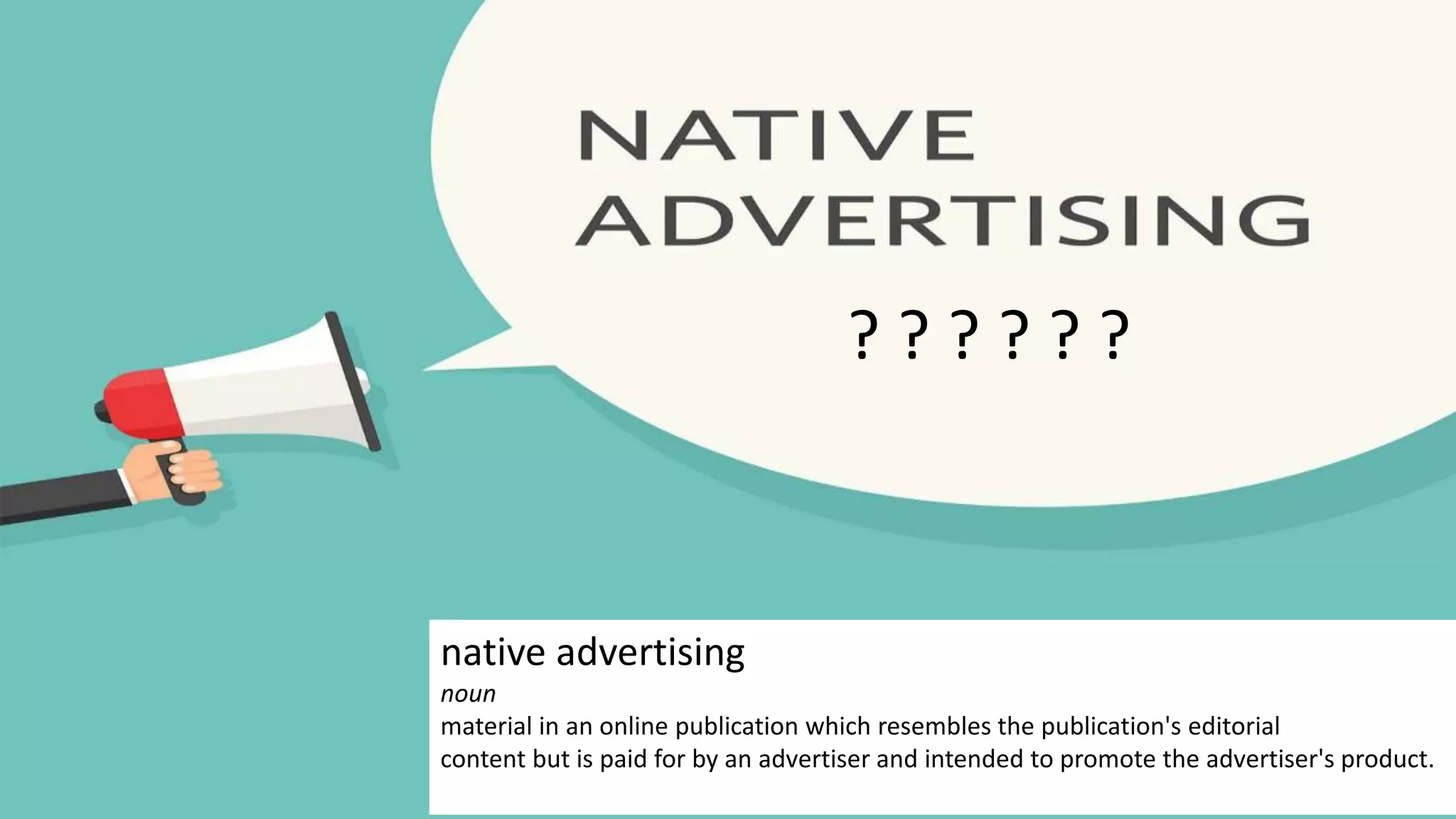
native advertising
noun
material in an online publication which resembles the publication's editorial
content but is paid for by an advertiser and intended to promote the advertiser's product.
? ? ? ? ? ?
But Why
Choose
Native Advertising
???
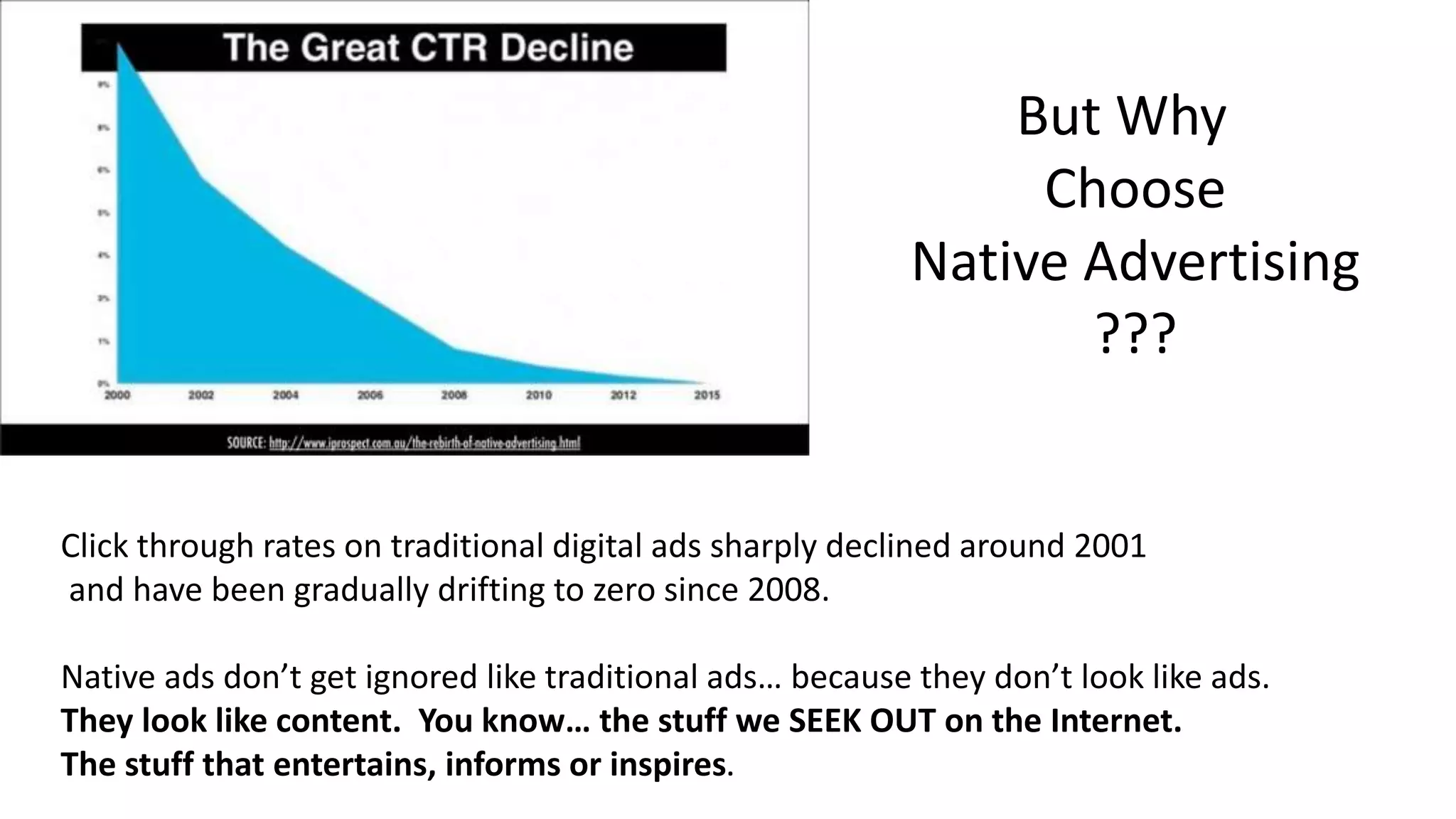
Click through rates on traditional digital ads sharply declined around 2001
and have been gradually drifting to zero since 2008.
Native ads don’t get ignored like traditional ads… because they don’t look like ads.
They look like content. You know… the stuff we SEEK OUT on the Internet.
The stuff that entertains, informs or inspires.
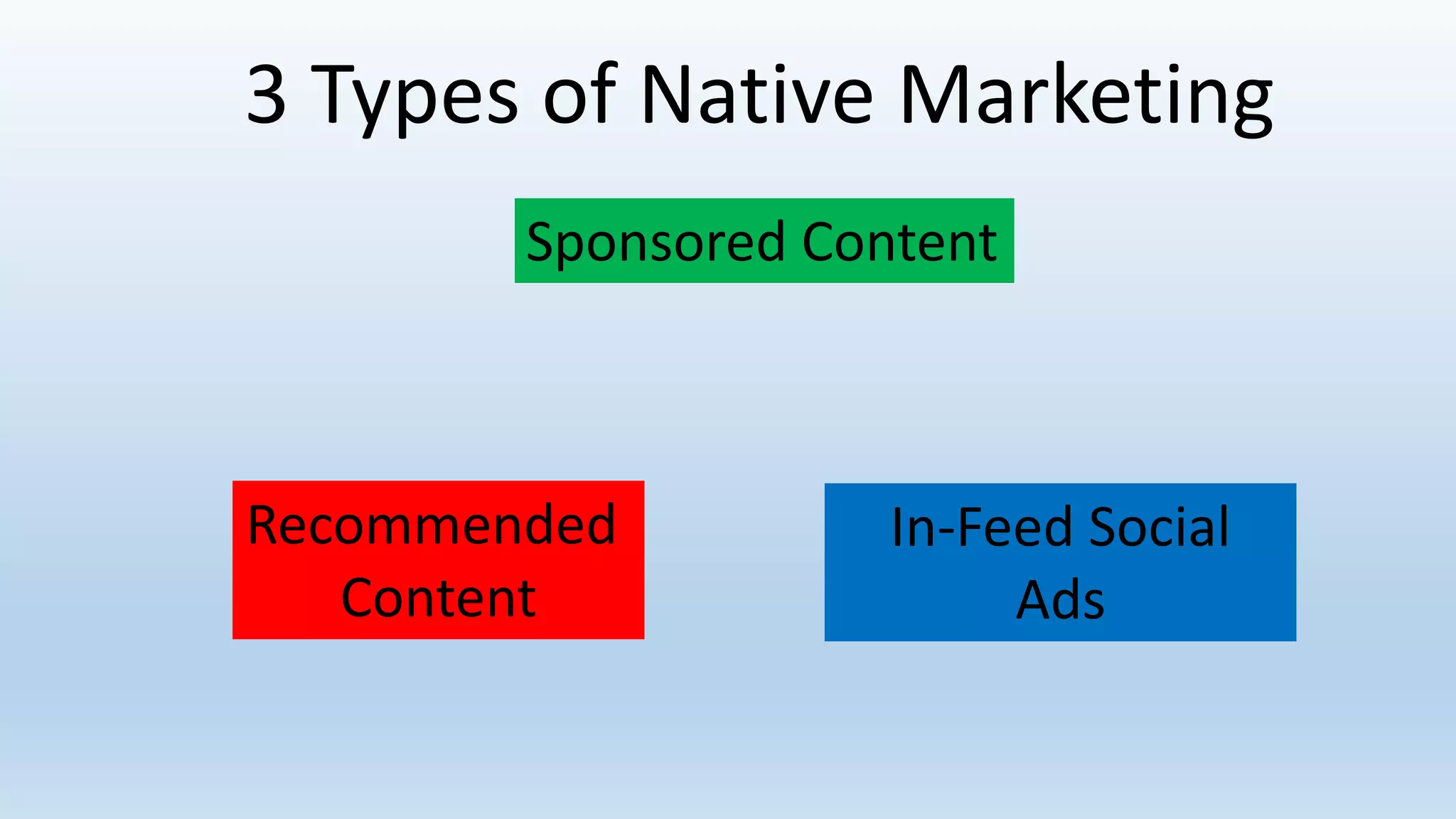
3 Types of Native Marketing
Sponsored Content
Recommended
Content
In-Feed Social
Ads
#1 Sponsored Content
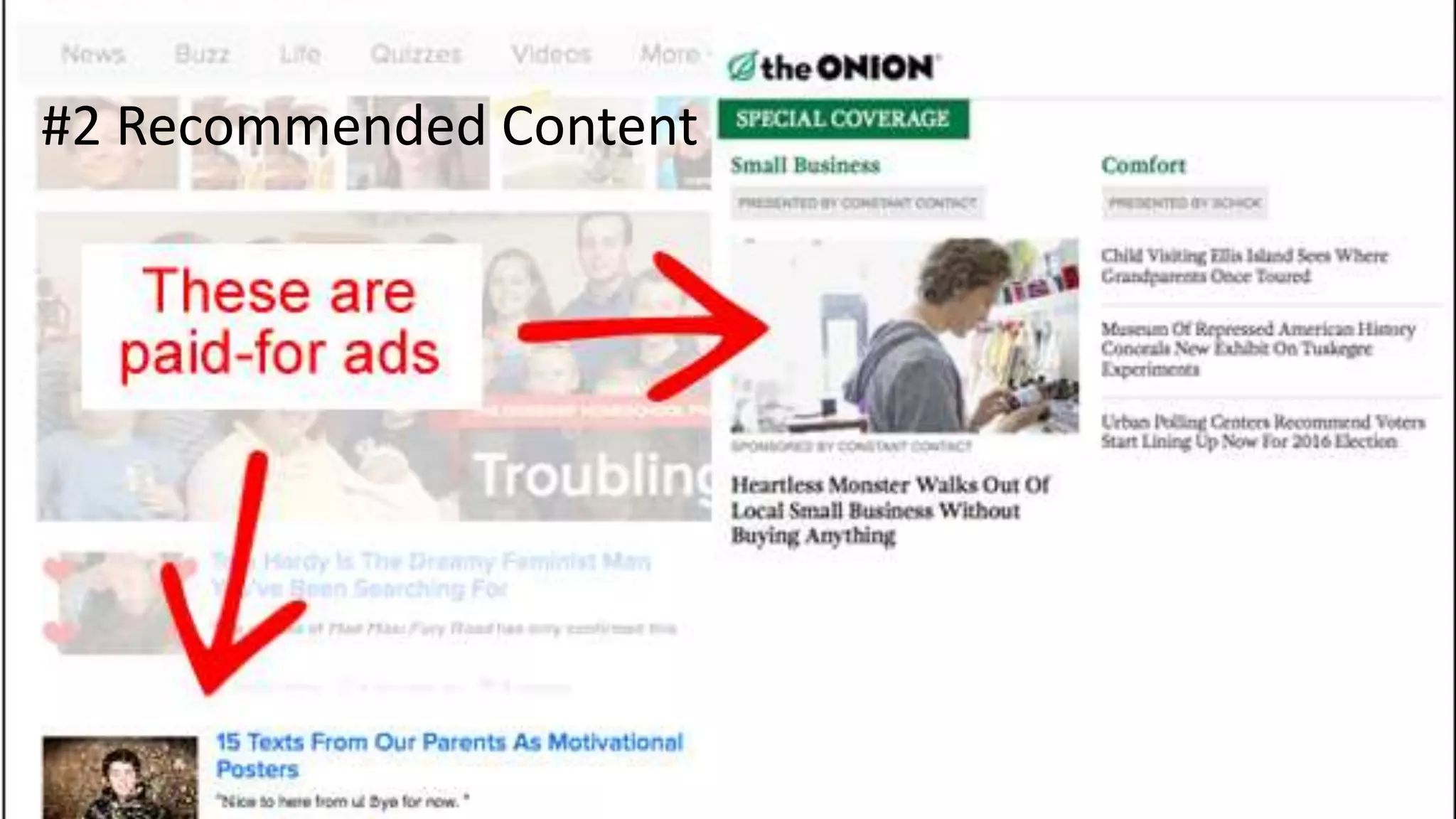
#2 Recommended Content
#3 In Feed Social Ads
1) The placement of the ad.
With native advertising, your ads appear in places that readers are already checking out.
Many internet users have developed a pattern of avoiding certain types of content and even specific locations on the page
in an effort to not be bombarded by advertisements when they're looking for other kinds of content.
Native advertising bypasses those habits and catches readers' attention.
2) They're effective.
Native advertisements attract three times more time and attention and have ten times better performance
than traditional mobile ads.
3) Brand appeal.
Native advertisements increase brand appeal and recognition more reliably than other types of advertisements.
The only catch is that they have to be created with the reader in mind and play by the rules
of high-quality native advertisements.
4) They fit right in.
An increasing number of marketing professionals are choosing native advertising.
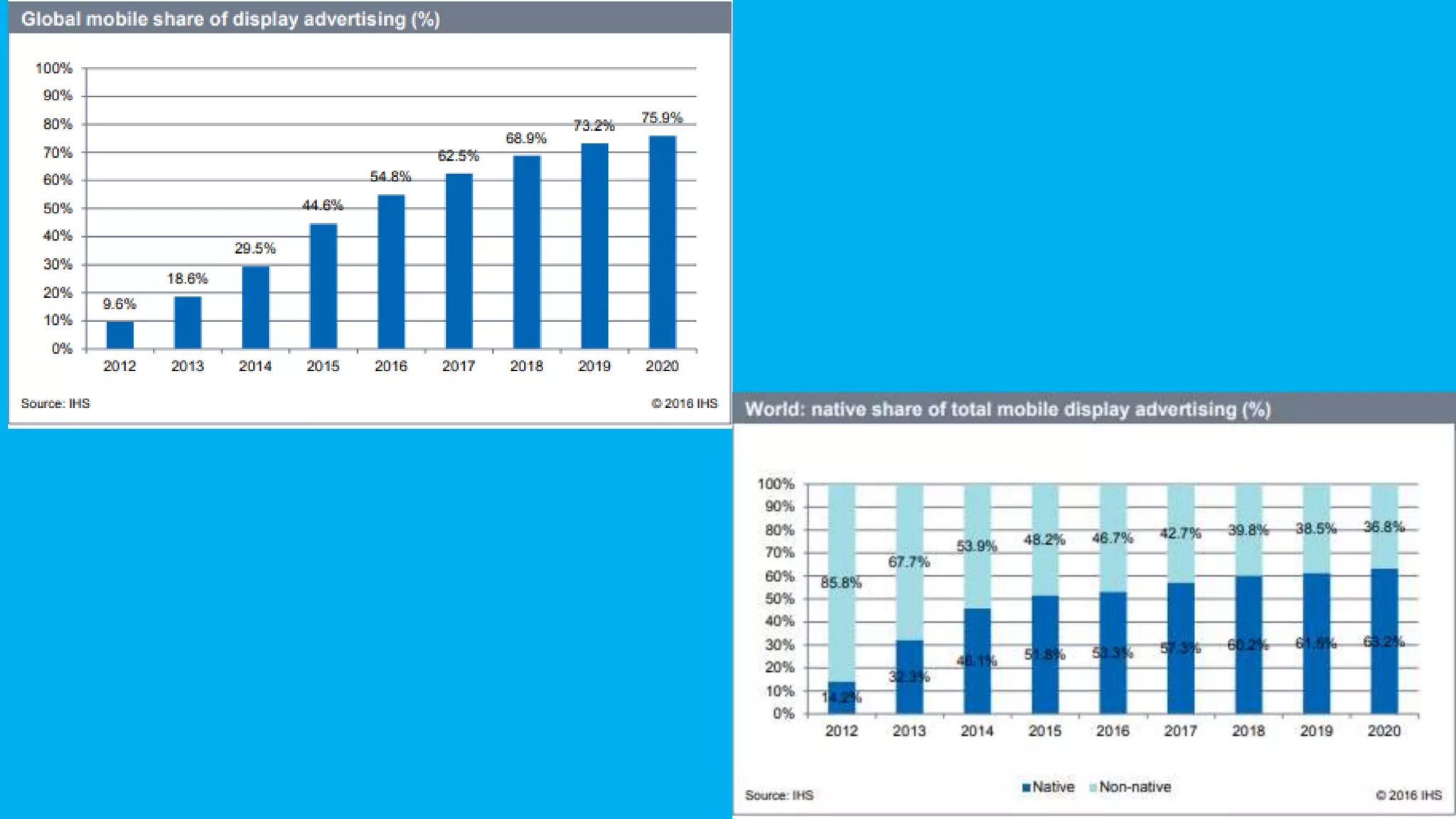
By 2020, it's predicted that as many as 63% of mobile display ad spending will be made up of native ads.
Advantages of Native Advertising
1) Readers can feel taken advantage of.
When you've created poor content or you haven't clearly disclosed the nature of the content (that it's an advertisement)
you can make readers feel taken advantage of.
2) The potential exists to create negative brand awareness.
If the experience with the native advertising content is a bad one, the negative feelings translate to the brand.
3) Native advertising can be more expensive than other forms of content marketing.
If you're trying to shave dollars off of your marketing budget, using native advertising might not be the best option.
4) It doesn't produce SEO benefits.
If your goal is to increase traffic to your site, native advertising isn't going to help with that.
Disadvantages of Native Advertising
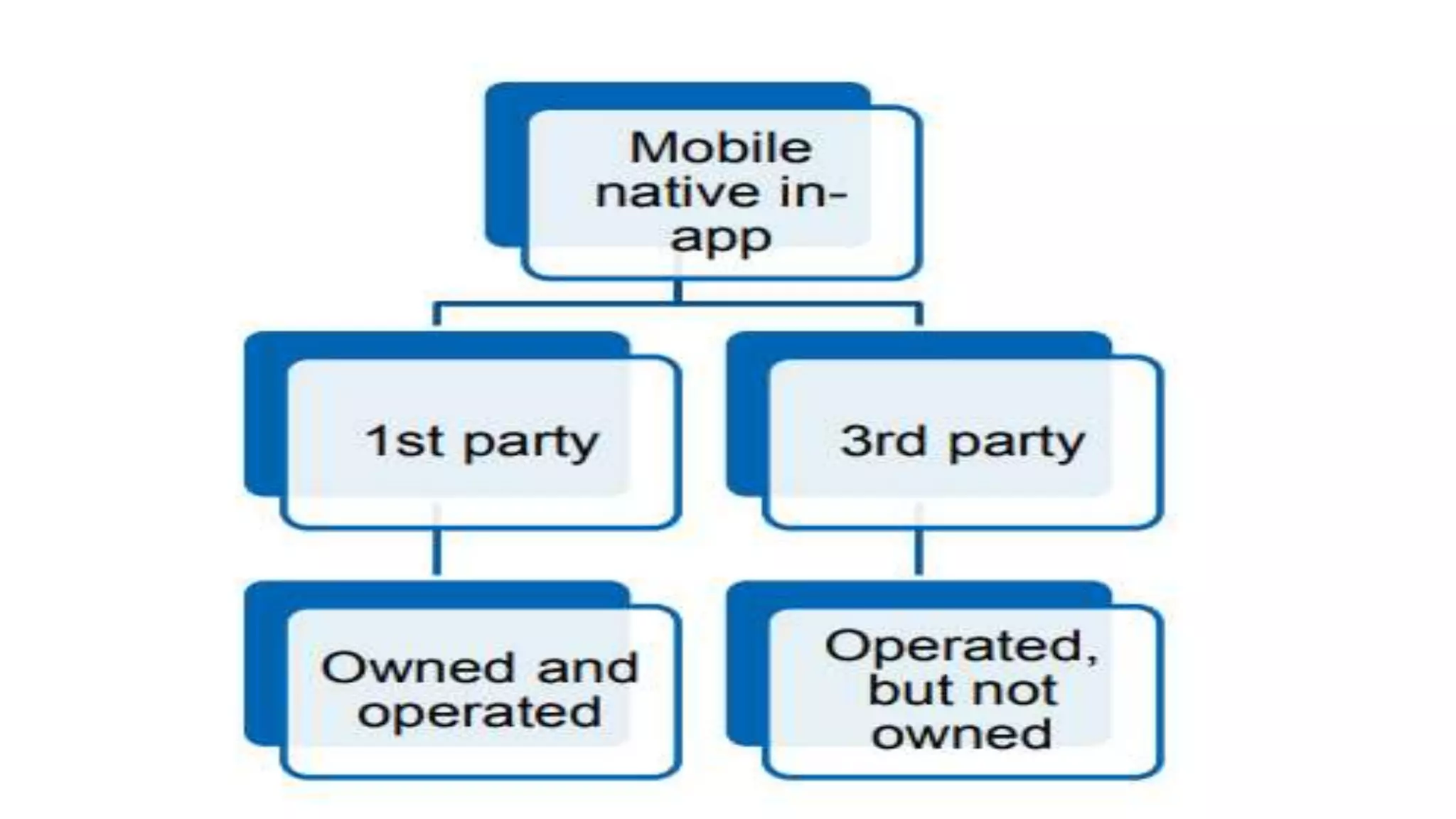
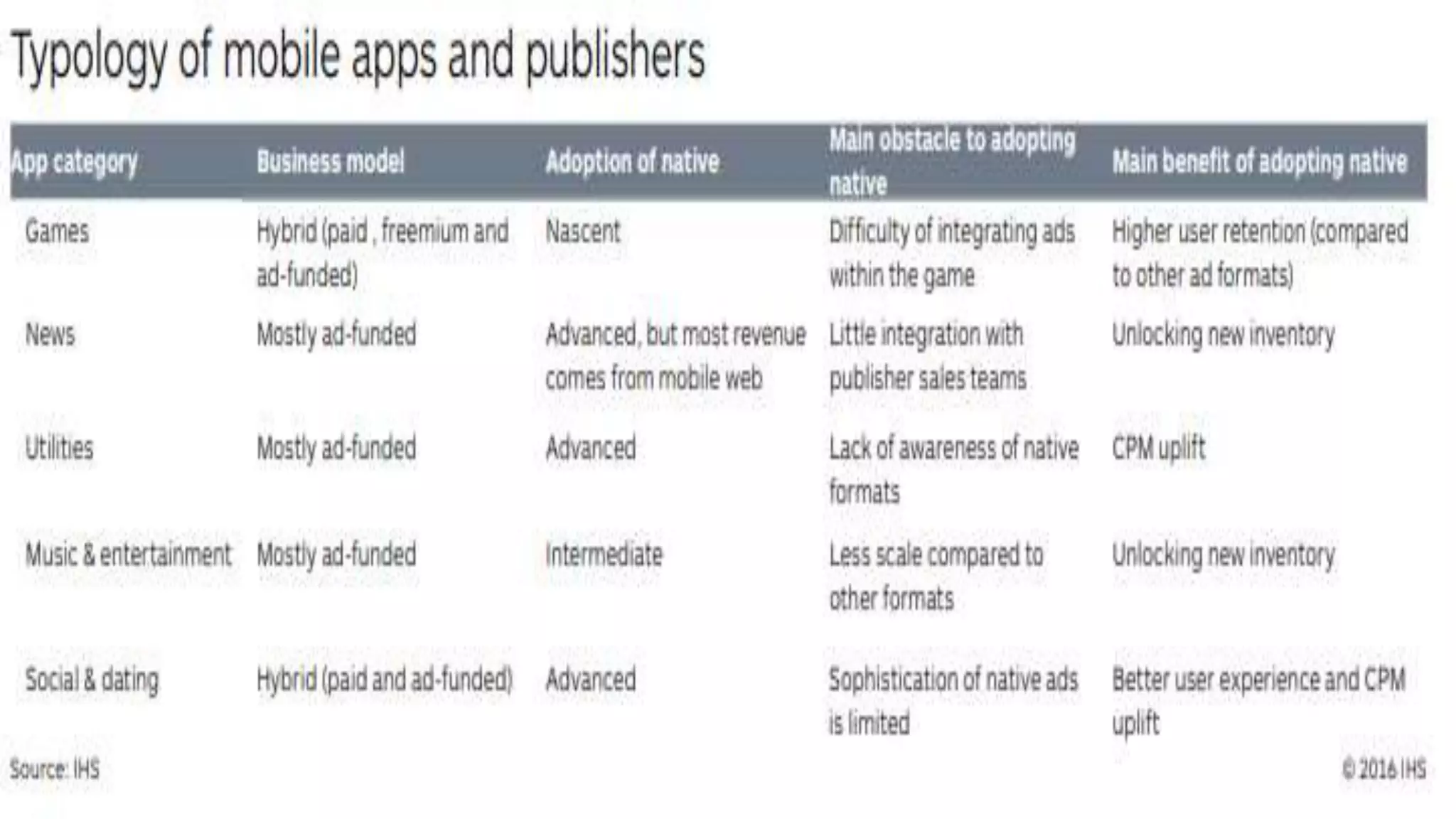
Mobile Native Marketing
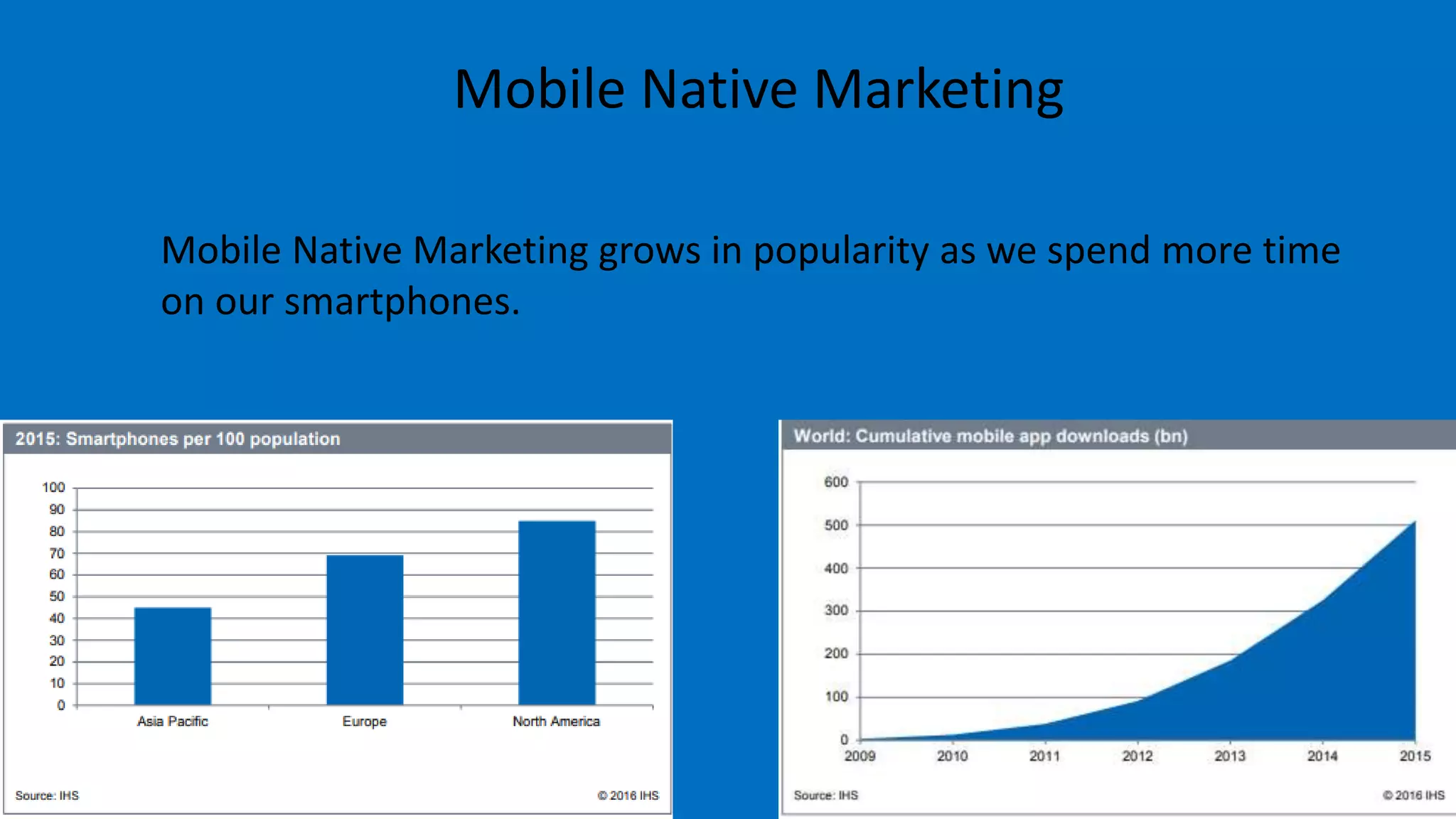
Mobile Native Marketing grows in popularity as we spend more time
on our smartphones.
The basics of native marketing

The basics of native marketing

  • 1.
    Basics of NativeAdvertising A short presentation by Joy Srivastava, MBA DMS, Pondicherry University
  • 2.
    native advertising noun material inan online publication which resembles the publication's editorial content but is paid for by an advertiser and intended to promote the advertiser's product. ? ? ? ? ? ?
  • 3.
    But Why Choose Native Advertising ??? Clickthrough rates on traditional digital ads sharply declined around 2001 and have been gradually drifting to zero since 2008. Native ads don’t get ignored like traditional ads… because they don’t look like ads. They look like content. You know… the stuff we SEEK OUT on the Internet. The stuff that entertains, informs or inspires.
  • 5.
    3 Types ofNative Marketing Sponsored Content Recommended Content In-Feed Social Ads
  • 6.
  • 7.
  • 8.
    #3 In FeedSocial Ads
  • 10.
    1) The placementof the ad. With native advertising, your ads appear in places that readers are already checking out. Many internet users have developed a pattern of avoiding certain types of content and even specific locations on the page in an effort to not be bombarded by advertisements when they're looking for other kinds of content. Native advertising bypasses those habits and catches readers' attention. 2) They're effective. Native advertisements attract three times more time and attention and have ten times better performance than traditional mobile ads. 3) Brand appeal. Native advertisements increase brand appeal and recognition more reliably than other types of advertisements. The only catch is that they have to be created with the reader in mind and play by the rules of high-quality native advertisements. 4) They fit right in. An increasing number of marketing professionals are choosing native advertising. By 2020, it's predicted that as many as 63% of mobile display ad spending will be made up of native ads. Advantages of Native Advertising
  • 11.
    1) Readers canfeel taken advantage of. When you've created poor content or you haven't clearly disclosed the nature of the content (that it's an advertisement) you can make readers feel taken advantage of. 2) The potential exists to create negative brand awareness. If the experience with the native advertising content is a bad one, the negative feelings translate to the brand. 3) Native advertising can be more expensive than other forms of content marketing. If you're trying to shave dollars off of your marketing budget, using native advertising might not be the best option. 4) It doesn't produce SEO benefits. If your goal is to increase traffic to your site, native advertising isn't going to help with that. Disadvantages of Native Advertising
  • 13.
    Mobile Native Marketing MobileNative Marketing grows in popularity as we spend more time on our smartphones.