






testing with mock objects
when i say testing… == developer / unit tests == integration tests  (sometimes) != functional / acceptance tests
when i say mock… test stub mock object dummy object fake object
mock vs. stub  interaction vs. state the difference between mocks and stubs usually the same library provides both interaction = mock state = stub
why?
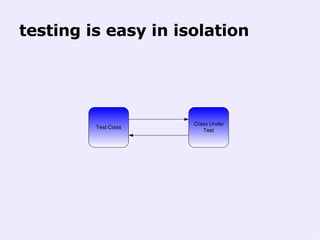
testing is easy in isolation
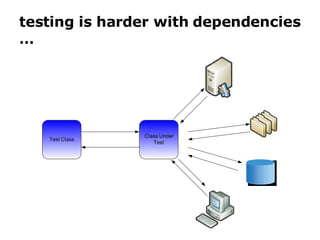
testing is harder with dependencies …
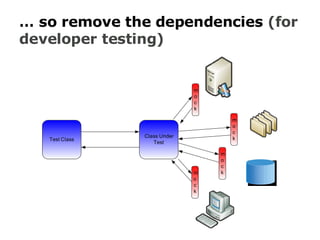
…  so remove the dependencies  (for developer testing)
for me… lots of time in the airport lots of time in the airplane lots of time on the train not enough family time not enough snowboarding
scenarios to think about fee per transaction distributed development parallel development plug-ins / providers automated test duration
scenarios to think about third-party tools or services non-deterministic outcomes external systems the mainframe crew defer infrastructure choices
demo
thoughts
…  on architecture and design similar to the benefits of tdd writing to interfaces = code empathy easier to test = good design highly cohesive / loosely coupled
…  on implementation good libraries exist roll your own only for extreme cases for .Net… NMock, NMock2, Rhino Mocks, DotNetMock
…  on automated builds developer tests:  use mocks (if necessary) acceptance tests:  don’t use mocks
…  on a few useful patterns code to interfaces thin proxies self-shunt dependency injection providers
learn more
http:// www.martinfowler.com/articles/mocksArentStubs.html
http:// xunitpatterns.com /
http:// www.nmock.org
http:// www.mockobjects.com
http:// www.codeproject.com/dotnet/tdd_in_dotnet.asp

Testing with Mock Objects