BLRTMM6

Testers in product development -
       Code review phase

          Chetan Giridhar
        (http://technobeans.com)
          Vishal Kanaujia
    (http://freethreads.wordpress.com)
Objective
• Break the myth – “testers need not or
  shouldn’t review developer’s code”
• Substantiate the merits of the idea, analyzes
  the flip side.
• Audiences to evaluate the thought…
What is Code Review
• According to Wikipedia, “Code review is
  systematic examination (often as peer review) of
  computer source code intended to find and fix
  mistakes overlooked in the initial development
  phase, improving both the overall quality of
  software and the developers' skills.”
• Code Review helps in finding or rather preventing
  critical defects early in the cycle (thereby
  reducing the bug fixing costs)
• Improving developers’ knowledge and provide
  exposure to the other components of the
  software system.
Importance of code review
• Better quality of code
  – Logic and semantic errors
  – Potential bugs, corner cases
  – Design suggestions
  – UT suggestions
• Enforced coding standards
• Helps in improving skills of fellow developers
• Better cross domain understanding
Let’s review code together
Ex)
void foo(char* input) {
   printf(“Input char is %s”, *(input+2));

    int *p = malloc();
    int* B[10];

    for (I =0; I < 10; i++) {
          free(p);
          int* q = malloc();

         B[i] = q;
    }
}
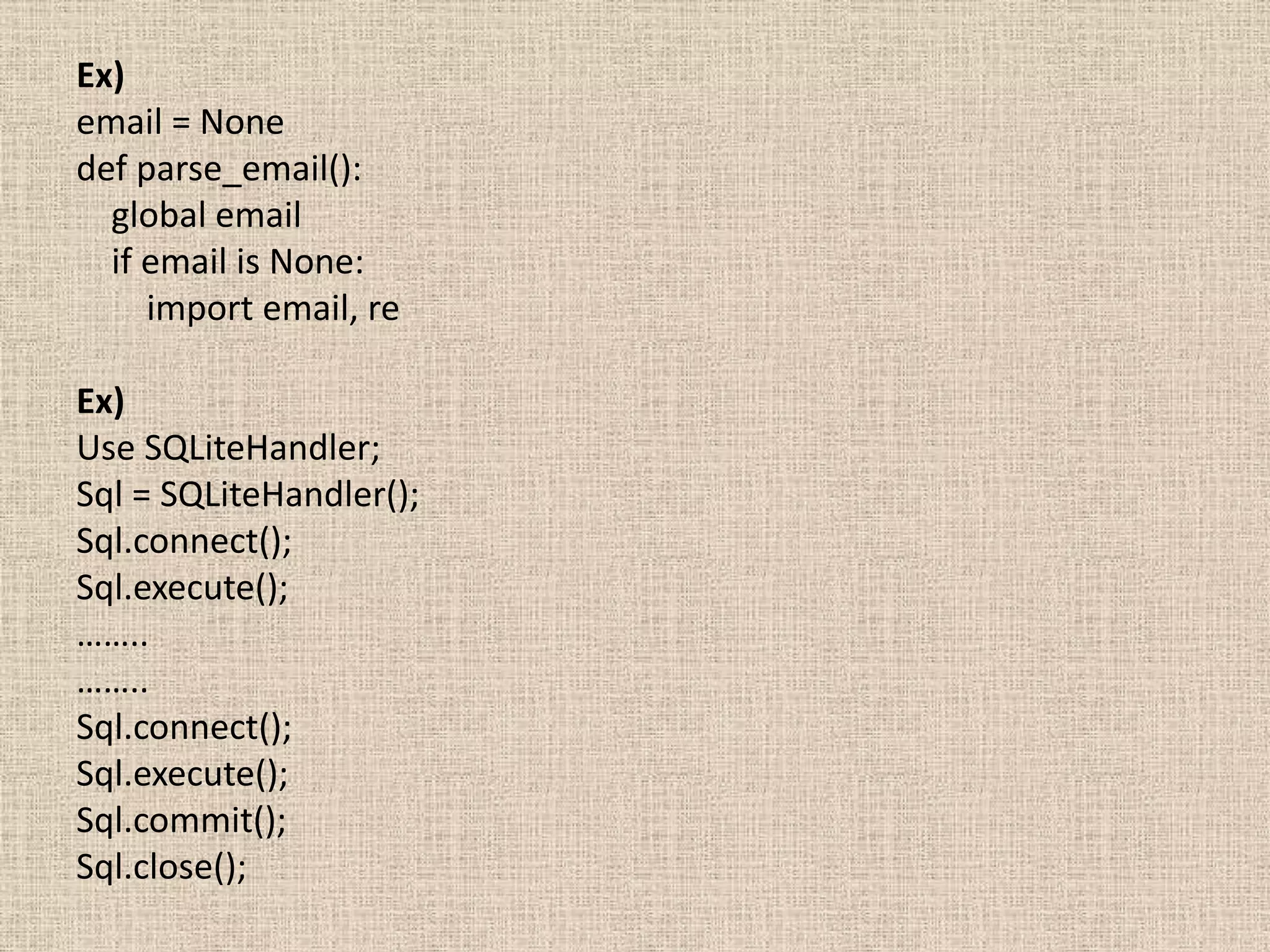
Ex)
email = None
def parse_email():
  global email
  if email is None:
     import email, re

Ex)
Use SQLiteHandler;
Sql = SQLiteHandler();
Sql.connect();
Sql.execute();
……..
……..
Sql.connect();
Sql.execute();
Sql.commit();
Sql.close();
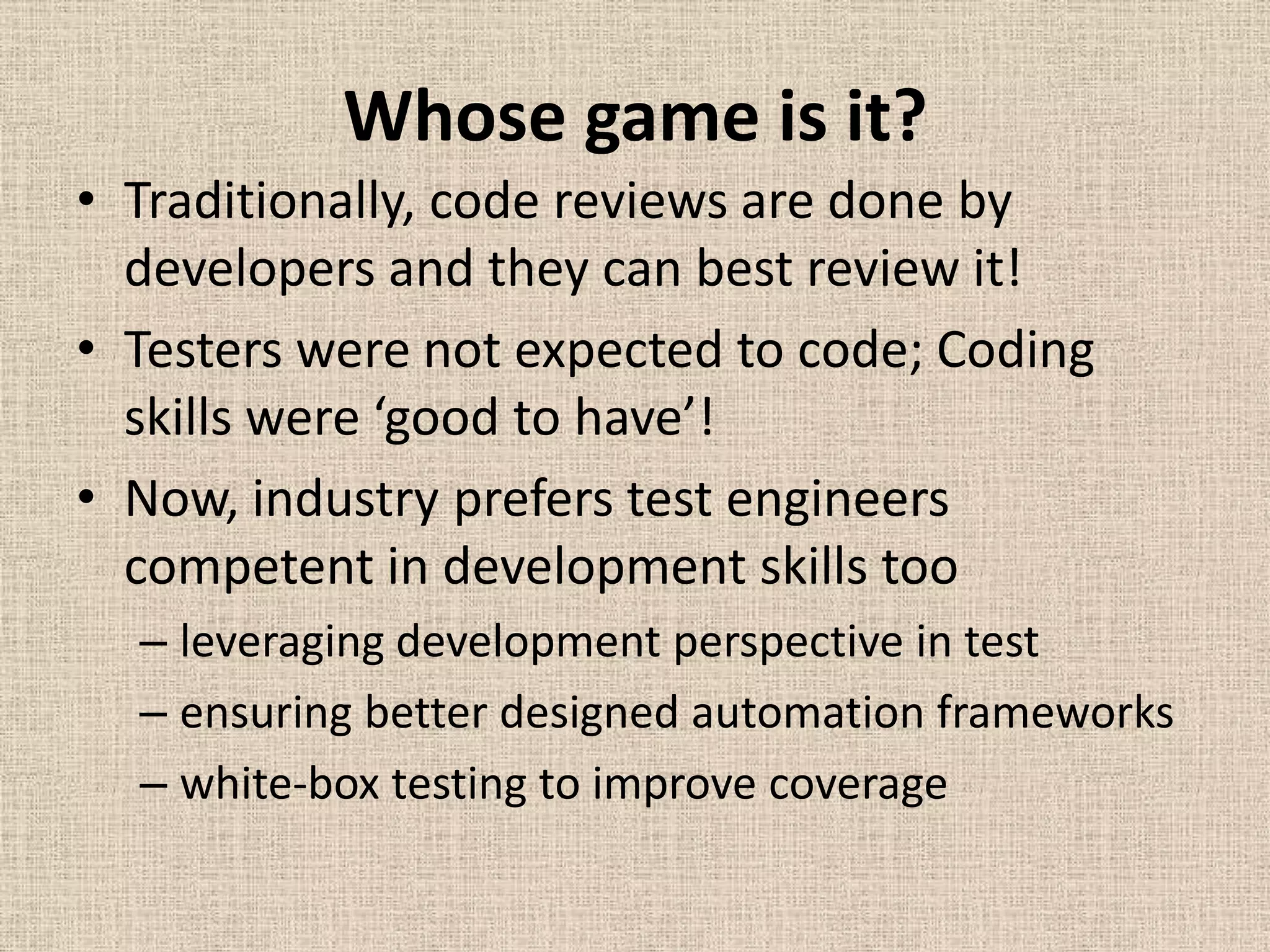
Whose game is it?
• Traditionally, code reviews are done by
  developers and they can best review it!
• Testers were not expected to code; Coding
  skills were ‘good to have’!
• Now, industry prefers test engineers
  competent in development skills too
  – leveraging development perspective in test
  – ensuring better designed automation frameworks
  – white-box testing to improve coverage
For: Involve testers in code
           reviews
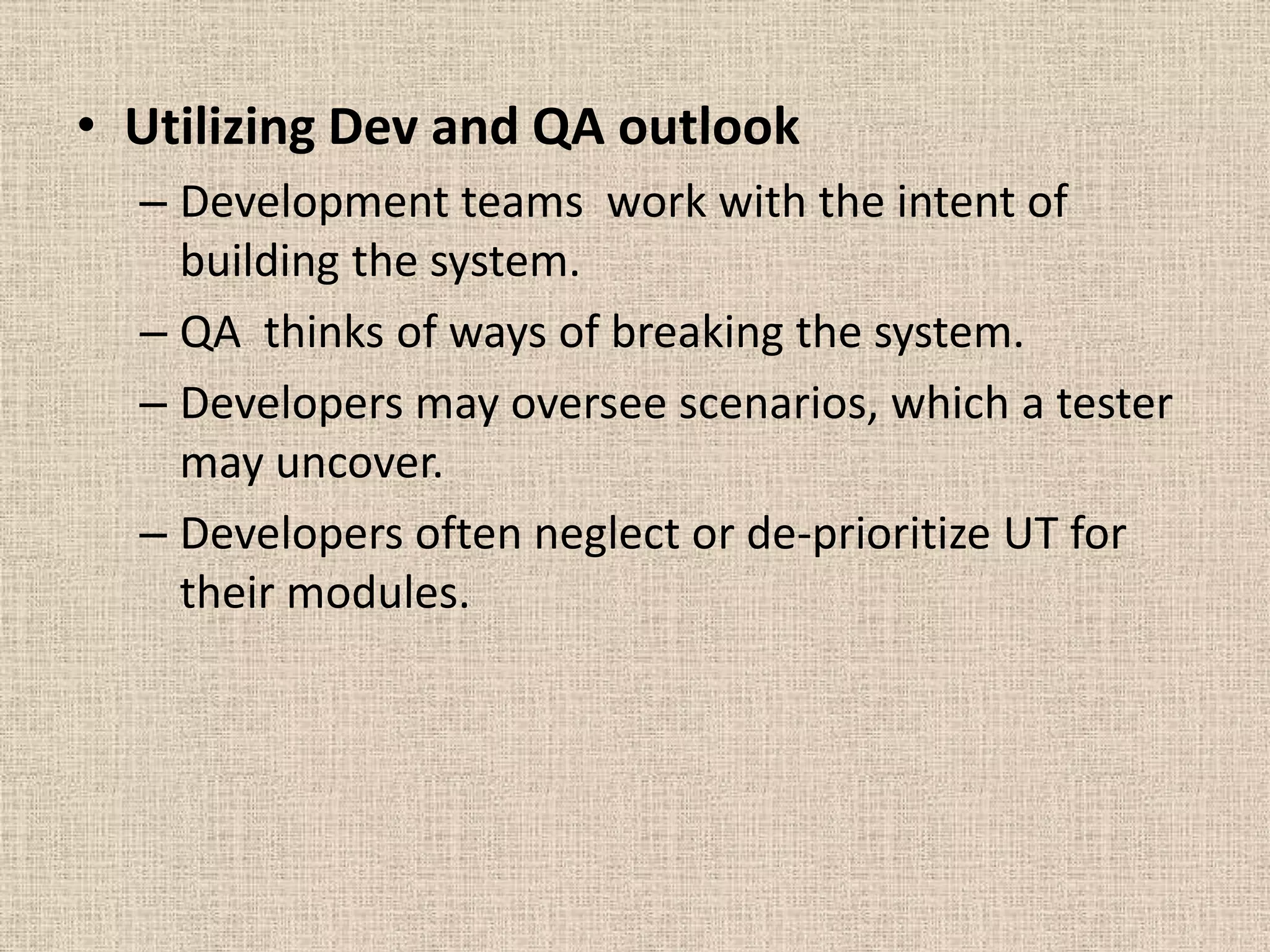
• Utilizing Dev and QA outlook
  – Development teams work with the intent of
    building the system.
  – QA thinks of ways of breaking the system.
  – Developers may oversee scenarios, which a tester
    may uncover.
  – Developers often neglect or de-prioritize UT for
    their modules.
• QA builds product knowledge
  – QA is only aware of the functionalities to be tested
    from the requirement specification documents.
  – Code reviews will help QA bridge gaps between
    their perception of the requirement and the
    actual code implementation.
  – QA understands the product better which is
    imperative for testing the product.
• Improved test documentation
  – Code reviews help QA identify gaps in test
    documentation.
  – Improved test plan and test case design
    documents.
  – Improved test automation.
• Reduced testing time and costs
  – If QA were to participate in code reviews, they
    wouldn’t have to wait for the RTQA build to
    understand the implementation.
  – Speeds up testing and reduces the overall product
    life cycle time.
• Better triaging from QA
  – QA understands the code changes.
  – QA would try to pinpoint a failure as they are
    aware of the implementation.
  – Saves a lot of developer time.
  – Improves Dev/QA productivity.
• Involvement of QA in Root Cause Analysis
  (RCA)
  – QA is cognizant of all the functionalities and the
    implementation.
  – QA could assist in performing root cause analysis
    of defects that have been reported in the field.
• Aids in white-box testing
  – Taking part in code review would definitely help
    testers in improving and adding more tests in
    white-box testing.
• Improved quality of code-comments and
  enforcing coding guidelines
  – The idea here is that developer egos can be used
    to boost the quality of code. 
  – Developers will include better comments so that
    they don’t have to answer too many questions
    from the reviewers.
• Help for a newly set-up development team
  – New development team is set up to work on a
    research project.
  – Suggestions from senior QA members given to
    Dev as formal/informal inputs make developers
    comfortable.
  – Code review meetings can be seen as an
    opportunity for such discussions.
• Improving rapport between Dev and QA
  – As code reviews are helpful for both Dev and
    QA, they would be beneficial for developing a
    healthy environment among the teams.
Against: Code review is not for
            testers!
• Steep learning curve
  – Imperative to evaluate the development skills of
    the QA team .
  – Steep learning curve and time involved for QA to
    gain development or white-box testing skills to
    understand and review code.
• Extra effort required by the testing team
  – Better planning to include additional responsibility
    in QA cycle.
  – Impacts QA deadlines and may lead to project
    deadline slippages.
• Testing based on implementation rather than
  specification
  – QA test the product based on implementation
    knowledge and not based on the specification.
  – Defeats the whole purpose of QA perspective!
  – QA may start justifying the behavior of the product
    based on product knowledge rather than validating
    against requirements.
• Over-involvement of testers understanding
  complex code
  – Testers may get too interested in understanding a
    complex code snippet.
  – Tester spends too much time appreciating the code
    and spends less time in testing.
• Code complexity/simplicity decides the
  testing strategy
  – Depending on the complexity of the code, QA may
    change their testing strategy.
  – Testing effort projected based on code-
    complexity; wrong assumptions.
  – Results in incorrect test planning.
To summarize
– Not only do reviews help QA in improving the product
  knowledge, but also errors found by the QA team
  during code reviews can be fixed earlier in the cycle.
– Code reviews also help in improving test
  documentation and give QA an opportunity to identify
  more areas in testing .
– Moreover, developers also benefit as they get a
  chance to get inputs on the products from
  experienced QA who have worked on similar
  technologies before.
– May look like an attractive proposition, but it should
  be evaluated. Does it suit my needs? Does it solve my
  purpose?
Conclusion

     We would definitely advocate it!
           It’s worth a try!

Remember: Time is required before it starts
            paying dividends..
Your thoughts? 
Previous references
Chetan has written this article and was first
    published at TestingExperience titled
   ‘Advocating Code Review for Testers’.
            Have a look at it at
      http://technobeans.com/articles
         Appreciated by Alan Page

Testers in product development code review phase

  • 1.
    BLRTMM6 Testers in productdevelopment - Code review phase Chetan Giridhar (http://technobeans.com) Vishal Kanaujia (http://freethreads.wordpress.com)
  • 2.
    Objective • Break themyth – “testers need not or shouldn’t review developer’s code” • Substantiate the merits of the idea, analyzes the flip side. • Audiences to evaluate the thought…
  • 3.
    What is CodeReview • According to Wikipedia, “Code review is systematic examination (often as peer review) of computer source code intended to find and fix mistakes overlooked in the initial development phase, improving both the overall quality of software and the developers' skills.” • Code Review helps in finding or rather preventing critical defects early in the cycle (thereby reducing the bug fixing costs) • Improving developers’ knowledge and provide exposure to the other components of the software system.
  • 4.
    Importance of codereview • Better quality of code – Logic and semantic errors – Potential bugs, corner cases – Design suggestions – UT suggestions • Enforced coding standards • Helps in improving skills of fellow developers • Better cross domain understanding
  • 5.
    Let’s review codetogether Ex) void foo(char* input) { printf(“Input char is %s”, *(input+2)); int *p = malloc(); int* B[10]; for (I =0; I < 10; i++) { free(p); int* q = malloc(); B[i] = q; } }
  • 6.
    Ex) email = None defparse_email(): global email if email is None: import email, re Ex) Use SQLiteHandler; Sql = SQLiteHandler(); Sql.connect(); Sql.execute(); …….. …….. Sql.connect(); Sql.execute(); Sql.commit(); Sql.close();
  • 7.
    Whose game isit? • Traditionally, code reviews are done by developers and they can best review it! • Testers were not expected to code; Coding skills were ‘good to have’! • Now, industry prefers test engineers competent in development skills too – leveraging development perspective in test – ensuring better designed automation frameworks – white-box testing to improve coverage
  • 8.
    For: Involve testersin code reviews
  • 9.
    • Utilizing Devand QA outlook – Development teams work with the intent of building the system. – QA thinks of ways of breaking the system. – Developers may oversee scenarios, which a tester may uncover. – Developers often neglect or de-prioritize UT for their modules.
  • 10.
    • QA buildsproduct knowledge – QA is only aware of the functionalities to be tested from the requirement specification documents. – Code reviews will help QA bridge gaps between their perception of the requirement and the actual code implementation. – QA understands the product better which is imperative for testing the product.
  • 11.
    • Improved testdocumentation – Code reviews help QA identify gaps in test documentation. – Improved test plan and test case design documents. – Improved test automation. • Reduced testing time and costs – If QA were to participate in code reviews, they wouldn’t have to wait for the RTQA build to understand the implementation. – Speeds up testing and reduces the overall product life cycle time.
  • 12.
    • Better triagingfrom QA – QA understands the code changes. – QA would try to pinpoint a failure as they are aware of the implementation. – Saves a lot of developer time. – Improves Dev/QA productivity.
  • 13.
    • Involvement ofQA in Root Cause Analysis (RCA) – QA is cognizant of all the functionalities and the implementation. – QA could assist in performing root cause analysis of defects that have been reported in the field. • Aids in white-box testing – Taking part in code review would definitely help testers in improving and adding more tests in white-box testing.
  • 14.
    • Improved qualityof code-comments and enforcing coding guidelines – The idea here is that developer egos can be used to boost the quality of code.  – Developers will include better comments so that they don’t have to answer too many questions from the reviewers.
  • 15.
    • Help fora newly set-up development team – New development team is set up to work on a research project. – Suggestions from senior QA members given to Dev as formal/informal inputs make developers comfortable. – Code review meetings can be seen as an opportunity for such discussions. • Improving rapport between Dev and QA – As code reviews are helpful for both Dev and QA, they would be beneficial for developing a healthy environment among the teams.
  • 16.
    Against: Code reviewis not for testers!
  • 17.
    • Steep learningcurve – Imperative to evaluate the development skills of the QA team . – Steep learning curve and time involved for QA to gain development or white-box testing skills to understand and review code. • Extra effort required by the testing team – Better planning to include additional responsibility in QA cycle. – Impacts QA deadlines and may lead to project deadline slippages.
  • 18.
    • Testing basedon implementation rather than specification – QA test the product based on implementation knowledge and not based on the specification. – Defeats the whole purpose of QA perspective! – QA may start justifying the behavior of the product based on product knowledge rather than validating against requirements. • Over-involvement of testers understanding complex code – Testers may get too interested in understanding a complex code snippet. – Tester spends too much time appreciating the code and spends less time in testing.
  • 19.
    • Code complexity/simplicitydecides the testing strategy – Depending on the complexity of the code, QA may change their testing strategy. – Testing effort projected based on code- complexity; wrong assumptions. – Results in incorrect test planning.
  • 20.
    To summarize – Notonly do reviews help QA in improving the product knowledge, but also errors found by the QA team during code reviews can be fixed earlier in the cycle. – Code reviews also help in improving test documentation and give QA an opportunity to identify more areas in testing . – Moreover, developers also benefit as they get a chance to get inputs on the products from experienced QA who have worked on similar technologies before. – May look like an attractive proposition, but it should be evaluated. Does it suit my needs? Does it solve my purpose?
  • 21.
    Conclusion We would definitely advocate it! It’s worth a try! Remember: Time is required before it starts paying dividends..
  • 22.
  • 23.
    Previous references Chetan haswritten this article and was first published at TestingExperience titled ‘Advocating Code Review for Testers’. Have a look at it at http://technobeans.com/articles Appreciated by Alan Page