Test Bank for Sociology A Brief Introduction, 7th Edition : Thio
Test Bank for Sociology A Brief Introduction, 7th Edition : Thio
Test Bank for Sociology A Brief Introduction, 7th Edition : Thio
Test Bank for Sociology A Brief Introduction, 7th Edition : Thio
Test Bank for Sociology A Brief Introduction, 7th Edition : Thio
1.
Test Bank forSociology A Brief Introduction,
7th Edition : Thio download
http://testbankbell.com/product/test-bank-for-sociology-a-brief-
introduction-7th-edition-thio/
Explore and download more test bank or solution manual
at testbankbell.com
2.
Here are somerecommended products for you. Click the link to
download, or explore more at testbankbell.com
Test Bank For Sociology: A Brief Introduction 11TH EDITION
http://testbankbell.com/product/test-bank-for-sociology-a-brief-
introduction-11th-edition/
Test Bank for Sociology A Brief Introduction 13th by
Schaefer
http://testbankbell.com/product/test-bank-for-sociology-a-brief-
introduction-13th-by-schaefer/
Test Bank for Sociology A Brief Introduction 9th Edition
by Schaefer
http://testbankbell.com/product/test-bank-for-sociology-a-brief-
introduction-9th-edition-by-schaefer/
Financial and Managerial Accounting 14th Edition Warren
Solutions Manual
http://testbankbell.com/product/financial-and-managerial-
accounting-14th-edition-warren-solutions-manual/
3.
Test Bank forBiology: The Core 2nd Edition
http://testbankbell.com/product/test-bank-for-biology-the-core-2nd-
edition/
Elementary Statistics: Picturing the World Larson 6th
Edition Solutions Manual
http://testbankbell.com/product/elementary-statistics-picturing-the-
world-larson-6th-edition-solutions-manual/
Accounting Theory Conceptual Issues in a Political and
Economic Environment 9th Edition Wolk Solutions Manual
http://testbankbell.com/product/accounting-theory-conceptual-issues-
in-a-political-and-economic-environment-9th-edition-wolk-solutions-
manual/
Test Bank for Cost Accounting 14th Edition By Horngren
http://testbankbell.com/product/test-bank-for-cost-accounting-14th-
edition-by-horngren/
Business Law and the Regulation of Business 12th Edition
Mann Test Bank
http://testbankbell.com/product/business-law-and-the-regulation-of-
business-12th-edition-mann-test-bank/
4.
Solution Manual forUsing MIS Plus MyMISLab with Pearson
eText — Package, 9/E – David M. Kroenke & Randall J.
Boyle
http://testbankbell.com/product/solution-manual-for-using-mis-plus-
mymislab-with-pearson-etext-package-9-e-david-m-kroenke-randall-j-
boyle/
5.
323
Test Bank forSociology A Brief Introduction,
7th Edition : Thio
Download full chapter at: https://testbankbell.com/product/test-
bank-for-sociology-a-brief-introduction-7th-edition-thio/
Chapter 1 The Essence of Sociology
1.1 Multiple Choice Questions
1) Sociology is the
A) study of other cultures and preliterate societies.
B) study of human economic decisions and the creation of economies.
C) systematic, scientific study of human society.
D) science of helping others and solving social problems.
Answer: C
Diff: 2 Page Ref: 2
Topic: The Study of Social Life
Skill: Interpretive
2) The text states that, by studying and appreciating social diversity, we ultimately
A) develop prejudices toward other ethnic groups.
B) discover ways to make others more like ourselves.
C) develop a better understanding of ourselves.
D) can solve the problems of racial and ethnic tensions.
Answer: C
Diff: 2 Page Ref: 4
Topic: The Study of Social Life
Skill: Factual
3) Sociology can help us understand events such as the terrorist attacks on the U.S. on September
11, 2001 because it
A) studies human society scientifically
B) probes the causes of human motivations
C) focuses on one type of economic behavior
D) studies a variety of historical and prehistorical events
Answer: A
Diff: 2 Page Ref: 2
Topic: The Study of Social Life
Skill: Interpretive
4) Economic globalization is
A) a place in Europe where many of the world s leaders regularly meet to discuss the
world s problems.
B) the spread of U.S. goods around the world.
C) a term used to describe the spread of technology and communication around the world.
D) the interrelationships among the world economies.
325
Test Bank
5) Ednais a sociologist. She is organizing a study of young people who join cults because she
believes that they mostly come from broken homes. Her belief is called her
A) theory. B) research result.
C) perspective. D) hypothesis.
Answer: D
Diff: 1 Page Ref: 4
Topic: The Study of Social Life
Skill: Applied
6) A scientific theory is
A) beyond the research of most sociologists because their data is too subjective and soft.
B) too abstract to be very useful.
C) always open to revision, but only after a major shift in scientific thinking.
D) always open to revision in the light of new evidence.
Answer: D
Diff: 2 Page Ref: 5
Topic: The Study of Social Life
Skill: Factual
7) Emile Durkheim s classic study of suicide makes the sociological point that
A) divorced and widowed people have the same rate of suicide as married people.
B) social facts are unrelated to the rates of suicide.
C) suicide rates can increase as a result of excessive isolation from people.
D) high suicide rates are caused by poor mental health.
Answer: C
Diff: 3 Page Ref: 6
Topic: The Study of Social Life
Skill: Factual
8) Nineteenth century social philosophers were influenced by the natural sciences because those
sciences
A) served as a model to understand and control the social world.
B) had more prestige and rewards than the social sciences.
C) were more keyed to the Industrial Revolution.
D) were properly grounded in philosophy.
Answer: A
Diff: 2 Page Ref: 8
Topic: The Development of Sociology
Skill: Interpretive
9) Auguste Comte sought to develop a science of society by focusing on the interplay between
A) biology and society. B) religion and science.
C) conflict and consensus. D) social statics and social dynamics.
Answer: D
Diff: 2 Page Ref: 8
Topic: The Development of Sociology
Skill: Factual
8.
326
Chapter 1: TheEssence of Sociology
10) Karl Marx argued that the difference between owners and workers is rooted in
A) the economic system. B) economic globalization.
C) social stability. D) social evolution.
Answer: A
Diff: 2 Page Ref: 9
Topic: The Development of Sociology
Skill: Factual
11) The first sociologist to use formal scientific methods and observations was
A) Max Weber. B) Karl Marx.
C) Auguste Comte. D) Emile Durkheim.
Answer: D
Diff: 1 Page Ref: 9
Topic: The Development of Sociology
Skill: Factual
12) When people in a society perform a variety of specialized jobs and depend on one another,
Durkheim called this social cohesion
A) organic solidarity. B) primary solidarity.
C) mechanical solidarity. D) secondary solidarity.
Answer: A
Diff: 2 Page Ref: 12
Topic: Major Perspectives in Sociology
Skill: Factual
13) U.S. sociology was reshaped during the 1960s by renewed awareness of
A) poverty and other social ills. B) religion and out of body experiences.
C) health and physical fitness. D) children s learning disabilities.
Answer: A
Diff: 2 Page Ref: 10
Topic: The Development of Sociology
Skill: Factual
14) Sociologists take a view when they focus on how people interact with each other.
A) macro B) historical C) micro D) psychological
Answer: C
Diff: 1 Page Ref: 11
Topic: Major Perspectives in Sociology
Skill: Factual
15) According to the functionalist perspective, each part of society
A) contributes something to the society as a whole.
B) may or may not help society to properly function.
C) is in conflict with other parts of society.
D) is symbolically represented in language.
Answer: A
Diff: 2 Page Ref: 11
Topic: Major Perspectives in Sociology
Skill: Factual
9.
327
Test Bank
16) Acondition in which most members of society agree on what would be good for everyone and
cooperate to achieve it is called
A) social change. B) social function.
C) social consensus. D) social conflict.
Answer: C
Diff: 2 Page Ref: 11
Topic: Major Perspectives in Sociology
Skill: Interpretive
17) Participation in war often promotes social solidarity and stimulates scientific development.
These outcomes are examples of functions of war.
A) manifest B) latent C) contradictory D) symbolic
Answer: B
Diff: 2 Page Ref: 12
Topic: Major Perspectives in Sociology
Skill: Applied
18) Critics of the feminist theory criticize the theory because it
A) does not take a critical approach to society.
B) overemphasizes the oppressiveness of patriarchy.
C) overemphasizes the positive aspects of society.
D) does not really show much interest in the nature of society.
Answer: B
Diff: 2 Page Ref: 14
Topic: Major Perspectives in Sociology
Skill: Factual
19) A system of domination with men exercising power over women is called
A) patriarchy. B) matriarchy.
C) class conflict. D) social consensus.
Answer: A
Diff: 1 Page Ref: 14
Topic: Major Perspectives in Sociology
Skill: Factual
20) Symbolic Interaction theory has been criticized for ignoring macro issues and
A) being more objective than other theories.
B) viewing humans as more than complex animals.
C) for being a uniquely American perspective.
D) the influence of groups and institutions.
Answer: D
Diff: 2 Page Ref: 14
Topic: Major Perspectives in Sociology
Skill: Interpretive
10.
328
Chapter 1: TheEssence of Sociology
21) According to symbolic interactionists,
A) people respond directly to physical things.
B) people respond to their interpretations of symbols and experiences.
C) people respond only to concrete experiences and signs.
D) people are studied in order to develop large scale theories of social behavior.
Answer: B
Diff: 2 Page Ref: 14
Topic: Major Perspectives in Sociology
Skill: Interpretive
22) By using each of the three sociological perspectives, researchers can
A) achieve a total theory of society.
B) become more confused than those who use only one perspective.
C) avoid most forms of research bias.
D) bring more aspects of society into a sharper focus.
Answer: D
Diff: 2 Page Ref: 15
Topic: Major Perspectives in Sociology
Skill: Interpretive
23) Which of the following statements reflects the conflict perspective on sport?
A) Sport is an integrating force for society.
B) Due to its competitive nature, sport inspires individuals to do their best to succeed.
C) Sport teaches values and norms that contribute to success in other parts of society.
D) Sport acts as an opiate that numbs the masses sense of dissatisfaction.
Answer: D
Diff: 2 Page Ref: 16
Topic: Sports: Illustrating the Three Perspectives
Skill: Applied
24) If you wanted to determine whether there is a gender difference in how often people think
about sex, the best research method would be
A) the survey. B) participant observation.
C) content analysis. D) interviewing.
Answer: A
Diff: 1 Page Ref: 19
Topic: Major research Methods
Skill: Applied
25) Sociologist Jane Johnson lived with the Kickapoo Indians and studied the tribal members
beliefs. This type of research is called
A) interviewing. B) ethnography.
C) survey. D) content analysis.
Answer: B
Diff: 2 Page Ref: 22
Topic: Major research Methods
Skill: Applied
11.
329
Test Bank
26) Asample is representative, or random, when all members of the population
A) give identical answers to survey questions.
B) are paid to answer survey questions.
C) volunteer, or self select, to participate.
D) have the same chance of being selected for the sample.
Answer: D
Diff: 2 Page Ref: 20
Topic: Major research Methods
Skill: Factual
27) Personal interviews may use standard questions or open ended questions. These types of
interviews are called
A) structured interviews or self administered questionnaires.
B) structured interviews or unstructured interviews.
C) unstructured interviews or telephone interviews.
D) computer assisted interviews or survey interviews.
Answer: B
Diff: 2 Page Ref: 21
Topic: Major research Methods
Skill: Factual
28) To test a hypothesis, researches must first identify what they assume to be affected (dependent
variable) and the cause, or variable.
A) secondary B) primary C) independent D) control
Answer: C
Diff: 2 Page Ref: 23
Topic: Major research Methods
Skill: Factual
29) During an experiment, the group that is not exposed to the independent variable or cause is
called the group.
A) spurious B) experimental C) control D) field
Answer: C
Diff: 1 Page Ref: 23
Topic: Major research Methods
Skill: Factual
30) Sociologists study human behavior through books, magazines, letters, songs, etc. This type of
research is called
A) observation. B) interviews.
C) content analysis. D) applied sociology.
Answer: C
Diff: 1 Page Ref: 24
Topic: Major research Methods
Skill: Factual
12.
330
Chapter 1: TheEssence of Sociology
31) Sociology can help us enjoy a successful and happy life in at least three ways except:
A) It can be used as an intellectual exercise that s pursued for its own sake, for the pleasure
of tickling our curiosity, or for producing scientific knowledge.
B) It can be used to pursue a specific career in government or in the private sector.
C) It can be used as a general guide for understanding our social world so that we can
function more successfully in it.
D) It can be used to give us familiar and untested ideas.
Answer: D
Diff: 2 Page Ref: 24
Topic: Major research Methods
Skill: Factual
32) Emile Durkheim is associated with the perspective.
A) functionalist B) conflict
C) symbolic interactionist D) feminist
Answer: A
Diff: 2 Page Ref: 11
Topic: Major Perspectives in Sociology
Skill: Factual
33) The Industrial Revolution was a major factor in converting some philosophers into sociologists
because the rise of industrialization led to
A) the creation of the field of psychology
B) new types of wealth
C) the development of religious beliefs
D) widespread social upheaval and change
Answer: A
Diff: 2 Page Ref: 8
Topic: The Development of Sociology
Skill: Factual
34) John did not join groups and felt very different from other students. His separation help him
examine and better understand other s on campus. His condition, which can help promote
sociological understanding, is called
A) social integration B) social fragmentation
C) social marginality D) reality construction
Answer: C
Diff: 2 Page Ref: 3
Topic: The Study of Social Life
Skill: Applied
35) Jane was able to understand that her friend s suicide had to do with isolation from pressures
created by family and friends. This understanding shows that Jane probably possesses
A) psychological insight B) inaccurate ideas about human behavior
C) sociological imagination D) social work skills
Answer: C
Diff: 2 Page Ref: 6
Topic: The Study of Social Life
Skill: Applied
13.
331
Test Bank
36) AugusteComte is sometimes called the father of sociology because he
A) created the word sociology B) studied suicide and social isolation
C) created the concept of verstehen. D) argued for programs to help the poor.
Answer: A
Diff: 1 Page Ref: 8
Topic: The Development of Sociology
Skill: Factual
37) A theoretical perspective that focuses on change and conflict is the perspective.
A) functionalist B) symbolic interactionist
C) conflict D) feminist
Answer: C
Diff: 1 Page Ref: 12
Topic: Major Perspectives in Sociology
Skill: Applied
38) Which of the following statements is most clearly linked with Herbert Spencer s view of
society?
A) The primary feature of society is conflict.
B) The primary feature of society is interaction based on symbols.
C) The primary feature of society is its interactive parts that contribute to the function of the
whole.
D) The primary feature of society is competition.
Answer: C
Diff: 2 Page Ref: 8
Topic: The Development of Sociology
Skill: Factual
39) A research method that involves asking questions about opinions, beliefs, or behaviors is
a(n) .
A) survey B) participant observation
C) detached observation D) experiment
Answer: A
Diff: 2 Page Ref: 19
Topic: Major research Methods
Skill: Factual
40) A view that focuses on the large social phenomena of society, such as social institutions and
inequality is the .
A) latent view B) macro view C) micro view D) manifest view
Answer: B
Diff: 2 Page Ref: 11
Topic: Major Perspectives in Sociology
Skill: Factual
14.
332
Chapter 1: TheEssence of Sociology
41) Not interested in developing large scale social theories, early sociologists concentrated on
A) developing a basic science unifying psychology, anthropology, and sociology
B) solving their country s social problems
C) forming a professionally recognized discipline
D) more historical studies of past societies.
Answer: B
Diff: 2 Page Ref: 9 10
Topic: The Development of Sociology
Skill: Interpretive
42) A major contributor to the establishment of such governmental programs as Social Security
and Workers Compensation was U.S. Sociologists
A) W.E.B. DuBois B) Herbert Spencer
C) Jane Adams D) Max Weber
Answer: C
Diff: 1 Page Ref: 10
Topic: The Development of Sociology
Skill: Factual
43) A method of observation in which the researcher takes part in the activities if the group being
studied is .
A) detached observation B) survey
C) participant observation D) experiment
Answer: C
Diff: 1 Page Ref: 21
Topic: Major research Methods
Skill: Factual
44) The early sociologist who focused on the improvement of society and the racial problems of
the United States was
A) W.E.B. DuBois B) Jane Addams
C) Max Weber D) C. Wright Mills
Answer: A
Diff: 1 Page Ref: 10
Topic: The Development of Sociology
Skill: Factual
45) is a research operation in which the researcher manipulates variables so that their
influence can be determined
A) Experiment B) Participant observation
C) Detached observation D) survey
Answer: A
Diff: 1 Page Ref: 22
Topic: Major research Methods
Skill: Factual
333
Test Bank
46) Atheoretical perspective that focuses on social order is the perspective.
A) functionalist B) conflict
C) symbolic interactionist D) feminist
Answer: A
Diff: 1 Page Ref: 11
Topic: Major Perspectives in Sociology
Skill: Factual
47) A method of observation in which the researcher observes as an outsider, from a distance,
without getting involved is a(n)
A) experiment B) participant observation
C) detached observation D) survey
Answer: C
Diff: 1 Page Ref: 21
Topic: Major research Methods
Skill: Factual
48) Karl Marx is associated with the perspective.
A) conflict B) functionalist
C) symbolic interactionist D) feminist
Answer: A
Diff: 1 Page Ref: 12
Topic: Major Perspectives in Sociology
Skill: Interpretive
49) A view that focuses on the immediate social situation in which people interact with one
another.
A) micro view B) latent view C) macro view D) manifest view
Answer: A
Diff: 1 Page Ref: 11
Topic: Major Perspectives in Sociology
Skill: Factual
50) A set of general assumptions about the nature of society is called a .
A) theoretical perspective B) theory
C) sample D) hypothesis
Answer: A
Diff: 1 Page Ref: 11
Topic: Major Perspectives in Sociology
Skill: Factual
1.2 True and False
1) The conflict perspective is a theoretical perspective that focuses on social order.
Answer: FALSE
Diff: 1 Page Ref: 12
2) In the past, when elderly Inuit committed suicide, the cause was usually extreme social
integration.
Answer: TRUE
Diff: 3 Page Ref: 6
17.
334
Chapter 1: TheEssence of Sociology
3) Latent function is unintended and often unrecognized.
Answer: TRUE
Diff: 1 Page Ref: 12
4) Participant observation is a research method that involves asking questions about opinions,
beliefs, or behaviors.
Answer: FALSE
Diff: 2 Page Ref: 21
5) Patriarchy is a system of domination in which women exercise power over women.
Answer: FALSE
Diff: 1 Page Ref: 14
6) Sociology is the systematic, scientific study of human society.
Answer: TRUE
Diff: 1 Page Ref: 2
7) Class conflict is Durkheim s terms for the struggle between the capitalists, who own the means
of production, and the proletariat, who do not.
Answer: FALSE
Diff: 2 Page Ref: 9
8) Content analysis is searching for specific words or ideas and then turning them into numbers.
Answer: TRUE
Diff: 1 Page Ref: 24
9) Feminist theory is a form of conflict theory that explains human life in terms of the experiences
of women
Answer: TRUE
Diff: 1 Page Ref: 13
10) Economic globalization is a closely knit community of all the world s societies.
Answer: FALSE
Diff: 1 Page Ref: 4
11) A macro view focuses on the immediate social situations in which people interact with one
another.
Answer: FALSE
Diff: 2 Page Ref: 11
12) Scientific findings are always subject to verification or refutation by other scientists.
Answer: TRUE
Diff: 3 Page Ref: 5
13) According to the text, Postmodernist theory looks like a hybrid of the conflict and the symbolic
interactionist perspectives.
Answer: TRUE
Diff: 3 Page Ref: 7
18.
335
Test Bank
14) Detachedobservation is one method of gathering data.
Answer: TRUE
Diff: 3 Page Ref: 22
15) To functionalists, sports help athletes develop such qualities as skill and ability, diligence and
self discipline, metal alertness, and physical fitness which in turn help athletes be successful in
the larger society.
Answer: TRUE
Diff: 3 Page Ref: 12
1.3 Fill in the Blank Questions
1) is the systematic, mostly scientific study of human social behavior.
Answer: Sociology
Page Ref: 2
2) In , the sociologists searches for new knowledge in the data collected earlier by
another researcher.
Answer: secondary analysis
Page Ref: 23
3) C. Wright Mills called the ability to see the impact of social forces on individuals the .
Answer: sociological imagination
Page Ref: 5
4) Today, the world has become a community of all societies, also called a .
Answer: global village
Page Ref: 4
5) Social cohesion that develops when people have similar beliefs and values is known as
.
Answer: mechanical solidarity
Page Ref: 12
6) is Max Weber s term for the subjective method that requires sociologists to practice
empathy toward their subjects.
Answer: Verstehen
Page Ref: 9
7) The perspective that views society as a set of interdependent parts working together to
provide social order is known as the perspective.
Answer: functionalist
Page Ref: 11
8) Feminist theory suggests that differences shape our lives.
Answer: gender
Page Ref: 13
19.
336
Chapter 1: TheEssence of Sociology
9) The degree to which people are tied to a social group is called social .
Answer: integration
Page Ref: 6
10) With , the researcher analyzes people s lives from their own perspective.
Answer: ethnography
Page Ref: 21
11) W.E.B. DuBois was the first African American to receive a doctorate from .
Answer: Harvard University
Page Ref: 11
12) is the only sociologist ever to have received a Nobel prize.
Answer: Jane Adams
Page Ref: 10
13) According to the text, can help us enjoy a successful and happy life in at least three
ways.
Answer: sociology
Page Ref: 24
14) is regarded as the father of sociology.
Answer: Auguste Comte
Page Ref: 8
15) Functionalist perspective emphasizes society s stability, the perspective portrays
society as always changing and always marked by conflict.
Answer: Conflict
Page Ref: 12
1.4 Essay Questions
1) How can sports be used to explain the conflict, functionalists and symbolic interactionist
perspective?
Page Ref: 15 19
2) Identify and discuss the three American Sociological Association s ethical guidelines for
research.
Page Ref: 4 5
3) Define and explain the four basic social research methods.
Page Ref: 19 24
4) Using the work of Michael Schwartz (2005) and Jeff Weintraub (2005), determine if the ragtag
Iraqi insurgents could bring the larger, better trained and better equipped U.S. army to its
knees.
Page Ref: 24
5) How can sociology help us understand why athletes fight with fans?
Page Ref: 19
20.
337
Test Bank
6) Whatwere the contributions of Addams, DuBois, Spencer and Marx to the development of
sociology?
Page Ref: 8 11
7) How does the micro view differ from the macro view?
Page Ref: 11
8) Define sociology and how it differs from common sense.
Page Ref: 2 3
9) How did Karl Marx contribute to the conflict perspective ?
Page Ref: 12 13
10) Define and explain deconstructionism.
Page Ref: 7
larger elephants, hecontrived, before he could be hauled
close up to the tree, to walk once or twice round it,
carrying the rope with him; the decoy, perceiving the
advantage he had thus gained over the nooser, walked up
of her own accord, and pushed him backwards with her
head, till she made him unwind himself again; upon which
the rope was hauled tight and made fast. More than once,
when a wild one was extending his trunk, and would have
intercepted the rope about to be placed over his leg,
Siribeddi, by a sudden motion of her own trunk, pushed
his aside, and prevented him; and on one occasion, when
successive efforts had failed to put the noose over the
fore-leg of an elephant which was already secured by one
foot, but which wisely put the other to the ground as
often as it was attempted to pass the noose under it, I
saw the decoy watch her opportunity, and when his foot
was again raised, suddenly push in her own leg beneath
it, and hold it up till the noose was attached and drawn
tight.
One could almost fancy there was a display of dry
humour in the manner in which the decoys thus played
with the fears of the wild herd, and made light of their
efforts at resistance. When reluctant they shoved them
forward, when violent they drove them back; when the
wild ones threw themselves down, the tame ones butted
them with head and shoulders, and forced them up again.
And when it was necessary to keep them down, they knelt
upon them, and prevented them from rising, till the ropes
were secured.
At every moment of leisure they fanned themselves
with a bunch of leaves, and the graceful ease with which
an elephant uses his trunk on such occasions is very
striking. It is doubtless owing to the combination of a
circular with a horizontal movement in that flexible limb;
23.
but it isimpossible to see an elephant fanning himself
without being struck by the singular elegance of motion
which he displays. The tame ones, too, indulged in the
luxury of dusting themselves with sand, by flinging it from
their trunks; but it was a curious illustration of their
delicate sagacity, that so long as the mahout was on their
necks, they confined themselves to flinging the dust along
their sides and stomach, as if aware that to throw it over
their heads and back would cause annoyance to their
riders.[254]
Sir E. Tennent has also some observations on other uses to which
tame elephants are put, which are well worth quoting. Thus,
speaking of the labour of piling timber, he says that the elephant
manifests an intelligence and dexterity which are
surprising to a stranger, because the sameness of the
operation enables the animal to go on for hours disposing
of log after log, almost without a hint or direction from his
attendant. For example, two elephants employed in piling
ebony and satinwood in the yards attached to the
commissariat stores at Colombo, were so accustomed to
their work, that they were able to accomplish it with equal
precision and with greater rapidity than if it had been
done by dock-labourers. When the pile attained a certain
height, and they were no longer able by their conjoint
efforts to raise one of the heavy logs of ebony to the
summit, they had been taught to lean two pieces against
the heap, up the inclined plane of which they gently rolled
the remaining logs, and placed them trimly on the top.
It has been asserted that in their occupations
'elephants are to a surprising extent the creatures of
habit,' that their movements are altogether mechanical,
and that 'they are annoyed by any deviation from their
accustomed practice, and resent any constrained
departure from the regularity of their course.' So far as my
24.
own observation goes,this is incorrect; and I am assured
by officers of experience, that in regard to changing his
treatment, his hours or his occupation, an elephant
evinces no more consideration than a horse, but exhibits
the same pliancy and facility.
At one point, however, the utility of the elephant stops
short. Such is the intelligence and earnestness he displays
in work, which he seems to conduct almost without
supervision, that it has been assumed that he would
continue his labour, and accomplish his given task, as well
in the absence of his keeper as during his presence. But
here his innate love of ease displays itself, and if the eye
of his attendant be withdrawn, the moment he has
finished the thing immediately in hand, he will stroll away
lazily, to browse or enjoy the luxury of fanning himself and
blowing dust over his back.
The means of punishing so powerful an animal is a
question of difficulty to his attendants. Force being almost
inapplicable, they try to work on his passions and feelings,
by such expedients as altering the nature of his food or
withholding it altogether for a time. On such occasions the
demeanour of the creature will sometimes evince a sense
of humiliation as well as of discontent. In some parts of
India it is customary, in dealing with offenders, to stop
their allowance of sugar canes or of jaggery; or to restrain
them from eating their own share of fodder and leaves till
their companions shall have finished; and in such cases
the consciousness of degradation betrayed by the looks
and attitudes of the culprit is quite sufficient to identify
him, and to excite a feeling of sympathy and pity.
The elephant's obedience to his keeper is the result of
affection, as well as of fear; and although his attachment
becomes so strong that an elephant in Ceylon has been
known to remain out all night, without food, rather than
25.
abandon his mahout,lying intoxicated in the jungle, yet
he manifests little difficulty in yielding the same
submission to a new driver in the event of a change of
attendants.[255]
Lastly, Sir E. Tennent writes:—
One evening, whilst riding in the vicinity of Candy,
towards the scene of the massacre of Major Dabies' party
in 1803, my horse evinced some excitement at a noise
which approached us in the thick jungle, and which
consisted of a repetition of the ejaculation urmph! urmph!
in a hoarse and dissatisfied tone. A turn in the forest
explained the mystery, by bringing us face to face with a
tame elephant, unaccompanied by any attendant. He was
labouring painfully to carry a heavy beam of timber, which
he balanced across his tusks, but, the pathway being
narrow, he was forced to bend his head to one side to
permit it to pass endways; and the exertion and this
inconvenience combined led him to utter the dissatisfied
sounds which disturbed the composure of my horse. On
seeing us halt, the elephant raised his head, reconnoitred
us for a moment, then flung down the timber, and
voluntarily forced himself backwards among the
brushwood so as to leave a passage, of which he
expected us to avail ourselves. My horse hesitated: the
elephant observed it, and impatiently thrust himself
deeper into the jungle, repeating his cry of urmph! but in
a voice evidently meant to encourage us to advance. Still
the horse trembled; and, anxious to observe the instinct
of the two sagacious animals, I forebore any interference:
again the elephant of his own accord wedged himself
further in amongst the trees, and manifested some
impatience that we did not pass him. At length the horse
moved forward; and when we were fairly past, I saw the
wise creature stoop and take up its heavy burden, trim
26.
and balance iton its tusks, and resume its route as
before, hoarsely snorting its discontented remonstrance.
Dr. Erasmus Darwin records an observation which was
communicated to him by a 'gentleman of undoubted veracity,' of an
elephant in India which the keeper was in the habit of leaving to
play the part of nurse to his child when he and his wife had occasion
to go away from home. The elephant was chained up, and whenever
the child in its creeping about came to the end of the elephant's
tether, he used gently to draw it back again with his trunk.
In 'Nature,' vol. xix., p. 385, Mr. J. J. Furniss writes:—
In Central Park one very hot day my attention was
drawn to the conduct of an elephant which had been
placed in an enclosure in the open air. On the ground was
a large heap of newly-mown grass, which the sagacious
animal was taking up by the trunkful, and laying carefully
upon his sun-heated back. He continued the operation
until his back was completely thatched, when he remained
quiet, apparently enjoying the result of his ingenuity.
Mr. Furniss in a later communication (vol. xx., p. 21) continues:—
Since the publication of my former letter (as above), I
have received additional data bearing on the subject from
Mr. W. A. Conklin, the superintendent of the Central Park
Menagerie. I am informed by him that he has frequently
observed elephants, when out of doors in the hot
sunshine, thatch their backs with hay or grass; that they
do so to a certain extent when under cover in the summer
time, and when the flies which then attack the animals,
often so fiercely as to draw blood, are particularly
numerous; but that they never attempt to thatch their
backs in winter. This seems to prove that they act
intelligently for the attainment of a definite end. It would
be interesting to learn whether elephants in their wild
27.
state are inthe habit of so thatching their backs. It seems
more probable to suppose that in their native wilds they
would avail themselves of the natural shade afforded by
the jungle, and that the habit is one which has been
developed in consequence of their changed surroundings
in captivity.
Mr. G. E. Peal writes to 'Nature' (vol. xxi., p. 34):—
One evening, soon after my arrival in Eastern Assam,
and while the five elephants were as usual being fed
opposite the bungalow, I observed a young and lately
caught one step up to a bamboo-stake fence, and quietly
pull one of the stakes up. Placing it under foot, it broke a
piece off with the trunk, and after lifting it to its mouth
threw it away. It repeated this twice or thrice, and then
drew another stake and began again. Seeing that the
bamboo was old and dry I asked the reason of this, and
was told to wait and see what it would do. At last it
seemed to get a piece that suited, and holding it in the
trunk firmly, and stepping the left fore-leg well forward,
passed the piece of bamboo under the armpit, so to
speak, and began to scratch with some force. My surprise
reached its climax when I saw a large elephant leech fall
on the ground, quite six inches long and thick as one's
finger, and which, from its position, could not easily be
detached without this scraper or scratcher which was
deliberately made by the elephant. I subsequently found
that it was a common occurrence. Such scrapers are used
by every elephant daily.
On another occasion, when travelling at a time of the
year when the large flies are so tormenting to an
elephant, I noticed that the one I rode had no fan or wisp
to beat them off with. The mahout, at my order, slackened
pace and allowed her to go to the side of the road, when
for some moments she moved along rummaging the
28.
smaller jungle onthe bank; at last she came to a cluster
of young shoots well branched, and after feeling among
them and selecting one, raised her trunk and neatly
stripped down the stem, taking off all the lower branches
and leaving a fine bunch on top. She deliberately cleaned
it down several times, and then laying hold at the lower
end broke off a beautiful fan or switch about five feet
long, handle included. With this she kept the flies at bay
as we went along, flapping them off on each side.
Say what we may, these are both really bonâ fide
implements, each intelligently made for a definite
purpose.
My friend Mrs. A. S. H. Richardson sends me the following. The
Rev. Mr. Townsend, who narrated the episode, is personally known
to her:—
An elephant was chained to a tree in the compound
opposite Mr. Townsend's house. Its driver made an oven
at a short distance, in which he put his rice-cakes to bake,
and then covered them with stones and grass and went
away. When he was gone, the elephant with his trunk
unfastened the chain round his foot, went to the oven and
uncovered it, took out and ate the cakes, re-covered the
oven with the stones and grass as before, and went back
to his place. He could not fasten the chain again round his
own foot, so he twisted it round and round it, in order to
look the same, and when the driver returned the elephant
was standing with his back to the oven. The driver went
to his cakes, discovered the theft, and, looking round,
caught the elephant's eye as he looked back over his
shoulder out of the corner of it. Instantly he detected the
culprit, and condign punishment followed. The whole
occurrence was witnessed from the windows by the
family.
30.
CHAPTER XIV.
THE CAT.
Thecat is unquestionably a highly intelligent animal, though when
contrasted with its great domestic rival, the dog, its intelligence,
from being cast in quite a different mould, is very frequently
underrated. Comparatively unsocial in temperament, wanderingly
predaceous in habits, and lacking in the affectionate docility of the
canine nature, this animal has never in any considerable degree
been subject to those psychologically transforming influences
whereby a prolonged and intimate association with man has, as we
shall subsequently see, so profoundly modified the psychology of the
dog. Nevertheless, as we shall immediately find, the cat is not only
by nature an animal remarkable for intelligence, but in spite of its
naturally imposed disadvantages of temperament, has not altogether
escaped those privileges of nurture which unnumbered centuries of
domestication could scarcely fail to supply. Thus, as contrasted with
most of the wild species of the genus when tamed from their
youngest days, the domestic cat is conspicuously of less uncertain
temper towards its masters—the uncertainty of temper displayed by
nearly all the wild members of the feline tribe when tamed being, of
course, an expression of the interference of individual with
hereditary experience. And, as contrasted with all the wild species of
the genus when tamed, the domestic cat is conspicuous in alone
manifesting any exalted development of affection towards the
human kind; for in many individual cases such affection, under
favouring circumstances, reaches a level fully comparable to that
which it attains in the dog. We do not know the wild stock from
which the domestic cat originally sprang, and therefore cannot
estimate the extent of the psychological results which human agency
31.
has here produced;but it is worth while in this connection to
remember that the nearest ally of the domestic cat is the wild cat,
and that this animal, while so closely resembling its congener in size
and anatomical structure, differs so enormously from it in the branch
of psychological structure which we are considering, that there is no
animal on the face of the earth so obstinately untamable.
As regards the wild species of the tribe in general, it may be said
that they all exhibit the same unsocial, fierce, and rapacious
character. Bold when brought to bay, they do not court battle with
dangerous antagonists, but prefer to seek safety in flight. Even the
proverbial courage of the lion is now known, as a rule, to consist in
'the better part of valour;' and those exceptional individuals among
tigers which adopt a 'man-eating' propensity, snatch their human
victims by stealth. That the larger feline animals possess high
intelligence would be shown, even in the absence of information
concerning their ordinary habits, by the numerous tricks which they
prove themselves capable of learning at the hands of menagerie-
keepers; though in such cases the conflict of nature with nurture
renders even the best-trained specimens highly uncertain in their
behaviour, and therefore always more or less dangerous to the 'lion-
kings.' The only wild species that is employed for any practical
purpose—the cheetah—is so employed by utilising directly its natural
instincts; it is shown the antelope, and runs it down after the
manner of all its ancestors.
Returning now to the domestic cat, it is commonly remarked as a
peculiar and distinctive trait in its emotional character that it shows a
strongly rooted attachment to places as distinguished from persons.
There can be no question that this peculiarity is a marked feature in
the psychology of domestic cats considered as a class, although of
course individual exceptions occur in abundance. Probably this
feature is a survival of an instinctive attachment to dens or lairs
bequeathed to our cats by their wild progenitors.
The only other feature in the emotional life of cats which calls for
special notice is that which leads to their universal and proverbial
32.
treatment of helplessprey. The feelings that prompt a cat to torture
a captured mouse can only, I think, be assigned to the category to
which by common consent they are ascribed—delight in torturing for
torture's sake. Speaking of man, John S. Mill somewhere observes
that there is in some human beings a special faculty or instinct of
cruelty, which is not merely a passive indifference to the sight of
physical sufferings, but an active pleasure in witnessing or causing it.
Now, so far as I have been able to discover, the only animals in
which there is any evidence of a class of feelings in any way similar
to these—if, indeed, in the case even of such animals the feelings
which prompt actions of gratuitous cruelty really are similar to those
which prompt it in man—are cats and monkeys. With regard to
monkeys I shall adduce evidence on this point in the chapter which
treats of these animals. With regard to cats it is needless to dwell
further upon facts so universally known.
General Intelligence.
Coming now to the higher faculties, it is to be noted as a general
feature of interest that all cats, however domesticated they may be,
when circumstances require it, and often even quite spontaneously,
throw off with the utmost ease the whole mental clothing of their
artificial experience, and return in naked simplicity to the natural
habits of their ancestors. This readiness of cats to become feral is a
strong expression of the shallow psychological influence which
prolonged domestication has here exerted, in comparison with that
which it has produced in the case of the dog. A pet terrier lost in the
haunts of his ancestors is almost as pitiable an object as a babe in
the wood; a pet cat under similar circumstances soon finds itself
quite at home. The reason of this difference is, of course, that the
psychology of the cat, never having lent itself to the practical uses
of, and intelligent dependency on, man, has never, as in the case of
the dog, been under the cumulative influence of human agency in
becoming further and further bent away from its original and
naturally imposed position of self-reliance; so that when now a
33.
severance takes placebetween a cat and its human protectors, the
animal, inheriting unimpaired the transmitted experience of wild
progenitors, knows very well how to take care of itself.
Having made these general remarks, I shall now pass on to quote
a few instances showing the highest level of intelligence to which
cats attain.
As to observation, Mrs. Hubbard tells me of a cat which she
possessed, and which was in the habit of poaching young rabbits to
'eat privately in the seclusion of a disused pigsty.' One day this cat
caught a small black rabbit, and instead of eating it, as she always
did the brown ones, brought it into the house unhurt, and laid it at
the feet of her mistress. 'She clearly recognised the black rabbit as
an unusual specimen, and apparently thought it right to show it to
her mistress.' Such was 'not the only instance this cat showed of
zoological discrimination,' for on another occasion, 'having caught
another unusual animal—viz., a stoat—she also brought this alive
into the house for the purpose of exhibiting it.'
Mr. A. Percy Smith informs me of a cat which he possesses, and
which, to test her intelligence, he used to punish whenever her
kittens misbehaved. Very soon this had the effect of causing the cat
herself to train the kittens, for whenever they misbehaved 'she
swore at them and boxed their ears, until she taught the kittens to
be clean.'
Mr. Blackman, writing from the London Institution, tells me of a
cat which he has, and which without tuition began to 'beg' for food,
in imitation of a terrier in the same house whose begging gesture it
must have observed to be successful in the obtaining of tit-bits. The
cat, however, would never beg unless it was hungry;—
And no coaxing could persuade it to do so unless it felt
so inclined. The same cat also, whenever it wanted to go
out, would come into the sitting-room, and make a
peculiar noise to attract attention: failing that mode being
34.
successful, it wouldpull one's dress with its claw and then
having succeeded in attracting the desired attention, it
would walk to the street door and stop there, making the
same cry until let out.
Coming now to cases indicative of reason in cats, Mr. John Martin,
writing from St. Clement's, Oxford, informs me: 'I have a cat which a
short time ago had kittens, and from some cause or other her milk
failed. My housekeeper saw her carrying a piece of bread to them.'
The process of reasoning here is obvious.
Mr. Bidie, writing from the Government Museum of Madras to
'Nature' (vol. xx., p. 96), relates this instance of reasoning in a cat:—
In 1877 I was absent from Madras for two months, and
left in my quarters three cats, one of which, an English
tabby, was a very gentle and affectionate creature. During
my absence the quarters were occupied by two young
gentlemen, who delighted in teasing and frightening the
cats. About a week before my return the English cat had
kittens, which she carefully concealed behind bookshelves
in the library. On the morning of my return I saw the cat,
and patted her as usual, and then left the house for about
an hour. On returning to dress I found that the kittens
were located in a corner of my dressing-room, where
previous broods had been deposited and nursed. On
questioning the servant as to how they came there, he at
once replied, 'Sir, the old cat taking one by one in her
mouth, brought them here.' In other words, the mother
had carried them one by one in her mouth from the library
to the dressing-room, where they lay quite exposed. I do
not think I have heard of a more remarkable instance of
reasoning and affectionate confidence in an animal, and I
need hardly say that the latter manifestation gave me
great pleasure. The train of reasoning seems to have been
as follows: 'Now that my master has returned there is no
risk of the kittens being injured by the two young savages
35.
in the house,so I will take them out for my protector to
see and admire, and keep them in the corner in which all
my former pets have been nursed in safety.'
Dr. Bannister writes me from Chicago, of a cat belonging to his
friend the late Mr. Meek, the palæontologist, who drew my
correspondent's attention to the fact:—
He had fixed upright on his table a small looking-glass,
from which he used to draw objects from nature, reversed
on wood. The cat seeing her image in this glass made
several attempts to investigate it, striking at it, &c. Then
coming apparently to the conclusion that there was
something between her and the other animal, she very
slily and cautiously approached it, keeping her eye on it all
the while, and struck her paw around behind the mirror,
becoming seemingly much surprised at finding nothing
there. This was done repeatedly, until she was at last
convinced that it was beyond her comprehension, or she
lost interest in the matter.
Mr. T. B. Groves communicates an almost precisely similar
observation to 'Nature' (vol. xx., p. 291), of a cat which, on first
seeing his own reflection in a mirror, tried to fight it. Meeting with
resistance from the glass, the cat next ran behind the mirror. Not
finding the object of his search, he again came to the front, and
while keeping his eyes deliberately fixed on the image, felt round the
edge of the glass with one paw, whilst with his head twisted round
to the front he assured himself of the persistence of the reflection.
He never afterwards condescended to notice a mirror.
The following is communicated to me by a correspondent whose
name I cannot obtain permission to publish. I am sure, however,
that it is communicated in good faith, and the incident can scarcely
be supposed to have been due to accident. After describing the cat
and the parrot in their amiable relationship, my correspondent
proceeds:—
36.
One evening therewas no one in the kitchen. Cook had
gone upstairs, and left a bowl full of dough to rise by the
fire. Shortly after, the cat rushed up after her, mewing,
and making what signs she could for her to go down; then
she jumped up and seized her apron, and tried to drag
her down. As she was in such a state of excitement cook
went, and found 'Polly' shrieking, calling out, flapping her
wings and struggling violently, 'up to her knees' in dough,
and stuck quite fast.
No doubt if she had not been rescued she would have
sunk in the morass and been smothered.
I shall here introduce two or three cases to show the ingenious
devices to which clever cats will resort for the purpose of capturing
prey.
Mr. James Hutchings writes in 'Nature' (vol. xii., p. 330) an
account of an old tom cat using a young bird, which had fallen out of
its nest, as a decoy for the old birds. The cat touched the young bird
with his paw when it ceased to flutter and cry, in order that, by thus
making it display its terror, the old cock bird, which was all the while
flying about in great consternation, might be induced to approach
near enough to be caught. Many times the cock bird did so, and the
cat made numerous attempts to catch it, but without success. All the
while a kitten had to be kept from killing the young bird. As this
scene continued for a long time—in fact, till terminated by Mr.
Hutchings—and as there does not appear to have been any
opportunity for errors of observation, I think the case worth
recording.
The following case is communicated to me by Mr. James G.
Stevens, of St. Stephen, New Brunswick:—
Looking out on the garden in front of my residence, I
observed a robin alight on a small tree: it was midwinter,
the ground covered with about a foot of light snow. A cat
37.
came stealthily along,with difficulty making her way
through the snow until within about three feet of the tree
where the bird was; the robin was sluggishly resting on a
twig distant three feet from the ground or surface of
snow; the cat could not well, owing to the softness of the
snow, venture to make a spring. She crouched down and
at first gently stirred herself, evidently with the purpose of
causing the bird to move. The first attempt failed. She
again more actively stirred herself by a shaking motion.
She again failed, when she stirred herself vigorously again
and started the bird, which flew about fifty feet away, and
alighted on a small low bush on the northern side of a
close-boarded fence. The cat keenly watched the flight
and the alighting of the bird; as quickly as she could cross
through the snow, she then took a circuit of about one
hundred feet, watching the place where the bird was all
the while, and covering her march by making available
every bush to hide her. When out of range of vision of the
bird she more actively made for the fence, leaped over it,
came up on the southern side of it, and jumped on it,
calculating her distance so accurately that she came
within a foot of the bush where the bird was, and at once
sprung. She missed her prey, but I thought she proved
herself a cunning hunter. If this case is worth relating you
may use the name of Judge Stevens, of St. Stephen, New
Brunswick, as a witness to the same.
Again, I quote the following case communicated to 'Nature' by Dr.
Frost, because, although it shows an almost incredible amount of
far-sighted stratagem, I cannot on the one hand see much room for
mal-observation, and on the other hand it is, as I shall show, to
some extent corroborated by an independent observation of my
friend Dr. Klein, and another correspondent:—
Our servants have been accustomed during the late
frost to throw the crumbs remaining from the breakfast-
38.
table to thebirds, and I have several times noticed that
our cat used to wait there in ambush in the expectation of
obtaining a hearty meal from one or two of the assembled
birds. Now, so far, this circumstance in itself is not an
'example of abstract reasoning.' But to continue. For the
last few days this practice of feeding the birds has been
left off. The cat, however, with an almost incredible
amount of forethought, was observed by myself, together
with two other members of the household, to scatter
crumbs on the grass with the obvious intention of enticing
the birds.[256]
Although this account, as I have said, borders on the incredible, I
have allowed it to pass, because up to a certain point it is, as I have
also said, corroborated by an observation communicated to me by
my friend Dr. Klein, F.R.S.
Dr. Klein satisfied himself that the cat he observed had
established a definite association between crumbs already sprinkled
on the garden walk, and sparrows coming to eat them; for as soon
as the crumbs were sprinkled on the walk, the cat used to conceal
himself from the walk in a neighbouring shrubbery, there to await in
ambush the coming of the birds. The latter, however, showed
themselves more wide awake than the cat, for there was a wall
running behind the shrubbery, from the top of which the birds could
see the cat in his supposed concealment, and then a long line of
sparrows used to wait watching the cat and the crumbs at the same
time, but never venturing to fly down to the latter until the former,
wearied with waiting, went away. In this case the reasoning
observation of the cat—'crumbs attract birds, therefore I will wait for
birds when crumbs are scattered'—was as complete as in the case of
Dr. Frost's cat, but the reasoning in the latter case seems to have
proceeded a stage further—'therefore I will scatter crumbs to attract
birds.'
Now, in the face of the definite statement made by Dr. Frost, that
his cat did advance to this further stage of reasoning, I have not felt
39.
justified in suppressinghis remarkable observation. And, as lending
still further credence to the account, I may quote the corroborative
observation of another correspondent in 'Nature,' which is of value
because forming an intermediate step between the intelligence
displayed by Dr. Klein's cat and that displayed by Dr. Frost's. This
correspondent says:—
A case somewhat similar to that mentioned by Dr.
Frost, of a cat scattering crumbs, occurred here within my
own knowledge. During the recent severe winter a friend
was in the habit of throwing crumbs outside his bedroom
window. The family have a fine black cat, which, seeing
that the crumbs brought birds, would occasionally hide
herself behind some shrubs, and when the birds came for
their breakfast, would pounce out upon them with varying
success. The crumbs had been laid out as usual one
afternoon, but left untouched, and during the night a
slight fall of snow occurred. On looking out next morning
my friend observed puss busily engaged scratching away
the snow. Curious to learn what she sought, he waited,
and saw her take the crumbs up from the cleared space
and lay them one by one after another on the snow. After
doing this she retired behind the shrubs to wait further
developments. This was repeated on two other occasions.
[257]
Taking, then, these three cases together, we have an ascending
series in the grades of intelligence from that displayed by Dr. Klein's
cat, which merely observed that crumbs attracted birds, through that
of the cat which exposed the concealed crumbs for the purpose of
attracting birds, to that of Dr. Frost's cat, which actually sprinkled the
crumbs. Therefore, although, if the last-mentioned or most
remarkable case had stood alone, I should not have felt justified in
quoting it, as we find it thus led up to by other and independent
observations, I do not feel that I should be justified in suppressing it.
And, after all, regarded as an act of reason, the sprinkling of crumbs
40.
to attract birdsdoes not involve ideas or inferences very much more
abstruse or remote than those which are concerned in some of the
other and better corroborated instances of the display of feline
intelligence, which I shall now proceed to state.
In the understanding of mechanical appliances, cats attain to a
higher level of intelligence than any other animals, except monkeys,
and perhaps elephants. Doubtless it is not accidental that these
three kinds of animals fall to be associated in this particular. The
monkey in its hands, the elephant in its trunk, and the cat in its agile
limbs provided with mobile claws, all possess instruments adapted to
manipulation, with which no other organs in the brute creation can
properly be compared, except the beak and toes of the parrot,
where, as we have already seen, a similar correlation with
intelligence may be traced. Probably, therefore, the higher aptitude
which these animals display in their understanding of mechanical
appliances is due to the reaction exerted upon their intelligence by
these organs of manipulation. But, be this as it may, I am quite sure
that, excepting only the monkey and elephant, the cat shows a
higher intelligence of the special kind in question than any other
animal, not forgetting even the dog. Thus, for instance, while I have
only heard of one solitary case (communicated to me by a
correspondent) of a dog which, without tuition, divined the use of a
thumb-latch, so as to open a closed door by jumping upon the
handle and depressing the thumb-piece, I have received some half-
dozen instances of this display of intelligence on the part of cats.
These instances are all such precise repetitions of one another, that I
conclude the fact to be one of tolerably ordinary occurrence among
cats, while it is certainly very rare among dogs. I may add that my
own coachman once had a cat which, certainly without tuition, learnt
thus to open a door that led into the stables from a yard into which
looked some of the windows of the house. Standing at these
windows when the cat did not see me, I have many times witnessed
her modus operandi. Walking up to the door with a most matter-of-
course kind of air, she used to spring at the half-hoop handle just
below the thumb-latch. Holding on to the bottom of this half-hoop
41.
with one fore-paw,she then raised the other to the thumb-piece,
and while depressing the latter, finally with her hind legs scratched
and pushed the doorposts so as to open the door. Precisely similar
movements are described by my correspondents as having been
witnessed by them.
Of course in all such cases the cats must have previously
observed that the doors are opened by persons placing their hands
upon the handles, and, having observed this, the animals forthwith
act by what may be strictly termed rational imitation. But it should
be observed that the process as a whole is something more than
imitative. For not only would observation alone be scarcely enough
(within any limits of thoughtful reflection that it would be reasonable
to ascribe to an animal) to enable a cat upon the ground to
distinguish that the essential part of the process as performed by the
human hand consists, not in grasping the handle, but in depressing
the latch; but the cat certainly never saw any one, after having
depressed the latch, pushing the doorposts with his legs; and that
this pushing action is due to an originally deliberate intention of
opening the door, and not to having accidentally found this action to
assist the process, is shown by one of the cases communicated to
me (by Mr. Henry A. Gaphaus); for in this case, my correspondent
says, 'the door was not a loose-fitting one by any means, and I was
surprised that by the force of one hind leg she should have been
able to push it open after unlatching it.' Hence we can only conclude
that the cats in such cases have a very definite idea as to the
mechanical properties of a door; they know that to make it open,
even when unlatched, it requires to be pushed—a very different
thing from trying to imitate any particular action which they may see
to be performed for the same purpose by man. The whole
psychological process, therefore, implied by the fact of a cat opening
a door in this way is really most complex. First the animal must have
observed that the door is opened by the hand grasping the handle
and moving the latch. Next she must reason, by 'the logic of
feelings'—If a hand can do it, why not a paw? Then, strongly moved
by this idea, she makes the first trial. The steps which follow have
42.
not been observed,so we cannot certainly say whether she learns
by a succession of trials that depression of the thumb-piece
constitutes the essential part of the process, or, perhaps more
probably, that her initial observations supplied her with the idea of
clicking the thumb-piece. But, however this may be, it is certain that
the pushing with the hind feet after depressing the latch must be
due to adaptive reasoning unassisted by observation; and only by
the concerted action of all her limbs in the performance of a highly
complex and most unnatural movement is her final purpose attained.
Again, several very similar cases are communicated to me of cats
spontaneously, or without tuition, learning to knock knockers and
ring bells. Of course in both cases the animals must have observed
the use to which knockers and bells are put, and when desiring a
door to be opened, employ these signals for the purpose. It
betokens no small amount of observation and reasoning in a cat to
jump at a knocker with the expectation of thereby summoning a
servant to open the door—especially as in some of the cases the
jump is not a random jump at the knocker, but a deliberate and
complex action, having for its purposes the raising and letting fall of
the knocker. For instance, Mr. Belshaw, writing to 'Nature' (vol. xix.,
p. 659), says:—
I was sitting in one of the rooms, the first evening
there, and hearing a loud knock at the front door was told
not to heed it, as it was only this kitten asking admittance.
Not believing it, I watched for myself, and very soon saw
the kitten jump onto the door, hang on by one leg, and
put the other fore-paw right through the knocker and rap
twice.
In such cases the action closely resembles that of opening thumb-
latches, but clearly is performed with the purpose of summoning
some one else to open the door. Wonderful, however, as these cases
of summoning by knockers undoubtedly are, I think they are
surpassed by other cases in which the instrument used is the bell.
For here it is not merely that cats perfectly well understand the use
43.
of bells ascalls,[258] but I have one or two cases of cats jumping at
bell-wires passing from outside into houses the doors of which the
cats desired to be opened.[259] My informants tell me that they do
not know how these cats, from any process of observation, can have
surmised that pulling the wire in an exposed part of its length would
have the effect of ringing the bell; for they can never have observed
any one pulling the wires. I can only suggest that in these cases the
animals must have observed that when the bells were rung the wires
moved, and that the doors were afterwards opened; then a process
of inference must have led them to try whether jumping at the wires
would produce the same effects. But even this, which is the simplest
explanation possible, implies powers of observation scarcely less
remarkable than the process of reasoning to which they gave rise.
As further instances corroborating the fact that both these
faculties are developed in cats to a wonderful degree, I may add the
following. Couch ('Illustrations of Instinct,' p. 196) gives a case
within his own knowledge of a cat which, in order to get at milk kept
in a locked cupboard, used to unlock the door by seating herself on
an adjoining table, and 'repeatedly patting on the bow of the key
with her paw, when with a slight pull on the door' she was able to
open it; the lock was old, and the key turned in it 'on a very slight
impulse.'
As a still further instance of the high appreciation of mechanical
appliances to which cats attain, I shall quote an extract from a paper
by Mr. Otto, which will have been read at the Linnean Society before
this work is published. After describing the case of a cat opening a
thumb-latch in the same way as those already mentioned, this writer
proceeds:—
At Parara, the residence of Parker Bowman, Esq., a full-
grown cat was one day accidentally locked up in a room
without any other outlet than a small window, moving on
hinges, and kept shut by means of a swivel. Not long
afterwards the window was found open and the cat gone.
This having happened several times, it was at last found
44.
that the catjumped upon the window-sill, placed her fore-
paws as high as she could reach against the side,
deliberately reached with one over to the swivel, moved it
from its horizontal to a perpendicular position, and then,
leaning with her whole weight against the window, swung
it open and escaped.
To give only one other instance of high reasoning power in this
animal, Mr. W. Brown, writing from Greenock to 'Nature' (vol. xxi., p.
397), gives a remarkable story of a cat, the facts in which do not
seem to have admitted of mal-observation. While a paraffine lamp
was being trimmed, some of the oil fell upon the back of the cat,
and was afterwards ignited by a cinder falling upon it from the fire.
The cat with her back 'in a blaze, in an instant made for the door
(which happened to be open) and sped up the street about 100
yards,' where she plunged into the village watering-trough, and
extinguished the flame. 'The trough had eight or nine inches of
water, and puss was in the habit of seeing the fire put out with
water every night.' The latter point is important, as it shows the data
of observation on which the animal reasoned.
45.
CHAPTER XV.
FOXES, WOLVES,JACKALS, ETC.
The general psychology of these animals is, of course, very much the
same as that of the dog; but, from never having been submitted to
the influences of domestication, their mental qualities present a
sufficient number of differences from those of the dog to require
another chapter for their consideration.
If we could subtract from the domestic dog all the emotions
arising from his prolonged companionship with man, and at the
same time intensify the emotions of self-reliance, rapacity, &c., we
should get the emotional character now presented by the wolves
and jackals. It is interesting to note that this genetic similarity of
emotional character extends to what may be termed idiosyncratic
details in cases where it has not been interfered with by human
agency. Thus the peculiar, weird, and unaccountable class of
emotions which cause wolves to bay at the moon has been
propagated unchanged to our domestic dogs.
The intelligence of the fox is proverbial; but as I have not
received many original observations on this head, I shall merely refer
to some of the best authenticated observations already published,
and shall begin with the instance narrated by Mr. St. John in his 'Wild
Sports of the Highlands':—
When living in Ross-shire I went out one morning in
July, before daybreak, to endeavour to shoot a stag, which
had been complained of very much by an adjoining
farmer, as having done great damage to his crops. Just
after it was daylight I saw a large fox coming quietly along
46.
the edge ofthe plantation in which I was concealed; he
looked with great care over the turf wall into the field, and
seemed to long to get hold of some hares that were
feeding in it, but apparently knew that he had no chance
of catching one by dint of running; after considering a
short time he seemed to have formed his plans, and
having examined the different gaps in the wall by which
the hares might be supposed to go in and out, he fixed
upon the one that seemed the most frequented, and laid
himself down close to it in an attitude like a cat watching
a mouse. Cunning as he was, he was too intent on his
own hunting to be aware that I was within twenty yards of
him with a loaded rifle, and able to watch every
movement that he made. I was much amazed to see the
fellow so completely outwitted, and kept my rifle ready to
shoot him if he found me out and attempted to escape. In
the meantime I watched all his plans. He first with great
silence and care scraped a small hollow in the ground,
throwing up the sand as a kind of screen between his
hiding-place and the hares' mews; every now and then,
however, he stopped to listen, and sometimes to take a
most cautious look into the field; when he had done this
he laid himself down in a convenient position for springing
upon his prey, and remained perfectly motionless with the
exception of an occasional reconnoitre of the feeding
hares. When the sun began to rise, they came one by one
from the field to the cover of the plantation; three had
already come in without passing by his ambush; one of
them came within twenty yards of him, but he made no
movement beyond crouching still more closely to the
ground. Presently two came directly towards him; though
he did not venture to look up, I saw by an involuntary
motion of his ears that those quick organs had already
warned him of their approach: the two hares came
through the gap together, and the fox, springing with the
quickness of lightning, caught one and killed her
47.
immediately; he thenlifted up his booty and was carrying
it off like a retriever, when my rifle-ball stopped his course
by passing through his back-bone, and I went up and
despatched him.
Numberless instances are on record showing the remarkable
cunning of foxes in procuring bait from traps without allowing
themselves to be caught. These cases are so numerous, and all
display so much the same quality of intelligence, that it is impossible
to doubt so great a concurrence of testimony. I shall only give two
or three specific cases, to show the kind of intelligence that is in
question. It will be observed that it is much the same as that which
is displayed under similar circumstances by rats and wolverines, in
which animals we have already considered it. In all these cases the
intelligence displayed must justly be deemed to be of a very
remarkable order. For, inasmuch as traps are not things to be met
with in nature, hereditary experience cannot be supposed to have
played any part in the formation of special instincts to avoid the
dangers arising from traps, and therefore the astonishing devices by
which these dangers are avoided can only be attributed to
observation, coupled with intelligent investigation of a remarkably
high character.
I extract the following from Couch's 'Illustrations of Instinct' (p.
175):—
Whenever a cat is tempted by the bait, and caught in a
fox-trap, Reynard is at hand to devour the bait and the cat
too, and fearlessly approaches an instrument which the
fox must know cannot then do it any harm. Let us
compare with this boldness the incredible caution with
which the animal proceeds when tempted by the bait in a
set trap. Dietrich aus dem Winkell had once the good
fortune of observing, on a winter evening, a fox which for
many preceding days had been allured with loop baits,
and as often as it ate one it sat comfortably down,
wagging its brush. The nearer it approached the trap, the
48.
longer did ithesitate to take the baits, and the oftener did
it make the tour round the catching-place. When arrived
near the trap it squatted down, and eyed the bait for ten
minutes at least; whereupon it ran three or four times
round the trap, then it stretched out one of its fore-paws
after the bait, but did not touch it; again a pause, during
which the fox stared immovably at the bait. At last, as if in
despair, the animal made a rush and was caught by the
neck. (Mag. Nat. Hist., N. S., vol. i., p. 512.)
In 'Nature,' vol. xxi., p. 132, Mr. Crehore, writing from Boston,
says:—
Some years since, while hunting in Northern Michigan,
I tried with the aid of a professional trapper to entrap a
fox who made nightly visits to a spot where the entrails of
a deer had been thrown. Although we tried every
expedient that suggested itself to us we were
unsuccessful, and, what seemed very singular, we always
found the trap sprung. My companion insisted that the
animal dug beneath it, and putting his paw beneath the
jaw, pushed down the pan with safety to himself; but
though the appearance seemed to confirm it, I could
hardly credit his explanation. This year, in another locality
of the same region, an old and experienced trapper
assured me of its correctness, and said in confirmation
that he had several times caught them, after they had
made two or three successful attempts to spring the trap,
by the simple expedient of setting it upside down, when of
course the act of undermining and touching the pan would
bring the paw within the grasp of the jaws.
In connection with traps, my friend Dr. Rae has communicated to
me a highly remarkable instance of the display of reason on the part
of the Arctic foxes. I have previously published the facts in my
lecture before the British Association in 1879, and therefore shall
here quote them from it:—
49.
Desiring to obtainsome Arctic foxes, Dr. Rae set
various kinds of traps; but as the foxes knew these traps
from previous experience, he was unsuccessful.
Accordingly he set a kind of trap with which the foxes in
that part of the country were not acquainted. This
consisted of a loaded gun set upon a stand pointing at the
bait. A string connected the trigger of the gun with the
bait, so that when the fox seized the bait he discharged
the gun, and thus committed suicide. In this arrangement
the gun was separated from the bait by a distance of
about 30 yards, and the string which connected the
trigger with the bait was concealed throughout nearly its
whole distance in the snow. The gun-trap thus set was
successful in killing one fox, but never in killing a second;
for the foxes afterwards adopted either of two devices
whereby to secure the bait without injuring themselves.
One of these devices was to bite through the string at its
exposed part near the trigger, and the other device was to
burrow up to the bait through the snow at right angles to
the line of fire, so that, although in this way they
discharged the gun, they escaped with perhaps only a
pellet or two in the nose. Now both of these devices
exhibited a wonderful degree of what I think must fairly
be called power of reasoning. I have carefully interrogated
Dr. Rae on all the circumstances of the case, and he tells
me that in that part of the world traps are never set with
strings; so that there can have been no special association
in the foxes' minds between strings and traps. Moreover,
after the death of fox No. 1, the track on the snow
showed that fox No. 2, notwithstanding the temptation
offered by the bait, had expended a great deal of scientific
observation on the gun before he undertook to sever the
cord. Lastly, with regard to burrowing at right angles to
the line of fire, Dr. Rae justly deemed this so extraordinary
a circumstance, that he repeated the experiment a
number of times, in order to satisfy himself that the
50.
direction of theburrowing was really to be attributed to
thought, and not to chance.[260]
Dr. Rae also informs me with, regard to wolves, that 'they have
been frequently known to take the bait from a gun without injury to
themselves, by first cutting the line of communication between the
two.'[261] He adds:—
I may also mention what I have been told, although I
have never had an opportunity of seeing it, that wolves
watch the fishermen who set lines in deep water for trout,
through holes in the ice on Lake Superior, and very soon
after the man has left, the wolf goes up to the place,
takes hold of the stick which is placed across the hole and
attached to the line, trots off with it along the ice until the
bait is brought to the surface, then returns and eats the
bait and the fish, if any happens to be on the hook. The
trout of Lake Superior are very large, and the baits are of
a size in proportion.
Mr. Murray Browne, Inspector of the Local Government Board,
writes to me from Whitehall as follows:—
I once, at the Devil's Glen, Wicklow, found a fox fast in
a trap by the foot. We did not like to touch him, but got
sticks and poked at the trap till we got it open. The
process took ten minutes or a quarter-hour. When first we
came up the fox strained to get free, and looked frightfully
savage; but we had not poked at the trap more than a
very short time before the whole expression of his face
changed, he lay perfectly quiet (though we must at times
have hurt him); and when at last we had got the trap
completely off his foot, he still lay quiet, and looked calmly
at us, as if he knew we were friends. In fact, we had
some little difficulty in getting him to move away, which he
did readily enough when he chose. Was not this a case of
reason and good sense overpowering natural instinct?
51.
Couch says ('Illustrationsof Instinct,' p. 178): 'Derham quotes
Olaus in his account of Norway as having himself witnessed the fact
of a fox dropping his tail among the rocks on the sea-shore to catch
the crabs below, and hauling up and devouring such as laid hold of
it.'
Under the present heading I must not omit to refer to an
interesting class of instincts which are manifested by those species
of the genus Canis, whose custom it is to hunt in packs. The
instincts to which I refer are those which lead to a combination
among different members of the same pack for the capture of prey
by stratagem. These instincts, which no doubt arose and are now
maintained by intelligent adaptation to the requirements of the
chase, I shall call 'collective instincts.' Thus Sir E. Tennent writes:—
At dusk, and after nightfall, a pack of jackals, having
watched a hare or a small deer take refuge in one of
these retreats, immediately surrounded it on all sides; and
having stationed a few to watch the path by which the
game entered, the leader commences the attack by
raising the cry peculiar to their race, and which resembles
the sound 'okkay' loudly and rapidly repeated. The whole
party then rush into the jungle and drive out the victim,
which generally falls into the ambush previously laid to
entrap it.
A native gentleman, who had favourable opportunities
of observing the movements of these animals, informed
me that when a jackal has brought down his game and
killed it, his first impulse is to hide it in the nearest jungle,
whence he issues with an air of easy indifference to
observe whether anything more powerful than himself
may be at hand, from which he might encounter the risk
of being despoiled of his capture. If the coast be clear he
returns to the concealed carcass and carries it away,
followed by his companions. But if a man be in sight, or
any other animal to be avoided, my informant has seen
52.
the jackal seizea cocoa-nut husk in his mouth, or any
similar substance, and fly at full speed, as if eager to carry
off his pretended prize, returning for the real booty at
some more convenient season.[262]
Again, Jesse records the following display of the same instinct by
the fox, as having been communicated to him by a friend on whose
veracity he could rely:—
Part of this rocky ground was on the side of a very high
hill, which was not accessible for a sportsman, and from
which both hares and foxes took their way in the evening
to the plain below. There were two channels or gullies
made by the rains, leading from these rocks to the lower
ground. Near one of these channels, the sportsman in
question, and his attendant, stationed themselves one
evening in hopes of being able to shoot some hares. They
had not been there long, when they observed a fox
coming down the gully, and followed by another. After
playing together for a little time, one of the foxes
concealed himself under a large stone or rock, which was
at the bottom of the channel, and the other returned to
the rocks. He soon, however, came back, chasing a hare
before him. As the hare was passing the stone where the
first fox had concealed himself, he tried to seize her by a
sudden spring, but missed his aim. The chasing fox then
came up, and finding that his expected prey had escaped,
through the want of skill in his associate, he fell upon him,
and they both fought with so much animosity, that the
parties who had been watching their proceedings came up
and destroyed them both.
Similarly, Mr. E. C. Buck records ('Nature,' viii., 303) the following
interesting observation made by his friend Mr. Elliot, B.C.S.,
Secretary to Government, N.W.P.:—
53.
Welcome to ourwebsite – the perfect destination for book lovers and
knowledge seekers. We believe that every book holds a new world,
offering opportunities for learning, discovery, and personal growth.
That’s why we are dedicated to bringing you a diverse collection of
books, ranging from classic literature and specialized publications to
self-development guides and children's books.
More than just a book-buying platform, we strive to be a bridge
connecting you with timeless cultural and intellectual values. With an
elegant, user-friendly interface and a smart search system, you can
quickly find the books that best suit your interests. Additionally,
our special promotions and home delivery services help you save time
and fully enjoy the joy of reading.
Join us on a journey of knowledge exploration, passion nurturing, and
personal growth every day!
testbankbell.com





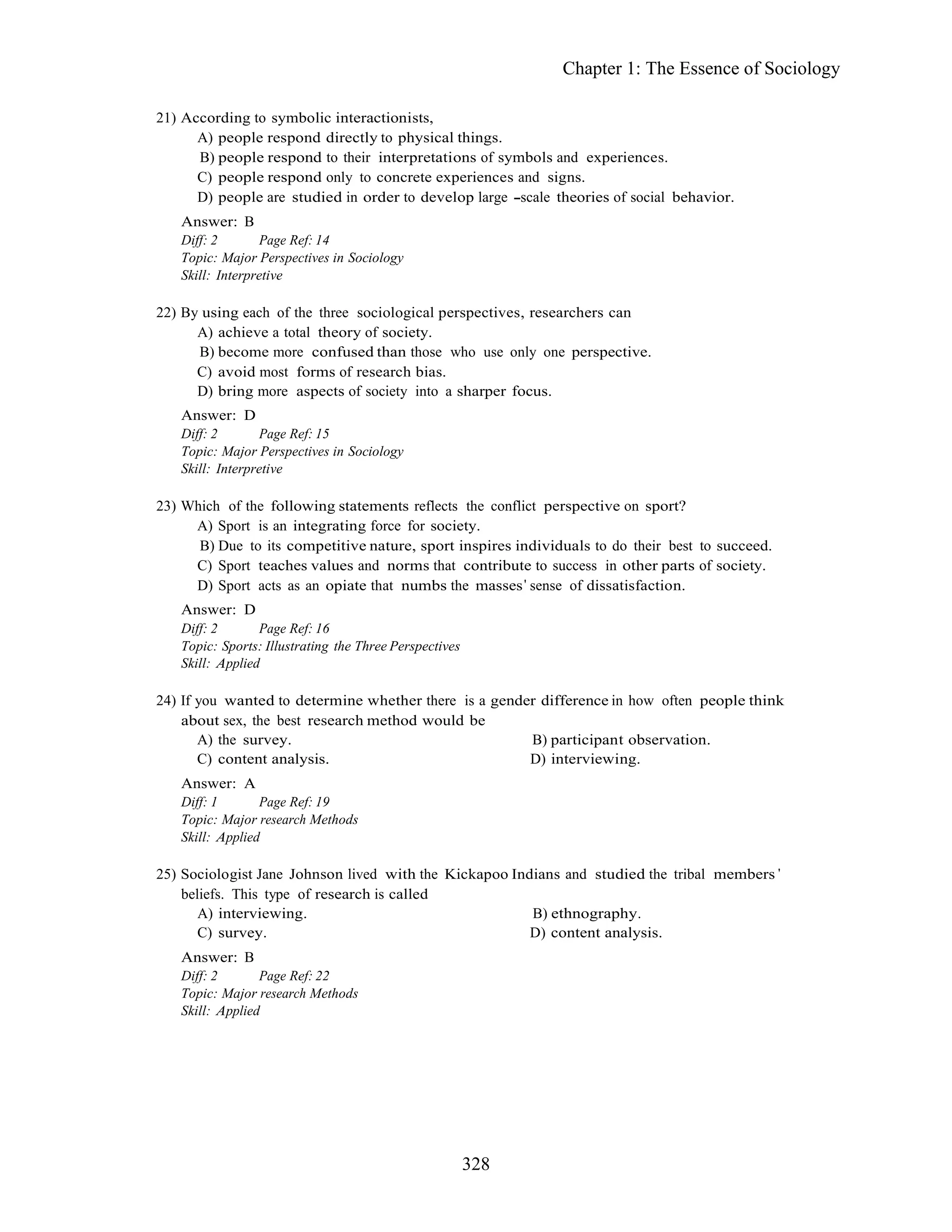
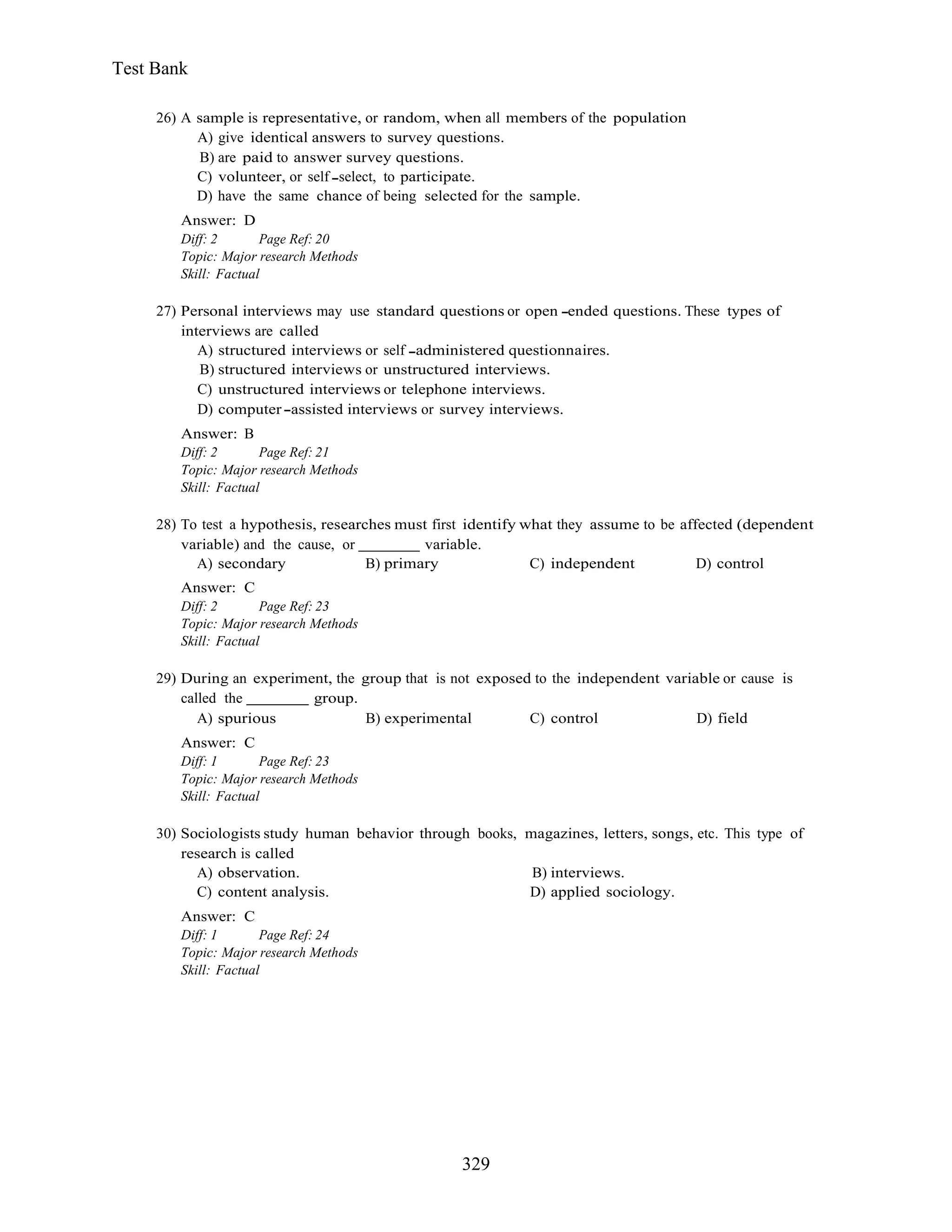
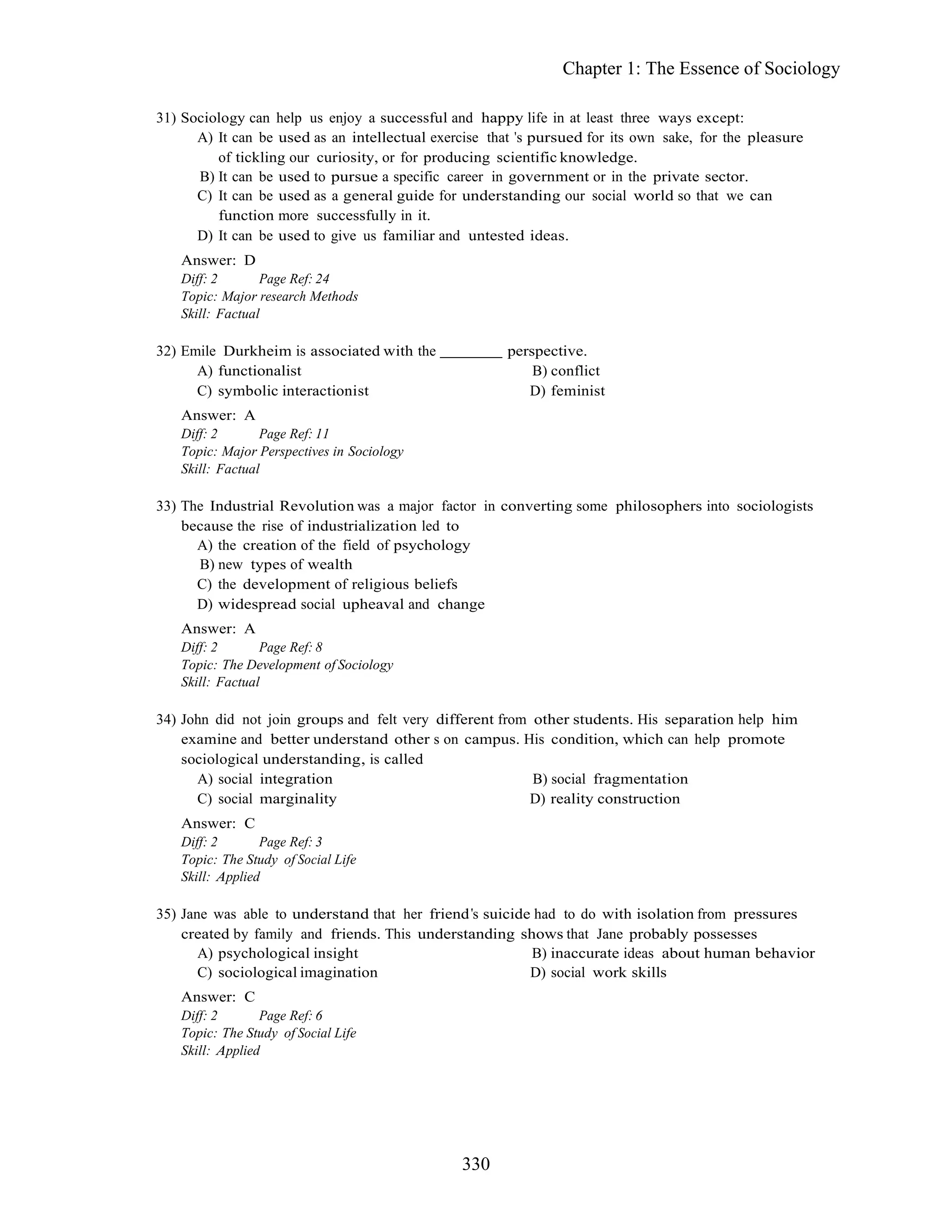
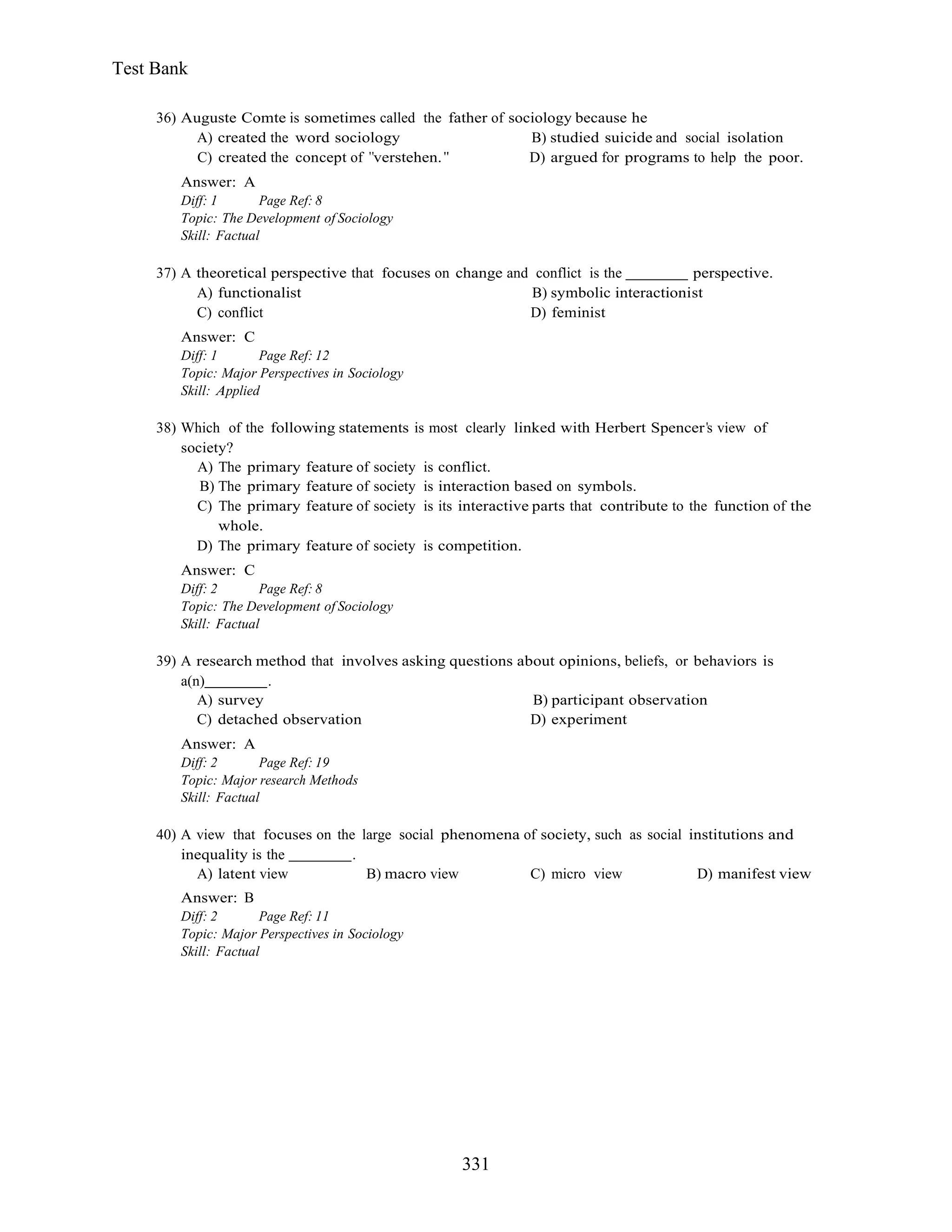
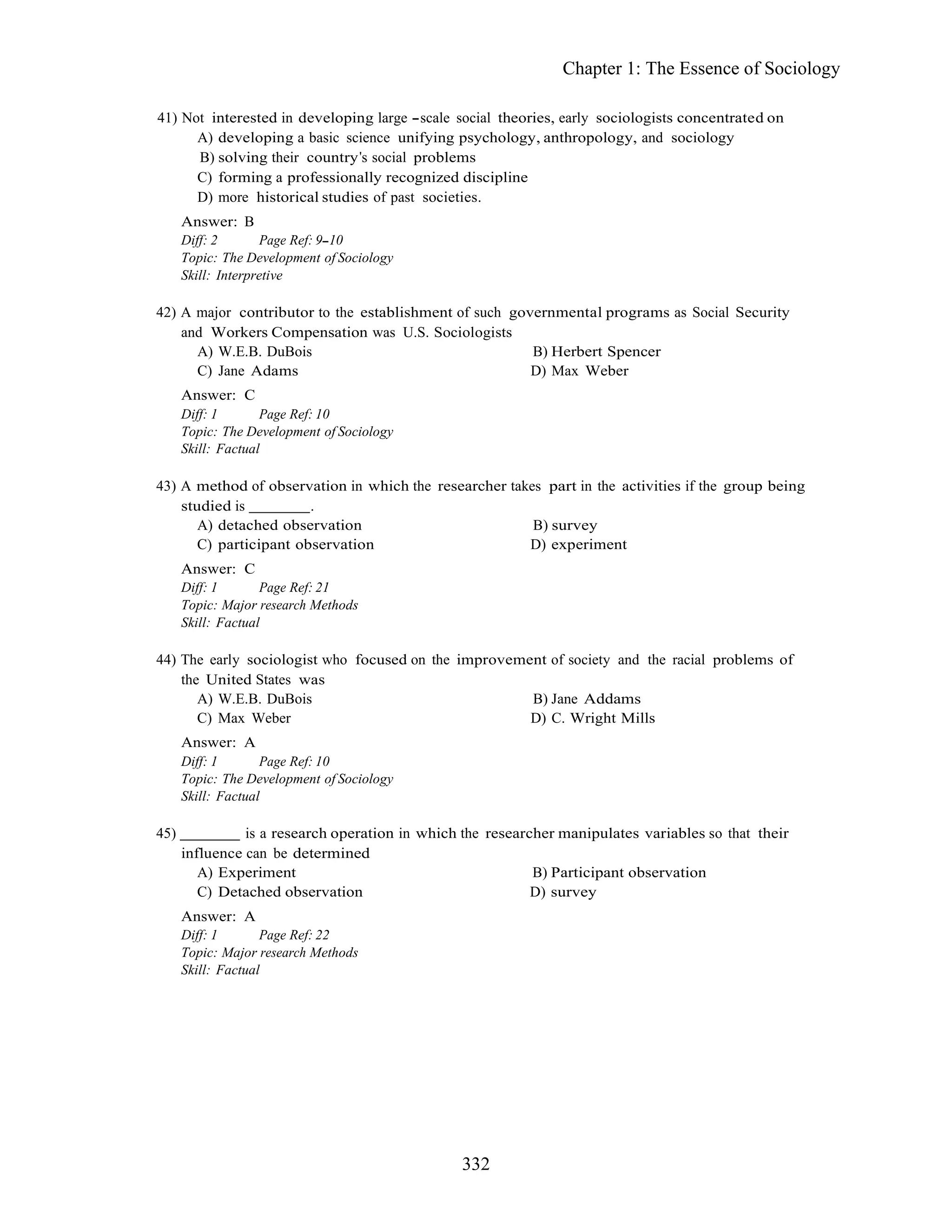

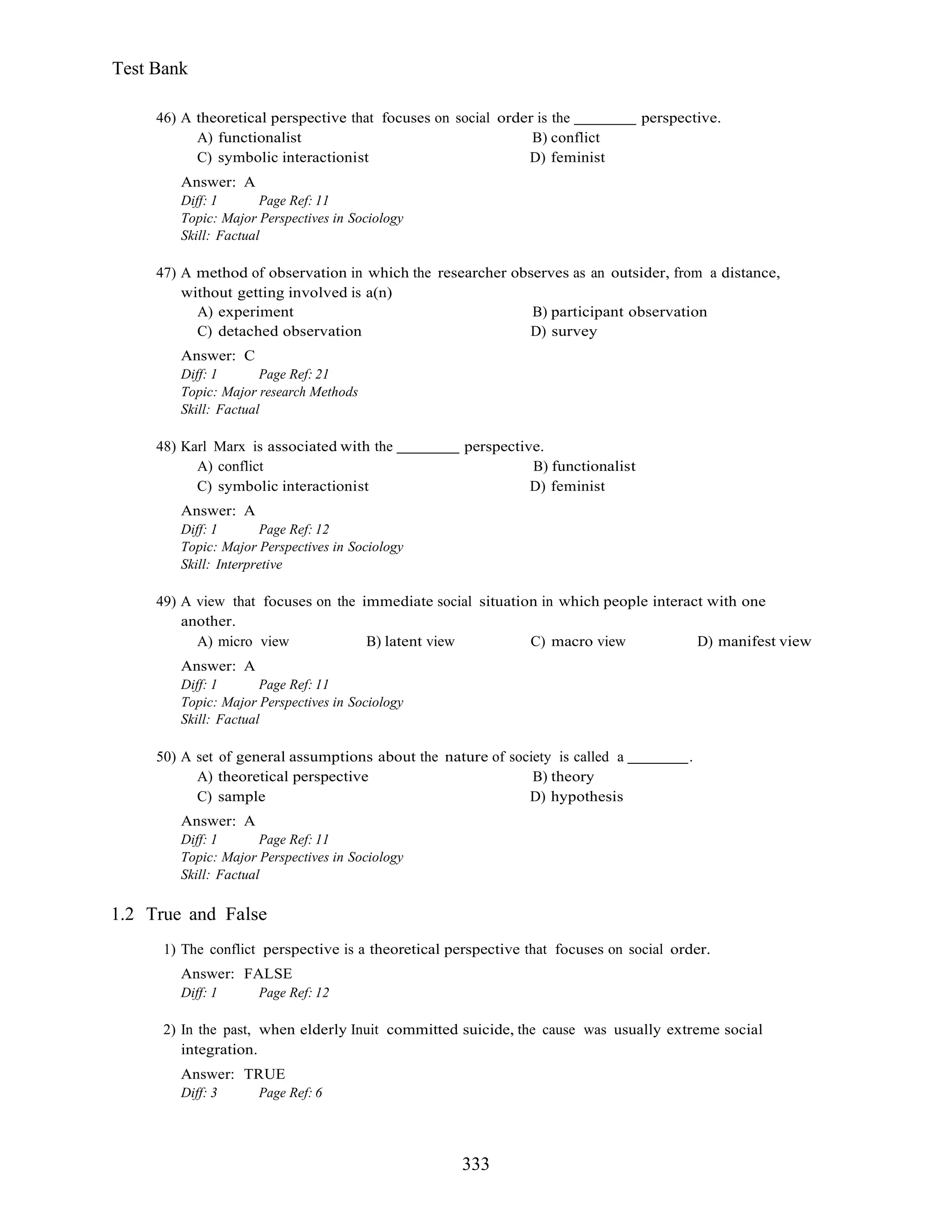
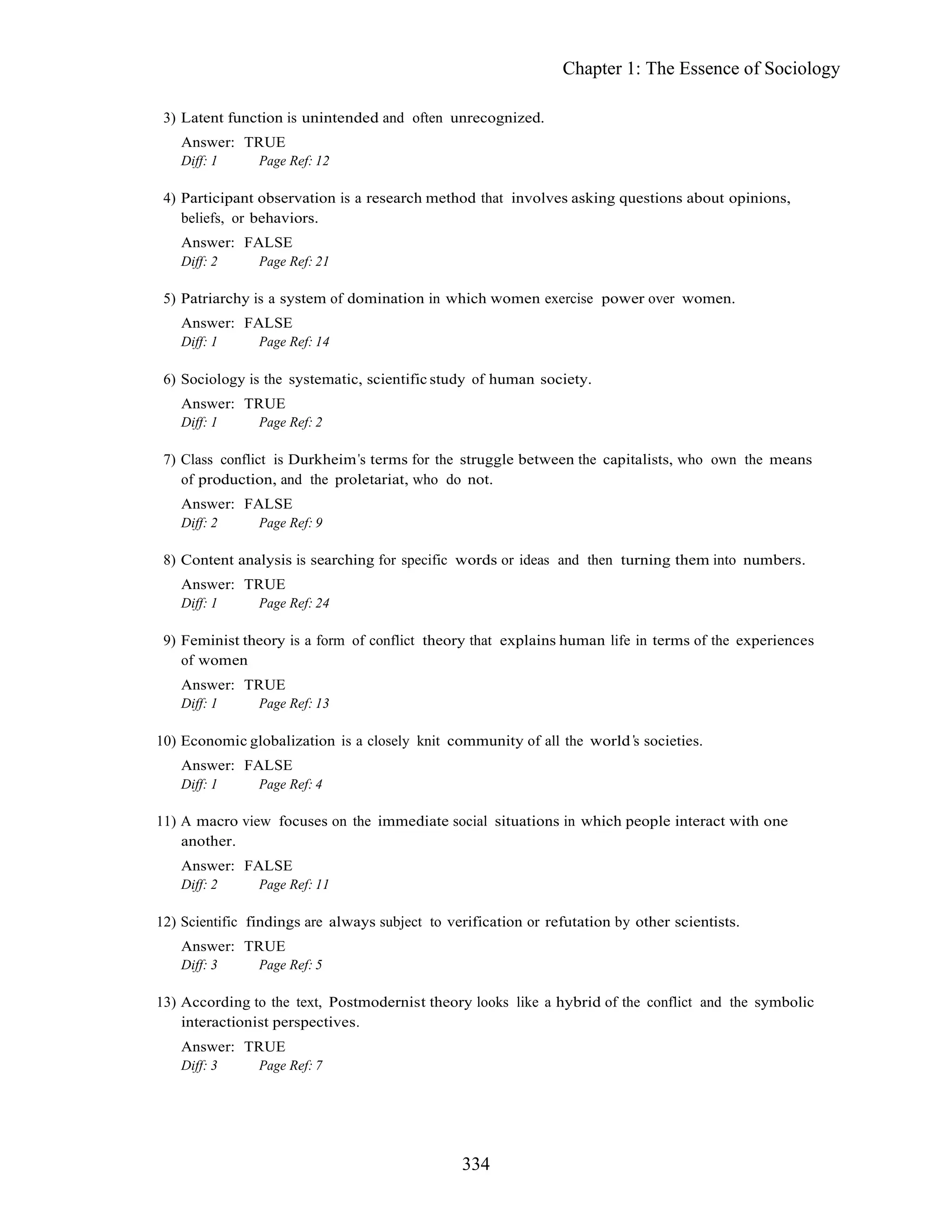
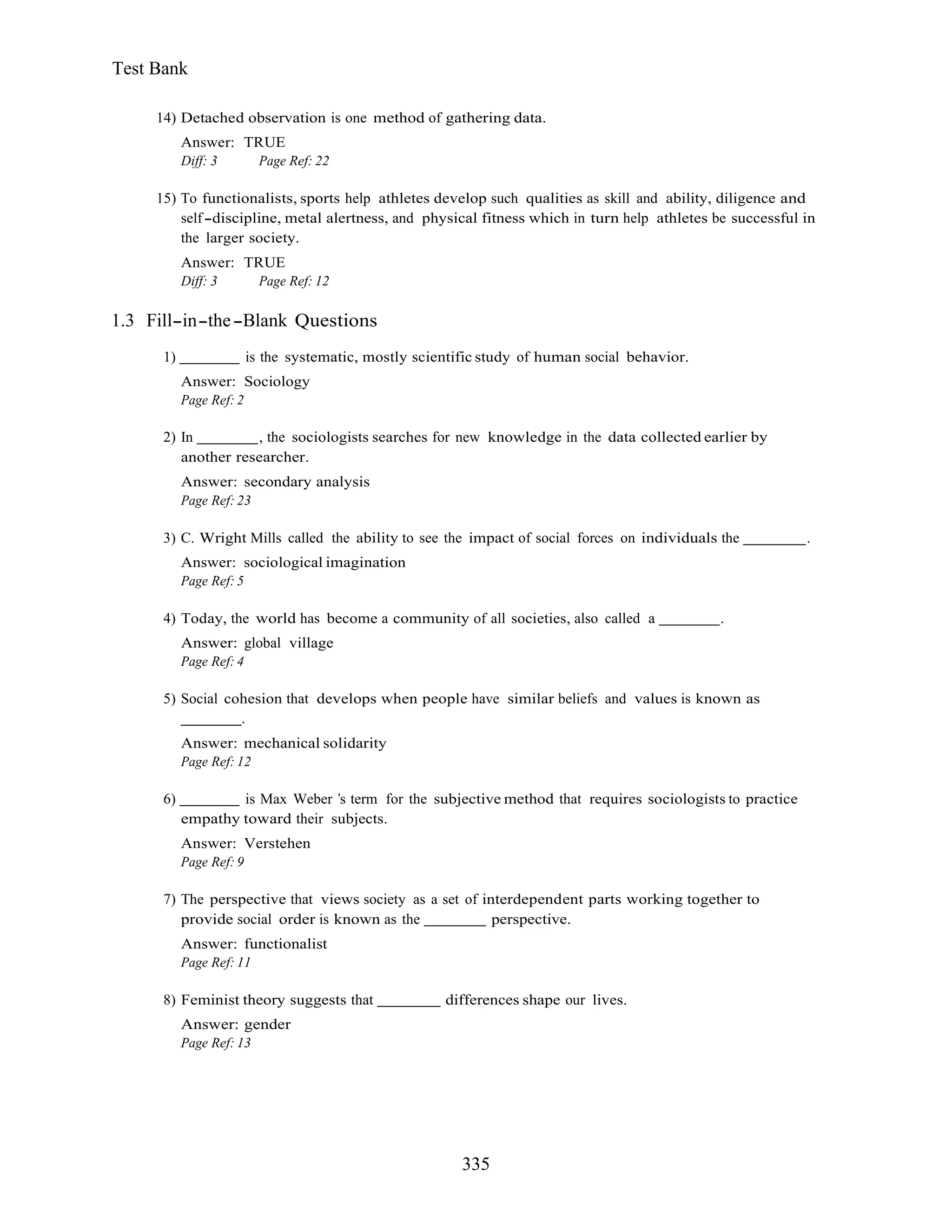

![but it is impossible to see an elephant fanning himself
without being struck by the singular elegance of motion
which he displays. The tame ones, too, indulged in the
luxury of dusting themselves with sand, by flinging it from
their trunks; but it was a curious illustration of their
delicate sagacity, that so long as the mahout was on their
necks, they confined themselves to flinging the dust along
their sides and stomach, as if aware that to throw it over
their heads and back would cause annoyance to their
riders.[254]
Sir E. Tennent has also some observations on other uses to which
tame elephants are put, which are well worth quoting. Thus,
speaking of the labour of piling timber, he says that the elephant
manifests an intelligence and dexterity which are
surprising to a stranger, because the sameness of the
operation enables the animal to go on for hours disposing
of log after log, almost without a hint or direction from his
attendant. For example, two elephants employed in piling
ebony and satinwood in the yards attached to the
commissariat stores at Colombo, were so accustomed to
their work, that they were able to accomplish it with equal
precision and with greater rapidity than if it had been
done by dock-labourers. When the pile attained a certain
height, and they were no longer able by their conjoint
efforts to raise one of the heavy logs of ebony to the
summit, they had been taught to lean two pieces against
the heap, up the inclined plane of which they gently rolled
the remaining logs, and placed them trimly on the top.
It has been asserted that in their occupations
'elephants are to a surprising extent the creatures of
habit,' that their movements are altogether mechanical,
and that 'they are annoyed by any deviation from their
accustomed practice, and resent any constrained
departure from the regularity of their course.' So far as my](https://image.slidesharecdn.com/18501-250402220718-e23d4327/75/Test-Bank-for-Sociology-A-Brief-Introduction-7th-Edition-Thio-23-2048.jpg)
![abandon his mahout, lying intoxicated in the jungle, yet
he manifests little difficulty in yielding the same
submission to a new driver in the event of a change of
attendants.[255]
Lastly, Sir E. Tennent writes:—
One evening, whilst riding in the vicinity of Candy,
towards the scene of the massacre of Major Dabies' party
in 1803, my horse evinced some excitement at a noise
which approached us in the thick jungle, and which
consisted of a repetition of the ejaculation urmph! urmph!
in a hoarse and dissatisfied tone. A turn in the forest
explained the mystery, by bringing us face to face with a
tame elephant, unaccompanied by any attendant. He was
labouring painfully to carry a heavy beam of timber, which
he balanced across his tusks, but, the pathway being
narrow, he was forced to bend his head to one side to
permit it to pass endways; and the exertion and this
inconvenience combined led him to utter the dissatisfied
sounds which disturbed the composure of my horse. On
seeing us halt, the elephant raised his head, reconnoitred
us for a moment, then flung down the timber, and
voluntarily forced himself backwards among the
brushwood so as to leave a passage, of which he
expected us to avail ourselves. My horse hesitated: the
elephant observed it, and impatiently thrust himself
deeper into the jungle, repeating his cry of urmph! but in
a voice evidently meant to encourage us to advance. Still
the horse trembled; and, anxious to observe the instinct
of the two sagacious animals, I forebore any interference:
again the elephant of his own accord wedged himself
further in amongst the trees, and manifested some
impatience that we did not pass him. At length the horse
moved forward; and when we were fairly past, I saw the
wise creature stoop and take up its heavy burden, trim](https://image.slidesharecdn.com/18501-250402220718-e23d4327/75/Test-Bank-for-Sociology-A-Brief-Introduction-7th-Edition-Thio-25-2048.jpg)





![table to the birds, and I have several times noticed that
our cat used to wait there in ambush in the expectation of
obtaining a hearty meal from one or two of the assembled
birds. Now, so far, this circumstance in itself is not an
'example of abstract reasoning.' But to continue. For the
last few days this practice of feeding the birds has been
left off. The cat, however, with an almost incredible
amount of forethought, was observed by myself, together
with two other members of the household, to scatter
crumbs on the grass with the obvious intention of enticing
the birds.[256]
Although this account, as I have said, borders on the incredible, I
have allowed it to pass, because up to a certain point it is, as I have
also said, corroborated by an observation communicated to me by
my friend Dr. Klein, F.R.S.
Dr. Klein satisfied himself that the cat he observed had
established a definite association between crumbs already sprinkled
on the garden walk, and sparrows coming to eat them; for as soon
as the crumbs were sprinkled on the walk, the cat used to conceal
himself from the walk in a neighbouring shrubbery, there to await in
ambush the coming of the birds. The latter, however, showed
themselves more wide awake than the cat, for there was a wall
running behind the shrubbery, from the top of which the birds could
see the cat in his supposed concealment, and then a long line of
sparrows used to wait watching the cat and the crumbs at the same
time, but never venturing to fly down to the latter until the former,
wearied with waiting, went away. In this case the reasoning
observation of the cat—'crumbs attract birds, therefore I will wait for
birds when crumbs are scattered'—was as complete as in the case of
Dr. Frost's cat, but the reasoning in the latter case seems to have
proceeded a stage further—'therefore I will scatter crumbs to attract
birds.'
Now, in the face of the definite statement made by Dr. Frost, that
his cat did advance to this further stage of reasoning, I have not felt](https://image.slidesharecdn.com/18501-250402220718-e23d4327/75/Test-Bank-for-Sociology-A-Brief-Introduction-7th-Edition-Thio-38-2048.jpg)
![justified in suppressing his remarkable observation. And, as lending
still further credence to the account, I may quote the corroborative
observation of another correspondent in 'Nature,' which is of value
because forming an intermediate step between the intelligence
displayed by Dr. Klein's cat and that displayed by Dr. Frost's. This
correspondent says:—
A case somewhat similar to that mentioned by Dr.
Frost, of a cat scattering crumbs, occurred here within my
own knowledge. During the recent severe winter a friend
was in the habit of throwing crumbs outside his bedroom
window. The family have a fine black cat, which, seeing
that the crumbs brought birds, would occasionally hide
herself behind some shrubs, and when the birds came for
their breakfast, would pounce out upon them with varying
success. The crumbs had been laid out as usual one
afternoon, but left untouched, and during the night a
slight fall of snow occurred. On looking out next morning
my friend observed puss busily engaged scratching away
the snow. Curious to learn what she sought, he waited,
and saw her take the crumbs up from the cleared space
and lay them one by one after another on the snow. After
doing this she retired behind the shrubs to wait further
developments. This was repeated on two other occasions.
[257]
Taking, then, these three cases together, we have an ascending
series in the grades of intelligence from that displayed by Dr. Klein's
cat, which merely observed that crumbs attracted birds, through that
of the cat which exposed the concealed crumbs for the purpose of
attracting birds, to that of Dr. Frost's cat, which actually sprinkled the
crumbs. Therefore, although, if the last-mentioned or most
remarkable case had stood alone, I should not have felt justified in
quoting it, as we find it thus led up to by other and independent
observations, I do not feel that I should be justified in suppressing it.
And, after all, regarded as an act of reason, the sprinkling of crumbs](https://image.slidesharecdn.com/18501-250402220718-e23d4327/75/Test-Bank-for-Sociology-A-Brief-Introduction-7th-Edition-Thio-39-2048.jpg)
![of bells as calls,[258] but I have one or two cases of cats jumping at
bell-wires passing from outside into houses the doors of which the
cats desired to be opened.[259] My informants tell me that they do
not know how these cats, from any process of observation, can have
surmised that pulling the wire in an exposed part of its length would
have the effect of ringing the bell; for they can never have observed
any one pulling the wires. I can only suggest that in these cases the
animals must have observed that when the bells were rung the wires
moved, and that the doors were afterwards opened; then a process
of inference must have led them to try whether jumping at the wires
would produce the same effects. But even this, which is the simplest
explanation possible, implies powers of observation scarcely less
remarkable than the process of reasoning to which they gave rise.
As further instances corroborating the fact that both these
faculties are developed in cats to a wonderful degree, I may add the
following. Couch ('Illustrations of Instinct,' p. 196) gives a case
within his own knowledge of a cat which, in order to get at milk kept
in a locked cupboard, used to unlock the door by seating herself on
an adjoining table, and 'repeatedly patting on the bow of the key
with her paw, when with a slight pull on the door' she was able to
open it; the lock was old, and the key turned in it 'on a very slight
impulse.'
As a still further instance of the high appreciation of mechanical
appliances to which cats attain, I shall quote an extract from a paper
by Mr. Otto, which will have been read at the Linnean Society before
this work is published. After describing the case of a cat opening a
thumb-latch in the same way as those already mentioned, this writer
proceeds:—
At Parara, the residence of Parker Bowman, Esq., a full-
grown cat was one day accidentally locked up in a room
without any other outlet than a small window, moving on
hinges, and kept shut by means of a swivel. Not long
afterwards the window was found open and the cat gone.
This having happened several times, it was at last found](https://image.slidesharecdn.com/18501-250402220718-e23d4327/75/Test-Bank-for-Sociology-A-Brief-Introduction-7th-Edition-Thio-43-2048.jpg)
![direction of the burrowing was really to be attributed to
thought, and not to chance.[260]
Dr. Rae also informs me with, regard to wolves, that 'they have
been frequently known to take the bait from a gun without injury to
themselves, by first cutting the line of communication between the
two.'[261] He adds:—
I may also mention what I have been told, although I
have never had an opportunity of seeing it, that wolves
watch the fishermen who set lines in deep water for trout,
through holes in the ice on Lake Superior, and very soon
after the man has left, the wolf goes up to the place,
takes hold of the stick which is placed across the hole and
attached to the line, trots off with it along the ice until the
bait is brought to the surface, then returns and eats the
bait and the fish, if any happens to be on the hook. The
trout of Lake Superior are very large, and the baits are of
a size in proportion.
Mr. Murray Browne, Inspector of the Local Government Board,
writes to me from Whitehall as follows:—
I once, at the Devil's Glen, Wicklow, found a fox fast in
a trap by the foot. We did not like to touch him, but got
sticks and poked at the trap till we got it open. The
process took ten minutes or a quarter-hour. When first we
came up the fox strained to get free, and looked frightfully
savage; but we had not poked at the trap more than a
very short time before the whole expression of his face
changed, he lay perfectly quiet (though we must at times
have hurt him); and when at last we had got the trap
completely off his foot, he still lay quiet, and looked calmly
at us, as if he knew we were friends. In fact, we had
some little difficulty in getting him to move away, which he
did readily enough when he chose. Was not this a case of
reason and good sense overpowering natural instinct?](https://image.slidesharecdn.com/18501-250402220718-e23d4327/75/Test-Bank-for-Sociology-A-Brief-Introduction-7th-Edition-Thio-50-2048.jpg)
![the jackal seize a cocoa-nut husk in his mouth, or any
similar substance, and fly at full speed, as if eager to carry
off his pretended prize, returning for the real booty at
some more convenient season.[262]
Again, Jesse records the following display of the same instinct by
the fox, as having been communicated to him by a friend on whose
veracity he could rely:—
Part of this rocky ground was on the side of a very high
hill, which was not accessible for a sportsman, and from
which both hares and foxes took their way in the evening
to the plain below. There were two channels or gullies
made by the rains, leading from these rocks to the lower
ground. Near one of these channels, the sportsman in
question, and his attendant, stationed themselves one
evening in hopes of being able to shoot some hares. They
had not been there long, when they observed a fox
coming down the gully, and followed by another. After
playing together for a little time, one of the foxes
concealed himself under a large stone or rock, which was
at the bottom of the channel, and the other returned to
the rocks. He soon, however, came back, chasing a hare
before him. As the hare was passing the stone where the
first fox had concealed himself, he tried to seize her by a
sudden spring, but missed his aim. The chasing fox then
came up, and finding that his expected prey had escaped,
through the want of skill in his associate, he fell upon him,
and they both fought with so much animosity, that the
parties who had been watching their proceedings came up
and destroyed them both.
Similarly, Mr. E. C. Buck records ('Nature,' viii., 303) the following
interesting observation made by his friend Mr. Elliot, B.C.S.,
Secretary to Government, N.W.P.:—](https://image.slidesharecdn.com/18501-250402220718-e23d4327/75/Test-Bank-for-Sociology-A-Brief-Introduction-7th-Edition-Thio-52-2048.jpg)