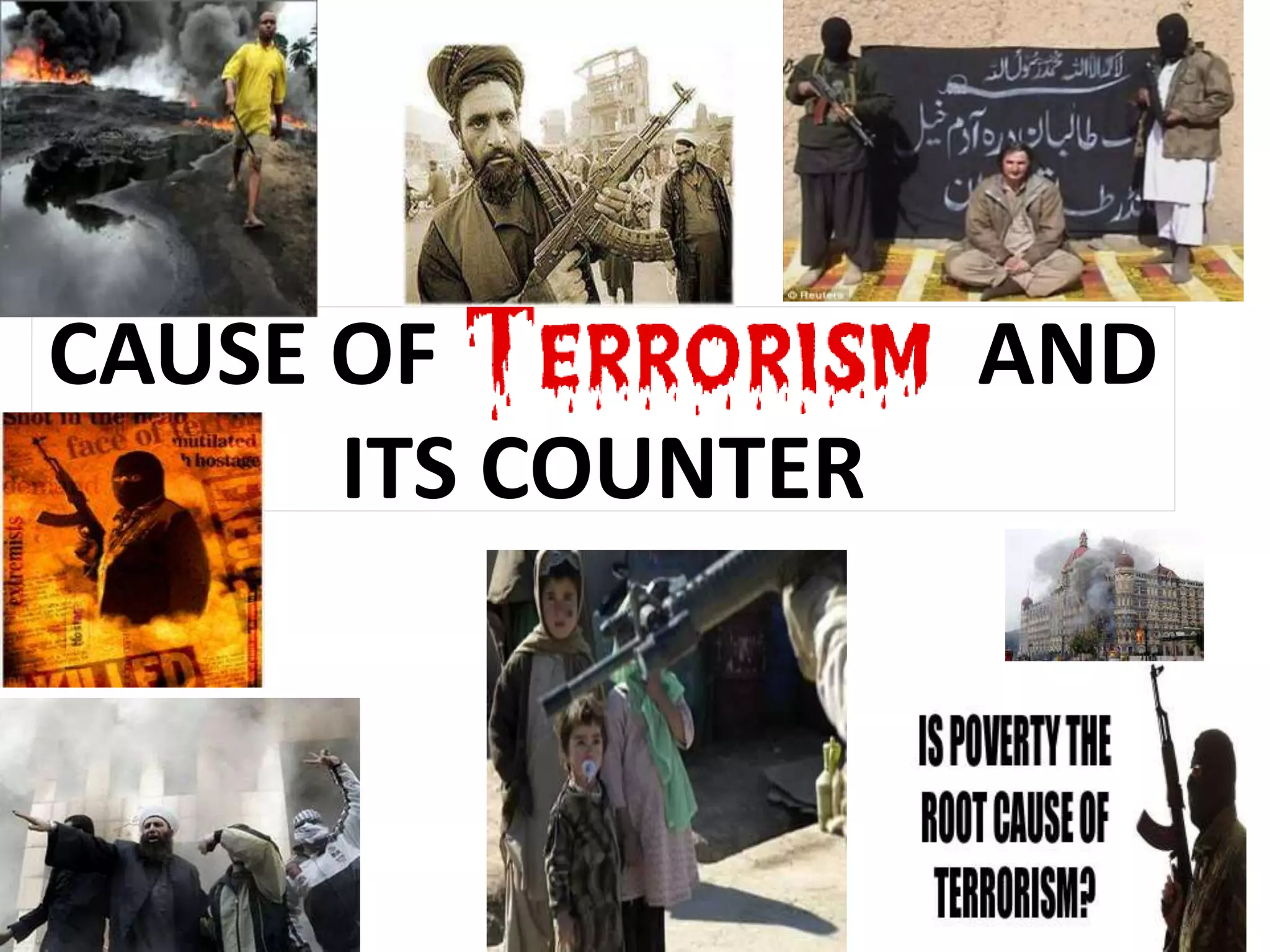
CAUSE OF AND
ITS COUNTER
WHAT IS TERRORISM ?
• The term TERRORISM come from french
terrorisme.
• Terror means ‘great fear’ ‘dread’.
• Is an unlawful act of violence
• Intimidates governments or societies
• Goal is to achieve political, religious or
ideological objectives
• Terrorism seeks to hurt a few people and to
scare a lot of people in order to make a point.
• Terrorism against the enemy is often viewed
as a religious act.
WHAT IS TERRORISM ?
Modern history of terrorism
• Middle 20th century, terrorism became a tool
used by both sides of colonial conflicts.
• The last 20 years of the 20th century religious
based terrorism became more and more
frequent.
• Another format is economic terrorism, which
destructs industry and agriculture system
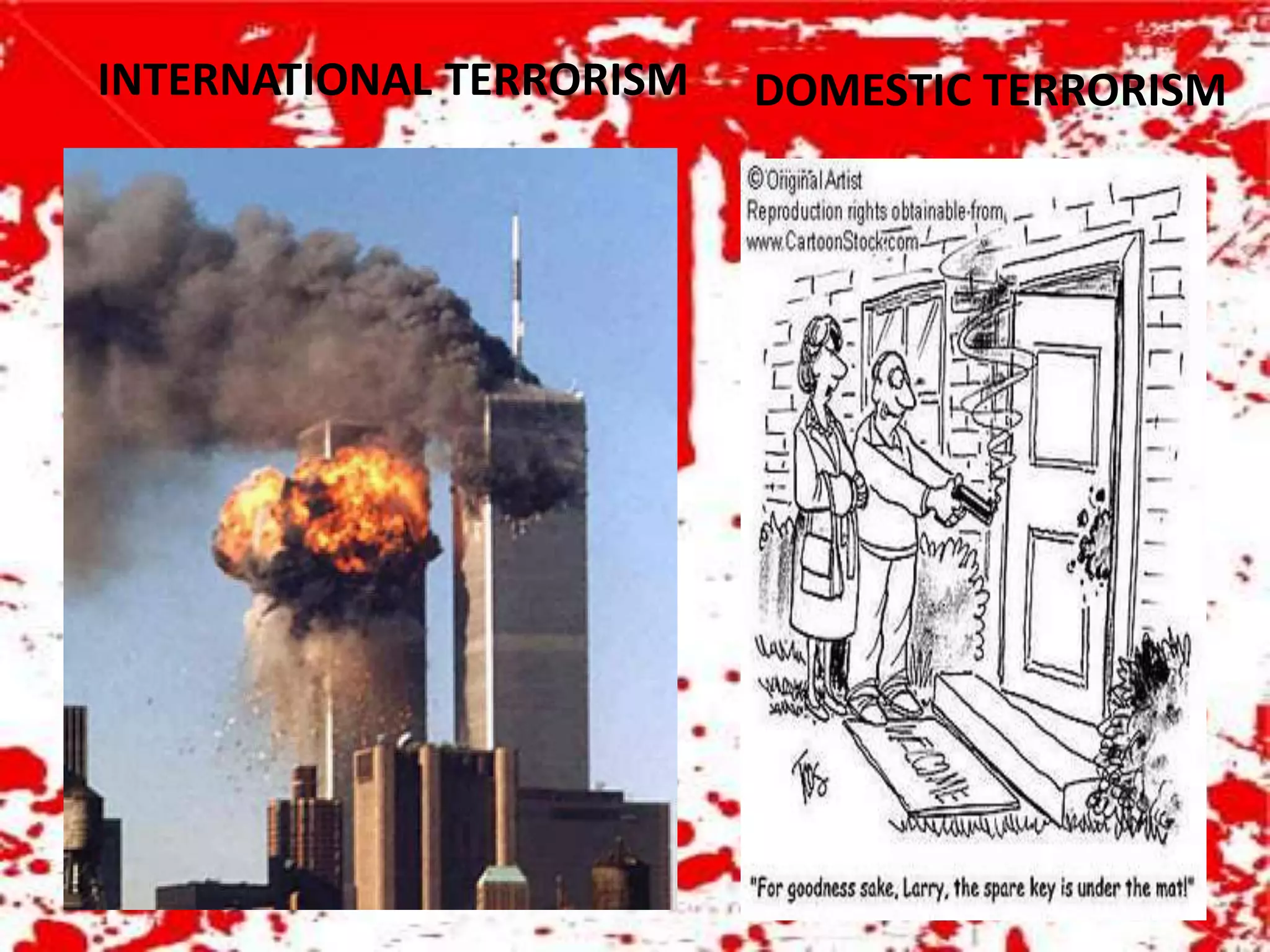
•Domestic terrorism: It involves groups whose
terrorist activities are directed at elements of our
government without foreign involvement. Oklahoma
City is a primary example.
•International terrorism: It involves groups whose
terrorist activities are foreign-based and/or directed
by countries or groups outside the United States.
Sept. 11 is an example of International Terrorism.
Types of Terrorism:
DOMESTIC TERRORISMINTERNATIONAL TERRORISM
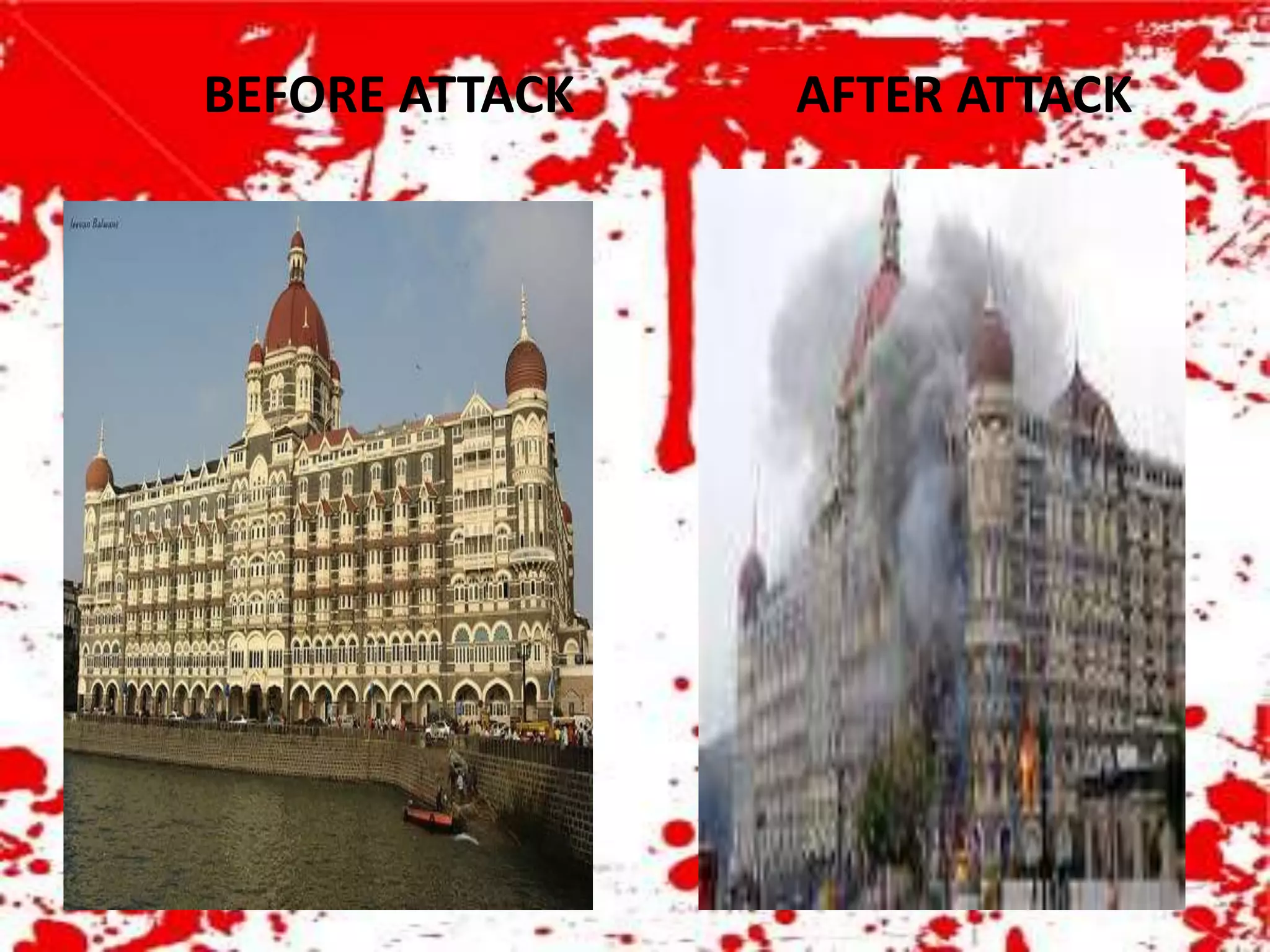
BEFORE ATTACKBEFORE ATTACK AFTER ATTACK
PREVENTION OF TERRORISM
• PRIMARY PREVENTION:-
– Education!!!
– Understand the differences in cultures, religions,
beliefs and human behaviors
– Think of the peace, freedom and equality of all
human beings, not just “my group of people”
– Eliminate the root of terrorism
Secondary prevention:
• Establish surveillance
• Monitoring system on terrorism attack
Improve protective system for citizens.
CAUSES OF TERRORISM
• Poverty: There are only a weak and indirect
relationships between poverty and terrorism
• State sponsorship of terrorism: Not a root cause
to terrorism, but an enabling factor
• Religious fanaticism: Suicidal terrorism is not
caused by religion as such, but religion may give
shape to and justification of political extremism
• Madness: Terrorists are not insane or irrational
actors
How do we counter terrorism?
•Responding to terrorism is any action taken by a
targeted interest in reply to a terrorist incident or
terrorist environment.
•Counterterrorism refers to proactive policies that
specifically seek to eliminate terrorist
environments and groups.
•Antiterrorism refers to target hardening,
enhanced security, and other defensive
measure seeking to deter or prevent terrorist attacks.
How do we counter terrorism?
• Use of Force
• Operations other than War
• Repressive Options
• Conciliatory Options
• Legalistic Options
How do we balance security and liberty?
.
Diagram taken from
Heymann, Phillip. (2003). Terrorism, Freedom, and Security. Winning Without War.
Cambridge: MIT Press.
The only thing
we have to
fear is fear
itself.
Fears are educated into us & can,
if we wish, be educated out. —
Karl A. Menninger
THANK YOU
PRESENTED BY:ANAM ZAHIDI

Terrorism

  • 1.
  • 2.
    WHAT IS TERRORISM? • The term TERRORISM come from french terrorisme. • Terror means ‘great fear’ ‘dread’. • Is an unlawful act of violence • Intimidates governments or societies • Goal is to achieve political, religious or ideological objectives
  • 3.
    • Terrorism seeksto hurt a few people and to scare a lot of people in order to make a point. • Terrorism against the enemy is often viewed as a religious act. WHAT IS TERRORISM ?
  • 4.
    Modern history ofterrorism • Middle 20th century, terrorism became a tool used by both sides of colonial conflicts. • The last 20 years of the 20th century religious based terrorism became more and more frequent. • Another format is economic terrorism, which destructs industry and agriculture system
  • 6.
    •Domestic terrorism: Itinvolves groups whose terrorist activities are directed at elements of our government without foreign involvement. Oklahoma City is a primary example. •International terrorism: It involves groups whose terrorist activities are foreign-based and/or directed by countries or groups outside the United States. Sept. 11 is an example of International Terrorism. Types of Terrorism:
  • 7.
  • 10.
  • 11.
    PREVENTION OF TERRORISM •PRIMARY PREVENTION:- – Education!!! – Understand the differences in cultures, religions, beliefs and human behaviors – Think of the peace, freedom and equality of all human beings, not just “my group of people” – Eliminate the root of terrorism
  • 12.
    Secondary prevention: • Establishsurveillance • Monitoring system on terrorism attack Improve protective system for citizens.
  • 13.
    CAUSES OF TERRORISM •Poverty: There are only a weak and indirect relationships between poverty and terrorism • State sponsorship of terrorism: Not a root cause to terrorism, but an enabling factor • Religious fanaticism: Suicidal terrorism is not caused by religion as such, but religion may give shape to and justification of political extremism • Madness: Terrorists are not insane or irrational actors
  • 14.
    How do wecounter terrorism? •Responding to terrorism is any action taken by a targeted interest in reply to a terrorist incident or terrorist environment. •Counterterrorism refers to proactive policies that specifically seek to eliminate terrorist environments and groups. •Antiterrorism refers to target hardening, enhanced security, and other defensive measure seeking to deter or prevent terrorist attacks.
  • 15.
    How do wecounter terrorism? • Use of Force • Operations other than War • Repressive Options • Conciliatory Options • Legalistic Options
  • 16.
    How do webalance security and liberty? . Diagram taken from Heymann, Phillip. (2003). Terrorism, Freedom, and Security. Winning Without War. Cambridge: MIT Press.
  • 17.
    The only thing wehave to fear is fear itself. Fears are educated into us & can, if we wish, be educated out. — Karl A. Menninger
  • 18.