EFFECTIVE
TEACHING
STRATEGIES
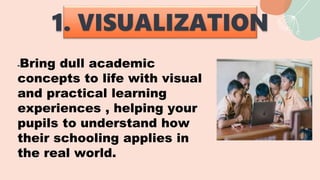
1. VISUALIZATION
-Bring dull academic
concepts to life with visual
and practical learning
experiences , helping your
pupils to understand how
their schooling applies in
the real world.
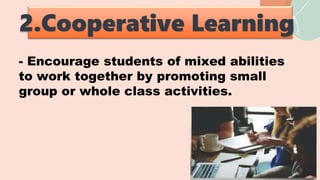
2.Cooperative Learning
- Encourage students of mixed abilities
to work together by promoting small
group or whole class activities.
2.Cooperative Learning
- Solving mathematical
puzzles, conducting
scientific experiments and
acting out short drama are
just a few examples of how
cooperative learning can be
incorporated into classroom
lessons.
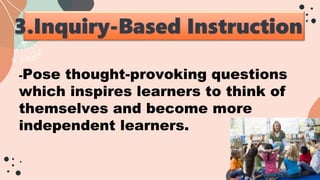
3.Inquiry-Based Instruction
-Pose thought-provoking questions
which inspires learners to think of
themselves and become more
independent learners.
3.Inquiry-Based Instruction
-Encouraging learners to ask questions and
investigate their own ideas helps improve their
problem-solving skills as well as gain a deeper
understanding of academic concepts. Both of
which are important life skills.
4.Differentiation
-Assigning classroom strategies to pupils’
unique learning needs means individuals with
higher academic capabilities are stretched and
those who are struggling get the appropriate
support.
4.Differentiation
-This can involve handing out worksheets that
vary in complexity to different groups of
learners.
5. Technology in the Classroom
-Interactive whiteboards or mobile
devices can be used to display
images and videos, which helps
learners visualize new academic
concepts. Learning can become
more interactive and pupils can
physically engage during lessons
as well as instantly research their
ideas, which develops autonomy.
5. Technology in the Classroom
-Mobile devices can be used in the classroom
for pupils to record results, take photos/videos,
or simply as a behavior management technique.
6. Behavior Management
-Implementing an effective behavior management
strategy is crucial to gain your pupils’ respect and
ensure pupils have an equal chance of reaching
their full potential. Developing an atmosphere of
mutual respect through a combination of discipline
and reward can be beneficial for both you and your
pupils.
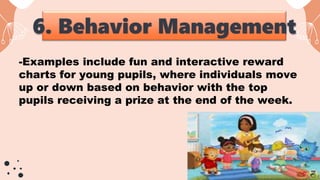
6. Behavior Management
-Examples include fun and interactive reward
charts for young pupils, where individuals move
up or down based on behavior with the top
pupils receiving a prize at the end of the week.
7. Professional Development
-Engaging in regular professional development
programs is a great way to enhance teaching
strategy and learning in classroom.
7. Professional Development
-With educational policies constantly changing
it is extremely useful to attend events where
you can gain inspiration from other teachers
and academics. It’s also great excuse to get out
of the classroom and work alongside other
teachers like you!

Teaching Strategies.pptx

  • 1.
  • 2.
    1. VISUALIZATION -Bring dullacademic concepts to life with visual and practical learning experiences , helping your pupils to understand how their schooling applies in the real world.
  • 3.
    2.Cooperative Learning - Encouragestudents of mixed abilities to work together by promoting small group or whole class activities.
  • 4.
    2.Cooperative Learning - Solvingmathematical puzzles, conducting scientific experiments and acting out short drama are just a few examples of how cooperative learning can be incorporated into classroom lessons.
  • 5.
    3.Inquiry-Based Instruction -Pose thought-provokingquestions which inspires learners to think of themselves and become more independent learners.
  • 6.
    3.Inquiry-Based Instruction -Encouraging learnersto ask questions and investigate their own ideas helps improve their problem-solving skills as well as gain a deeper understanding of academic concepts. Both of which are important life skills.
  • 7.
    4.Differentiation -Assigning classroom strategiesto pupils’ unique learning needs means individuals with higher academic capabilities are stretched and those who are struggling get the appropriate support.
  • 8.
    4.Differentiation -This can involvehanding out worksheets that vary in complexity to different groups of learners.
  • 9.
    5. Technology inthe Classroom -Interactive whiteboards or mobile devices can be used to display images and videos, which helps learners visualize new academic concepts. Learning can become more interactive and pupils can physically engage during lessons as well as instantly research their ideas, which develops autonomy.
  • 10.
    5. Technology inthe Classroom -Mobile devices can be used in the classroom for pupils to record results, take photos/videos, or simply as a behavior management technique.
  • 11.
    6. Behavior Management -Implementingan effective behavior management strategy is crucial to gain your pupils’ respect and ensure pupils have an equal chance of reaching their full potential. Developing an atmosphere of mutual respect through a combination of discipline and reward can be beneficial for both you and your pupils.
  • 12.
    6. Behavior Management -Examplesinclude fun and interactive reward charts for young pupils, where individuals move up or down based on behavior with the top pupils receiving a prize at the end of the week.
  • 13.
    7. Professional Development -Engagingin regular professional development programs is a great way to enhance teaching strategy and learning in classroom.
  • 14.
    7. Professional Development -Witheducational policies constantly changing it is extremely useful to attend events where you can gain inspiration from other teachers and academics. It’s also great excuse to get out of the classroom and work alongside other teachers like you!