Teaching	
  Soft	
  Skills	
  in	


      Healthcare	
  Professions	


                                              by Lori Tyler
                                  Lori Tyler & Associates


©Tyler & Associates, Inc., 2012
What	
  are	
  Soft	
  
 Skills?	
  

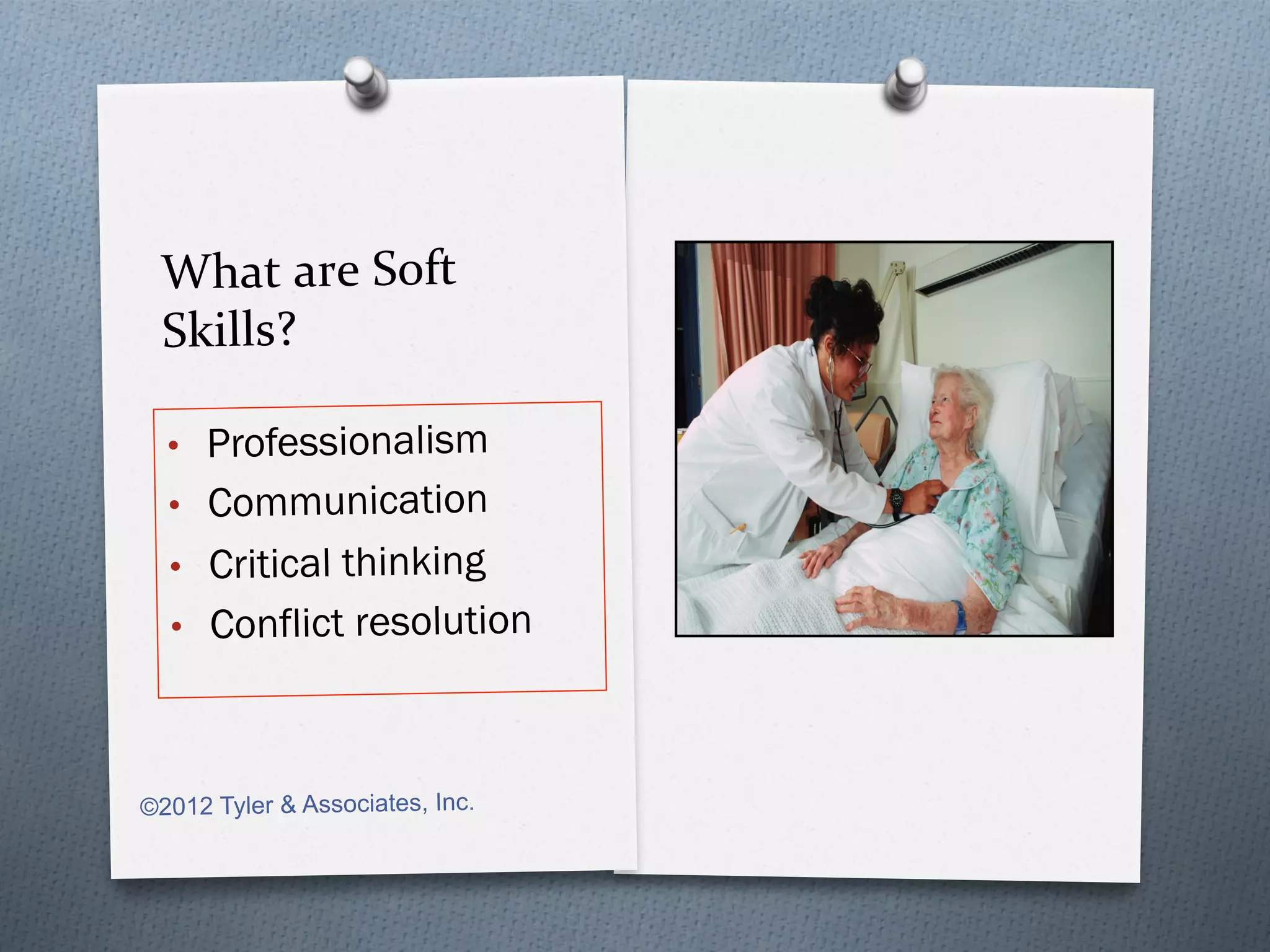
  •  Professionalism
  •  Communication
  •  Critical thinking
  •  Conflict resolution


©2012 Tyler & Associates, Inc.
Why	
  Teach	
  Soft	
  Skills?	
  
     Research has found that the use of soft
   skills make for a productive, happy staff and
                 satisfied patients.


           Soft skills are a major focus of many
                 accreditation standards

Tyler & Associates, Inc.
Employers
   kn o w


                                 People are the key


©2012 Tyler & Associates, Inc.
Teaching	
  Soft	
  Skills	


                             to adults in healthcare professions


©2012 Tyler & Associates, Inc.
Three	
  needs	
  of	
  adults	
  	
  
  in	
  the	
  workplace	
  
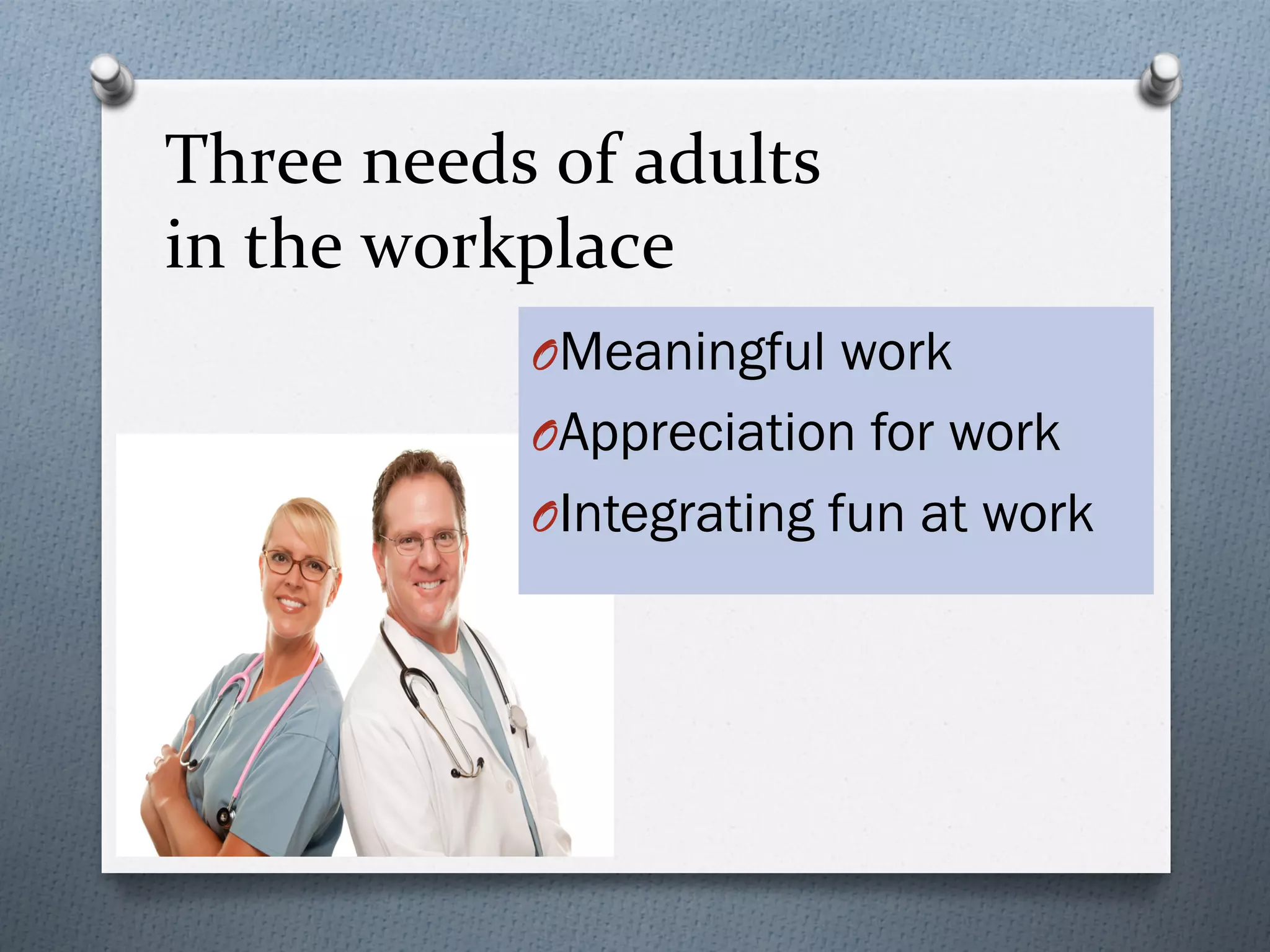
                           O Meaningful work
                           O Appreciation for work
                           O Integrating fun at work


Tyler & Associates, Inc.
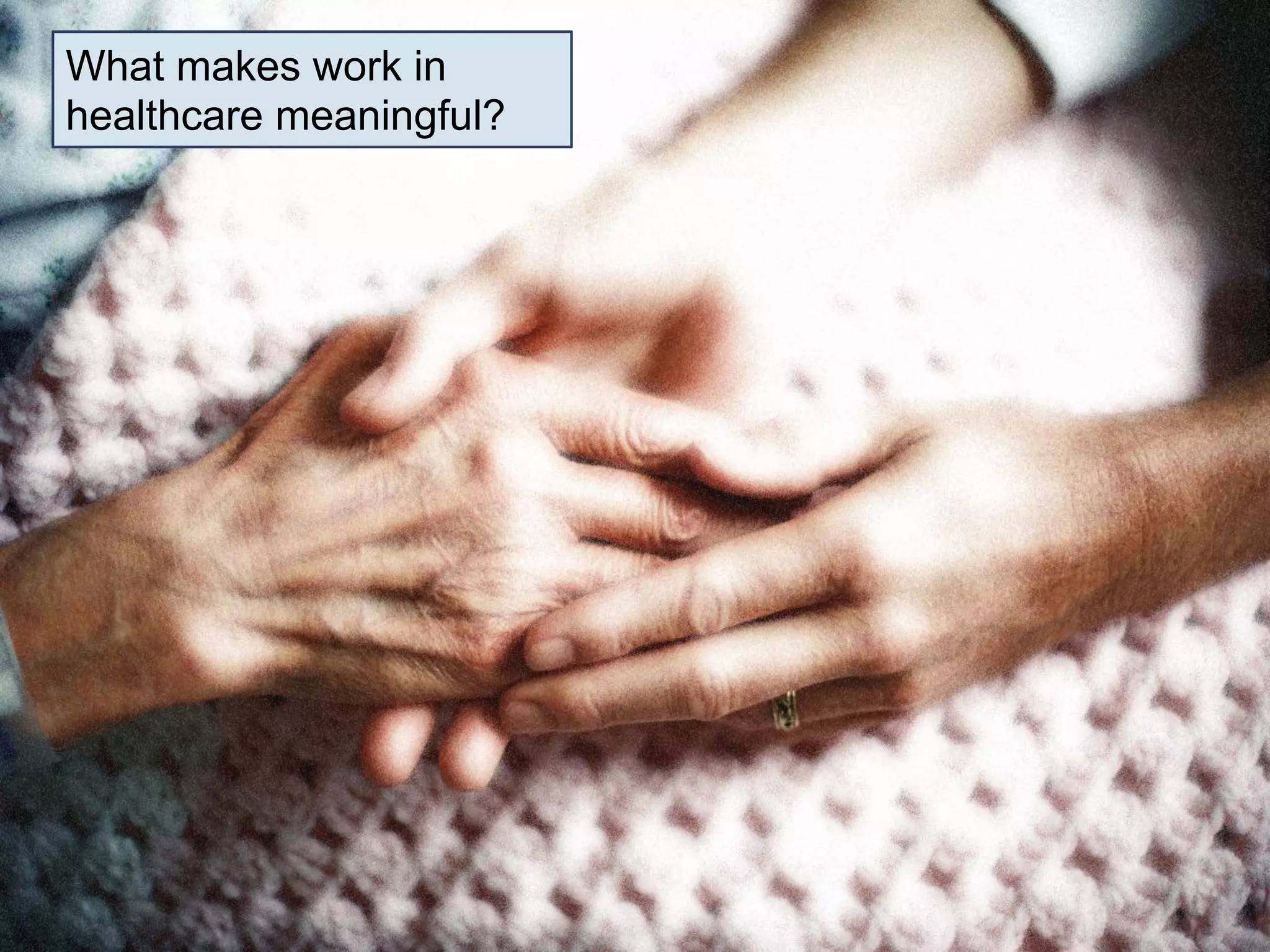
What makes work in
healthcare meaningful?
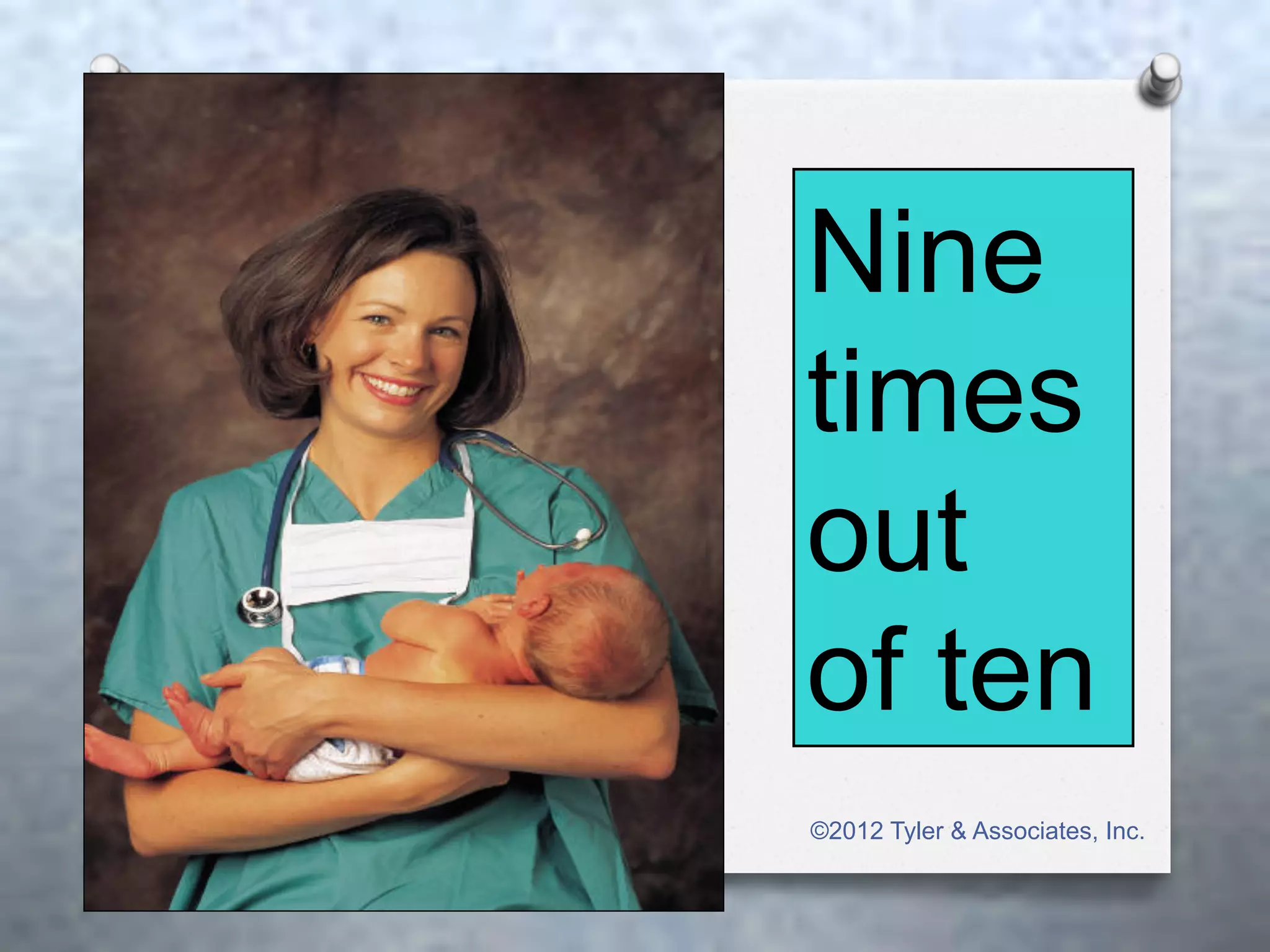
Nine
times
out
of ten
©2012 Tyler & Associates, Inc.
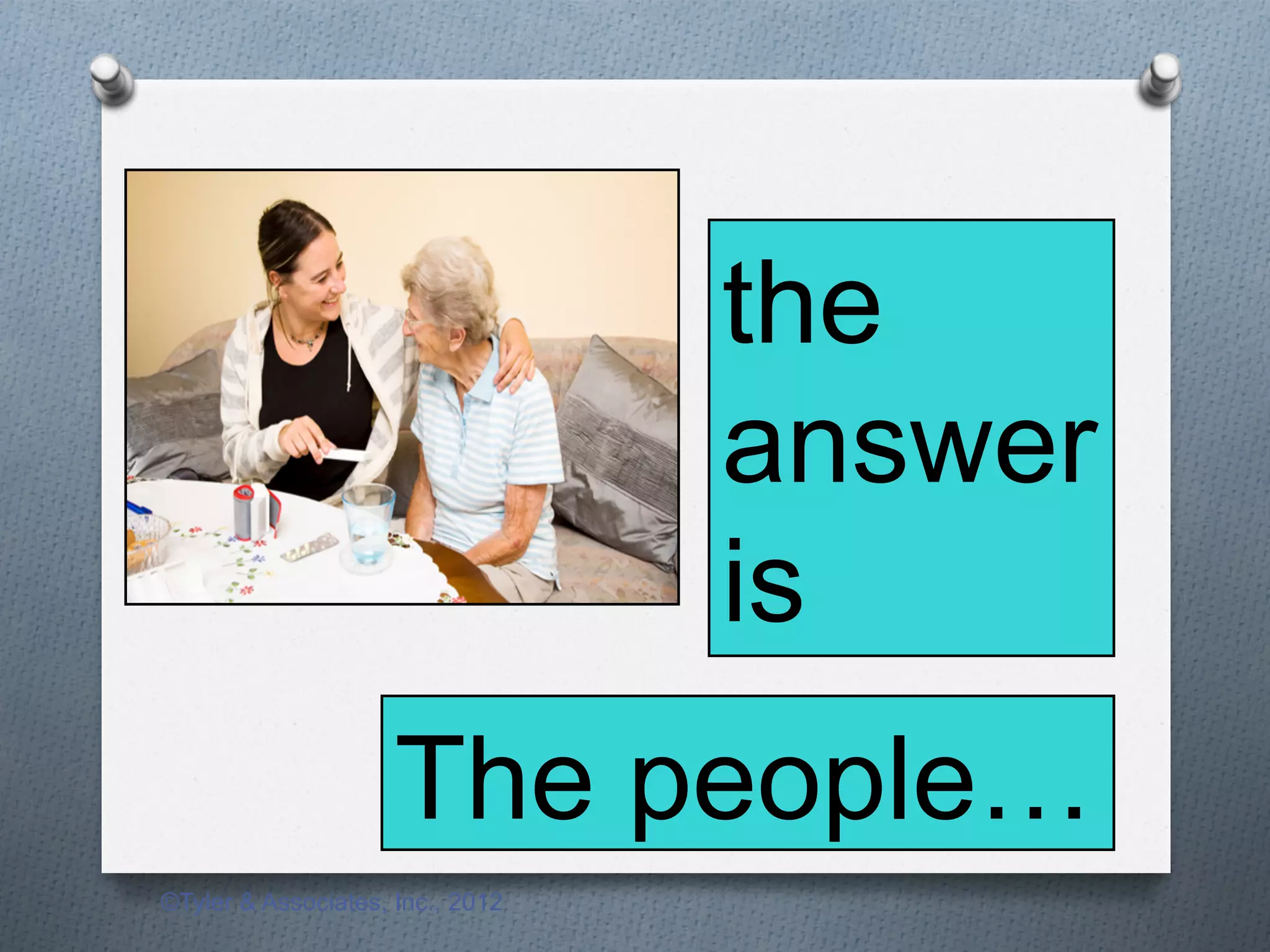
the
                                  answer
                                  is
                     The people…
©Tyler & Associates, Inc., 2012
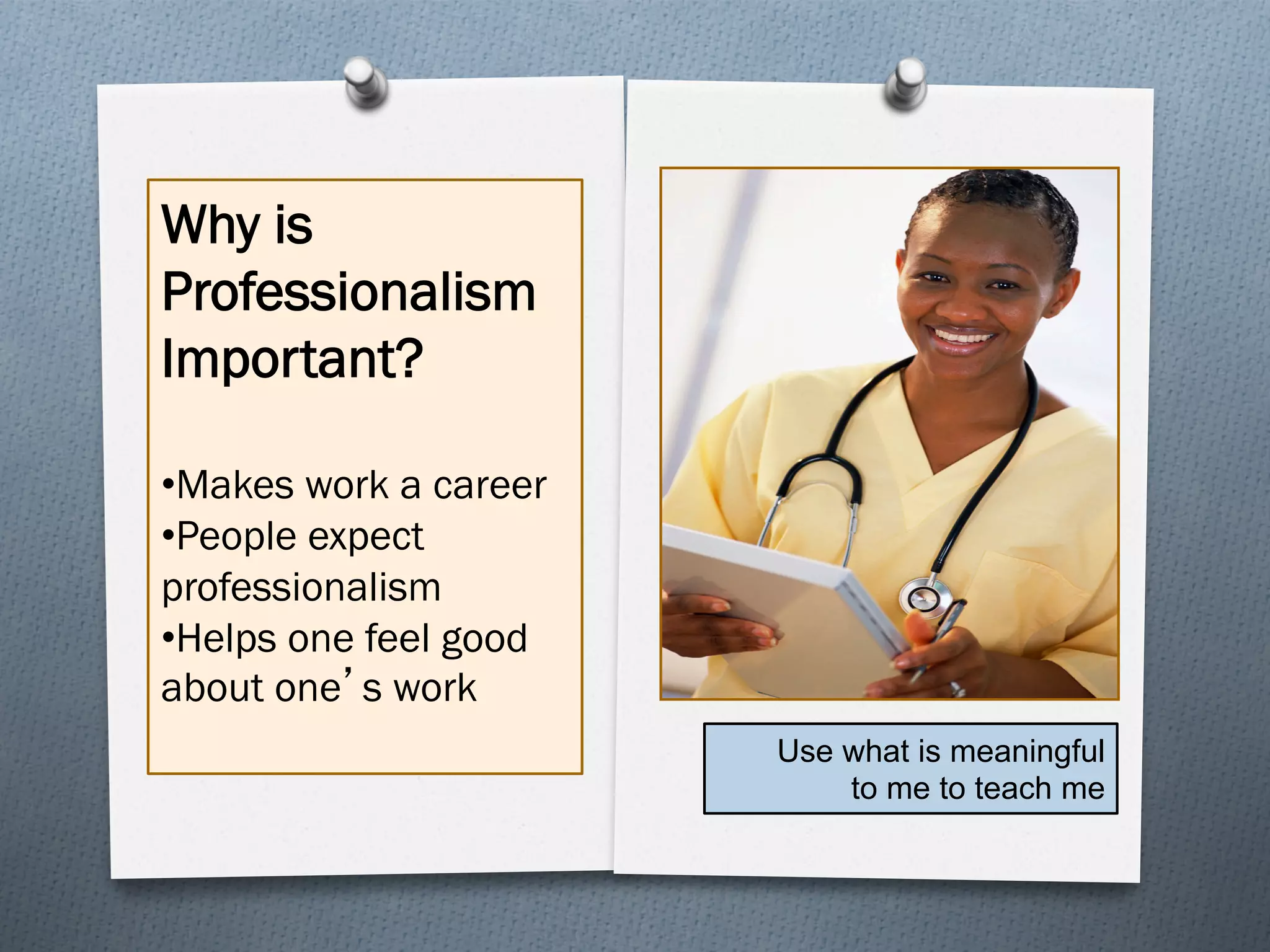
Why is
Professionalism
Important?

• Makes work a career
• People expect
professionalism
• Helps one feel good
about one’s work
                        Use what is meaningful
                            to me to teach me
Set	
  the	
  Expectation	
  
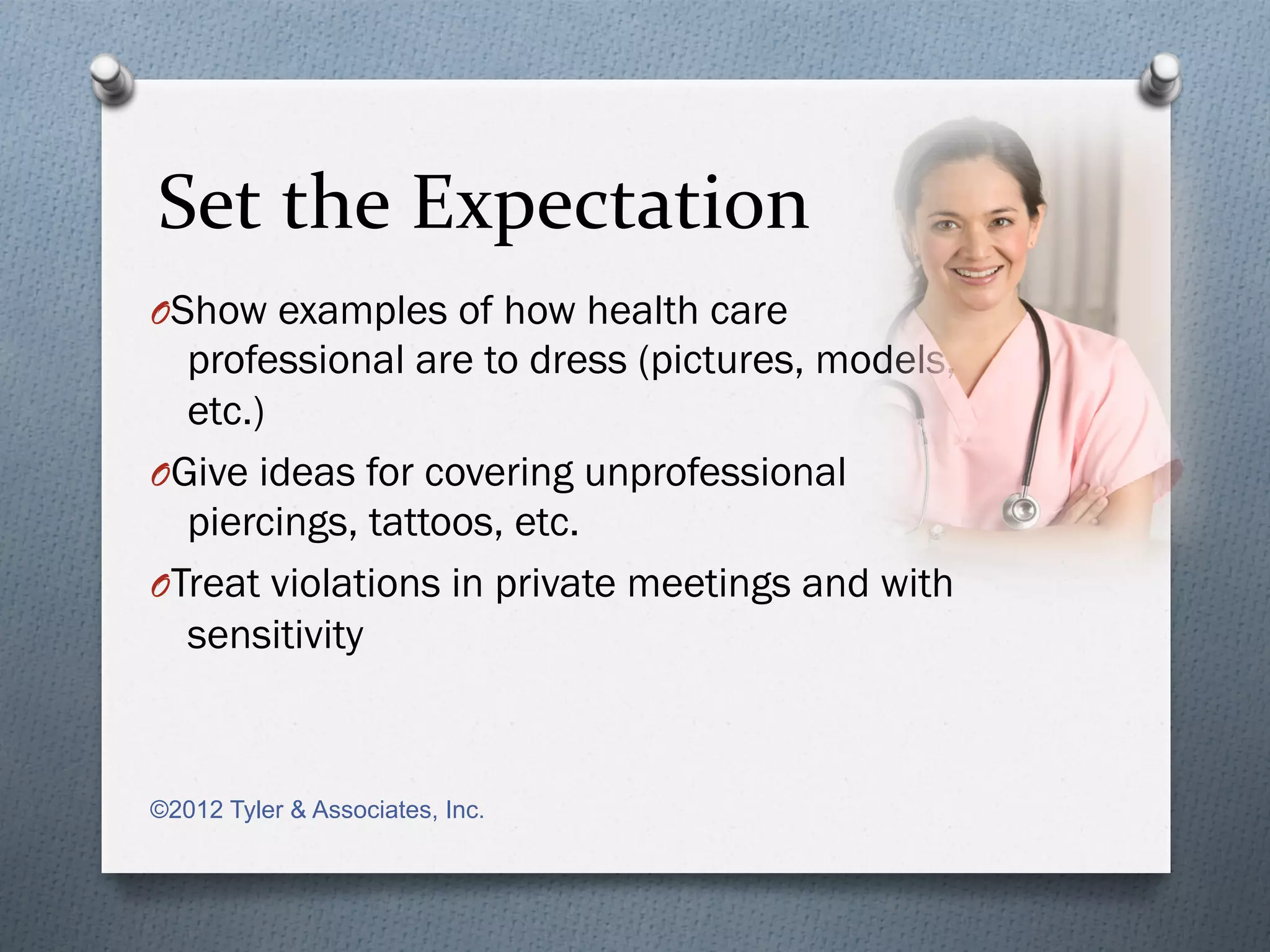
O Show examples of how health care
   professional are to dress (pictures, models,
   etc.)
O Give ideas for covering unprofessional
   piercings, tattoos, etc.
O Treat violations in private meetings and with
   sensitivity


©2012 Tyler & Associates, Inc.
Practice	
  Communication	
  Skills	
  
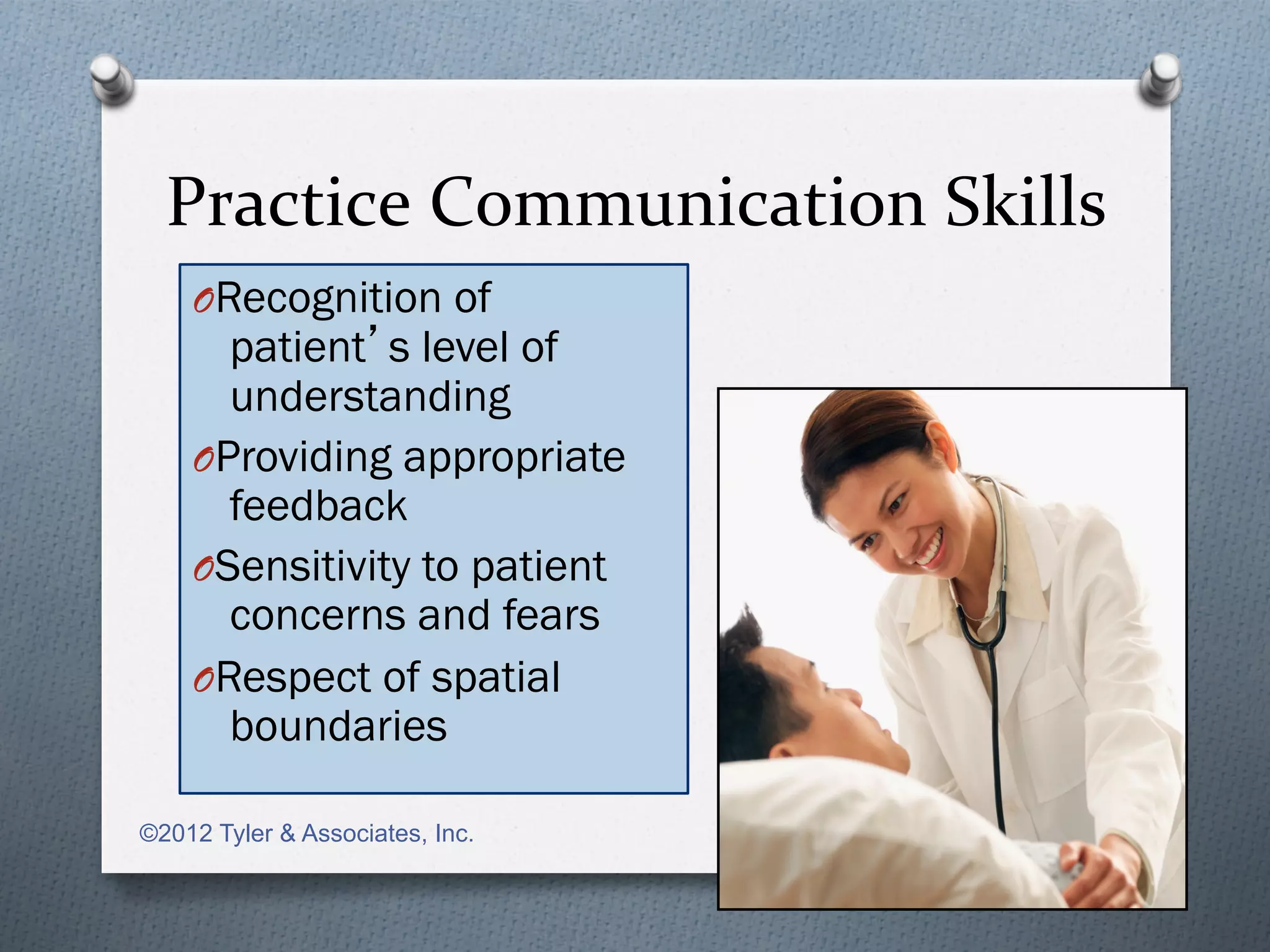
    O Recognition of
       patient’s level of
       understanding
    O Providing appropriate
       feedback
    O Sensitivity to patient
       concerns and fears
    O Respect of spatial
       boundaries

©2012 Tyler & Associates, Inc.
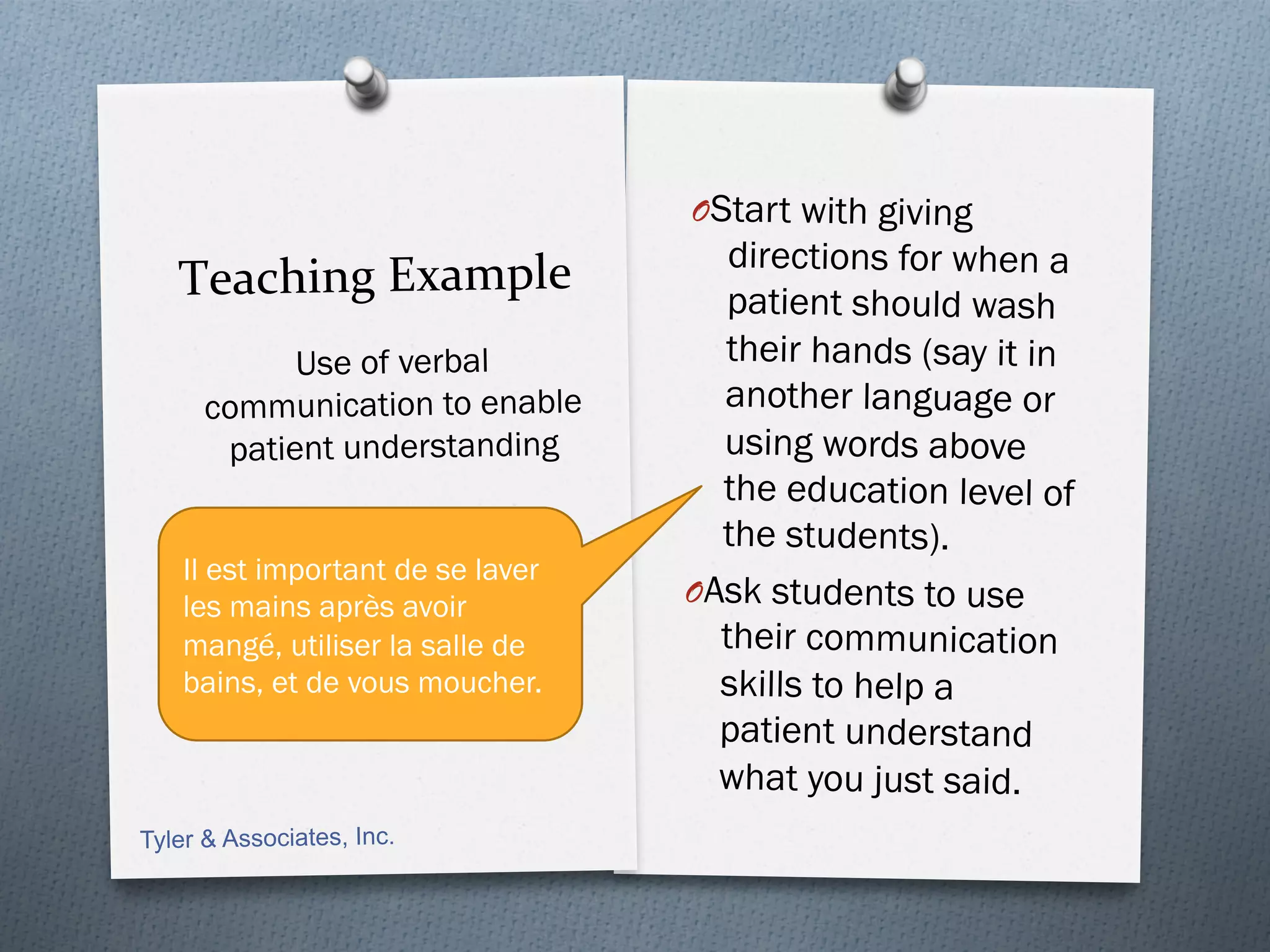
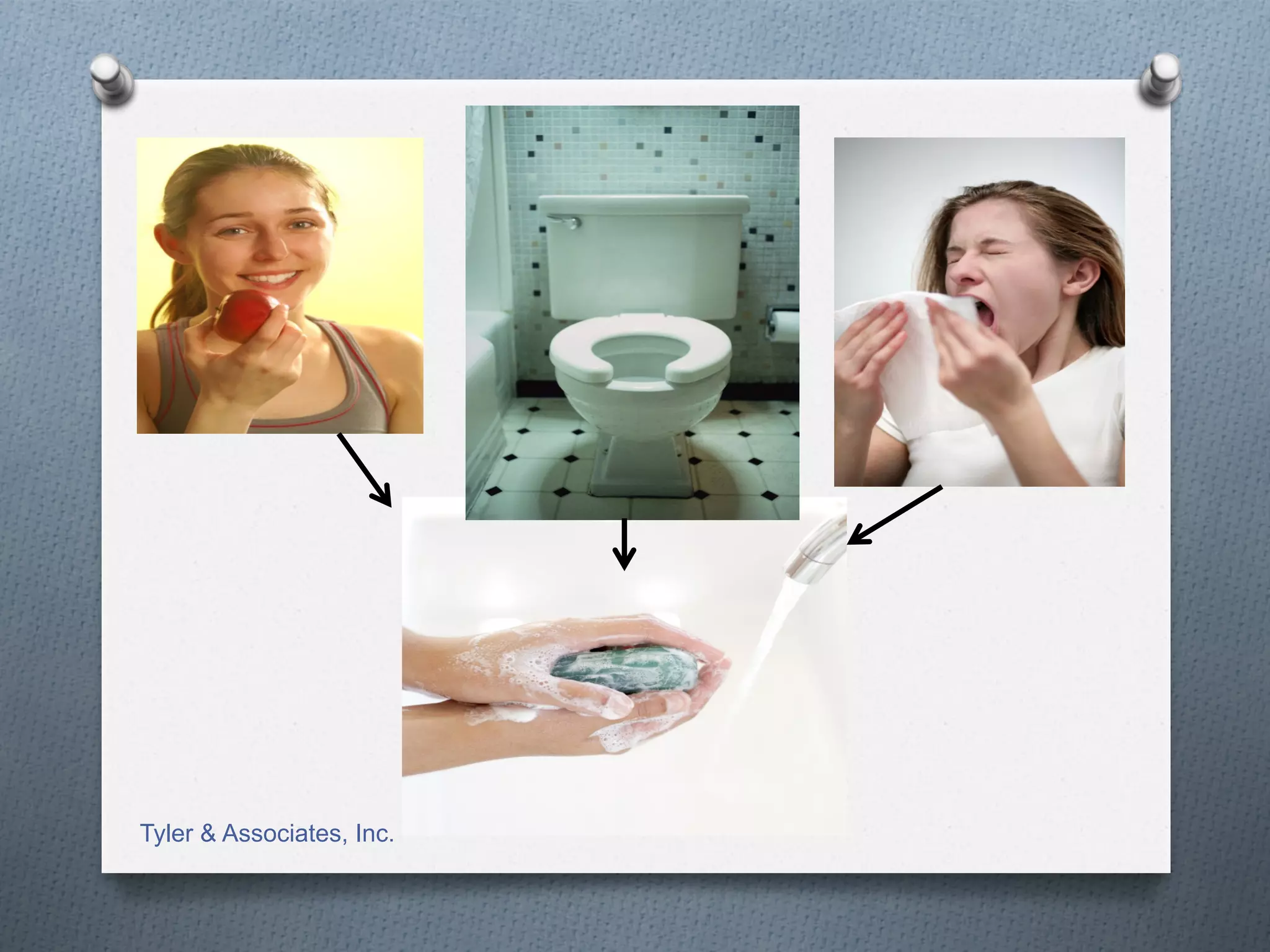
O Start with giving
                                       directions for when a
   Teaching	
  Example	
              patient should wash
            Use of verbal             their hands (say it in
      communication to enable         another language or
       patient understanding          using words above
                                      the education level of
                                      the students).
    Il est important de se laver
    les mains après avoir          O Ask students to use
    mangé, utiliser la salle de       their communication
    bains, et de vous moucher.        skills to help a
                                      patient understand
                                      what you just said.
Tyler & Associates, Inc.
Provide	
  
Opportunities	
  to	
  
Experience	
  
Diversity	
  
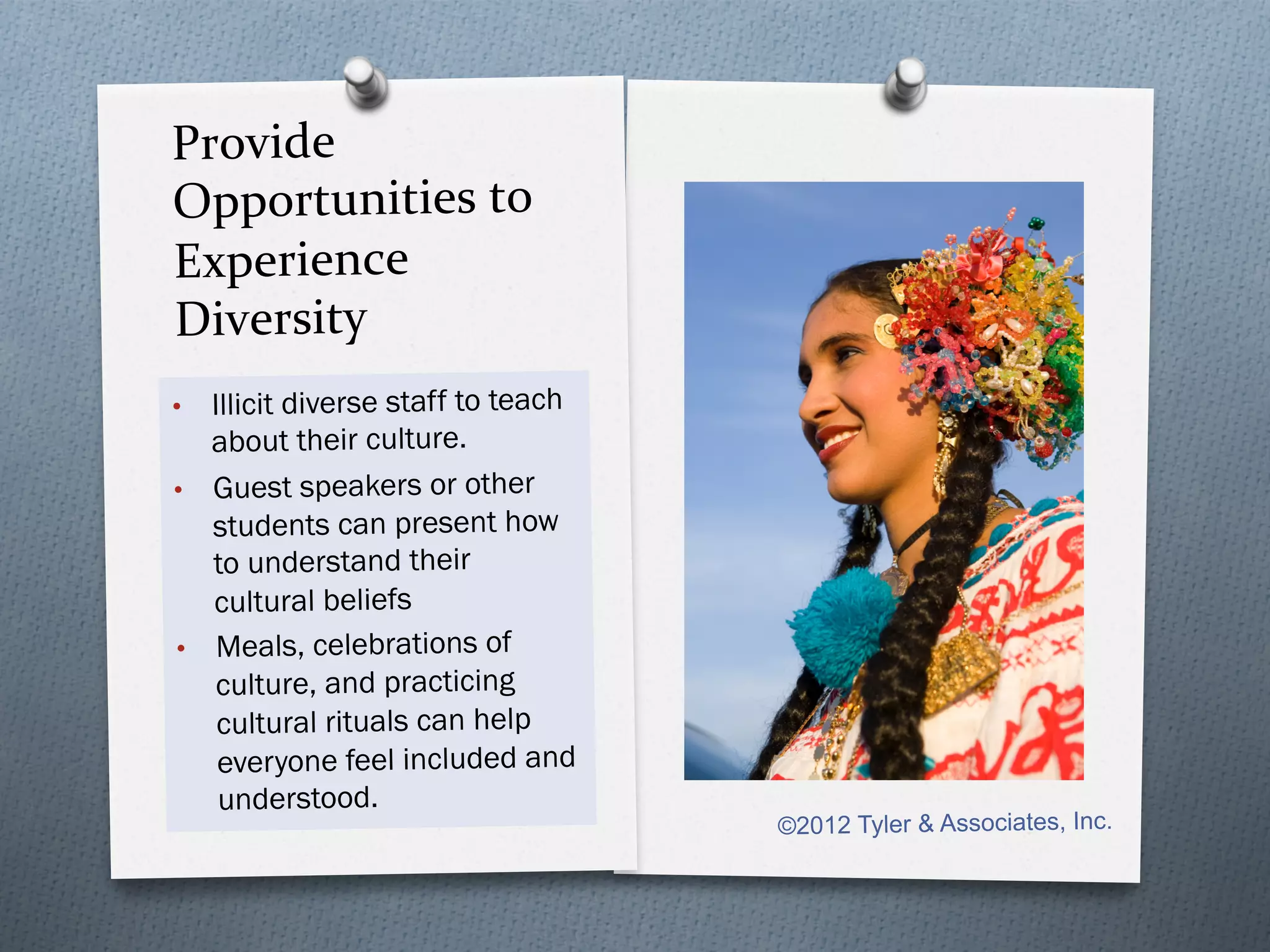
•  Illicit diverse staf f to teach
   about their culture.
•  Guest speakers or other
   students can present how
   to understand their
   cultural beliefs
•  Meals, celebrations of
   culture, and practicing
   cultural rituals can help
   everyone feel included and
   understood.
                                     ©2012 Tyler & Associates, Inc.
Teaching	
  Example	
  
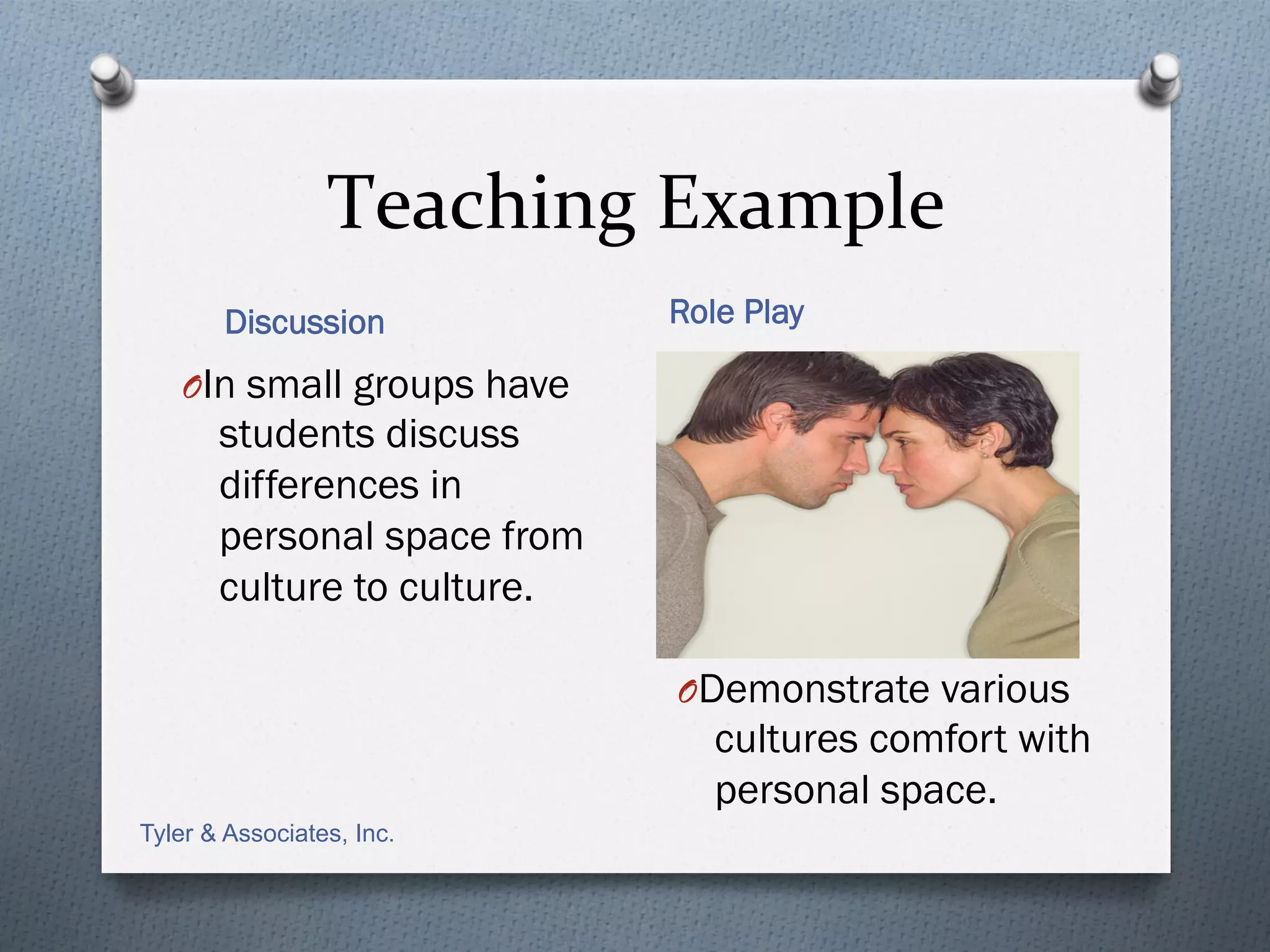
       Discussion            Role Play

   O In small groups have
       students discuss
       differences in
       personal space from
       culture to culture.

                             O Demonstrate various
                                cultures comfort with
                                personal space.
Tyler & Associates, Inc.
Develop	
  Critical	
  Thinking	
  
            Skills	
  
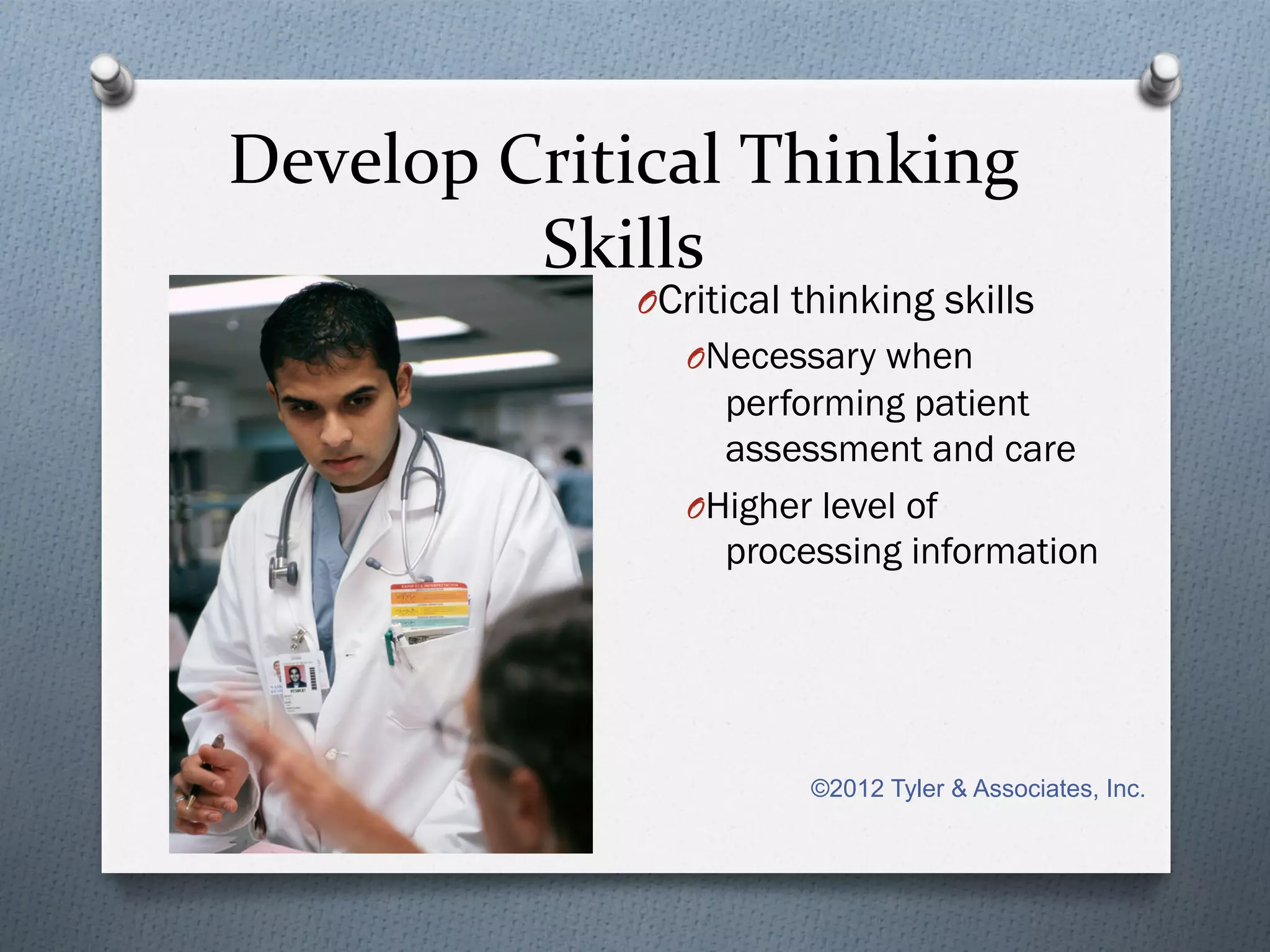
                 O Critical thinking skills
                    O Necessary when
                       performing patient
                       assessment and care
                    O Higher level of
                       processing information


                            ©2012 Tyler & Associates, Inc.
O Provide students with
                                         a brief history to
    Teaching	
  Example	
                por tray to the
                                         assessor
     Applying Critical Thinking in   O Have students take
        Patient Assessment              turns role playing the
                                        patient and the
                                        assessor
                                     O Be sure to praise the
                                        examples of critical
                                        thinking

Tyler & Associates, Inc.
Provide	
  Options	
  for	
  	
  
                 Conflict	
  Resolution	
  

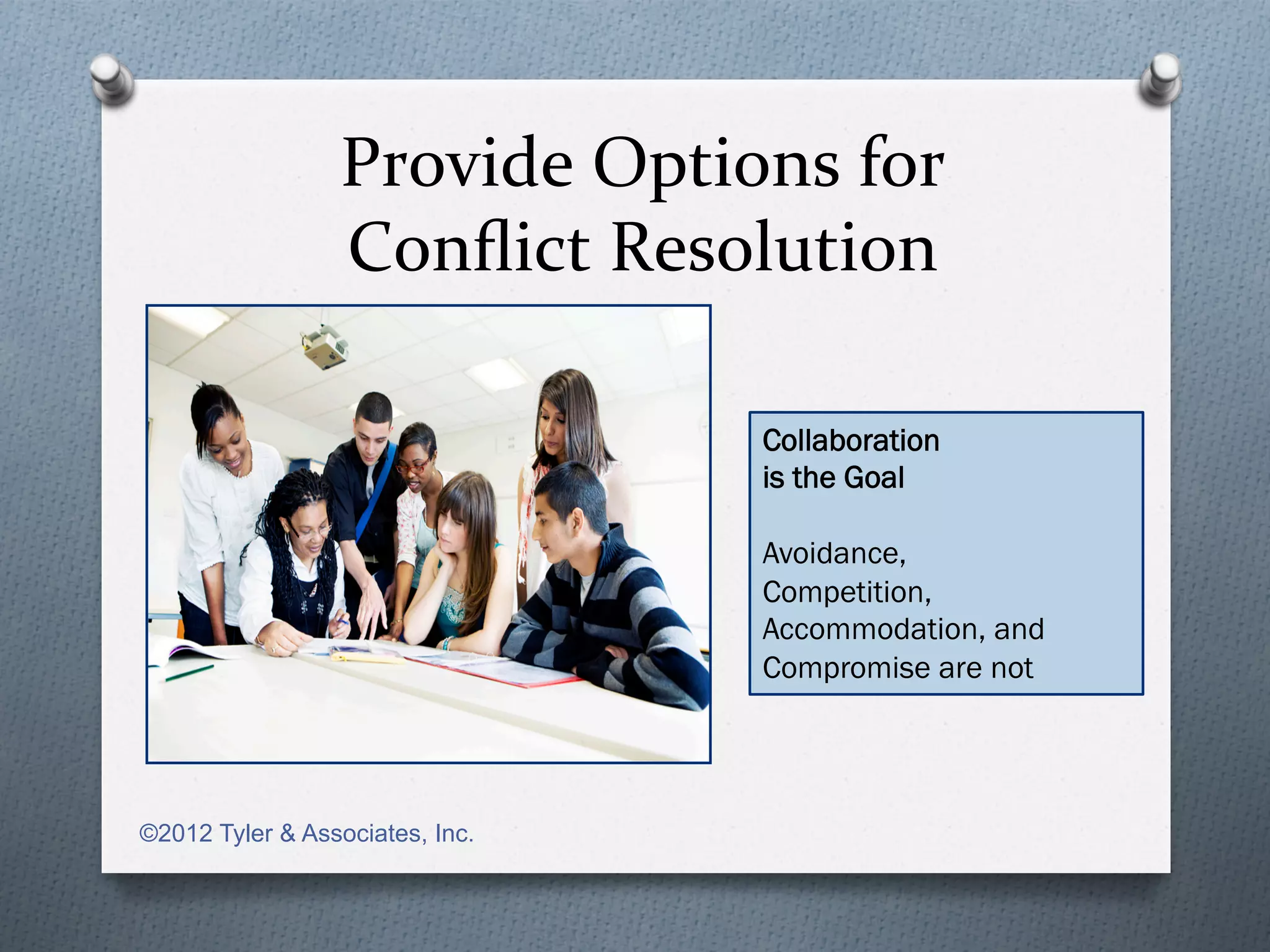
                                      Collaboration
                                      is the Goal

                                      Avoidance,
                                      Competition,
                                      Accommodation, and
                                      Compromise are not


©2012 Tyler & Associates, Inc.
Everyone	
  has	
  a	
  
                                 scope	
  of	
  practice	
  
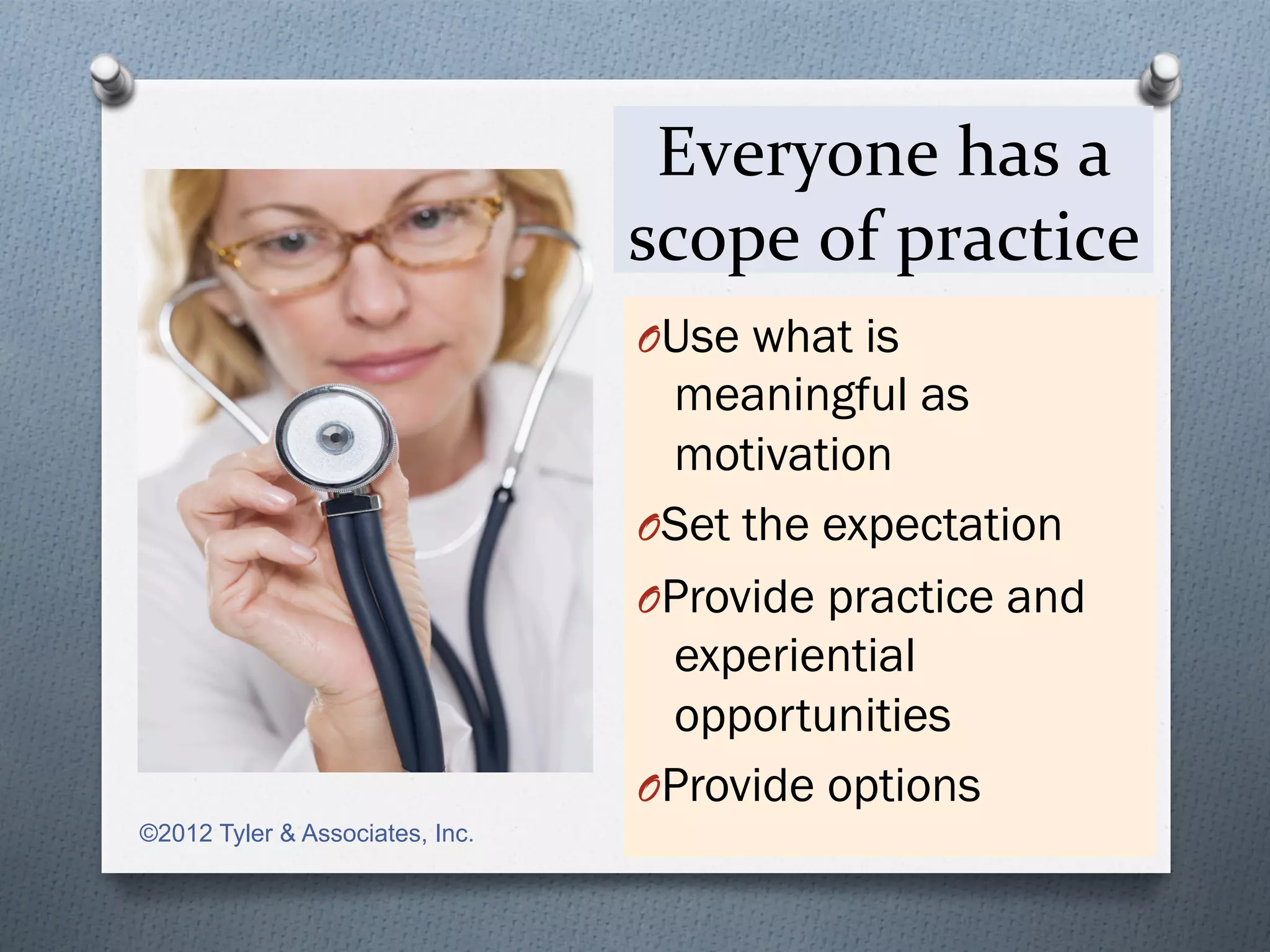
                                 O Use what is
                                   meaningful as
                                   motivation
                                 O Set the expectation
                                 O Provide practice and
                                   experiential
                                   opportunities
                                 O Provide options
©2012 Tyler & Associates, Inc.

Teaching Soft Skills in Healthcare Professions, by Lori Tyler

  • 1.
    Teaching  Soft  Skills  in       Healthcare  Professions   by Lori Tyler Lori Tyler & Associates ©Tyler & Associates, Inc., 2012
  • 2.
    What  are  Soft   Skills?   •  Professionalism •  Communication •  Critical thinking •  Conflict resolution ©2012 Tyler & Associates, Inc.
  • 3.
    Why  Teach  Soft  Skills?   Research has found that the use of soft skills make for a productive, happy staff and satisfied patients. Soft skills are a major focus of many accreditation standards Tyler & Associates, Inc.
  • 4.
    Employers kn o w People are the key ©2012 Tyler & Associates, Inc.
  • 5.
    Teaching  Soft  Skills   to adults in healthcare professions ©2012 Tyler & Associates, Inc.
  • 6.
    Three  needs  of  adults     in  the  workplace   O Meaningful work O Appreciation for work O Integrating fun at work Tyler & Associates, Inc.
  • 7.
    What makes workin healthcare meaningful?
  • 8.
  • 9.
    the answer is The people… ©Tyler & Associates, Inc., 2012
  • 10.
    Why is Professionalism Important? • Makes worka career • People expect professionalism • Helps one feel good about one’s work Use what is meaningful to me to teach me
  • 11.
    Set  the  Expectation   O Show examples of how health care professional are to dress (pictures, models, etc.) O Give ideas for covering unprofessional piercings, tattoos, etc. O Treat violations in private meetings and with sensitivity ©2012 Tyler & Associates, Inc.
  • 12.
    Practice  Communication  Skills   O Recognition of patient’s level of understanding O Providing appropriate feedback O Sensitivity to patient concerns and fears O Respect of spatial boundaries ©2012 Tyler & Associates, Inc.
  • 13.
    O Start with giving directions for when a Teaching  Example   patient should wash Use of verbal their hands (say it in communication to enable another language or patient understanding using words above the education level of the students). Il est important de se laver les mains après avoir O Ask students to use mangé, utiliser la salle de their communication bains, et de vous moucher. skills to help a patient understand what you just said. Tyler & Associates, Inc.
  • 14.
  • 15.
    Provide   Opportunities  to   Experience   Diversity   •  Illicit diverse staf f to teach about their culture. •  Guest speakers or other students can present how to understand their cultural beliefs •  Meals, celebrations of culture, and practicing cultural rituals can help everyone feel included and understood. ©2012 Tyler & Associates, Inc.
  • 16.
    Teaching  Example   Discussion Role Play O In small groups have students discuss differences in personal space from culture to culture. O Demonstrate various cultures comfort with personal space. Tyler & Associates, Inc.
  • 17.
    Develop  Critical  Thinking   Skills   O Critical thinking skills O Necessary when performing patient assessment and care O Higher level of processing information ©2012 Tyler & Associates, Inc.
  • 18.
    O Provide students with a brief history to Teaching  Example   por tray to the assessor Applying Critical Thinking in O Have students take Patient Assessment turns role playing the patient and the assessor O Be sure to praise the examples of critical thinking Tyler & Associates, Inc.
  • 19.
    Provide  Options  for     Conflict  Resolution   Collaboration is the Goal Avoidance, Competition, Accommodation, and Compromise are not ©2012 Tyler & Associates, Inc.
  • 20.
    Everyone  has  a   scope  of  practice   O Use what is meaningful as motivation O Set the expectation O Provide practice and experiential opportunities O Provide options ©2012 Tyler & Associates, Inc.