Supporting and Developing the Junior
  Medical Workforce in Psychiatry


       Professor Steven C. Boyages
             November 2010
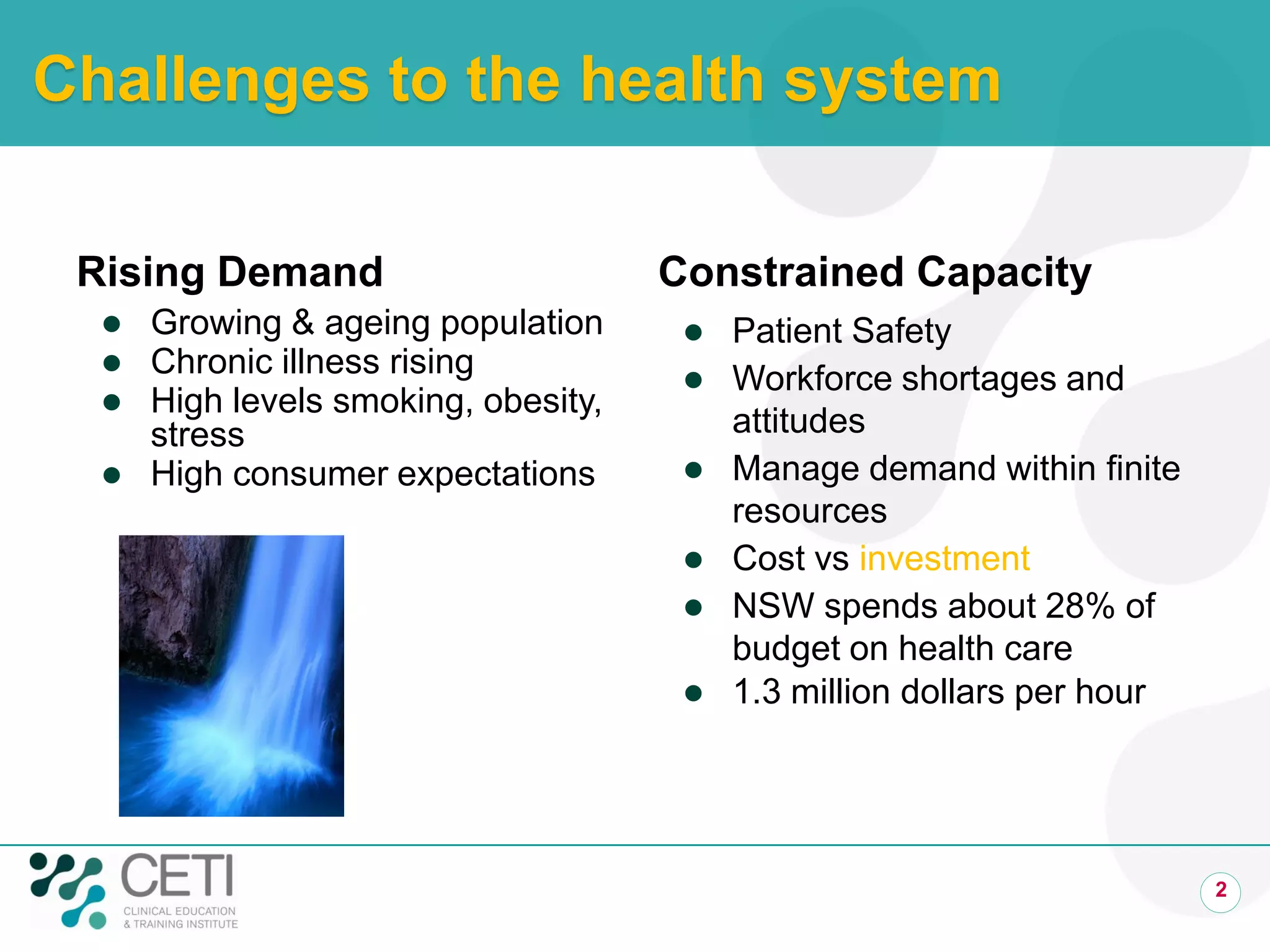
Challenges to the health system

 Rising Demand                        Constrained Capacity
     Growing & ageing population         Patient Safety
     Chronic illness rising              Workforce shortages and
     High levels smoking, obesity,
      stress                               attitudes
     High consumer expectations          Manage demand within finite
                                           resources
                                          Cost vs investment
                                          NSW spends about 28% of
                                           budget on health care
                                          1.3 million dollars per hour


                                                                          2
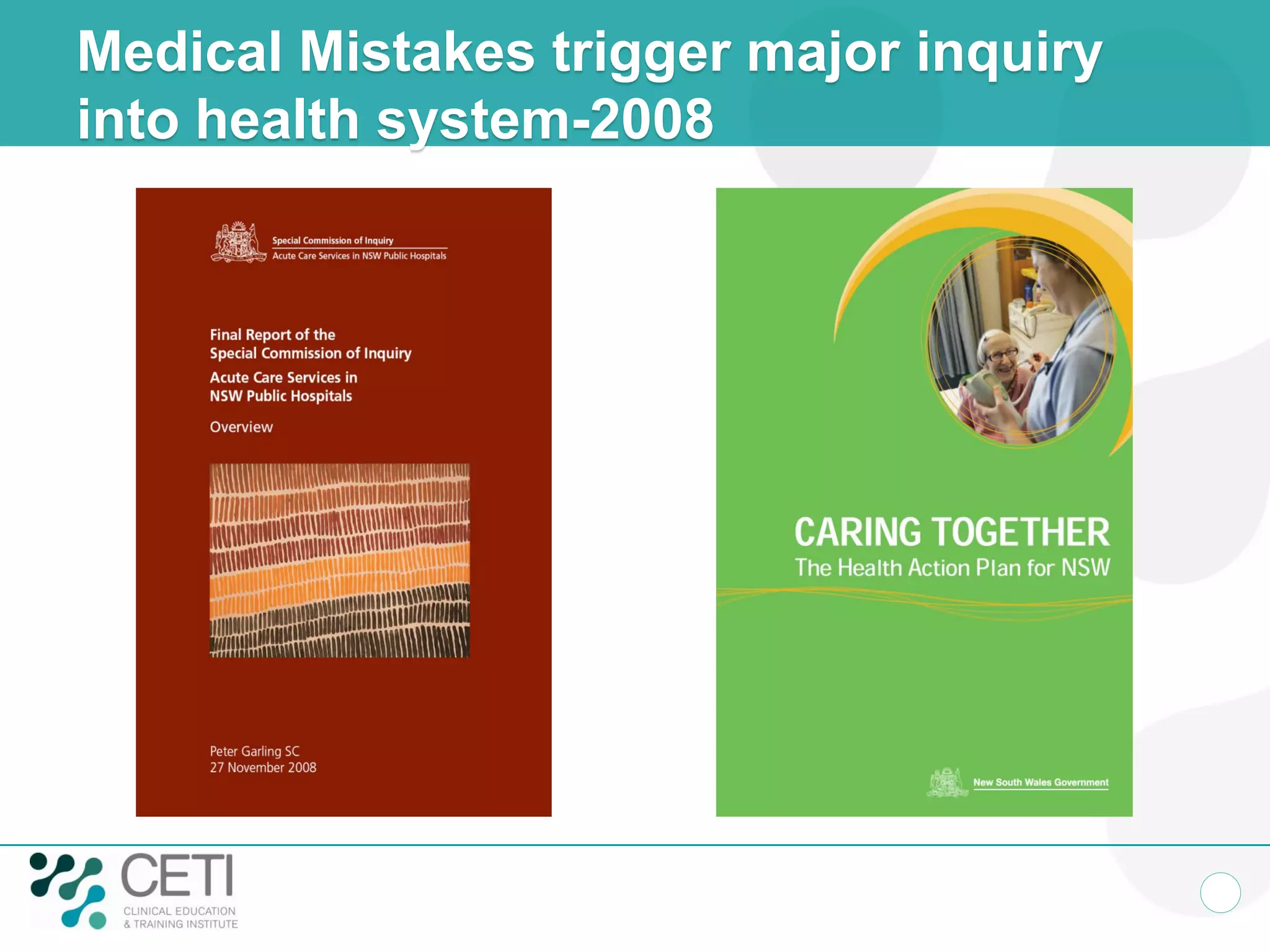
Medical Mistakes trigger major inquiry
into health system-2008
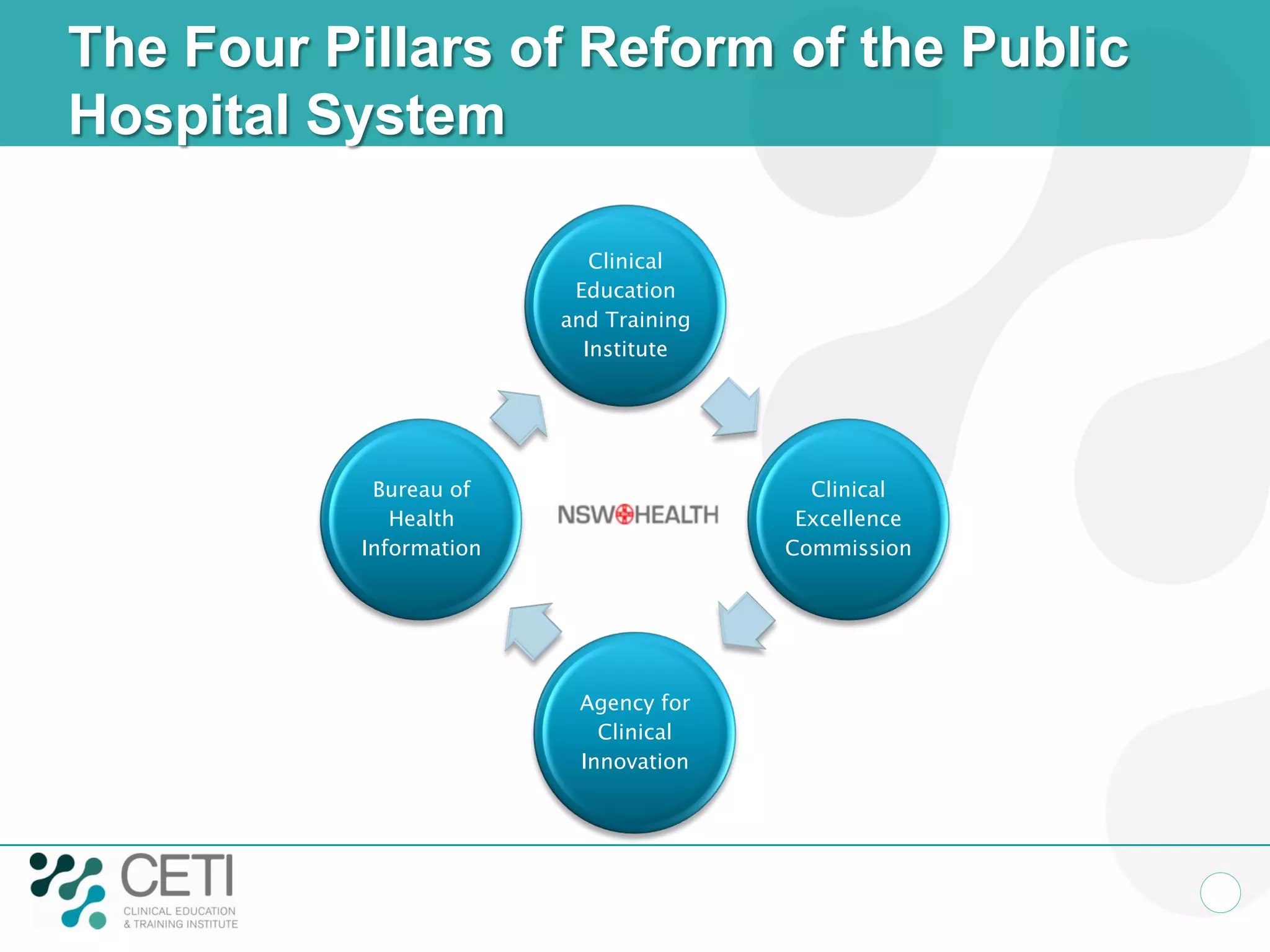
The Four Pillars of Reform of the Public
Hospital System

                            Clinical
                          Education
                         and Training
                           Institute


            Bureau of                     Clinical
              Health                     Excellence
           Information                  Commission


                          Agency for
                            Clinical
                          Innovation
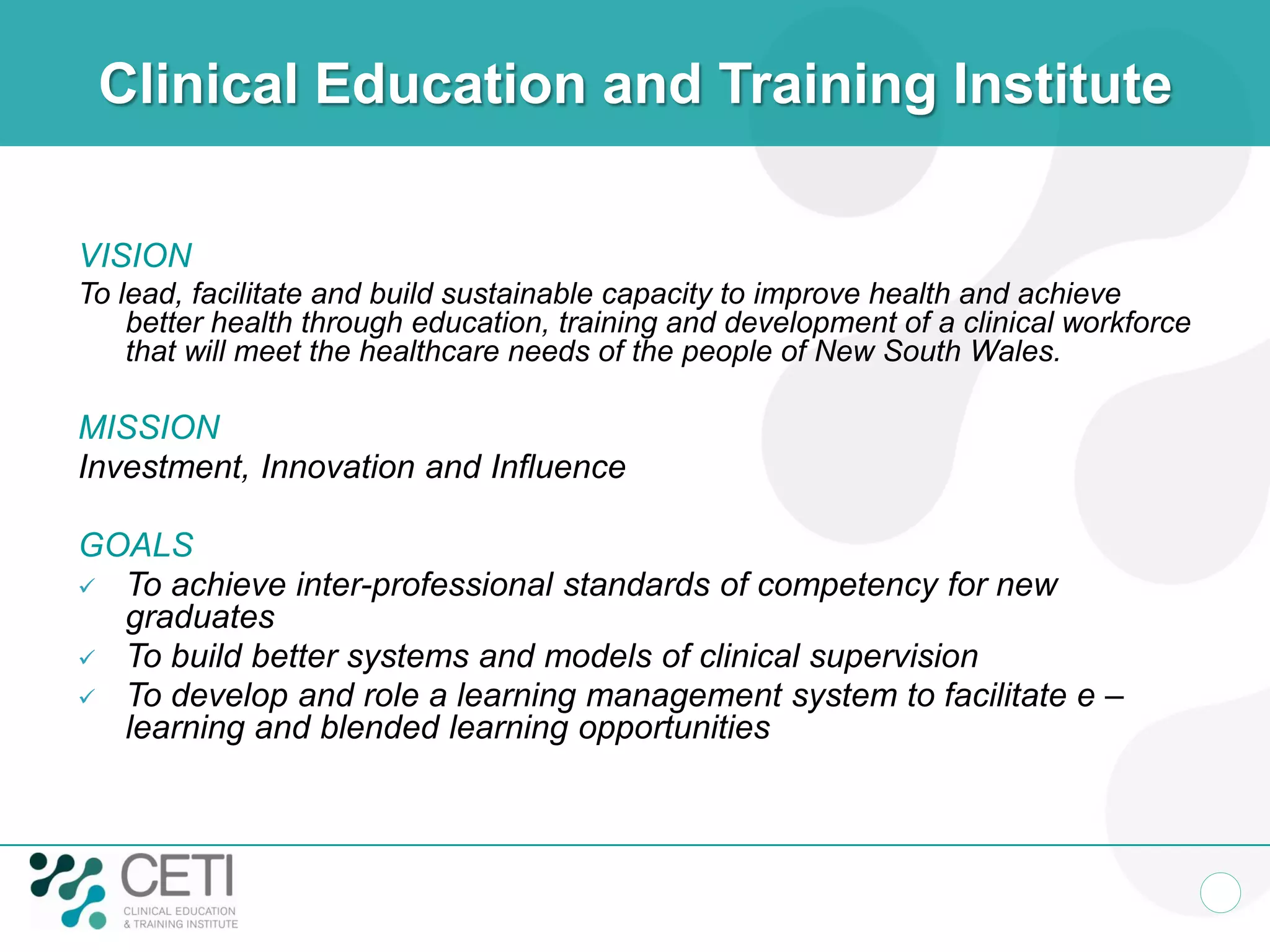
Clinical Education and Training Institute

VISION
To lead, facilitate and build sustainable capacity to improve health and achieve
    better health through education, training and development of a clinical workforce
    that will meet the healthcare needs of the people of New South Wales.

MISSION
Investment, Innovation and Influence

GOALS
 To achieve inter-professional standards of competency for new
  graduates
 To build better systems and models of clinical supervision
 To develop and role a learning management system to facilitate e –
  learning and blended learning opportunities
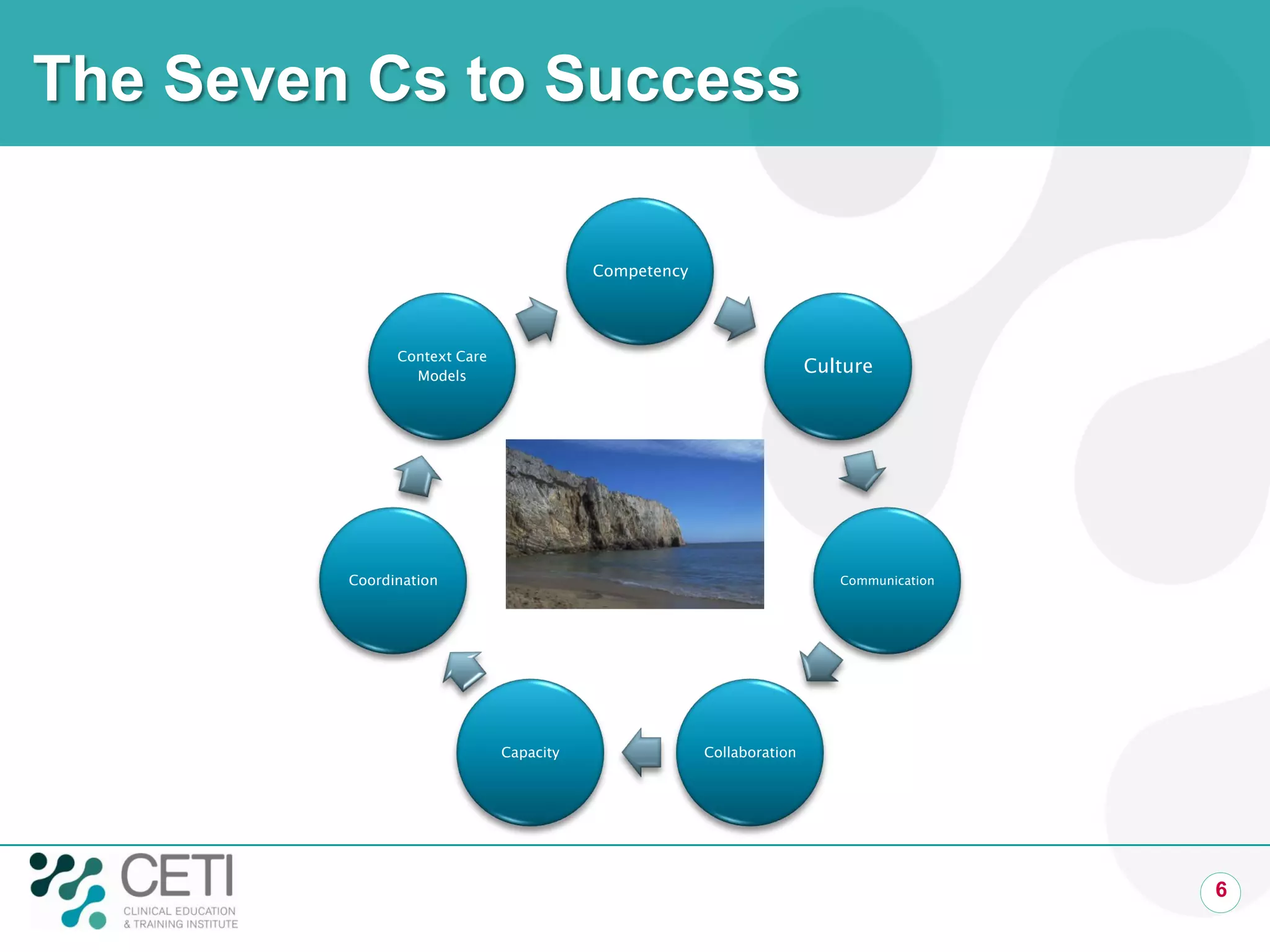
The Seven Cs to Success

                                         Competency


               Context Care
                 Models
                                                                      Culture


         Coordination                                                    Communication


                              Capacity                Collaboration


                                                                                         6
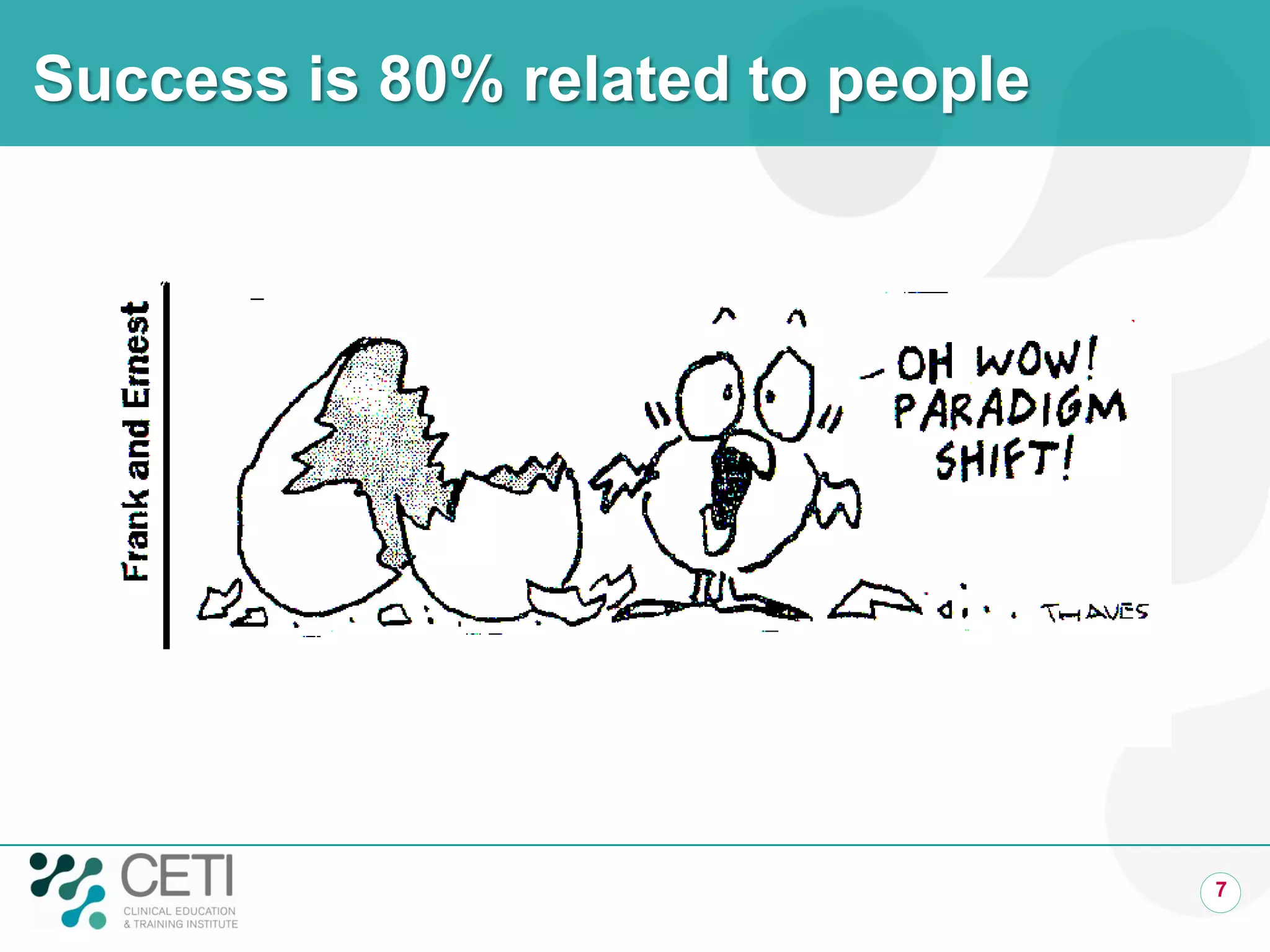
Success is 80% related to people


                                   7
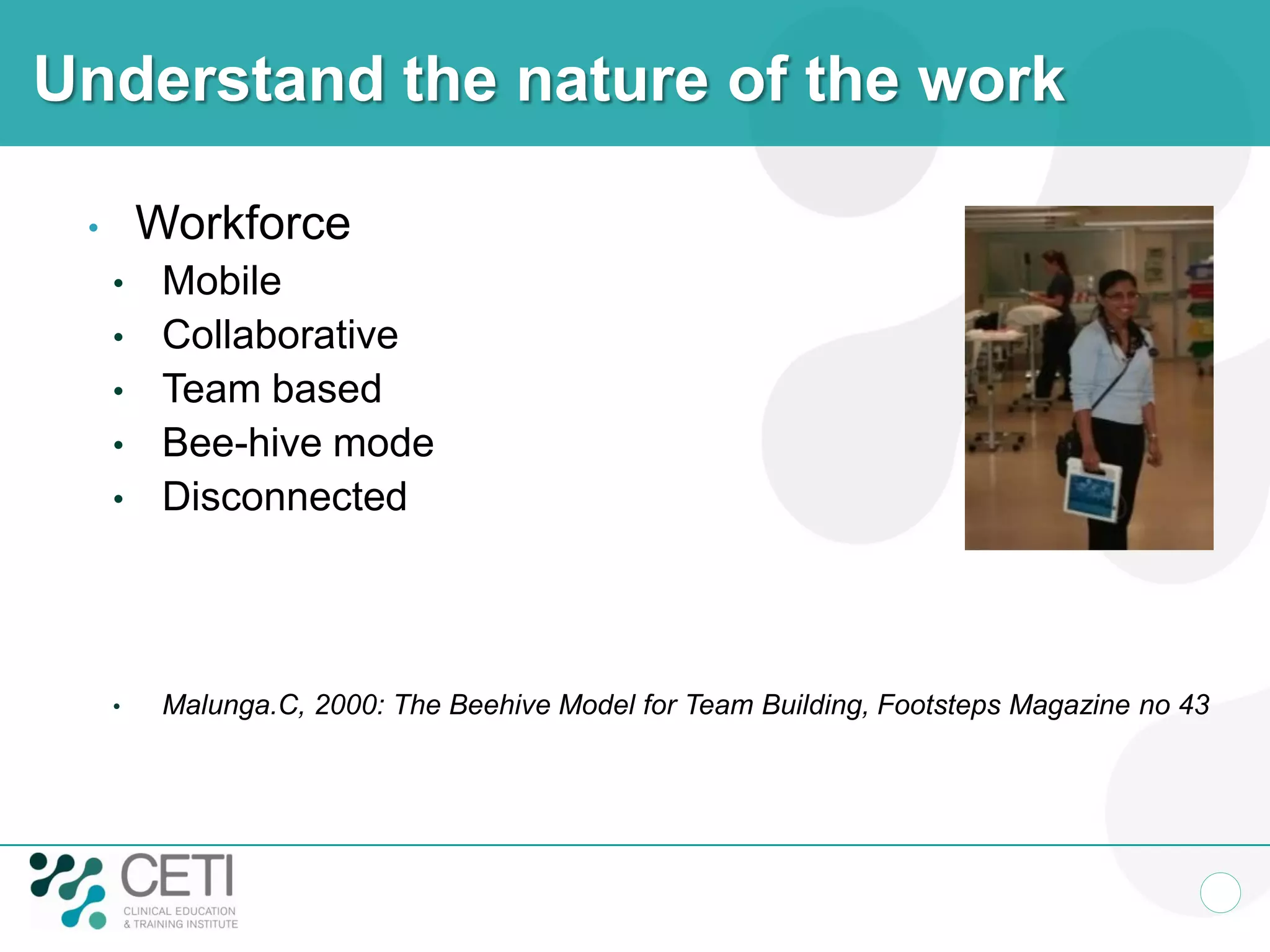
Understand the nature of the work

 •       Workforce
     •    Mobile
     •    Collaborative
     •    Team based
     •    Bee-hive mode
     •    Disconnected


     •    Malunga.C, 2000: The Beehive Model for Team Building, Footsteps Magazine no 43
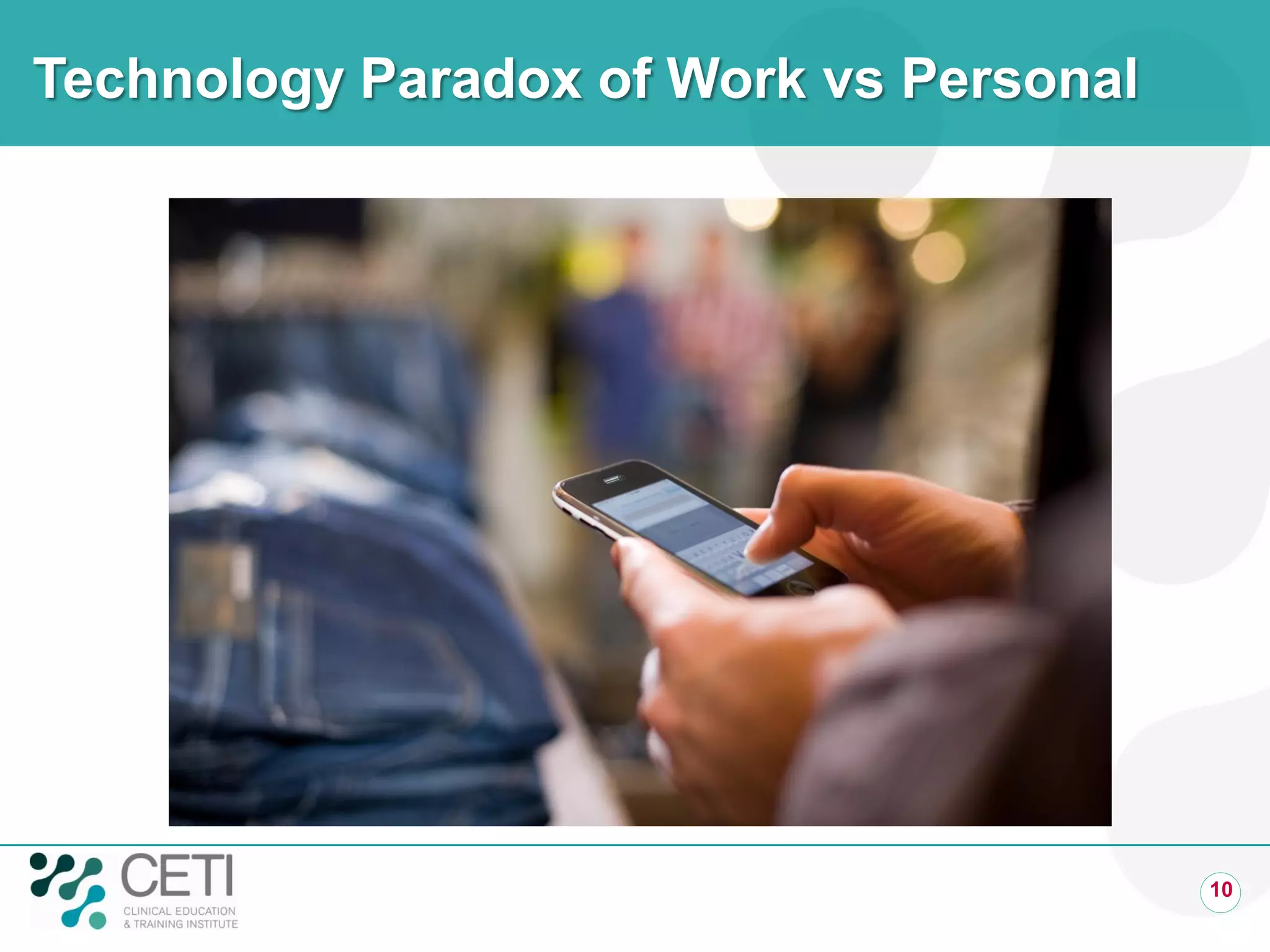
Technology Paradox of Work vs Personal


                                         10
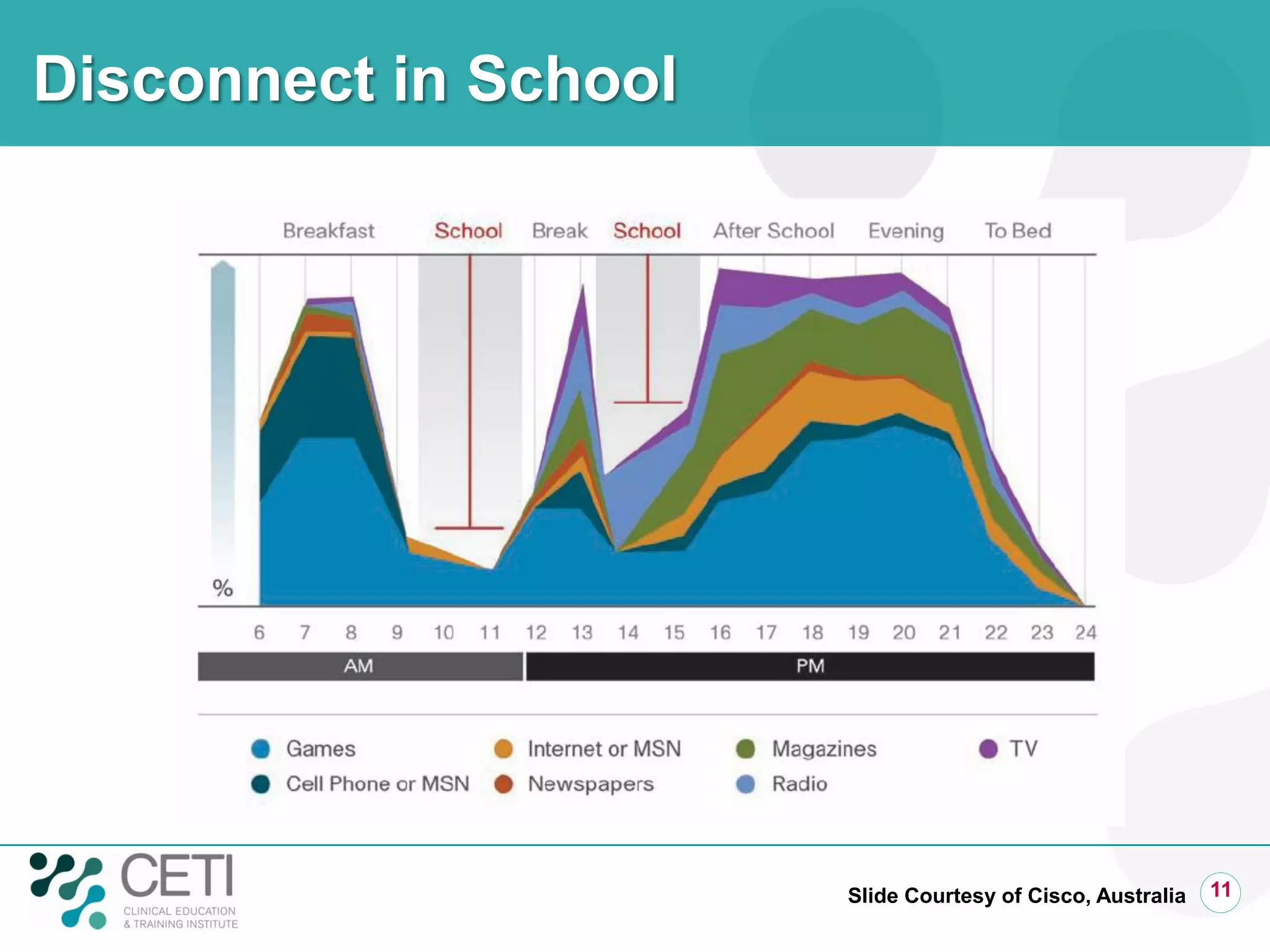
Disconnect in School


                       Slide Courtesy of Cisco, Australia   11
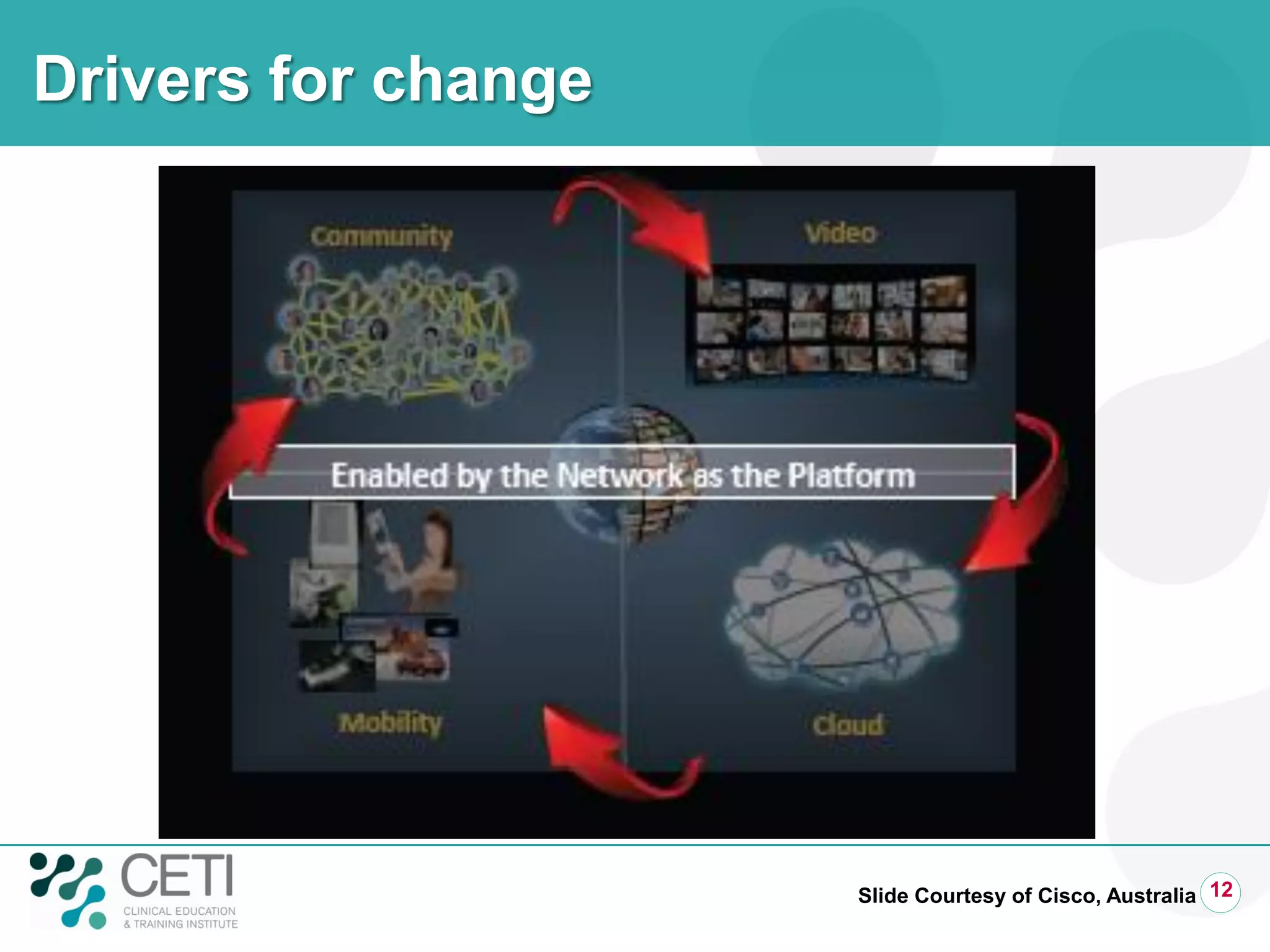
Drivers for change


                     Slide Courtesy of Cisco, Australia 12
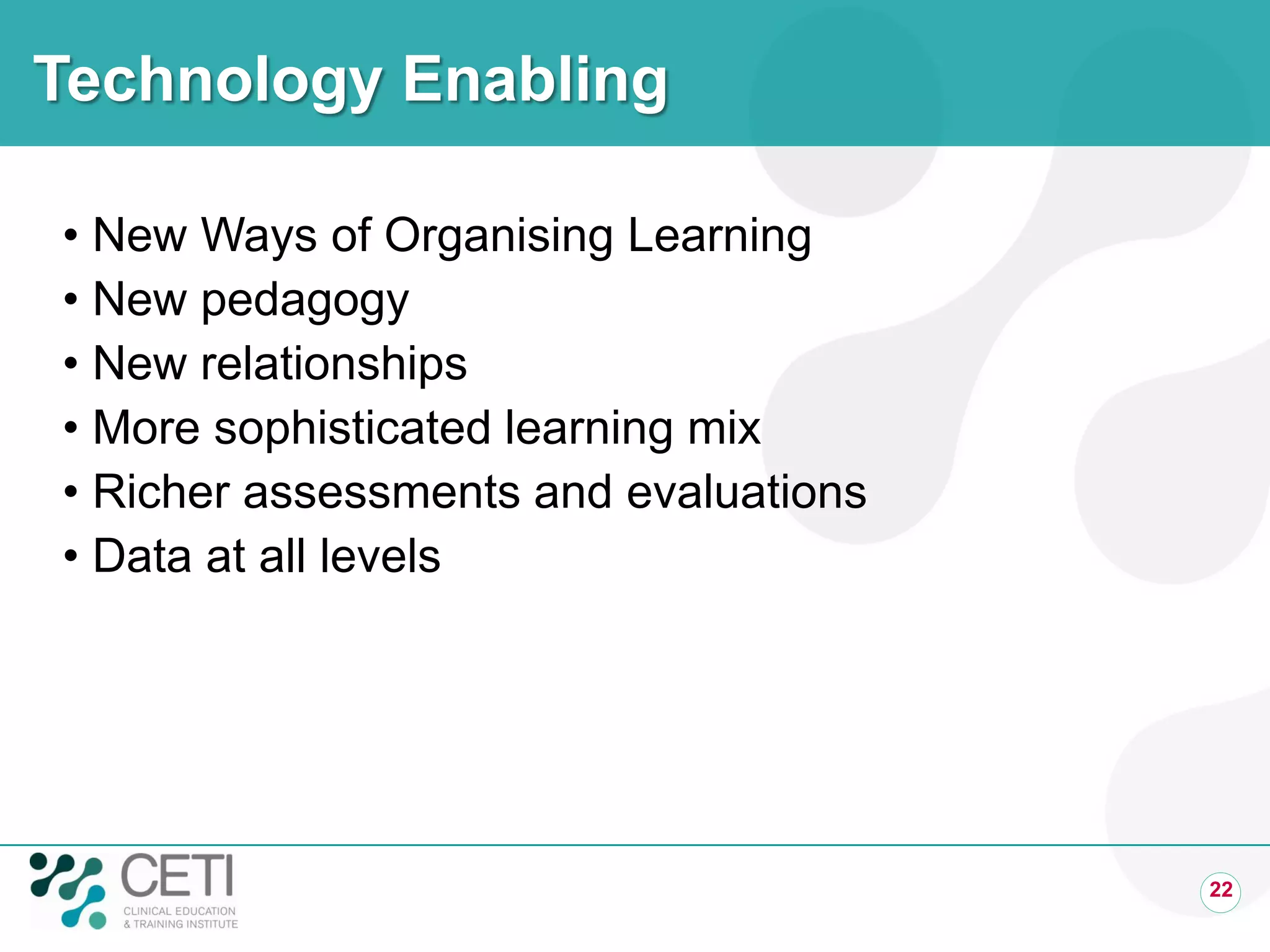
Technology Enabling

• New Ways of Organising Learning
• New pedagogy
• New relationships
• More sophisticated learning mix
• Richer assessments and evaluations
• Data at all levels


                                       13
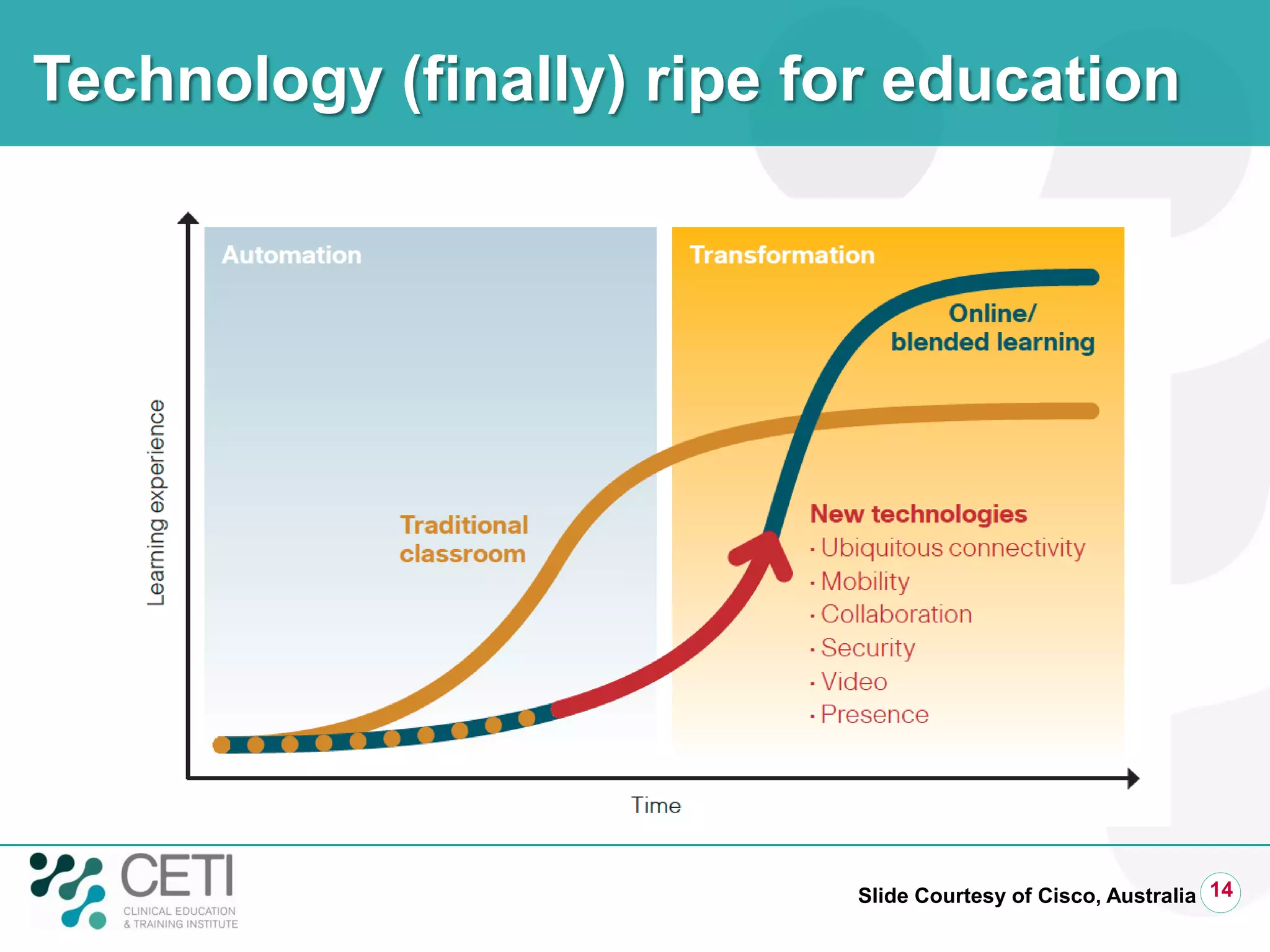
Technology (finally) ripe for education


                            Slide Courtesy of Cisco, Australia 14
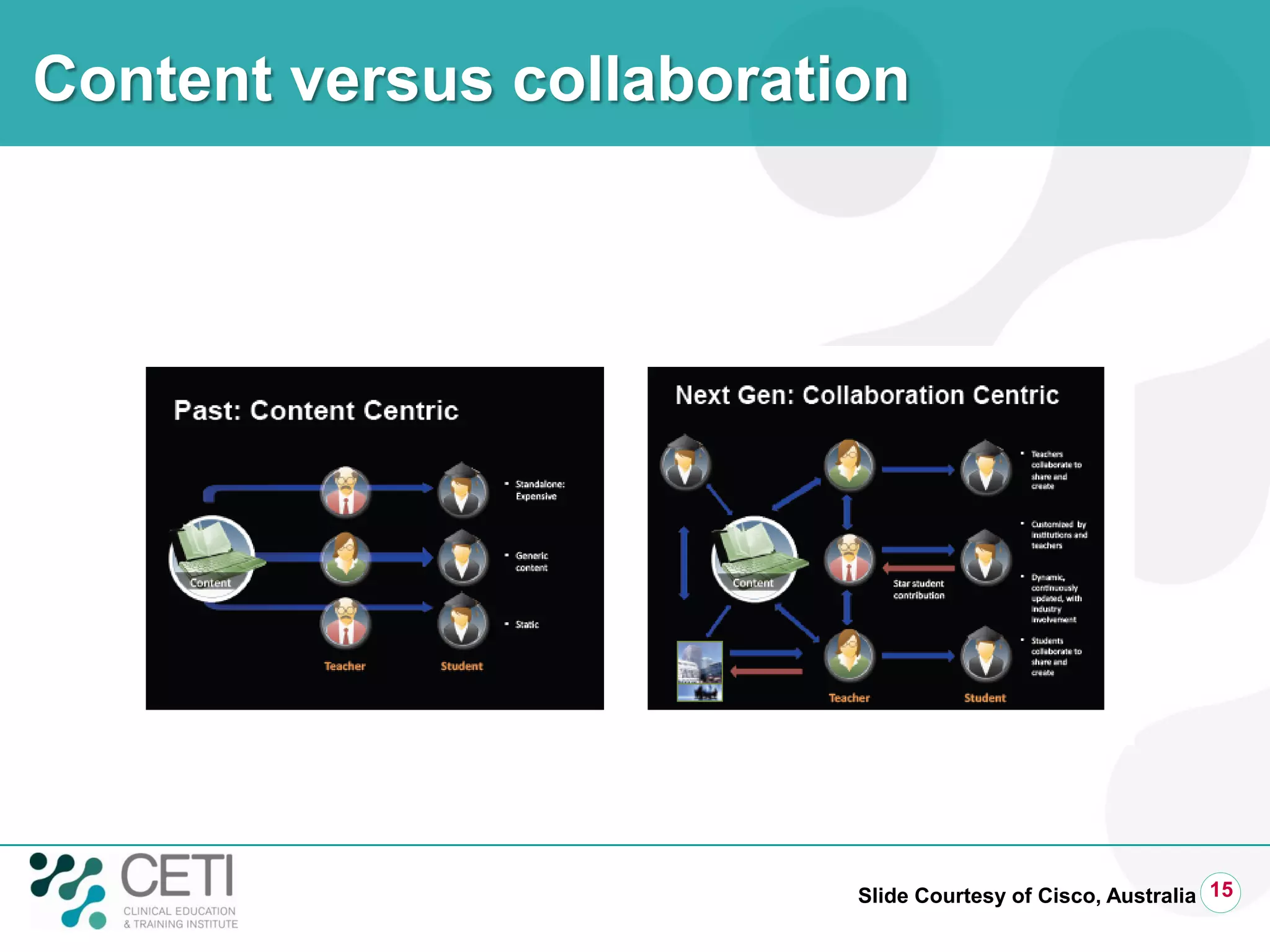
Content versus collaboration


                          Slide Courtesy of Cisco, Australia 15
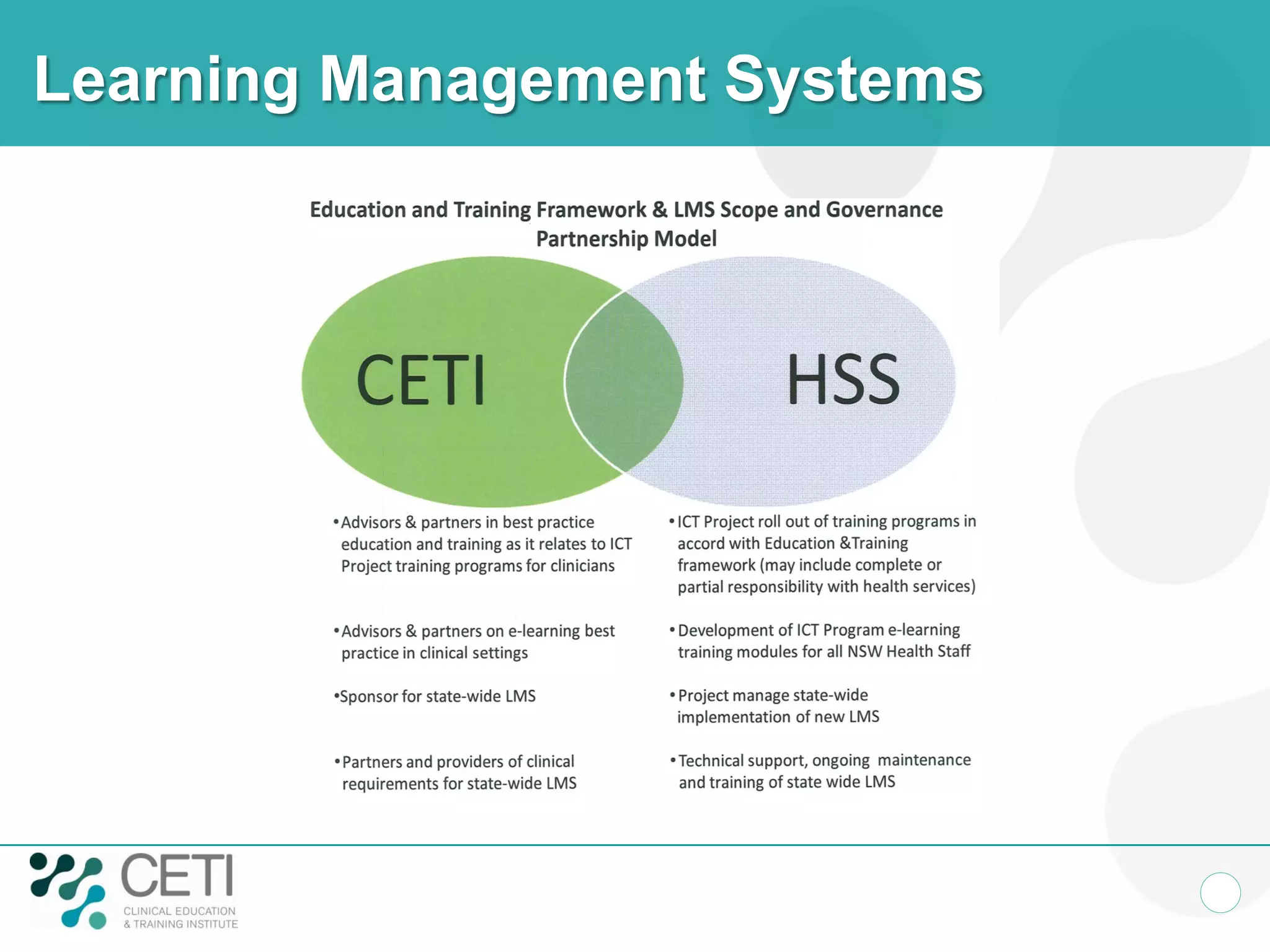
Learning Management Systems
Developing a common platform

    eLearning by definition is any learning that can be delivered
     (and undertaken) electronically.
    There are 2 elements to eLearning:
     o the technology, or learning experience, ie the electronic
       media of formats
     o the learning design, or the learning experience, ie the events,
       activities and relationships that the learner is involved in
    While the technology and the learning design are
     intrinsically bound together, it is useful to be mindful of these
     elements in isolation when considering eLearning.


                                                                     17
eLearning is evolving


    eLearning is an evolving format which has been
     enabled through technology. Just as the landscape of
     „technology supported activities‟ continues to evolve, so
     does eLearning


                                                                 18
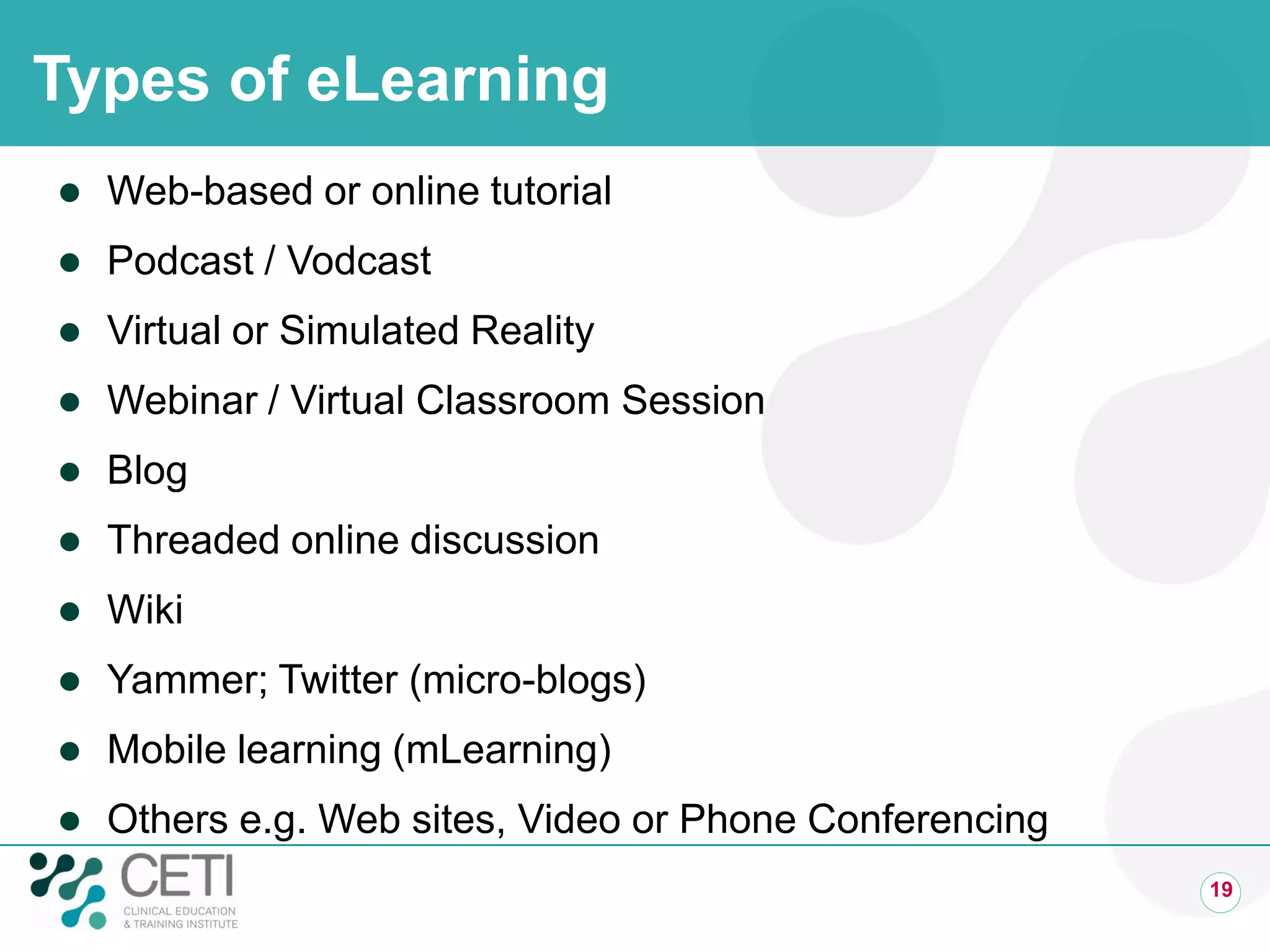
Types of eLearning
   Web-based or online tutorial
   Podcast / Vodcast
   Virtual or Simulated Reality
   Webinar / Virtual Classroom Session
   Blog
   Threaded online discussion
   Wiki
   Yammer; Twitter (micro-blogs)
   Mobile learning (mLearning)
   Others e.g. Web sites, Video or Phone Conferencing
                                                         19
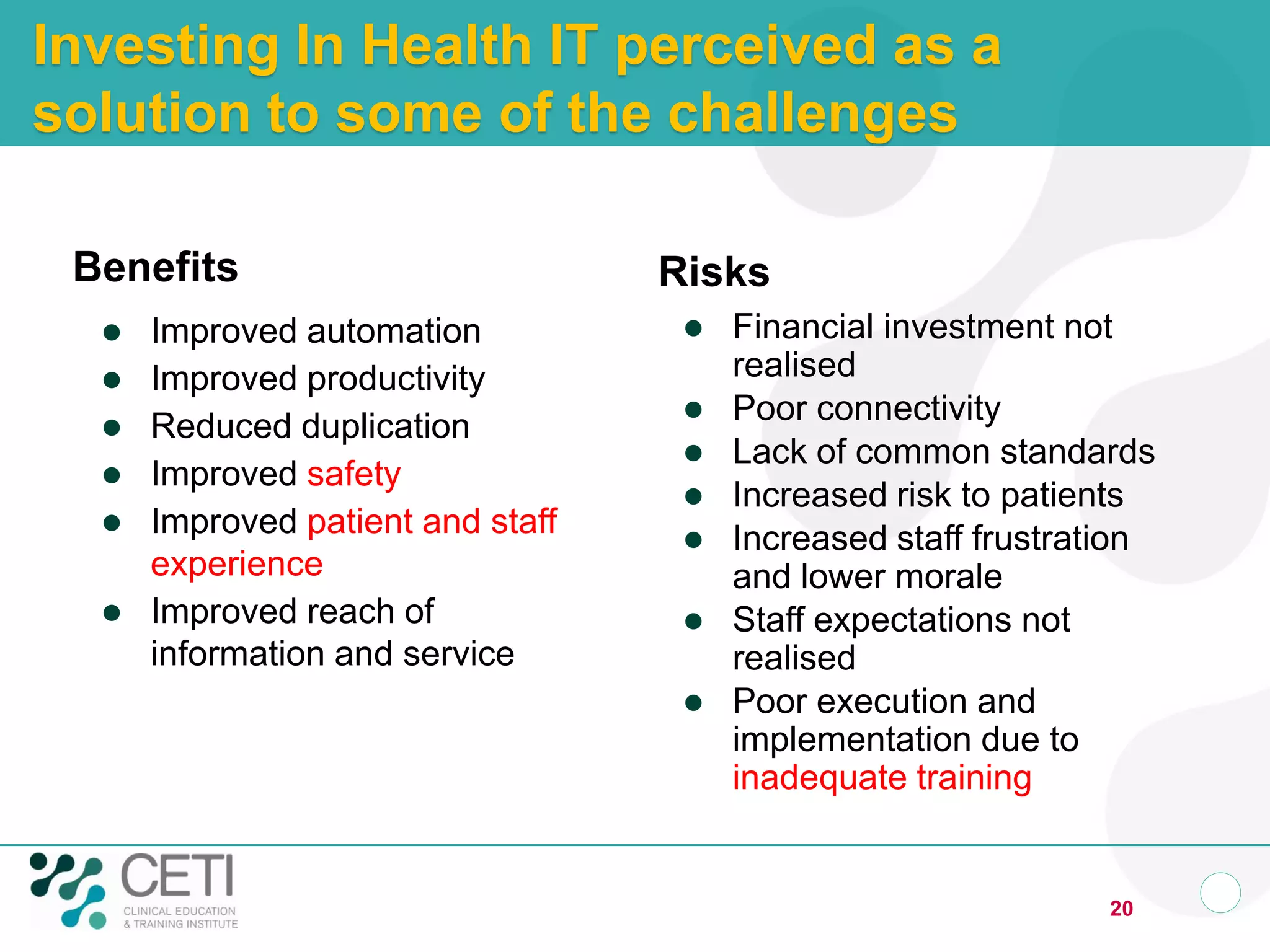
Investing In Health IT perceived as a
solution to some of the challenges

 Benefits                          Risks
     Improved automation              Financial investment not
     Improved productivity             realised
                                       Poor connectivity
     Reduced duplication
                                       Lack of common standards
     Improved safety
                                       Increased risk to patients
     Improved patient and staff       Increased staff frustration
      experience                        and lower morale
     Improved reach of                Staff expectations not
      information and service           realised
                                       Poor execution and
                                        implementation due to
                                        inadequate training


                                                                20
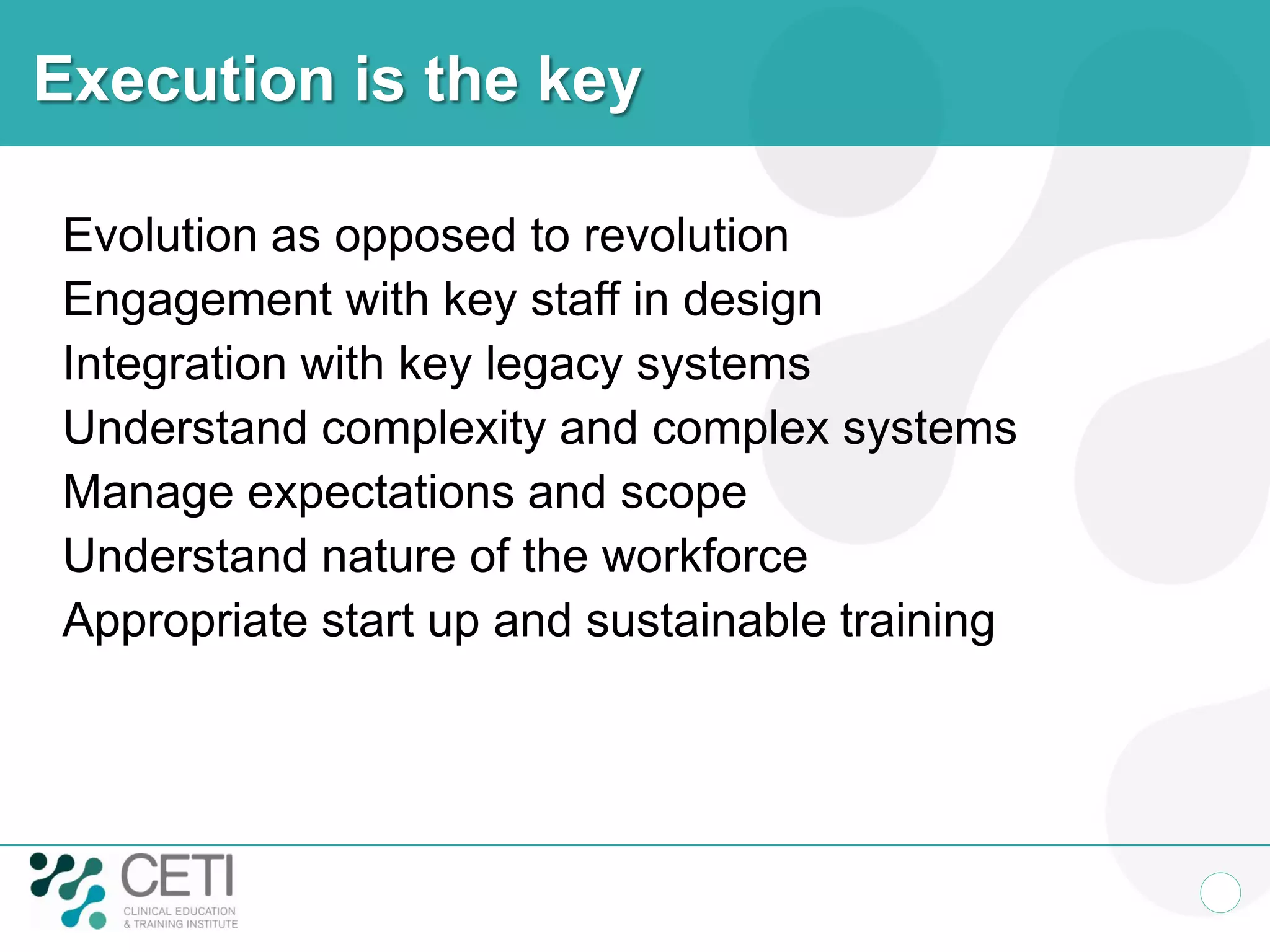
Execution is the key

Evolution as opposed to revolution
Engagement with key staff in design
Integration with key legacy systems
Understand complexity and complex systems
Manage expectations and scope
Understand nature of the workforce
Appropriate start up and sustainable training
Technology Enabling

• New Ways of Organising Learning
• New pedagogy
• New relationships
• More sophisticated learning mix
• Richer assessments and evaluations
• Data at all levels


                                       22
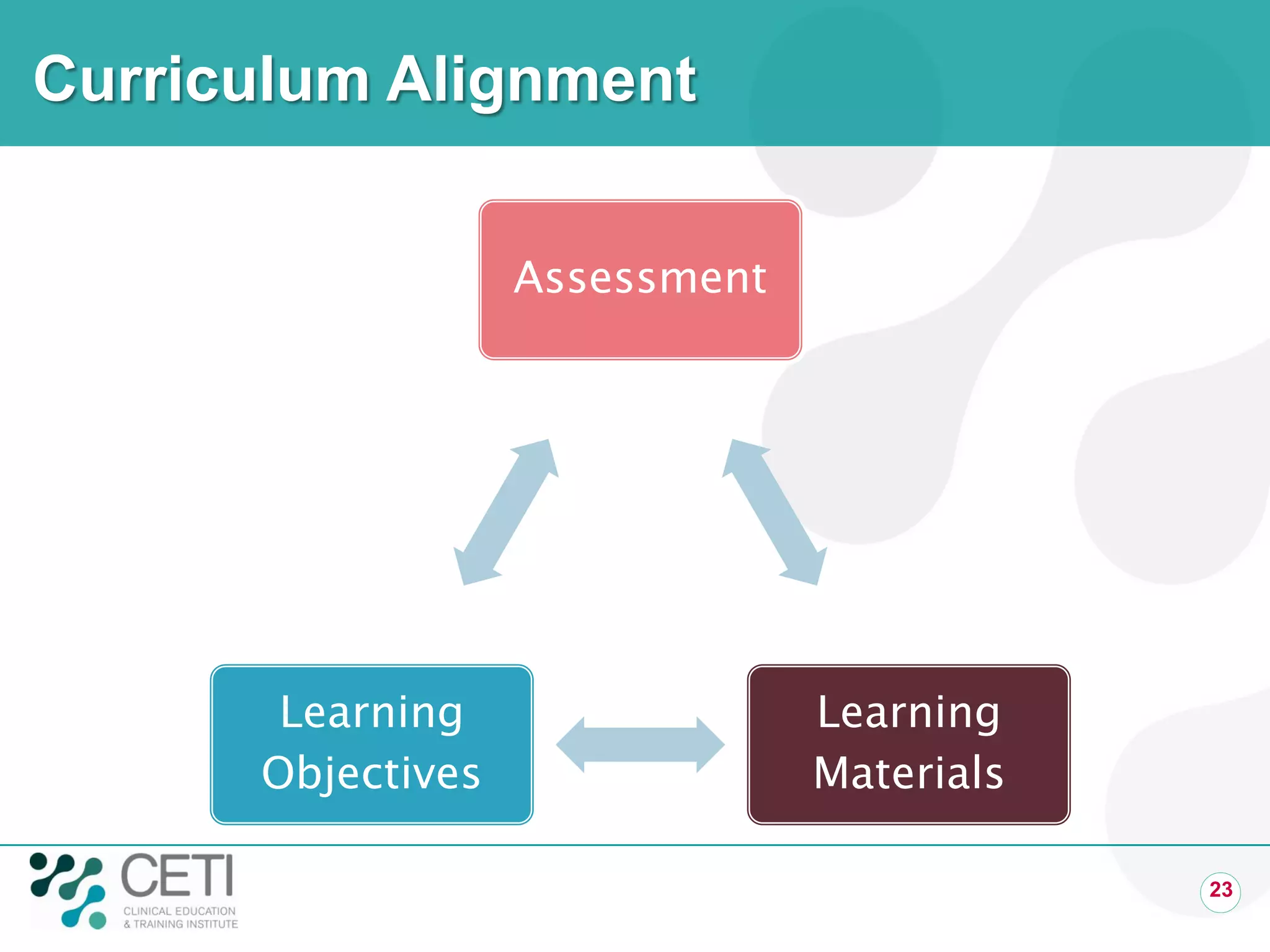
Curriculum Alignment


                   Assessment


       Learning                 Learning
      Objectives                Materials

                                            23
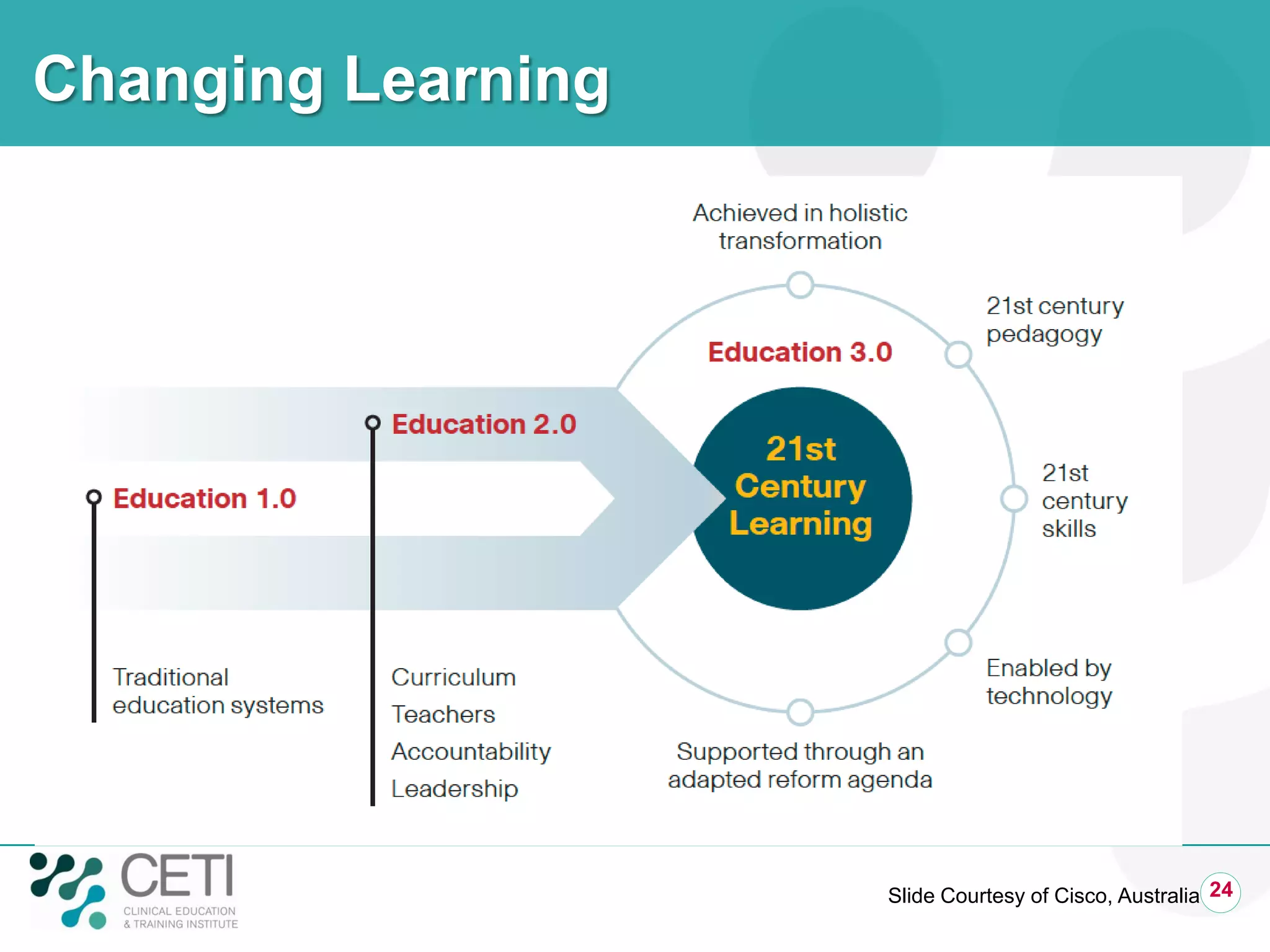
Changing Learning


                    Slide Courtesy of Cisco, Australia 24
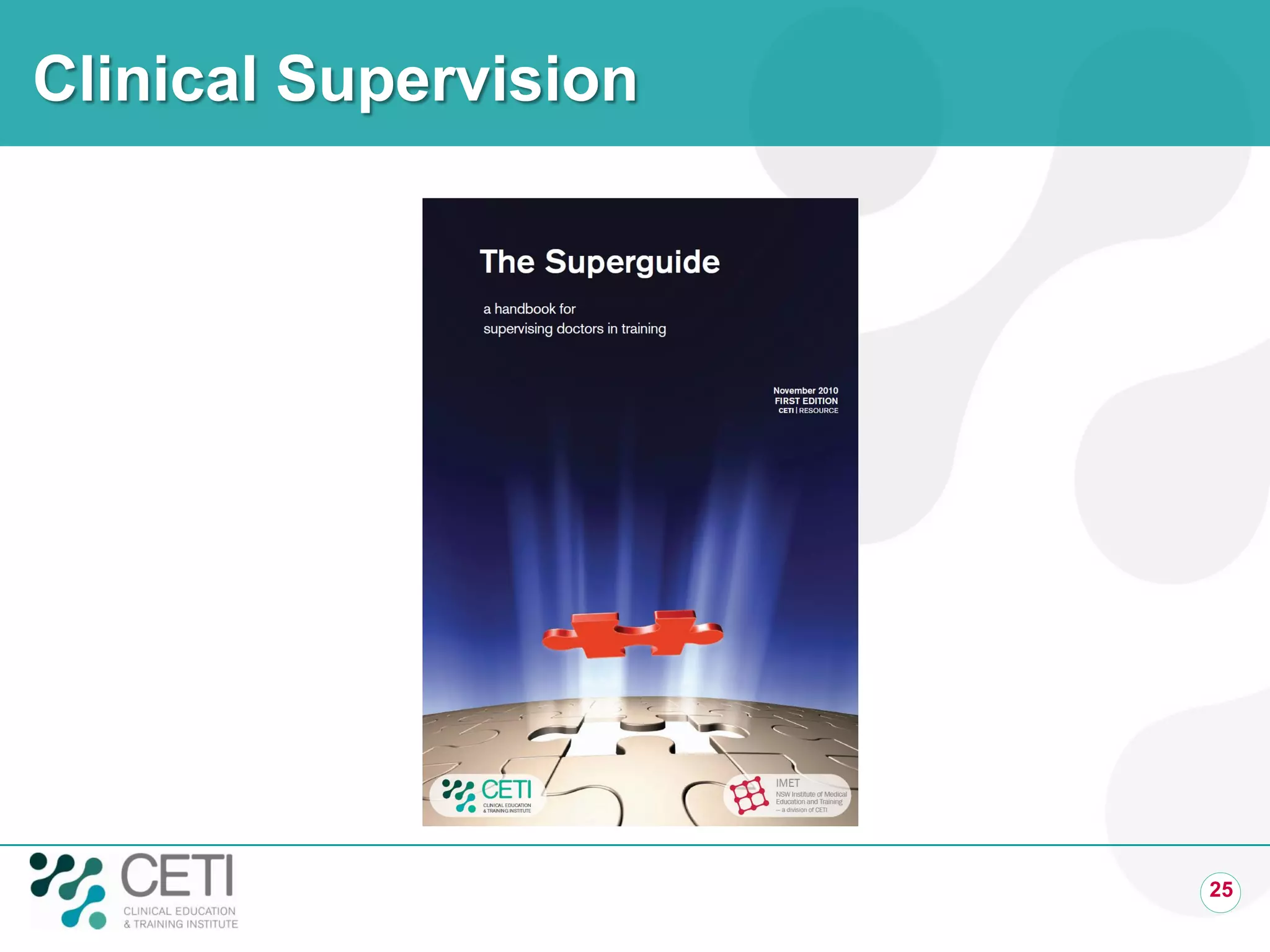
Clinical Supervision


                       25
Roles and Responsibilities

   Building and owning programs
   Building and owning courses
   Integrating with existing programs (eg colleges)
   Commissioning others to build programs and courses
   Managing and administering programs and courses
   Acting as a “clearing house” of resources and programs
    (portal)
   Resource program/course development and maintenance
   Running assessments
   Evaluating programs/courses


                                                             26

CETI Psychiatry Review

  • 1.
    Supporting and Developingthe Junior Medical Workforce in Psychiatry Professor Steven C. Boyages November 2010
  • 2.
    Challenges to thehealth system Rising Demand Constrained Capacity  Growing & ageing population  Patient Safety  Chronic illness rising  Workforce shortages and  High levels smoking, obesity, stress attitudes  High consumer expectations  Manage demand within finite resources  Cost vs investment  NSW spends about 28% of budget on health care  1.3 million dollars per hour 2
  • 3.
    Medical Mistakes triggermajor inquiry into health system-2008
  • 4.
    The Four Pillarsof Reform of the Public Hospital System Clinical Education and Training Institute Bureau of Clinical Health Excellence Information Commission Agency for Clinical Innovation
  • 5.
    Clinical Education andTraining Institute VISION To lead, facilitate and build sustainable capacity to improve health and achieve better health through education, training and development of a clinical workforce that will meet the healthcare needs of the people of New South Wales. MISSION Investment, Innovation and Influence GOALS  To achieve inter-professional standards of competency for new graduates  To build better systems and models of clinical supervision  To develop and role a learning management system to facilitate e – learning and blended learning opportunities
  • 6.
    The Seven Csto Success Competency Context Care Models Culture Coordination Communication Capacity Collaboration 6
  • 7.
    Success is 80%related to people 7
  • 8.
    Understand the natureof the work • Workforce • Mobile • Collaborative • Team based • Bee-hive mode • Disconnected • Malunga.C, 2000: The Beehive Model for Team Building, Footsteps Magazine no 43
  • 10.
    Technology Paradox ofWork vs Personal 10
  • 11.
    Disconnect in School Slide Courtesy of Cisco, Australia 11
  • 12.
    Drivers for change Slide Courtesy of Cisco, Australia 12
  • 13.
    Technology Enabling • NewWays of Organising Learning • New pedagogy • New relationships • More sophisticated learning mix • Richer assessments and evaluations • Data at all levels 13
  • 14.
    Technology (finally) ripefor education Slide Courtesy of Cisco, Australia 14
  • 15.
    Content versus collaboration Slide Courtesy of Cisco, Australia 15
  • 16.
  • 17.
    Developing a commonplatform  eLearning by definition is any learning that can be delivered (and undertaken) electronically.  There are 2 elements to eLearning: o the technology, or learning experience, ie the electronic media of formats o the learning design, or the learning experience, ie the events, activities and relationships that the learner is involved in  While the technology and the learning design are intrinsically bound together, it is useful to be mindful of these elements in isolation when considering eLearning. 17
  • 18.
    eLearning is evolving  eLearning is an evolving format which has been enabled through technology. Just as the landscape of „technology supported activities‟ continues to evolve, so does eLearning 18
  • 19.
    Types of eLearning  Web-based or online tutorial  Podcast / Vodcast  Virtual or Simulated Reality  Webinar / Virtual Classroom Session  Blog  Threaded online discussion  Wiki  Yammer; Twitter (micro-blogs)  Mobile learning (mLearning)  Others e.g. Web sites, Video or Phone Conferencing 19
  • 20.
    Investing In HealthIT perceived as a solution to some of the challenges Benefits Risks  Improved automation  Financial investment not  Improved productivity realised  Poor connectivity  Reduced duplication  Lack of common standards  Improved safety  Increased risk to patients  Improved patient and staff  Increased staff frustration experience and lower morale  Improved reach of  Staff expectations not information and service realised  Poor execution and implementation due to inadequate training 20
  • 21.
    Execution is thekey Evolution as opposed to revolution Engagement with key staff in design Integration with key legacy systems Understand complexity and complex systems Manage expectations and scope Understand nature of the workforce Appropriate start up and sustainable training
  • 22.
    Technology Enabling • NewWays of Organising Learning • New pedagogy • New relationships • More sophisticated learning mix • Richer assessments and evaluations • Data at all levels 22
  • 23.
    Curriculum Alignment Assessment Learning Learning Objectives Materials 23
  • 24.
    Changing Learning Slide Courtesy of Cisco, Australia 24
  • 25.
  • 26.
    Roles and Responsibilities  Building and owning programs  Building and owning courses  Integrating with existing programs (eg colleges)  Commissioning others to build programs and courses  Managing and administering programs and courses  Acting as a “clearing house” of resources and programs (portal)  Resource program/course development and maintenance  Running assessments  Evaluating programs/courses 26