7/16/2022 1
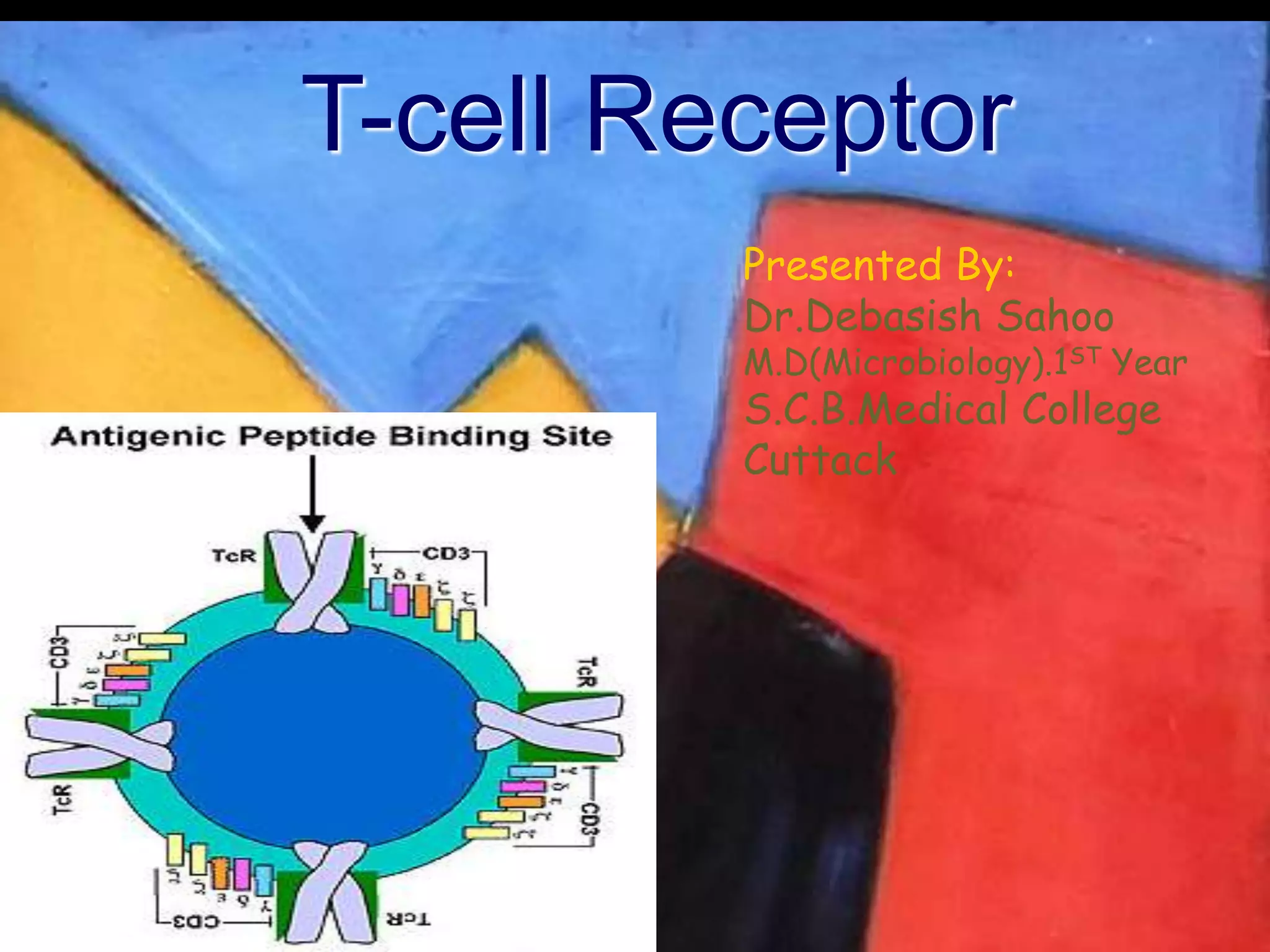
T-cell Receptor
Presented By:
Dr.Debasish Sahoo
M.D(Microbiology).1ST Year
S.C.B.Medical College
Cuttack
7/16/2022 2
POINT OF DISCUSSION
o Definition & Characteristics of TCR
o Generation of TCR
o The TCR Complex
o TCR Co-Receptors
o T Cell Activation
o Associated Molecules of TCR complex
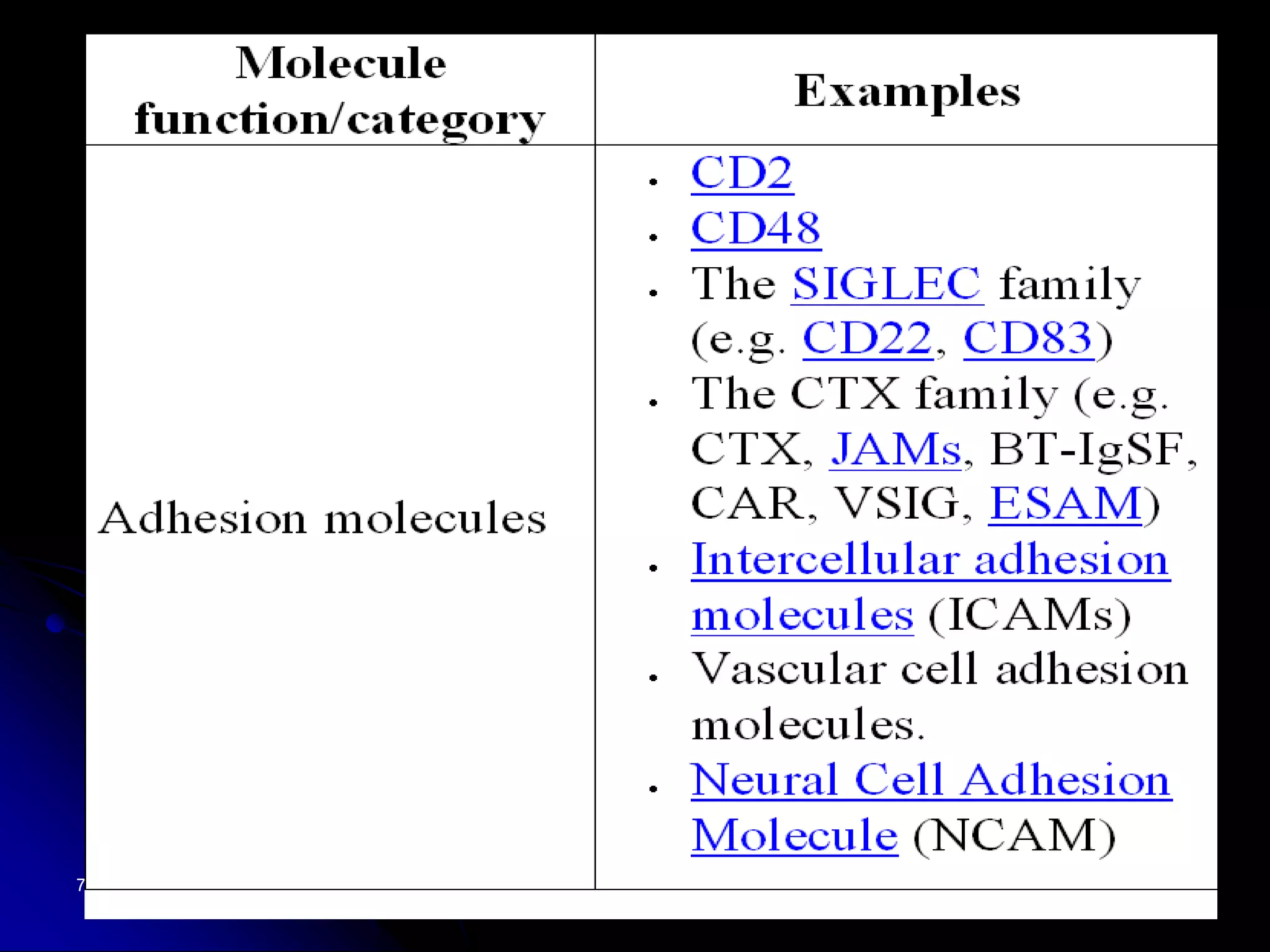
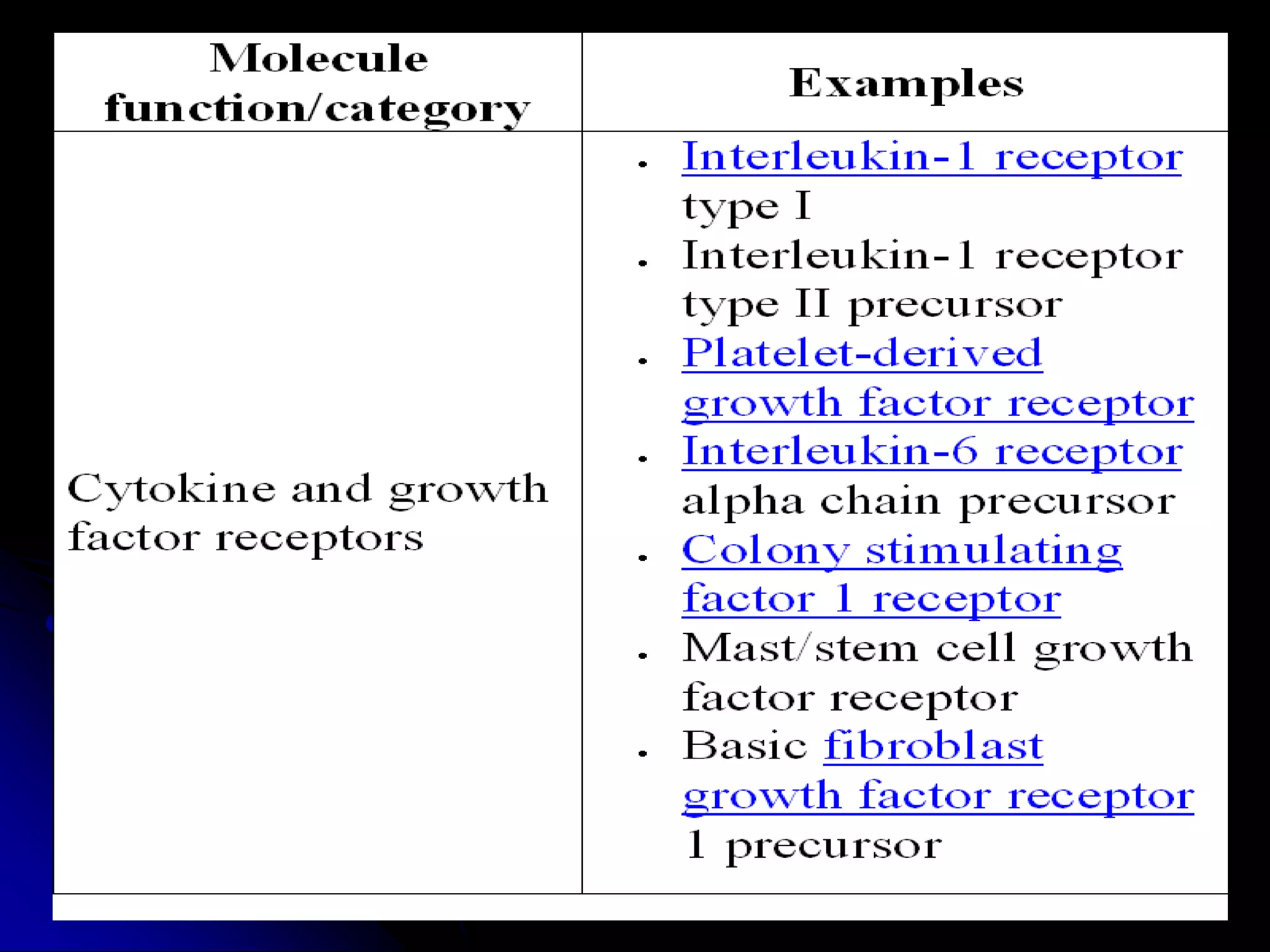
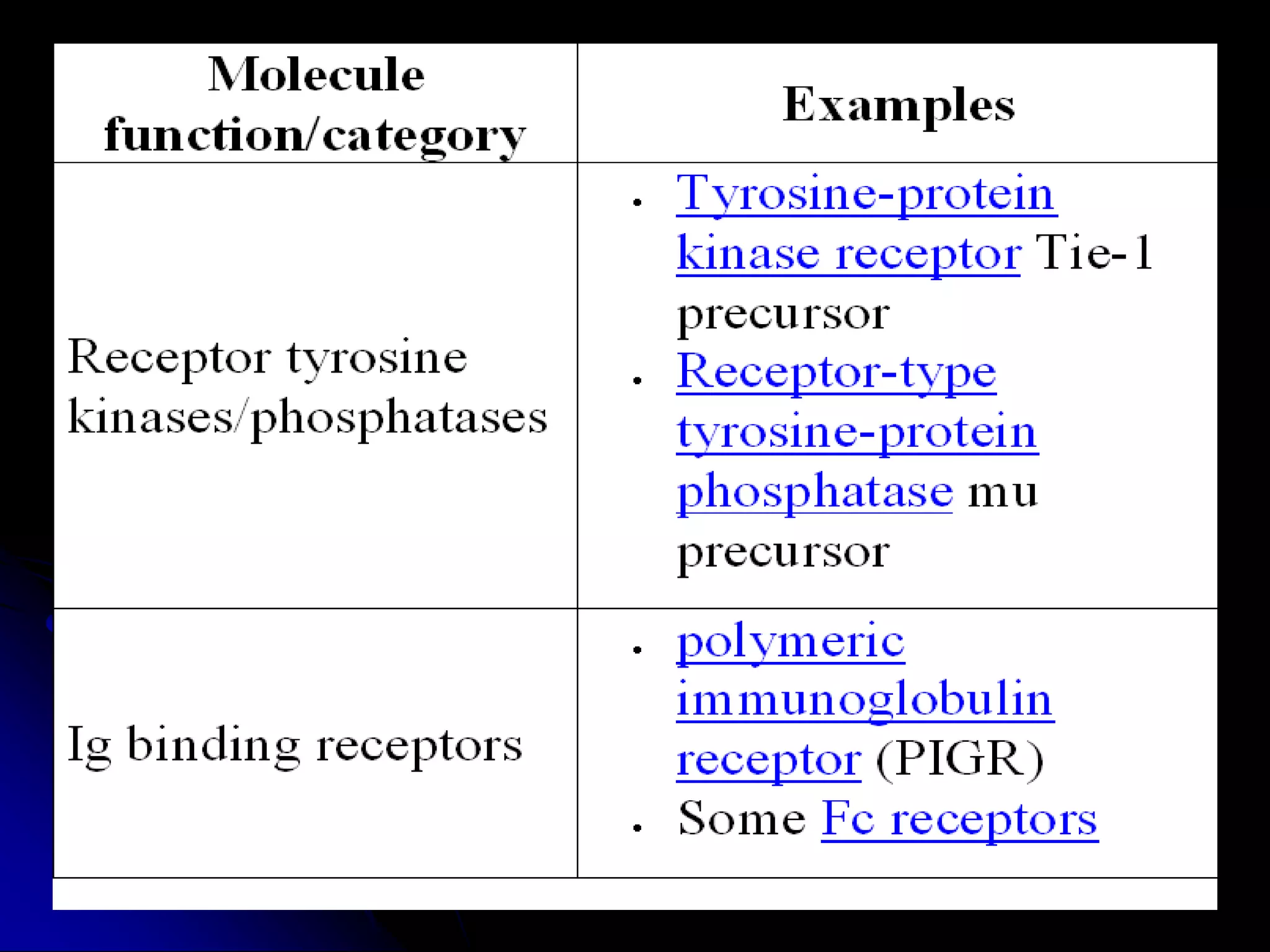
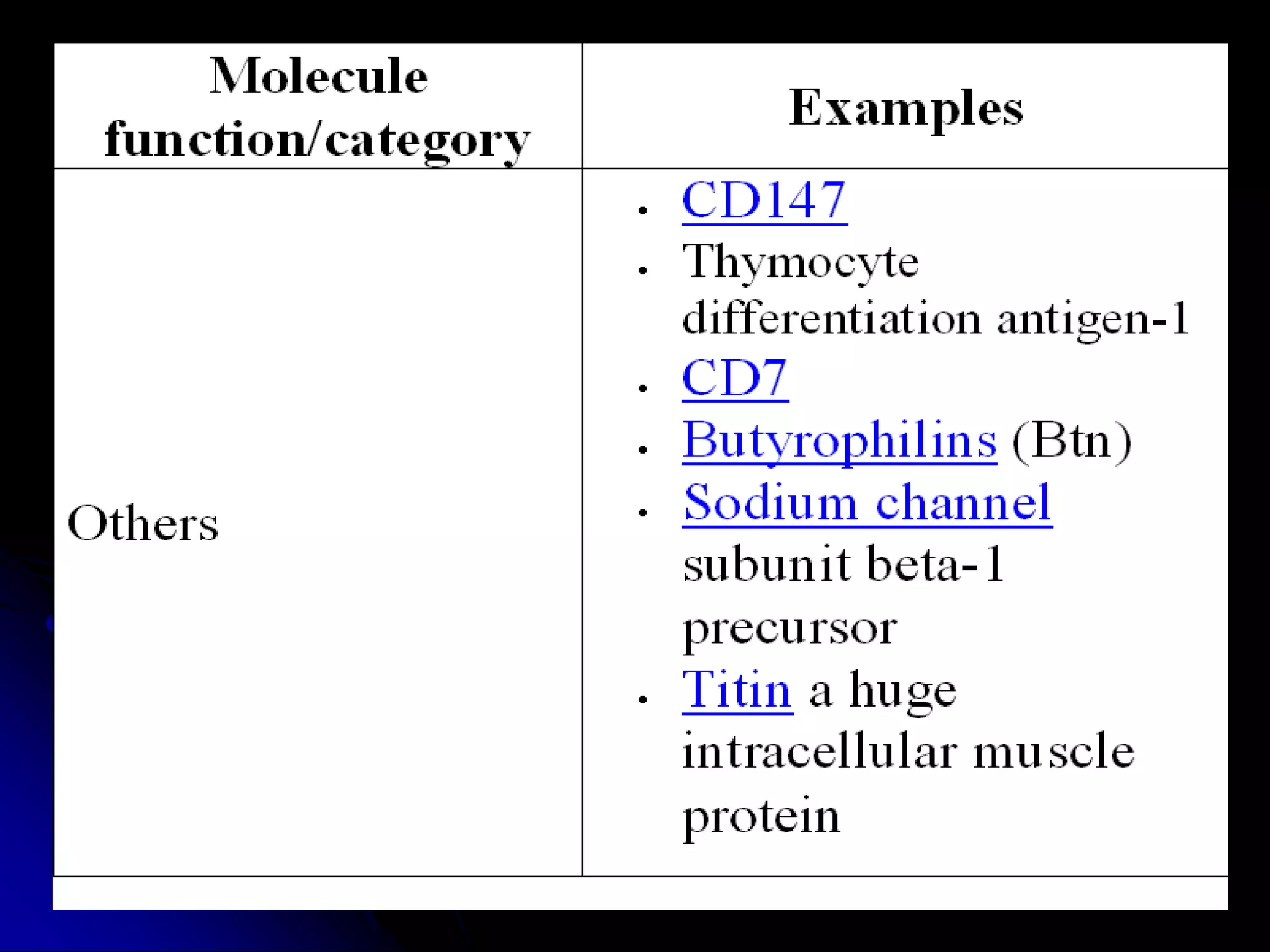
o Immunoglobulin superfamily
7/16/2022 3
DEFINITION
 The T cell receptor or TCR is a complex of
eight transmembrane proteins which consist
of two disulfide linked chains.
 It is found on the surface of T Lymphocytes
responsible for recognizing antigens bound
to MHC molecules.
 It is a heterodimer consisting of a and b
chains in 95% of T cells, whereas 5% of T
cells have g and d chains.
7/16/2022 4
TCR
 Mature T cells express one of two types
of TCR: a heterodimer composed either
of a and b chains or of g and d chains.
 T cells expressing ab receptors
account for 90% of T-cell helper function
and cytotoxic activity.
 The gd T cells, whose physiologic role is
still unclear.
7/16/2022 5
a b TCR
 a b TCR mostly found in thymus & peripheral
lymphoid organs.
 Is disulphide linked heterodimer of
.alpha subunit-40-50 kDa
.beta subunit-35-47kDa
 Each polypeptide chain contains two
extacellular Ig- like domain of 110 aa.
 The extracellular portion of the ab
heterodimer is structurally similar to the
antigen-binding fragment (Fab) of an Ig
7/16/2022 6
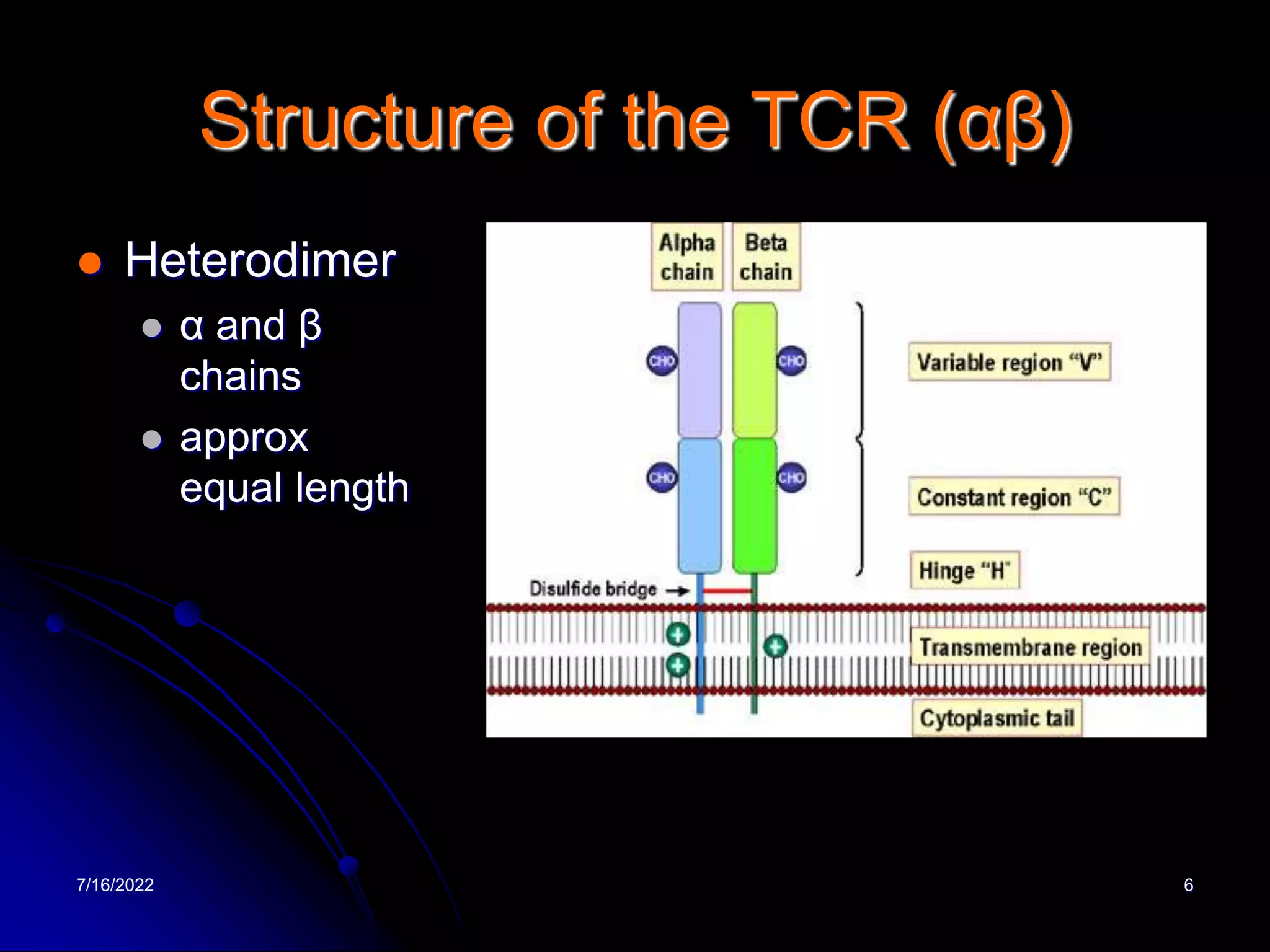
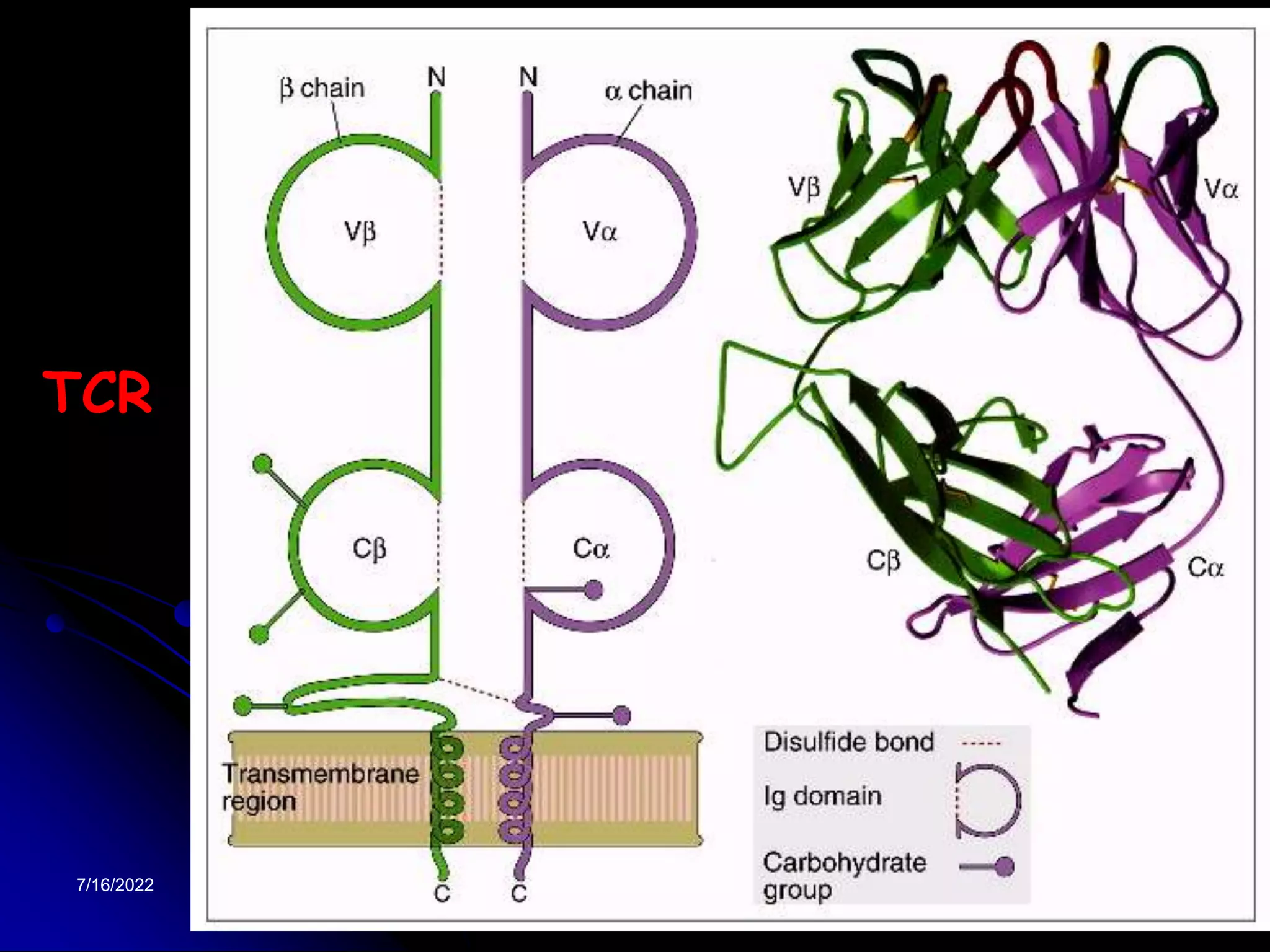
Structure of the TCR (αβ)
 Heterodimer
 α and β
chains
 approx
equal length
7/16/2022 7
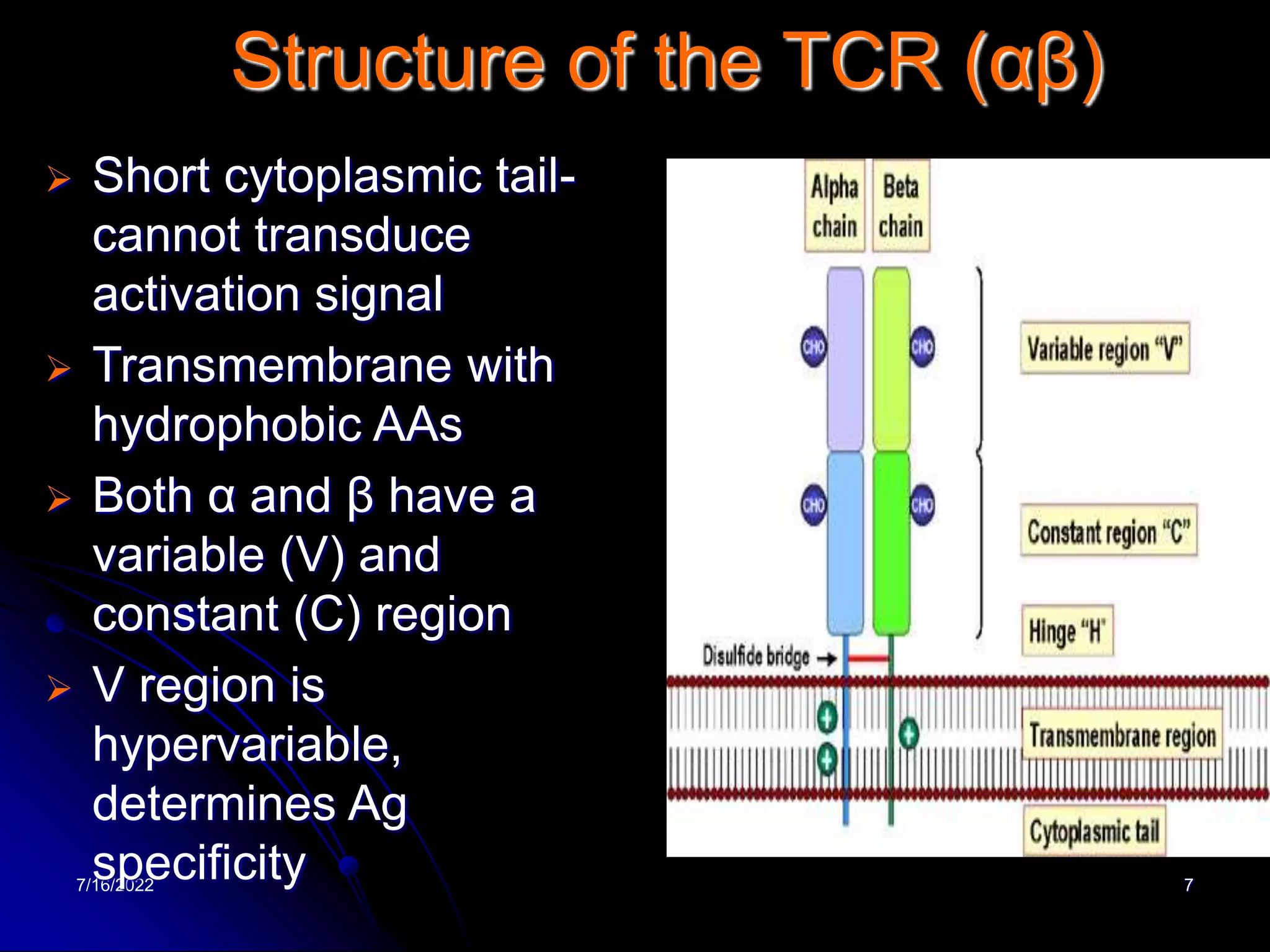
Structure of the TCR (αβ)
 Short cytoplasmic tail-
cannot transduce
activation signal
 Transmembrane with
hydrophobic AAs
 Both α and β have a
variable (V) and
constant (C) region
 V region is
hypervariable,
determines Ag
specificity
7/16/2022 8
Structural characteristics of the TCR
The structure of TCR is very similar to
immunoglobulin Fab fragments
The V- domain of both TCR α-chain
and β-chain have 3 hypervariable or
complementarity determining regions
The V-region of the β-chain has an
additional area of hypervariability
(HV4) that does not normally contact
antigen and not considered a CDR.
7/16/2022 9
Structural characteristics of the TCR
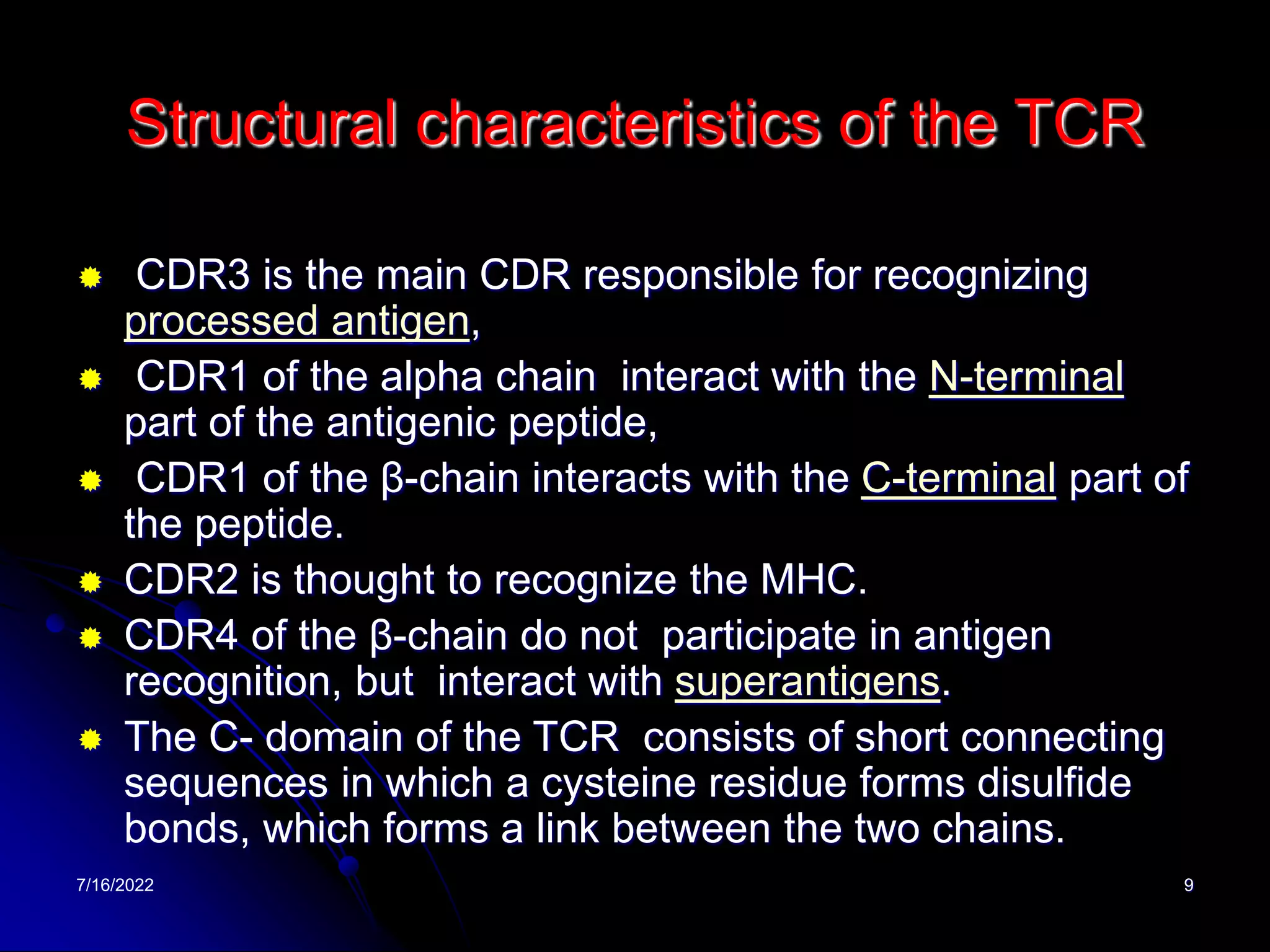
 CDR3 is the main CDR responsible for recognizing
processed antigen,
 CDR1 of the alpha chain interact with the N-terminal
part of the antigenic peptide,
 CDR1 of the β-chain interacts with the C-terminal part of
the peptide.
 CDR2 is thought to recognize the MHC.
 CDR4 of the β-chain do not participate in antigen
recognition, but interact with superantigens.
 The C- domain of the TCR consists of short connecting
sequences in which a cysteine residue forms disulfide
bonds, which forms a link between the two chains.
7/16/2022 10
TCR
7/16/2022 11
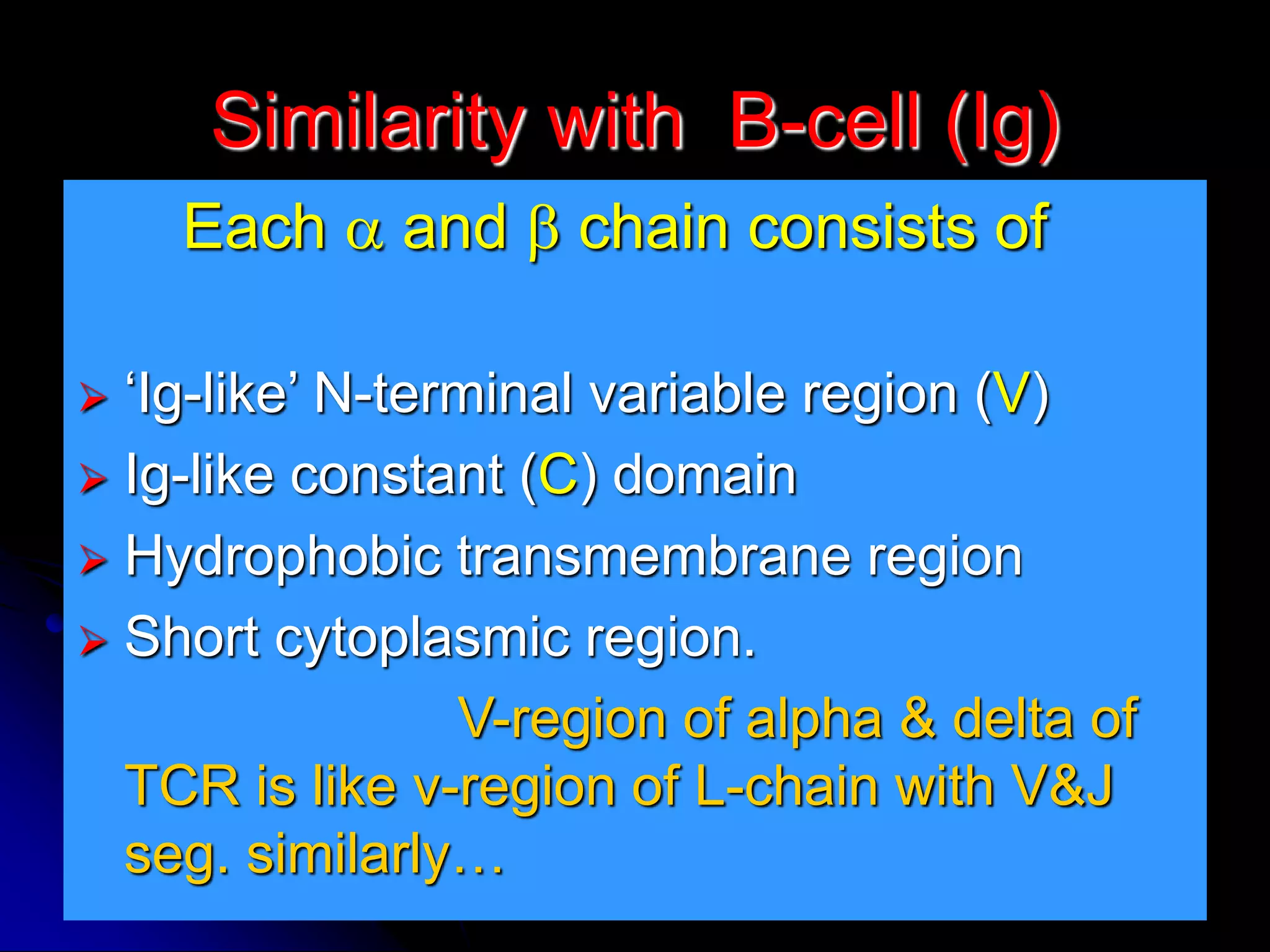
Similarity with B-cell (Ig)
Each a and b chain consists of
 ‘Ig-like’ N-terminal variable region (V)
 Ig-like constant (C) domain
 Hydrophobic transmembrane region
 Short cytoplasmic region.
V-region of alpha & delta of
TCR is like v-region of L-chain with V&J
seg. similarly…
7/16/2022 12
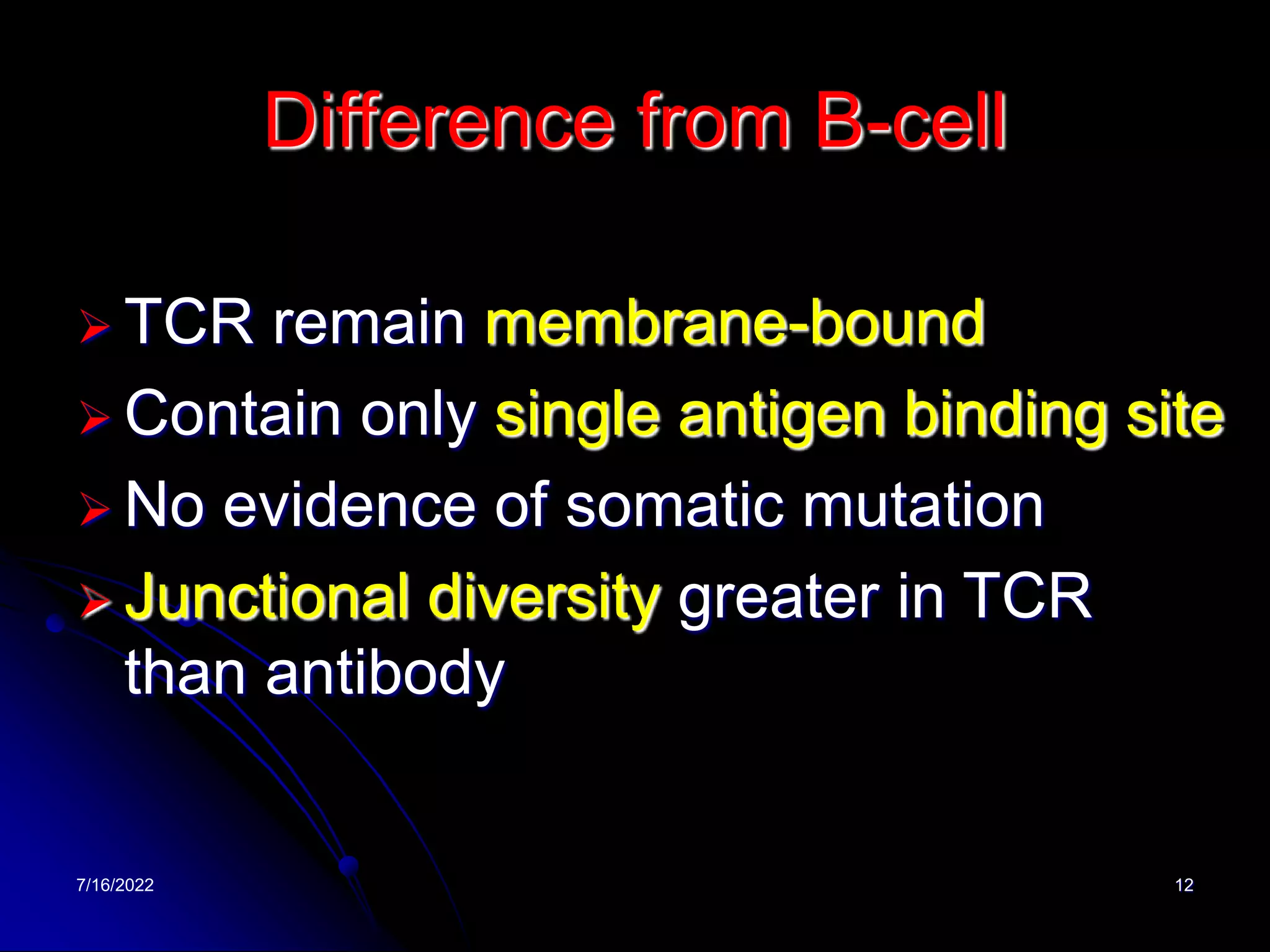
Difference from B-cell
 TCR remain membrane-bound
 Contain only single antigen binding site
 No evidence of somatic mutation
 Junctional diversity greater in TCR
than antibody
7/16/2022 13
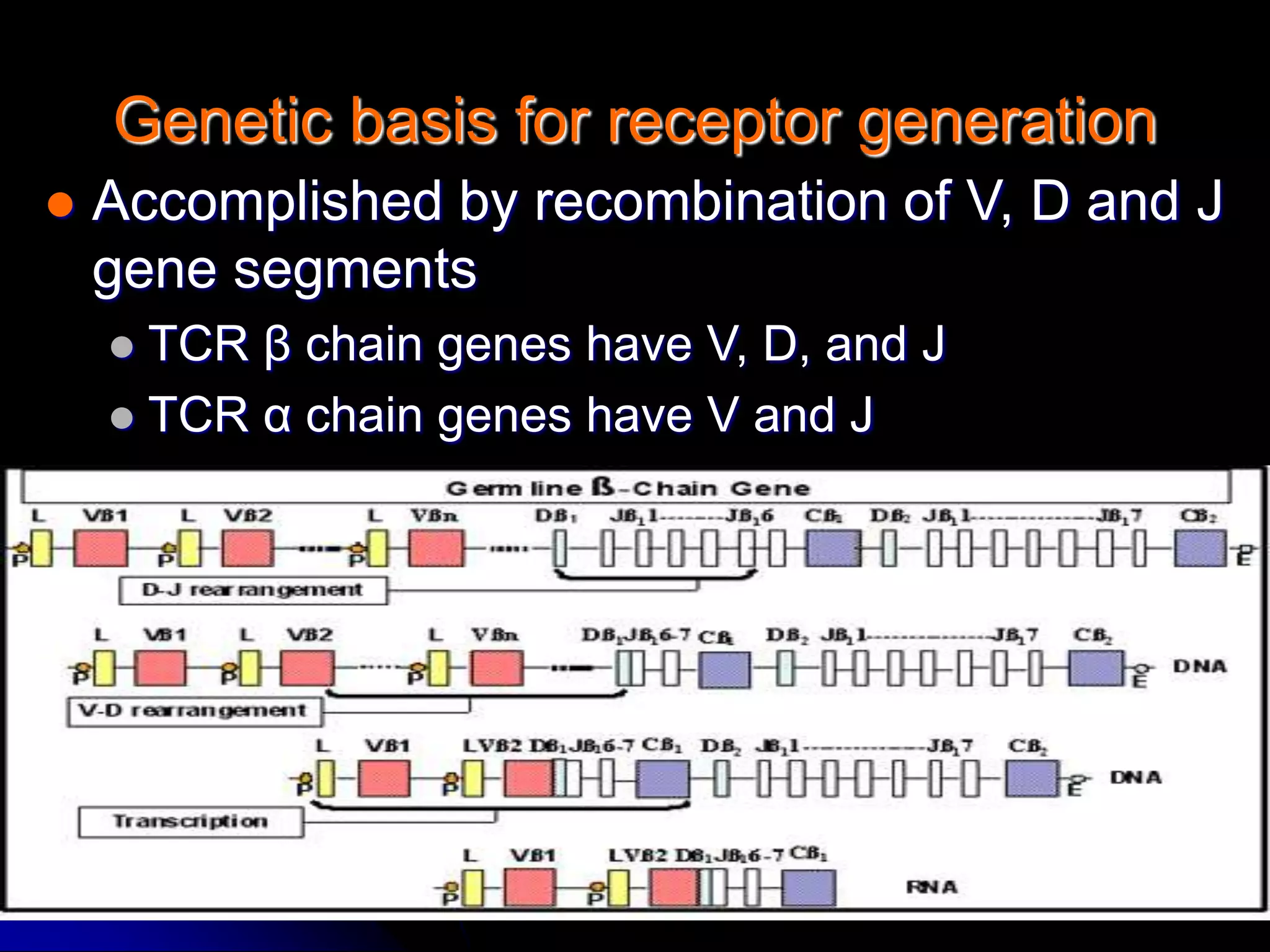
Generation of the TCR
TCR formation are similar to those of
B cell receptors.
TCR alpha chain is generated by VJ
recombination, whereas the beta chain
is generated by V(D)J recombination .
 Generation of the TCR gamma chain
involves VJ recombination, whereas
generation of the TCR delta chain occurs
by V(D)J recombination.
7/16/2022 14
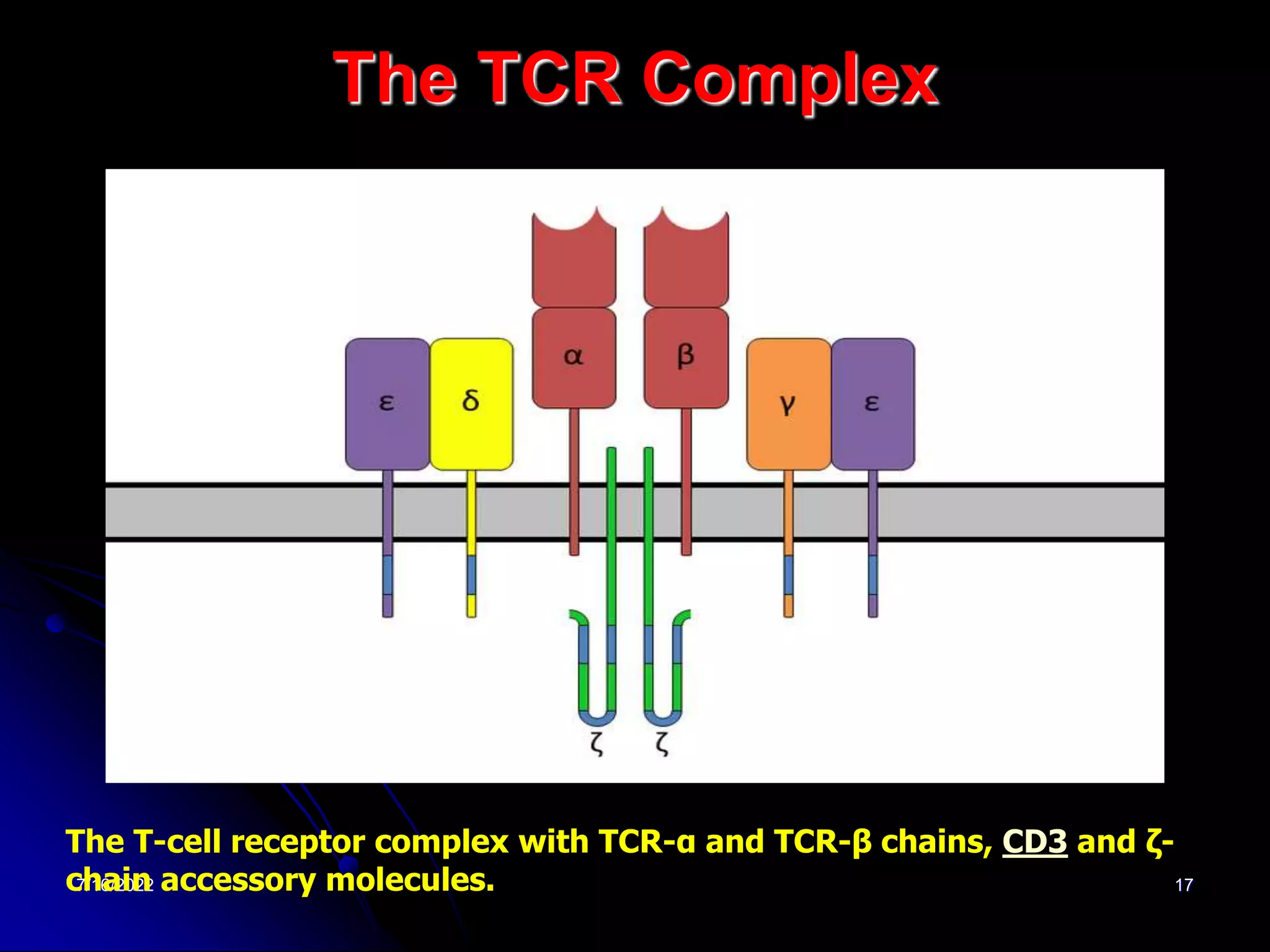
T-cell Receptor complex
The biochemical signals that are triggered
in T cells by antigen recognition are
transduced not by the T cell receptor itself
but by invariant proteins called CD3 an z
(zeta), which are noncovalenlty linked to
the antigen receptor to form the TCR
complex.
7/16/2022 15
TCR and CD3 complex
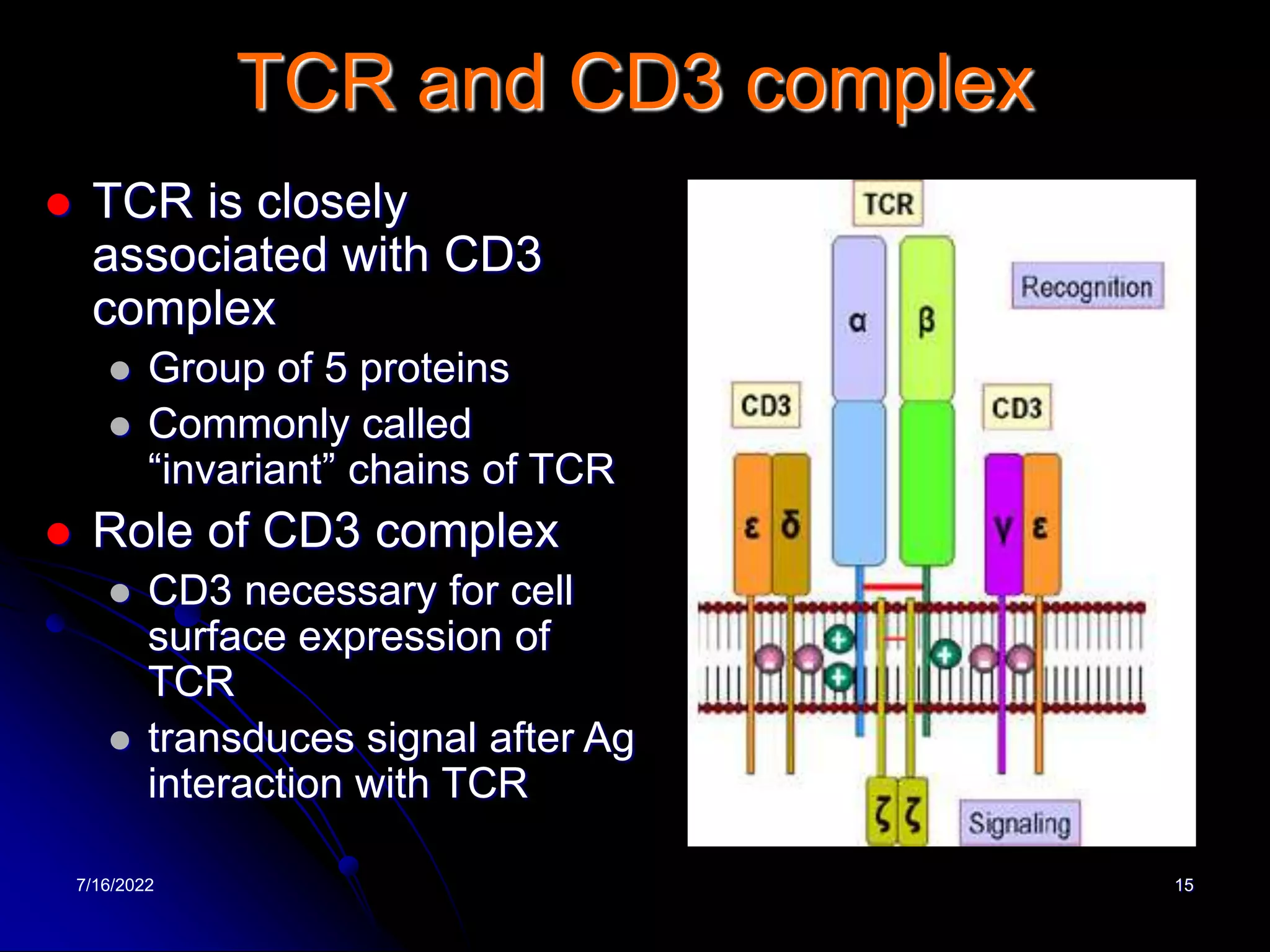
 TCR is closely
associated with CD3
complex
 Group of 5 proteins
 Commonly called
“invariant” chains of TCR
 Role of CD3 complex
 CD3 necessary for cell
surface expression of
TCR
 transduces signal after Ag
interaction with TCR
7/16/2022 16
CD3
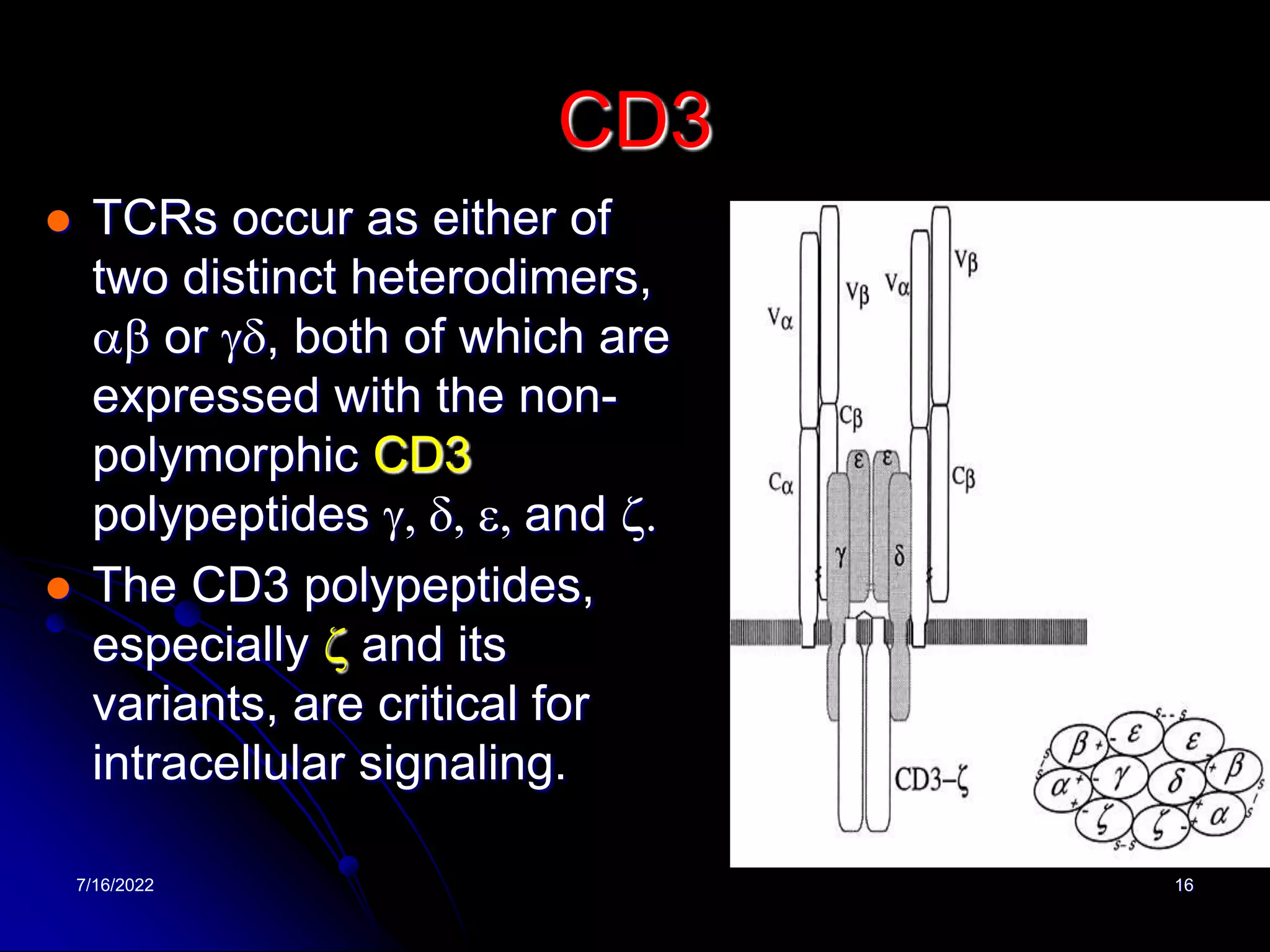
 TCRs occur as either of
two distinct heterodimers,
ab or gd, both of which are
expressed with the non-
polymorphic CD3
polypeptides g, d, e, and z.
 The CD3 polypeptides,
especially z and its
variants, are critical for
intracellular signaling.
7/16/2022 17
The TCR Complex
The T-cell receptor complex with TCR-α and TCR-β chains, CD3 and ζ-
chain accessory molecules.
7/16/2022 18
TCR α & β GENES & THE GENERATION
OF TCR DIVERSITY
 Diversity of TCRs required to recognize a
wide spectrum of antigenic determinants.
 TCR a and b genes use a strategy of
recombination similar to that of the
immunoglobulin genes.
 The germline TCR b-gene locus contains
20-30 V (variable), 2 D (diversity), and 13
J (joining) gene segments
7/16/2022 19
Genetic basis for receptor generation
 Accomplished by recombination of V, D and J
gene segments
 TCR β chain genes have V, D, and J
 TCR α chain genes have V and J
7/16/2022 20
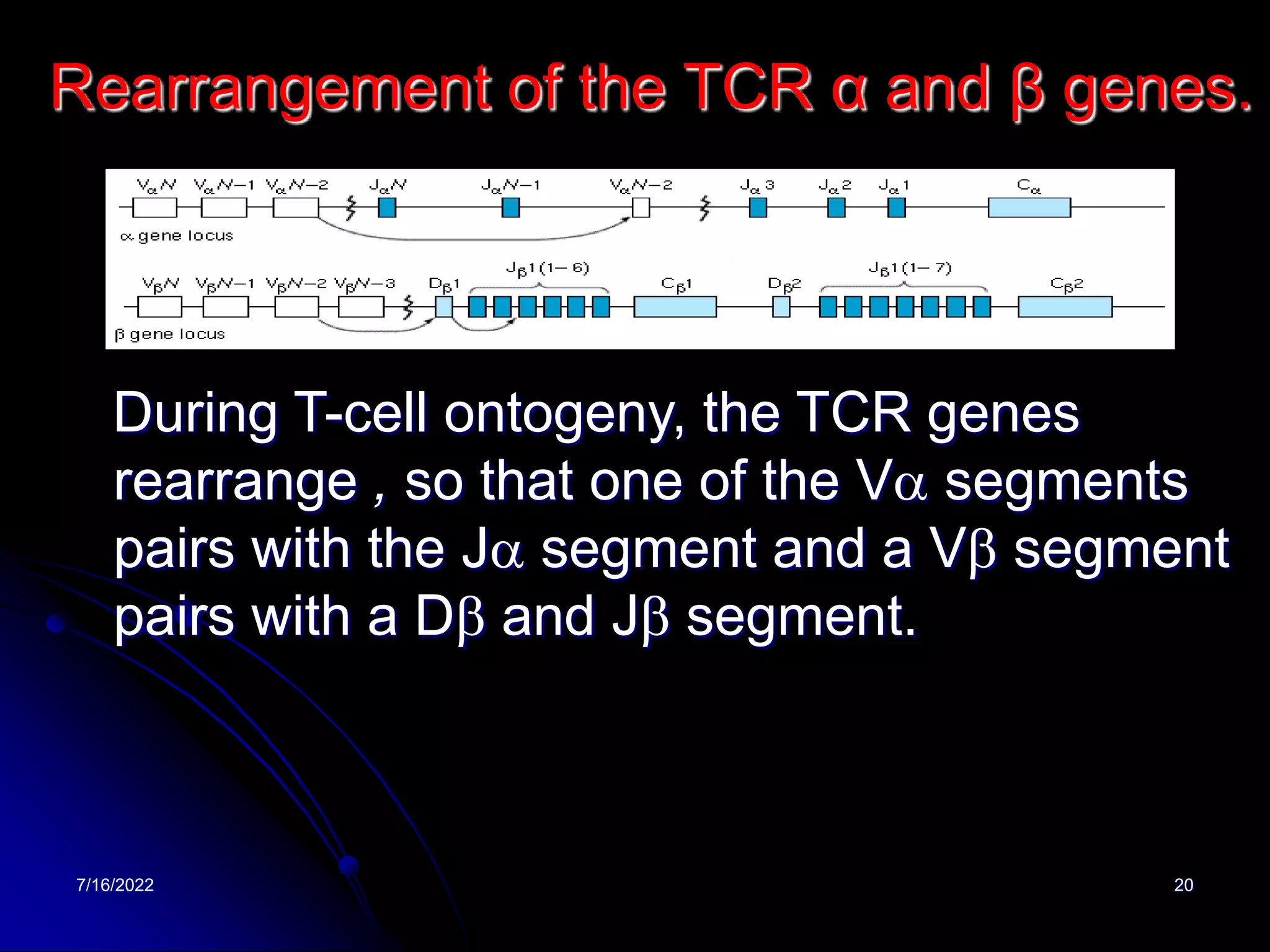
Rearrangement of the TCR α and β genes.
During T-cell ontogeny, the TCR genes
rearrange , so that one of the Va segments
pairs with the Ja segment and a Vb segment
pairs with a Db and Jb segment.
7/16/2022 21
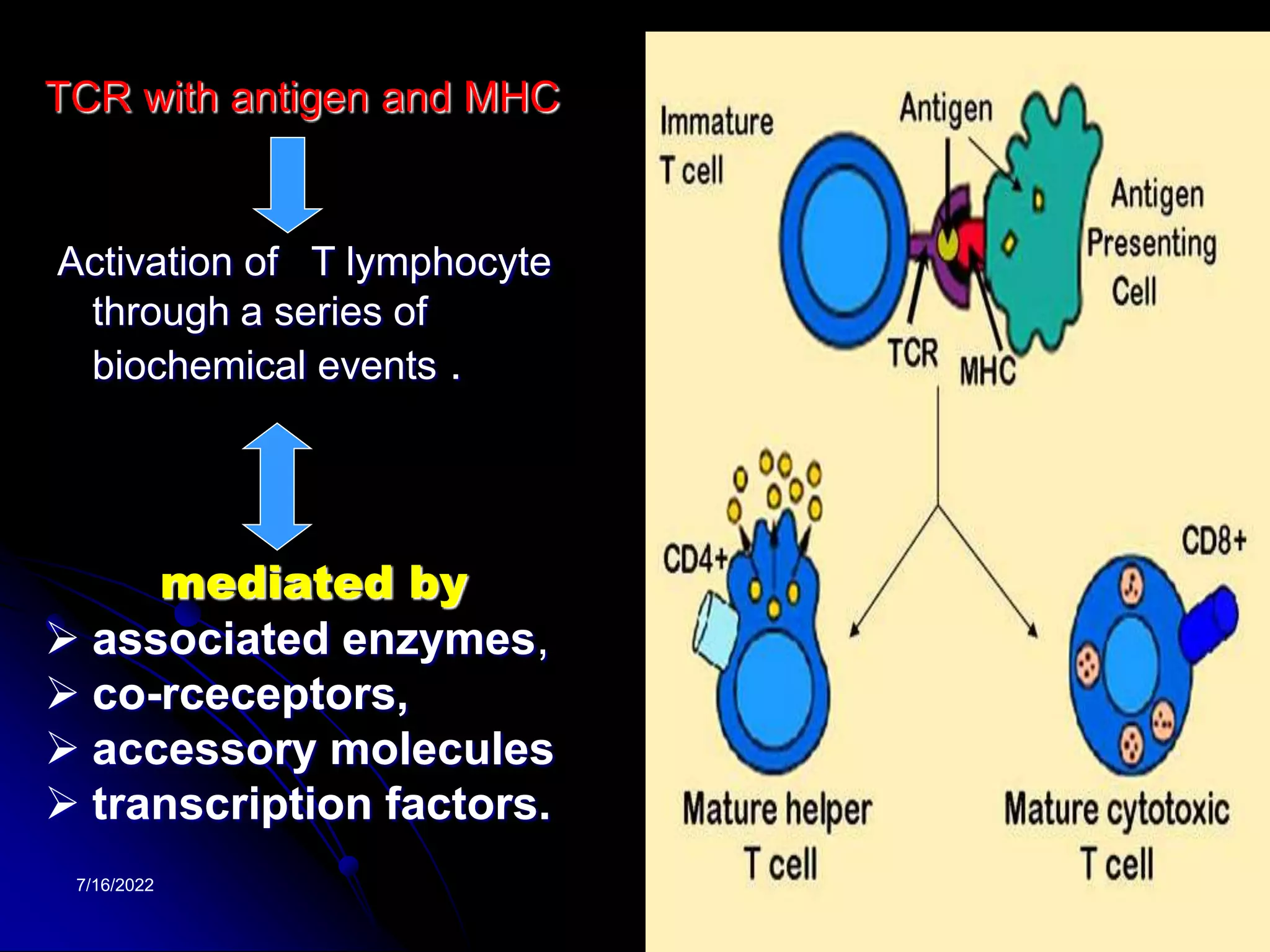
TCR with antigen and MHC
Activation of T lymphocyte
through a series of
biochemical events .
mediated by
 associated enzymes,
 co-rceceptors,
 accessory molecules
 transcription factors.
7/16/2022 22
Interaction of TCR with
Superantigens
 The super antigens act as clamp between
TCR and class II MHC providing signal to
the T cell.
 On T cell super antigens binds to V-beta
segments only without affecting D-beta
and J-beta regions.
7/16/2022 23
gd TCR
 The gd TCR are a second type of TCR.
 Their function remains largely unresolved.
 They do not recognize MHC-associated
peptides and are not MHC restricted.
 In mice and chickens they are found in the small
bowel mucosa and termed intraepithelial
lymphocytes.
 In humans they are found in the tongue, uterus
and vagina.
7/16/2022 24
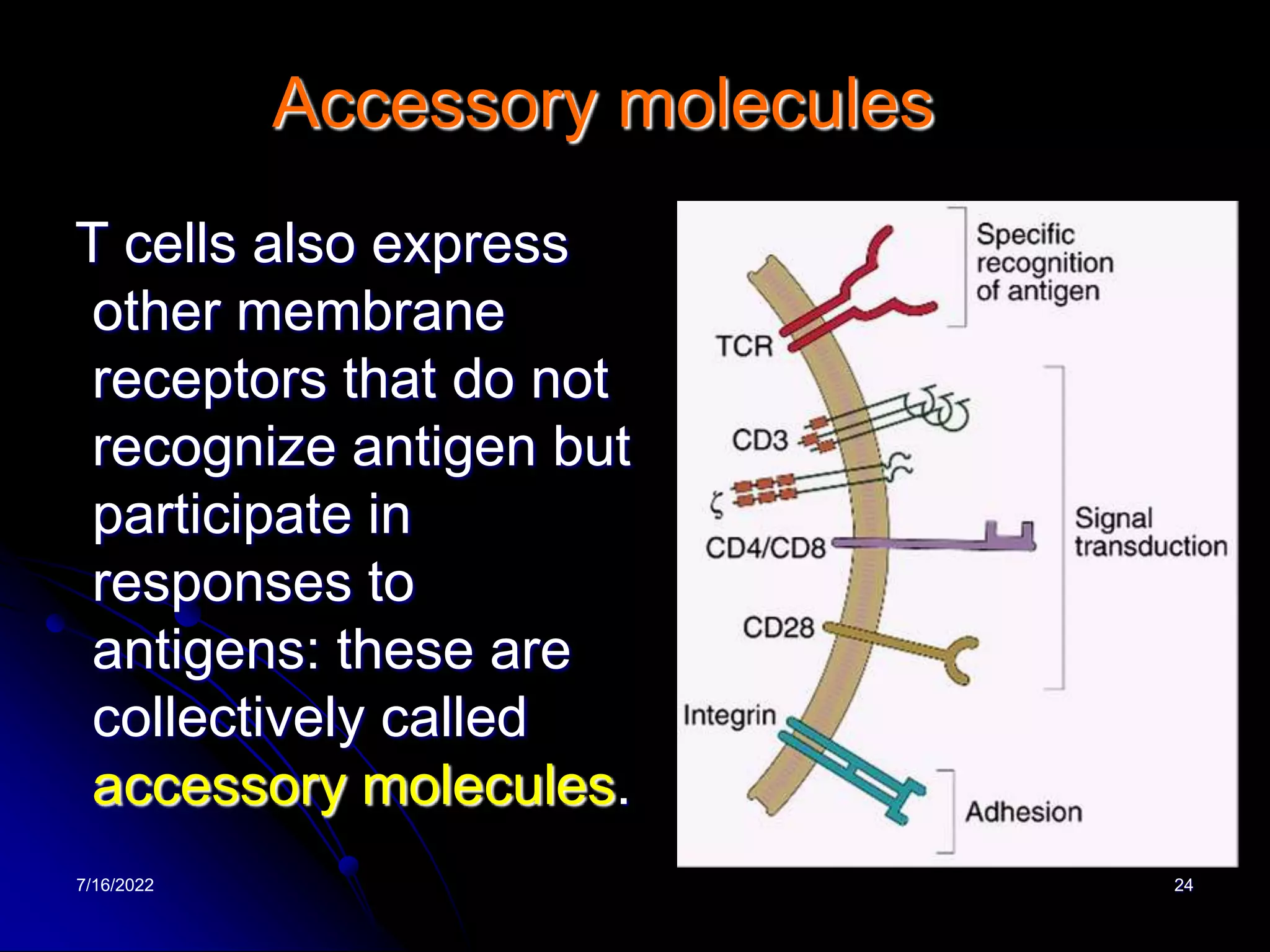
Accessory molecules
T cells also express
other membrane
receptors that do not
recognize antigen but
participate in
responses to
antigens: these are
collectively called
accessory molecules.
7/16/2022 25
CD45
 CD45 is a large (180-220 kd)
transmembrane cell surface molecule that
is expressed by all leukocytes, including
all T lymphocytes.
 The cytoplasmic domain of CD45 has
tyrosine phosphatase activity.
 CD45 is required for the functional
coupling of the TCR and its PTKs.
 Naive T cells express CD45RA, whereas
memory T cells express CD45RO.
7/16/2022 26
COSTIMULATION BY CD28
 CD28, expressed as a homodimer on the
surfaces of all CD4 T cells and 50% of CD8
T cells.
 CD28 binds two distinct cell surface
molecules, B7.1 and B7.2, found on
dendritic cells, macrophages, and activated
B cells.
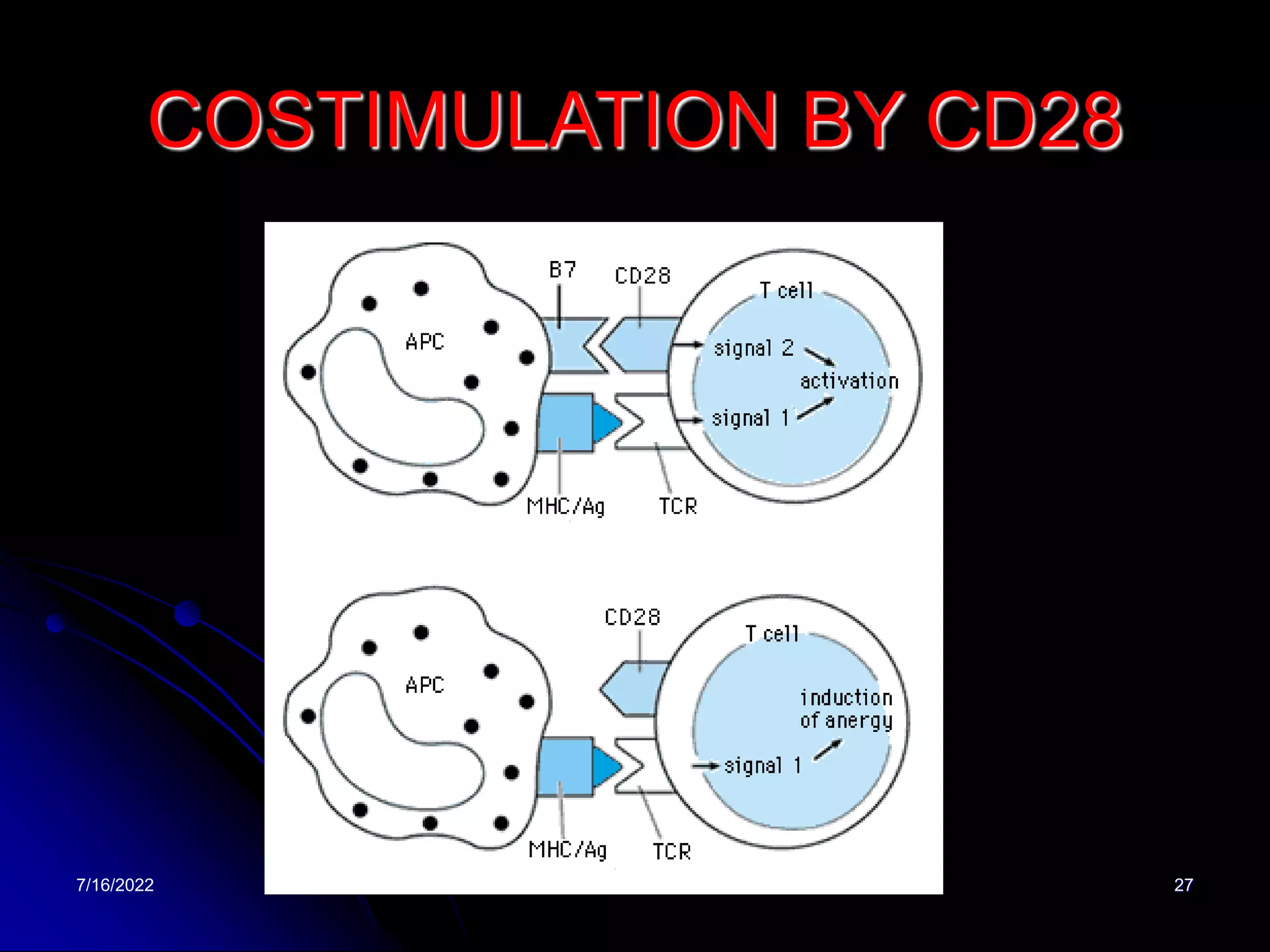
 The combination of TCR stimulation and
interaction of CD28 with its B7 ligands fully
activates T cells and results in greater
lymphokine production.
7/16/2022 27
COSTIMULATION BY CD28
7/16/2022 28
CTLA-4
 CTLA-4 shares considerable sequence
homology with CD28 and, like CD28, binds
B7.1 and B7.2 on the APC.
 Unlike CD28, however, CTLA-4 delivers
inhibitory signals to T cells, so that
engagement of CTLA-4 tends to strongly
diminish T-cell responses.
.
7/16/2022 29
CD2
 CD2 is a glycoprotien present on more
than 90% of mature T-cells and 50-70% of
thymocytes.
 This molecule contains two extracellular Ig
domains.
 The principle ligand for CD2 is LFA-3
(CD58).
7/16/2022 30
CD2
 CD2 functions both as an adhesion
molecule and signal transducer.
 The association of CD2 with the TCR
complex helps to aggregate the TCR in the
regions of cell–cell contact, allowing the
stabilization of low-affinity TCR/MHC
interactions.
 Finally, CD2 is involved in the regulation of
cytokine production by T cells.
7/16/2022 31
Integrins
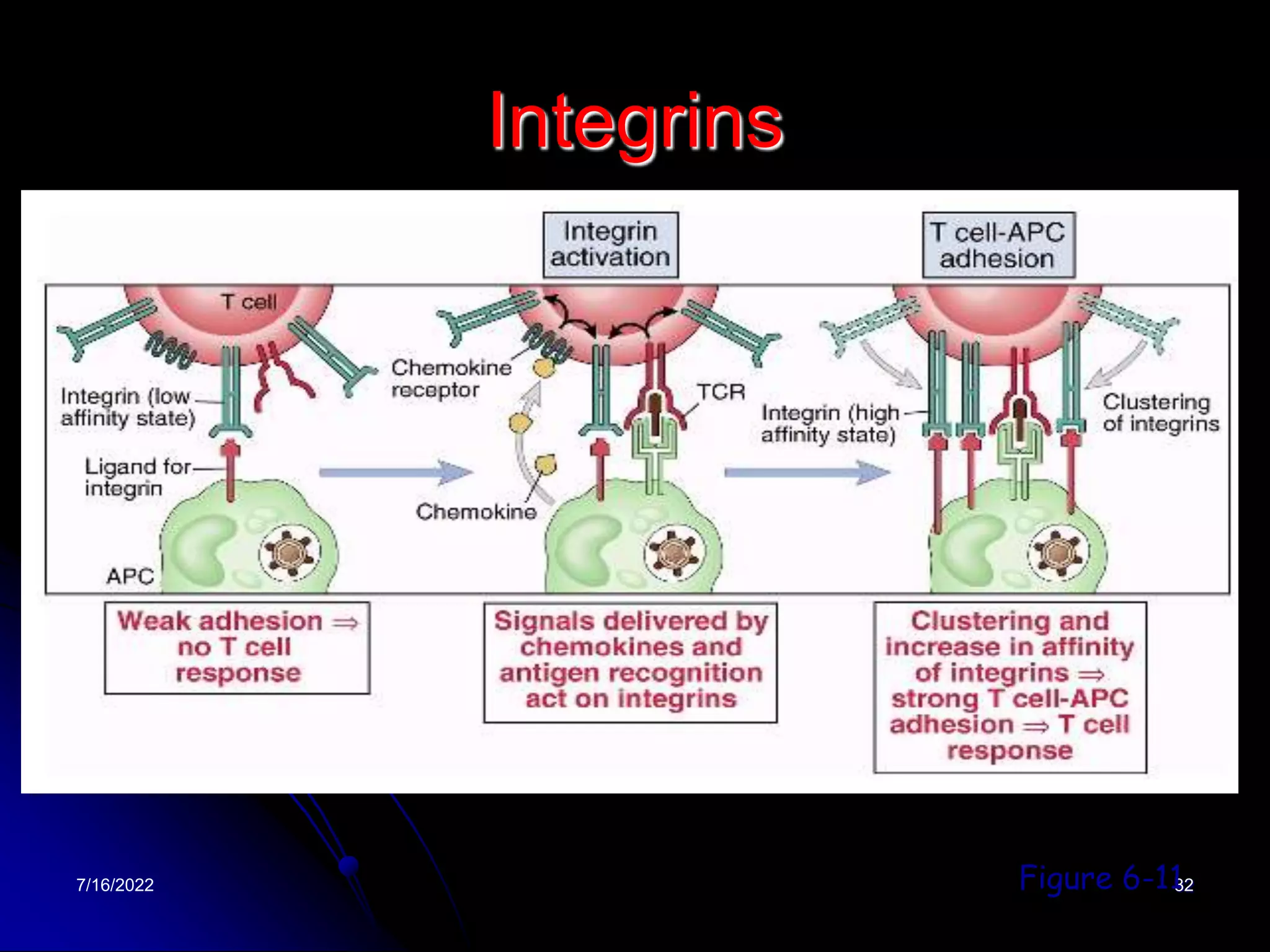
 The major functions of T-cell integrins are
to mediate adhesion to APCs, endothelial
cells, and extracellular matrix proteins.
 The avidity of integrins for their ligands is
increased rapidly on exposure of the T-
cells to cytokines called chemokines and
after stimulation of T-cells through the
TCR.
7/16/2022 32
Integrins
Figure 6-11
7/16/2022 33
CD44
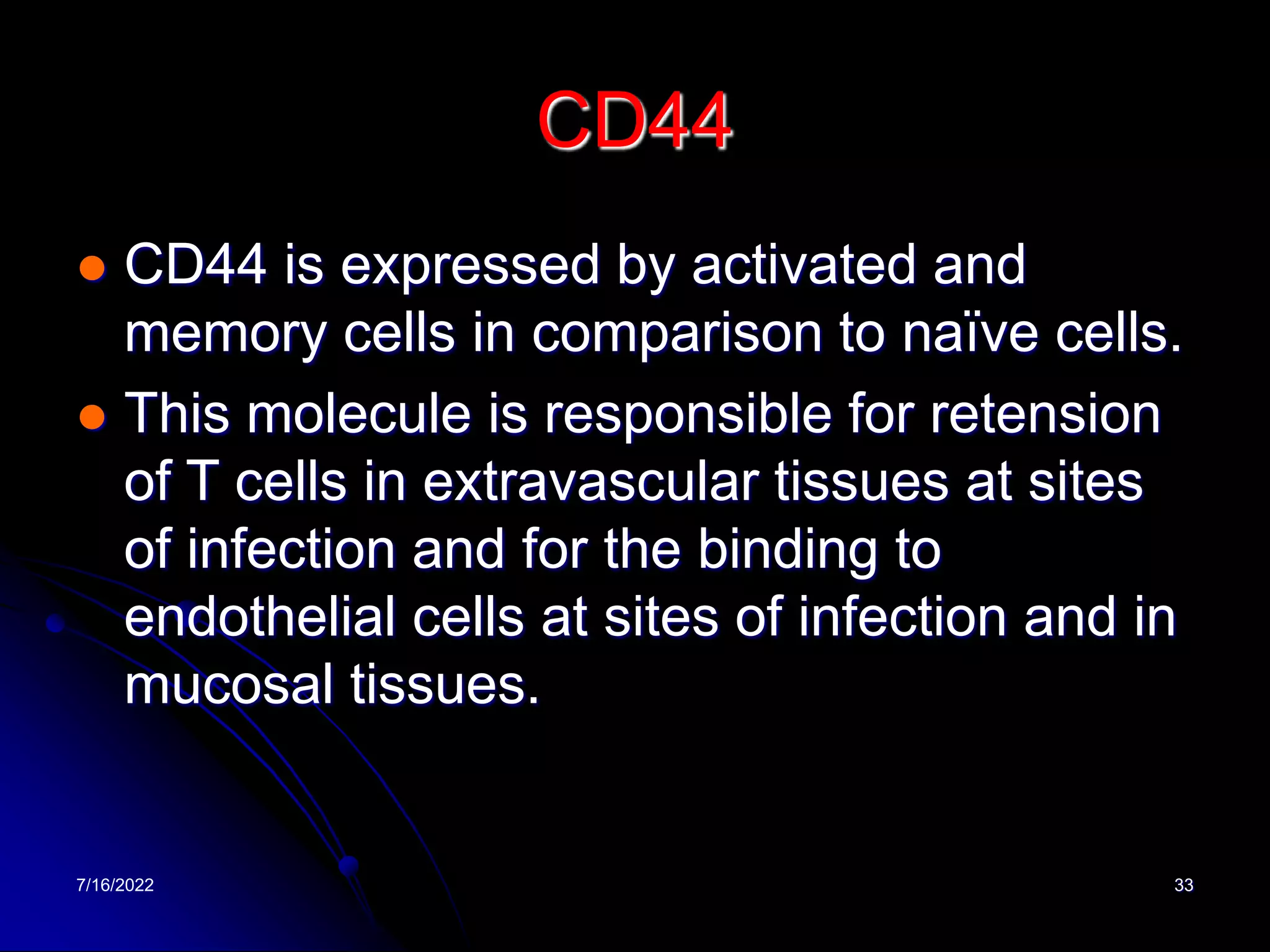
 CD44 is expressed by activated and
memory cells in comparison to naïve cells.
 This molecule is responsible for retension
of T cells in extravascular tissues at sites
of infection and for the binding to
endothelial cells at sites of infection and in
mucosal tissues.
7/16/2022 34
CD95 (Fas receptor)
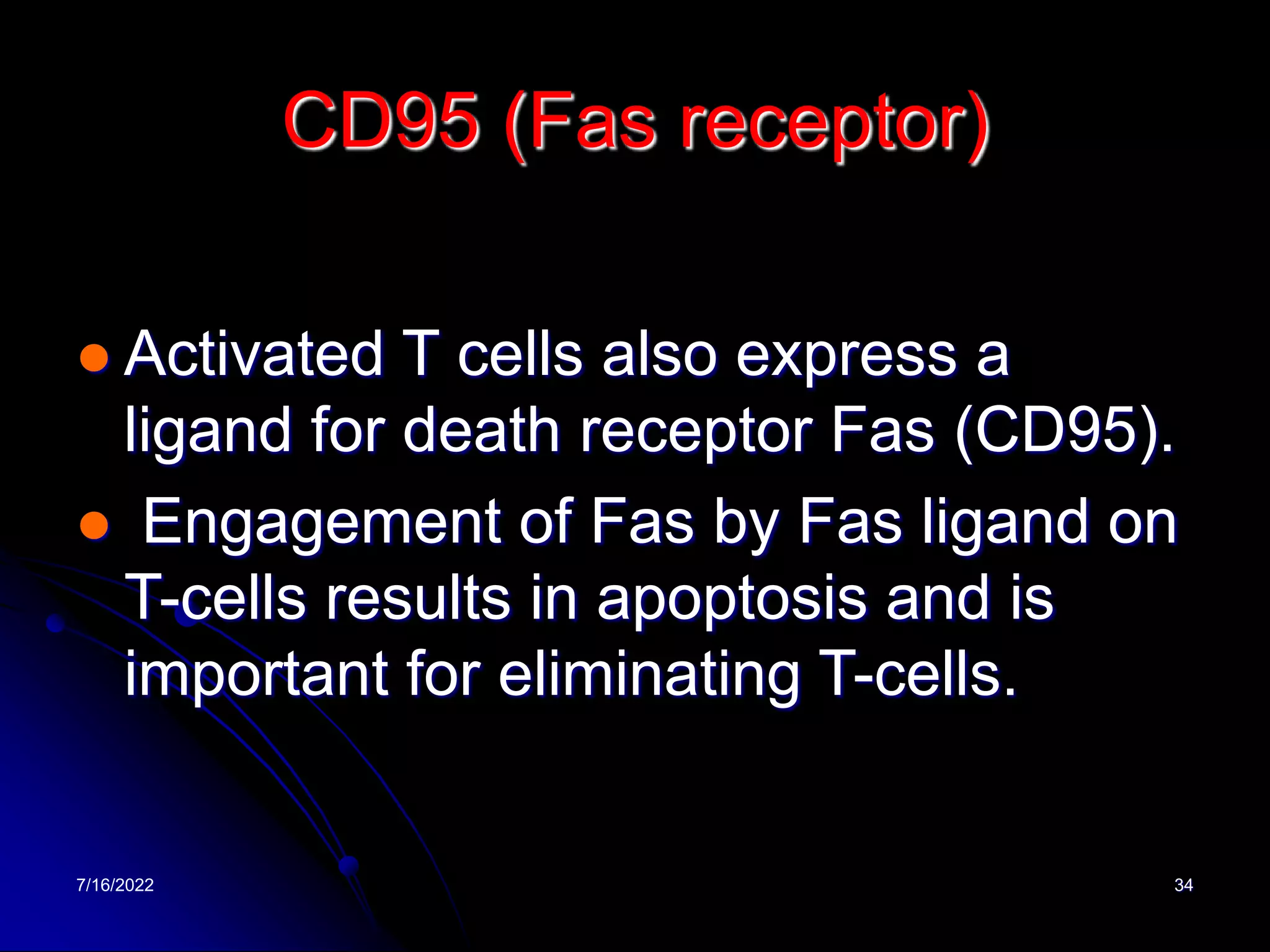
 Activated T cells also express a
ligand for death receptor Fas (CD95).
 Engagement of Fas by Fas ligand on
T-cells results in apoptosis and is
important for eliminating T-cells.
7/16/2022 35
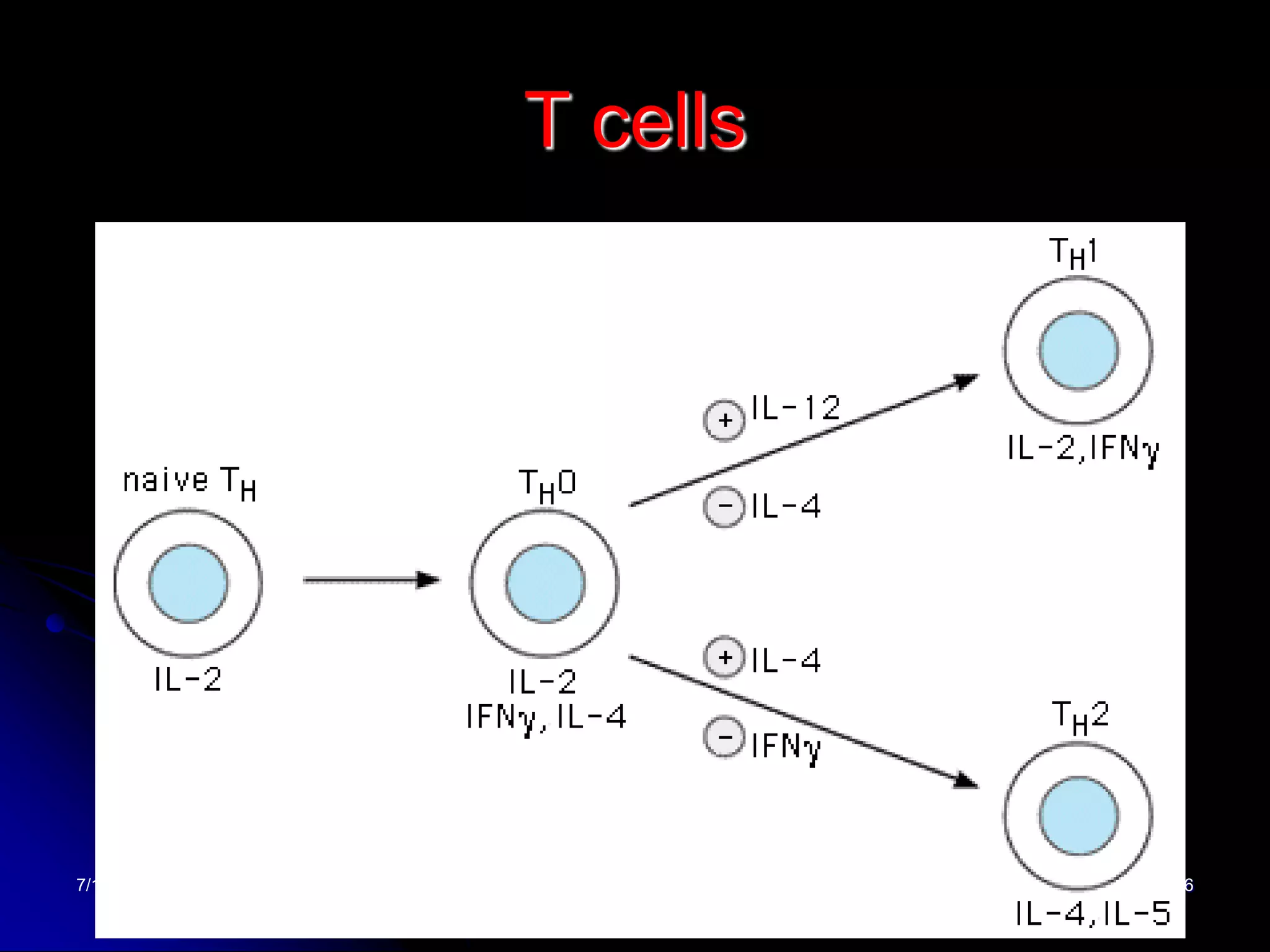
T-cell Subtypes
 T helper Th1 cells secrete pro-inflammatory
cytokines (IFN-g, TNF, and IL-2.
 Whereas T helper Th2 cells produce
cytokines that generally stimulate Ig
responses (IL-4, -5, -6, -9, and -10).
 These biases tend to be self-reinforcing: IL-
10 represses Th1 cell activity and IFN-g
inhibits Th2 cells.
7/16/2022 36
T cells
7/16/2022 37
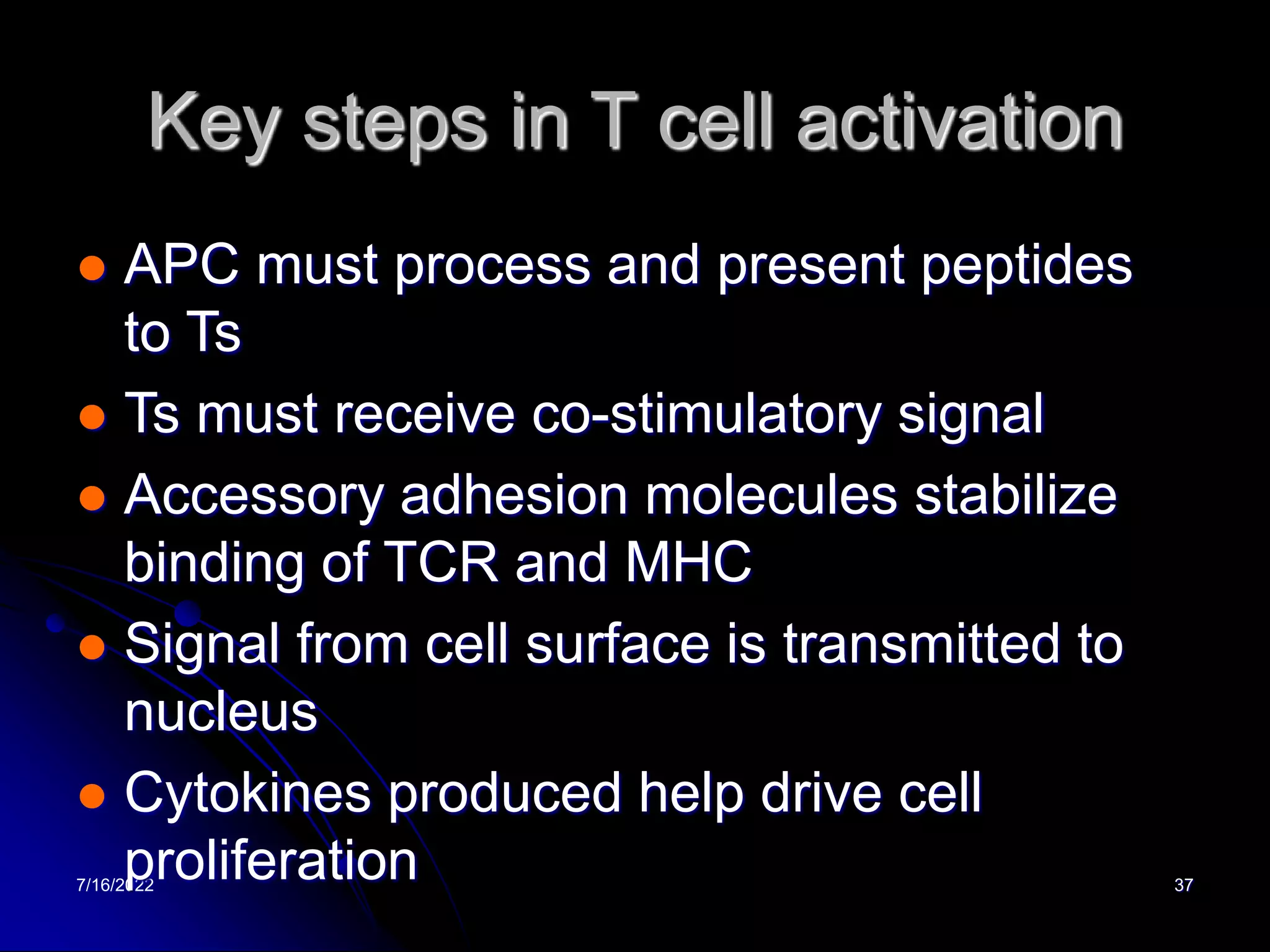
Key steps in T cell activation
 APC must process and present peptides
to Ts
 Ts must receive co-stimulatory signal
 Accessory adhesion molecules stabilize
binding of TCR and MHC
 Signal from cell surface is transmitted to
nucleus
 Cytokines produced help drive cell
proliferation
7/16/2022 38
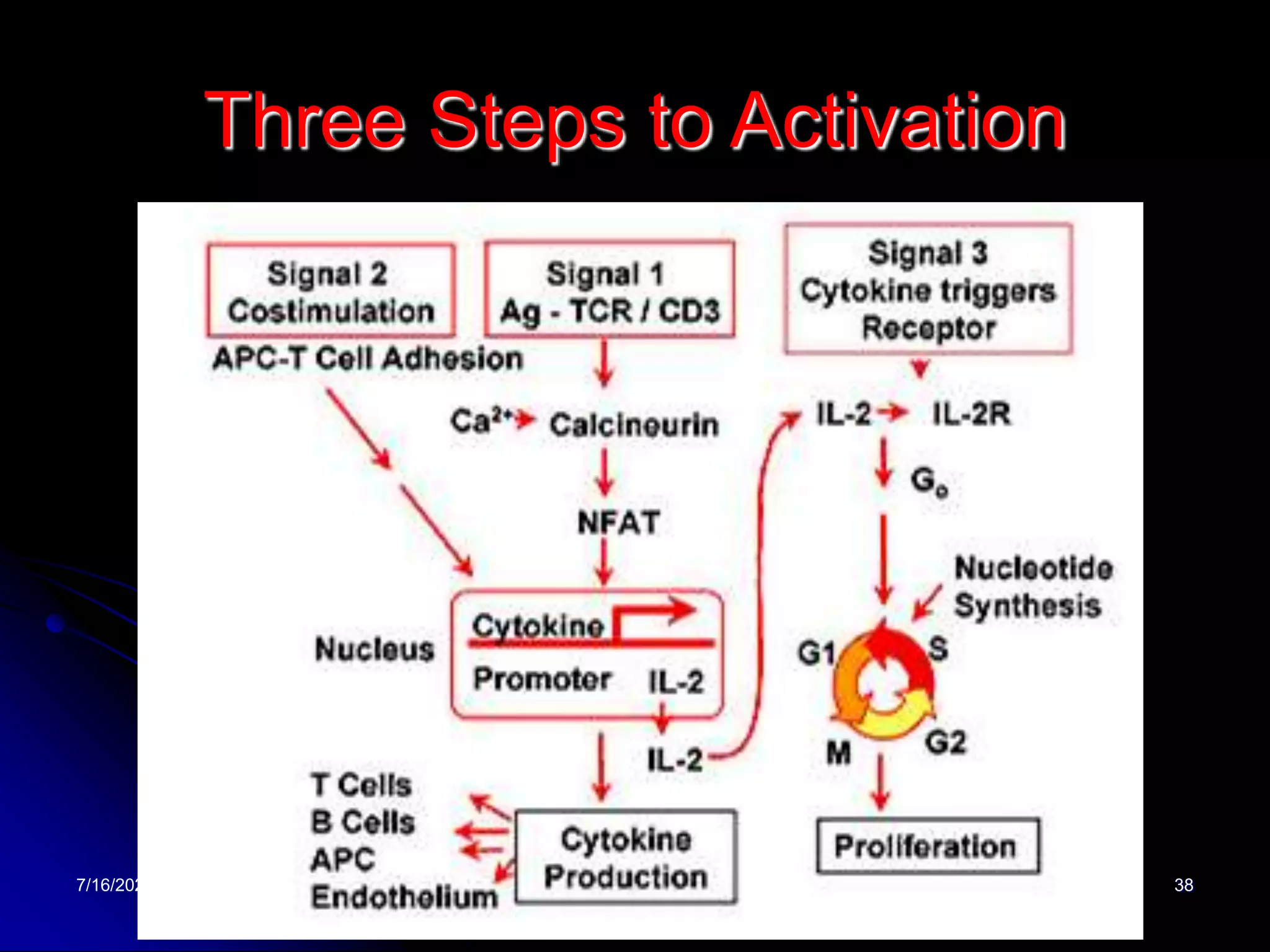
Three Steps to Activation
7/16/2022 39
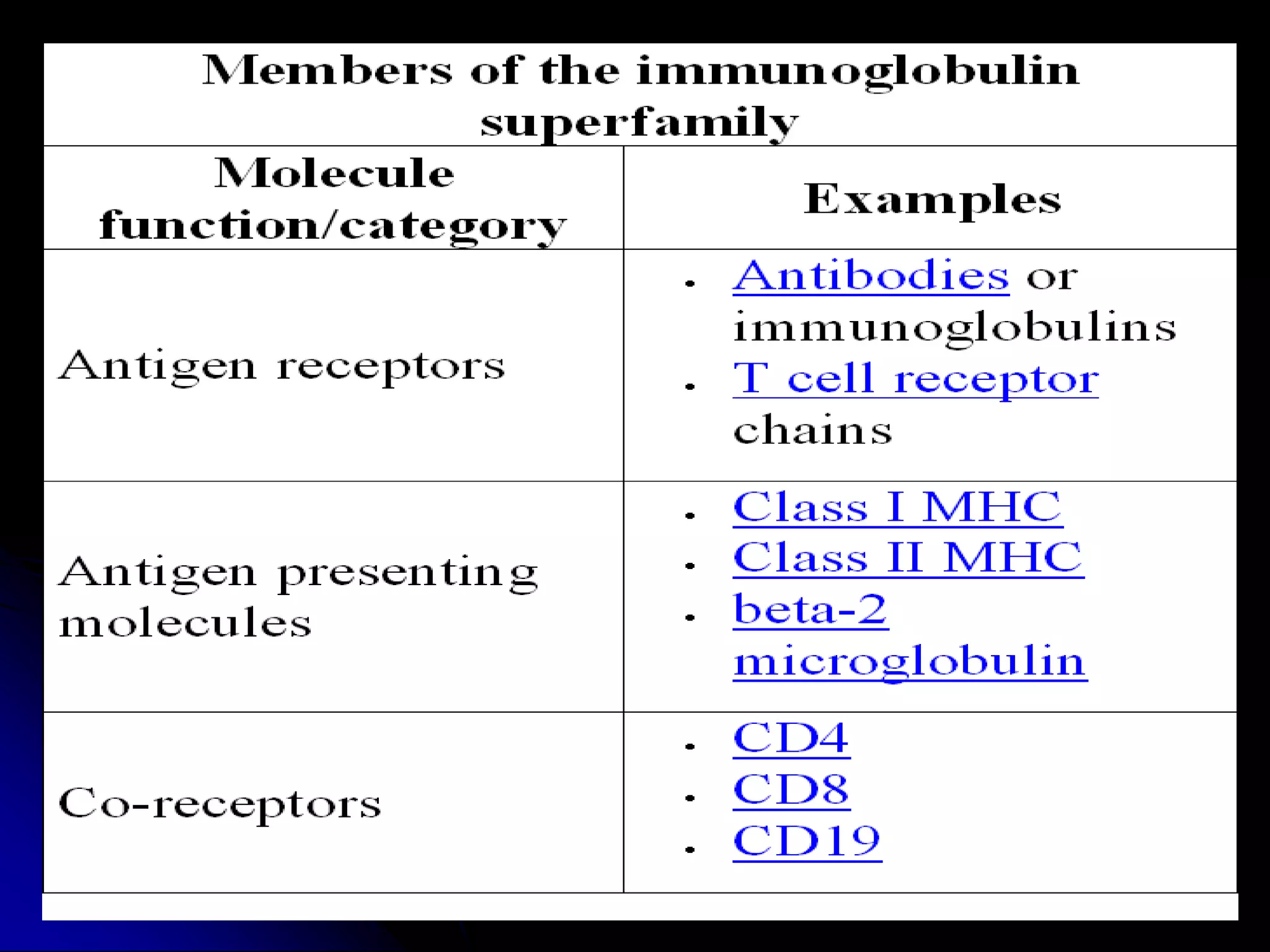
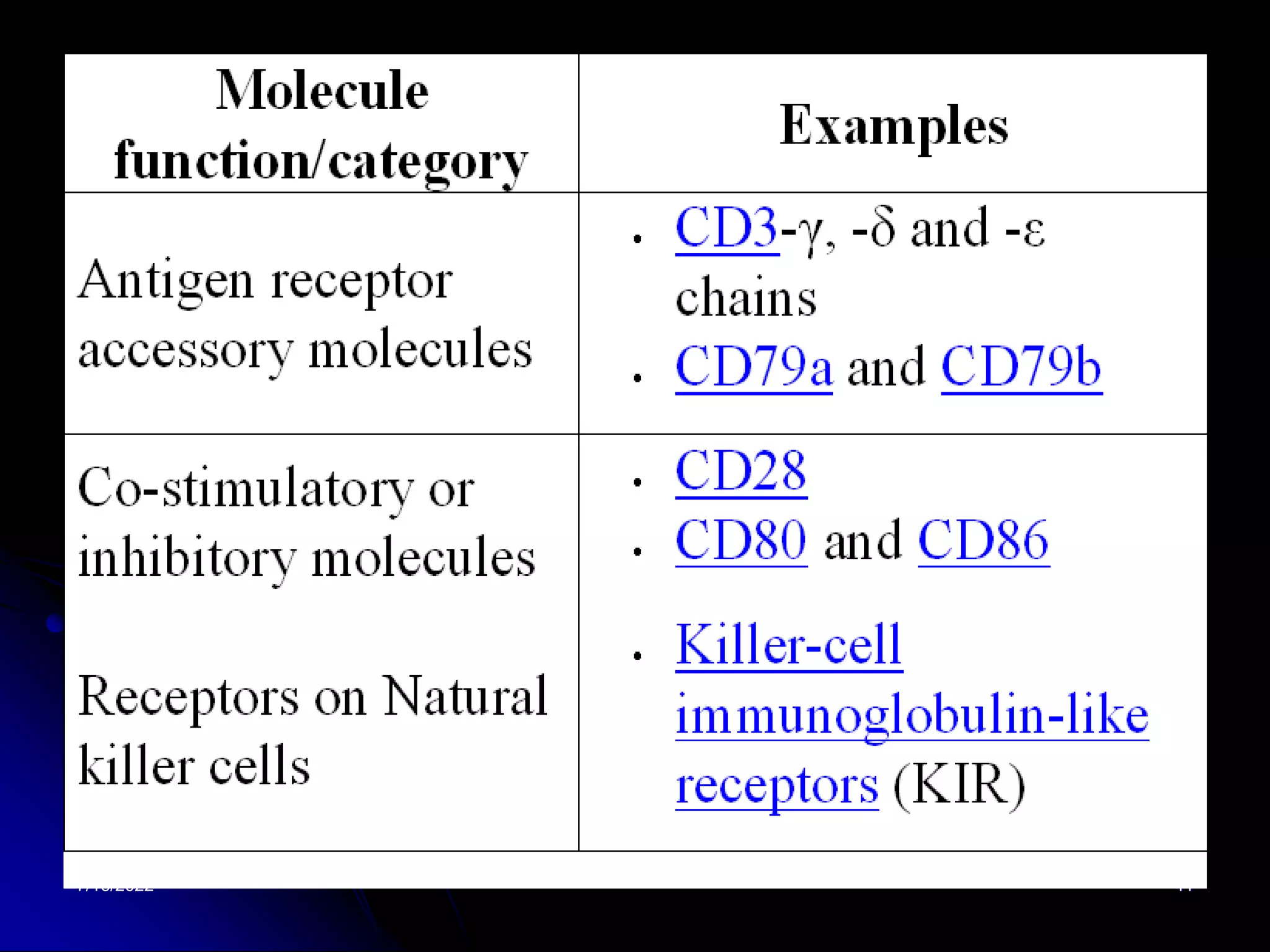
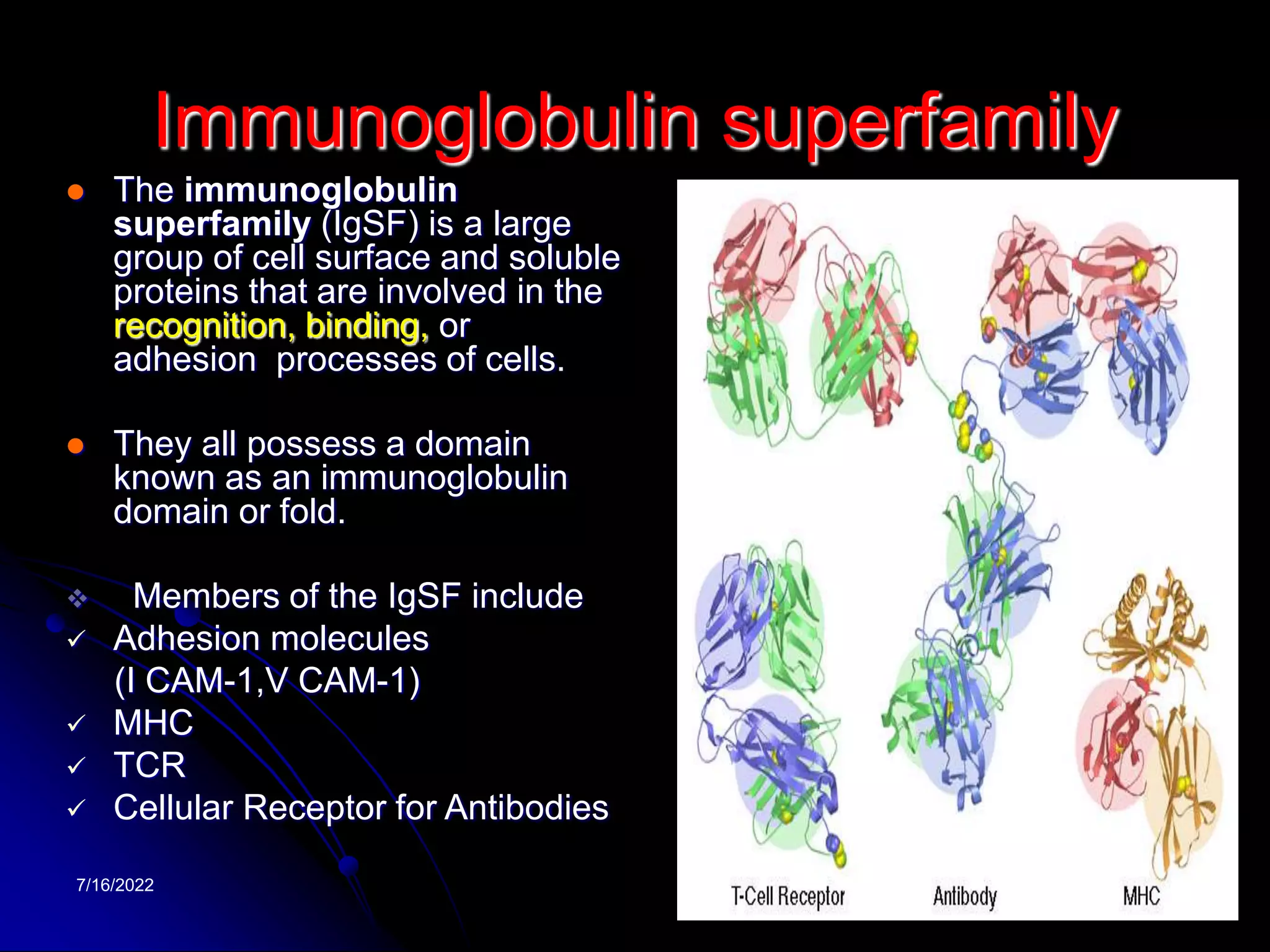
Immunoglobulin superfamily
 The immunoglobulin
superfamily (IgSF) is a large
group of cell surface and soluble
proteins that are involved in the
recognition, binding, or
adhesion processes of cells.
 They all possess a domain
known as an immunoglobulin
domain or fold.
 Members of the IgSF include
 Adhesion molecules
(I CAM-1,V CAM-1)
 MHC
 TCR
 Cellular Receptor for Antibodies
7/16/2022 40
7/16/2022 41
7/16/2022 42
7/16/2022 43
7/16/2022 44
7/16/2022 45
7/16/2022 46

tcelldebasish.ppt

  • 1.
    7/16/2022 1 T-cell Receptor PresentedBy: Dr.Debasish Sahoo M.D(Microbiology).1ST Year S.C.B.Medical College Cuttack
  • 2.
    7/16/2022 2 POINT OFDISCUSSION o Definition & Characteristics of TCR o Generation of TCR o The TCR Complex o TCR Co-Receptors o T Cell Activation o Associated Molecules of TCR complex o Immunoglobulin superfamily
  • 3.
    7/16/2022 3 DEFINITION  TheT cell receptor or TCR is a complex of eight transmembrane proteins which consist of two disulfide linked chains.  It is found on the surface of T Lymphocytes responsible for recognizing antigens bound to MHC molecules.  It is a heterodimer consisting of a and b chains in 95% of T cells, whereas 5% of T cells have g and d chains.
  • 4.
    7/16/2022 4 TCR  MatureT cells express one of two types of TCR: a heterodimer composed either of a and b chains or of g and d chains.  T cells expressing ab receptors account for 90% of T-cell helper function and cytotoxic activity.  The gd T cells, whose physiologic role is still unclear.
  • 5.
    7/16/2022 5 a bTCR  a b TCR mostly found in thymus & peripheral lymphoid organs.  Is disulphide linked heterodimer of .alpha subunit-40-50 kDa .beta subunit-35-47kDa  Each polypeptide chain contains two extacellular Ig- like domain of 110 aa.  The extracellular portion of the ab heterodimer is structurally similar to the antigen-binding fragment (Fab) of an Ig
  • 6.
    7/16/2022 6 Structure ofthe TCR (αβ)  Heterodimer  α and β chains  approx equal length
  • 7.
    7/16/2022 7 Structure ofthe TCR (αβ)  Short cytoplasmic tail- cannot transduce activation signal  Transmembrane with hydrophobic AAs  Both α and β have a variable (V) and constant (C) region  V region is hypervariable, determines Ag specificity
  • 8.
    7/16/2022 8 Structural characteristicsof the TCR The structure of TCR is very similar to immunoglobulin Fab fragments The V- domain of both TCR α-chain and β-chain have 3 hypervariable or complementarity determining regions The V-region of the β-chain has an additional area of hypervariability (HV4) that does not normally contact antigen and not considered a CDR.
  • 9.
    7/16/2022 9 Structural characteristicsof the TCR  CDR3 is the main CDR responsible for recognizing processed antigen,  CDR1 of the alpha chain interact with the N-terminal part of the antigenic peptide,  CDR1 of the β-chain interacts with the C-terminal part of the peptide.  CDR2 is thought to recognize the MHC.  CDR4 of the β-chain do not participate in antigen recognition, but interact with superantigens.  The C- domain of the TCR consists of short connecting sequences in which a cysteine residue forms disulfide bonds, which forms a link between the two chains.
  • 10.
  • 11.
    7/16/2022 11 Similarity withB-cell (Ig) Each a and b chain consists of  ‘Ig-like’ N-terminal variable region (V)  Ig-like constant (C) domain  Hydrophobic transmembrane region  Short cytoplasmic region. V-region of alpha & delta of TCR is like v-region of L-chain with V&J seg. similarly…
  • 12.
    7/16/2022 12 Difference fromB-cell  TCR remain membrane-bound  Contain only single antigen binding site  No evidence of somatic mutation  Junctional diversity greater in TCR than antibody
  • 13.
    7/16/2022 13 Generation ofthe TCR TCR formation are similar to those of B cell receptors. TCR alpha chain is generated by VJ recombination, whereas the beta chain is generated by V(D)J recombination .  Generation of the TCR gamma chain involves VJ recombination, whereas generation of the TCR delta chain occurs by V(D)J recombination.
  • 14.
    7/16/2022 14 T-cell Receptorcomplex The biochemical signals that are triggered in T cells by antigen recognition are transduced not by the T cell receptor itself but by invariant proteins called CD3 an z (zeta), which are noncovalenlty linked to the antigen receptor to form the TCR complex.
  • 15.
    7/16/2022 15 TCR andCD3 complex  TCR is closely associated with CD3 complex  Group of 5 proteins  Commonly called “invariant” chains of TCR  Role of CD3 complex  CD3 necessary for cell surface expression of TCR  transduces signal after Ag interaction with TCR
  • 16.
    7/16/2022 16 CD3  TCRsoccur as either of two distinct heterodimers, ab or gd, both of which are expressed with the non- polymorphic CD3 polypeptides g, d, e, and z.  The CD3 polypeptides, especially z and its variants, are critical for intracellular signaling.
  • 17.
    7/16/2022 17 The TCRComplex The T-cell receptor complex with TCR-α and TCR-β chains, CD3 and ζ- chain accessory molecules.
  • 18.
    7/16/2022 18 TCR α& β GENES & THE GENERATION OF TCR DIVERSITY  Diversity of TCRs required to recognize a wide spectrum of antigenic determinants.  TCR a and b genes use a strategy of recombination similar to that of the immunoglobulin genes.  The germline TCR b-gene locus contains 20-30 V (variable), 2 D (diversity), and 13 J (joining) gene segments
  • 19.
    7/16/2022 19 Genetic basisfor receptor generation  Accomplished by recombination of V, D and J gene segments  TCR β chain genes have V, D, and J  TCR α chain genes have V and J
  • 20.
    7/16/2022 20 Rearrangement ofthe TCR α and β genes. During T-cell ontogeny, the TCR genes rearrange , so that one of the Va segments pairs with the Ja segment and a Vb segment pairs with a Db and Jb segment.
  • 21.
    7/16/2022 21 TCR withantigen and MHC Activation of T lymphocyte through a series of biochemical events . mediated by  associated enzymes,  co-rceceptors,  accessory molecules  transcription factors.
  • 22.
    7/16/2022 22 Interaction ofTCR with Superantigens  The super antigens act as clamp between TCR and class II MHC providing signal to the T cell.  On T cell super antigens binds to V-beta segments only without affecting D-beta and J-beta regions.
  • 23.
    7/16/2022 23 gd TCR The gd TCR are a second type of TCR.  Their function remains largely unresolved.  They do not recognize MHC-associated peptides and are not MHC restricted.  In mice and chickens they are found in the small bowel mucosa and termed intraepithelial lymphocytes.  In humans they are found in the tongue, uterus and vagina.
  • 24.
    7/16/2022 24 Accessory molecules Tcells also express other membrane receptors that do not recognize antigen but participate in responses to antigens: these are collectively called accessory molecules.
  • 25.
    7/16/2022 25 CD45  CD45is a large (180-220 kd) transmembrane cell surface molecule that is expressed by all leukocytes, including all T lymphocytes.  The cytoplasmic domain of CD45 has tyrosine phosphatase activity.  CD45 is required for the functional coupling of the TCR and its PTKs.  Naive T cells express CD45RA, whereas memory T cells express CD45RO.
  • 26.
    7/16/2022 26 COSTIMULATION BYCD28  CD28, expressed as a homodimer on the surfaces of all CD4 T cells and 50% of CD8 T cells.  CD28 binds two distinct cell surface molecules, B7.1 and B7.2, found on dendritic cells, macrophages, and activated B cells.  The combination of TCR stimulation and interaction of CD28 with its B7 ligands fully activates T cells and results in greater lymphokine production.
  • 27.
  • 28.
    7/16/2022 28 CTLA-4  CTLA-4shares considerable sequence homology with CD28 and, like CD28, binds B7.1 and B7.2 on the APC.  Unlike CD28, however, CTLA-4 delivers inhibitory signals to T cells, so that engagement of CTLA-4 tends to strongly diminish T-cell responses. .
  • 29.
    7/16/2022 29 CD2  CD2is a glycoprotien present on more than 90% of mature T-cells and 50-70% of thymocytes.  This molecule contains two extracellular Ig domains.  The principle ligand for CD2 is LFA-3 (CD58).
  • 30.
    7/16/2022 30 CD2  CD2functions both as an adhesion molecule and signal transducer.  The association of CD2 with the TCR complex helps to aggregate the TCR in the regions of cell–cell contact, allowing the stabilization of low-affinity TCR/MHC interactions.  Finally, CD2 is involved in the regulation of cytokine production by T cells.
  • 31.
    7/16/2022 31 Integrins  Themajor functions of T-cell integrins are to mediate adhesion to APCs, endothelial cells, and extracellular matrix proteins.  The avidity of integrins for their ligands is increased rapidly on exposure of the T- cells to cytokines called chemokines and after stimulation of T-cells through the TCR.
  • 32.
  • 33.
    7/16/2022 33 CD44  CD44is expressed by activated and memory cells in comparison to naïve cells.  This molecule is responsible for retension of T cells in extravascular tissues at sites of infection and for the binding to endothelial cells at sites of infection and in mucosal tissues.
  • 34.
    7/16/2022 34 CD95 (Fasreceptor)  Activated T cells also express a ligand for death receptor Fas (CD95).  Engagement of Fas by Fas ligand on T-cells results in apoptosis and is important for eliminating T-cells.
  • 35.
    7/16/2022 35 T-cell Subtypes T helper Th1 cells secrete pro-inflammatory cytokines (IFN-g, TNF, and IL-2.  Whereas T helper Th2 cells produce cytokines that generally stimulate Ig responses (IL-4, -5, -6, -9, and -10).  These biases tend to be self-reinforcing: IL- 10 represses Th1 cell activity and IFN-g inhibits Th2 cells.
  • 36.
  • 37.
    7/16/2022 37 Key stepsin T cell activation  APC must process and present peptides to Ts  Ts must receive co-stimulatory signal  Accessory adhesion molecules stabilize binding of TCR and MHC  Signal from cell surface is transmitted to nucleus  Cytokines produced help drive cell proliferation
  • 38.
  • 39.
    7/16/2022 39 Immunoglobulin superfamily The immunoglobulin superfamily (IgSF) is a large group of cell surface and soluble proteins that are involved in the recognition, binding, or adhesion processes of cells.  They all possess a domain known as an immunoglobulin domain or fold.  Members of the IgSF include  Adhesion molecules (I CAM-1,V CAM-1)  MHC  TCR  Cellular Receptor for Antibodies
  • 40.
  • 41.
  • 42.
  • 43.
  • 44.
  • 45.
  • 46.