TBI and CV dysfunction
Dr Flora Bird
LAA
Traumatic brain injury – Why?
Background – Why care?
• Traumatic brain injury (TBI)
- Worldwide global health problem; International call for further research (Rosenfeld 2012)
- Most common cause of death or disability in < 40 years-old in the UK (NICE 2014)
- Europe – 37% (95% CI 36-38) of all injury-related deaths (Majden 2016)
- USA – 50% trauma deaths assoc with Head AIS ≥ 4 (Bardes 2018)
- 2:1 (M:F) (Majden 2016)
• LAA data (2019-2020):
>5 per week severe TBI (GCS ≤ 8) (clinical interpretation)
>1 per week severe isolated TBI conveyed to MTC
• Lack of improvement in outcome in last 30 years (Patel, 2005; Stein, 2010; Cole, 2019)
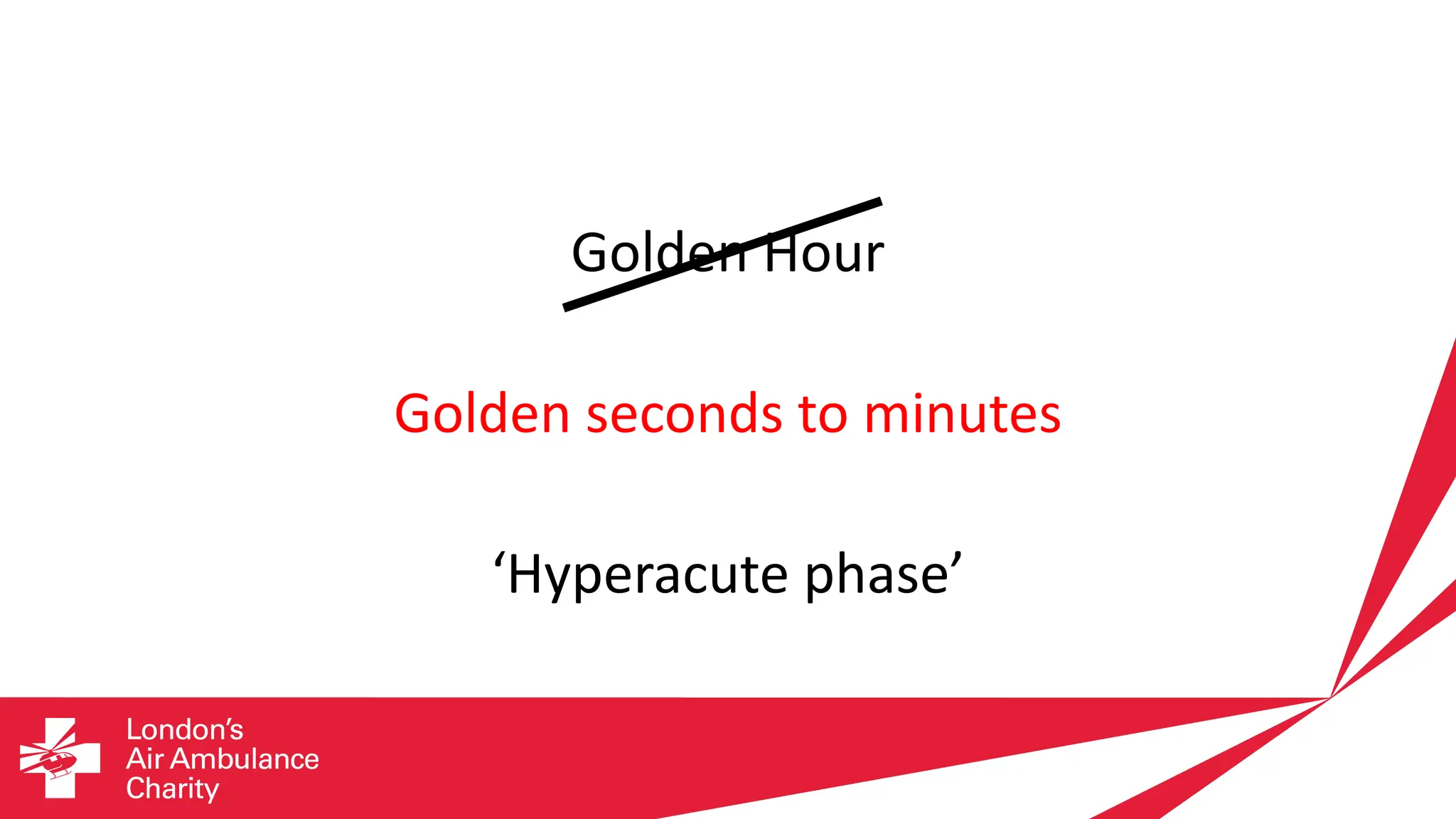
Golden Hour
Golden seconds to minutes
‘Hyperacute phase’
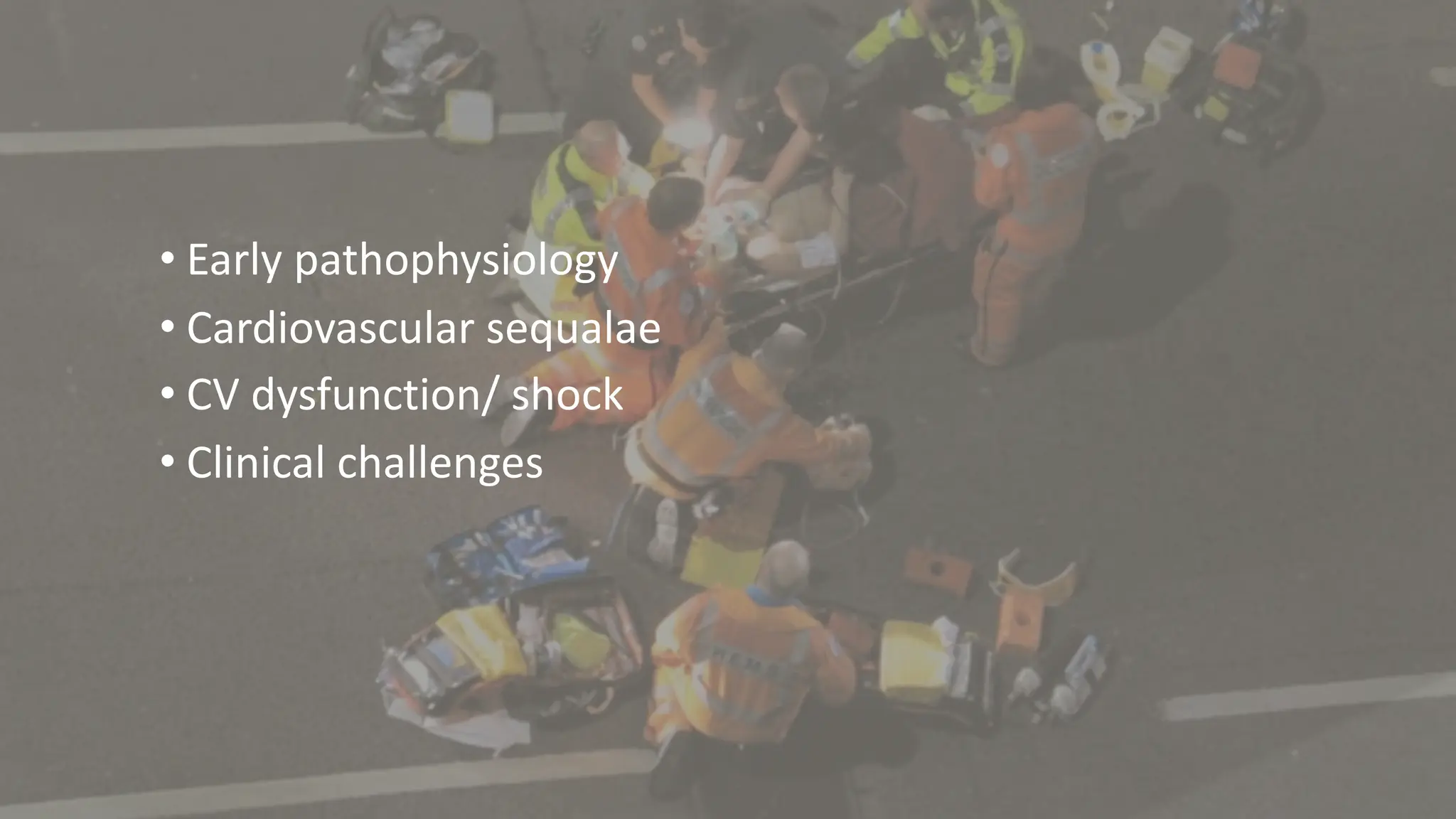
• Early pathophysiology
• Cardiovascular sequalae
• CV dysfunction/ shock
• Clinical challenges
Pathophysiology of severe TBI
• Multi system effects – not limited to the brain alone
• Sequalae associated with axonal stretch
• Apnoea and dysventilation
• Systemic inflammatory response (pro-inflammatory, coagulopathy)
• Cardiovascular
‘Shock does not result from isolated brain injuries’
ATLS
CASE
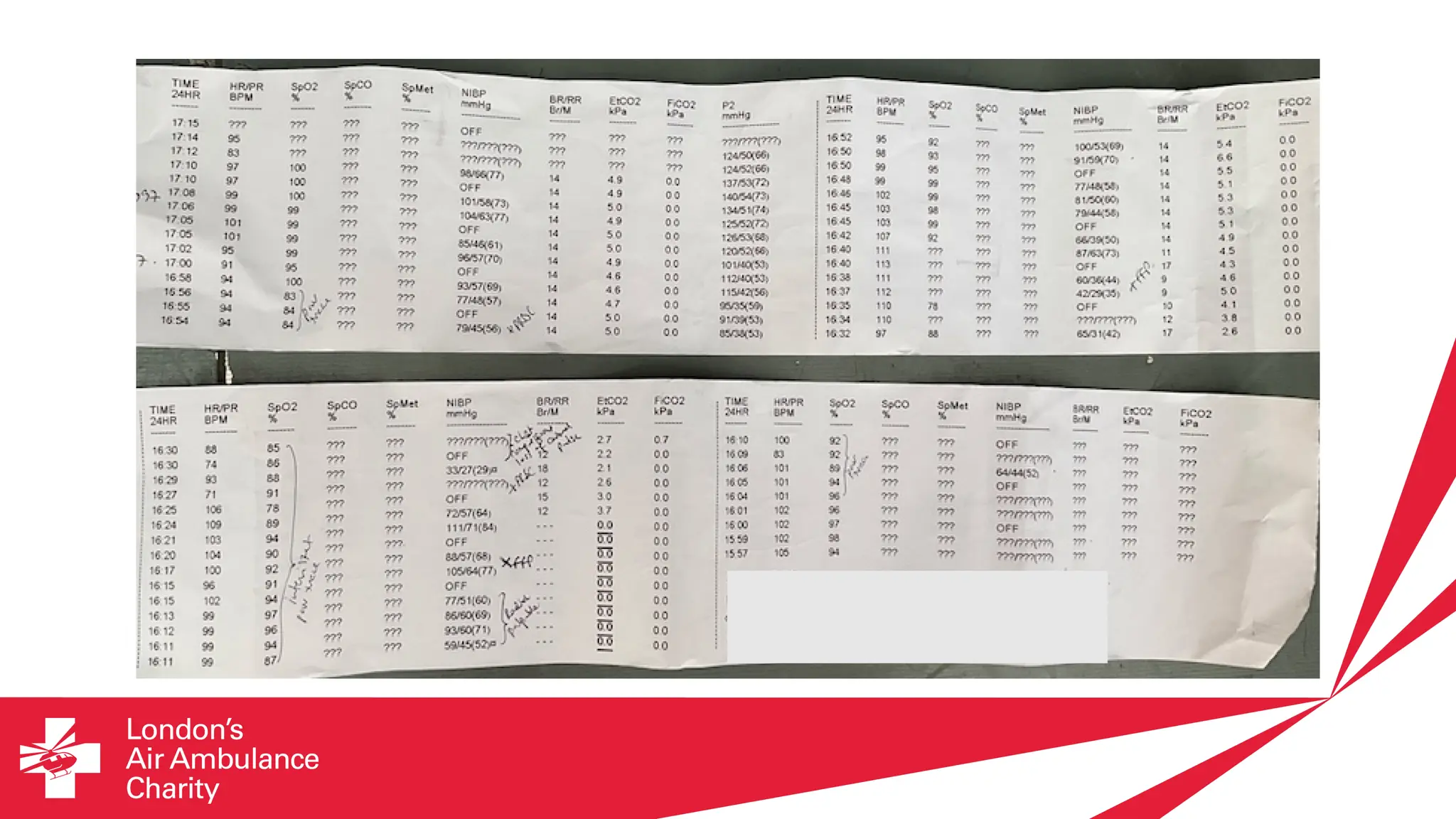
81 F, Pedestrian vs. motorbike
Immediately unconscious, breathing with dysventilation
GCS 4, Unequal pupils
IMP:
1. Significant TBI - suspected SAH, SDH, IPH.
2. Left rib fractures
3. Right scapula fracture ? Rib fractures.
4. At risk of intra abdominal injury and pelvic fracture.
5. Open left tib fib.
Treatment?
Treatment?
• Blood transfusion
• RSI
• Thoracostomies
• HTS
• Arterial line
• POCUS
• Escort to MTC – Code Red/ Code Black
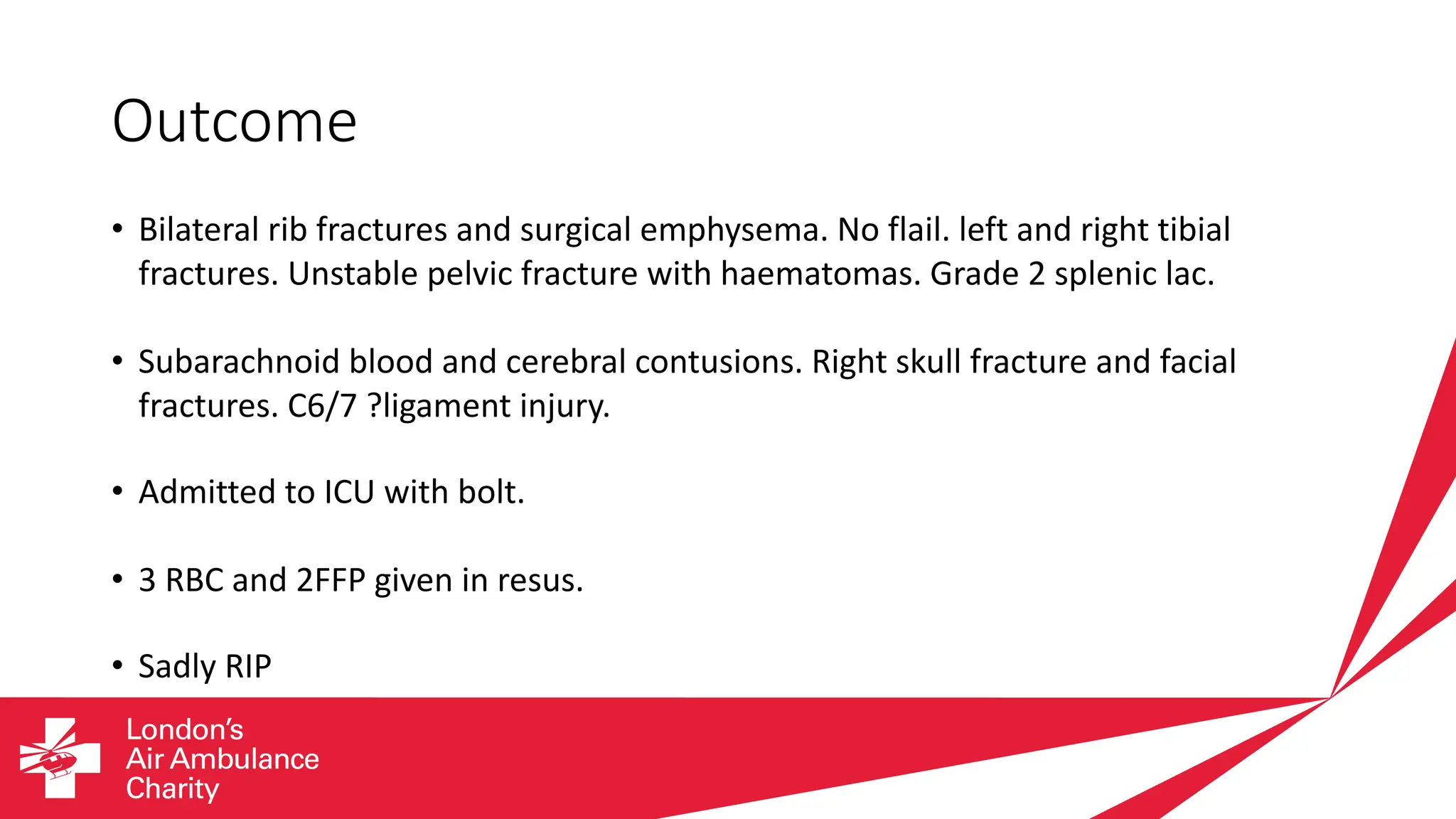
Outcome
• Bilateral rib fractures and surgical emphysema. No flail. left and right tibial
fractures. Unstable pelvic fracture with haematomas. Grade 2 splenic lac.
• Subarachnoid blood and cerebral contusions. Right skull fracture and facial
fractures. C6/7 ?ligament injury.
• Admitted to ICU with bolt.
• 3 RBC and 2FFP given in resus.
Outcome
• Bilateral rib fractures and surgical emphysema. No flail. left and right tibial
fractures. Unstable pelvic fracture with haematomas. Grade 2 splenic lac.
• Subarachnoid blood and cerebral contusions. Right skull fracture and facial
fractures. C6/7 ?ligament injury.
• Admitted to ICU with bolt.
• 3 RBC and 2FFP given in resus.
• Sadly RIP
Data
• Observational cohort database study of severe iTBI patients (Head AIS 3+) at a Level 1 trauma
centre (2008-2019) and from a physician-led air ambulance service (2019-20)
• CV Dysfunction = HR >100 with SBP <100mmHg
• Aims: (1) determine the prevalence and phenotype of CVD after iTBI in the hyper-acute phase
(2) compare treatment and clinical outcomes in those with CVD vs non-CVD.
Results
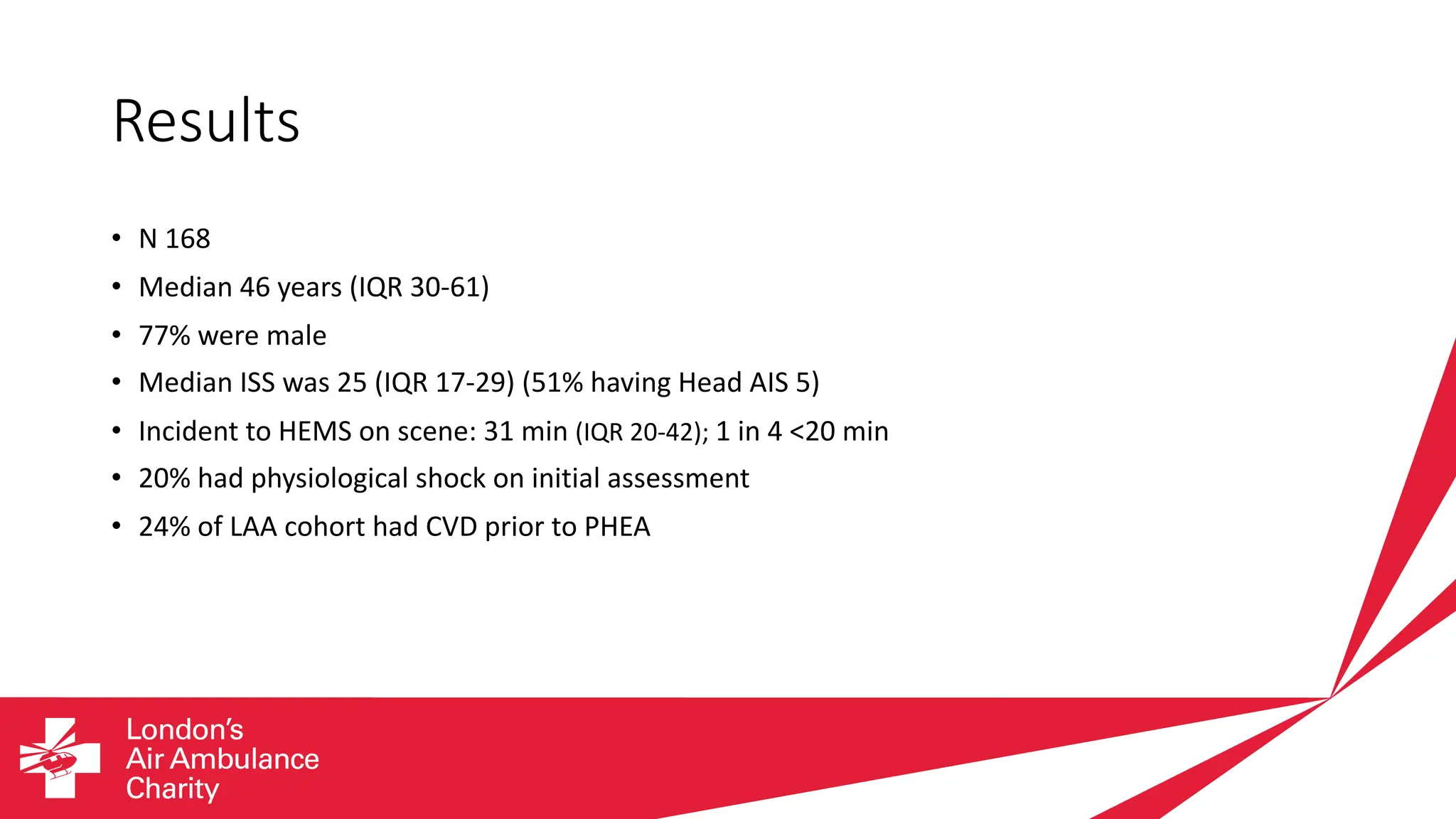
• N 168
• Median 46 years (IQR 30-61)
• 77% were male
• Median ISS was 25 (IQR 17-29) (51% having Head AIS 5)
• Incident to HEMS on scene: 31 min (IQR 20-42); 1 in 4 <20 min
• 20% had physiological shock on initial assessment
• 24% of LAA cohort had CVD prior to PHEA
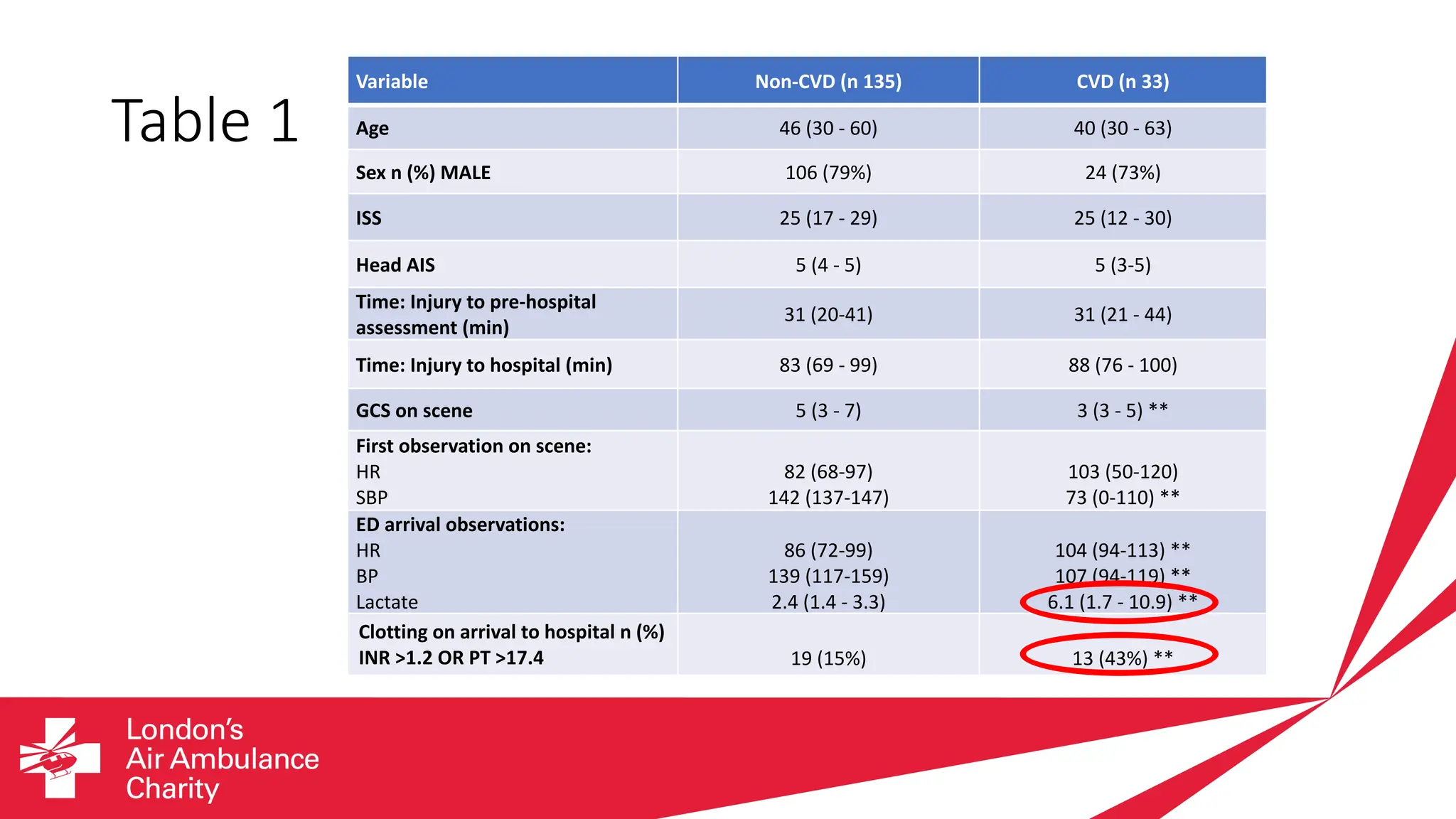
Table 1
Variable Non-CVD (n 135) CVD (n 33)
Age 46 (30 - 60) 40 (30 - 63)
Sex n (%) MALE 106 (79%) 24 (73%)
ISS 25 (17 - 29) 25 (12 - 30)
Head AIS 5 (4 - 5) 5 (3-5)
Time: Injury to pre-hospital
assessment (min)
31 (20-41) 31 (21 - 44)
Time: Injury to hospital (min) 83 (69 - 99) 88 (76 - 100)
GCS on scene 5 (3 - 7) 3 (3 - 5) **
First observation on scene:
HR
SBP
82 (68-97)
142 (137-147)
103 (50-120)
73 (0-110) **
ED arrival observations:
HR
BP
Lactate
86 (72-99)
139 (117-159)
2.4 (1.4 - 3.3)
104 (94-113) **
107 (94-119) **
6.1 (1.7 - 10.9) **
Clotting on arrival to hospital n (%)
INR >1.2 OR PT >17.4 19 (15%) 13 (43%) **
Table 1
Variable Non-CVD (n 135) CVD (n 33)
Age 46 (30 - 60) 40 (30 - 63)
Sex n (%) MALE 106 (79%) 24 (73%)
ISS 25 (17 - 29) 25 (12 - 30)
Head AIS 5 (4 - 5) 5 (3-5)
Time: Injury to pre-hospital
assessment (min)
31 (20-41) 31 (21 - 44)
Time: Injury to hospital (min) 83 (69 - 99) 88 (76 - 100)
GCS on scene 5 (3 - 7) 3 (3 - 5) **
First observation on scene:
HR
SBP
82 (68-97)
142 (137-147)
103 (50-120)
73 (0-110) **
ED arrival observations:
HR
BP
Lactate
86 (72-99)
139 (117-159)
2.4 (1.4 - 3.3)
104 (94-113) **
107 (94-119) **
6.1 (1.7 - 10.9) **
Clotting on arrival to hospital n (%)
INR >1.2 OR PT >17.4 19 (15%) 13 (43%) **
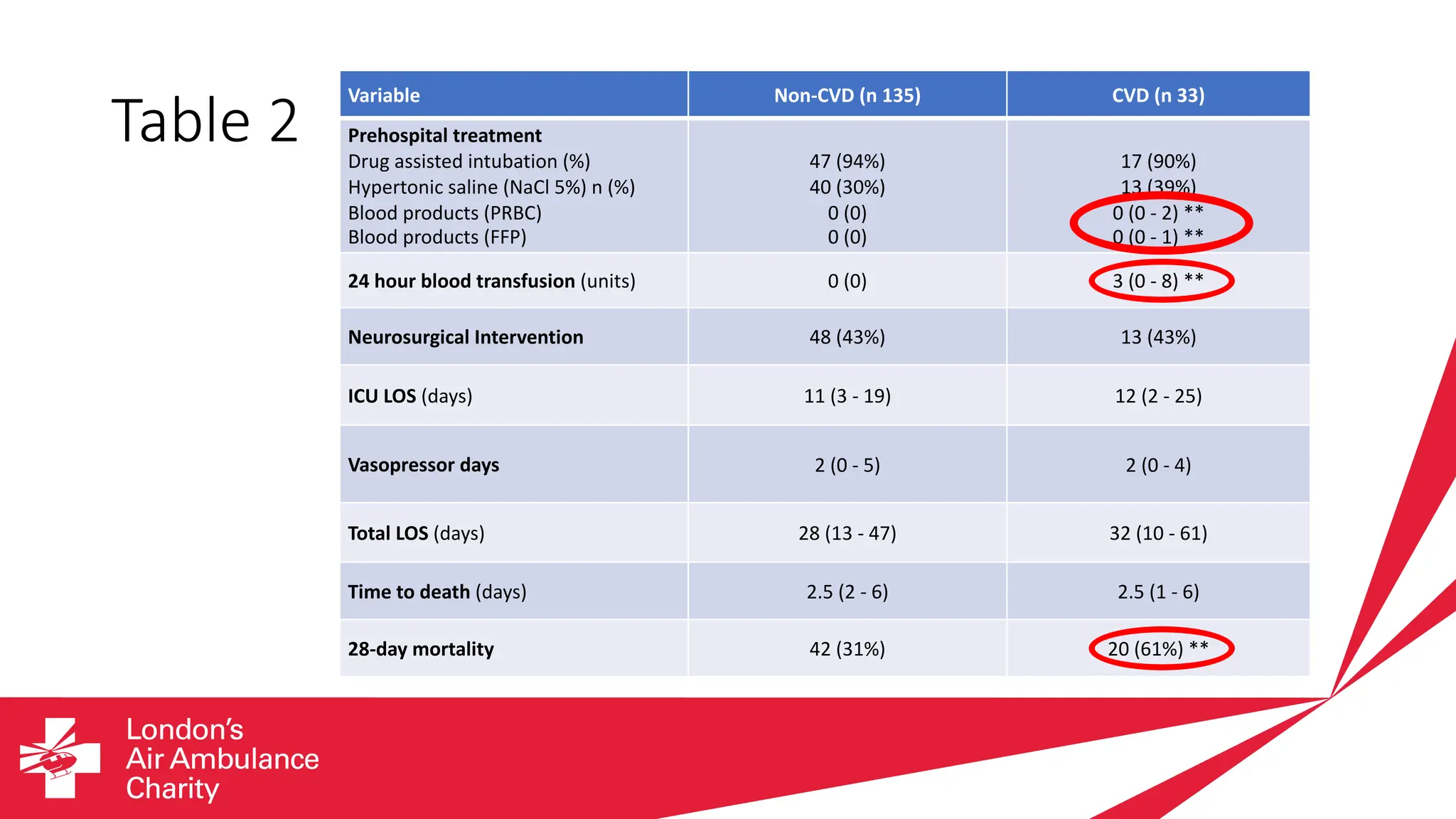
Table 2
Variable Non-CVD (n 135) CVD (n 33)
Prehospital treatment
Drug assisted intubation (%)
Hypertonic saline (NaCl 5%) n (%)
Blood products (PRBC)
Blood products (FFP)
47 (94%)
40 (30%)
0 (0)
0 (0)
17 (90%)
13 (39%)
0 (0 - 2) **
0 (0 - 1) **
24 hour blood transfusion (units) 0 (0) 3 (0 - 8) **
Neurosurgical Intervention 48 (43%) 13 (43%)
ICU LOS (days) 11 (3 - 19) 12 (2 - 25)
Vasopressor days 2 (0 - 5) 2 (0 - 4)
Total LOS (days) 28 (13 - 47) 32 (10 - 61)
Time to death (days) 2.5 (2 - 6) 2.5 (1 - 6)
28-day mortality 42 (31%) 20 (61%) **
Table 2
Variable Non-CVD (n 135) CVD (n 33)
Prehospital treatment
Drug assisted intubation (%)
Hypertonic saline (NaCl 5%) n (%)
Blood products (PRBC)
Blood products (FFP)
47 (94%)
40 (30%)
0 (0)
0 (0)
17 (90%)
13 (39%)
0 (0 - 2) **
0 (0 - 1) **
24 hour blood transfusion (units) 0 (0) 3 (0 - 8) **
Neurosurgical Intervention 48 (43%) 13 (43%)
ICU LOS (days) 11 (3 - 19) 12 (2 - 25)
Vasopressor days 2 (0 - 5) 2 (0 - 4)
Total LOS (days) 28 (13 - 47) 32 (10 - 61)
Time to death (days) 2.5 (2 - 6) 2.5 (1 - 6)
28-day mortality 42 (31%) 20 (61%) **
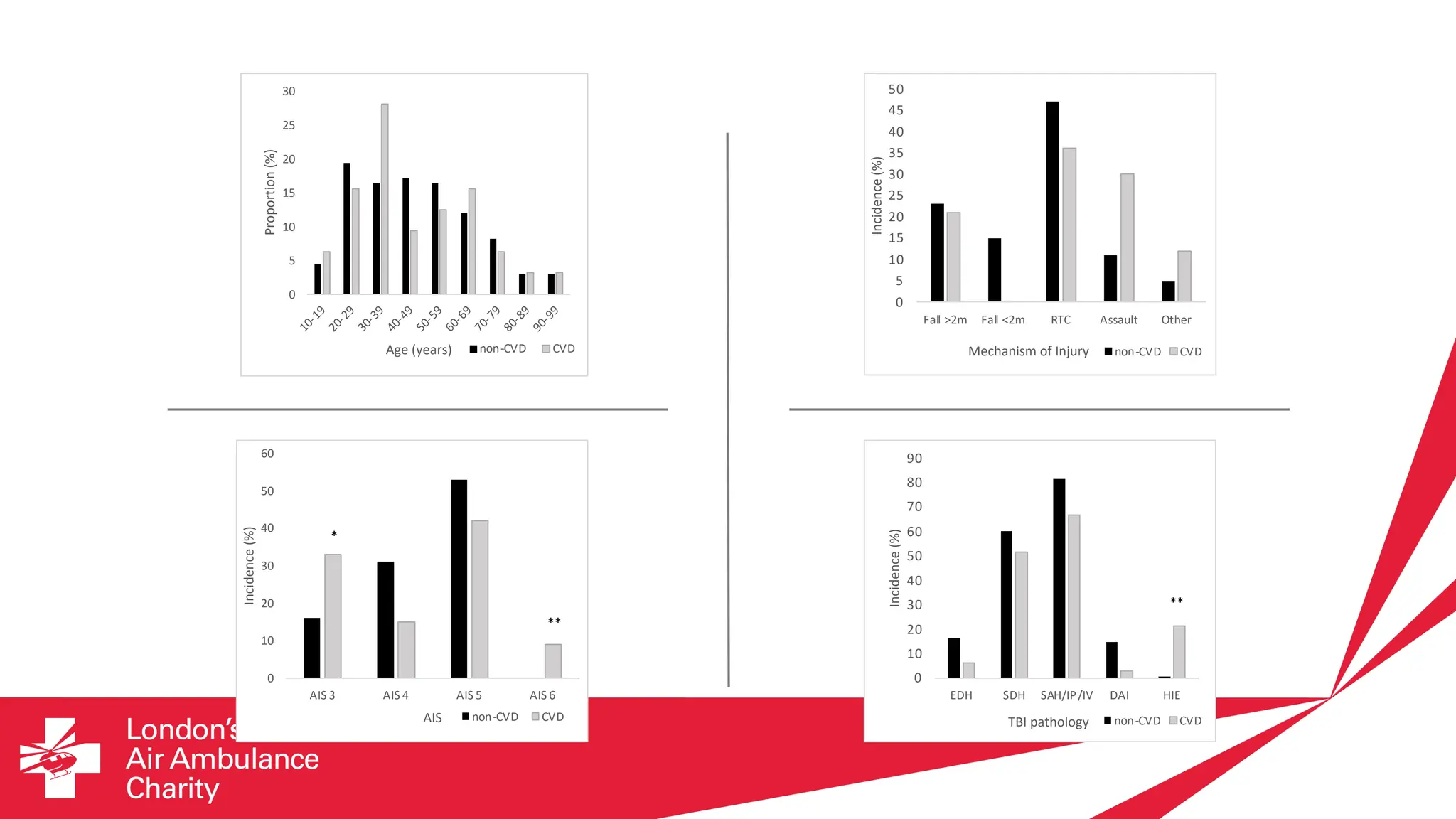
0
10
20
30
40
50
60
AIS 3 AIS 4 AIS 5 AIS 6
Incidence
(%)
AIS non-CVD CVD
*
**
0
10
20
30
40
50
60
70
80
90
EDH SDH SAH/IP/IV DAI HIE
Incidence
(%)
TBI pathology non-CVD CVD
**
0
5
10
15
20
25
30
35
40
45
50
Fall >2m Fall <2m RTC Assault Other
Incidence
(%)
Mechanism of Injury non-CVD CVD
0
5
10
15
20
25
30
1
0
-
1
9
2
0
-
2
9
3
0
-
3
9
4
0
-
4
9
5
0
-
5
9
6
0
-
6
9
7
0
-
7
9
8
0
-
8
9
9
0
-
9
9
Proportion
(%)
Age (years) non-CVD CVD
0
5
10
15
20
25
30
AIS 3 AIS 4 AIS 5 AIS 6
Mortality
(%)
AIS non-CVD CVD
**
*
0
10
20
30
40
50
60
70
Died Nursinghome/Hospital Home
Proportion
(%)
Destination non-CVD CVD
**
Pathophysiology
Cardiovascular – systemic CAs
• Animal models
- 1894 - stress response to TBI (Polis, 1894)
- 1980s - CA surge (Rosner, 1984)
• Humans
- Plasma CAs correlate with ISS, GCS (Woolf, 92)
- Elevated plasma CAs assoc with
functional outcome & mortality (Rizoli, 2017)
Rosner et al. J. Neurosurgery. 1984, 61 (1)
Pathophysiology
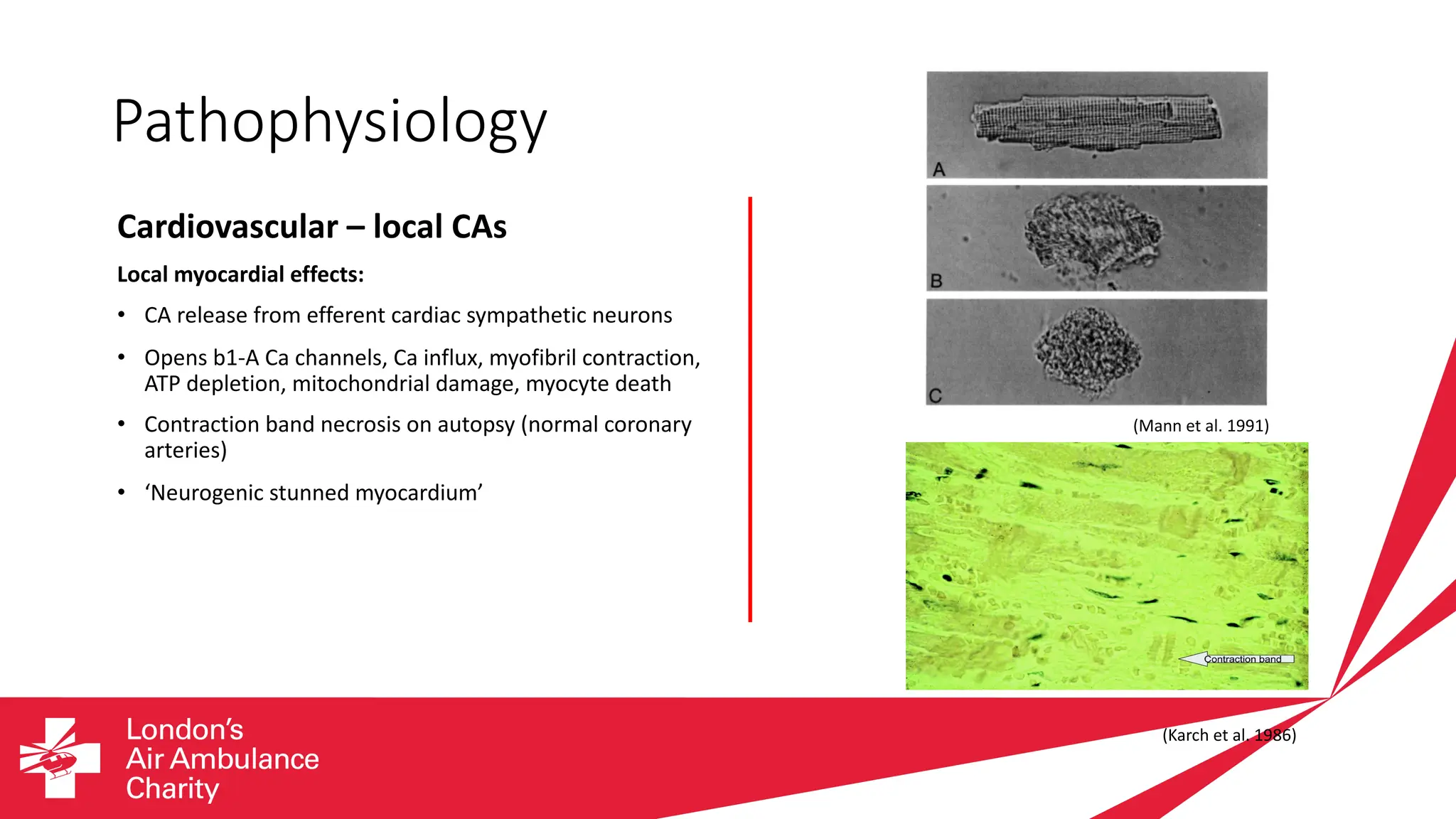
Cardiovascular – local CAs
Local myocardial effects:
• CA release from efferent cardiac sympathetic neurons
• Opens b1-A Ca channels, Ca influx, myofibril contraction,
ATP depletion, mitochondrial damage, myocyte death
• Contraction band necrosis on autopsy (normal coronary
arteries)
• ‘Neurogenic stunned myocardium’
(Karch et al. 1986)
(Mann et al. 1991)
A hypothesis for CV dysfunction in iTBI:
Apnoea ➜ hypoxia, hypercarbia, acidosis
+
Systemic CA surge ➜ increased SVR, afterload, myocardial demand
+
Local CA effects ➜ myocyte hypercontraction & death
+
Systemic inflammatory mediated response
• See ‘shocked state’, fluctuating BPs, changes on ECHO
• Results inadequate cerebral perfusion and oxygen delivery
• How to recognise?
• How to best treat?
• How to best optimise CO
and cerebral perfusion/
cerebral oxygenation?
The challenge
Responding to the challenge
• Importance of impact in the hyperacute phase
• Role of dispatch
• “Exquisite attention to detail from the earliest point of contact”
• Use of POCUS
Conclusion
• TBI a major concern and proportion of pre-hospital trauma work; Lack of
improvement in outcome over last 30 yrs
• Likely no quick fix; Improvement may come from precise pre-hospital
management in the hyperacute phase; Importance of dispatch and bystanders
• CV dysfunction in severe TBI present in 24% patients pre-PHEA
• Requires better understanding of early pathophysiology
Thank you

TBI and CV dysfunction - Flora Bird - TBS24

  • 1.
    TBI and CVdysfunction Dr Flora Bird LAA
  • 3.
  • 4.
    Background – Whycare? • Traumatic brain injury (TBI) - Worldwide global health problem; International call for further research (Rosenfeld 2012) - Most common cause of death or disability in < 40 years-old in the UK (NICE 2014) - Europe – 37% (95% CI 36-38) of all injury-related deaths (Majden 2016) - USA – 50% trauma deaths assoc with Head AIS ≥ 4 (Bardes 2018) - 2:1 (M:F) (Majden 2016) • LAA data (2019-2020): >5 per week severe TBI (GCS ≤ 8) (clinical interpretation) >1 per week severe isolated TBI conveyed to MTC • Lack of improvement in outcome in last 30 years (Patel, 2005; Stein, 2010; Cole, 2019)
  • 5.
    Golden Hour Golden secondsto minutes ‘Hyperacute phase’
  • 7.
    • Early pathophysiology •Cardiovascular sequalae • CV dysfunction/ shock • Clinical challenges
  • 8.
    Pathophysiology of severeTBI • Multi system effects – not limited to the brain alone • Sequalae associated with axonal stretch • Apnoea and dysventilation • Systemic inflammatory response (pro-inflammatory, coagulopathy) • Cardiovascular
  • 9.
    ‘Shock does notresult from isolated brain injuries’ ATLS
  • 10.
    CASE 81 F, Pedestrianvs. motorbike Immediately unconscious, breathing with dysventilation GCS 4, Unequal pupils IMP: 1. Significant TBI - suspected SAH, SDH, IPH. 2. Left rib fractures 3. Right scapula fracture ? Rib fractures. 4. At risk of intra abdominal injury and pelvic fracture. 5. Open left tib fib.
  • 13.
  • 14.
    Treatment? • Blood transfusion •RSI • Thoracostomies • HTS • Arterial line • POCUS • Escort to MTC – Code Red/ Code Black
  • 15.
    Outcome • Bilateral ribfractures and surgical emphysema. No flail. left and right tibial fractures. Unstable pelvic fracture with haematomas. Grade 2 splenic lac. • Subarachnoid blood and cerebral contusions. Right skull fracture and facial fractures. C6/7 ?ligament injury. • Admitted to ICU with bolt. • 3 RBC and 2FFP given in resus.
  • 16.
    Outcome • Bilateral ribfractures and surgical emphysema. No flail. left and right tibial fractures. Unstable pelvic fracture with haematomas. Grade 2 splenic lac. • Subarachnoid blood and cerebral contusions. Right skull fracture and facial fractures. C6/7 ?ligament injury. • Admitted to ICU with bolt. • 3 RBC and 2FFP given in resus. • Sadly RIP
  • 18.
    Data • Observational cohortdatabase study of severe iTBI patients (Head AIS 3+) at a Level 1 trauma centre (2008-2019) and from a physician-led air ambulance service (2019-20) • CV Dysfunction = HR >100 with SBP <100mmHg • Aims: (1) determine the prevalence and phenotype of CVD after iTBI in the hyper-acute phase (2) compare treatment and clinical outcomes in those with CVD vs non-CVD.
  • 19.
    Results • N 168 •Median 46 years (IQR 30-61) • 77% were male • Median ISS was 25 (IQR 17-29) (51% having Head AIS 5) • Incident to HEMS on scene: 31 min (IQR 20-42); 1 in 4 <20 min • 20% had physiological shock on initial assessment • 24% of LAA cohort had CVD prior to PHEA
  • 20.
    Table 1 Variable Non-CVD(n 135) CVD (n 33) Age 46 (30 - 60) 40 (30 - 63) Sex n (%) MALE 106 (79%) 24 (73%) ISS 25 (17 - 29) 25 (12 - 30) Head AIS 5 (4 - 5) 5 (3-5) Time: Injury to pre-hospital assessment (min) 31 (20-41) 31 (21 - 44) Time: Injury to hospital (min) 83 (69 - 99) 88 (76 - 100) GCS on scene 5 (3 - 7) 3 (3 - 5) ** First observation on scene: HR SBP 82 (68-97) 142 (137-147) 103 (50-120) 73 (0-110) ** ED arrival observations: HR BP Lactate 86 (72-99) 139 (117-159) 2.4 (1.4 - 3.3) 104 (94-113) ** 107 (94-119) ** 6.1 (1.7 - 10.9) ** Clotting on arrival to hospital n (%) INR >1.2 OR PT >17.4 19 (15%) 13 (43%) **
  • 21.
    Table 1 Variable Non-CVD(n 135) CVD (n 33) Age 46 (30 - 60) 40 (30 - 63) Sex n (%) MALE 106 (79%) 24 (73%) ISS 25 (17 - 29) 25 (12 - 30) Head AIS 5 (4 - 5) 5 (3-5) Time: Injury to pre-hospital assessment (min) 31 (20-41) 31 (21 - 44) Time: Injury to hospital (min) 83 (69 - 99) 88 (76 - 100) GCS on scene 5 (3 - 7) 3 (3 - 5) ** First observation on scene: HR SBP 82 (68-97) 142 (137-147) 103 (50-120) 73 (0-110) ** ED arrival observations: HR BP Lactate 86 (72-99) 139 (117-159) 2.4 (1.4 - 3.3) 104 (94-113) ** 107 (94-119) ** 6.1 (1.7 - 10.9) ** Clotting on arrival to hospital n (%) INR >1.2 OR PT >17.4 19 (15%) 13 (43%) **
  • 22.
    Table 2 Variable Non-CVD(n 135) CVD (n 33) Prehospital treatment Drug assisted intubation (%) Hypertonic saline (NaCl 5%) n (%) Blood products (PRBC) Blood products (FFP) 47 (94%) 40 (30%) 0 (0) 0 (0) 17 (90%) 13 (39%) 0 (0 - 2) ** 0 (0 - 1) ** 24 hour blood transfusion (units) 0 (0) 3 (0 - 8) ** Neurosurgical Intervention 48 (43%) 13 (43%) ICU LOS (days) 11 (3 - 19) 12 (2 - 25) Vasopressor days 2 (0 - 5) 2 (0 - 4) Total LOS (days) 28 (13 - 47) 32 (10 - 61) Time to death (days) 2.5 (2 - 6) 2.5 (1 - 6) 28-day mortality 42 (31%) 20 (61%) **
  • 23.
    Table 2 Variable Non-CVD(n 135) CVD (n 33) Prehospital treatment Drug assisted intubation (%) Hypertonic saline (NaCl 5%) n (%) Blood products (PRBC) Blood products (FFP) 47 (94%) 40 (30%) 0 (0) 0 (0) 17 (90%) 13 (39%) 0 (0 - 2) ** 0 (0 - 1) ** 24 hour blood transfusion (units) 0 (0) 3 (0 - 8) ** Neurosurgical Intervention 48 (43%) 13 (43%) ICU LOS (days) 11 (3 - 19) 12 (2 - 25) Vasopressor days 2 (0 - 5) 2 (0 - 4) Total LOS (days) 28 (13 - 47) 32 (10 - 61) Time to death (days) 2.5 (2 - 6) 2.5 (1 - 6) 28-day mortality 42 (31%) 20 (61%) **
  • 24.
    0 10 20 30 40 50 60 AIS 3 AIS4 AIS 5 AIS 6 Incidence (%) AIS non-CVD CVD * ** 0 10 20 30 40 50 60 70 80 90 EDH SDH SAH/IP/IV DAI HIE Incidence (%) TBI pathology non-CVD CVD ** 0 5 10 15 20 25 30 35 40 45 50 Fall >2m Fall <2m RTC Assault Other Incidence (%) Mechanism of Injury non-CVD CVD 0 5 10 15 20 25 30 1 0 - 1 9 2 0 - 2 9 3 0 - 3 9 4 0 - 4 9 5 0 - 5 9 6 0 - 6 9 7 0 - 7 9 8 0 - 8 9 9 0 - 9 9 Proportion (%) Age (years) non-CVD CVD
  • 25.
    0 5 10 15 20 25 30 AIS 3 AIS4 AIS 5 AIS 6 Mortality (%) AIS non-CVD CVD ** * 0 10 20 30 40 50 60 70 Died Nursinghome/Hospital Home Proportion (%) Destination non-CVD CVD **
  • 26.
    Pathophysiology Cardiovascular – systemicCAs • Animal models - 1894 - stress response to TBI (Polis, 1894) - 1980s - CA surge (Rosner, 1984) • Humans - Plasma CAs correlate with ISS, GCS (Woolf, 92) - Elevated plasma CAs assoc with functional outcome & mortality (Rizoli, 2017) Rosner et al. J. Neurosurgery. 1984, 61 (1)
  • 27.
    Pathophysiology Cardiovascular – localCAs Local myocardial effects: • CA release from efferent cardiac sympathetic neurons • Opens b1-A Ca channels, Ca influx, myofibril contraction, ATP depletion, mitochondrial damage, myocyte death • Contraction band necrosis on autopsy (normal coronary arteries) • ‘Neurogenic stunned myocardium’ (Karch et al. 1986) (Mann et al. 1991)
  • 28.
    A hypothesis forCV dysfunction in iTBI: Apnoea ➜ hypoxia, hypercarbia, acidosis + Systemic CA surge ➜ increased SVR, afterload, myocardial demand + Local CA effects ➜ myocyte hypercontraction & death + Systemic inflammatory mediated response • See ‘shocked state’, fluctuating BPs, changes on ECHO • Results inadequate cerebral perfusion and oxygen delivery
  • 29.
    • How torecognise? • How to best treat? • How to best optimise CO and cerebral perfusion/ cerebral oxygenation? The challenge
  • 30.
    Responding to thechallenge • Importance of impact in the hyperacute phase • Role of dispatch • “Exquisite attention to detail from the earliest point of contact” • Use of POCUS
  • 31.
    Conclusion • TBI amajor concern and proportion of pre-hospital trauma work; Lack of improvement in outcome over last 30 yrs • Likely no quick fix; Improvement may come from precise pre-hospital management in the hyperacute phase; Importance of dispatch and bystanders • CV dysfunction in severe TBI present in 24% patients pre-PHEA • Requires better understanding of early pathophysiology
  • 32.