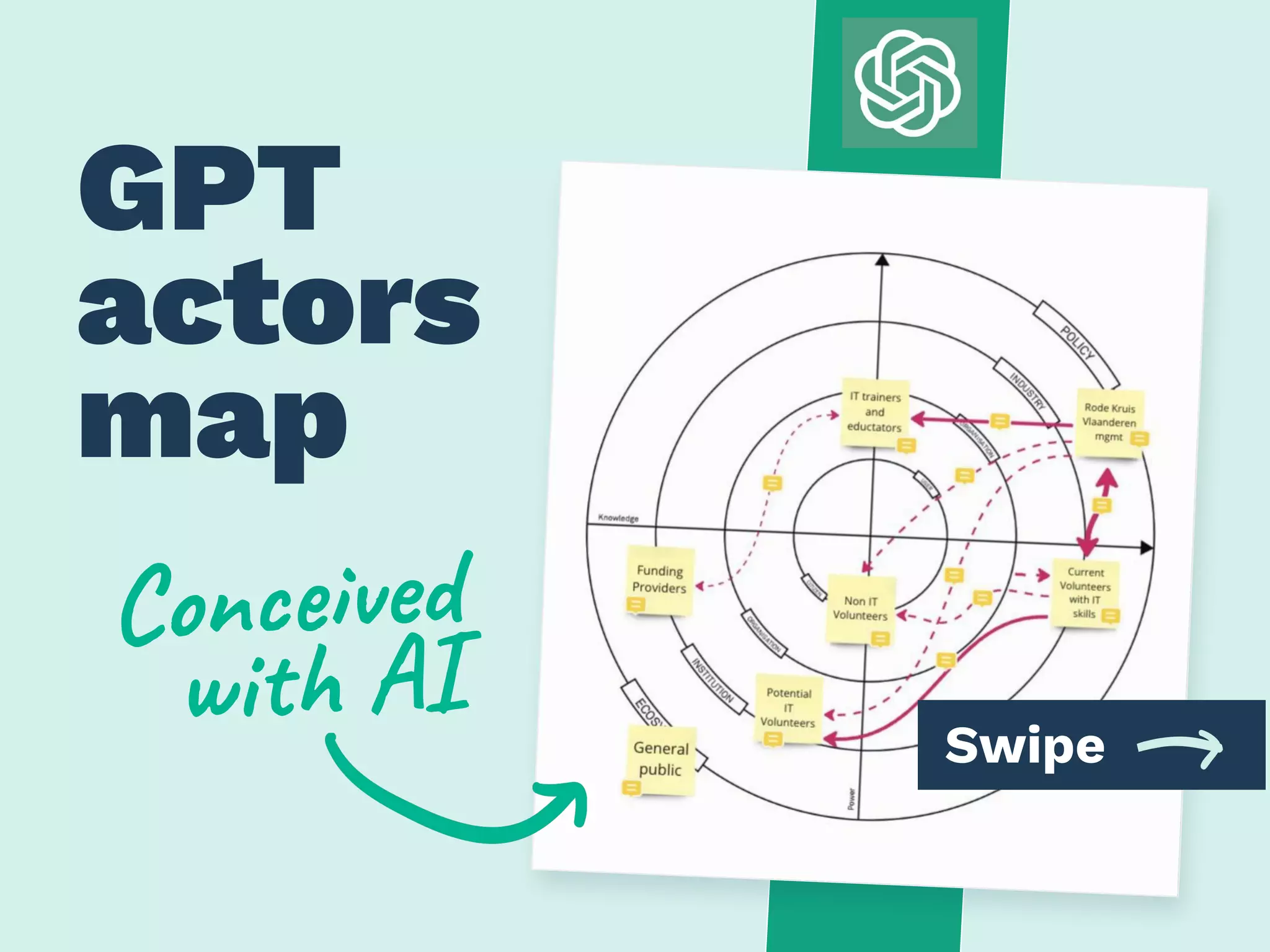
GPT
actors
map
Conceived
with AI
Swipe
Explore the potential actors on
your own, so you are prepared
to facilitate a workshop.
Create a quick first draft of an
actors map, that you can refine
with your stakeholders.
Use GPT to get a quick
head start
Who could be the actors in a new service
for the Belgian Red Cross?
LET’S USE AN EXAMPLE
A volunteer-driven app team, that quickly deploys
digital support systems for other volunteers
Let’s go
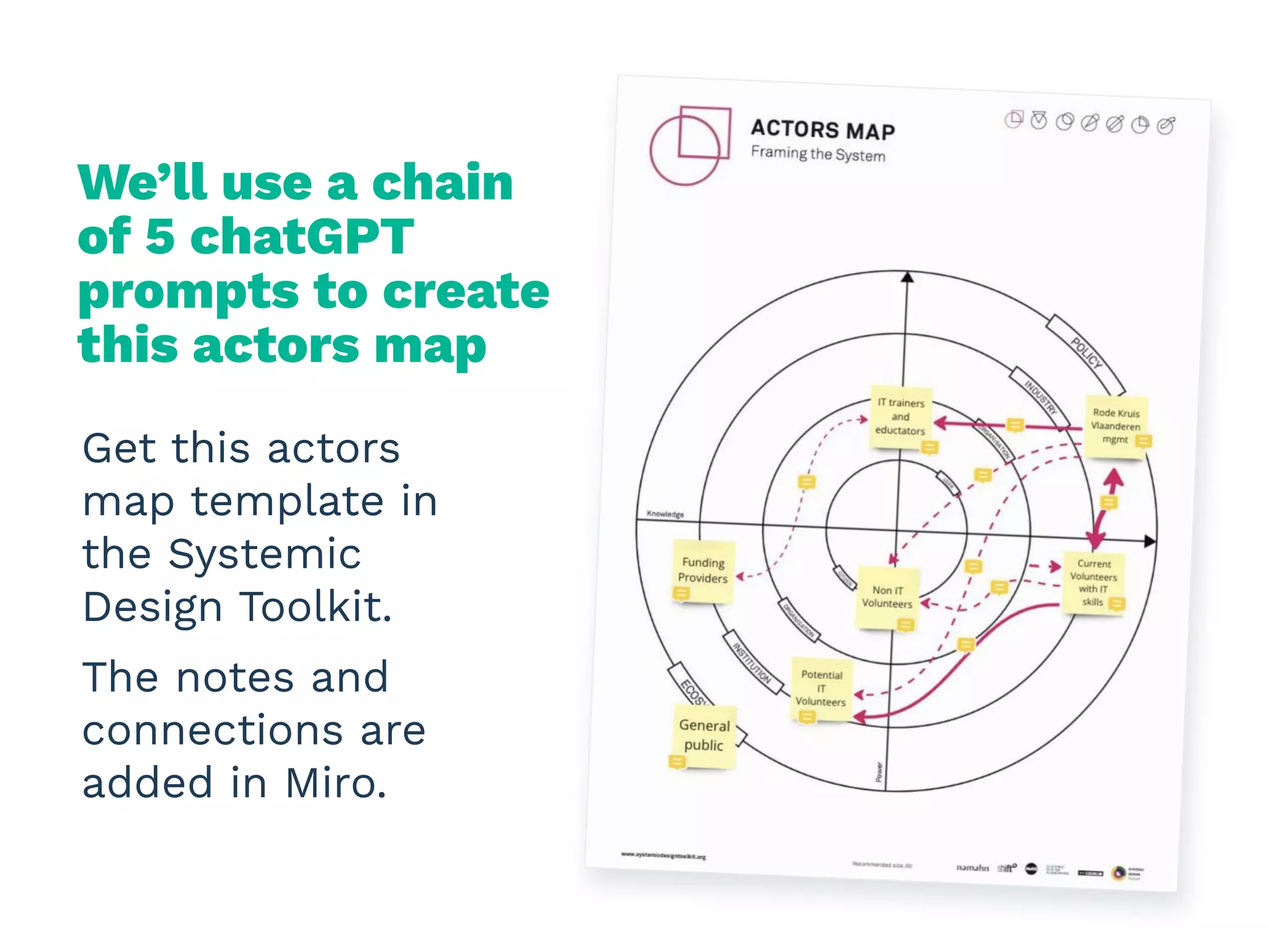
We’ll use a chain
of 5 chatGPT
prompts to create
this actors map
Get this actors
map template in
the Systemic
Design Toolkit.
The notes and
connections are
added in Miro.
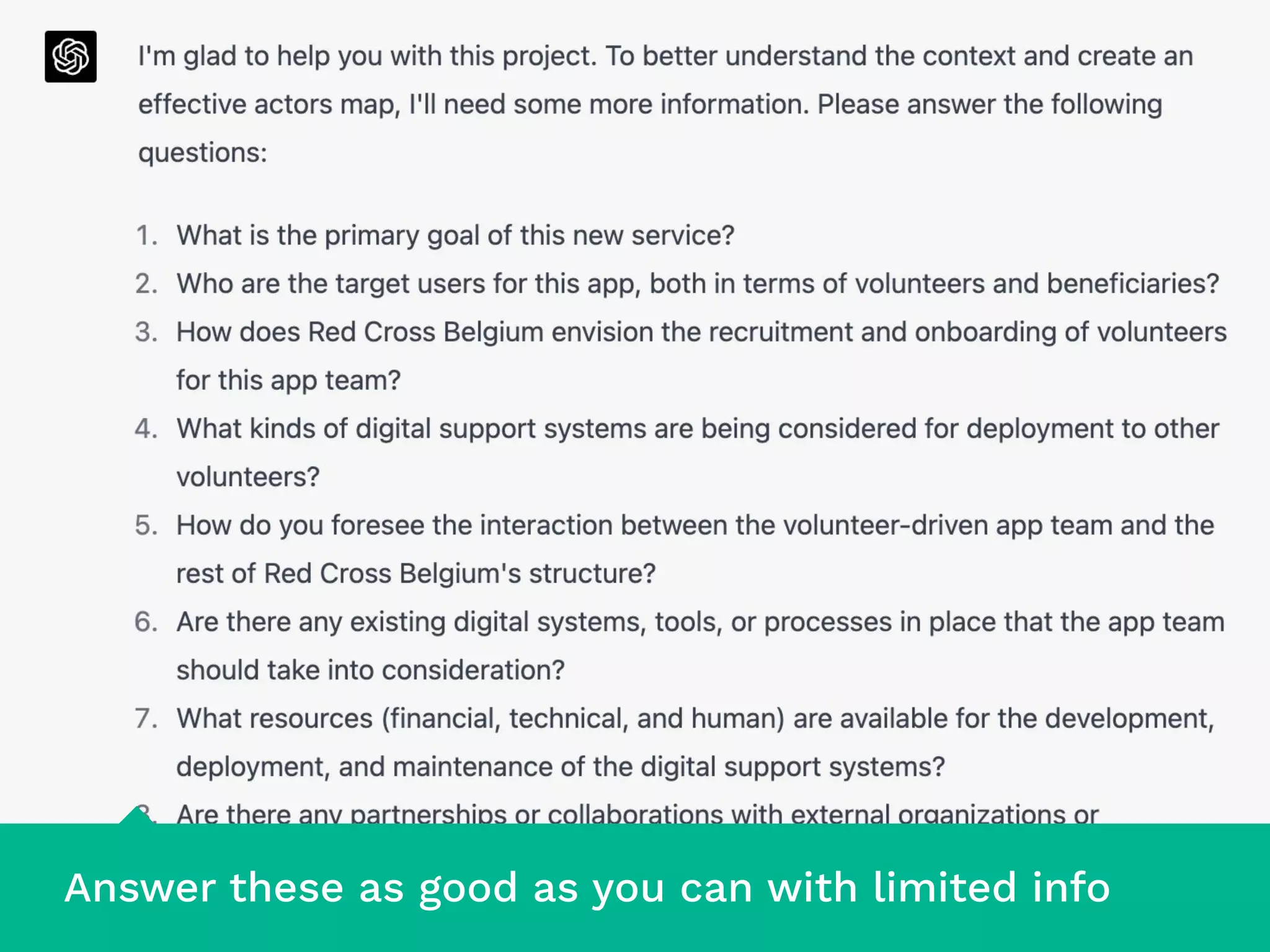
Ask GPT what it needs to know
Prompt 1:
Act as a systemic design expert.
I am investigating a new service for the brand Red
Cross Belgium. I’m exploring the possibilities of a
volunteer-driven app team, that quickly deploys
digital support systems for other volunteers.
Do not give me suggestions yet. First ask me more
information so you can help me create an actors map
further down the line.
1
2
3
4
5
Answer these as good as you can with limited info
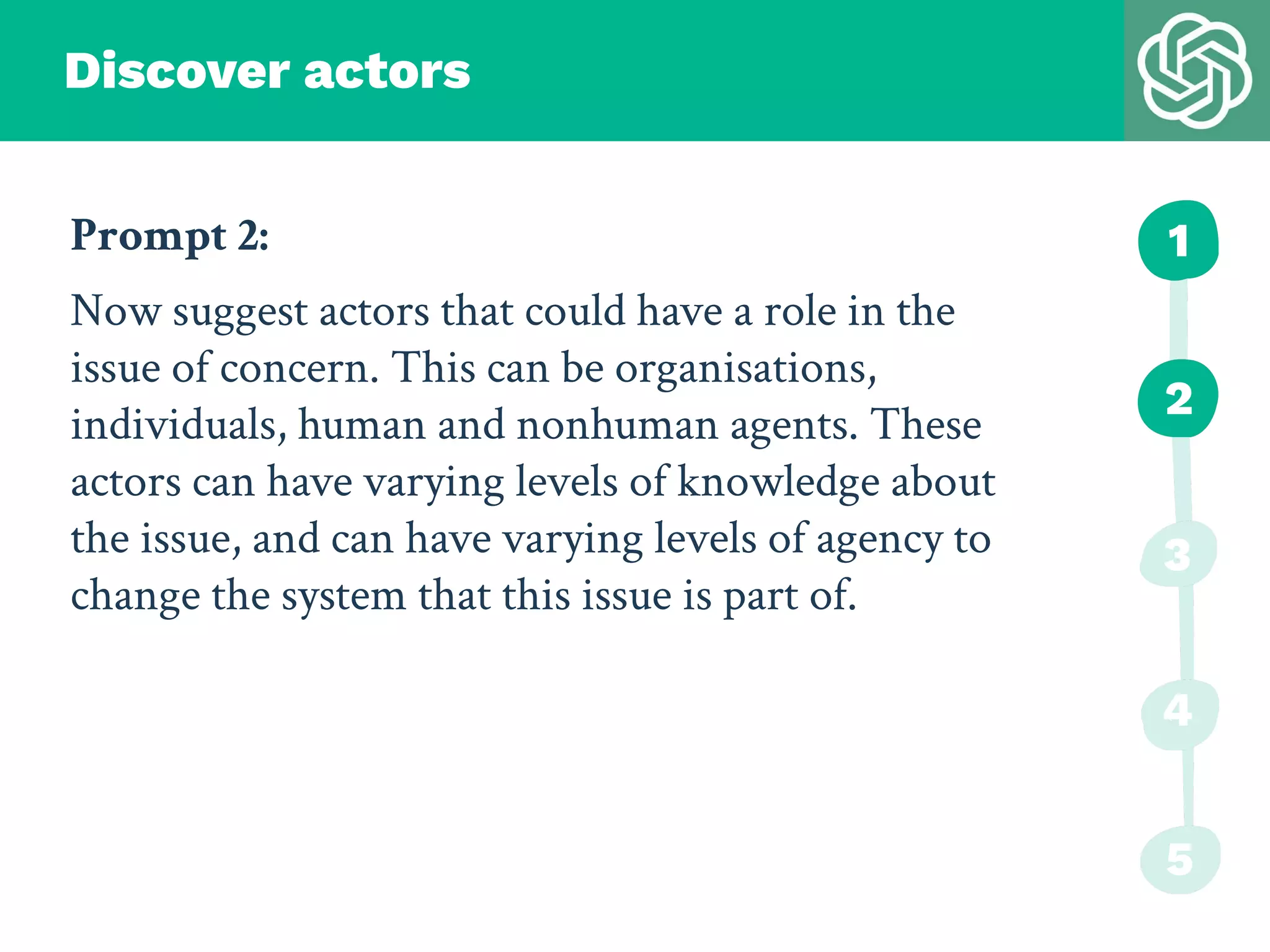
Prompt 2:
Now suggest actors that could have a role in the
issue of concern. This can be organisations,
individuals, human and nonhuman agents. These
actors can have varying levels of knowledge about
the issue, and can have varying levels of agency to
change the system that this issue is part of.
Discover actors
1
2
3
4
5
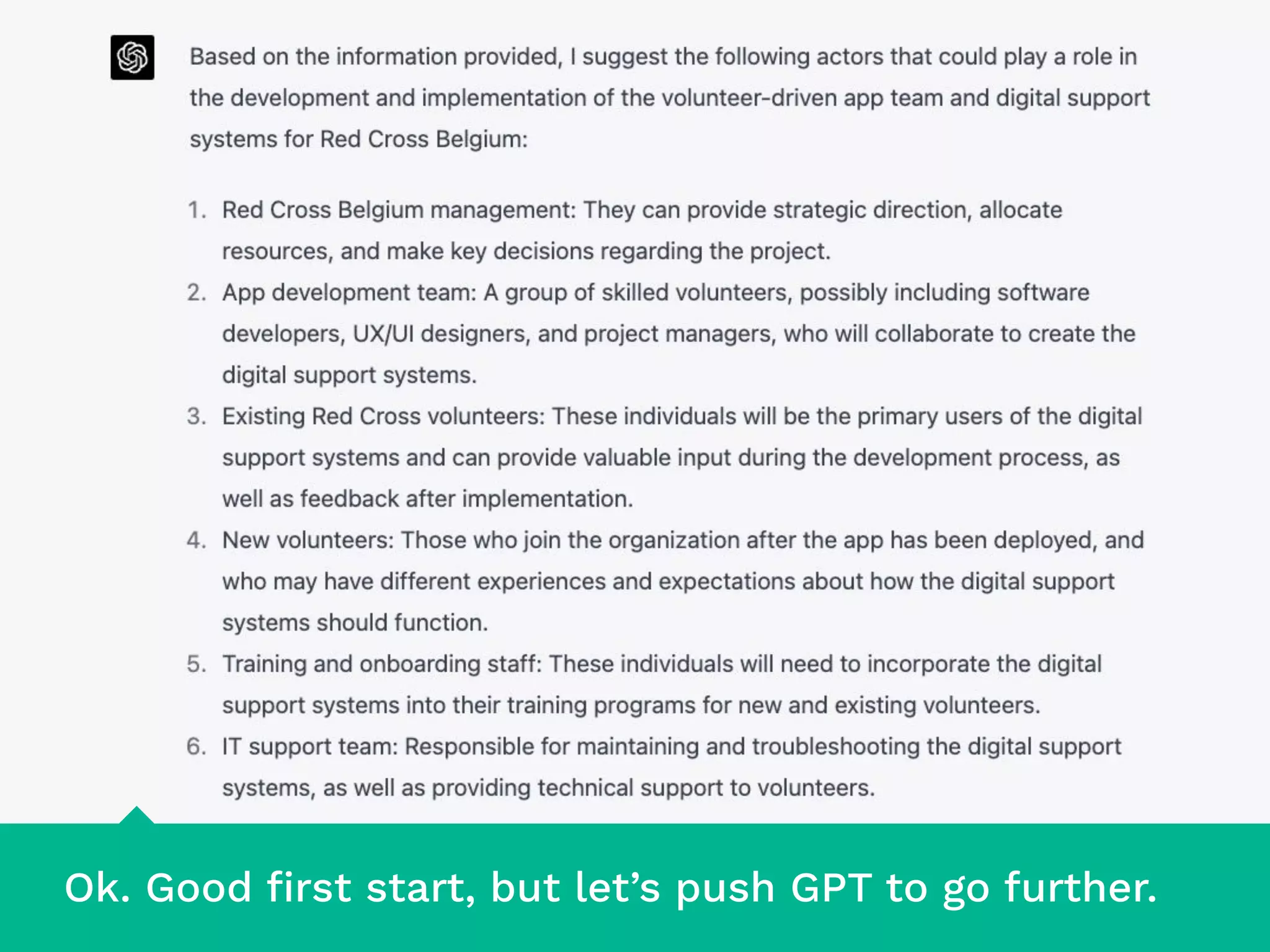
Ok. Good first start, but let’s push GPT to go further.
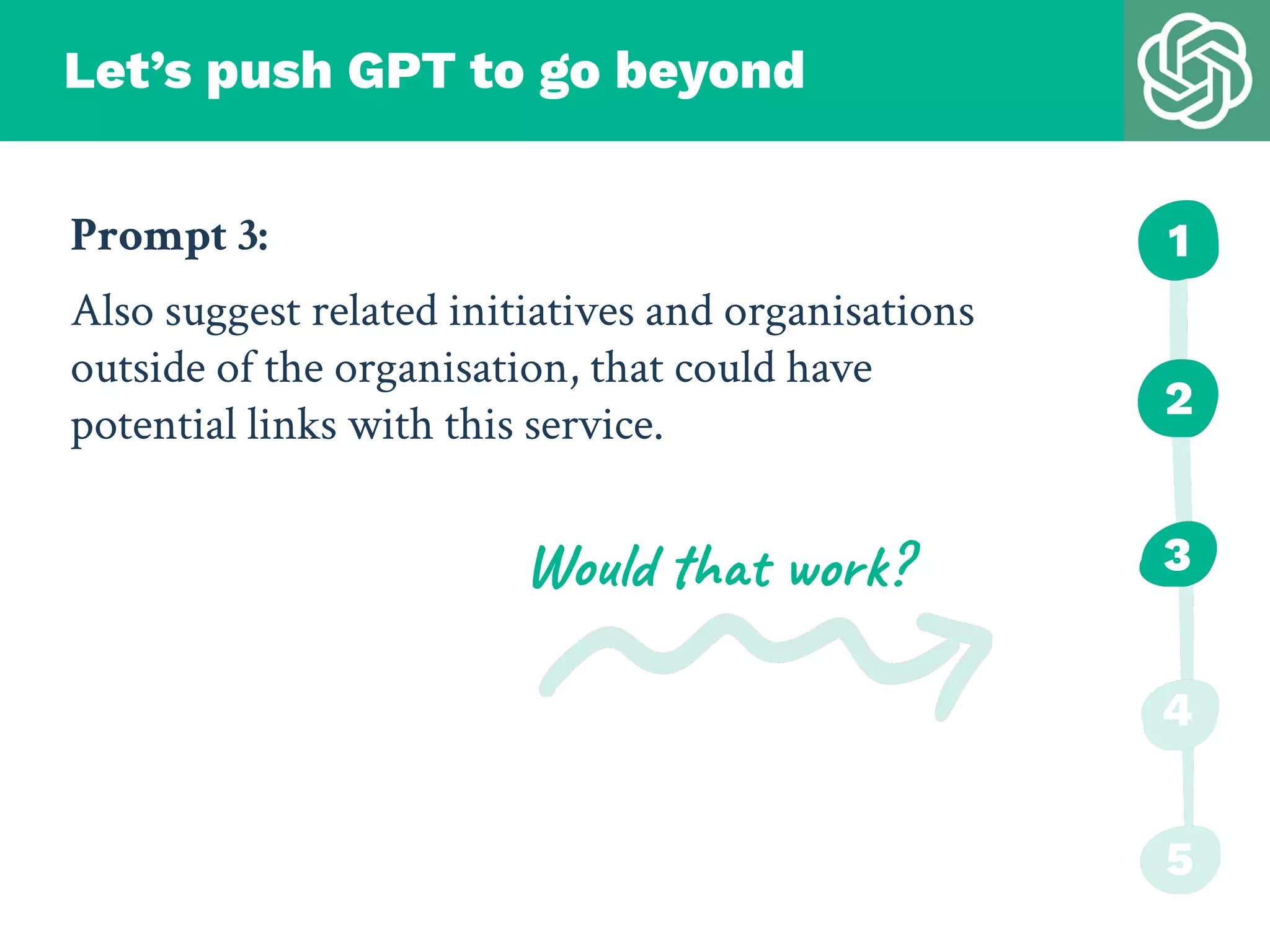
Prompt 3:
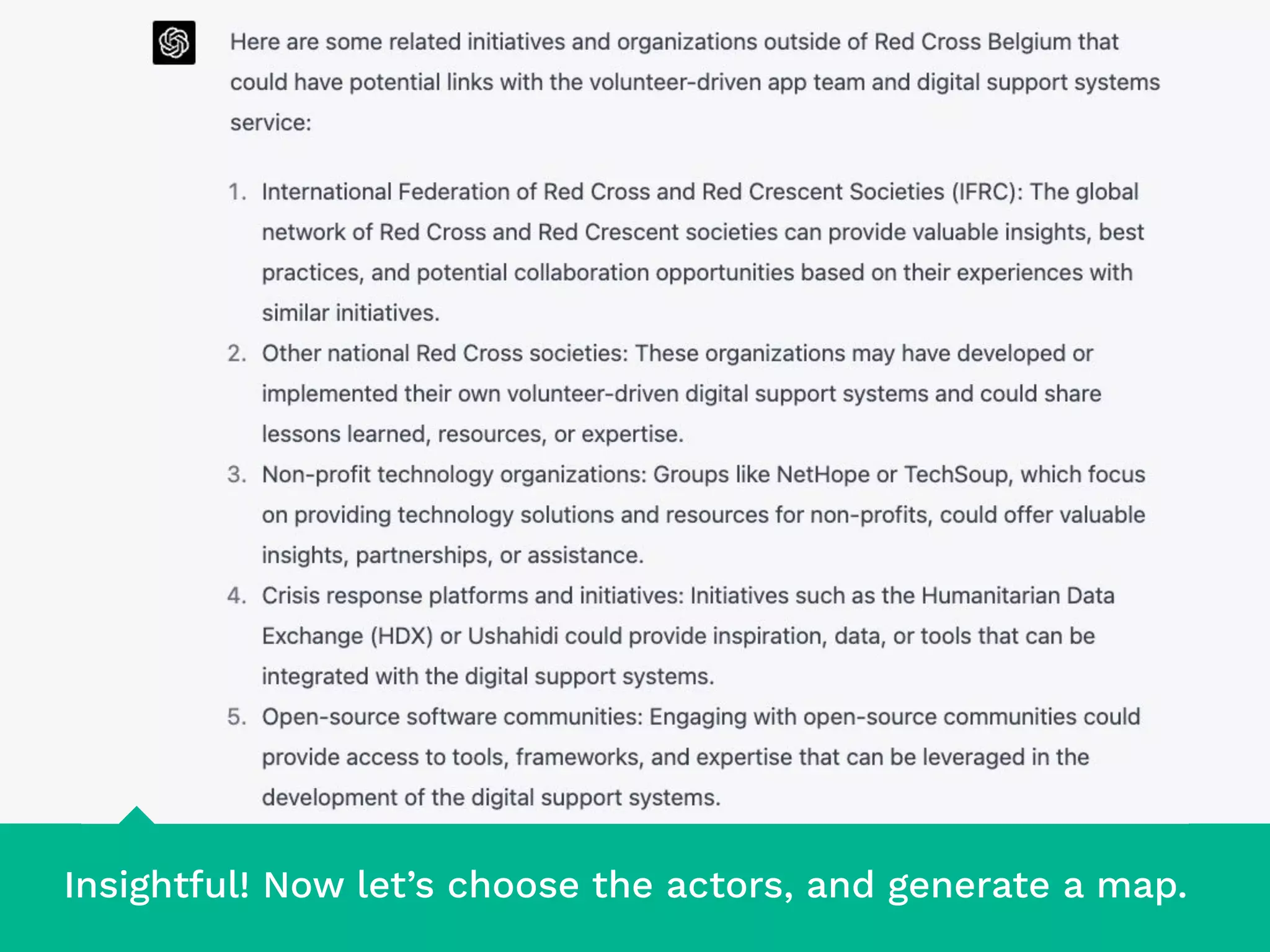
Also suggest related initiatives and organisations
outside of the organisation, that could have
potential links with this service.
Let’s push GPT to go beyond
Would that work?
1
2
3
4
5
Insightful! Now let’s choose the actors, and generate a map.
Prompt 4:
Help create an actors map about the topic.
An actors map is structured with four quadrants,
created by two axis.
Use the axis' of Power and Knowledge to suggest
actors with different levels of power and knowledge.
For each actor, give a short description about their
power and knowledge. Arrange them according to
their level of relative power (within the system, to
change the system) and their knowledge about the
issues.
Create the actors map
1
2
3
4
5
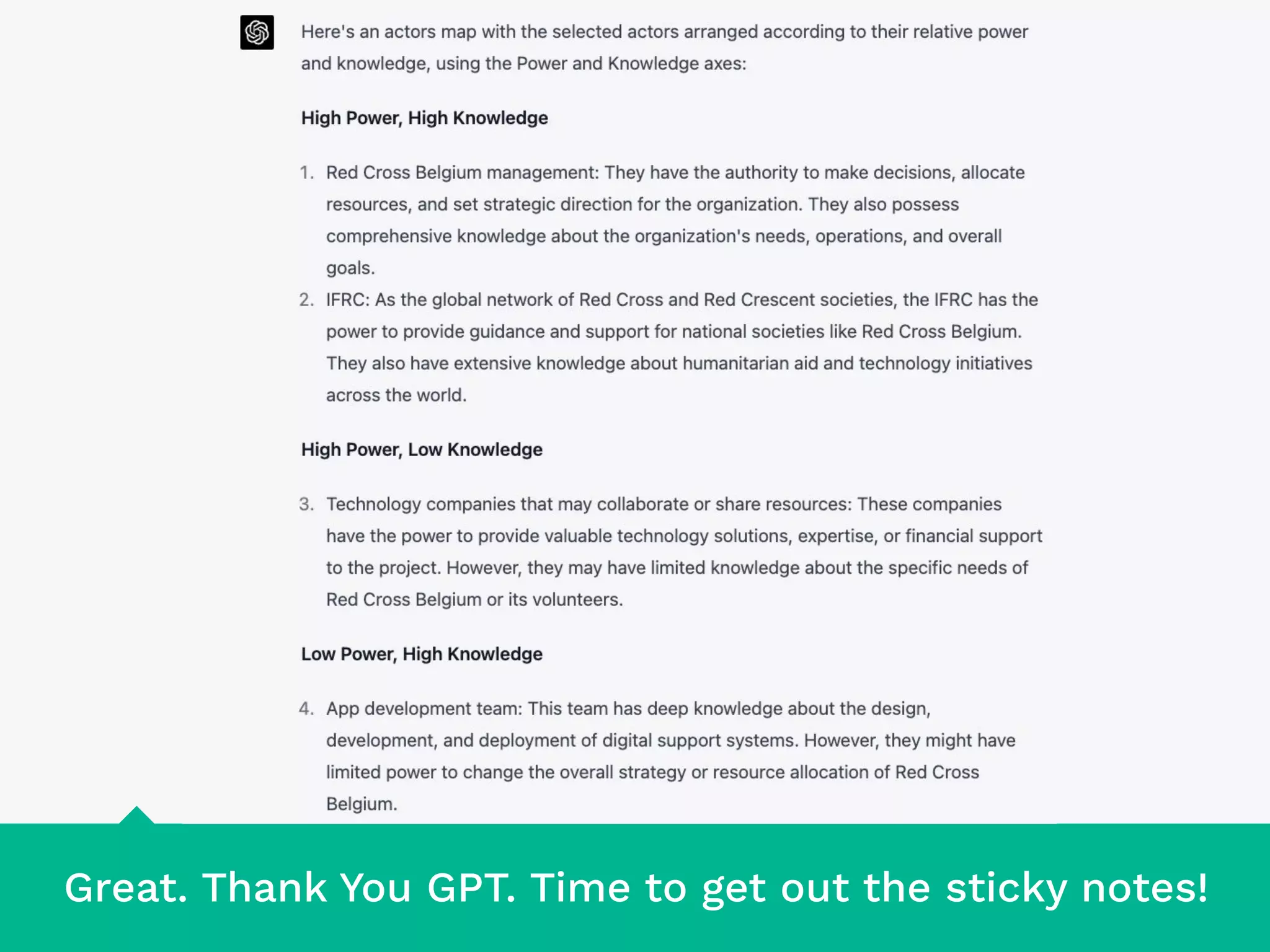
Great. Thank You GPT. Time to get out the sticky notes!
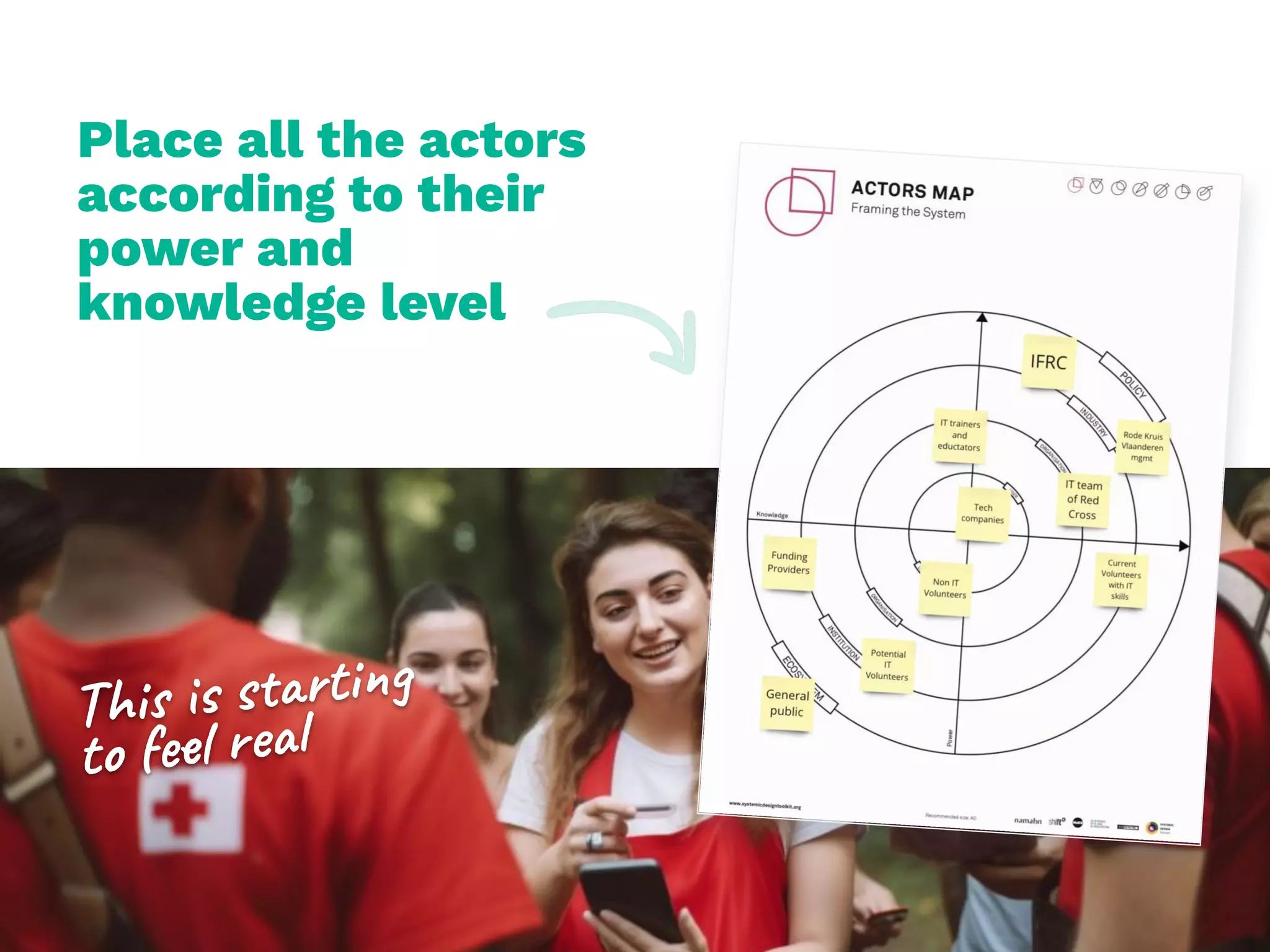
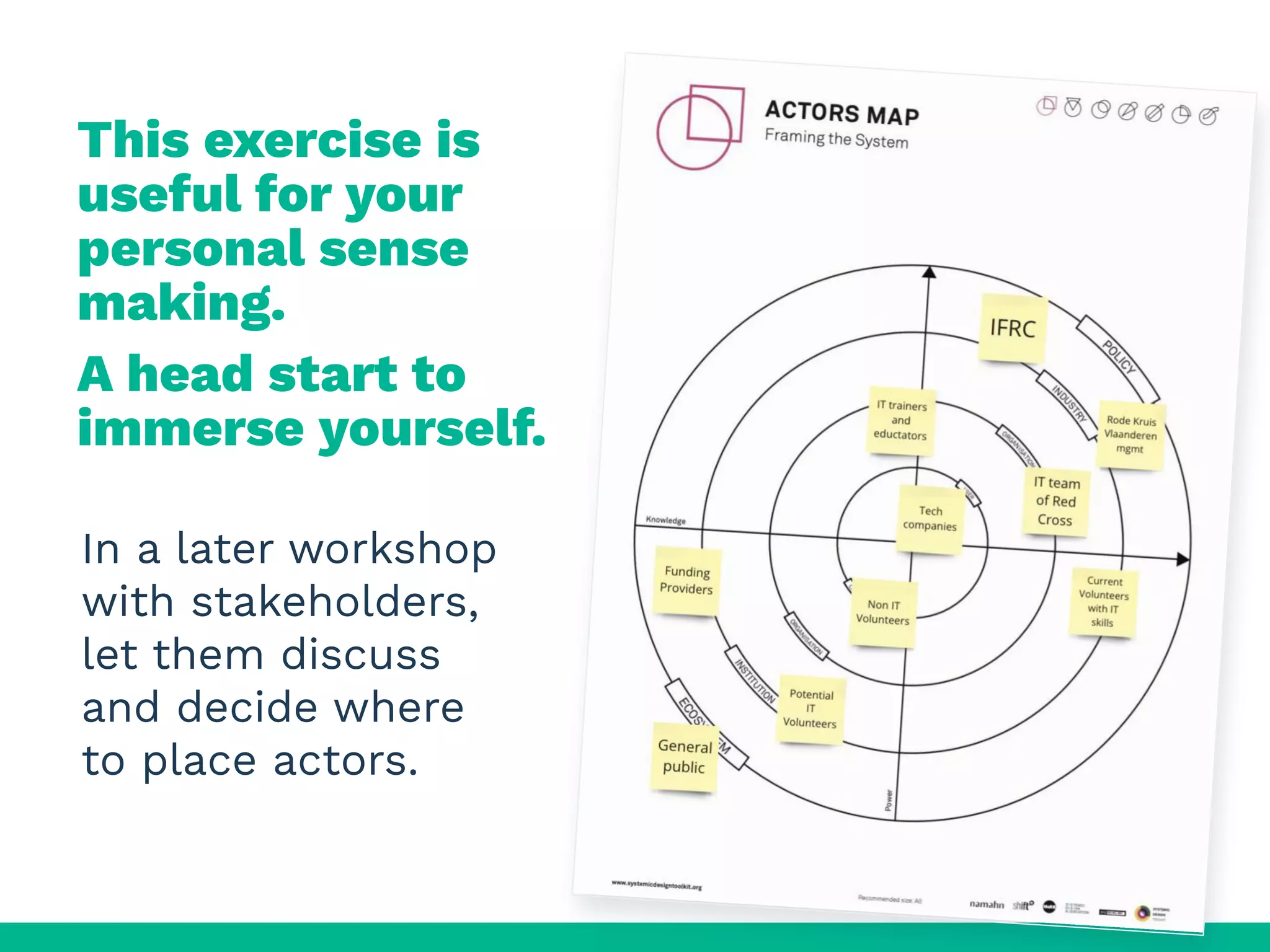
Place all the actors
according to their
power and
knowledge level
This is starti
to feel re
This exercise is
useful for your
personal sense
making.
A head start to
immerse yourself.
In a later workshop
with stakeholders,
let them discuss
and decide where
to place actors.
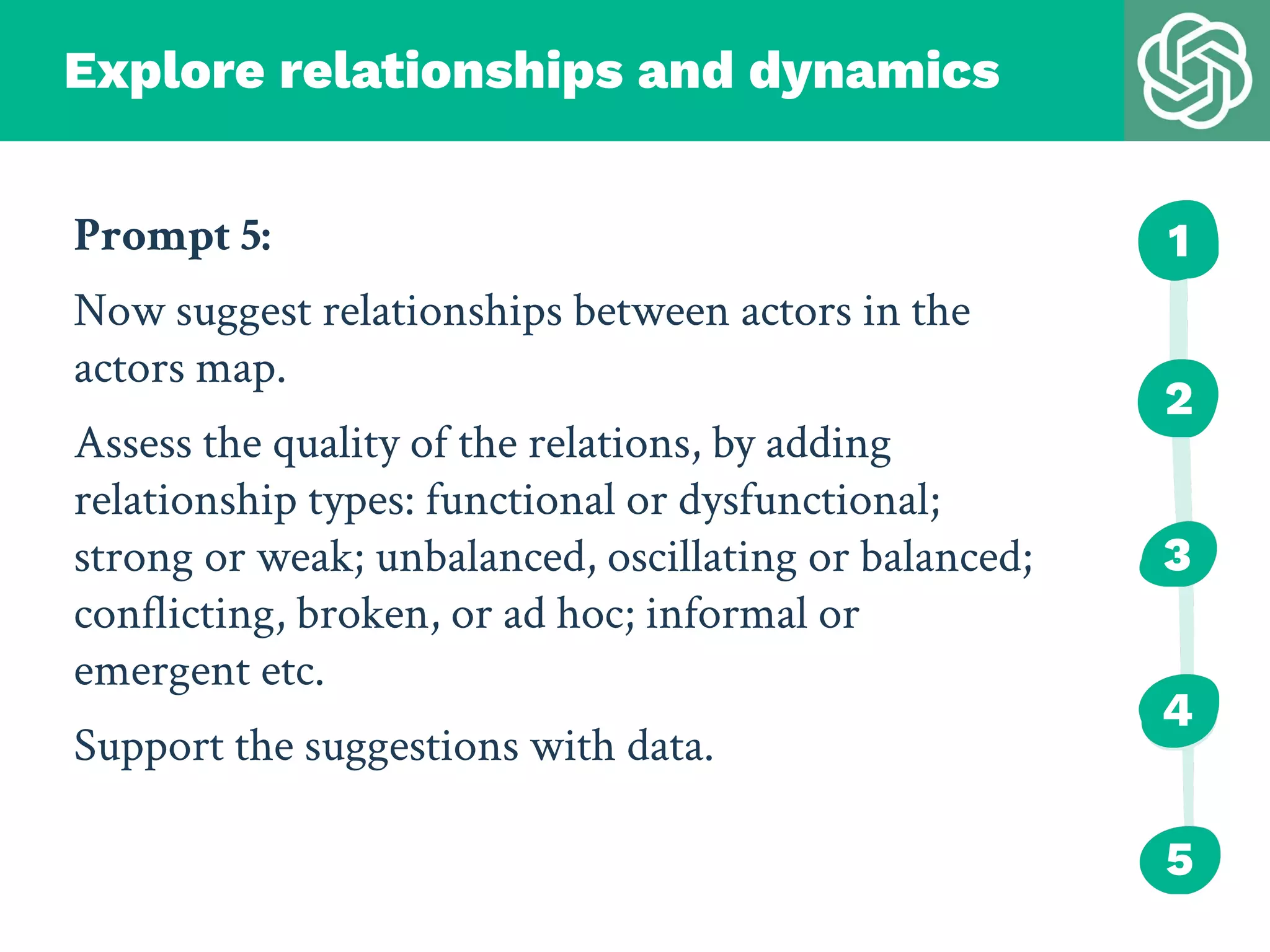
Prompt 5:
Now suggest relationships between actors in the
actors map.
Assess the quality of the relations, by adding
relationship types: functional or dysfunctional;
strong or weak; unbalanced, oscillating or balanced;
conflicting, broken, or ad hoc; informal or
emergent etc.
Support the suggestions with data.
Explore relationships and dynamics
1
2
3
4
5
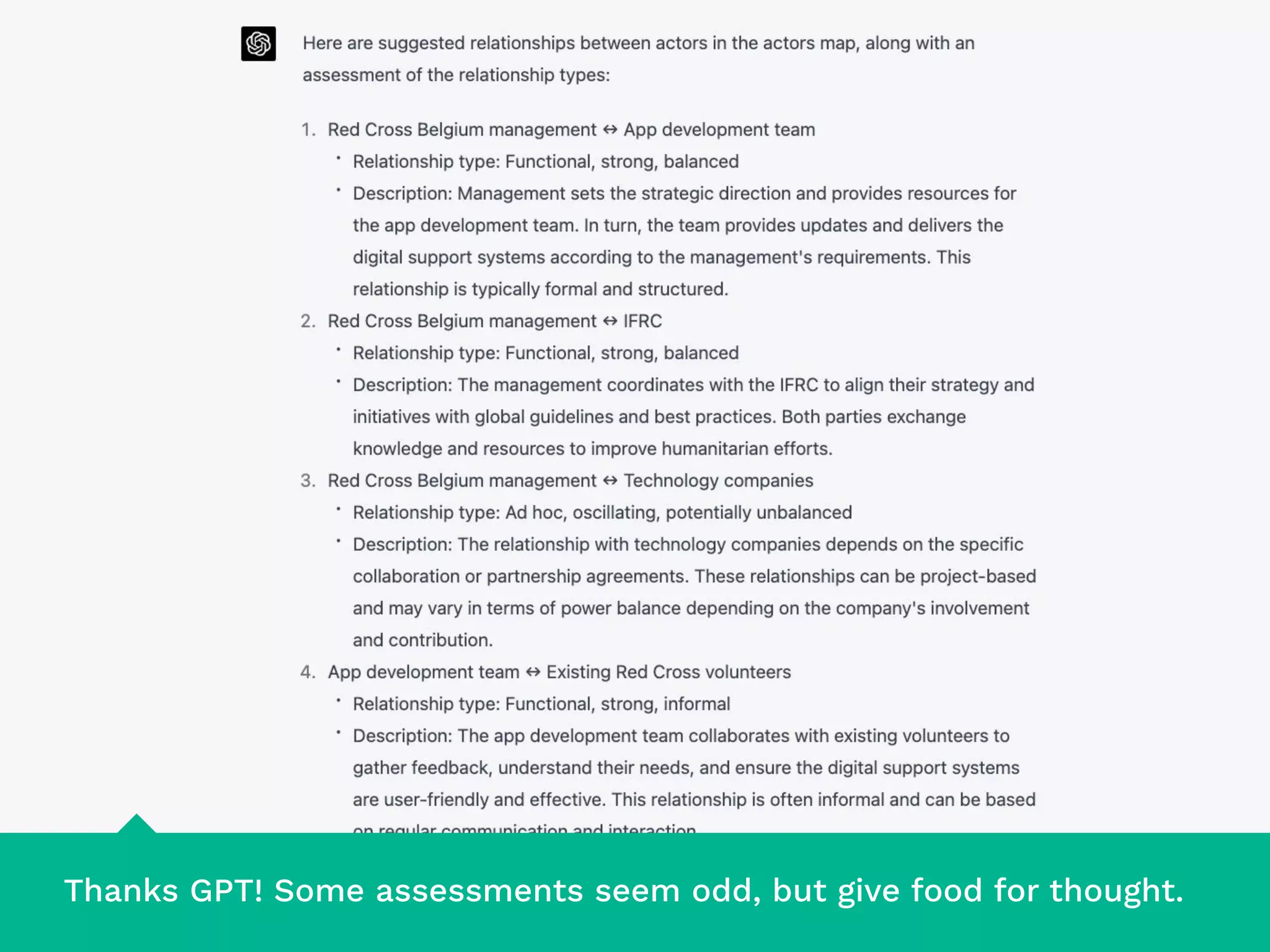
Thanks GPT! Some assessments seem odd, but give food for thought.
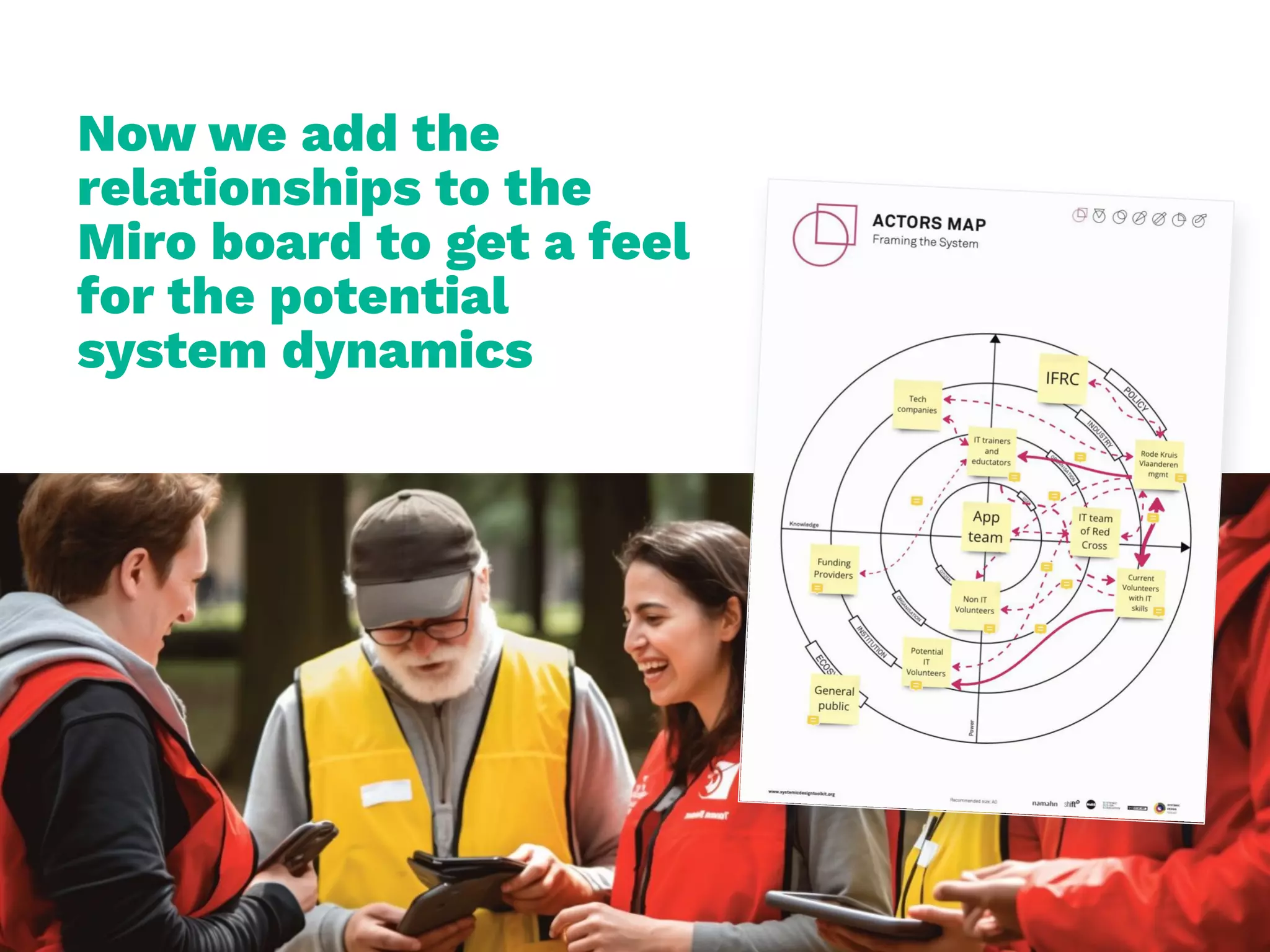
Now we add the
relationships to the
Miro board to get a feel
for the potential
system dynamics
That quick
internal test
gave a sense of
all the actors
and dynamics.
It’s an excellent
head start for a
proper workshop
with stakeholders.
As a facilitator, you
can now guide
participants with
extra confidence.
I share my learnings here on LinkedIn,
to become better at helping impact driven
organisations like The Red Cross.
Curious about more A.I. recipes for systemic design?
Let me know in the comments what you’re looking for.
Hungry for more?
FOR HIRE
info@frederikvincx.com
Book me for freelance
challenges
Need a hand to
shape your digital
products & services?
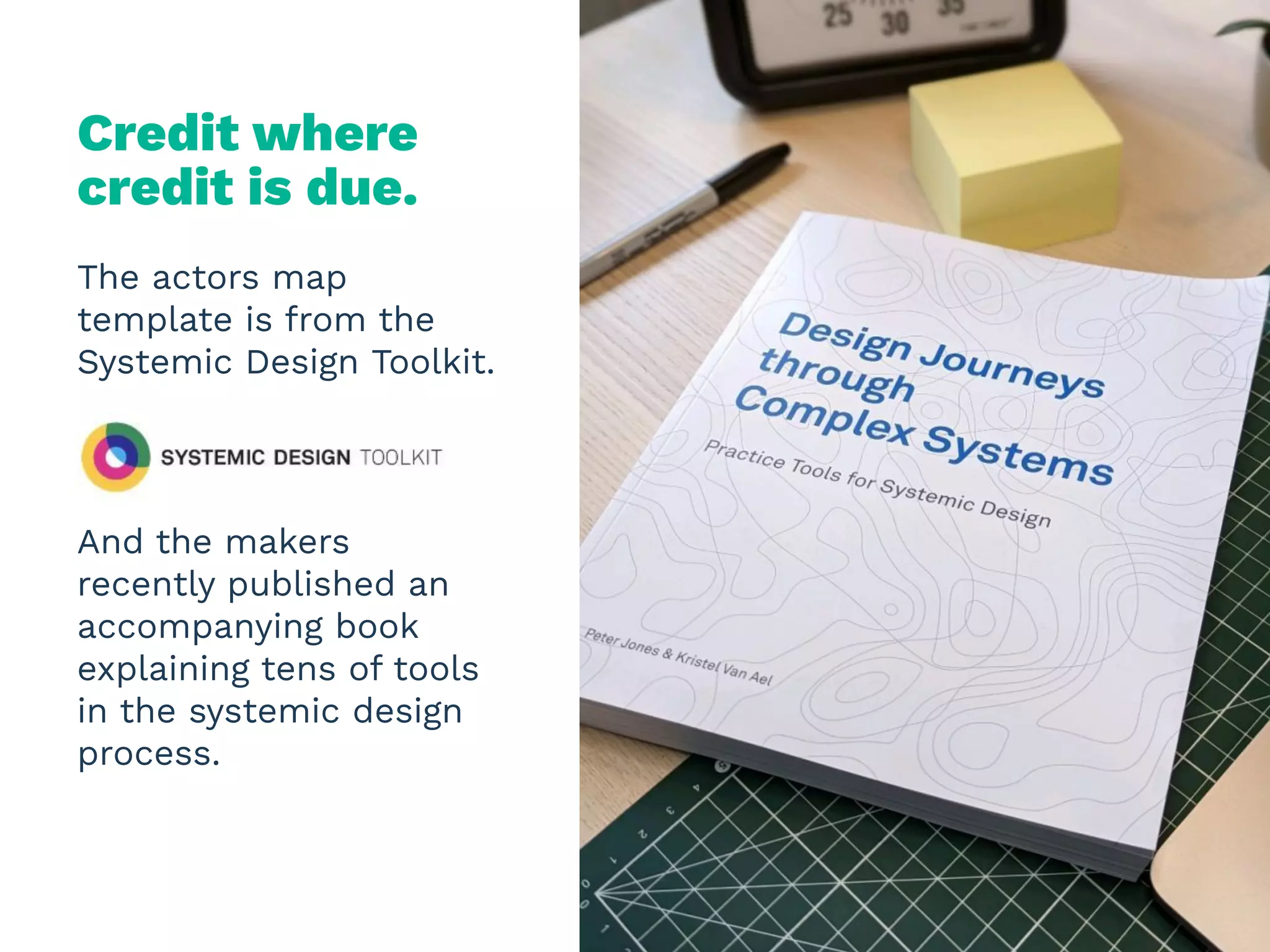
The actors map
template is from the
Systemic Design Toolkit.
And the makers
recently published an
accompanying book
explaining tens of tools
in the systemic design
process.
Credit where
credit is due.
Systemic sense-making with generative Ai

Systemic sense-making with generative Ai

  • 1.
  • 2.
    Explore the potentialactors on your own, so you are prepared to facilitate a workshop. Create a quick first draft of an actors map, that you can refine with your stakeholders. Use GPT to get a quick head start
  • 3.
    Who could bethe actors in a new service for the Belgian Red Cross? LET’S USE AN EXAMPLE A volunteer-driven app team, that quickly deploys digital support systems for other volunteers Let’s go
  • 4.
    We’ll use achain of 5 chatGPT prompts to create this actors map Get this actors map template in the Systemic Design Toolkit. The notes and connections are added in Miro.
  • 5.
    Ask GPT whatit needs to know Prompt 1: Act as a systemic design expert. I am investigating a new service for the brand Red Cross Belgium. I’m exploring the possibilities of a volunteer-driven app team, that quickly deploys digital support systems for other volunteers. Do not give me suggestions yet. First ask me more information so you can help me create an actors map further down the line. 1 2 3 4 5
  • 6.
    Answer these asgood as you can with limited info
  • 7.
    Prompt 2: Now suggestactors that could have a role in the issue of concern. This can be organisations, individuals, human and nonhuman agents. These actors can have varying levels of knowledge about the issue, and can have varying levels of agency to change the system that this issue is part of. Discover actors 1 2 3 4 5
  • 8.
    Ok. Good firststart, but let’s push GPT to go further.
  • 9.
    Prompt 3: Also suggestrelated initiatives and organisations outside of the organisation, that could have potential links with this service. Let’s push GPT to go beyond Would that work? 1 2 3 4 5
  • 10.
    Insightful! Now let’schoose the actors, and generate a map.
  • 11.
    Prompt 4: Help createan actors map about the topic. An actors map is structured with four quadrants, created by two axis. Use the axis' of Power and Knowledge to suggest actors with different levels of power and knowledge. For each actor, give a short description about their power and knowledge. Arrange them according to their level of relative power (within the system, to change the system) and their knowledge about the issues. Create the actors map 1 2 3 4 5
  • 12.
    Great. Thank YouGPT. Time to get out the sticky notes!
  • 13.
    Place all theactors according to their power and knowledge level This is starti to feel re
  • 14.
    This exercise is usefulfor your personal sense making. A head start to immerse yourself. In a later workshop with stakeholders, let them discuss and decide where to place actors.
  • 15.
    Prompt 5: Now suggestrelationships between actors in the actors map. Assess the quality of the relations, by adding relationship types: functional or dysfunctional; strong or weak; unbalanced, oscillating or balanced; conflicting, broken, or ad hoc; informal or emergent etc. Support the suggestions with data. Explore relationships and dynamics 1 2 3 4 5
  • 16.
    Thanks GPT! Someassessments seem odd, but give food for thought.
  • 17.
    Now we addthe relationships to the Miro board to get a feel for the potential system dynamics
  • 18.
    That quick internal test gavea sense of all the actors and dynamics. It’s an excellent head start for a proper workshop with stakeholders. As a facilitator, you can now guide participants with extra confidence.
  • 19.
    I share mylearnings here on LinkedIn, to become better at helping impact driven organisations like The Red Cross. Curious about more A.I. recipes for systemic design? Let me know in the comments what you’re looking for. Hungry for more?
  • 20.
    FOR HIRE info@frederikvincx.com Book mefor freelance challenges Need a hand to shape your digital products & services?
  • 21.
    The actors map templateis from the Systemic Design Toolkit. And the makers recently published an accompanying book explaining tens of tools in the systemic design process. Credit where credit is due.