B A T C H : B A G D 1 9 / 1 6 / 0 7
B A G D / 1 9 / 1 6 / 0 9
System Analysis Methodologies
Content ..
 Lifecycle/waterfall approach
 V Model
 Prototype,
 Spiral
 alige
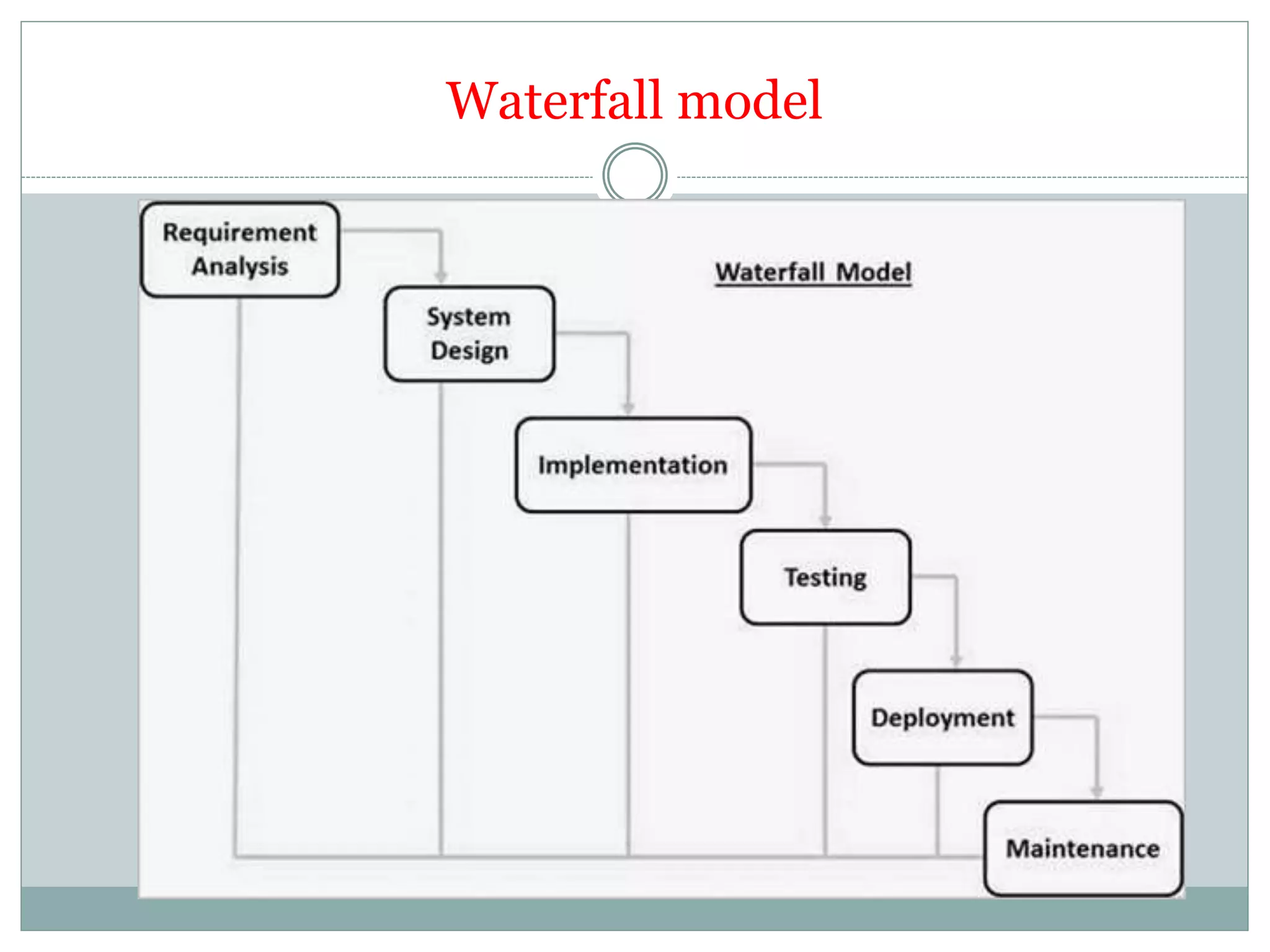
Waterfall model
waterfall
Every software developed is different and requires a suitable SDLC approach
to be followed based on the internal and external factors. Some situations
where the use of Waterfall model is most appropriate are −
 Requirements are very well documented, clear and fixed.
 Product definition is stable.
 Technology is understood and is not dynamic.
 There are no ambiguous requirements.
 Ample resources with required expertise are available to support the
product.
 The project is short.
Waterfall Advantages
 Simple and easy to understand and use
 Easy to manage due to the rigidity of the model. Each phase has specific
deliverables and a review process.
 Phases are processed and completed one at a time.
 Works well for smaller projects where requirements are very well understood.
 Clearly defined stages.
 Well understood milestones.
 Easy to arrange tasks.
 Process and results are well documented.
Waterfall disadvantages
 No working software is produced until late during the life cycle.
 High amounts of risk and uncertainty.
 Not a good model for complex and object-oriented projects.
 Poor model for long and ongoing projects.
 Not suitable for the projects where requirements are at a moderate to high risk
of changing. So, risk and uncertainty is high with this process model.
 It is difficult to measure progress within stages.
 Cannot accommodate changing requirements.
 Adjusting scope during the life cycle can end a proj
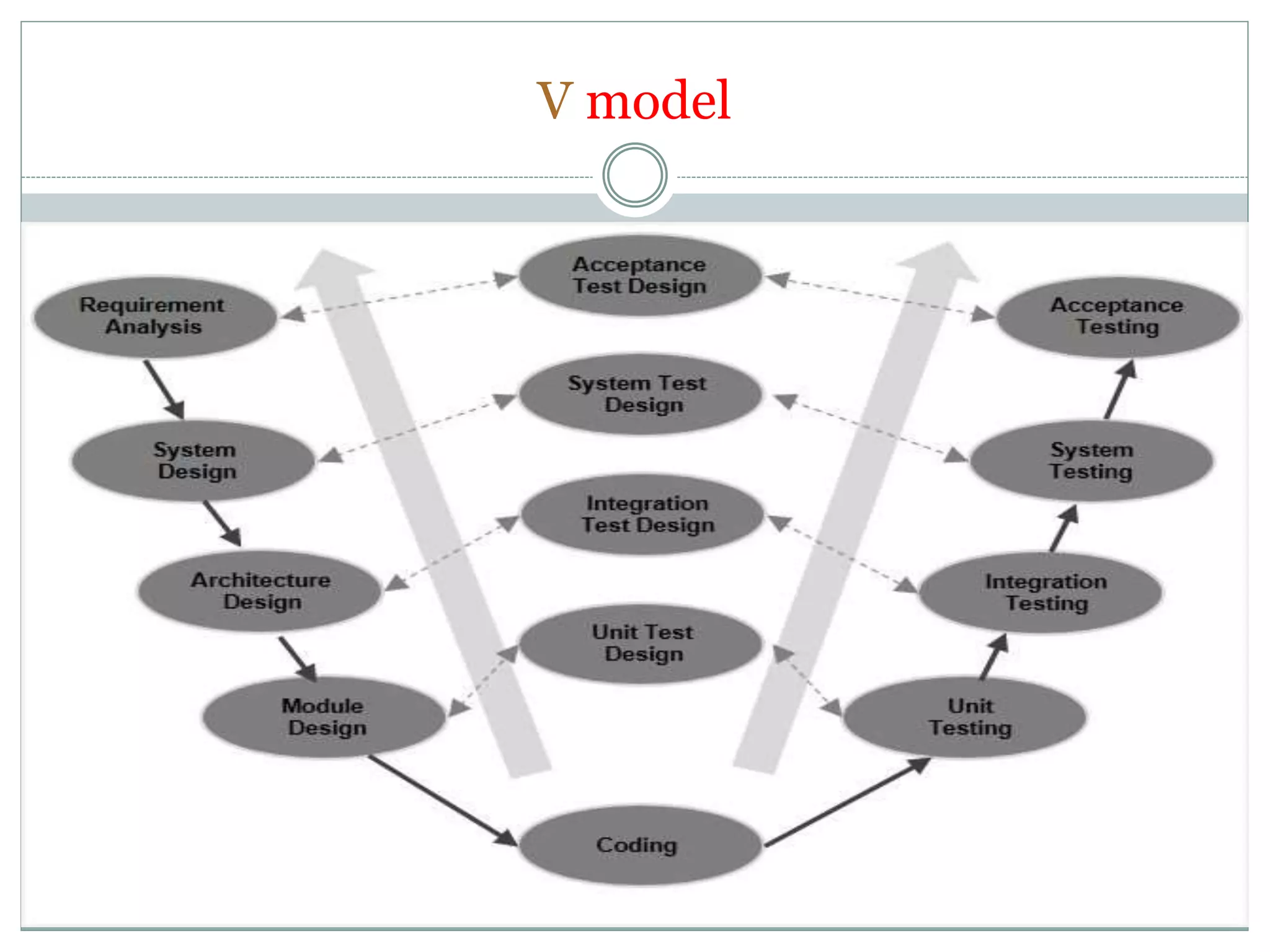
V model
 V- Model application is almost the same as the waterfall model, as both the
models are of sequential type. Requirements have to be very clear before the
project starts, because it is usually expensive to go back and make changes.
This model is used in the medical development field, as it is strictly a
disciplined domain.
 The following pointers are some of the most suitable scenarios to use the V-
Model application.
 Requirements are well defined, clearly documented and fixed.
 Product definition is stable.
 Technology is not dynamic and is well understood by the project team.
 There are no ambiguous or undefined requirements.
 The project is short.
The advantages
 This is a highly-disciplined model and Phases are completed one at
a time.
 Works well for smaller projects where requirements are very well
understood.
 Simple and easy to understand and use.
 Easy to manage due to the rigidity of the model. Each phase has
specific deliverables and a review process.
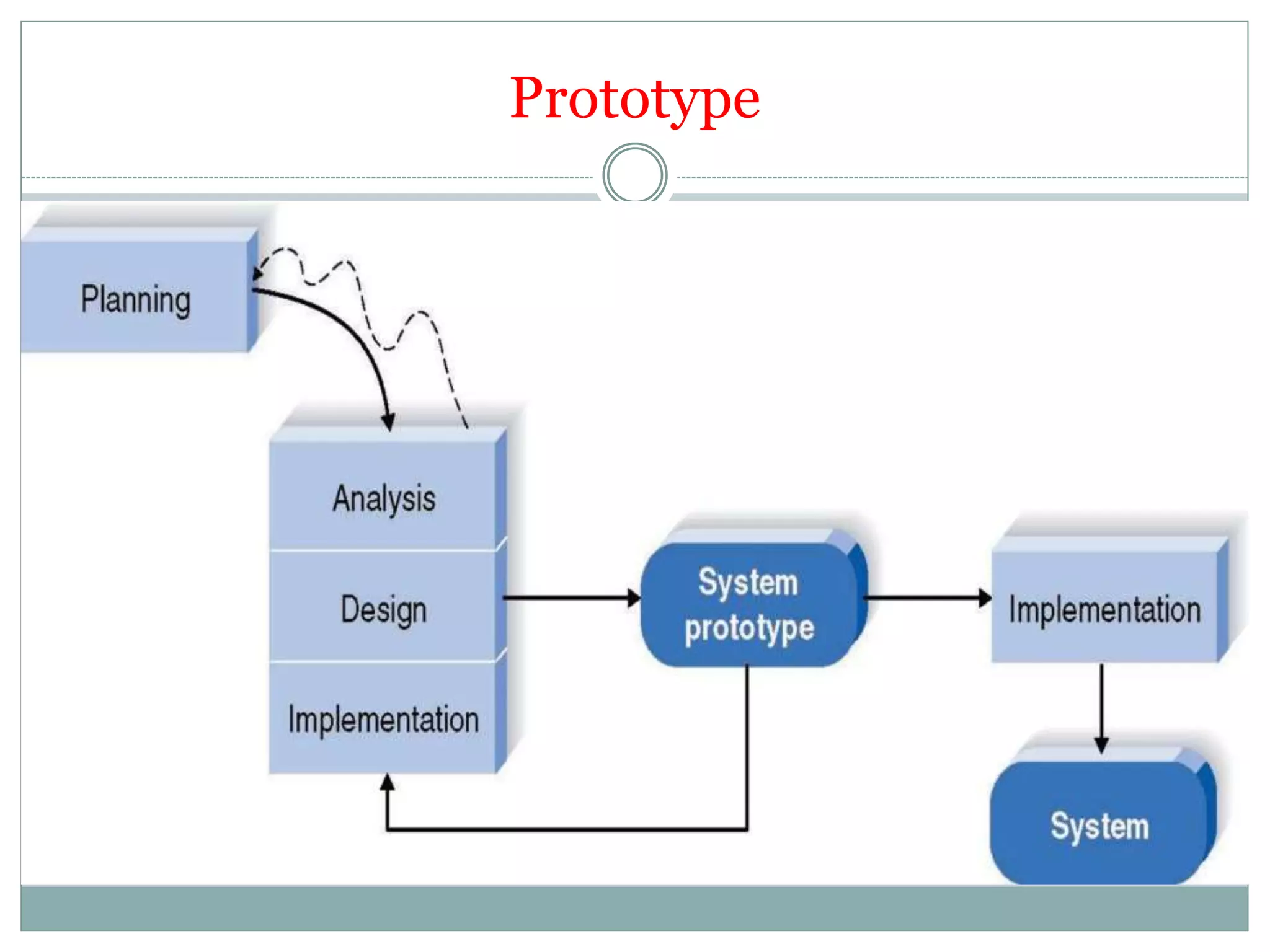
Prototype
 Prototype is a working model of software with some limited
functionality. The prototype does not always hold the exact
logic used in the actual software application and is an extra
effort to be considered under effort estimation.
 Prototyping is used to allow the users evaluate developer
proposals and try them out before implementation. It also
helps understand the requirements which are user specific
and may not have been considered by the developer during
product design.
 Following is a stepwise approach explained to design a
software prototype.
The advantages
 Increased user involvement in the product even before its
implementation.
 Since a working model of the system is displayed, the users get a
better understanding of the system being developed.
 Reduces time and cost as the defects can be detected much
earlier.
 Quicker user feedback is available leading to better solutions.
 Missing functionality can be identified easily.
 Confusing or difficult functions can be identified.
The Disadvantages
 Risk of insufficient requirement analysis owing to too much
dependency on the prototype.
 Users may get confused in the prototypes and actual systems.
 Practically, this methodology may increase the complexity of
the system as scope of the system may expand beyond original
plans.
 Developers may try to reuse the existing prototypes to build the
actual system, even when it is not technically feasible.
 The effort invested in building prototypes may be too much if it
is not monitored properly.
Spiral Model
the following pointers explain the typical uses of a
 When there is a budget constraint and risk evaluation is important.
 For medium to high-risk projects.
 Long-term project commitment because of potential changes to economic
priorities as the requirements change with time.
 Customer is not sure of their requirements which is usually the case.
 Requirements are complex and need evaluation to get clarity.
 New product line which should be released in phases to get enough customer
feedback.
 Significant changes are expected in the product during the development cycle.
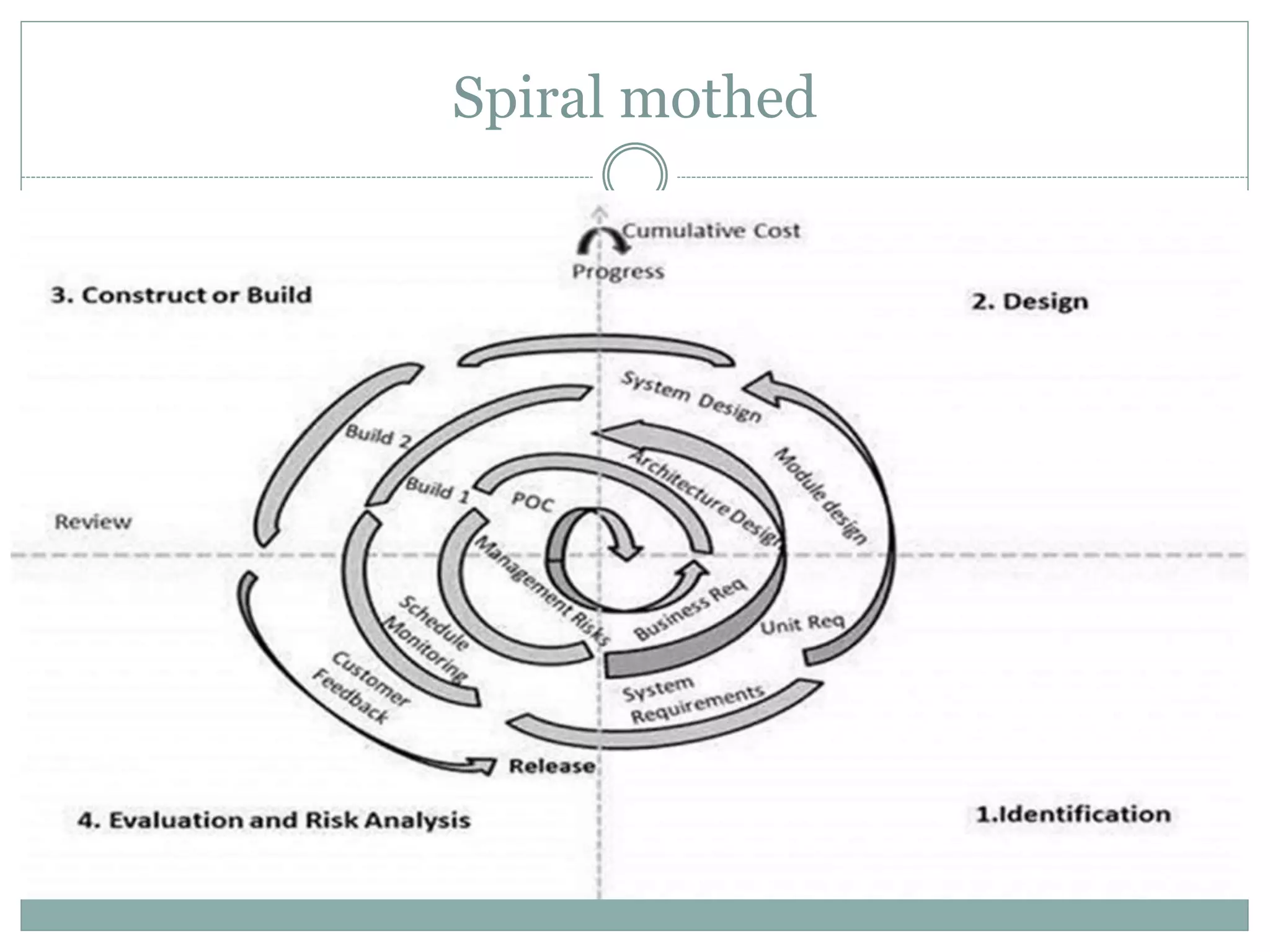
Spiral mothed
advantages
 Changing requirements can be accommodated.
 Allows extensive use of prototypes.
 Requirements can be captured more accurately.
 Users see the system early
Disadvantages
 Management is more complex.
 End of the project may not be known early.
 Not suitable for small or low risk projects and could
be expensive for small projects.
 Process is complex
 Large number of intermediate stages requires
excessive documentation
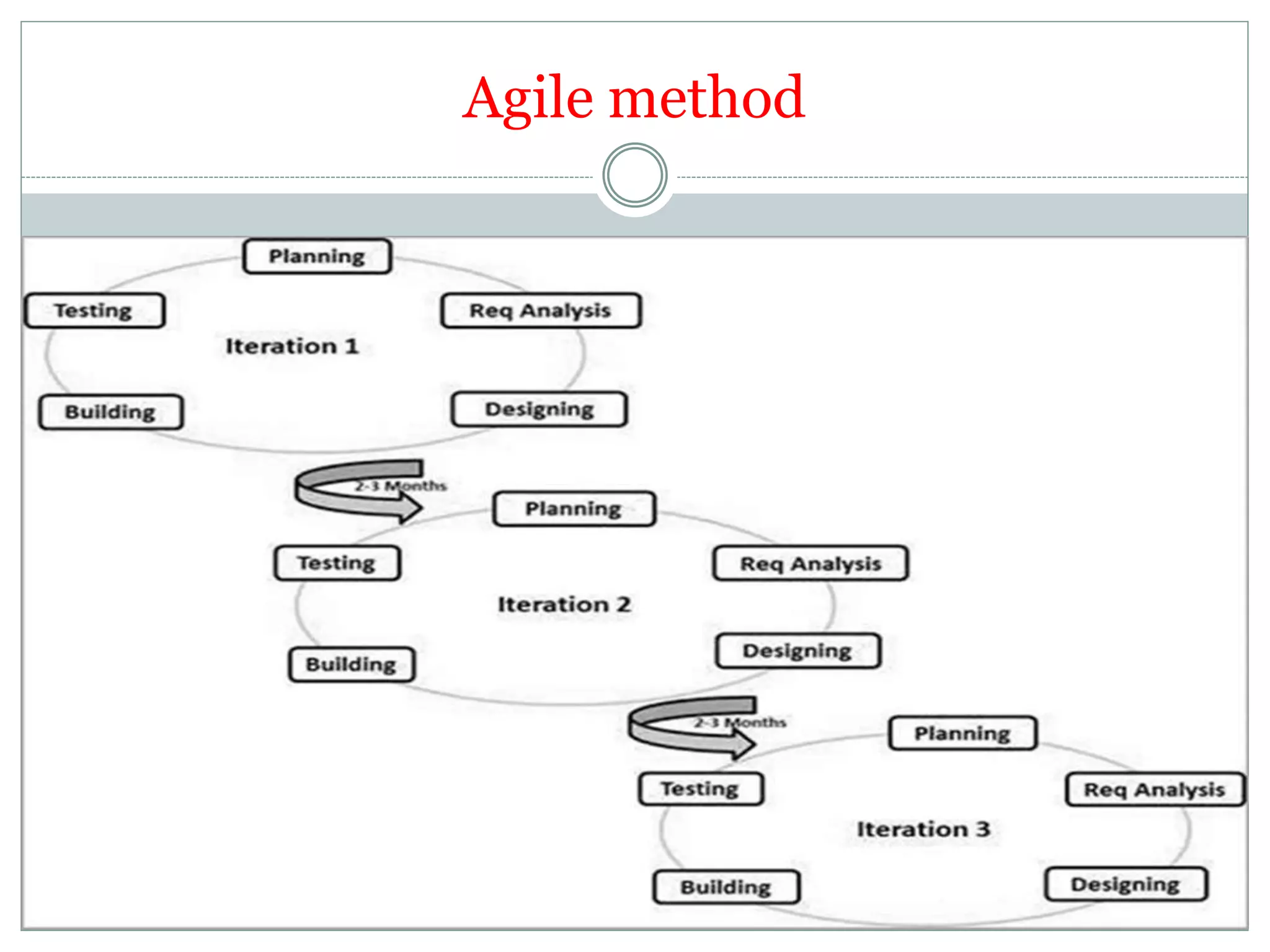
Agile method
Basic principles of alige method
 Satisfy the client and continually develop software.
 Changing requirements are embraced for the client’s competitive
advantage.
 Concentrate on delivering working software frequently. Delivery
preference will be placed on the shortest possible time span.
 Developers and business people must work together throughout the
entire project.
 Projects must be based on people who are motivated. Give them the
proper environment and the support that they need. They should be
trusted to get their jobs done.
 Face-to-face communication is the best way to transfer information to
and from a team.
 Working software is the primary measurement of progress.
 Agile processes will promote development that is sustainable. Sponsors,
developers, and users should be able to maintain an indefinite, constant
pace
Advantages of Agile
 Agile can meet changing requirements. Since stages aren’t
isolated, you can accommodate customer feedback without
running the entire software.
 Agile allows for more software testing because test cases can be
executed at any time. In fact, testing is often done
simultaneously along development.
 People that adopt Agile often believe it results in less bugs and
higher quality software. When bugs are found, they’re much
easier to fix.
 Agile is supports a faster development method for more features
to be released more quickly.
 Agile accommodates faster feedback, cross-departmental
communication, and collaboration.
 Testing and development interact more throughout the process
to create a high-quality project.
Conclusion

System analysis methodologies

  • 1.
    B A TC H : B A G D 1 9 / 1 6 / 0 7 B A G D / 1 9 / 1 6 / 0 9 System Analysis Methodologies
  • 2.
    Content ..  Lifecycle/waterfallapproach  V Model  Prototype,  Spiral  alige
  • 3.
  • 4.
    waterfall Every software developedis different and requires a suitable SDLC approach to be followed based on the internal and external factors. Some situations where the use of Waterfall model is most appropriate are −  Requirements are very well documented, clear and fixed.  Product definition is stable.  Technology is understood and is not dynamic.  There are no ambiguous requirements.  Ample resources with required expertise are available to support the product.  The project is short.
  • 5.
    Waterfall Advantages  Simpleand easy to understand and use  Easy to manage due to the rigidity of the model. Each phase has specific deliverables and a review process.  Phases are processed and completed one at a time.  Works well for smaller projects where requirements are very well understood.  Clearly defined stages.  Well understood milestones.  Easy to arrange tasks.  Process and results are well documented.
  • 6.
    Waterfall disadvantages  Noworking software is produced until late during the life cycle.  High amounts of risk and uncertainty.  Not a good model for complex and object-oriented projects.  Poor model for long and ongoing projects.  Not suitable for the projects where requirements are at a moderate to high risk of changing. So, risk and uncertainty is high with this process model.  It is difficult to measure progress within stages.  Cannot accommodate changing requirements.  Adjusting scope during the life cycle can end a proj
  • 7.
  • 8.
     V- Modelapplication is almost the same as the waterfall model, as both the models are of sequential type. Requirements have to be very clear before the project starts, because it is usually expensive to go back and make changes. This model is used in the medical development field, as it is strictly a disciplined domain.  The following pointers are some of the most suitable scenarios to use the V- Model application.  Requirements are well defined, clearly documented and fixed.  Product definition is stable.  Technology is not dynamic and is well understood by the project team.  There are no ambiguous or undefined requirements.  The project is short.
  • 9.
    The advantages  Thisis a highly-disciplined model and Phases are completed one at a time.  Works well for smaller projects where requirements are very well understood.  Simple and easy to understand and use.  Easy to manage due to the rigidity of the model. Each phase has specific deliverables and a review process.
  • 10.
  • 11.
     Prototype isa working model of software with some limited functionality. The prototype does not always hold the exact logic used in the actual software application and is an extra effort to be considered under effort estimation.  Prototyping is used to allow the users evaluate developer proposals and try them out before implementation. It also helps understand the requirements which are user specific and may not have been considered by the developer during product design.  Following is a stepwise approach explained to design a software prototype.
  • 12.
    The advantages  Increaseduser involvement in the product even before its implementation.  Since a working model of the system is displayed, the users get a better understanding of the system being developed.  Reduces time and cost as the defects can be detected much earlier.  Quicker user feedback is available leading to better solutions.  Missing functionality can be identified easily.  Confusing or difficult functions can be identified.
  • 13.
    The Disadvantages  Riskof insufficient requirement analysis owing to too much dependency on the prototype.  Users may get confused in the prototypes and actual systems.  Practically, this methodology may increase the complexity of the system as scope of the system may expand beyond original plans.  Developers may try to reuse the existing prototypes to build the actual system, even when it is not technically feasible.  The effort invested in building prototypes may be too much if it is not monitored properly.
  • 14.
    Spiral Model the followingpointers explain the typical uses of a  When there is a budget constraint and risk evaluation is important.  For medium to high-risk projects.  Long-term project commitment because of potential changes to economic priorities as the requirements change with time.  Customer is not sure of their requirements which is usually the case.  Requirements are complex and need evaluation to get clarity.  New product line which should be released in phases to get enough customer feedback.  Significant changes are expected in the product during the development cycle.
  • 15.
  • 16.
    advantages  Changing requirementscan be accommodated.  Allows extensive use of prototypes.  Requirements can be captured more accurately.  Users see the system early
  • 17.
    Disadvantages  Management ismore complex.  End of the project may not be known early.  Not suitable for small or low risk projects and could be expensive for small projects.  Process is complex  Large number of intermediate stages requires excessive documentation
  • 18.
  • 19.
    Basic principles ofalige method  Satisfy the client and continually develop software.  Changing requirements are embraced for the client’s competitive advantage.  Concentrate on delivering working software frequently. Delivery preference will be placed on the shortest possible time span.  Developers and business people must work together throughout the entire project.  Projects must be based on people who are motivated. Give them the proper environment and the support that they need. They should be trusted to get their jobs done.  Face-to-face communication is the best way to transfer information to and from a team.  Working software is the primary measurement of progress.  Agile processes will promote development that is sustainable. Sponsors, developers, and users should be able to maintain an indefinite, constant pace
  • 20.
    Advantages of Agile Agile can meet changing requirements. Since stages aren’t isolated, you can accommodate customer feedback without running the entire software.  Agile allows for more software testing because test cases can be executed at any time. In fact, testing is often done simultaneously along development.  People that adopt Agile often believe it results in less bugs and higher quality software. When bugs are found, they’re much easier to fix.  Agile is supports a faster development method for more features to be released more quickly.  Agile accommodates faster feedback, cross-departmental communication, and collaboration.  Testing and development interact more throughout the process to create a high-quality project.
  • 21.