Production of Synthetic Seed
Introduction:
• Synthetic seed can be defined as the artificial encapsulation of somatic embryo,
shoot buds or aggregates of cell or any tissues which has the ability to form a
plant in in-vitro or ex vivo condition.
• Synthetic seeds can be stored for a long time in appropriate condition.
• Synthetic seed production and used technology is rapidly growing branch of seed
biotechnology.
• Toshio Murashige in 1970 first coined the term synthetic seed.
• Synthetic seed production requires the large scale production of viable plant
material in lab condition using invitro culture system.
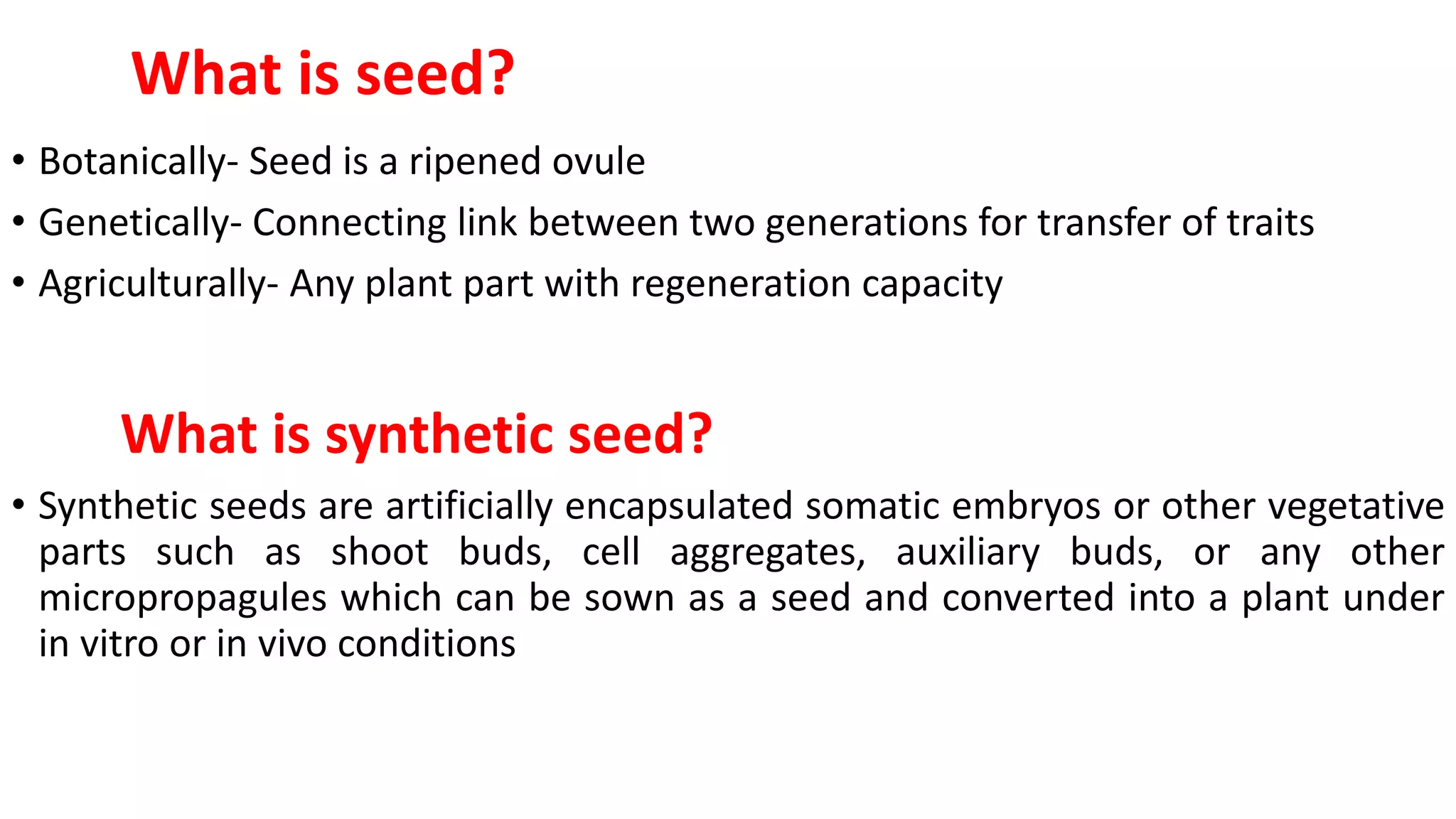
What is seed?
• Botanically- Seed is a ripened ovule
• Genetically- Connecting link between two generations for transfer of traits
• Agriculturally- Any plant part with regeneration capacity
What is synthetic seed?
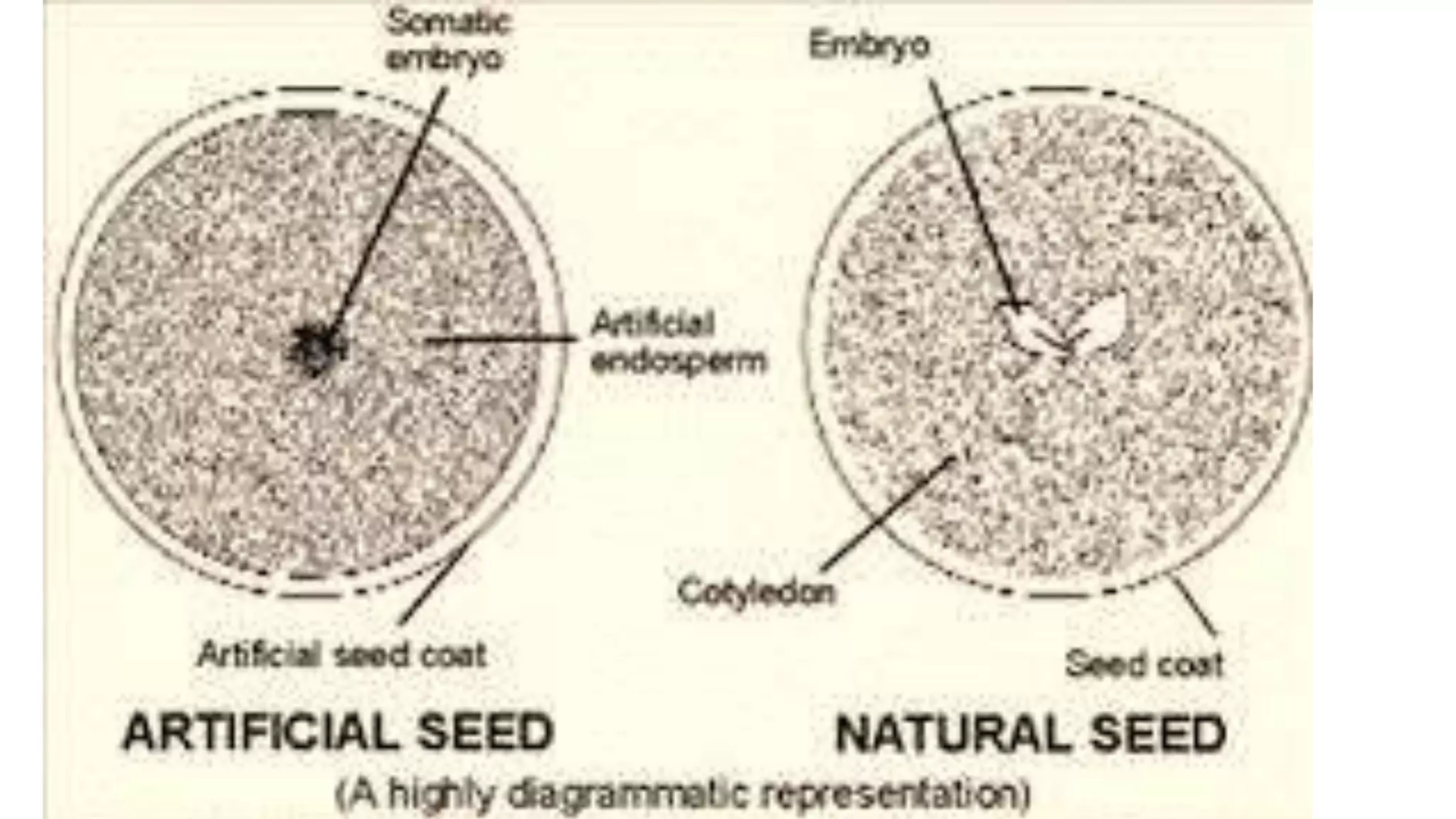
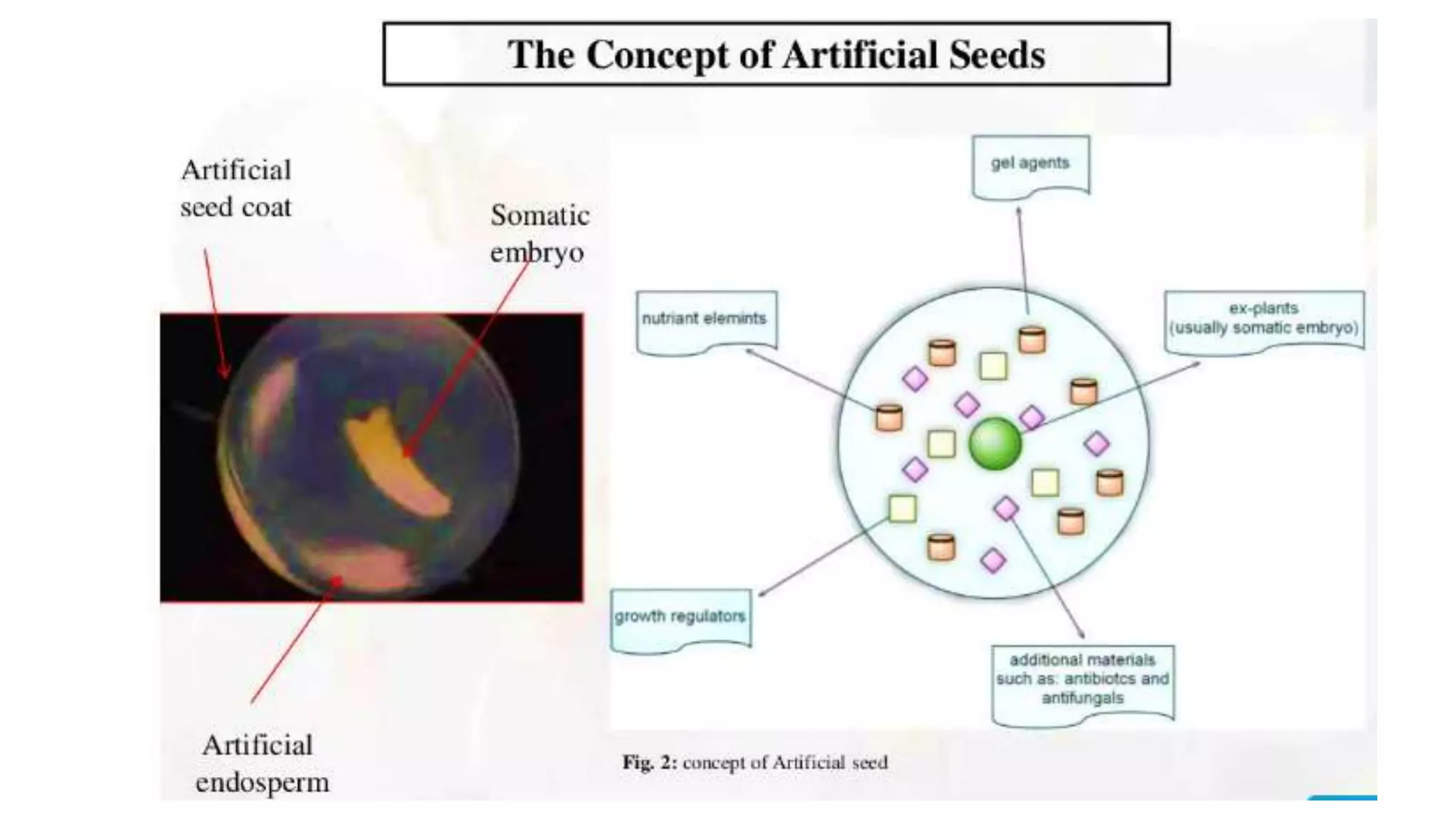
• Synthetic seeds are artificially encapsulated somatic embryos or other vegetative
parts such as shoot buds, cell aggregates, auxiliary buds, or any other
micropropagules which can be sown as a seed and converted into a plant under
in vitro or in vivo conditions
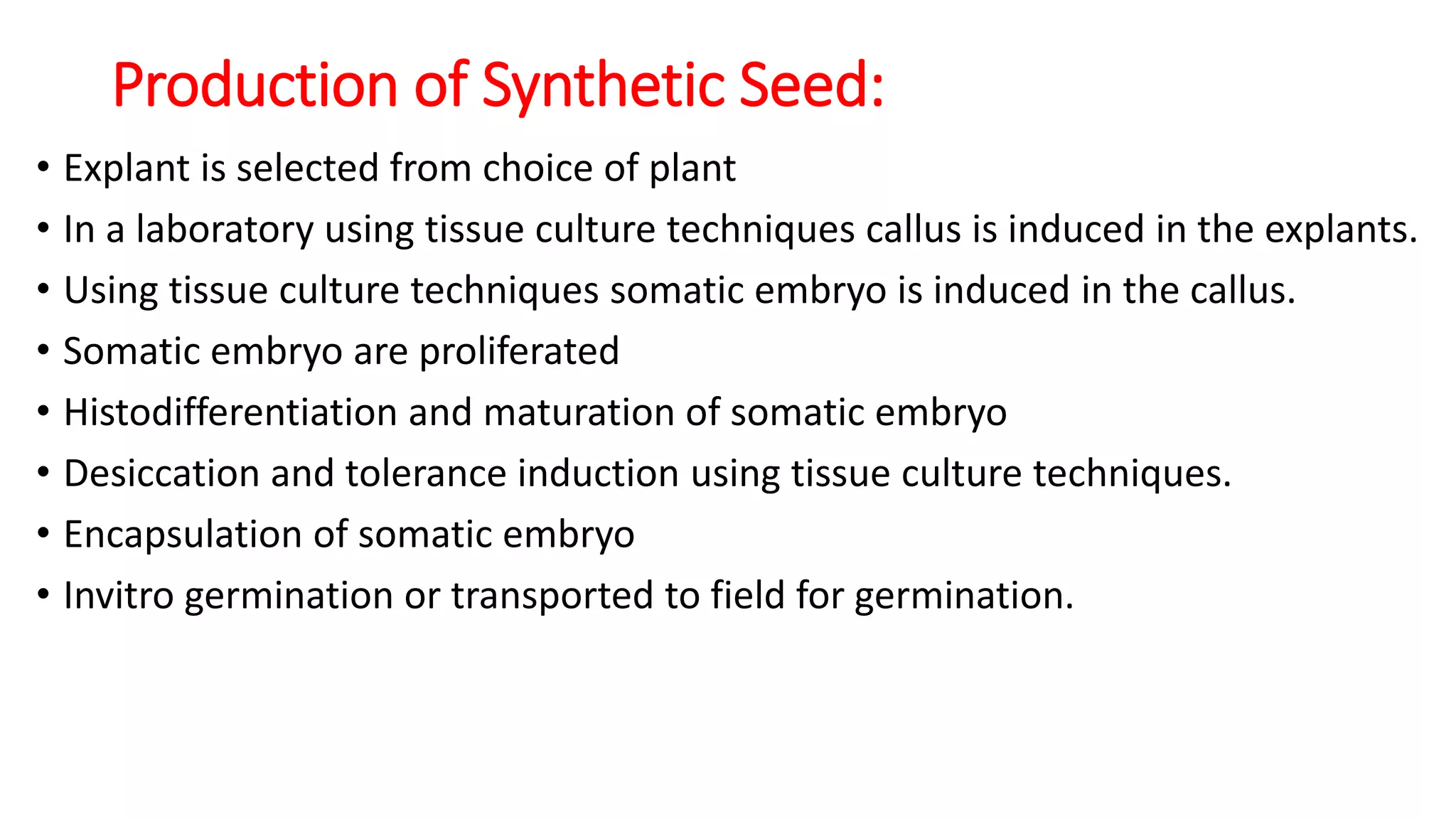
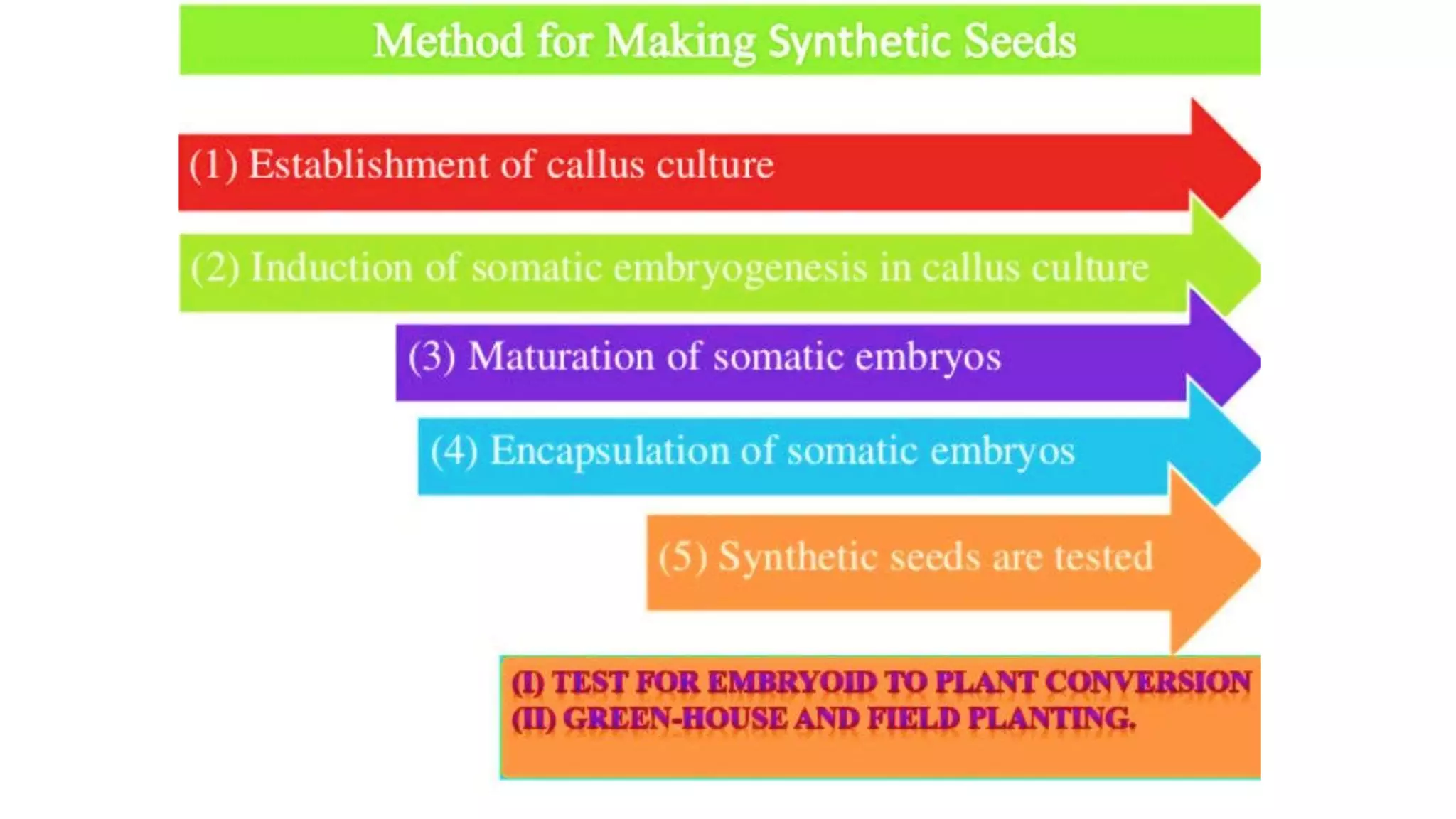
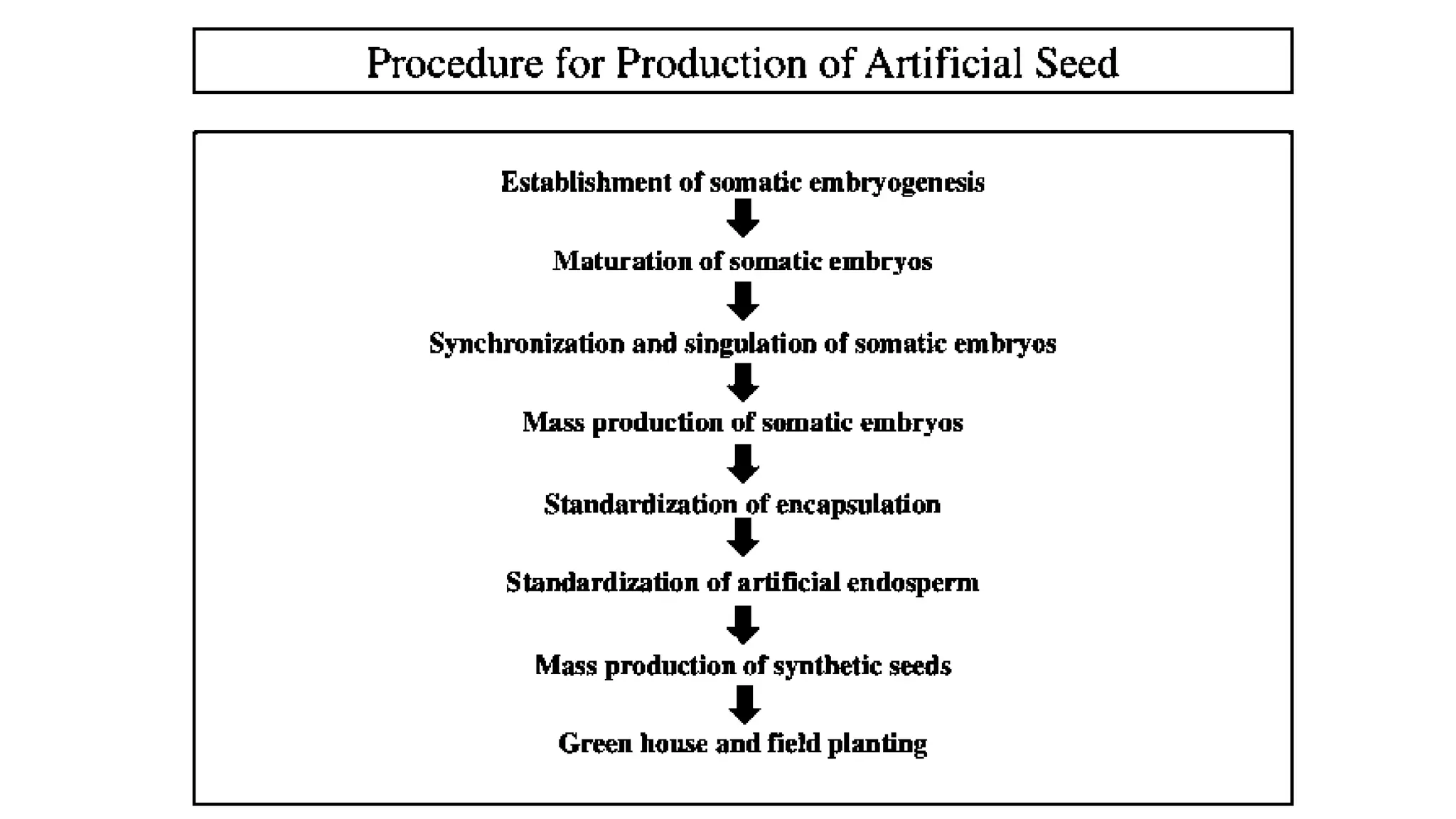
Production of Synthetic Seed:
• Explant is selected from choice of plant
• In a laboratory using tissue culture techniques callus is induced in the explants.
• Using tissue culture techniques somatic embryo is induced in the callus.
• Somatic embryo are proliferated
• Histodifferentiation and maturation of somatic embryo
• Desiccation and tolerance induction using tissue culture techniques.
• Encapsulation of somatic embryo
• Invitro germination or transported to field for germination.
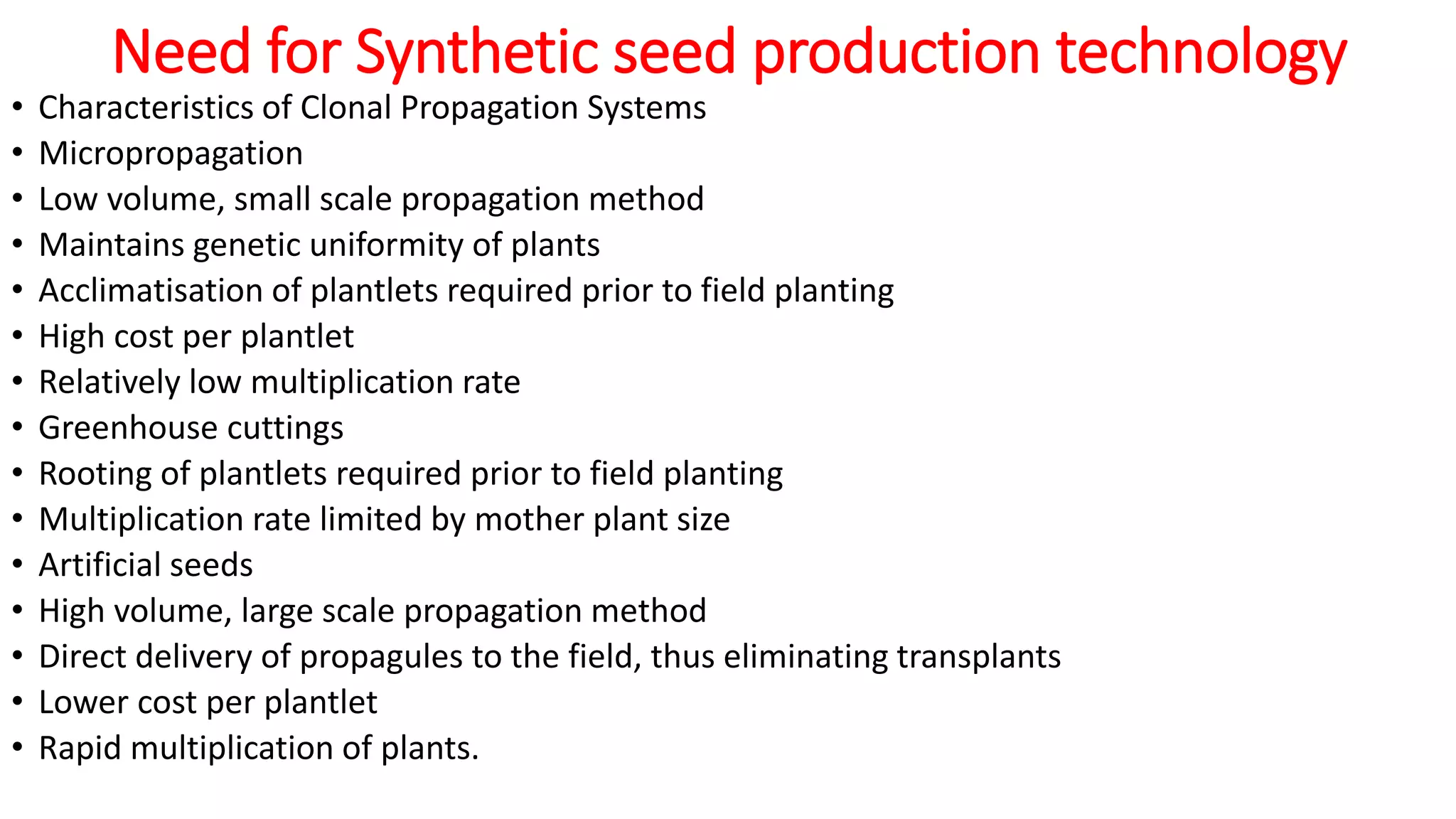
Need for Synthetic seed production technology
• Characteristics of Clonal Propagation Systems
• Micropropagation
• Low volume, small scale propagation method
• Maintains genetic uniformity of plants
• Acclimatisation of plantlets required prior to field planting
• High cost per plantlet
• Relatively low multiplication rate
• Greenhouse cuttings
• Rooting of plantlets required prior to field planting
• Multiplication rate limited by mother plant size
• Artificial seeds
• High volume, large scale propagation method
• Direct delivery of propagules to the field, thus eliminating transplants
• Lower cost per plantlet
• Rapid multiplication of plants.
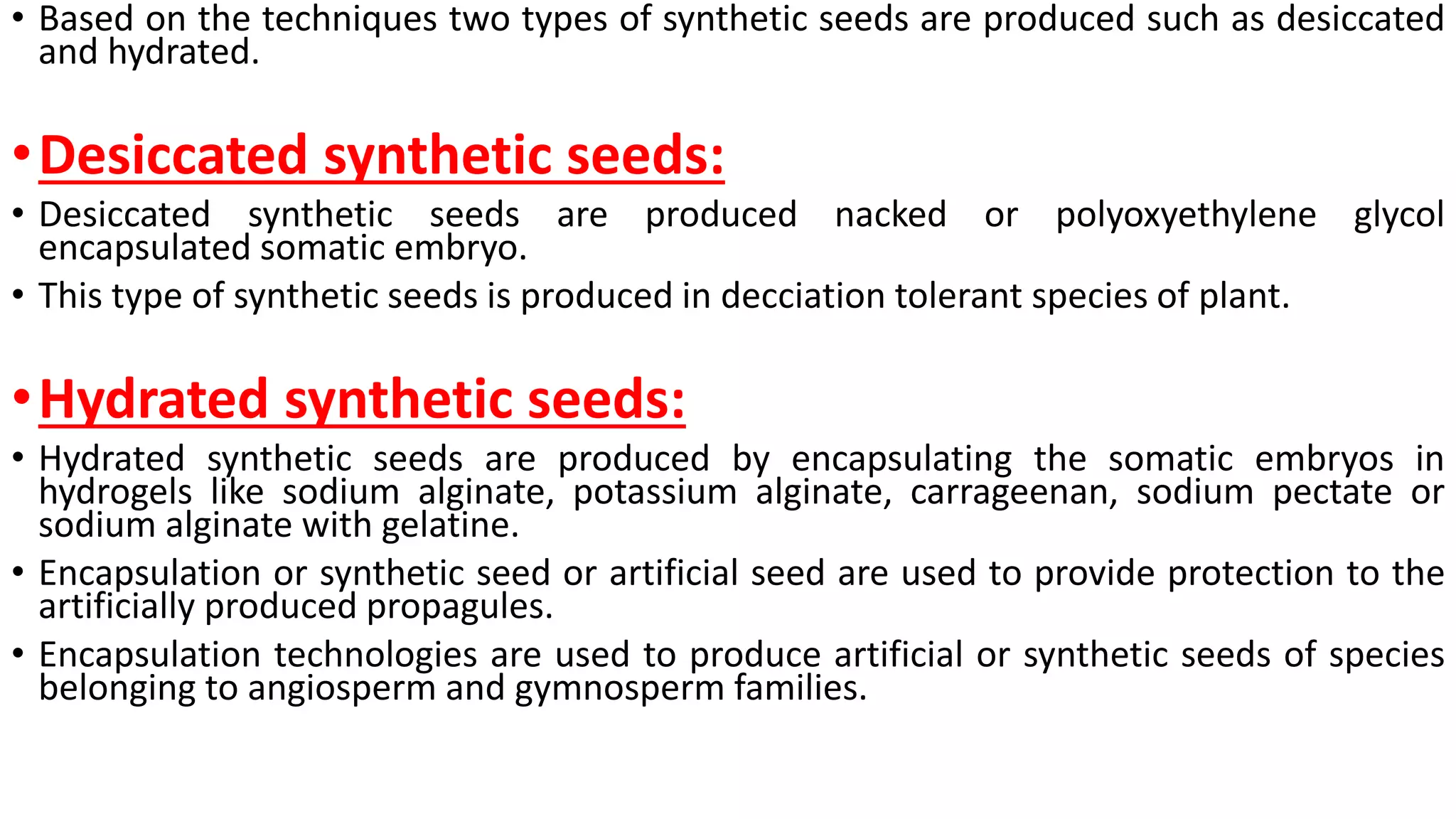
• Based on the techniques two types of synthetic seeds are produced such as desiccated
and hydrated.
•Desiccated synthetic seeds:
• Desiccated synthetic seeds are produced nacked or polyoxyethylene glycol
encapsulated somatic embryo.
• This type of synthetic seeds is produced in decciation tolerant species of plant.
•Hydrated synthetic seeds:
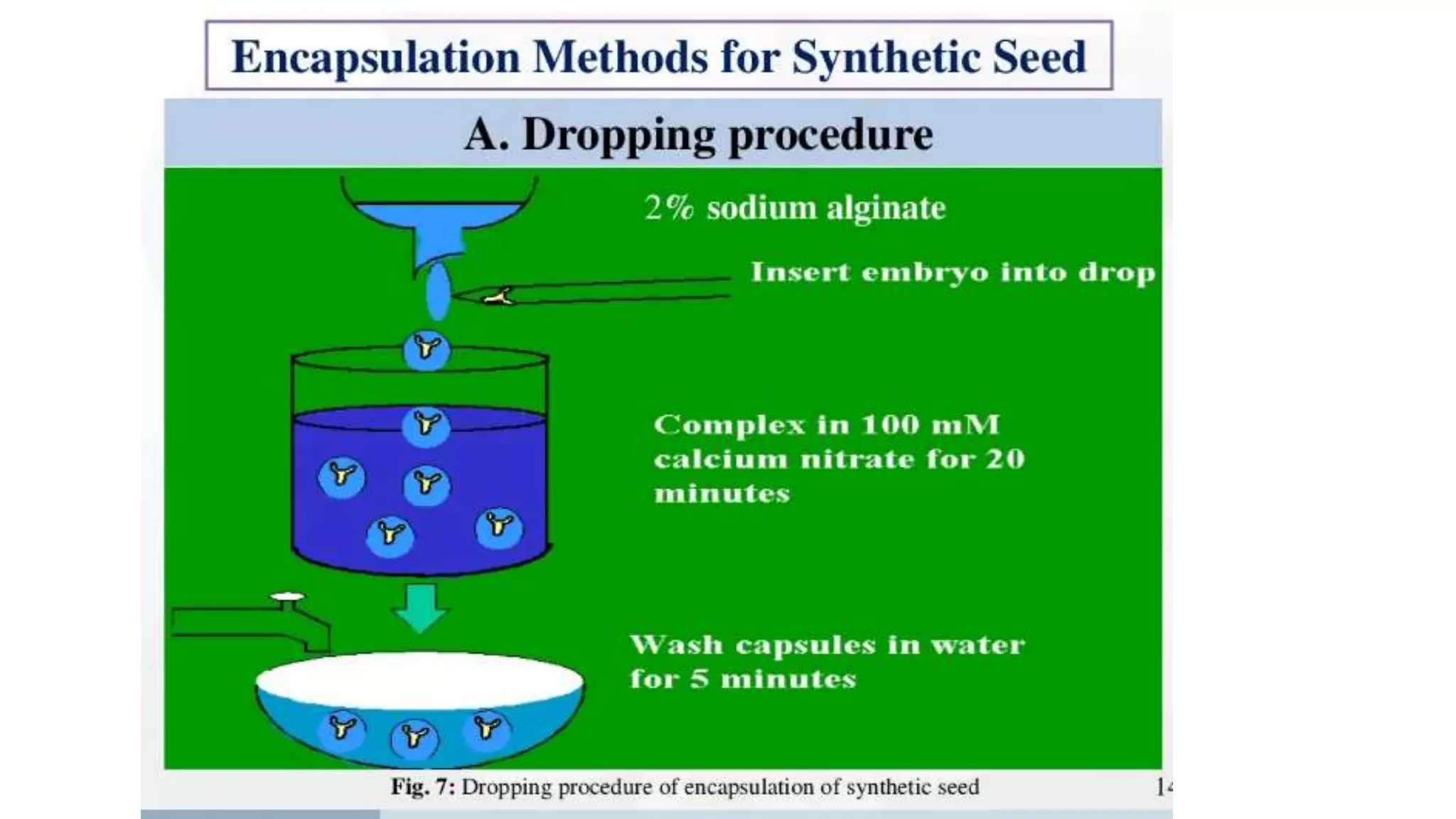
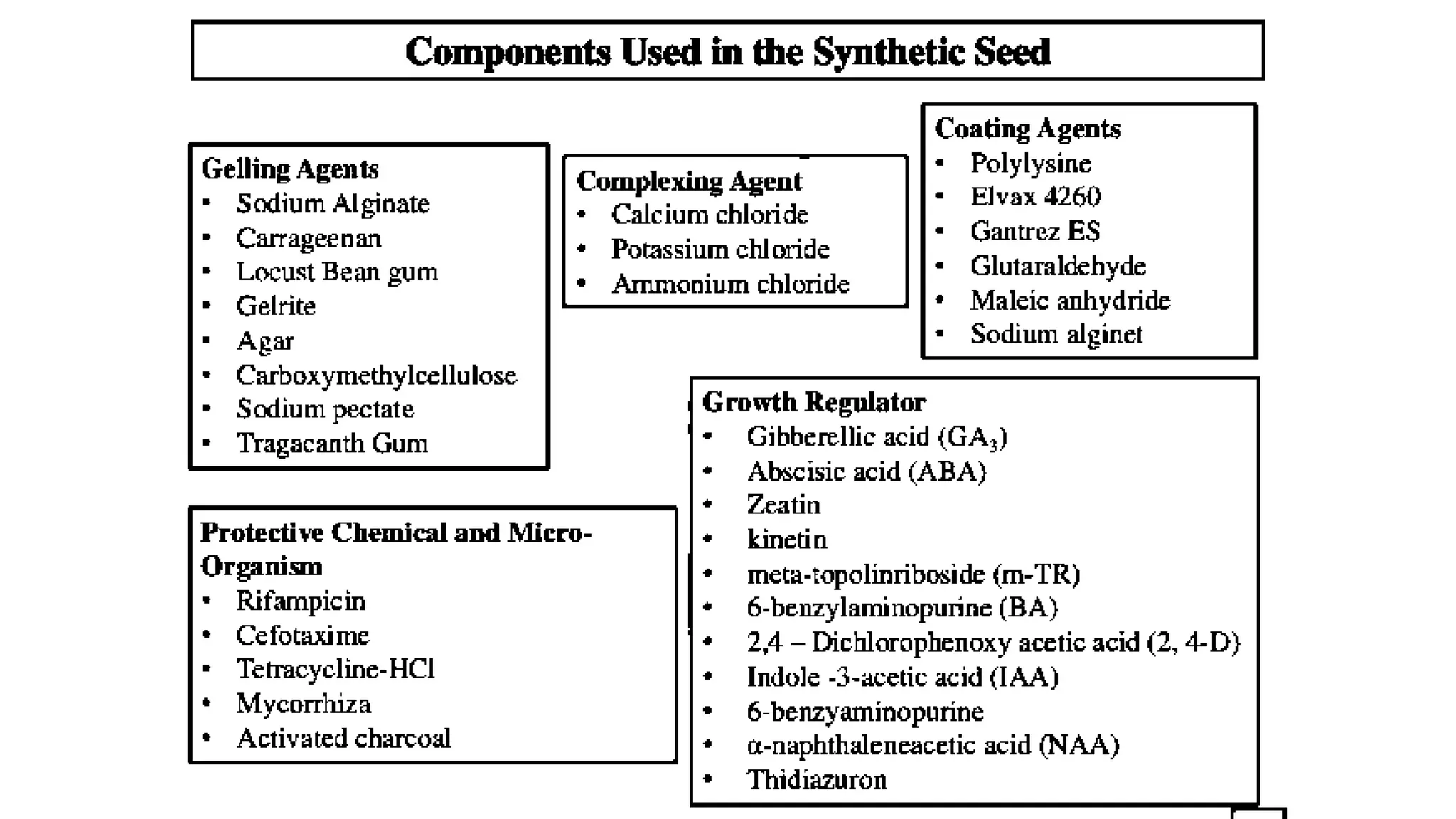
• Hydrated synthetic seeds are produced by encapsulating the somatic embryos in
hydrogels like sodium alginate, potassium alginate, carrageenan, sodium pectate or
sodium alginate with gelatine.
• Encapsulation or synthetic seed or artificial seed are used to provide protection to the
artificially produced propagules.
• Encapsulation technologies are used to produce artificial or synthetic seeds of species
belonging to angiosperm and gymnosperm families.
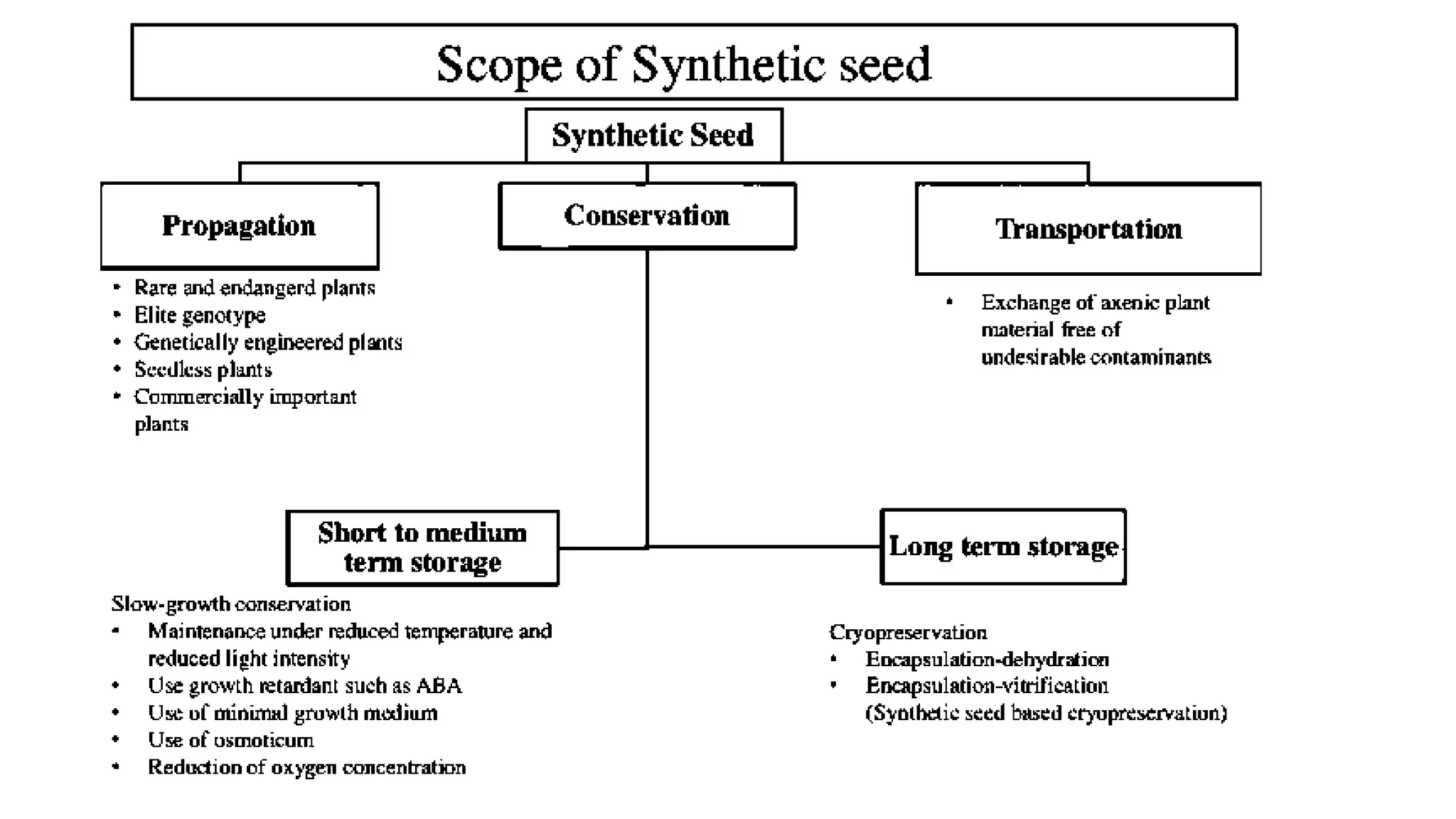
Applications of Synthetic Seeds:
Hybrid plants can be easily propagated using synthetic seed technology
Genetically modified plant or crops can be propagated using synthetic seed technology.
Endangered species can be propagated using synthetic seed technology.
Elite genotype can be preserved and propagated using artificial seed technology.
Synthetic seed production is cost effective when compared to traditional method.
Synthetic seeds can be directly used in fields
Genetic uniformity is maintained by using synthetic seed technology.
Synthetic seeds can be transported from one country to another without obligations
from quarantine department.
Cereals, fruits and medicinal plants can be studied anywhere in the world using
synthetic seeds.
Synthetic seed transportation is easy as these do not contain any disease causing
agents. As synthetic seeds are produced using sterile plant materials produced using
plant tissue culture techniques.
Synthetic seeds are small therefore they are easy to handle.
Synthetic seed encapsulation provides aseptic condition to the plant material or
explant, which is present inside the capsule.
While producing the synthetic seed encapsulation herbicides can be added to the
formulation, this herbicide will provide extra protection to the explants against
pests and diseases.
Synthetic seed plantation can be done by using the sowing farm machinery.
Synthetic seed crops are easy to maintain because of uniform genetic
constituent.
This technology improves the food production and also produces environment
friendly plantation.
Advantages of synthetic seeds
• This method is for large scale productions.
• It maintains genetic uniformity for a high number of generations. Most plant
tissue culture methods fail to maintain genetic uniformity for longer durations.
• According to literature, the costs of producing a plant using this technology is
low.
• It facilitates rapid multiplication of plants.
• One of the biggest merit of this method is direct delivery of plant parts
(protected with viable coating) to the field.
• These seeds have potential for short and medium term storage without losing
viability.
• As compared to plantlets, it is easy to handle and tranport synthetic seeds.
Disadvantages
• Somatic embryos have low survival rates for most plant species, which also limits the
value of synthetic seeds.
• There are not many protocols available to produce propagules from different plant
parts using plant tissue culture methods. Hence less useful material available for
producing synthetic seeds.
• In some cases, inefficient maturation of somatic embryos leads to poor germination and
hence poor growth and development.
• According to scientists, somatic embryos from some plants species are not capable of
germinating out of the capsule or coating. Hence, they are not able to form normal
plants rapidly.
• The concentration of coating material is also a limiting factor for producing synthetic
seeds. It should have nutrient supplementing materials for facilitating germination and
growth.
• When the shape of synthetic seeds is not matching the farm machinery then it is hard
to use them for transplantation. Hence, seeds should be transplantable.
• One of the major problems these seeds face is quick drying out of capsules. You need to
store them in a humid environment and coat them with hydrophobic materials to
prevent drying.
SYNTHETIC SEED.pptx

SYNTHETIC SEED.pptx

  • 1.
  • 2.
    Introduction: • Synthetic seedcan be defined as the artificial encapsulation of somatic embryo, shoot buds or aggregates of cell or any tissues which has the ability to form a plant in in-vitro or ex vivo condition. • Synthetic seeds can be stored for a long time in appropriate condition. • Synthetic seed production and used technology is rapidly growing branch of seed biotechnology. • Toshio Murashige in 1970 first coined the term synthetic seed. • Synthetic seed production requires the large scale production of viable plant material in lab condition using invitro culture system.
  • 3.
    What is seed? •Botanically- Seed is a ripened ovule • Genetically- Connecting link between two generations for transfer of traits • Agriculturally- Any plant part with regeneration capacity What is synthetic seed? • Synthetic seeds are artificially encapsulated somatic embryos or other vegetative parts such as shoot buds, cell aggregates, auxiliary buds, or any other micropropagules which can be sown as a seed and converted into a plant under in vitro or in vivo conditions
  • 7.
    Production of SyntheticSeed: • Explant is selected from choice of plant • In a laboratory using tissue culture techniques callus is induced in the explants. • Using tissue culture techniques somatic embryo is induced in the callus. • Somatic embryo are proliferated • Histodifferentiation and maturation of somatic embryo • Desiccation and tolerance induction using tissue culture techniques. • Encapsulation of somatic embryo • Invitro germination or transported to field for germination.
  • 12.
    Need for Syntheticseed production technology • Characteristics of Clonal Propagation Systems • Micropropagation • Low volume, small scale propagation method • Maintains genetic uniformity of plants • Acclimatisation of plantlets required prior to field planting • High cost per plantlet • Relatively low multiplication rate • Greenhouse cuttings • Rooting of plantlets required prior to field planting • Multiplication rate limited by mother plant size • Artificial seeds • High volume, large scale propagation method • Direct delivery of propagules to the field, thus eliminating transplants • Lower cost per plantlet • Rapid multiplication of plants.
  • 14.
    • Based onthe techniques two types of synthetic seeds are produced such as desiccated and hydrated. •Desiccated synthetic seeds: • Desiccated synthetic seeds are produced nacked or polyoxyethylene glycol encapsulated somatic embryo. • This type of synthetic seeds is produced in decciation tolerant species of plant. •Hydrated synthetic seeds: • Hydrated synthetic seeds are produced by encapsulating the somatic embryos in hydrogels like sodium alginate, potassium alginate, carrageenan, sodium pectate or sodium alginate with gelatine. • Encapsulation or synthetic seed or artificial seed are used to provide protection to the artificially produced propagules. • Encapsulation technologies are used to produce artificial or synthetic seeds of species belonging to angiosperm and gymnosperm families.
  • 19.
    Applications of SyntheticSeeds: Hybrid plants can be easily propagated using synthetic seed technology Genetically modified plant or crops can be propagated using synthetic seed technology. Endangered species can be propagated using synthetic seed technology. Elite genotype can be preserved and propagated using artificial seed technology. Synthetic seed production is cost effective when compared to traditional method. Synthetic seeds can be directly used in fields Genetic uniformity is maintained by using synthetic seed technology. Synthetic seeds can be transported from one country to another without obligations from quarantine department. Cereals, fruits and medicinal plants can be studied anywhere in the world using synthetic seeds. Synthetic seed transportation is easy as these do not contain any disease causing agents. As synthetic seeds are produced using sterile plant materials produced using plant tissue culture techniques.
  • 20.
    Synthetic seeds aresmall therefore they are easy to handle. Synthetic seed encapsulation provides aseptic condition to the plant material or explant, which is present inside the capsule. While producing the synthetic seed encapsulation herbicides can be added to the formulation, this herbicide will provide extra protection to the explants against pests and diseases. Synthetic seed plantation can be done by using the sowing farm machinery. Synthetic seed crops are easy to maintain because of uniform genetic constituent. This technology improves the food production and also produces environment friendly plantation.
  • 21.
    Advantages of syntheticseeds • This method is for large scale productions. • It maintains genetic uniformity for a high number of generations. Most plant tissue culture methods fail to maintain genetic uniformity for longer durations. • According to literature, the costs of producing a plant using this technology is low. • It facilitates rapid multiplication of plants. • One of the biggest merit of this method is direct delivery of plant parts (protected with viable coating) to the field. • These seeds have potential for short and medium term storage without losing viability. • As compared to plantlets, it is easy to handle and tranport synthetic seeds.
  • 22.
    Disadvantages • Somatic embryoshave low survival rates for most plant species, which also limits the value of synthetic seeds. • There are not many protocols available to produce propagules from different plant parts using plant tissue culture methods. Hence less useful material available for producing synthetic seeds. • In some cases, inefficient maturation of somatic embryos leads to poor germination and hence poor growth and development. • According to scientists, somatic embryos from some plants species are not capable of germinating out of the capsule or coating. Hence, they are not able to form normal plants rapidly. • The concentration of coating material is also a limiting factor for producing synthetic seeds. It should have nutrient supplementing materials for facilitating germination and growth. • When the shape of synthetic seeds is not matching the farm machinery then it is hard to use them for transplantation. Hence, seeds should be transplantable. • One of the major problems these seeds face is quick drying out of capsules. You need to store them in a humid environment and coat them with hydrophobic materials to prevent drying.