Downloaded 19 times
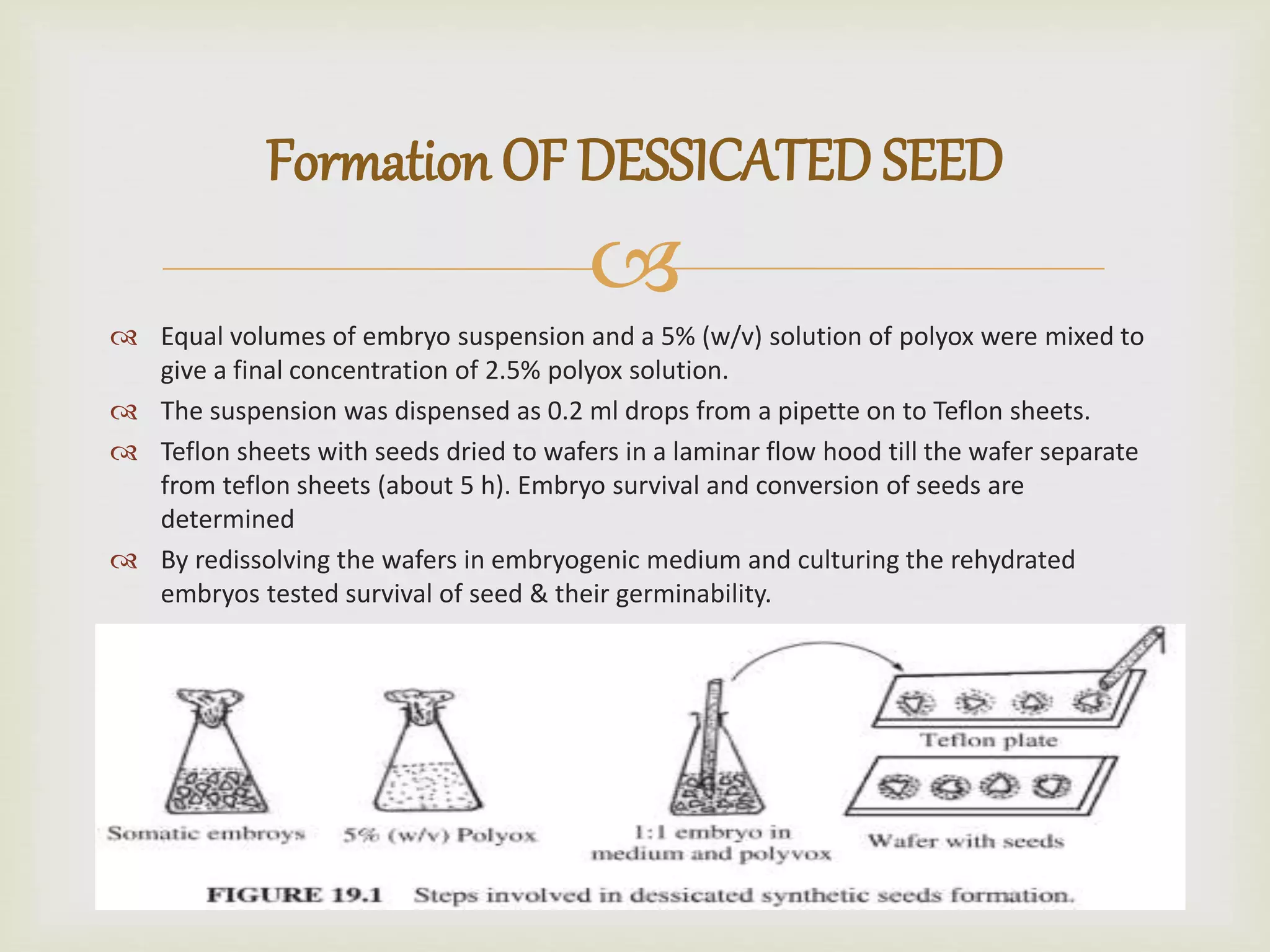
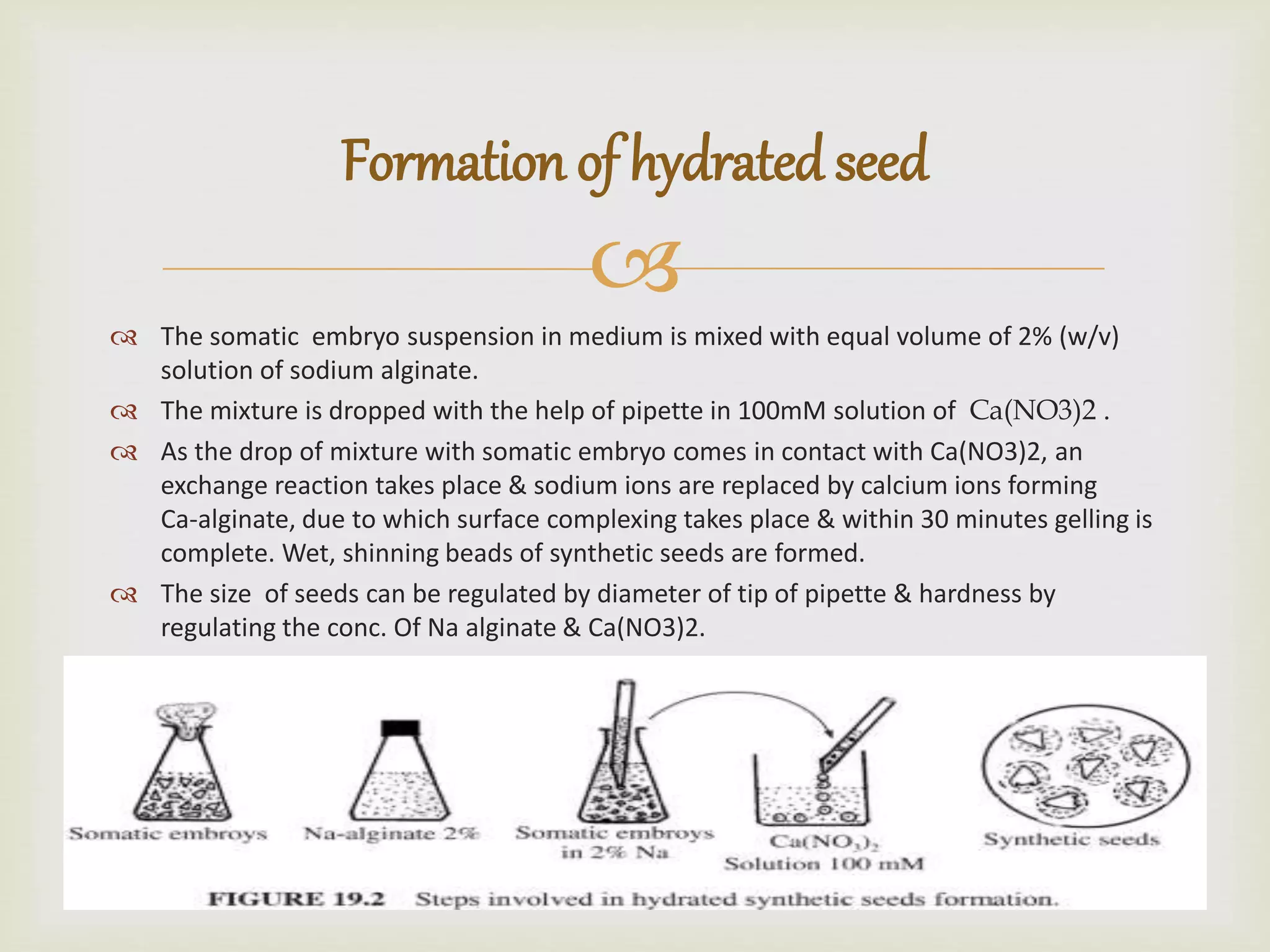




Artificial seeds, also known as synthetic seeds, involve the encapsulation of somatic embryos, shoot buds, or cell aggregates to propagate plants in vitro or ex vivo. They were first introduced in the 1970s and provide advantages like large-scale and low-cost propagation while maintaining genetic uniformity. Successful artificial seeds require an embryo-protective coating containing nutrients to support germination and growth. The coating material, embryo maturity, and encapsulation process can produce either desiccated or hydrated synthetic seeds. Common steps in artificial seed production involve establishing embryogenesis, encapsulating mature embryos, and field planting.


