Symbolic
Convergence
  Theory
 Meaghan
Widenhouse
Do you think that just because you don’t know these
      people, you can’t connect with them?
Did you
say yes?
How?! You ask...


Due to Symbolic Convergence
       Theory!!!(SCT)
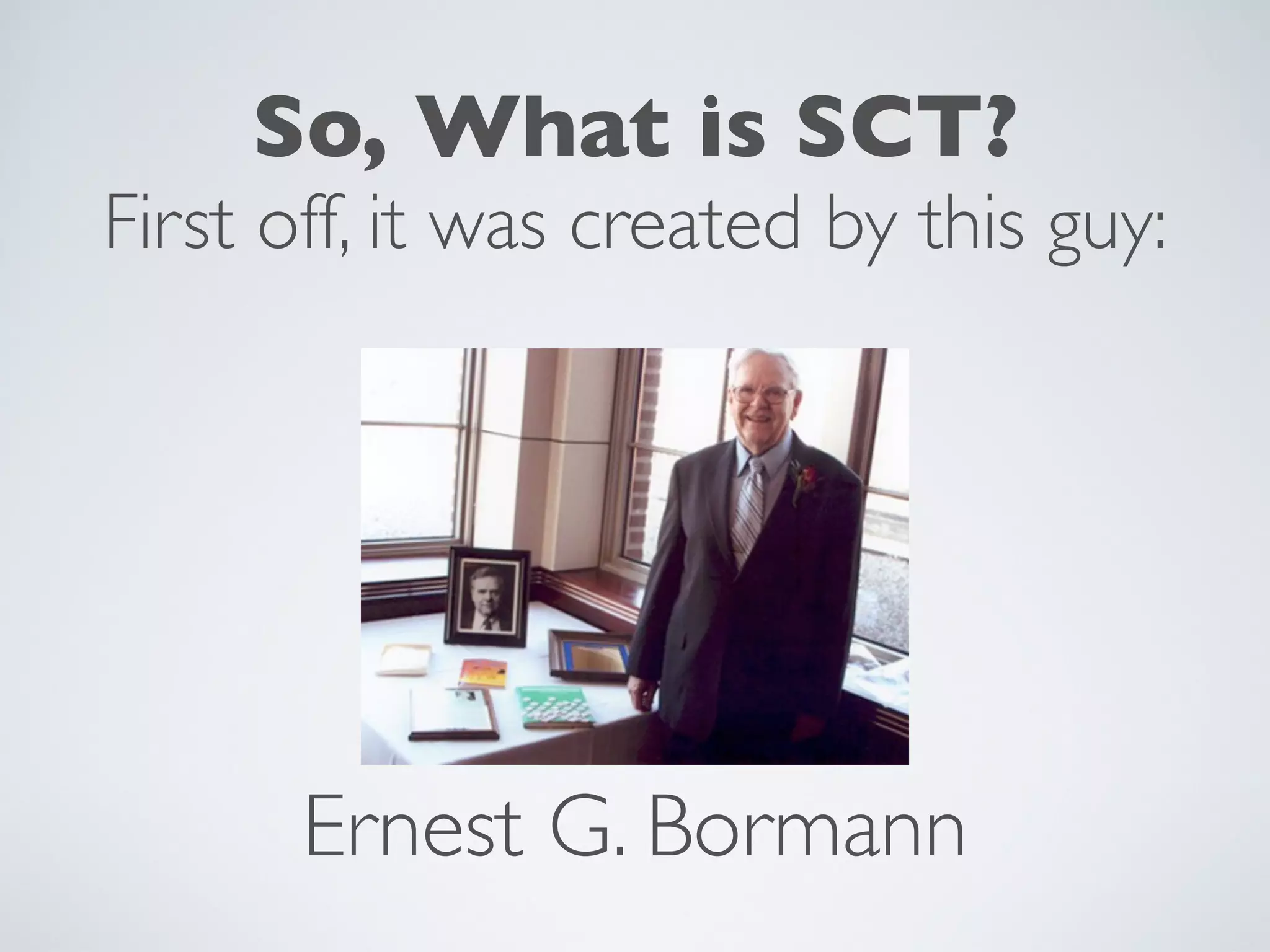
So, What is SCT?
First off, it was created by this guy:


       Ernest G. Bormann
*my choice


 Bormann was inspired to create SCT by studies of
   group behavior conducted by freudian scholar
                   Robert Bales
What is the definition?

  In a group setting, there are shared emotions,
 motives, and meanings within the group, which
can turn into what are known as “fantasy chains”
          or “dramatizations of events”
Confused???


How about an example...
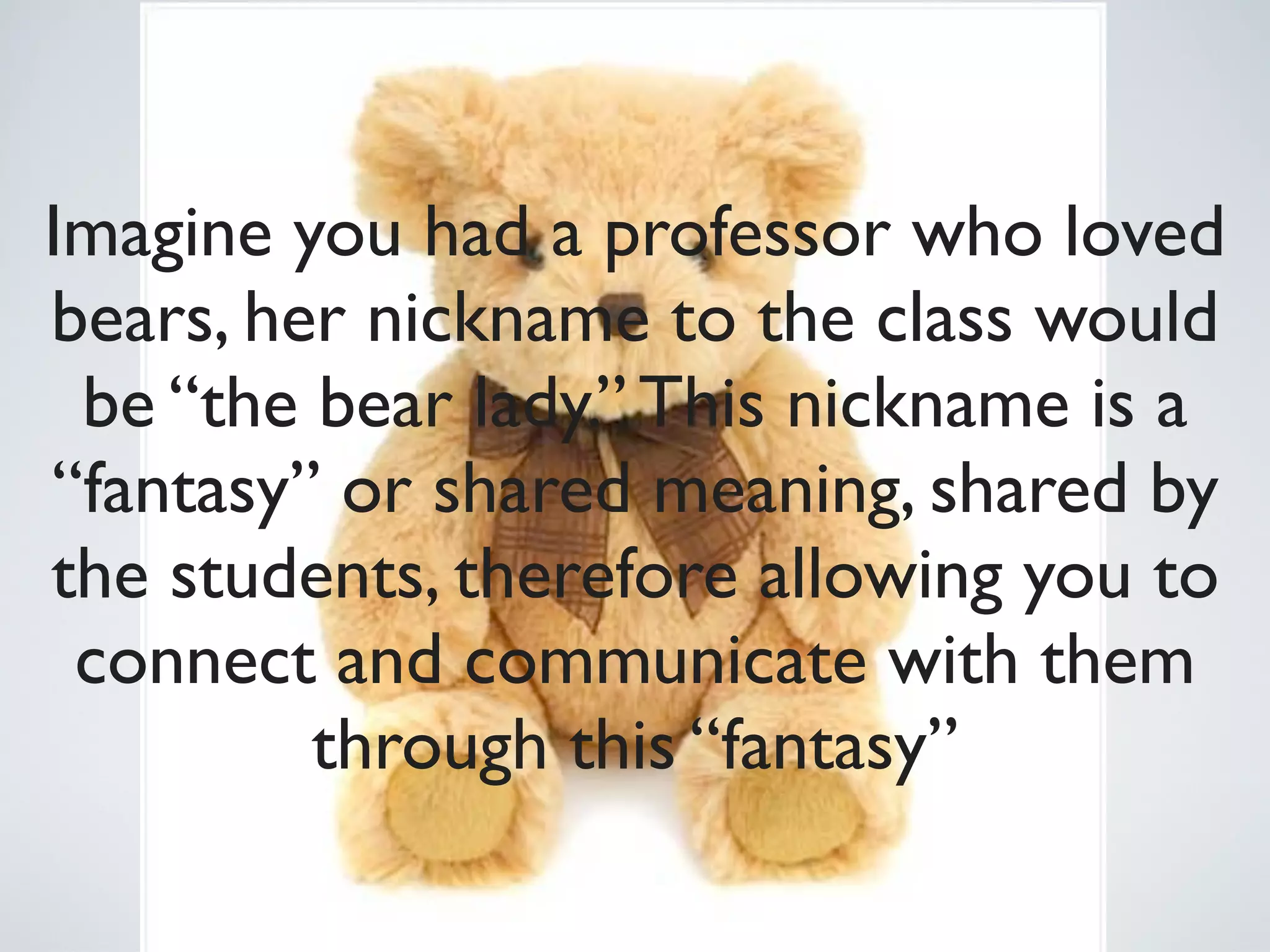
Imagine you had a professor who loved
bears, her nickname to the class would
 be “the bear lady.” This nickname is a
“fantasy” or shared meaning, shared by
the students, therefore allowing you to
 connect and communicate with them
         through this “fantasy”
What’s the point?


    Everyone in a group shares some kind of
meaning or commonality with each other, which
then turns into a “fantasy” and allows the group
of people to connect with each other through it
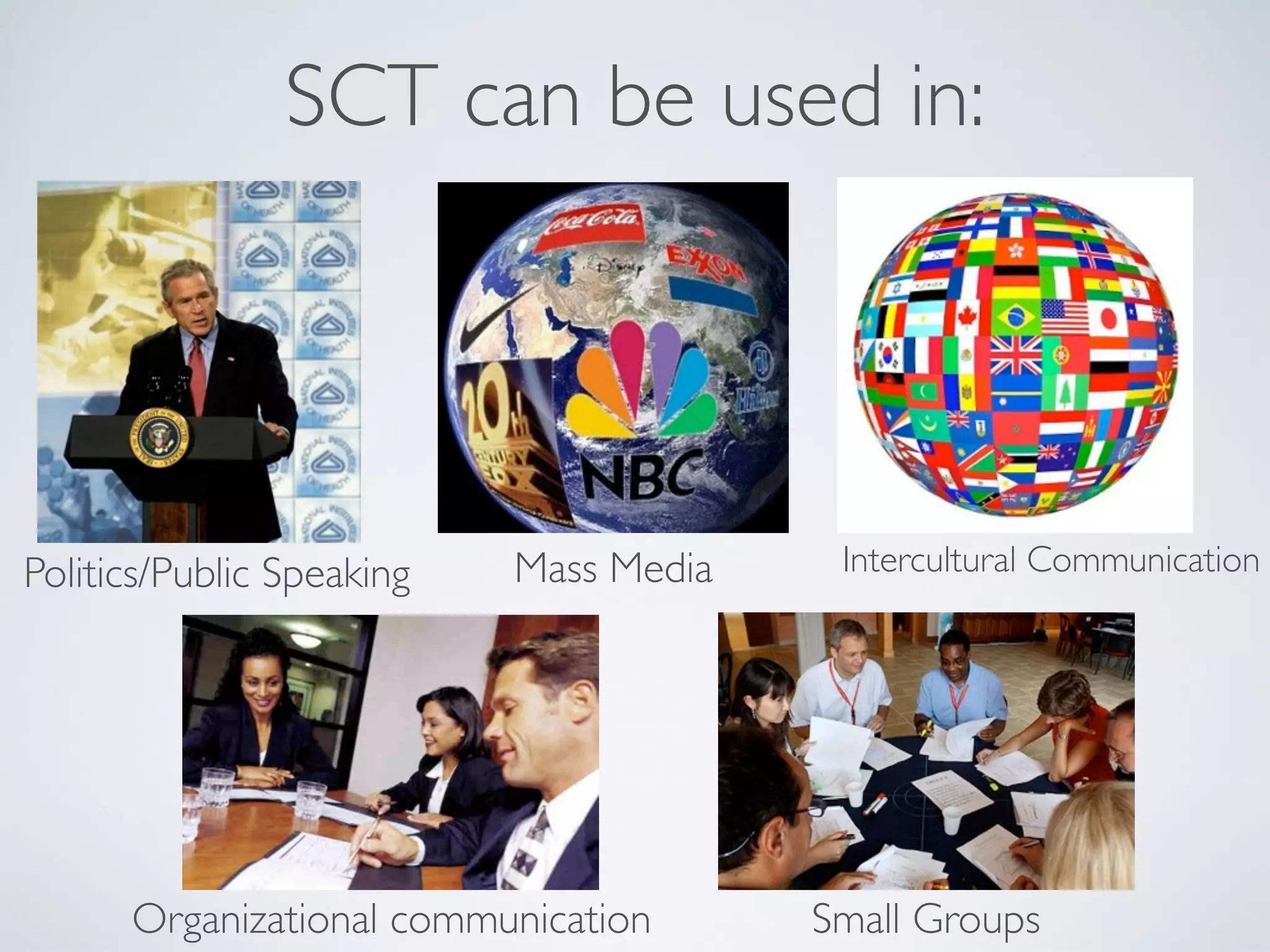
SCT can be used in:


Politics/Public Speaking   Mass Media    Intercultural Communication


      Organizational communication      Small Groups
What do critics say?
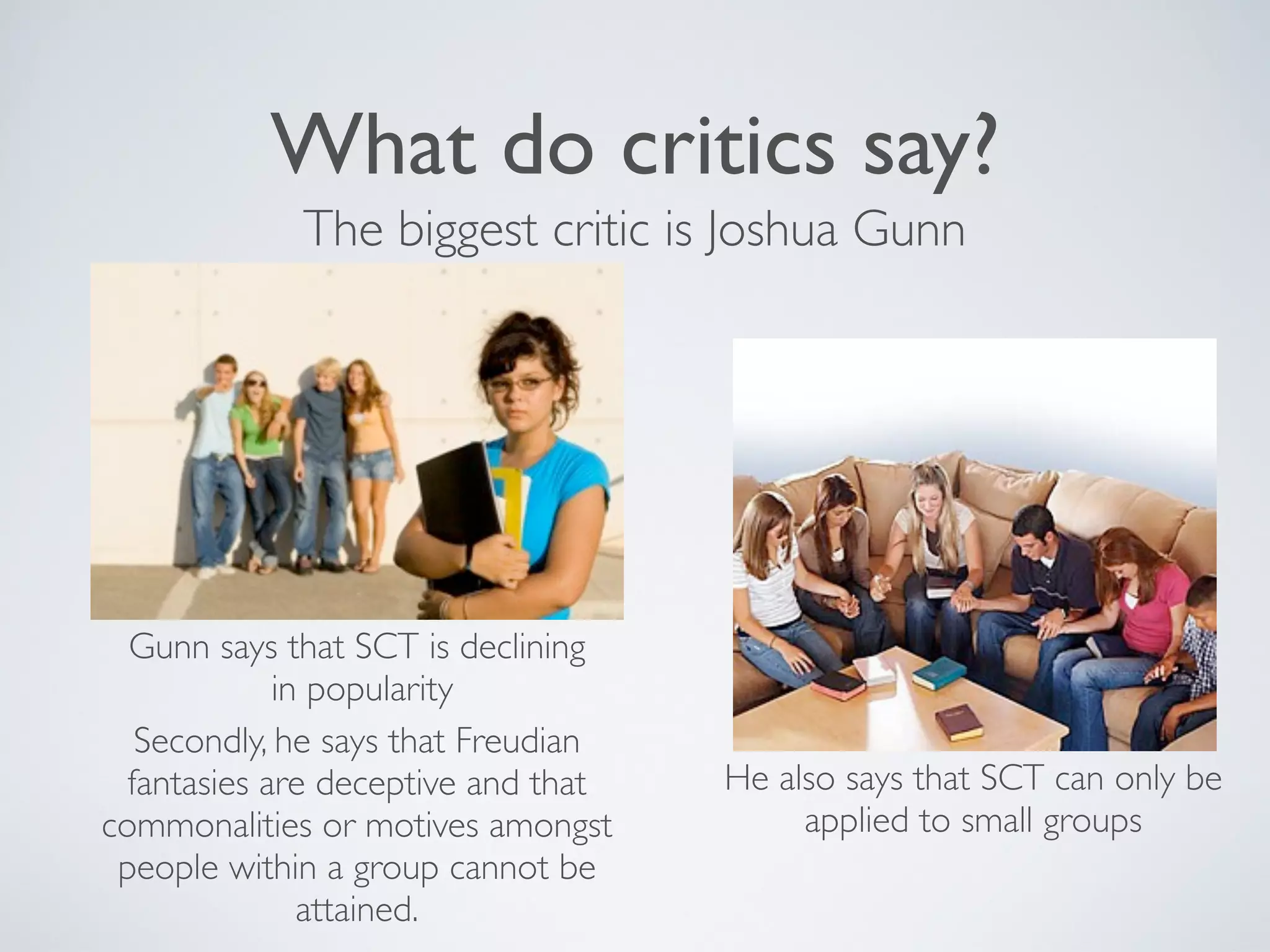
             The biggest critic is Joshua Gunn


  Gunn says that SCT is declining
             in popularity
   Secondly, he says that Freudian
  fantasies are deceptive and that   He also says that SCT can only be
commonalities or motives amongst          applied to small groups
 people within a group cannot be
               attained.
I personally do not agree with Gunn, I support
                     SCT


   It is still a relevant and   It applies to larger groups. A book published by
     popular theory with                Brad Jackson is based on business
     over 500 books and         management, which proves SCT can be applied
     articles based on it            to larger groups, such as organizations

I also believe that SCT is not deceptive because SCT researchers have
conducted large quantitative studies, showing the presence of meaning,
          emotion, value, and motive for action in fantasy form
Symbolic convergence theory

Symbolic convergence theory

  • 1.
    Symbolic Convergence Theory Meaghan Widenhouse
  • 2.
    Do you thinkthat just because you don’t know these people, you can’t connect with them?
  • 3.
  • 5.
    How?! You ask... Dueto Symbolic Convergence Theory!!!(SCT)
  • 6.
    So, What isSCT? First off, it was created by this guy: Ernest G. Bormann
  • 7.
    *my choice Bormannwas inspired to create SCT by studies of group behavior conducted by freudian scholar Robert Bales
  • 8.
    What is thedefinition? In a group setting, there are shared emotions, motives, and meanings within the group, which can turn into what are known as “fantasy chains” or “dramatizations of events”
  • 9.
  • 10.
    Imagine you hada professor who loved bears, her nickname to the class would be “the bear lady.” This nickname is a “fantasy” or shared meaning, shared by the students, therefore allowing you to connect and communicate with them through this “fantasy”
  • 11.
    What’s the point? Everyone in a group shares some kind of meaning or commonality with each other, which then turns into a “fantasy” and allows the group of people to connect with each other through it
  • 12.
    SCT can beused in: Politics/Public Speaking Mass Media Intercultural Communication Organizational communication Small Groups
  • 13.
    What do criticssay? The biggest critic is Joshua Gunn Gunn says that SCT is declining in popularity Secondly, he says that Freudian fantasies are deceptive and that He also says that SCT can only be commonalities or motives amongst applied to small groups people within a group cannot be attained.
  • 14.
    I personally donot agree with Gunn, I support SCT It is still a relevant and It applies to larger groups. A book published by popular theory with Brad Jackson is based on business over 500 books and management, which proves SCT can be applied articles based on it to larger groups, such as organizations I also believe that SCT is not deceptive because SCT researchers have conducted large quantitative studies, showing the presence of meaning, emotion, value, and motive for action in fantasy form