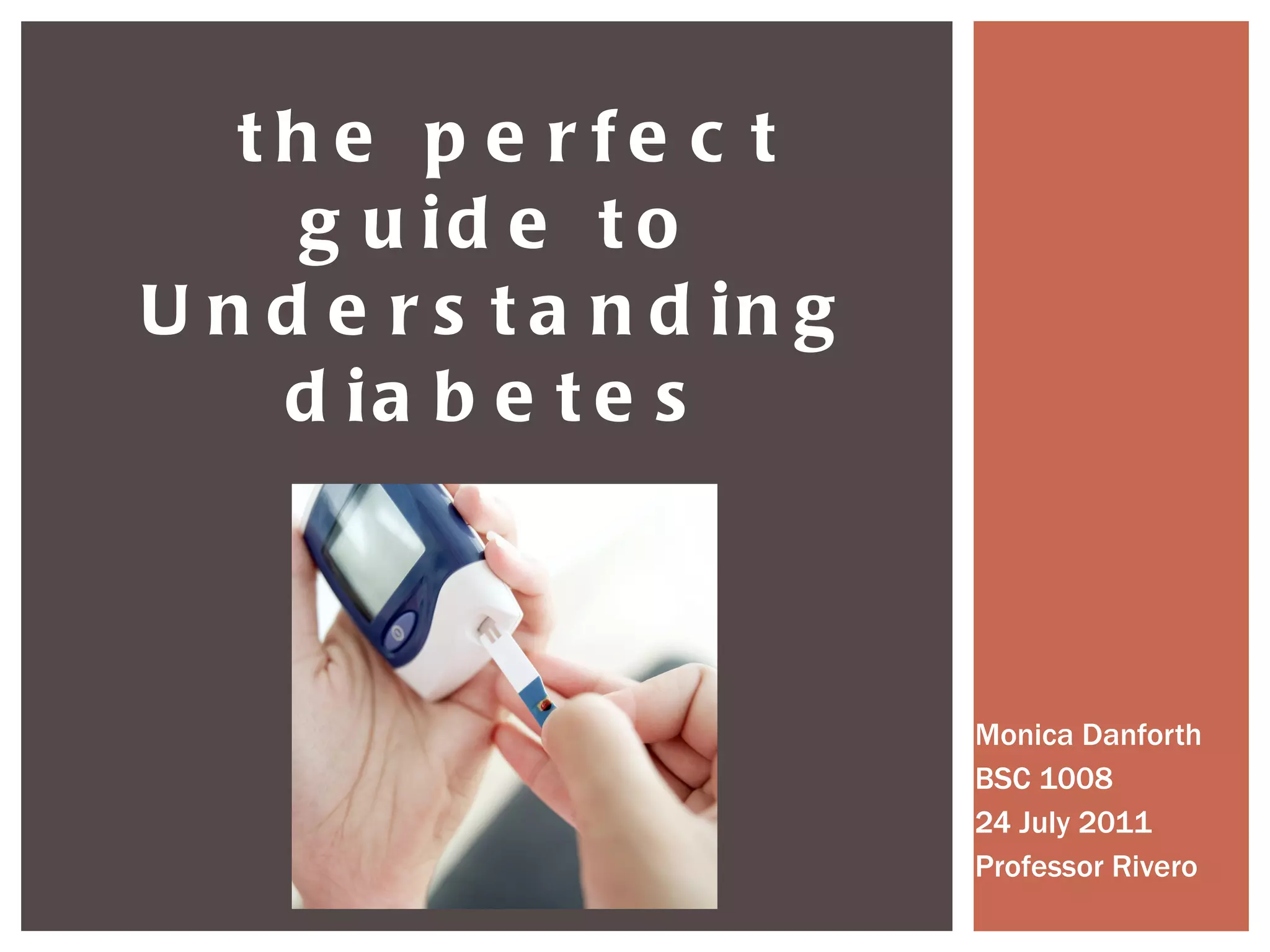
Monica Danforth BSC 1008 24 July 2011 Professor Rivero the perfect guide to Understanding diabetes
What is Diabetes? What are the statistics? What are the different types of Diabetes? What are the symptoms? How does it transmit? How do I get tested for diabetes? How can I prevent or control diabetes? What parts of the body does diabetes affect? Can diabetes be cured? How can I educate myself? Diabetes: Things to consider…
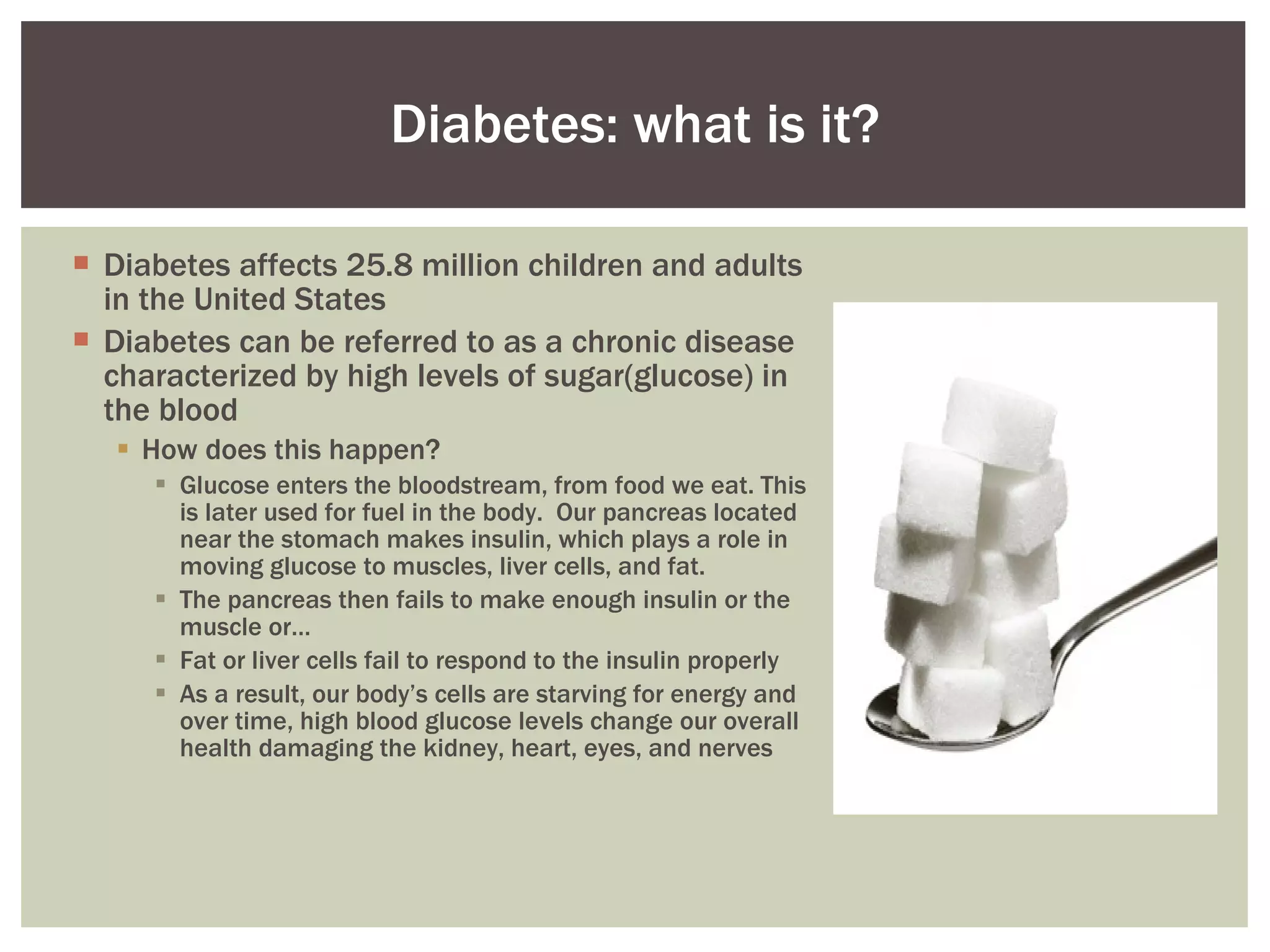
Diabetes affects 25.8 million children and adults in the United States  Diabetes can be referred to as a chronic disease characterized by high levels of sugar(glucose) in the blood  How does this happen? Glucose enters the bloodstream, from food we eat. This is later used for fuel in the body.  Our pancreas located near the stomach makes insulin, which plays a role in moving glucose to muscles, liver cells, and fat.  The pancreas then fails to make enough insulin or the muscle or… Fat or liver cells fail to respond to the insulin properly  As a result, our body’s cells are starving for energy and over time, high blood glucose levels change our overall health damaging the kidney, heart, eyes, and nerves Diabetes: what is it?
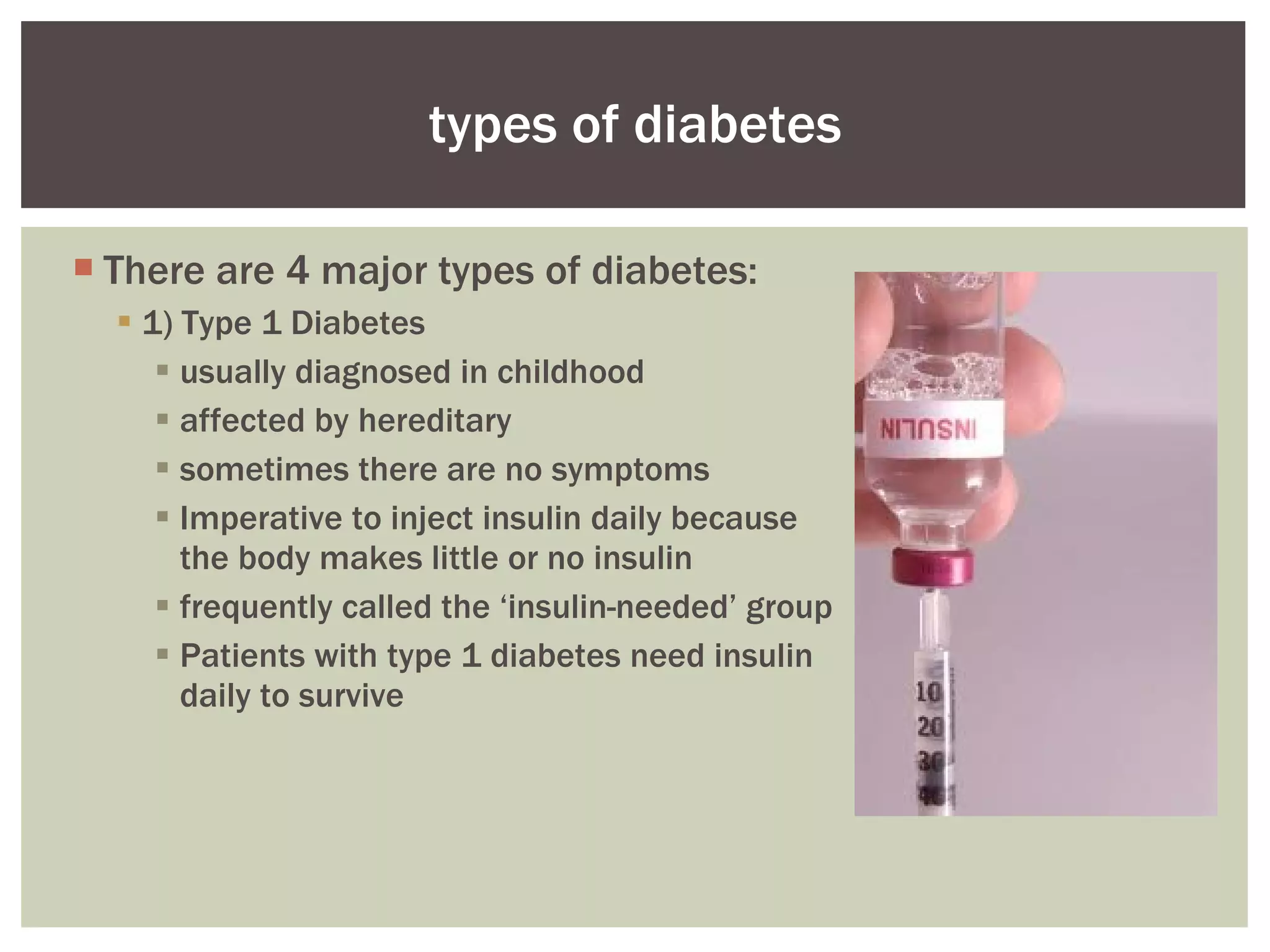
There are 4 major types of diabetes: 1) Type 1 Diabetes usually diagnosed in childhood affected by hereditary sometimes there are no symptoms  Imperative to inject insulin daily because the body makes little or no insulin frequently called the ‘insulin-needed’ group Patients with type 1 diabetes need insulin daily to survive  types of diabetes
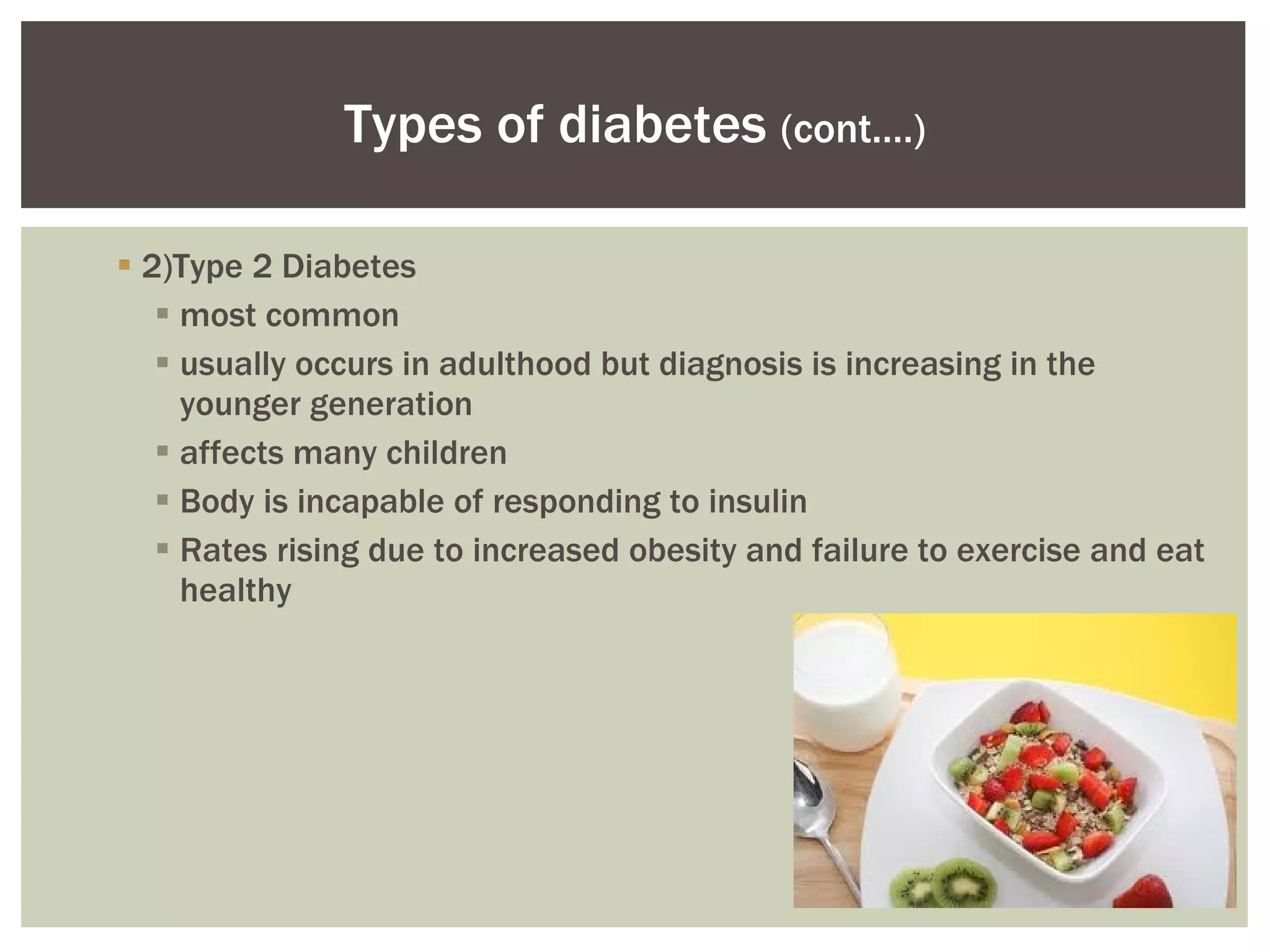
2)Type 2 Diabetes most common usually occurs in adulthood but diagnosis is increasing in the younger generation  affects many children Body is incapable of responding to insulin  Rates rising due to increased obesity and failure to exercise and eat healthy Types of diabetes  (cont.…)
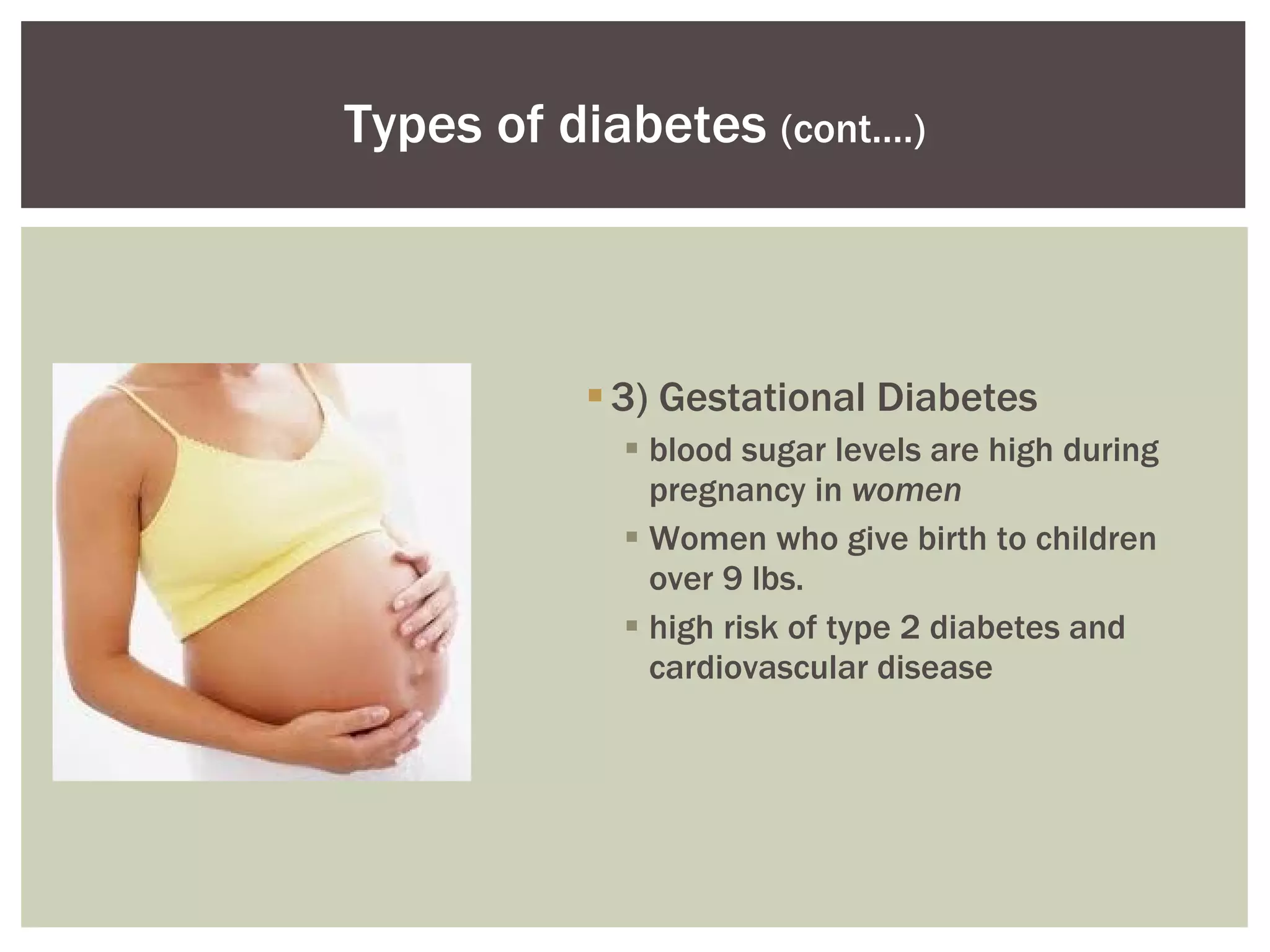
3) Gestational Diabetes  blood sugar levels are high during pregnancy in  women Women who give birth to children over 9 lbs. high risk of type 2 diabetes and cardiovascular disease  Types of diabetes  (cont.…)
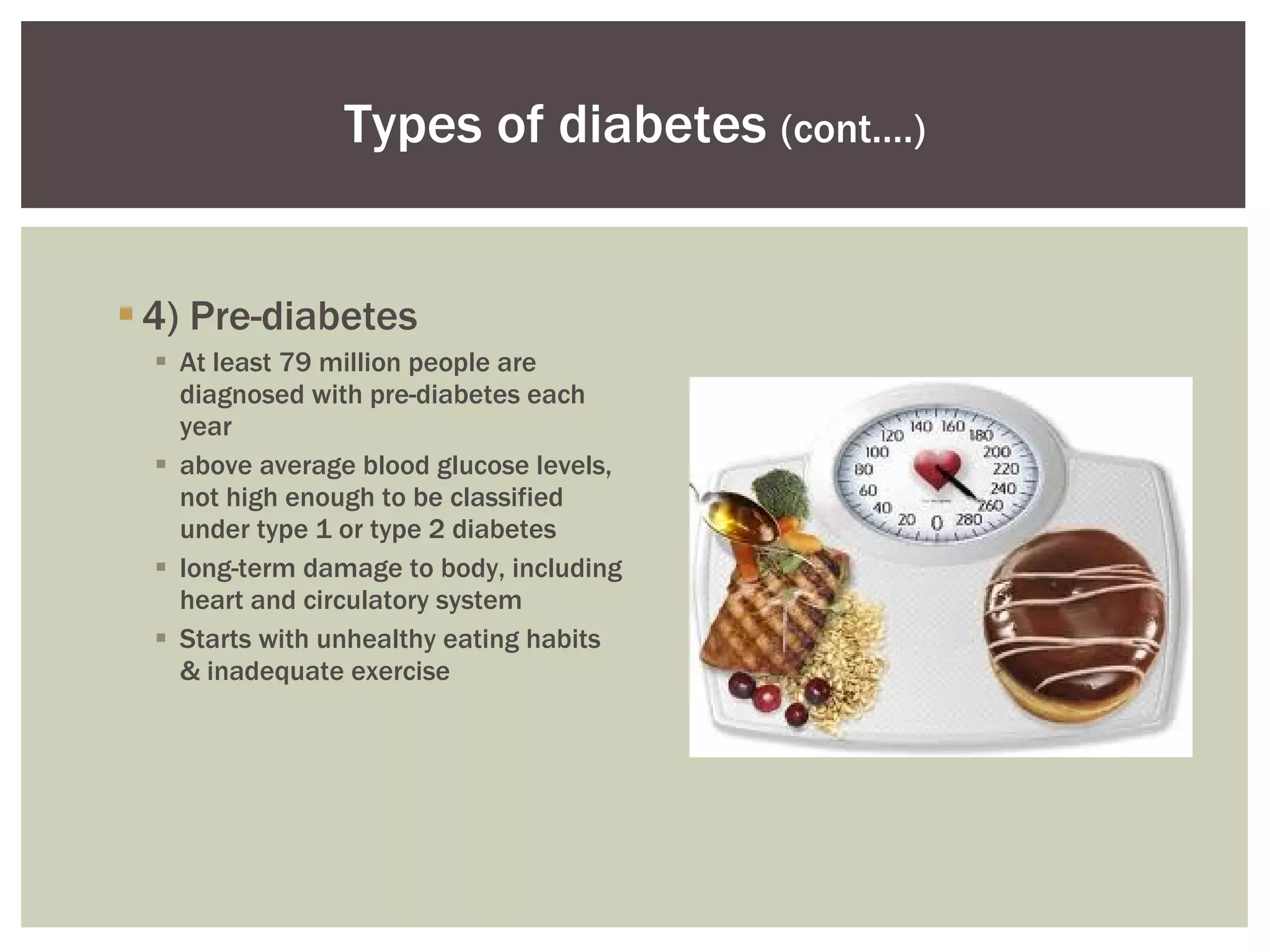
4) Pre-diabetes At least 79 million people are diagnosed with pre-diabetes each year above average blood glucose levels, not high enough to be classified under type 1 or type 2 diabetes long-term damage to body, including heart and circulatory system  Starts with unhealthy eating habits & inadequate exercise Types of diabetes  (cont.…)
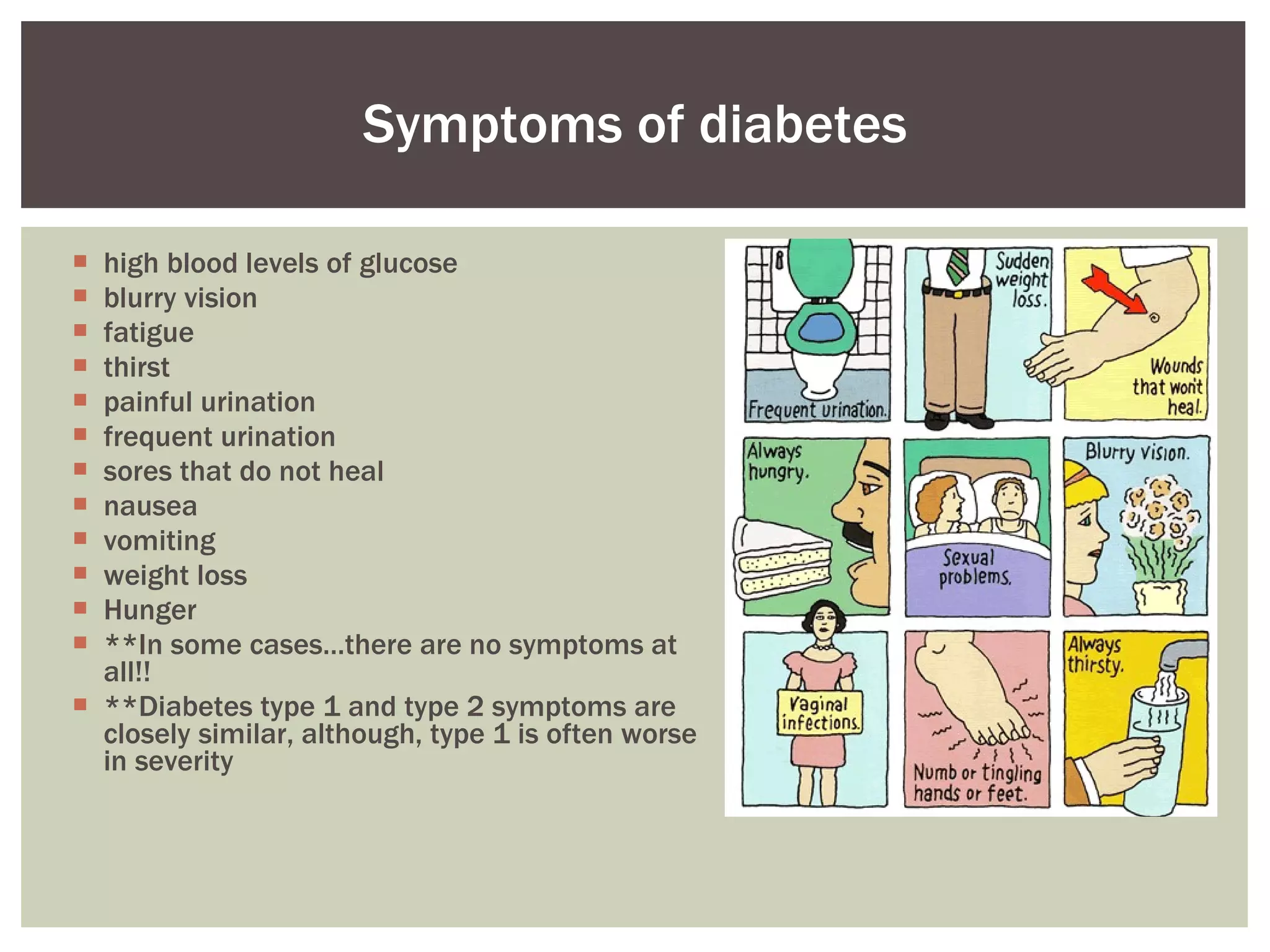
high blood levels of glucose  blurry vision fatigue thirst painful urination  frequent urination  sores that do not heal nausea vomiting  weight loss Hunger **In some cases…there are no symptoms at all!! **Diabetes type 1 and type 2 symptoms are closely similar, although, type 1 is often worse in severity Symptoms of diabetes
Genetically (type 1 diabetes, pre-diabetes, gestational) Can develop due to poor diet & inadequate exercise  (pre-diabetes, type 2 diabetes, gestational diabetes) Develops due to following factors Overweight High blood pressure High cholesterol Family history of diabetes African-American, Asian-American, Latino, Hispanic-American, Native American ethnicity Family history of gestational diabetes How does diabetes transmit?
Two tests doctors use to diagnose diabetes and pre-diabetes: 1) FPG (Fasting Plasma Glucose Test) patient must fast for eight hours doctor draws blood doctor will mix blood with other liquids to determine the amount of sugar or glucose in the blood this is measured in mg/dL blood glucose range for pre-diabetics will be in the 100-125 mg/dL range. type 2 diabetes will have blood sugar results in the range of 126 mg/dL and above these levels can increase the risk of heart disease and stroke  2) OGTT (Oral Glucose Tolerance Test) doctor measures how well your body reacts to average dose of sugar patient will be drawn blood two hours before and after he/she drinks pre-mixed beverage with the sugar blood glucose levels are measured to see how the body reacted  Blood glucose range for pre-diabetics will be between 140-199 mg/dL. For those with type 2 diabetes, the range will start at 200 mg/dL and continue to peak  Testing for diabetes
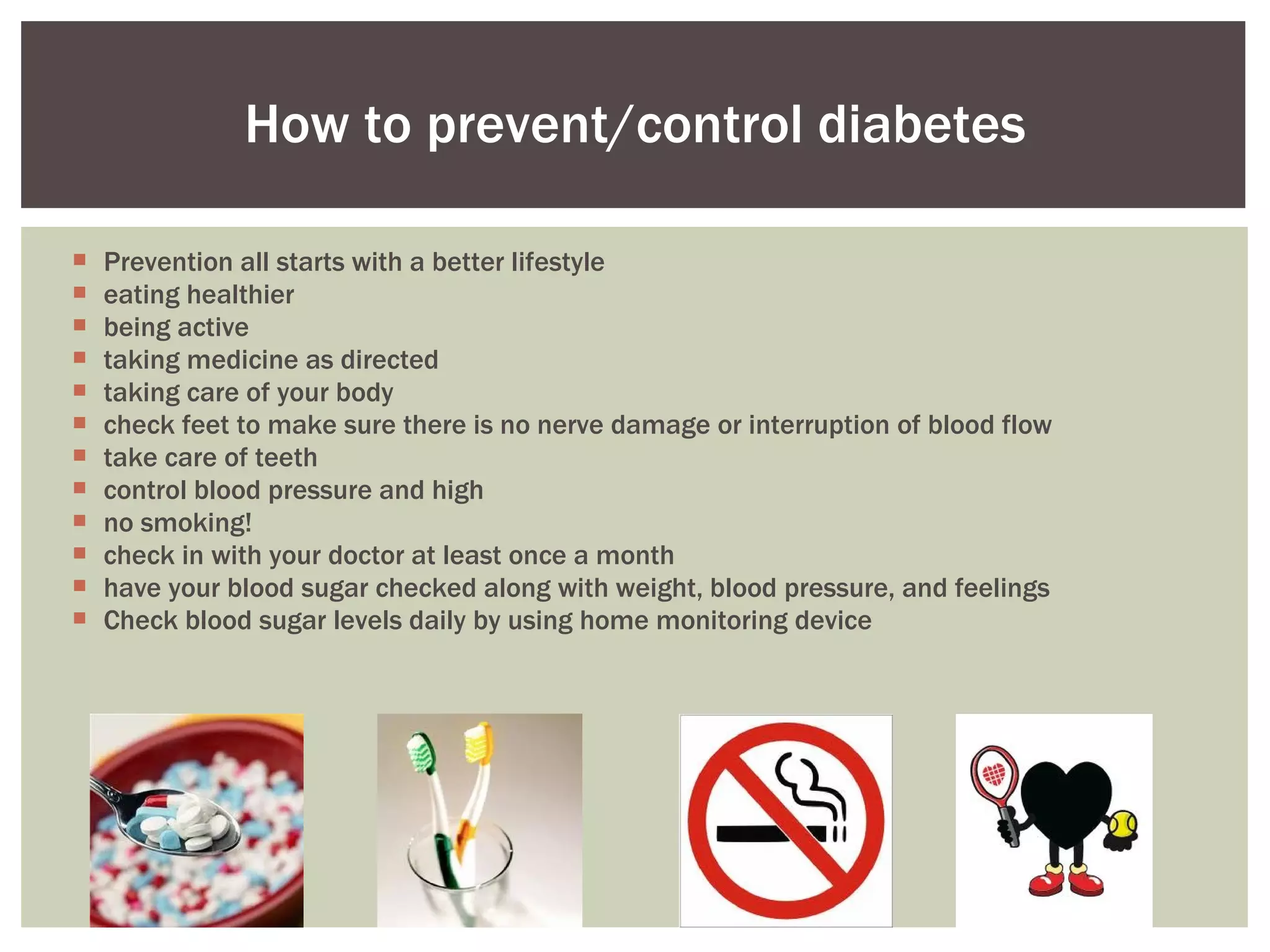
Prevention all starts with a better lifestyle  eating healthier being active taking medicine as directed taking care of your body check feet to make sure there is no nerve damage or interruption of blood flow  take care of teeth control blood pressure and high  no smoking!  check in with your doctor at least once a month  have your blood sugar checked along with weight, blood pressure, and feelings Check blood sugar levels daily by using home monitoring device How to prevent/control diabetes
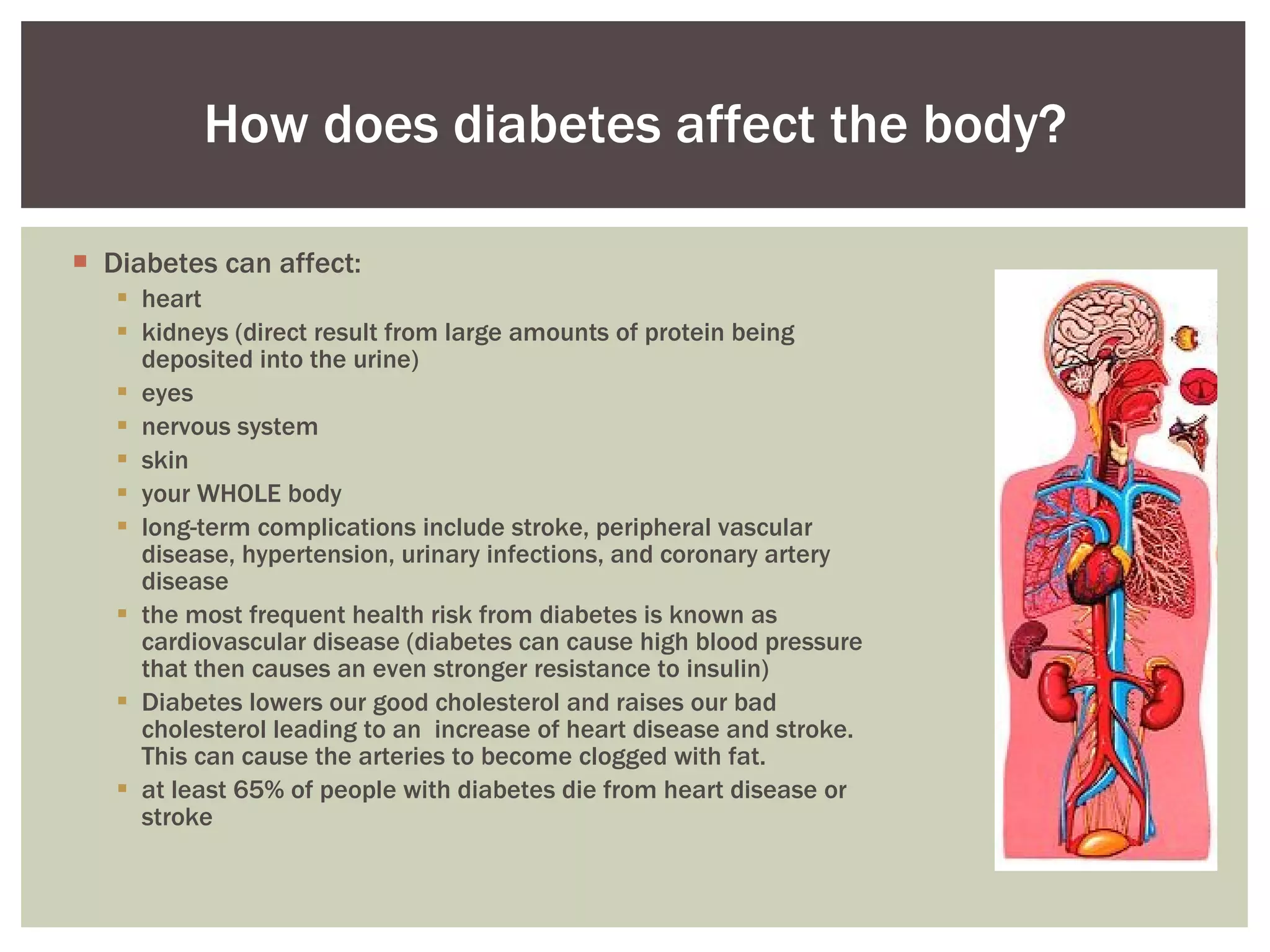
Diabetes can affect: heart kidneys (direct result from large amounts of protein being deposited into the urine)  eyes nervous system  skin  your WHOLE body  long-term complications include stroke, peripheral vascular disease, hypertension, urinary infections, and coronary artery disease the most frequent health risk from diabetes is known as cardiovascular disease (diabetes can cause high blood pressure that then causes an even stronger resistance to insulin) Diabetes lowers our good cholesterol and raises our bad cholesterol leading to an  increase of heart disease and stroke. This can cause the arteries to become clogged with fat.  at least 65% of people with diabetes die from heart disease or stroke  How does diabetes affect the body?
Unfortunately, there is not yet a cure for diabetes BUT DON’ T GIVE UP HOPE! There are always new facts and discoveries being made every day.  Doctors are providing treatment that can lower symptoms of diabetes of all types, which can reduce pain.  By following a good diet and exercise plan, body may be able to use insulin minimally, or none at all in cases besides type 1 There is also research being done on “islet” transplantation **This can be seen on the next slide Can diabetes be cured?
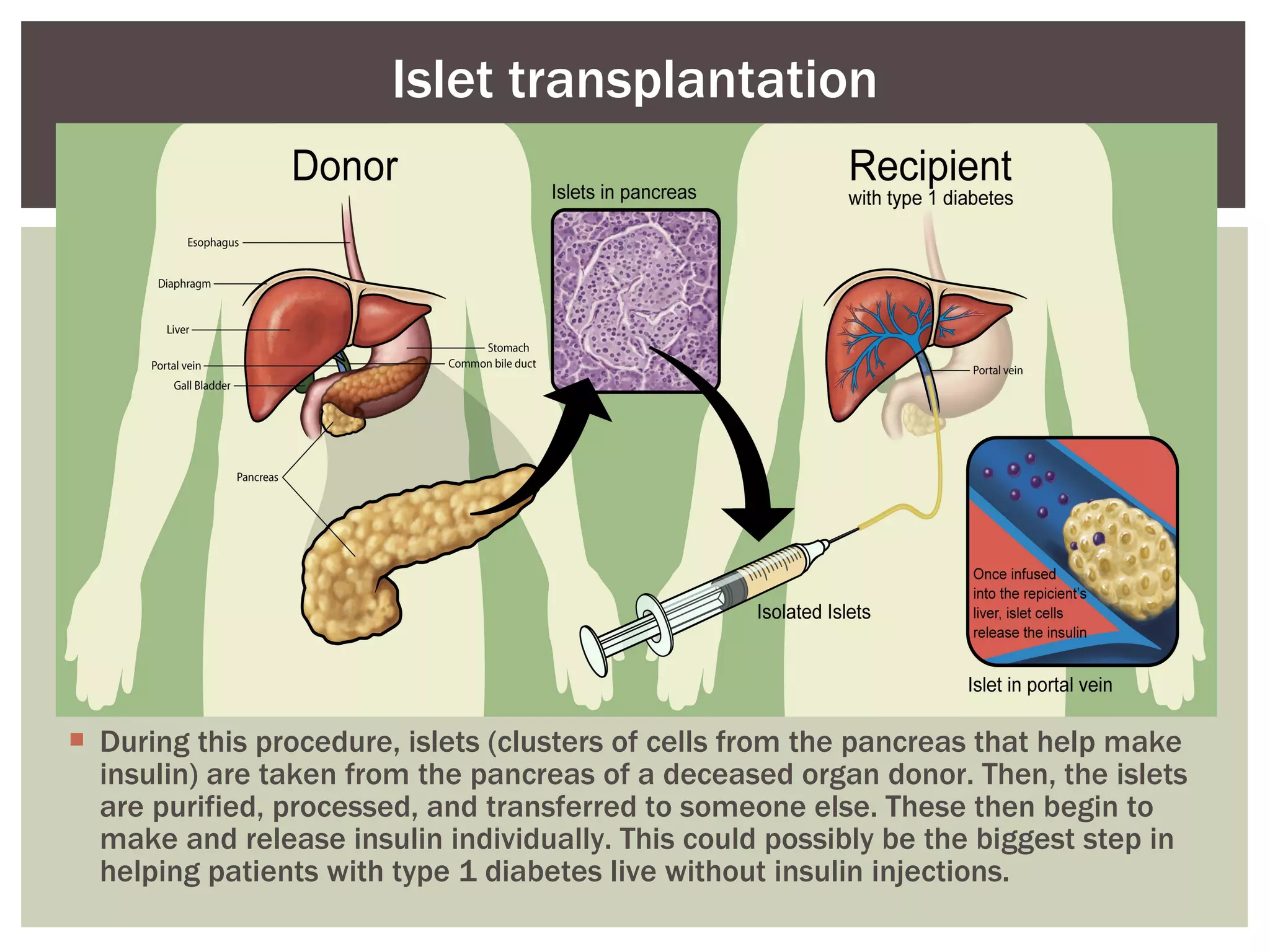
During this procedure, islets (clusters of cells from the pancreas that help make insulin) are taken from the pancreas of a deceased organ donor. Then, the islets are purified, processed, and transferred to someone else. These then begin to make and release insulin individually. This could possibly be the biggest step in helping patients with type 1 diabetes live without insulin injections.  Islet transplantation
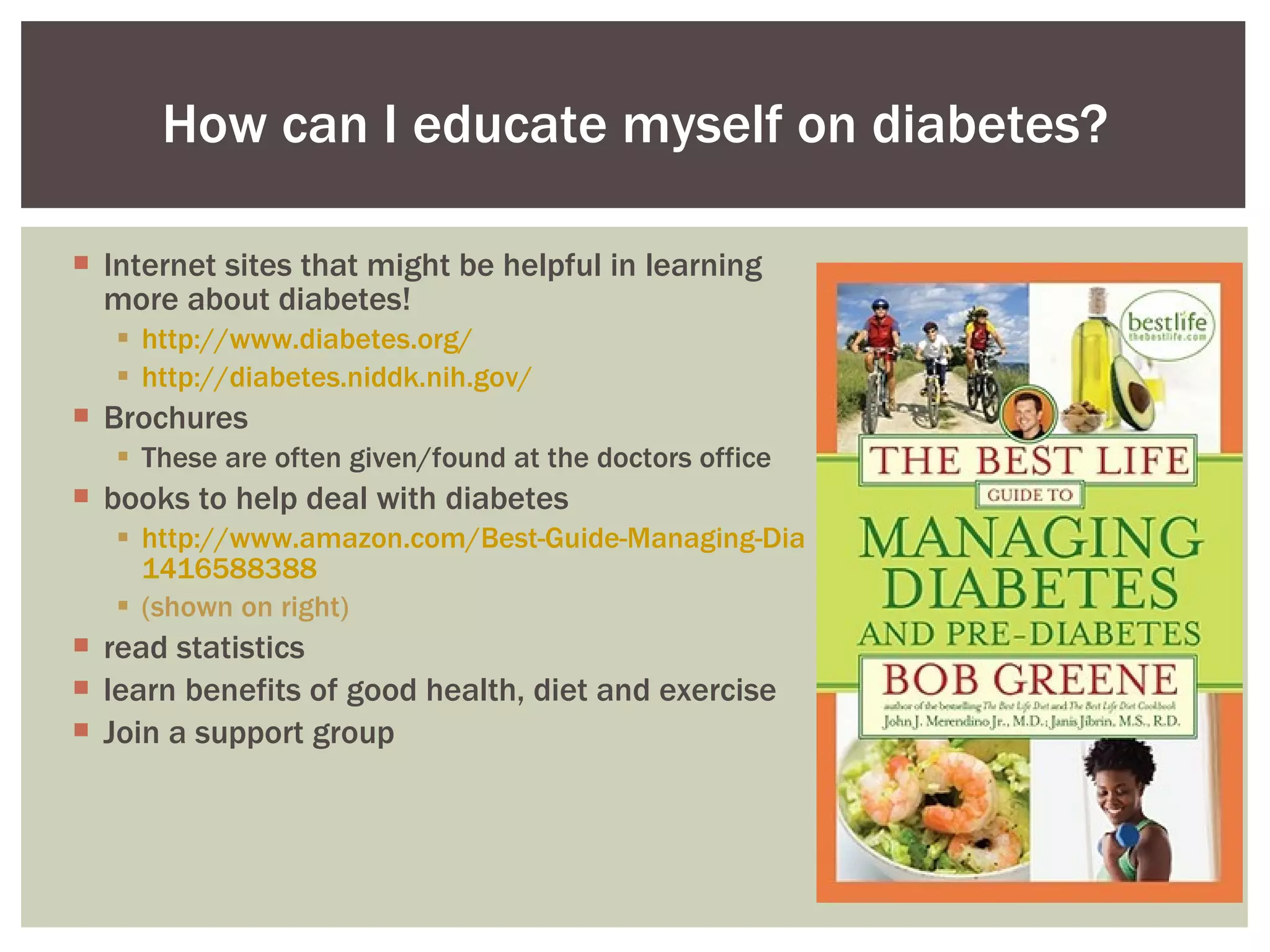
Internet sites that might be helpful in learning more about diabetes! http://www.diabetes.org / http://diabetes.niddk.nih.gov / Brochures These are often given/found at the doctors office books to help deal with diabetes http://www.amazon.com/Best-Guide-Managing-Diabetes-Pre-Diabetes/dp/ 1416588388 (shown on right) read statistics  learn benefits of good health, diet and exercise Join a support group How can I educate myself on diabetes?
REMEMBER….TAKE CONTROL OF YOUR LIFE!  DON’T LET DIABETES CONTROL YOU!
BIBLIOGRAPHY

Diabetes powerpoint

  • 1.
    Monica Danforth BSC1008 24 July 2011 Professor Rivero the perfect guide to Understanding diabetes
  • 2.
    What is Diabetes?What are the statistics? What are the different types of Diabetes? What are the symptoms? How does it transmit? How do I get tested for diabetes? How can I prevent or control diabetes? What parts of the body does diabetes affect? Can diabetes be cured? How can I educate myself? Diabetes: Things to consider…
  • 3.
    Diabetes affects 25.8million children and adults in the United States Diabetes can be referred to as a chronic disease characterized by high levels of sugar(glucose) in the blood How does this happen? Glucose enters the bloodstream, from food we eat. This is later used for fuel in the body. Our pancreas located near the stomach makes insulin, which plays a role in moving glucose to muscles, liver cells, and fat. The pancreas then fails to make enough insulin or the muscle or… Fat or liver cells fail to respond to the insulin properly As a result, our body’s cells are starving for energy and over time, high blood glucose levels change our overall health damaging the kidney, heart, eyes, and nerves Diabetes: what is it?
  • 4.
    There are 4major types of diabetes: 1) Type 1 Diabetes usually diagnosed in childhood affected by hereditary sometimes there are no symptoms Imperative to inject insulin daily because the body makes little or no insulin frequently called the ‘insulin-needed’ group Patients with type 1 diabetes need insulin daily to survive types of diabetes
  • 5.
    2)Type 2 Diabetesmost common usually occurs in adulthood but diagnosis is increasing in the younger generation affects many children Body is incapable of responding to insulin Rates rising due to increased obesity and failure to exercise and eat healthy Types of diabetes (cont.…)
  • 6.
    3) Gestational Diabetes blood sugar levels are high during pregnancy in women Women who give birth to children over 9 lbs. high risk of type 2 diabetes and cardiovascular disease Types of diabetes (cont.…)
  • 7.
    4) Pre-diabetes Atleast 79 million people are diagnosed with pre-diabetes each year above average blood glucose levels, not high enough to be classified under type 1 or type 2 diabetes long-term damage to body, including heart and circulatory system Starts with unhealthy eating habits & inadequate exercise Types of diabetes (cont.…)
  • 8.
    high blood levelsof glucose blurry vision fatigue thirst painful urination frequent urination sores that do not heal nausea vomiting weight loss Hunger **In some cases…there are no symptoms at all!! **Diabetes type 1 and type 2 symptoms are closely similar, although, type 1 is often worse in severity Symptoms of diabetes
  • 9.
    Genetically (type 1diabetes, pre-diabetes, gestational) Can develop due to poor diet & inadequate exercise (pre-diabetes, type 2 diabetes, gestational diabetes) Develops due to following factors Overweight High blood pressure High cholesterol Family history of diabetes African-American, Asian-American, Latino, Hispanic-American, Native American ethnicity Family history of gestational diabetes How does diabetes transmit?
  • 10.
    Two tests doctorsuse to diagnose diabetes and pre-diabetes: 1) FPG (Fasting Plasma Glucose Test) patient must fast for eight hours doctor draws blood doctor will mix blood with other liquids to determine the amount of sugar or glucose in the blood this is measured in mg/dL blood glucose range for pre-diabetics will be in the 100-125 mg/dL range. type 2 diabetes will have blood sugar results in the range of 126 mg/dL and above these levels can increase the risk of heart disease and stroke 2) OGTT (Oral Glucose Tolerance Test) doctor measures how well your body reacts to average dose of sugar patient will be drawn blood two hours before and after he/she drinks pre-mixed beverage with the sugar blood glucose levels are measured to see how the body reacted Blood glucose range for pre-diabetics will be between 140-199 mg/dL. For those with type 2 diabetes, the range will start at 200 mg/dL and continue to peak Testing for diabetes
  • 11.
    Prevention all startswith a better lifestyle eating healthier being active taking medicine as directed taking care of your body check feet to make sure there is no nerve damage or interruption of blood flow take care of teeth control blood pressure and high no smoking! check in with your doctor at least once a month have your blood sugar checked along with weight, blood pressure, and feelings Check blood sugar levels daily by using home monitoring device How to prevent/control diabetes
  • 12.
    Diabetes can affect:heart kidneys (direct result from large amounts of protein being deposited into the urine) eyes nervous system skin your WHOLE body long-term complications include stroke, peripheral vascular disease, hypertension, urinary infections, and coronary artery disease the most frequent health risk from diabetes is known as cardiovascular disease (diabetes can cause high blood pressure that then causes an even stronger resistance to insulin) Diabetes lowers our good cholesterol and raises our bad cholesterol leading to an increase of heart disease and stroke. This can cause the arteries to become clogged with fat. at least 65% of people with diabetes die from heart disease or stroke How does diabetes affect the body?
  • 13.
    Unfortunately, there isnot yet a cure for diabetes BUT DON’ T GIVE UP HOPE! There are always new facts and discoveries being made every day. Doctors are providing treatment that can lower symptoms of diabetes of all types, which can reduce pain. By following a good diet and exercise plan, body may be able to use insulin minimally, or none at all in cases besides type 1 There is also research being done on “islet” transplantation **This can be seen on the next slide Can diabetes be cured?
  • 14.
    During this procedure,islets (clusters of cells from the pancreas that help make insulin) are taken from the pancreas of a deceased organ donor. Then, the islets are purified, processed, and transferred to someone else. These then begin to make and release insulin individually. This could possibly be the biggest step in helping patients with type 1 diabetes live without insulin injections. Islet transplantation
  • 15.
    Internet sites thatmight be helpful in learning more about diabetes! http://www.diabetes.org / http://diabetes.niddk.nih.gov / Brochures These are often given/found at the doctors office books to help deal with diabetes http://www.amazon.com/Best-Guide-Managing-Diabetes-Pre-Diabetes/dp/ 1416588388 (shown on right) read statistics learn benefits of good health, diet and exercise Join a support group How can I educate myself on diabetes?
  • 16.
    REMEMBER….TAKE CONTROL OFYOUR LIFE! DON’T LET DIABETES CONTROL YOU!
  • 17.