SYBSC IT SEM IV EMBEDDED SYSTEMS UNIT II Application and Domain Specific ES
The document outlines key components of washing machines, particularly highlighting important parts like the water inlet control valve and motor. It discusses automotive embedded systems, emphasizing their role in modern vehicles, where numerous electronic control units (ECUs) manage various functions from fuel injection to power windows. Additionally, it describes the communication protocols used in these systems, such as CAN, LIN, and MOST, which facilitate efficient data transfer within automotive applications.
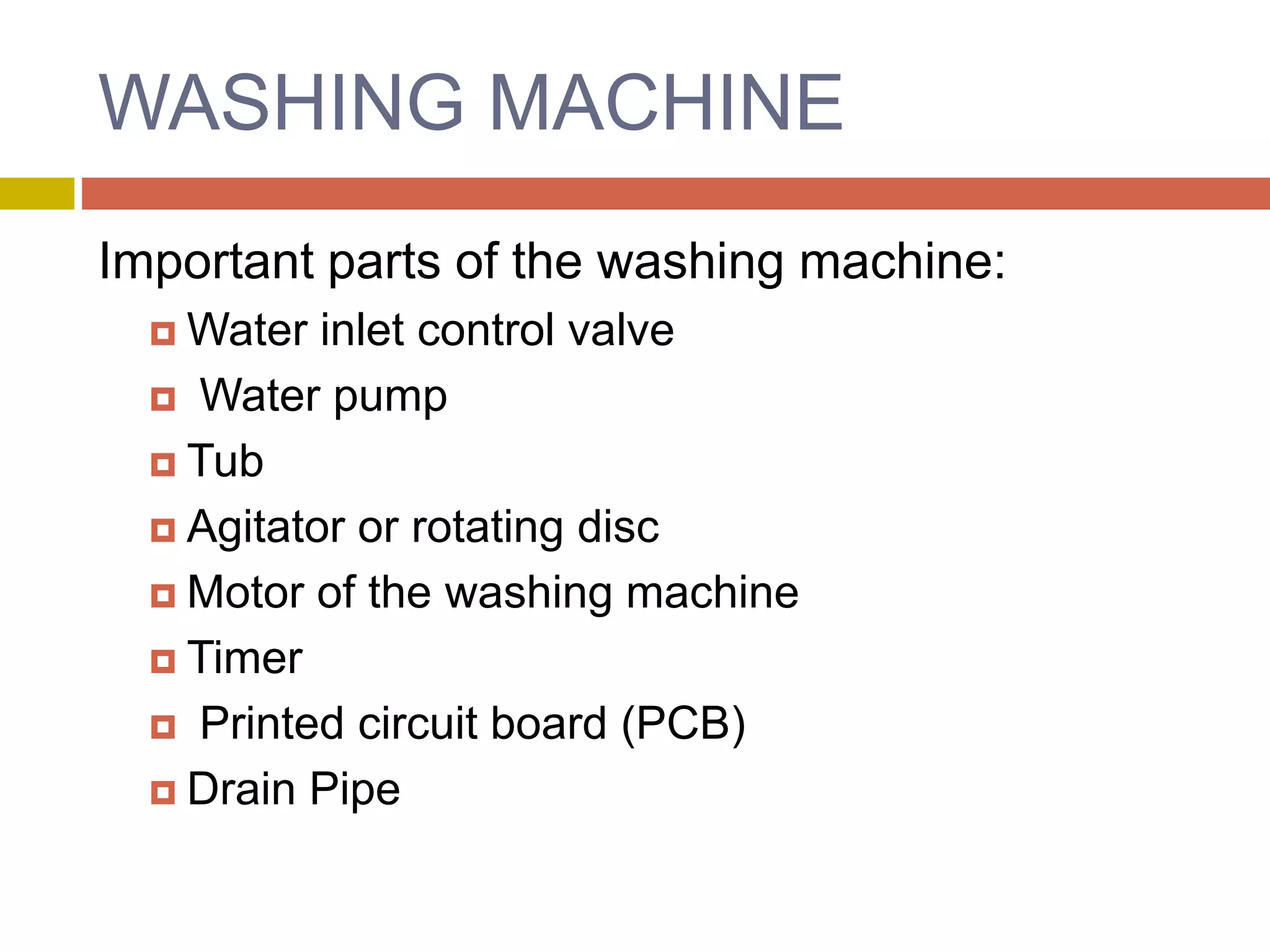
WASHING MACHINE
Important partsof the washing machine:
Water inlet control valve
Water pump
Tub
Agitator or rotating disc
Motor of the washing machine
Timer
Printed circuit board (PCB)
Drain Pipe
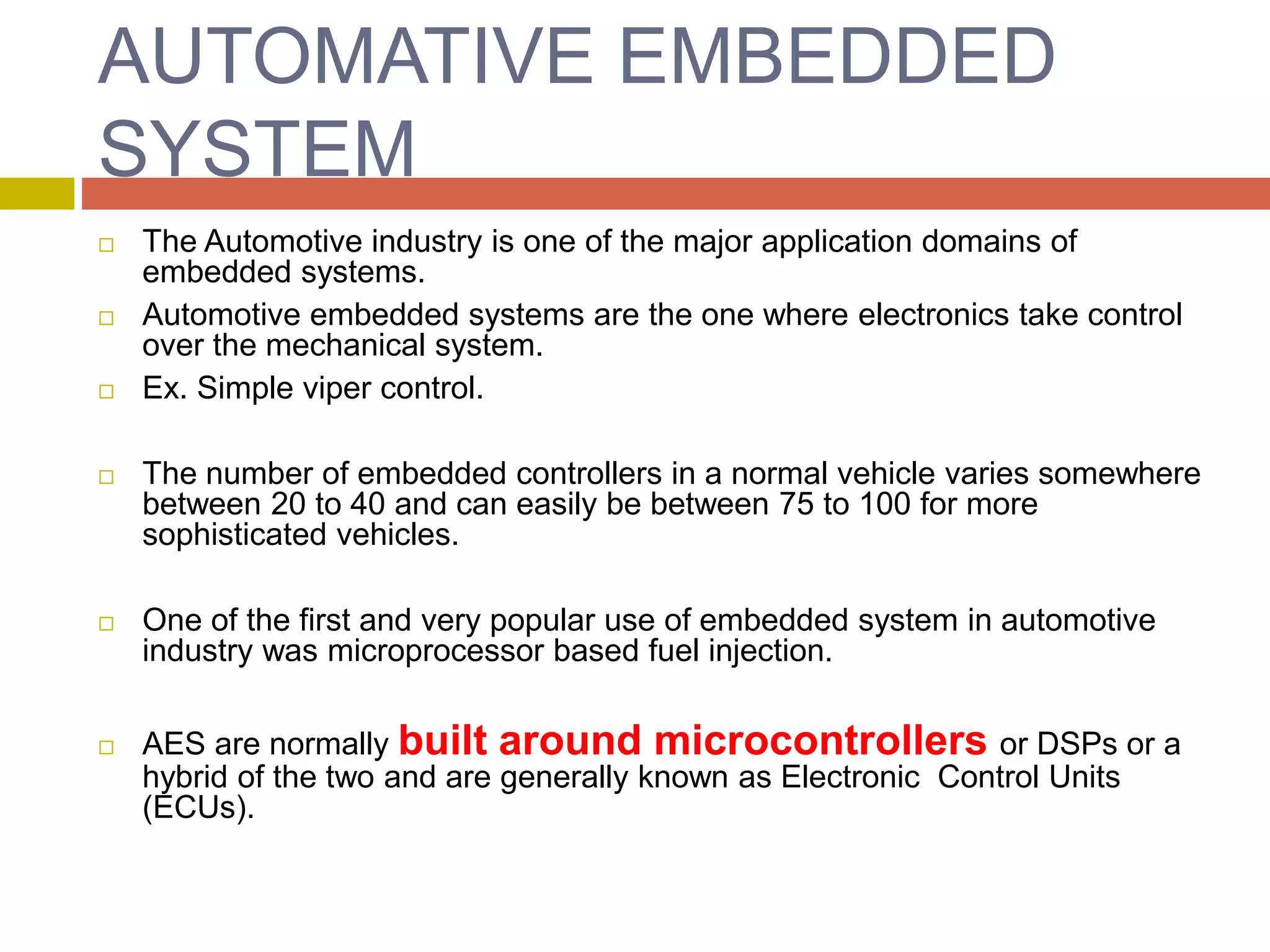
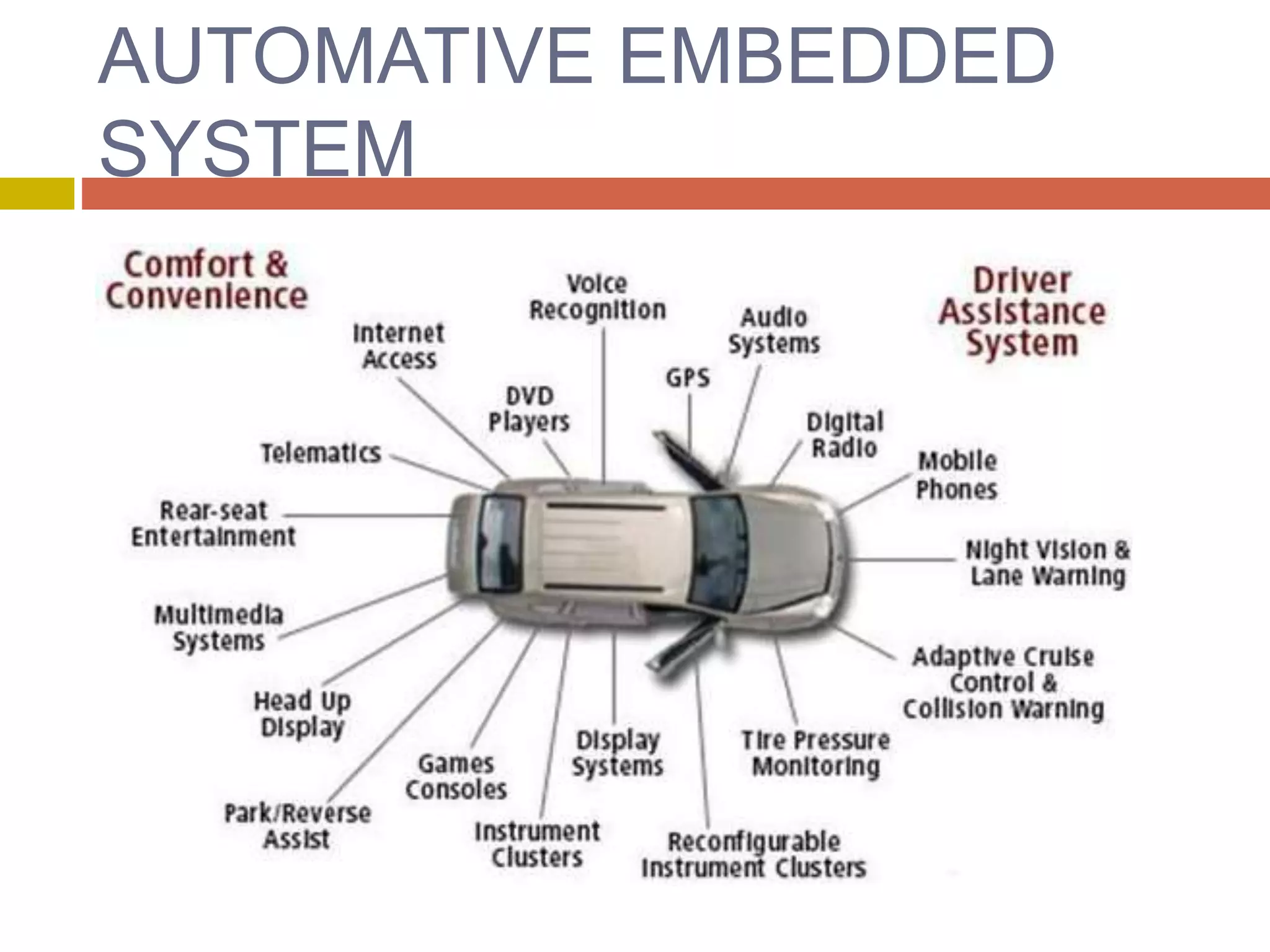
AUTOMATIVE EMBEDDED
SYSTEM
TheAutomotive industry is one of the major application domains of
embedded systems.
Automotive embedded systems are the one where electronics take control
over the mechanical system.
Ex. Simple viper control.
The number of embedded controllers in a normal vehicle varies somewhere
between 20 to 40 and can easily be between 75 to 100 for more
sophisticated vehicles.
One of the first and very popular use of embedded system in automotive
industry was microprocessor based fuel injection.
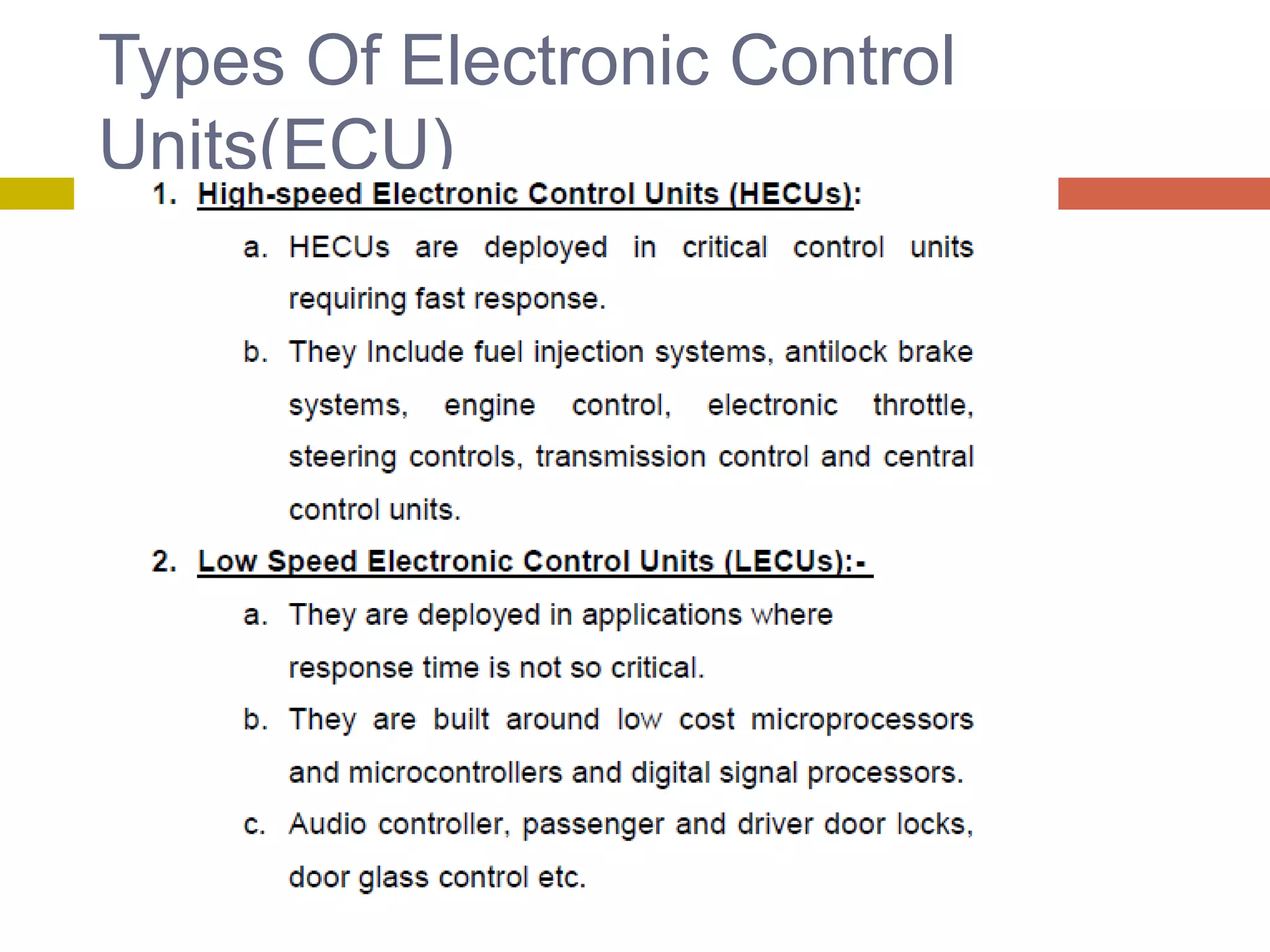
AES are normally built around microcontrollers or DSPs or a
hybrid of the two and are generally known as Electronic Control Units
(ECUs).
5.
AUTOMATIVE EMBEDDED
SYSTEM
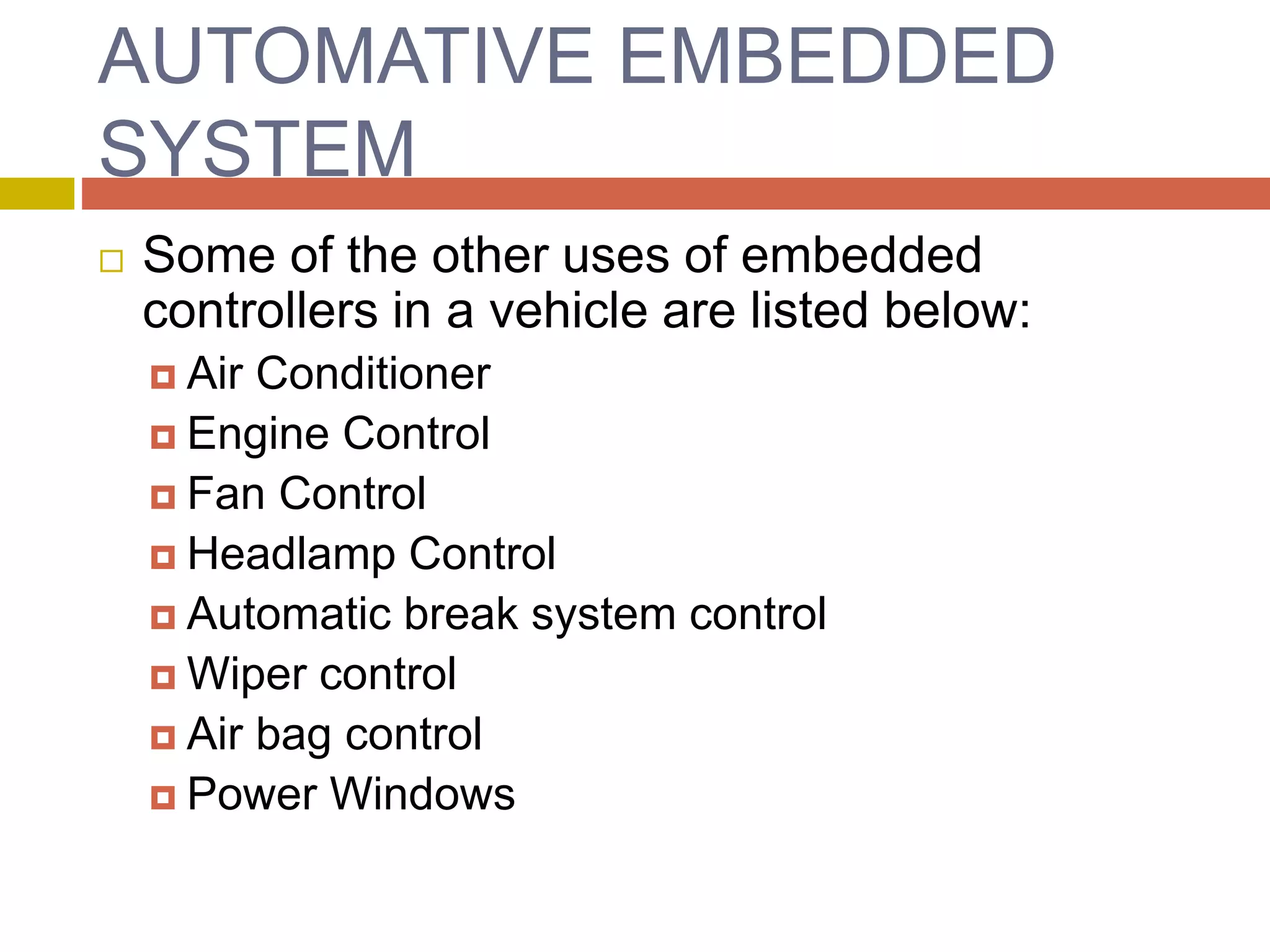
Someof the other uses of embedded
controllers in a vehicle are listed below:
Air Conditioner
Engine Control
Fan Control
Headlamp Control
Automatic break system control
Wiper control
Air bag control
Power Windows
Automotive Communication
Buses
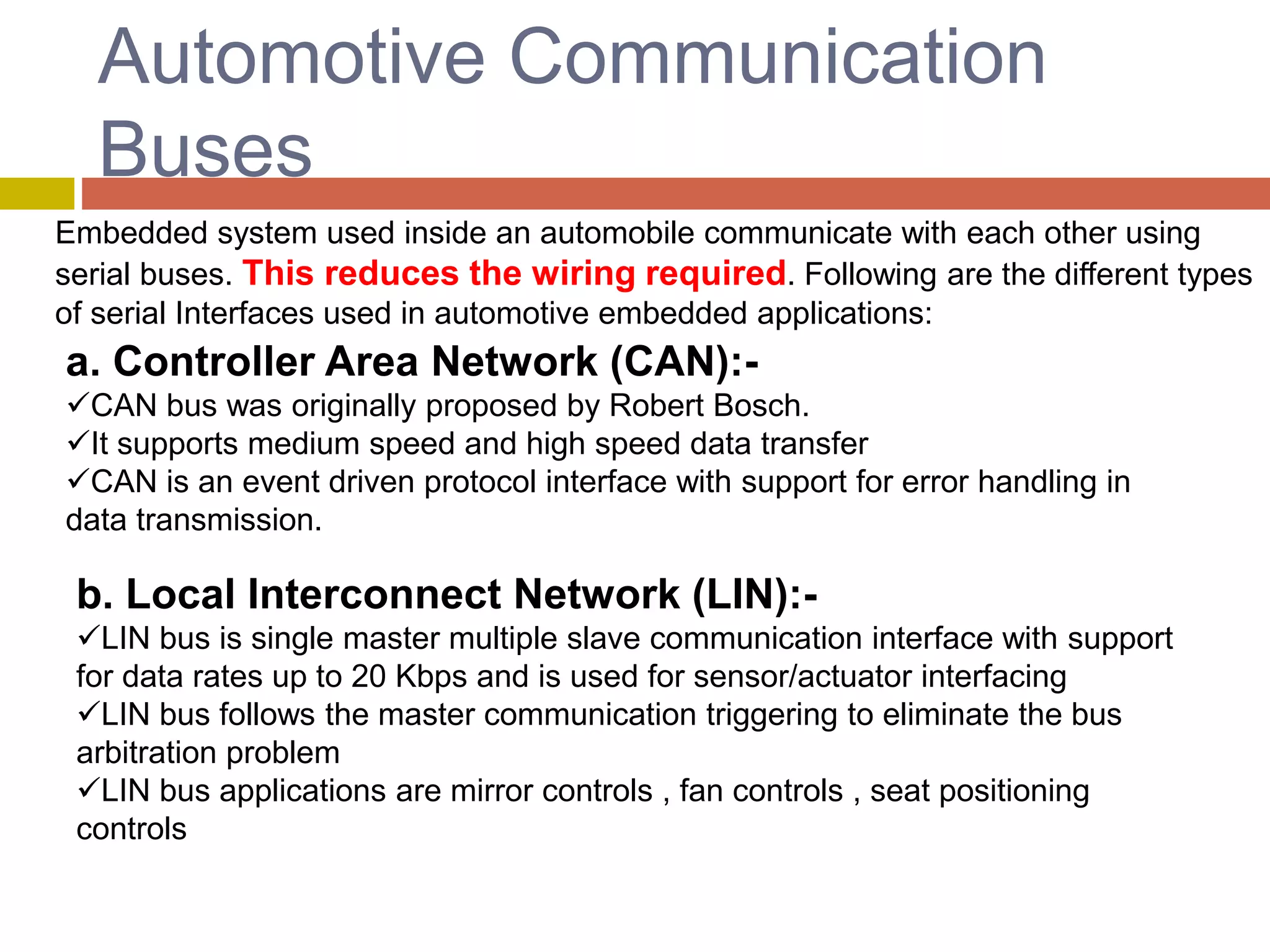
Embedded systemused inside an automobile communicate with each other using
serial buses. This reduces the wiring required. Following are the different types
of serial Interfaces used in automotive embedded applications:
a. Controller Area Network (CAN):-
CAN bus was originally proposed by Robert Bosch.
It supports medium speed and high speed data transfer
CAN is an event driven protocol interface with support for error handling in
data transmission.
b. Local Interconnect Network (LIN):-
LIN bus is single master multiple slave communication interface with support
for data rates up to 20 Kbps and is used for sensor/actuator interfacing
LIN bus follows the master communication triggering to eliminate the bus
arbitration problem
LIN bus applications are mirror controls , fan controls , seat positioning
controls
9.
Automotive Communication
Buses
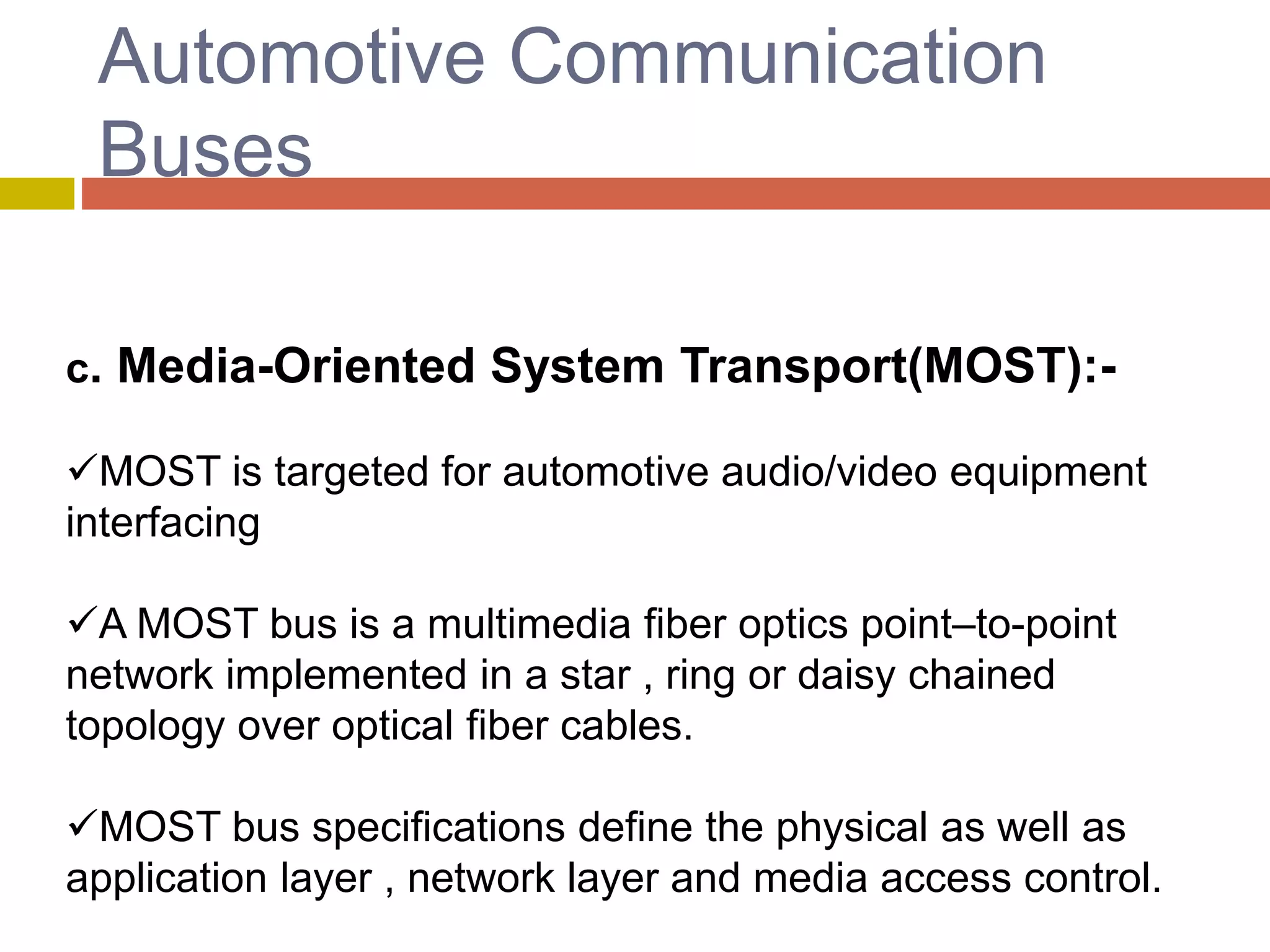
c. Media-OrientedSystem Transport(MOST):-
MOST is targeted for automotive audio/video equipment
interfacing
A MOST bus is a multimedia fiber optics point–to-point
network implemented in a star , ring or daisy chained
topology over optical fiber cables.
MOST bus specifications define the physical as well as
application layer , network layer and media access control.