NAME : RUCHI RANI
ROLL NO. : 20
COURSE : M.Sc BIOTECHNOLOGY,IIIrd
SEMESTER
SUPERANTIGENS
 When the immune system encounters a conventional T-dependent
antigen, only a small fraction of the T cell population is able to
recognize the antigen and become activated. However, some
antigens can polyclonally activate a large fraction of the T cells,
setting off massive immune response. These antigens are called
Superantigens
 Superantigens stimulate up to 10% of T cells to respond whereas
antigen would normally stimulate only 0.001-0.01% of T cells to
respond
 Staphylococcal enterotoxins
 Staphylococcal toxic shock toxin (TSST-1)
 Streptococcal pyrogenic exotoxins (exotoxin A
and exotoxin B)
 Mouse mammary tumor virus (retrovirus), which
causes breast cancer in mice, is also known to
produce superantigen
 Protein antigens are normally processed by macrophages and other
antigen-presenting cells (APC) into peptide fragments, which are
expressed on the surface of these cells in association with MHC class II
molecules
 Only those T-cells with receptors (TCR), which recognize the antigen
together with the MHC molecule, are activated
 Superantigens are not processed in this way but can bind to MHC class II
molecules on manyAPC surfaces directly
 Superantigens simultaneously bind to MHC class II molecules on the
APCs and to the variable region of the TCR. This leads to the stimulation
of many T-cells and an excessive production of interleukin-2 and other
inflammatory cytokines. The over-production of interleukins/cytokines
byT-cells can have the same effects as those observed in septic shock
 A typical antigen must be
processed by an APC, after
which it binds to both the α
and β chain of theTCR
 Superantigens don’t require
processing and do not bind
to the α chain. Instead, they
link the β chain of the TCR
directly to the class II MHC
molecule on the APC, an
interaction that is sufficient
to activate the T cell in the
absence of any other co-
stimulatory signals
 Antigen requires
processing by APC
 Antigen recognition andT-
cell activation is MHC-II
restricted
 Small proportion ofT-cells
become activated (<0.001)
and highly regulated
response
 Does not require processing
by APC
 MHC-II positive cells are
required for SAg-inducedT-
cell activation, but it is not
MHC-II restrictive
 MassiveT-cell activation
(20-30% of totalT cells) and
associated with adverse
consequences
conventional response superantigen response
 Superantigens are considered virulence factors, the stimulated T cells
respond by secreting cytokines that suppress immune responses
 Superantigen also induces apoptosis in the superantigen-binding CD4
T cells, soT cells that can respond to the pathogen are deleted
 Responsible for diseases like Staphylococcal food poisoning,
Staphylococcal Toxic shock syndrome, Streptococcal toxic shock like
syndrome etc
 Staphylococcal enterotoxins bind to MHC II molecules and stimulate T
cells to divide and produce lymphokines such as IL-2 and TNF-alpha,
which induce diarrhea. Streptococcus pyogenes exotoxin A (SPEA) and
S pyogenes exotoxin B (SPEB) are the major toxins produced by group A
beta-hemolytic streptococci
 Endogenous Superantigens (ESAgs) are cell membrane proteins
encoded by certain viruses that infect mammalian cells
 In humans ESAg is encoded by env gene of human endogenous
retrovirus (HERV), and all humans carry numerous copies of HERV
in their genome
 Exact significance of ESAg is not known in humans
 Endogenous superantigen stimulates T cell in Vβ in a selective
manner to support viral replication and plays a role in the
pathogenesis of infections, HIV infection, CMV infection and IDDM
(Insulin Dependent Diabetes Mellitus)
 As there is no definite disease model for SAg-mediated disease
and lack of controlled trials about therapeutic intervention, many
drugs are claimed to be effective with different immunological
properties. Following treatment strategies are proposed for the
diseases associated with Sag
 Removal of source of SAg
- Drain the abscess
- Early and adequate antibacterial therapy,
e.g. Clindamycin
 Supportive care for shock
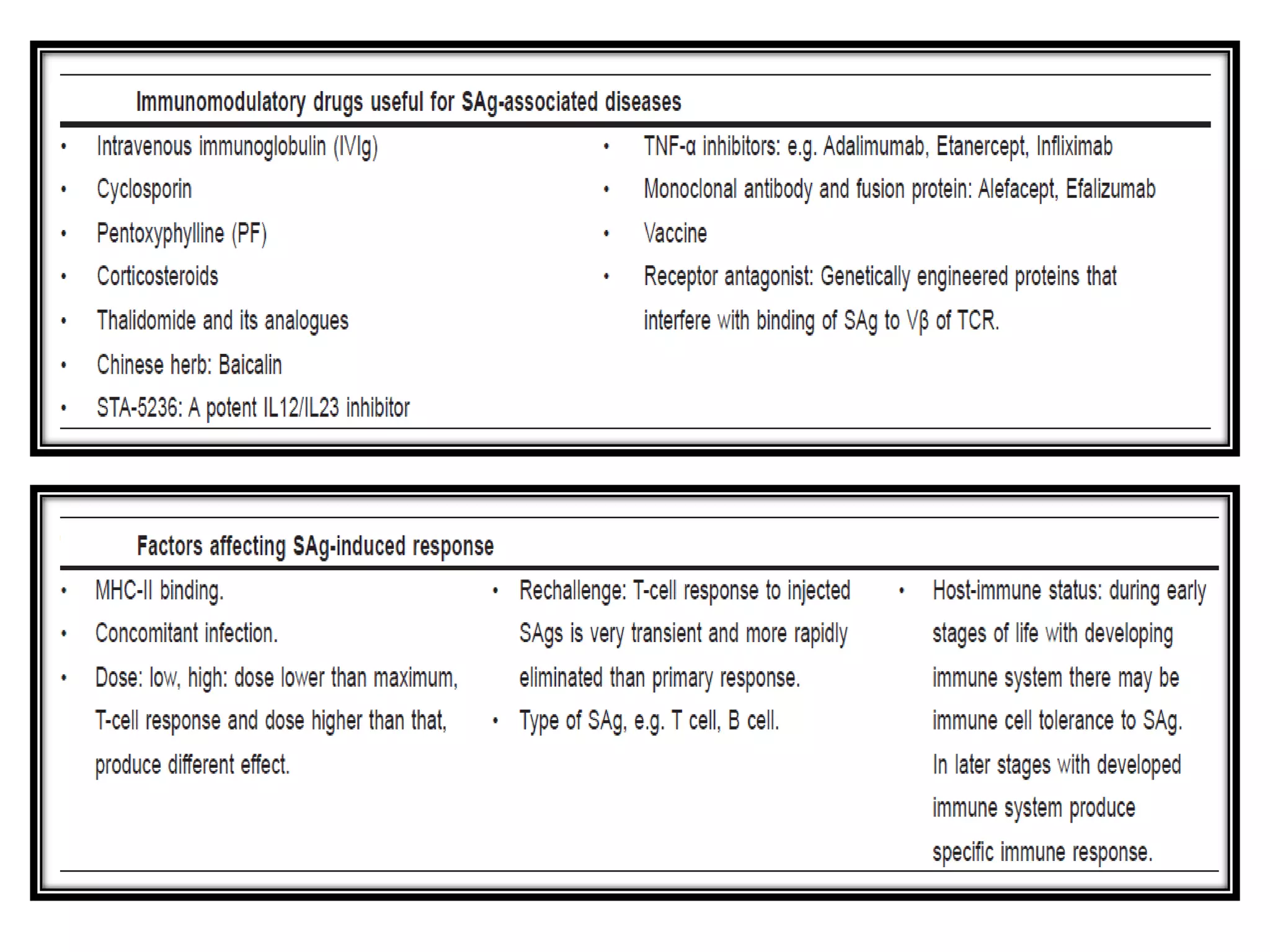
 Immunomodulatory drugs
- Drugs useful for various SAg-associated diseases
 Kappler J, Kotzin B, Herron L, Gelfand EW, Bigler RD, BoylstonA, Carrel S, Posnett DN,
Choi Y, Marrack P. V beta-specificstimulation of human T cells by staphylococcal toxins.
Science1989;244:811-3.
 Parish WE, Breathnach SM. Clinical Immunology and Allergy.In: Champion RH, Burton JL,
Burns DA, Breathnach SM,editors. Rook Textbook of dermatology. 6th edition.
Oxford:Blackwell Science 1998. p. 277-36.
 Janeway CA, Travers P, Walport M, Shlomchik MJ, editors. Antigen recognition by B cell
and T cell receptors. In:Immunobiology, The immune system in health and disease; 5th
edition. London: Garland Publishing: 2001. p. 93-122.
 Choi Y, Lafferty JA, Clements JR, Todd JK, Gelfand EW, Kappler J, Marrack P, Kotzin BL.
Selective expansion of T cells expressing V beta 2 in toxic shock syndrome. J Exp Med
1990;172:981-4.
 Llewelyn M, Cohen J. Superantigen: Microbial agents that corrupt immunity.The lancet
infectious disease 2002;2:156-62.
 Kozlowski LM, Li W, Goldschmidt M, Levinson AI. In vivo inflammatory response to a
prototypic B cell superantigen: Elicitation of an arthus reaction by staphylococcal protein A.
J Immunol 1998;160:5246-2.

Superantigen

  • 1.
    NAME : RUCHIRANI ROLL NO. : 20 COURSE : M.Sc BIOTECHNOLOGY,IIIrd SEMESTER SUPERANTIGENS
  • 2.
     When theimmune system encounters a conventional T-dependent antigen, only a small fraction of the T cell population is able to recognize the antigen and become activated. However, some antigens can polyclonally activate a large fraction of the T cells, setting off massive immune response. These antigens are called Superantigens  Superantigens stimulate up to 10% of T cells to respond whereas antigen would normally stimulate only 0.001-0.01% of T cells to respond
  • 3.
     Staphylococcal enterotoxins Staphylococcal toxic shock toxin (TSST-1)  Streptococcal pyrogenic exotoxins (exotoxin A and exotoxin B)  Mouse mammary tumor virus (retrovirus), which causes breast cancer in mice, is also known to produce superantigen
  • 4.
     Protein antigensare normally processed by macrophages and other antigen-presenting cells (APC) into peptide fragments, which are expressed on the surface of these cells in association with MHC class II molecules  Only those T-cells with receptors (TCR), which recognize the antigen together with the MHC molecule, are activated  Superantigens are not processed in this way but can bind to MHC class II molecules on manyAPC surfaces directly  Superantigens simultaneously bind to MHC class II molecules on the APCs and to the variable region of the TCR. This leads to the stimulation of many T-cells and an excessive production of interleukin-2 and other inflammatory cytokines. The over-production of interleukins/cytokines byT-cells can have the same effects as those observed in septic shock
  • 5.
     A typicalantigen must be processed by an APC, after which it binds to both the α and β chain of theTCR  Superantigens don’t require processing and do not bind to the α chain. Instead, they link the β chain of the TCR directly to the class II MHC molecule on the APC, an interaction that is sufficient to activate the T cell in the absence of any other co- stimulatory signals
  • 6.
     Antigen requires processingby APC  Antigen recognition andT- cell activation is MHC-II restricted  Small proportion ofT-cells become activated (<0.001) and highly regulated response  Does not require processing by APC  MHC-II positive cells are required for SAg-inducedT- cell activation, but it is not MHC-II restrictive  MassiveT-cell activation (20-30% of totalT cells) and associated with adverse consequences conventional response superantigen response
  • 7.
     Superantigens areconsidered virulence factors, the stimulated T cells respond by secreting cytokines that suppress immune responses  Superantigen also induces apoptosis in the superantigen-binding CD4 T cells, soT cells that can respond to the pathogen are deleted  Responsible for diseases like Staphylococcal food poisoning, Staphylococcal Toxic shock syndrome, Streptococcal toxic shock like syndrome etc  Staphylococcal enterotoxins bind to MHC II molecules and stimulate T cells to divide and produce lymphokines such as IL-2 and TNF-alpha, which induce diarrhea. Streptococcus pyogenes exotoxin A (SPEA) and S pyogenes exotoxin B (SPEB) are the major toxins produced by group A beta-hemolytic streptococci
  • 10.
     Endogenous Superantigens(ESAgs) are cell membrane proteins encoded by certain viruses that infect mammalian cells  In humans ESAg is encoded by env gene of human endogenous retrovirus (HERV), and all humans carry numerous copies of HERV in their genome  Exact significance of ESAg is not known in humans  Endogenous superantigen stimulates T cell in Vβ in a selective manner to support viral replication and plays a role in the pathogenesis of infections, HIV infection, CMV infection and IDDM (Insulin Dependent Diabetes Mellitus)
  • 11.
     As thereis no definite disease model for SAg-mediated disease and lack of controlled trials about therapeutic intervention, many drugs are claimed to be effective with different immunological properties. Following treatment strategies are proposed for the diseases associated with Sag  Removal of source of SAg - Drain the abscess - Early and adequate antibacterial therapy, e.g. Clindamycin  Supportive care for shock  Immunomodulatory drugs - Drugs useful for various SAg-associated diseases
  • 12.
     Kappler J,Kotzin B, Herron L, Gelfand EW, Bigler RD, BoylstonA, Carrel S, Posnett DN, Choi Y, Marrack P. V beta-specificstimulation of human T cells by staphylococcal toxins. Science1989;244:811-3.  Parish WE, Breathnach SM. Clinical Immunology and Allergy.In: Champion RH, Burton JL, Burns DA, Breathnach SM,editors. Rook Textbook of dermatology. 6th edition. Oxford:Blackwell Science 1998. p. 277-36.  Janeway CA, Travers P, Walport M, Shlomchik MJ, editors. Antigen recognition by B cell and T cell receptors. In:Immunobiology, The immune system in health and disease; 5th edition. London: Garland Publishing: 2001. p. 93-122.  Choi Y, Lafferty JA, Clements JR, Todd JK, Gelfand EW, Kappler J, Marrack P, Kotzin BL. Selective expansion of T cells expressing V beta 2 in toxic shock syndrome. J Exp Med 1990;172:981-4.  Llewelyn M, Cohen J. Superantigen: Microbial agents that corrupt immunity.The lancet infectious disease 2002;2:156-62.  Kozlowski LM, Li W, Goldschmidt M, Levinson AI. In vivo inflammatory response to a prototypic B cell superantigen: Elicitation of an arthus reaction by staphylococcal protein A. J Immunol 1998;160:5246-2.