Study Visa In USA
Table of content
 Introduction to Study Visa in USA
 Types of Study Visas
 Application Process
 Required Documents
 Interview Process
 Visa Approval and Denial
 Maintaining Status
 Conclusion
Introduction to Study Visa in USA
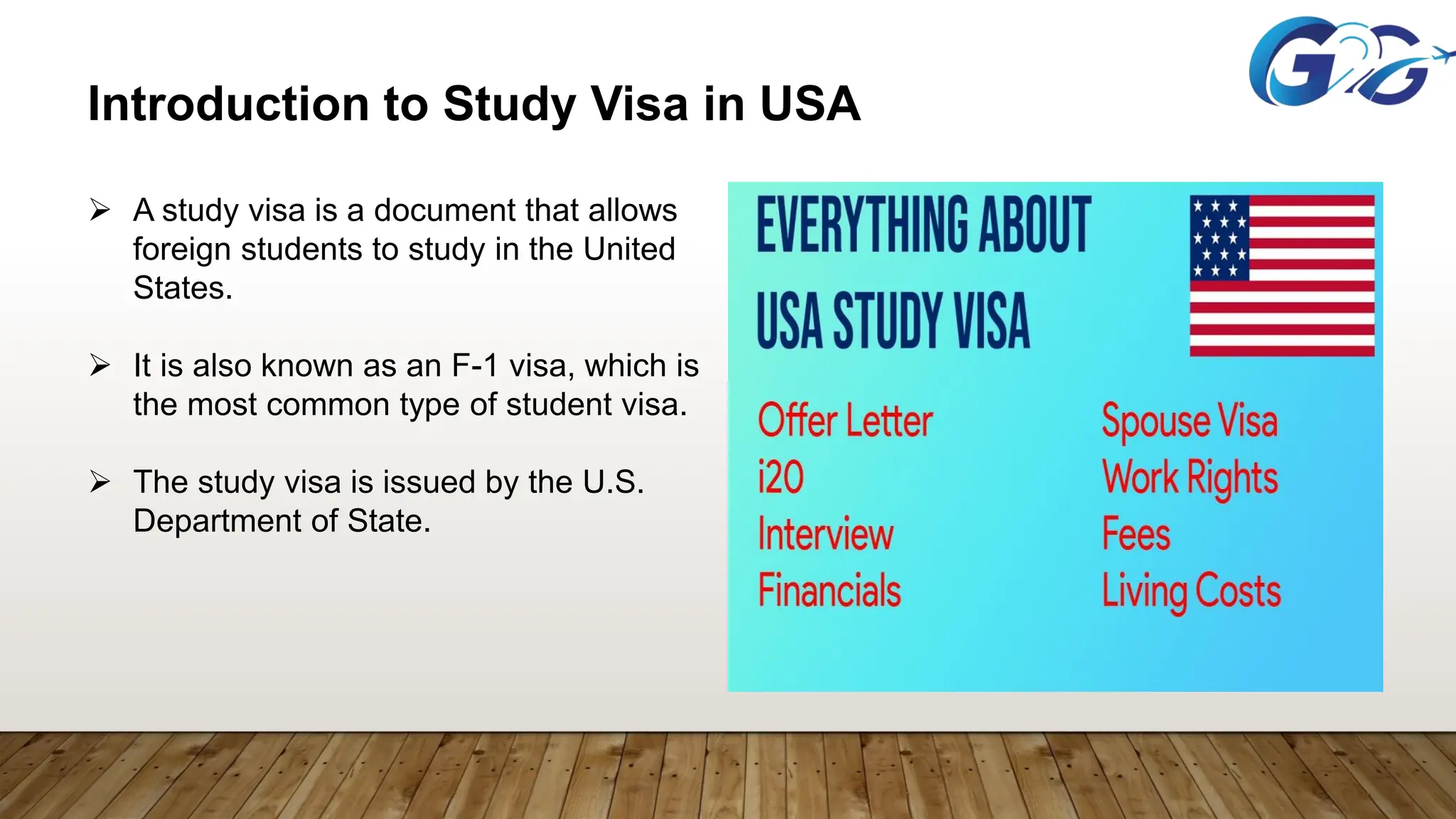
 A study visa is a document that allows
foreign students to study in the United
States.
 It is also known as an F-1 visa, which is
the most common type of student visa.
 The study visa is issued by the U.S.
Department of State.
Types of Study Visas
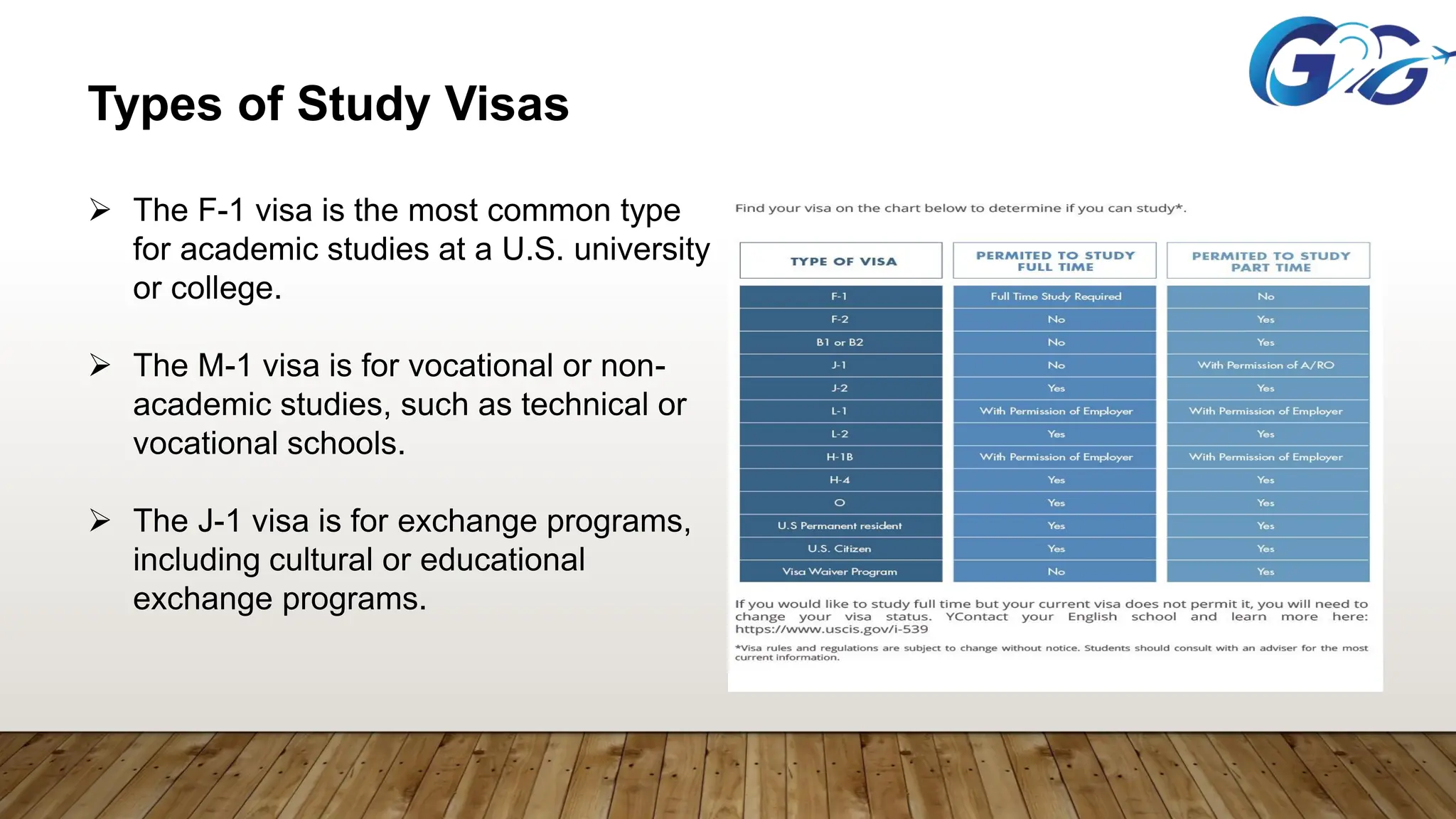
 The F-1 visa is the most common type
for academic studies at a U.S. university
or college.
 The M-1 visa is for vocational or non-
academic studies, such as technical or
vocational schools.
 The J-1 visa is for exchange programs,
including cultural or educational
exchange programs.
Application Process
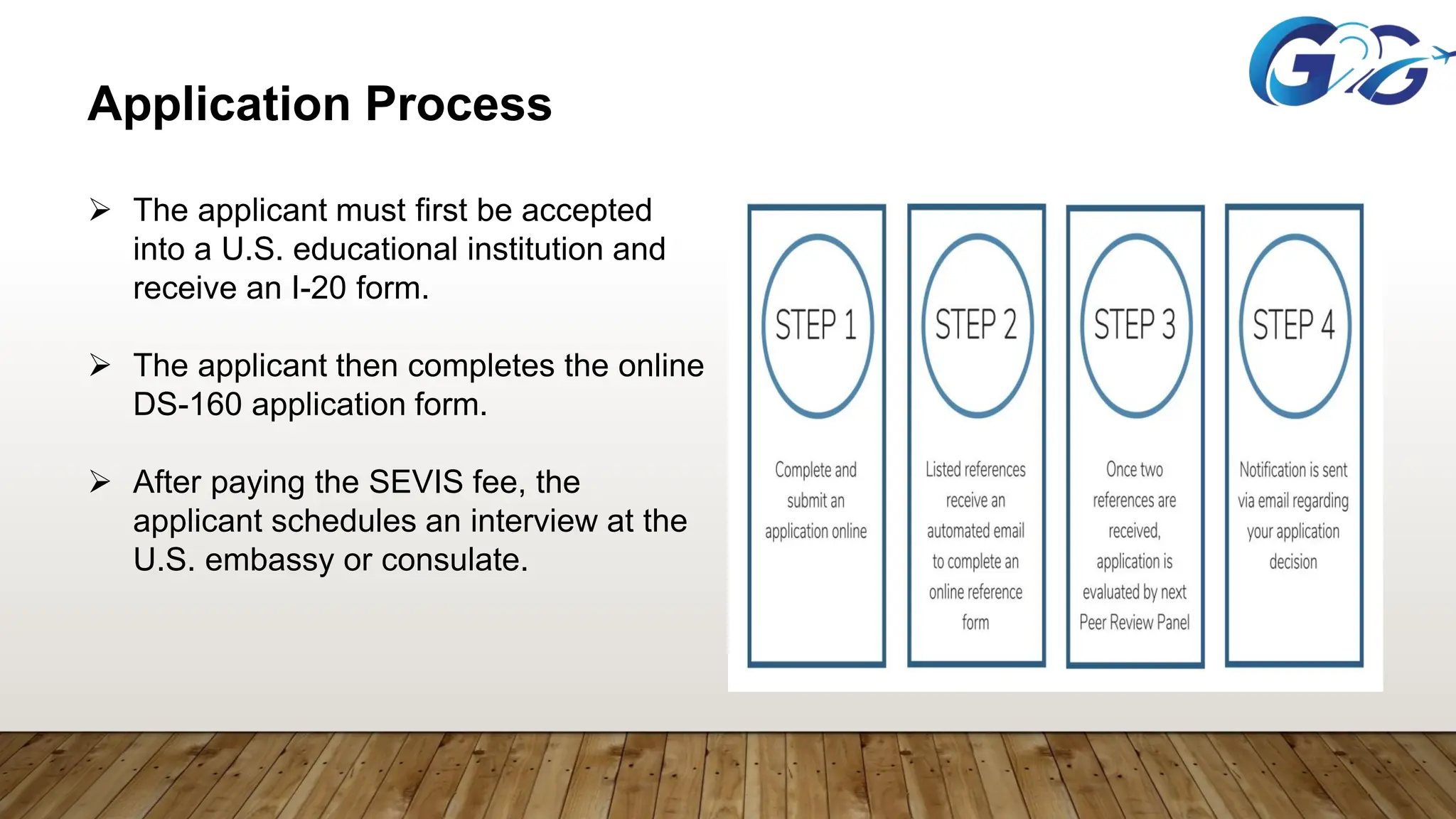
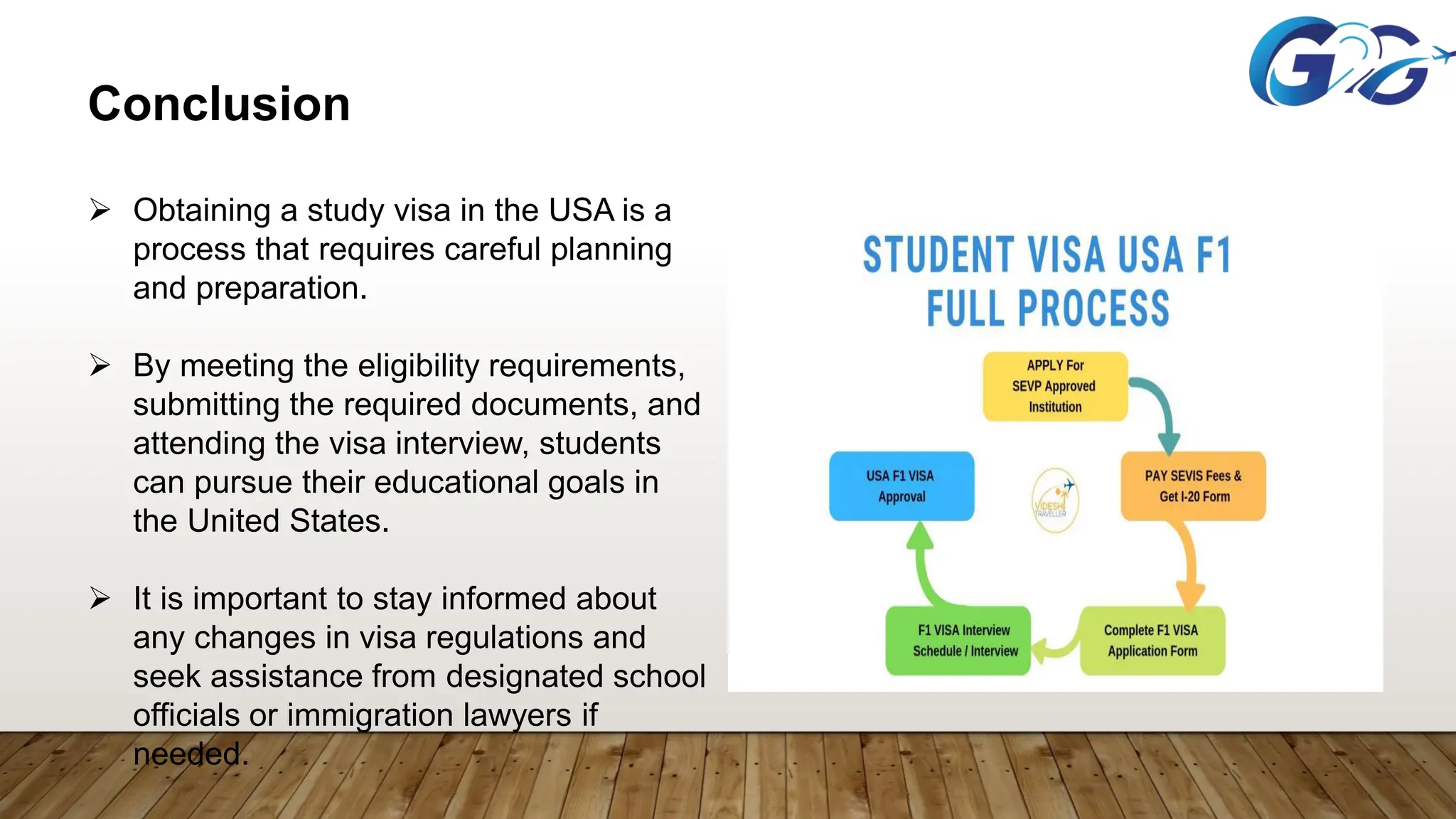
 The applicant must first be accepted
into a U.S. educational institution and
receive an I-20 form.
 The applicant then completes the online
DS-160 application form.
 After paying the SEVIS fee, the
applicant schedules an interview at the
U.S. embassy or consulate.
Required Documents
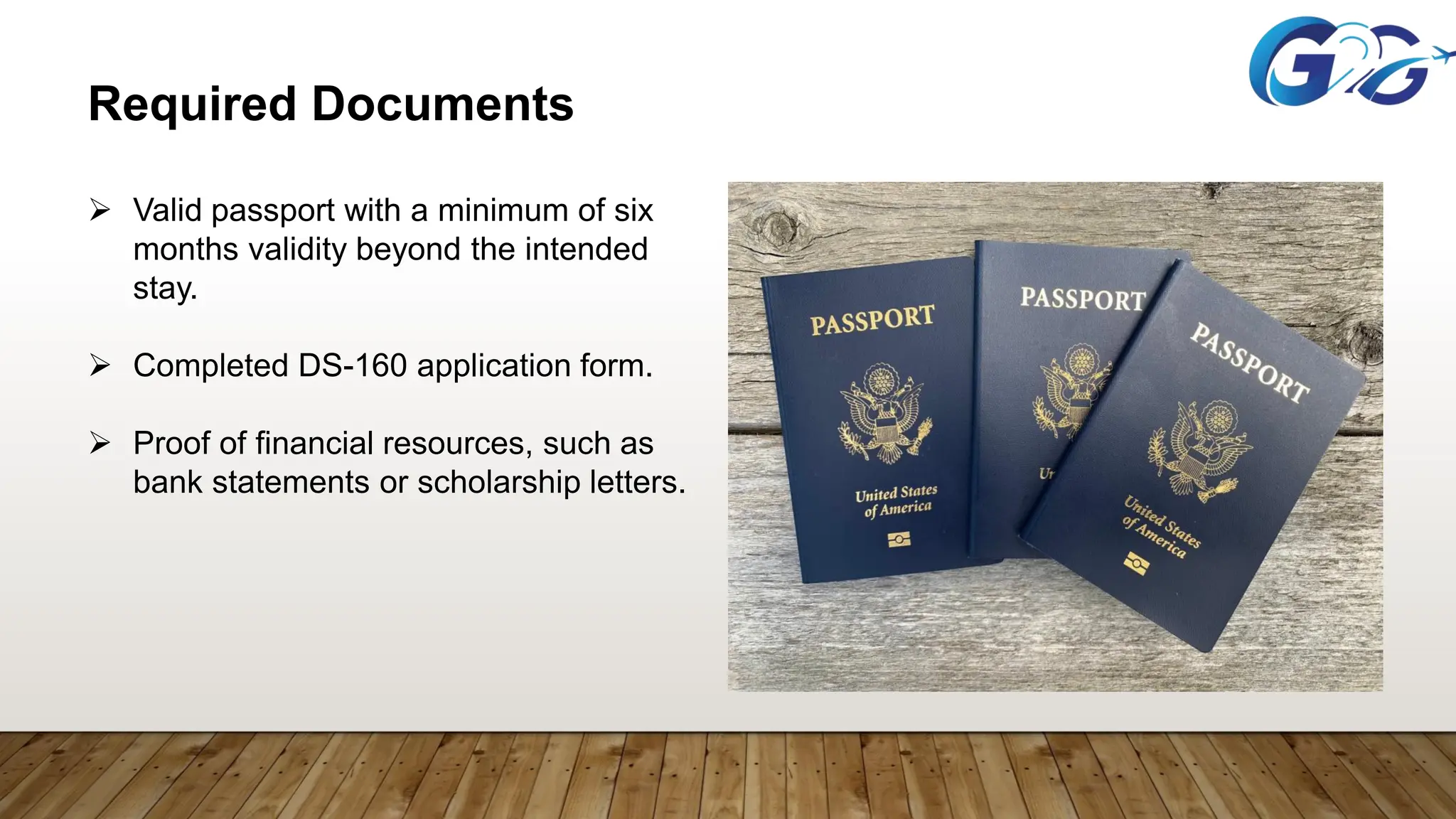
 Valid passport with a minimum of six
months validity beyond the intended
stay.
 Completed DS-160 application form.
 Proof of financial resources, such as
bank statements or scholarship letters.
Interview Process
 The visa interview is conducted at the
U.S. embassy or consulate.
 The applicant should be prepared to
answer questions about their
educational plans, financial resources,
and ties to their home country.
 It is important to bring all required
documents to the interview.
Visa Approval and Denial
 If the visa is approved, the applicant will
receive the visa in their passport.
 The visa may be granted for the
duration of the study program.
 If the visa is denied, the applicant will
receive a written explanation for the
denial.
Maintaining Status
 Once in the United States, students
must maintain their visa status by
enrolling in a full course of study and
making satisfactory academic progress.
 Students are allowed to work on-
campus part-time, but must obtain
authorization for any off-campus
employment.
 It is important to comply with all visa
regulations to avoid jeopardizing future
visa applications.
Conclusion
 Obtaining a study visa in the USA is a
process that requires careful planning
and preparation.
 By meeting the eligibility requirements,
submitting the required documents, and
attending the visa interview, students
can pursue their educational goals in
the United States.
 It is important to stay informed about
any changes in visa regulations and
seek assistance from designated school
officials or immigration lawyers if
needed.
Presenter name: Kathika.Kalyani
Email : info@g2goverseas.com
Website
address:www.g2goverseas.com

Study Visa In USA.pdf

  • 1.
  • 2.
    Table of content Introduction to Study Visa in USA  Types of Study Visas  Application Process  Required Documents  Interview Process  Visa Approval and Denial  Maintaining Status  Conclusion
  • 3.
    Introduction to StudyVisa in USA  A study visa is a document that allows foreign students to study in the United States.  It is also known as an F-1 visa, which is the most common type of student visa.  The study visa is issued by the U.S. Department of State.
  • 4.
    Types of StudyVisas  The F-1 visa is the most common type for academic studies at a U.S. university or college.  The M-1 visa is for vocational or non- academic studies, such as technical or vocational schools.  The J-1 visa is for exchange programs, including cultural or educational exchange programs.
  • 5.
    Application Process  Theapplicant must first be accepted into a U.S. educational institution and receive an I-20 form.  The applicant then completes the online DS-160 application form.  After paying the SEVIS fee, the applicant schedules an interview at the U.S. embassy or consulate.
  • 6.
    Required Documents  Validpassport with a minimum of six months validity beyond the intended stay.  Completed DS-160 application form.  Proof of financial resources, such as bank statements or scholarship letters.
  • 7.
    Interview Process  Thevisa interview is conducted at the U.S. embassy or consulate.  The applicant should be prepared to answer questions about their educational plans, financial resources, and ties to their home country.  It is important to bring all required documents to the interview.
  • 8.
    Visa Approval andDenial  If the visa is approved, the applicant will receive the visa in their passport.  The visa may be granted for the duration of the study program.  If the visa is denied, the applicant will receive a written explanation for the denial.
  • 9.
    Maintaining Status  Oncein the United States, students must maintain their visa status by enrolling in a full course of study and making satisfactory academic progress.  Students are allowed to work on- campus part-time, but must obtain authorization for any off-campus employment.  It is important to comply with all visa regulations to avoid jeopardizing future visa applications.
  • 10.
    Conclusion  Obtaining astudy visa in the USA is a process that requires careful planning and preparation.  By meeting the eligibility requirements, submitting the required documents, and attending the visa interview, students can pursue their educational goals in the United States.  It is important to stay informed about any changes in visa regulations and seek assistance from designated school officials or immigration lawyers if needed.
  • 11.
    Presenter name: Kathika.Kalyani Email: info@g2goverseas.com Website address:www.g2goverseas.com