Download to read offline
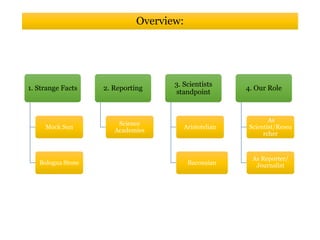
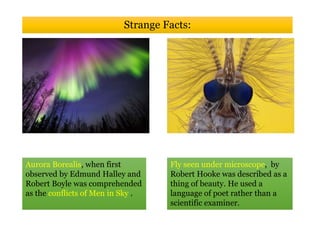
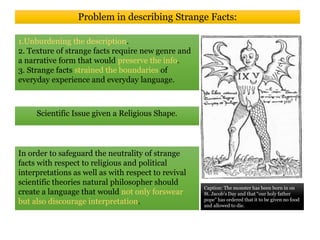
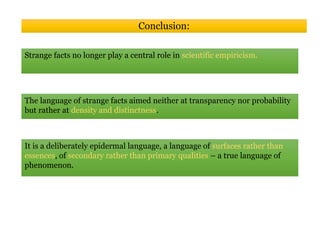


This document discusses the language used to describe strange facts in early modern science. During the 17th century, scientists encountered many new phenomena that seemed strange. Scientific societies reported on strange occurrences. Scientists like Robert Hooke described observations, like views of flies under microscopes, using poetic rather than scientific language. There was debate between Aristotelian and Baconian views on whether to generalize or take strange particulars seriously. Describing strange facts strained everyday language. Scientists aimed to create a neutral language to document phenomena without interpretation. The language of strange facts was deliberately superficial rather than seeking essences.


