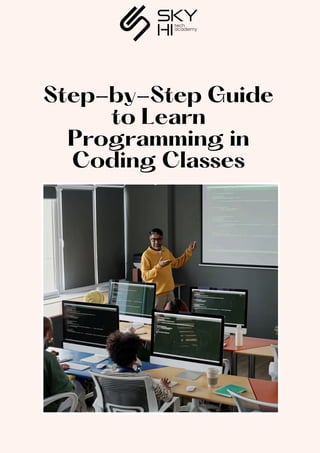
Step-by-Step Guide
to Learn
Programming in
Coding Classes
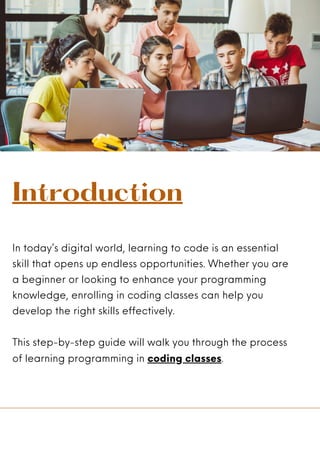
In today’s digital world, learning to code is an essential
skill that opens up endless opportunities. Whether you are
a beginner or looking to enhance your programming
knowledge, enrolling in coding classes can help you
develop the right skills effectively.
This step-by-step guide will walk you through the process
of learning programming in coding classes.
Introduction
Step 1: Choose the Right Coding
Class
Not all coding classes are the same. Some focus on web
development, while others specialize in data science,
mobile app development, or game design. Before enrolling,
determine your goals and choose a class that aligns with
your interests and career aspirations.
Step 2: Start with the Basics
If you’re new to programming, begin with fundamental
concepts such as variables, loops, functions, and data
structures. Most coding classes start with beginner-friendly
languages like Python, JavaScript, or Scratch (for kids).
Step 3: Practice Regularly
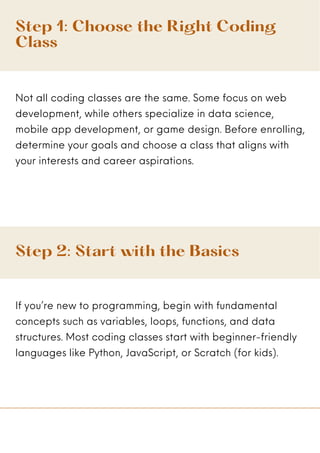
Coding is a hands-on skill that requires consistent practice.
During coding classes, you’ll work on small exercises and
projects to reinforce what you’ve learned. Make sure to
dedicate time outside of class to practice coding through
online platforms like CodeAcademy, LeetCode, or
freeCodeCamp.
Step 4: Work on Real-World Projects
Once you have a grasp of the basics, start working on
real-world projects. Many coding classes include
assignments and challenges that simulate real-life
programming tasks.
Step 5: Collaborate and Seek Feedback
Learning programming is more effective when done in a
collaborative environment. Engage with fellow students,
participate in discussions, and seek feedback from
instructors. Many coding classes offer forums, peer
coding exercises, and mentorship opportunities to
enhance your learning experience.
Step 6: Explore Advanced Topics
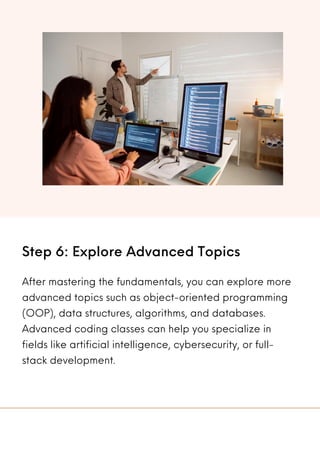
After mastering the fundamentals, you can explore more
advanced topics such as object-oriented programming
(OOP), data structures, algorithms, and databases.
Advanced coding classes can help you specialize in
fields like artificial intelligence, cybersecurity, or full-
stack development.
Learning to program through coding classes is an
exciting and rewarding journey. By following this step-
by-step guide, you can develop a strong foundation,
gain practical experience, and advance in your
programming career. Whether you aim to become a
software developer, data analyst, or web designer,
coding classes will provide you with the essential skills
to succeed.
Start your coding journey today and unlock your
potential!
Contact Us:
https://www.skyhitechacademy.com/
hello@skyhitechacademy.co.nz
+64 22 177 0399

Step-by-Step Guide to Learn Programming in Coding Classes

  • 1.
  • 2.
    In today’s digitalworld, learning to code is an essential skill that opens up endless opportunities. Whether you are a beginner or looking to enhance your programming knowledge, enrolling in coding classes can help you develop the right skills effectively. This step-by-step guide will walk you through the process of learning programming in coding classes. Introduction
  • 3.
    Step 1: Choosethe Right Coding Class Not all coding classes are the same. Some focus on web development, while others specialize in data science, mobile app development, or game design. Before enrolling, determine your goals and choose a class that aligns with your interests and career aspirations. Step 2: Start with the Basics If you’re new to programming, begin with fundamental concepts such as variables, loops, functions, and data structures. Most coding classes start with beginner-friendly languages like Python, JavaScript, or Scratch (for kids).
  • 4.
    Step 3: PracticeRegularly Coding is a hands-on skill that requires consistent practice. During coding classes, you’ll work on small exercises and projects to reinforce what you’ve learned. Make sure to dedicate time outside of class to practice coding through online platforms like CodeAcademy, LeetCode, or freeCodeCamp.
  • 5.
    Step 4: Workon Real-World Projects Once you have a grasp of the basics, start working on real-world projects. Many coding classes include assignments and challenges that simulate real-life programming tasks. Step 5: Collaborate and Seek Feedback Learning programming is more effective when done in a collaborative environment. Engage with fellow students, participate in discussions, and seek feedback from instructors. Many coding classes offer forums, peer coding exercises, and mentorship opportunities to enhance your learning experience.
  • 6.
    Step 6: ExploreAdvanced Topics After mastering the fundamentals, you can explore more advanced topics such as object-oriented programming (OOP), data structures, algorithms, and databases. Advanced coding classes can help you specialize in fields like artificial intelligence, cybersecurity, or full- stack development.
  • 7.
    Learning to programthrough coding classes is an exciting and rewarding journey. By following this step- by-step guide, you can develop a strong foundation, gain practical experience, and advance in your programming career. Whether you aim to become a software developer, data analyst, or web designer, coding classes will provide you with the essential skills to succeed. Start your coding journey today and unlock your potential!
  • 8.