Contents 
 General introduction 
 Gene therapy 
 Stem cell gene therapy 
 Applications 
 Advantages & Disadvantages
Stem Cell Gene Therapy 
General Introduction 
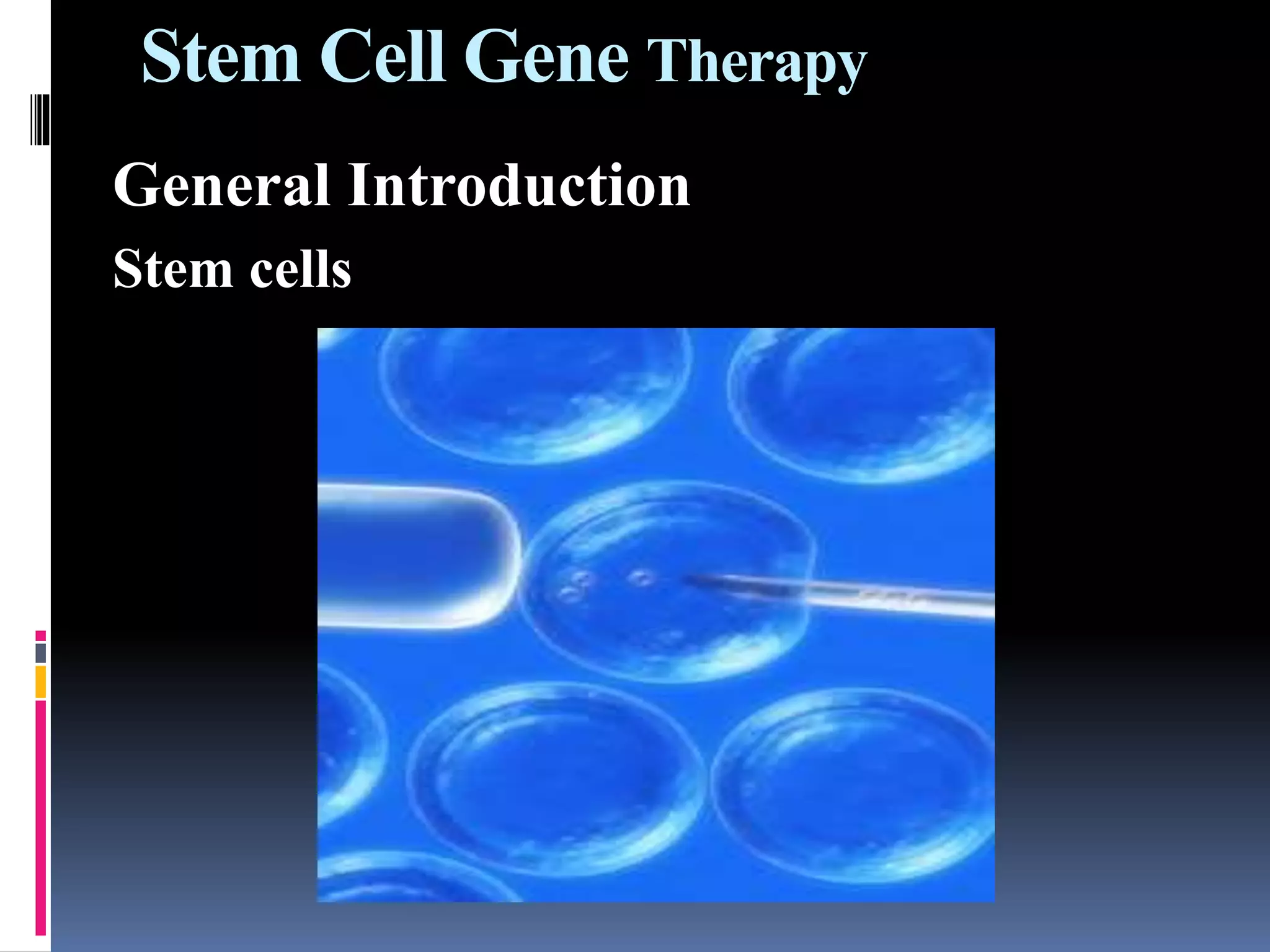
Stem cells
Stem cells 
 Stem cells have the remarkable potential to develop 
into many different cell types in the body during 
early life and growth 
 Pluripotent cells
Stem cells 
 Ability to divide numerous times and produce 
progeny that undergo differentiation 
1 
Differentiation = 
division power
Types of stem cells 
Two types of stem cells: 
 
Embryonic Stem Cells 
 Highly undifferentiated 
 Allogeneic transplantation 
 Taken from umbilical cord
Adult Stem Cells 
 Somatic stem cell 
 Maintain and repair the tissue 
 Autologous transplantation
Gene Therapy (GT) 
Stem Cells Gene Therapy 
 Use of adult stem cell or embryonic stem cell 
 Transfection 
 Transduction
Stem Cells Gene Therapy
Applications of stem cell gene therapy 
 Hemophilia treatment 
 Repairing mutations 
 Heart disease treatment 
 Sickle Cell Disease treatment 
 Skin disease treatment
Stem Cell Gene Therapy for Sickle Cell 
Disease 
 Sickle cell disease (SCD) is common monogenic 
disorders worldwide 
 Major cause of early mortality 
 Inherited abnormality of the oxygen-carrying 
hemoglobin protein in red blood cells (RBC)
 Source of RBCs is bone marrow
Advantages 
 It discover treatments and cures to diseases like 
Cancer, spinal cord injuries, diabetes & many 
more 
 It provides medical benefits in the fields of 
therapeutic cloning 
 Healthy life
Disadvantage 
 Additional biological complexity brought into 
systems by living cells 
 Some times it leads to mortality of individual 
 Modify the activity of neighboring genes 
(positively or negatively)
References 
 Thorat, C. et al. What the Orphan Drug Act has done lately for 
children with rare diseases: a 10-year analysis. Pediatrics 129, 
516–521 (2012). | Article | PubMed | 
 Grieger, J.C. & Samulski, R.J. Adeno-associated virus 
vectorology, manufacturing, and clinical applications. Meth. 
Enzymol. 507, 229–254 (2012). | PubMed | 
 http://stemcells.nih.gov/info/scireport/pages/chapter11.aspx 
 http://www.explorestemcells.co.uk/StemCellsAndGeneTherap 
y.html
stem cell gene therapy

stem cell gene therapy

  • 2.
    Contents  Generalintroduction  Gene therapy  Stem cell gene therapy  Applications  Advantages & Disadvantages
  • 3.
    Stem Cell GeneTherapy General Introduction Stem cells
  • 4.
    Stem cells Stem cells have the remarkable potential to develop into many different cell types in the body during early life and growth  Pluripotent cells
  • 5.
    Stem cells Ability to divide numerous times and produce progeny that undergo differentiation 1 Differentiation = division power
  • 6.
    Types of stemcells Two types of stem cells:  Embryonic Stem Cells  Highly undifferentiated  Allogeneic transplantation  Taken from umbilical cord
  • 7.
    Adult Stem Cells  Somatic stem cell  Maintain and repair the tissue  Autologous transplantation
  • 8.
    Gene Therapy (GT) Stem Cells Gene Therapy  Use of adult stem cell or embryonic stem cell  Transfection  Transduction
  • 9.
  • 10.
    Applications of stemcell gene therapy  Hemophilia treatment  Repairing mutations  Heart disease treatment  Sickle Cell Disease treatment  Skin disease treatment
  • 11.
    Stem Cell GeneTherapy for Sickle Cell Disease  Sickle cell disease (SCD) is common monogenic disorders worldwide  Major cause of early mortality  Inherited abnormality of the oxygen-carrying hemoglobin protein in red blood cells (RBC)
  • 13.
     Source ofRBCs is bone marrow
  • 14.
    Advantages  Itdiscover treatments and cures to diseases like Cancer, spinal cord injuries, diabetes & many more  It provides medical benefits in the fields of therapeutic cloning  Healthy life
  • 15.
    Disadvantage  Additionalbiological complexity brought into systems by living cells  Some times it leads to mortality of individual  Modify the activity of neighboring genes (positively or negatively)
  • 16.
    References  Thorat,C. et al. What the Orphan Drug Act has done lately for children with rare diseases: a 10-year analysis. Pediatrics 129, 516–521 (2012). | Article | PubMed |  Grieger, J.C. & Samulski, R.J. Adeno-associated virus vectorology, manufacturing, and clinical applications. Meth. Enzymol. 507, 229–254 (2012). | PubMed |  http://stemcells.nih.gov/info/scireport/pages/chapter11.aspx  http://www.explorestemcells.co.uk/StemCellsAndGeneTherap y.html

Editor's Notes

  • #9 History: The search for stem cells began in the aftermath of the bombings in Hiroshima and Nagasaki in 1945. Those who died over a prolonged period from lower doses of radiation had compromised hematopoietic systems….. Mouse
  • #12 Hematopoietic stem cells (HSCs) are the blood cells that give rise to all the other blood cells and are derived from mesoderm.