Ethical and Scientific Issues  in the use of Human Stem Cells Allen R. Dyer, M.D., Ph.D. [email_address] http://faculty.etsu.edu/dyer
Legal Scientific Religious Ethical
Principles of Bioethics Beneficence (or Paternalism) Physician-centered decisions Non-maleficence First Do No Harm Autonomy Patient’s right to self- determination Justice Fairness Ethical
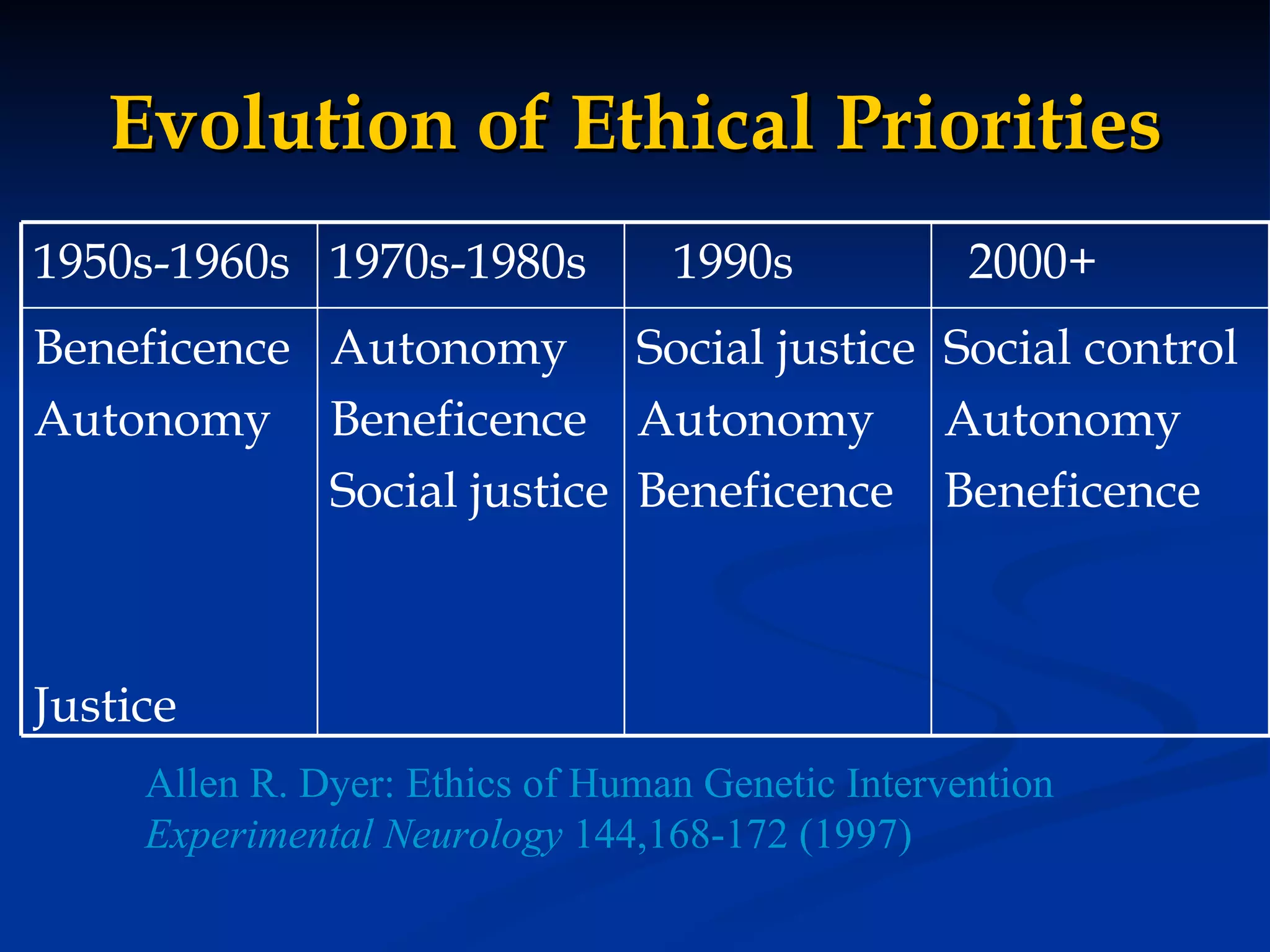
Evolution of Ethical Priorities Allen R. Dyer: Ethics of Human Genetic Intervention Experimental Neurology  144,168-172 (1997) Social control Autonomy Beneficence Social justice Autonomy Beneficence Autonomy Beneficence Social justice Beneficence Autonomy Justice 2000+ 1990s 1970s-1980s 1950s-1960s
Human Genetic Intervention Allen R. Dyer: Ethics of Human Genetic Intervention Experimental Neurology  144,168-172 (1997) Genetic Engineering Genetic Engineering Enhancement of capabilities Genetic Engineering Gene therapy Cure or prevention of disease Germ-line Somatic cells
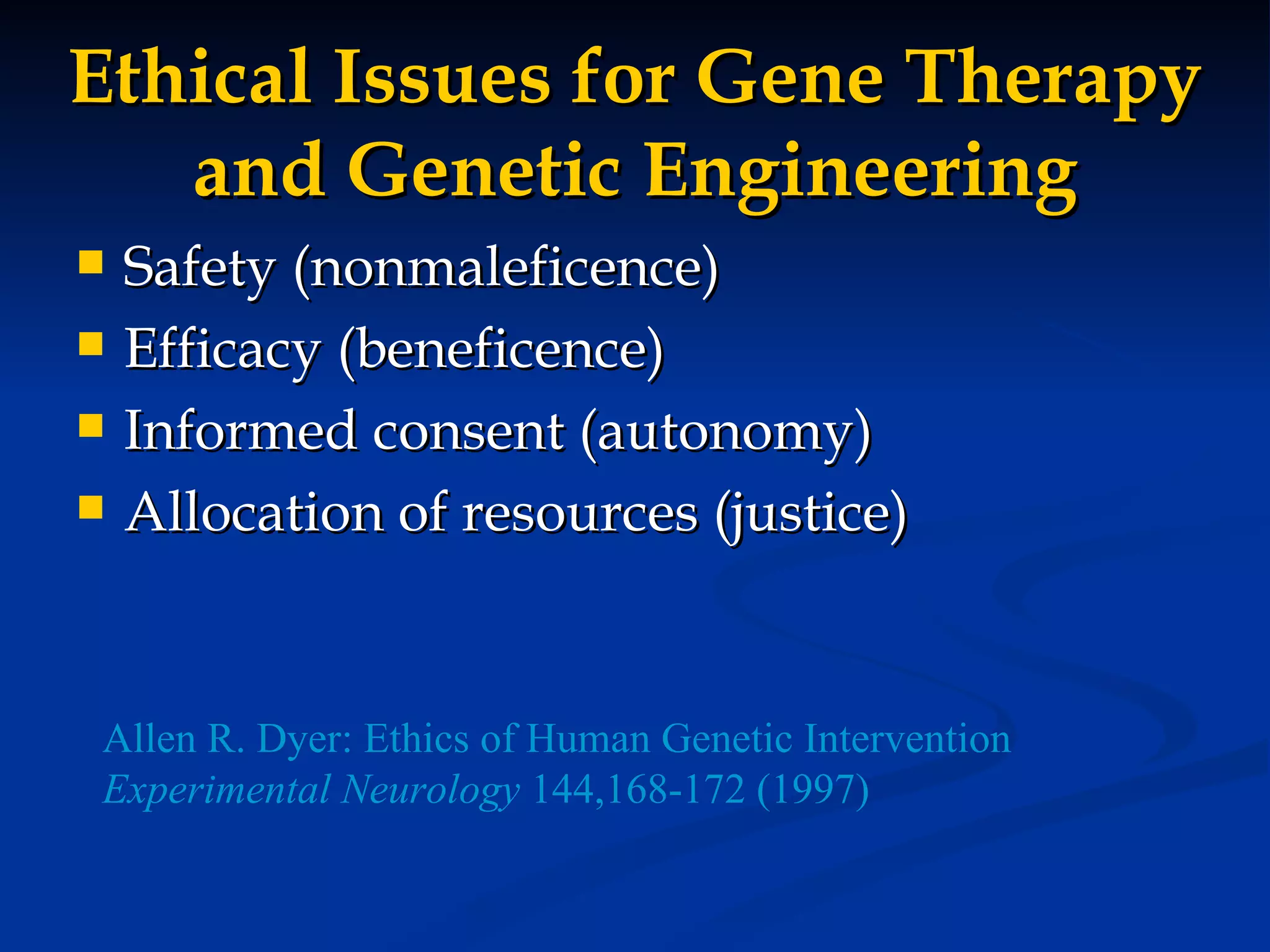
Ethical Issues for Gene Therapy and Genetic Engineering Safety (nonmaleficence) Efficacy (beneficence) Informed consent (autonomy) Allocation of resources (justice) Allen R. Dyer: Ethics of Human Genetic Intervention Experimental Neurology  144,168-172 (1997)
Ethical issues in assisted reproduction   “ Ethics, Advertising and Assisted Reproduction:  The Goals and Methods of Advertising”  Concern for “commodification” of life and life products Concern for availability, allocation, and pricing  of the technology Allen R. Dyer:  Women’s Health Issues  7:3,  pp. 143-148.  May/June 1997
 
Human Embryo Blastocyst stage  Immunosurgery  Embryonic stem cells Scientific
STEM CELL (DEFINITION) A cell that has the ability to continuously  divide and differentiate (develop)  into various other kind(s) of cells/tissues  Fetal tissue, cord blood, and adult stem cells Cells differentiated, but can form a number of other tissues Multipotent Some cells of blastocyst (5 to 14 days) Cells can form any (over 200) cell types Pluripotent Cells from early (1-3 days) embryos Each cell can develop into a new individual Totipotent Examples Description Stem cell type
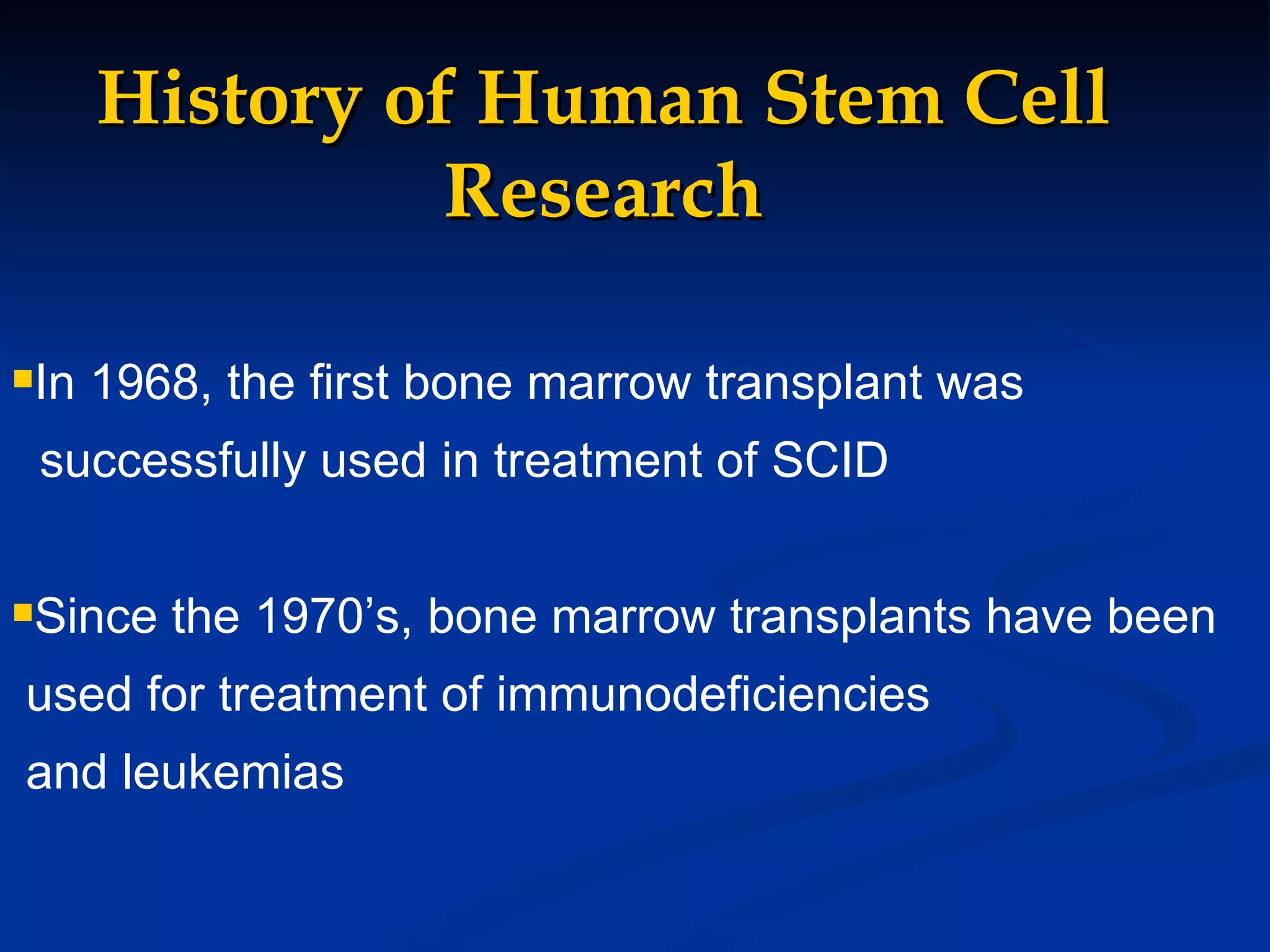
History of Human Stem Cell Research In 1968, the first bone marrow transplant was  successfully used in treatment of SCID Since the 1970’s, bone marrow transplants have been used for treatment of immunodeficiencies  and leukemias
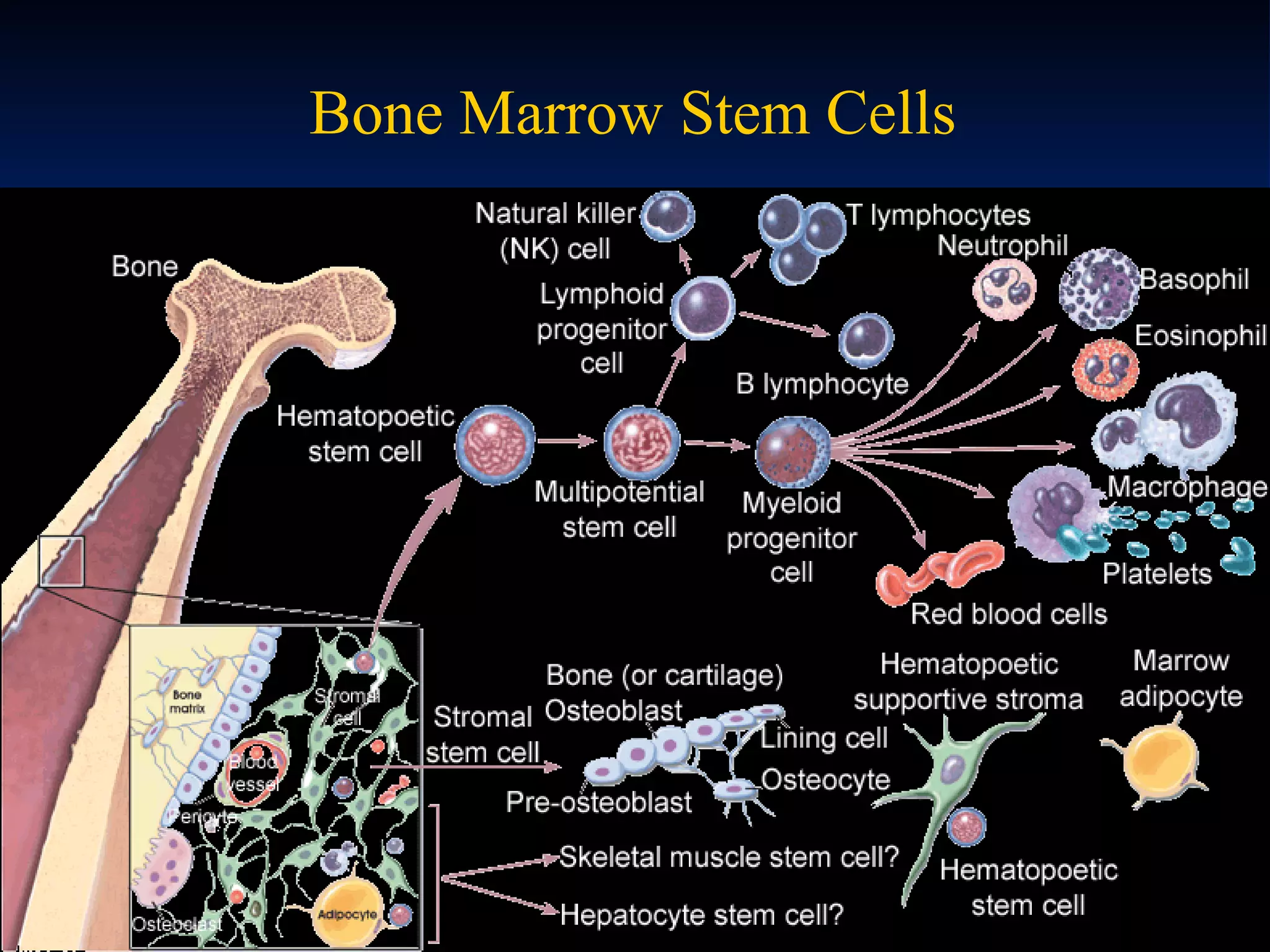
Bone Marrow Stem Cells
Genetics Cancer is a genetic illness: It is not necessarily a hereditary illness.
 
Glass, D. A. et. al. N Engl J Med December 25, 2003 Formation of Osteolytic Lesions in Multiple Myeloma
 
 
History of Human Embryonic  Stem Cell Research   1954 – John Enders received a  Nobel prize in Medicine for growing  polio virus in human embryonic kidney cells
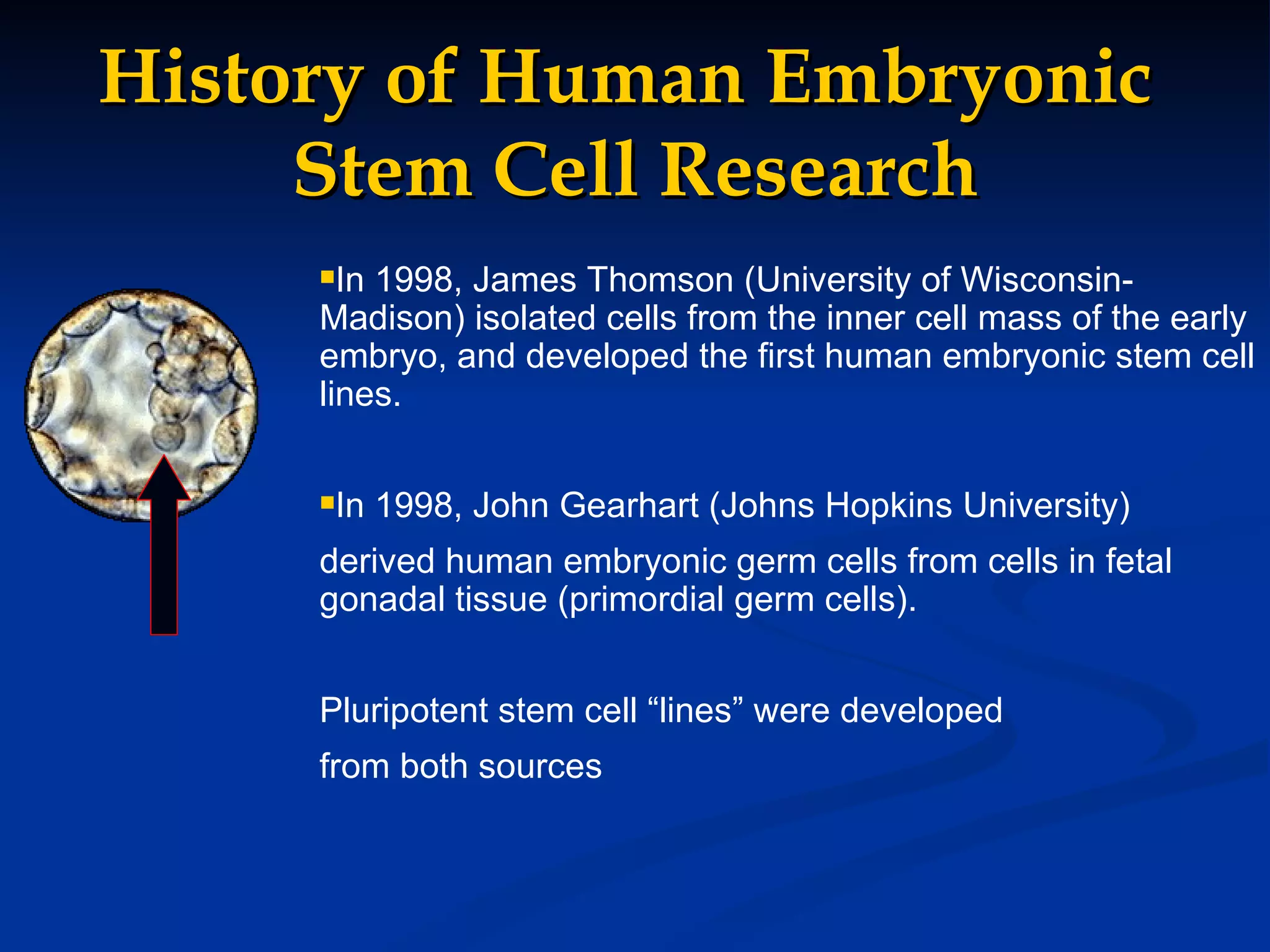
History of Human Embryonic  Stem Cell Research In 1998, James Thomson (University of Wisconsin-Madison) isolated cells from the inner cell mass of the early embryo, and developed the first human embryonic stem cell lines. In 1998, John Gearhart (Johns Hopkins University)  derived human embryonic germ cells from cells in fetal gonadal tissue (primordial germ cells). Pluripotent stem cell “lines” were developed  from both sources
History of Somatic Cell Nuclear Transfer (Cloning) 1952 – Briggs and King cloned tadpoles 1996 – The first mammal cloned from adult cells was Dolly, the sheep. 1998 – Mice cloned 1998 – Cows cloned 2000 - Pigs cloned 2001 - Cat cloned (CC = Carbon copy) 2002 - Rabbits cloned 2004 - Human Embryos cloned and embryonic stem cells extracted   2004 -- Bull serially cloned
Possible Uses of  Stem Cell Technology Replaceable tissues/organs Repair of defective cell types Delivery of genetic therapies Delivery of chemotherapeutic agents
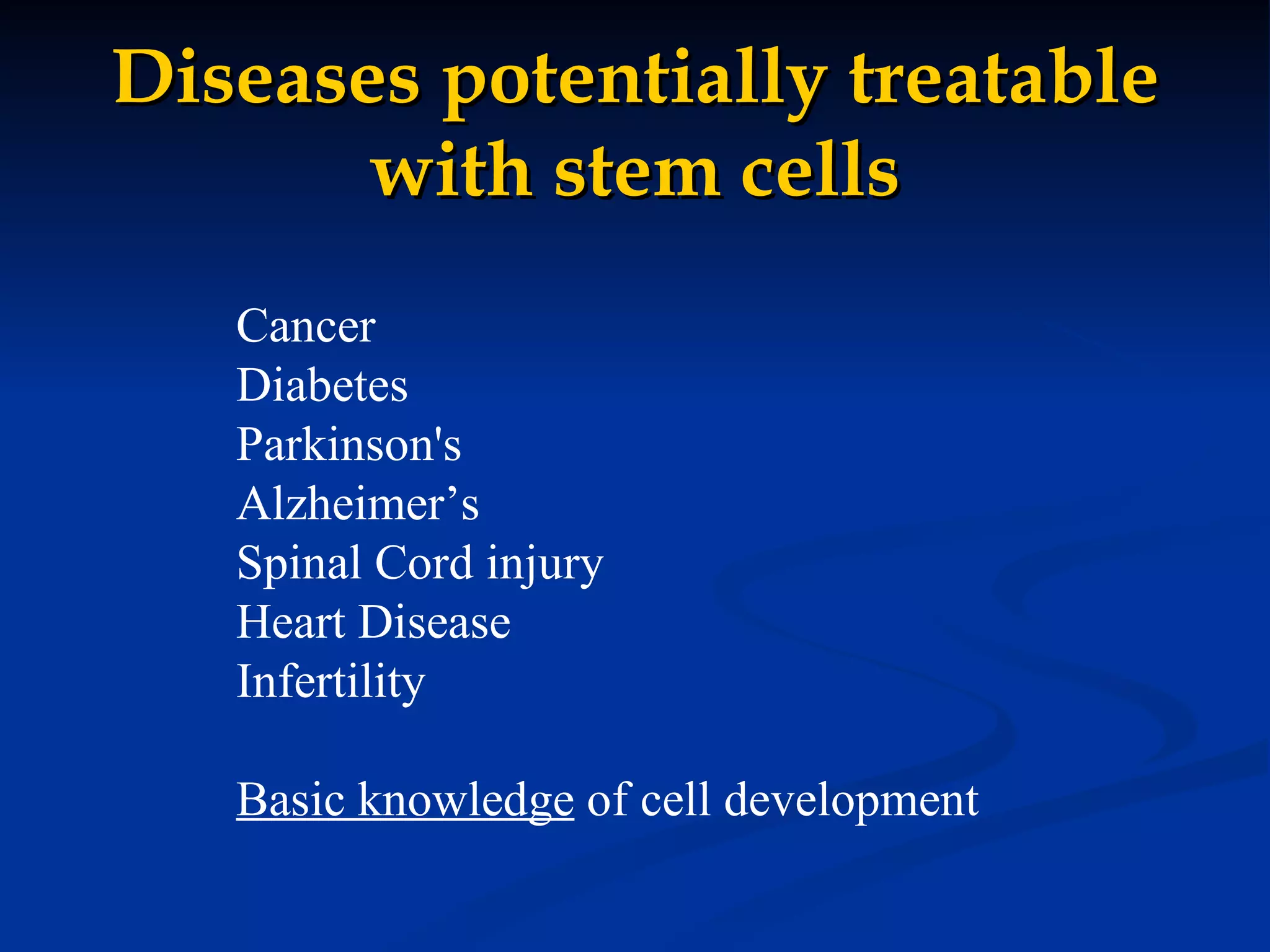
Diseases potentially treatable with stem cells Cancer Diabetes Parkinson's Alzheimer’s Spinal Cord injury Heart Disease Infertility Basic knowledge  of cell development
Who are stakeholders? People with illnesses Parents of children with illnesses Physicians and scientists Research Institutes:  NIH, Universities,  Corporations and shareholders (those who might profit) Government (s) USA, California, UK, Australia, Czech Republic, South Korea Taxpayers Churches and clergy The cells themselves
Misconceptions hamper understanding Sources of stem cells:  Adult stem cells:    bone marrow, blood, muscle, fat, nerves , etc. Umbilical cord stem cells:   Umbilical cord blood and placenta Embryonic stem cells:    From TABs or (supernumerary) IVFs Embryos made solely for research purposes Embryos made using somatic cell nuclear transfer (SCNT) DNA
Possible points of contention Source of cells Source of funding Autonomy or freedom Respect for life Definition of “life”
 
Legal Considerations: Embryonic Stem Cell Research 1973 – moratorium on government  financing for human embryo research 1988 – NIH Panel voted 19-2 in  favor of government funding 1989 – DHHS Secretary Sullivan  extended the moratorium Legal
Legal Issues: Embryonic Stem Cell Research 1990 – Congress voted to override the moratorium, vetoed by President  George H.W. Bush 1993 – President Clinton lifted the ban 1994 – the Human Embryo Research  Panel favored research, but Clinton overrode the panel 1995 – Congress banned federal funding
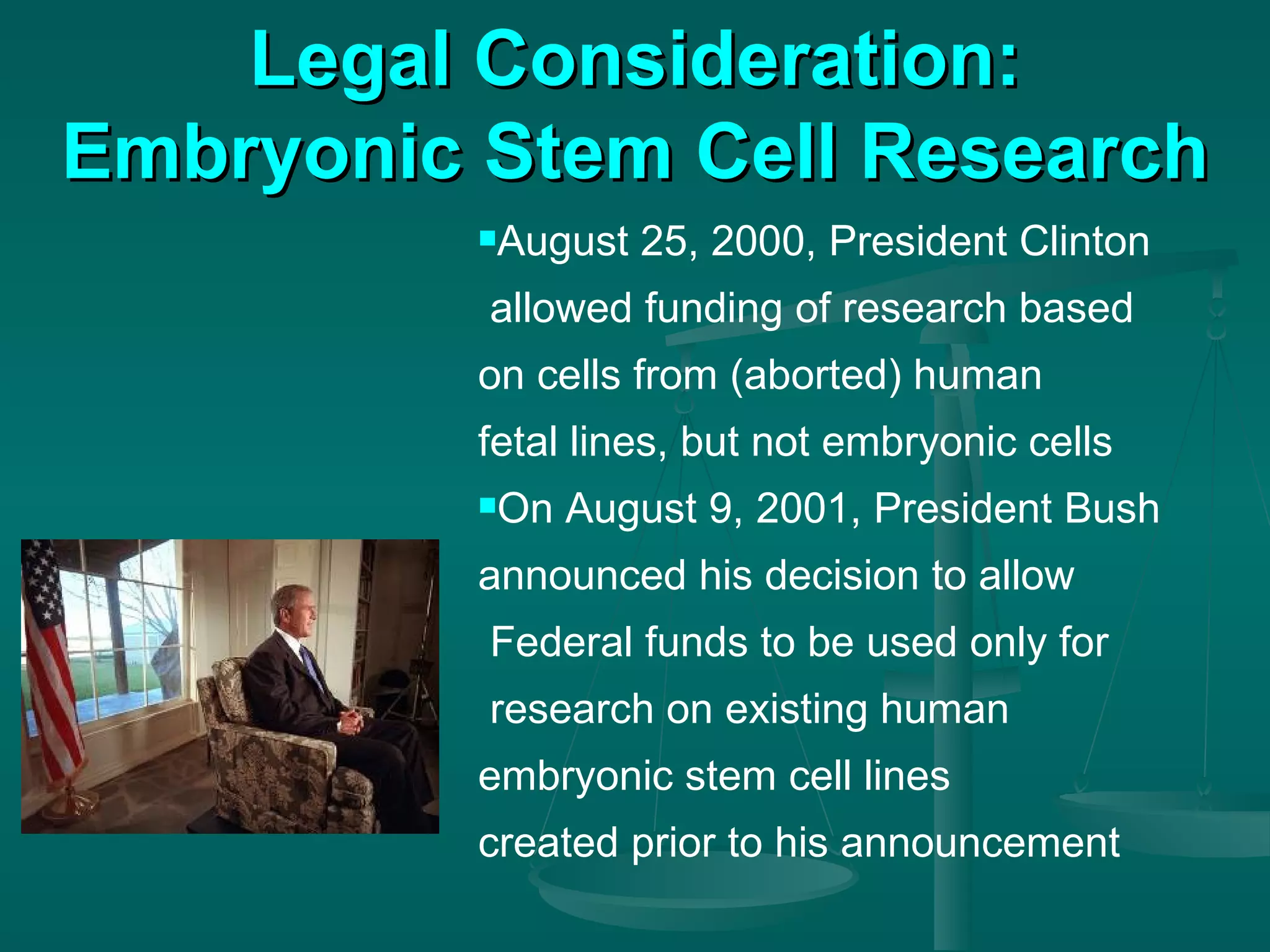
Legal Consideration: Embryonic Stem Cell Research August 25, 2000, President Clinton allowed funding of research based  on cells from (aborted) human  fetal lines, but not embryonic cells On August 9, 2001, President Bush  announced his decision to allow Federal funds to be used only for research on existing human embryonic stem cell lines  created prior to his announcement
Laws Banning  Reproductive  Cloning
Laws Banning  Research  Cloning
Embryonic  Reproductive Cloning Laws Worldwide
Embryonic  Research Cloning Laws Worldwide
Legislation on Reproductive/Therapeutic Cloning, Embryo Research,  and Stem Cell Research 2003 Source:  Encyclopedia of Bioethics 12 Stem Cell Research on Spare Embryos allowed 13 (General) Research on Embryos allowed +Australia, Brazil, Canada, Finland, France, Iceland, Spain, Sweden 5 Therapeutic Cloning (SCNT) allowed (US, UK, Netherlands, Japan, Israel) None Reproductive Cloning allowed
Allow for the procurement of human embryonic cells from supernumerary embryos by law Finland  Greece The Netherlands Sweden United Kingdom Prohibit procurement but allow by law the import and use  of human embryonic stem cell lines Germany
IVF cells only to be used for medical assisted reproduction Austria Denmark France Iceland  Spain Allowing for creation of human embryos for stem cell procurement by law United Kingdom
The Case for Federal Funding “ The only possible source for adequate support of our medical schools and medical research is the taxing power of the Federal Government.  Such a program must assure complete freedom for the institutions and the individual scientists in developing and conducting their research work.” 1932 1945 1995 2004
The Case for Federal Funding “ The only possible source for adequate support of our medical schools and medical research is the taxing power of the Federal Government.  Such a program must assure complete freedom for the institutions and the individual scientists in developing and conducting their research work.” b) 1945  US Surgeon General Thomas Parran arguing for the establishment of the National Institutes of Health (NIH)
California Stem Cell Research and Cures Initiative November, 2004, ballot initiative passed Run by an Independent Citizen’s Oversight Committee composed of politicians, advocacy groups, and executive officers of universities Provides $3 billion for embryonic stem cell research Grants up to $6 million Includes construction costs
Contributions from  Religious traditions Catholic (varies over time) tends to identify point of life at conception Protestant: varies by denomination, region, congregation, and parishioner Jewish tends to favor research, early intervention, prenatal diagnosis, and treatment Muslim tends toward pragmatism in particular context, e.g. goals of marriage, procreation Buddhist many considerations and interpretations. (No consistent positions) Religious
Early Judaism Genesis 1:28  “Be fruitful and increase in number.”  Exodus 21:  “When men strive together, and hurt a woman with child, so that there is a miscarriage, the one who hurt her shall be fined. If harm follows, then you shall give life for life. Developing life not give legal status of a person.  Abortion not condoned in early Judaism.
Early Christianity New Testament takes no position on abortion or the status of embryonic or fetal life. Negative references to  pharmakeia  may refer to abortifacient drugs and not medicine generally.  In translating Exodus from Hebrew to Greek, “harm” become “form”.
Catholicism The soul not joined to the body until formation. Only when fetal development advances to a stage that resembles human form is it possible for the human soul to be present. 40 days after conception for males/90 for females. Until 1869 Catholic Church recognized a distinction between the ensouled and unensouled fetus.
Another distinction Possible  persons - entities that could possibly develop into persons if certain actions were taken with respect to them (e.g. implantation) Potential  persons - entities that will develop into persons in the normal course of events unless that development is interrupted Development of “primitive streak” at 14 days a possible “moral marker” Development of gastrulation, organ formation, at 17 days Development of neural tube at 21 days
 
Protestant Many forms Luther and Calvin rejected the philosophical theology of Thomas Aquinas Protestantism sees abortion (and other reproductive decisions) as a matter of  individual conscience (no papal authority)  now more tolerant of abortion as a matter of choice or individual responsibility (no state religion).  Discouraged for less than urgent reasons
Contemporary Judaism Tolerant of contemporary public policy of “choice” Teaches abortion should be chosen   only for compelling reasons. Embryo’s status for the first forty days   (according to Talmud) “ as if it were simply water”. Hence Judaism supportive of IVF and  Pre-implantation Genetic Diagnosis (PGD).
Islam Koran 23:12-16  Human creation begins with a tiny drop from which the larger fetus is fashioned by God the creator, who breathes life into what is formed.  Distinguishes between souled and unensouled fetus.  End of 4th month-point when abortion is no longer permissible.  Technology not valued abstractly:  reproductive technology must serve health within context of marriage.
Asian Traditions More practical and less divisive than in West Require woman to make thoughtful and compassionate decisions In Japan fetal loss is mourned and observed with ritual and remembrance ( mizuko ) In China, abortion not only permitted but mandatory after first child.  India, as China, has development stem cell lines.  Public encouragement for potential benefit.
Buddhist Ethics "Cloning is a different way of thinking about the recycling of life,” "It's a Buddhist way of thinking.” Professor Yong Moon   from Korea's Seoul National University at the American Association for the Advancement of Science 2004 Just a few days earlier at the same conference, Moon was part of the team that announced it had successfully cloned human embryos and extracted sought-after and versatile embryonic stem cells. *Hwang, W.S., et al. 2004. Evidence of a Pluripotent Human Embryonic Stem Cell Line Derived from a Cloned Blastocyst.  Science  303: 1669-1674.
Confucian tradition “ Ren” = “good birth” Chinese generally have a concern to reduce the number of deleterious genetic diseases In the population. Collective good generally given higher priority than that of the embryo or individual rights.
Cloned Embryos Catholicism opposes ablation of inner cell mass (ICM) of blastocyst. Southern Baptist Convention (1999) vigorously opposition to destruction of innocent human life (including embryos) Presbyterian Church (USA) (2001) “We affirm the use of human stem cell tissue for research that may result in the restoring of health to those suffering from serious illness.” Judaism stresses God-given human role in mending creation.  “The Torah commands us to treat and cure the ill and to defeat disease wherever possible.” (2002)
Ethical principles for Embryonic Stem Cell Research Principle of  Respect   Embryo is human life which should not be damaged without reason and good cause.  Because of potential benefit in treating human diseases, research should be allowed and supported.  Principle of  Informed consent  (autonomy) Principle of  Safety and utility   (non-malfeasance) Principle of  Non-commercialization  (justice) Tissues and cells should be donated Buying and selling of gametes, embryos and fetal tissues should not be allowed.
Preimplantation Genetic Diagnosis P.G.D.
PGD Cancer (Colon and Breast) Cystic fibrosis Cycle cell anemia Ankylosing spondylosis Huntington’s disease
Partial Birth Abortion Currently under consideration by US Supreme Court Challenges constitutionality of Partial-Birth Abortion Act of November 2003. (Nebraska law struck down in 2000) Fails to provide  an exception for procedures preformed to protect the health of the pregnant woman. Vaguely written Places undue burden on women seeking abortion.  Supporters of the law argued that procedure was never medically  necessary.
Partial-birth abortion With the ban, Congress targeted an abortion procedure, known medically as "intact dilation and extraction," that involves the partial delivery of a fetus. The skull is then punctured and its contents evacuated to make it easier for the head to pass through the birth canal. Doctors say it is used only in exceedingly rare circumstances (1 in 500). American College of Obstetricians and Gynecologists  has said that the procedures banned under the measure -- called "intact dilation and extraction and evacuation" and "dilation and extraction” (D & X) -- are increasingly regarded as the safest abortion procedures during the second trimester of pregnancy.
Partial-birth abortion Constitutional issues: Right to privacy Right to life (and definition of life) “ Child” or “Fetus” Interest of the state Freedom of religion Legal versus moral considerations Responsibility to make moral choices
Principles of Bioethics Beneficence Physician-centered decisions Non-maleficence First Do No Harm Autonomy Patient’s right to self- determination Justice Fairness Ethical
Conclusion The religions today, even in their disagreements, serve to focus both our awe at the mysteries of our humanity and our anxieties about our futures.  Religious traditions will probably continue to adapt to our changing knowledge of ourselves and our growing powers to modify our nature.  In so doing they will perhaps shed some light on our biological origins and on our technological destiny.   Ronald Cole-Turner Encyclopedia of Bioethics
Your role in 21st century medicine There are still many unanswered questions: As physicians, you will be concerned with the particular details of your patients’ lives. You will face situations in which there will inevitably be uncomfortable choices. You will hope to be able to make those decisions with your patients and for your patients best interests. You will hope to be able to practice with in a legal environment that respects science, knowledge, your training, and your own moral convictions.

Stem cell ethics 06

  • 1.
    Ethical and ScientificIssues in the use of Human Stem Cells Allen R. Dyer, M.D., Ph.D. [email_address] http://faculty.etsu.edu/dyer
  • 2.
  • 3.
  • 4.
    Principles of BioethicsBeneficence (or Paternalism) Physician-centered decisions Non-maleficence First Do No Harm Autonomy Patient’s right to self- determination Justice Fairness Ethical
  • 5.
    Evolution of EthicalPriorities Allen R. Dyer: Ethics of Human Genetic Intervention Experimental Neurology 144,168-172 (1997) Social control Autonomy Beneficence Social justice Autonomy Beneficence Autonomy Beneficence Social justice Beneficence Autonomy Justice 2000+ 1990s 1970s-1980s 1950s-1960s
  • 6.
    Human Genetic InterventionAllen R. Dyer: Ethics of Human Genetic Intervention Experimental Neurology 144,168-172 (1997) Genetic Engineering Genetic Engineering Enhancement of capabilities Genetic Engineering Gene therapy Cure or prevention of disease Germ-line Somatic cells
  • 7.
    Ethical Issues forGene Therapy and Genetic Engineering Safety (nonmaleficence) Efficacy (beneficence) Informed consent (autonomy) Allocation of resources (justice) Allen R. Dyer: Ethics of Human Genetic Intervention Experimental Neurology 144,168-172 (1997)
  • 8.
    Ethical issues inassisted reproduction “ Ethics, Advertising and Assisted Reproduction: The Goals and Methods of Advertising” Concern for “commodification” of life and life products Concern for availability, allocation, and pricing of the technology Allen R. Dyer: Women’s Health Issues 7:3, pp. 143-148. May/June 1997
  • 9.
  • 10.
    Human Embryo Blastocyststage Immunosurgery Embryonic stem cells Scientific
  • 11.
    STEM CELL (DEFINITION)A cell that has the ability to continuously divide and differentiate (develop) into various other kind(s) of cells/tissues Fetal tissue, cord blood, and adult stem cells Cells differentiated, but can form a number of other tissues Multipotent Some cells of blastocyst (5 to 14 days) Cells can form any (over 200) cell types Pluripotent Cells from early (1-3 days) embryos Each cell can develop into a new individual Totipotent Examples Description Stem cell type
  • 12.
    History of HumanStem Cell Research In 1968, the first bone marrow transplant was successfully used in treatment of SCID Since the 1970’s, bone marrow transplants have been used for treatment of immunodeficiencies and leukemias
  • 13.
  • 14.
    Genetics Cancer isa genetic illness: It is not necessarily a hereditary illness.
  • 15.
  • 16.
    Glass, D. A.et. al. N Engl J Med December 25, 2003 Formation of Osteolytic Lesions in Multiple Myeloma
  • 17.
  • 18.
  • 19.
    History of HumanEmbryonic Stem Cell Research 1954 – John Enders received a Nobel prize in Medicine for growing polio virus in human embryonic kidney cells
  • 20.
    History of HumanEmbryonic Stem Cell Research In 1998, James Thomson (University of Wisconsin-Madison) isolated cells from the inner cell mass of the early embryo, and developed the first human embryonic stem cell lines. In 1998, John Gearhart (Johns Hopkins University) derived human embryonic germ cells from cells in fetal gonadal tissue (primordial germ cells). Pluripotent stem cell “lines” were developed from both sources
  • 21.
    History of SomaticCell Nuclear Transfer (Cloning) 1952 – Briggs and King cloned tadpoles 1996 – The first mammal cloned from adult cells was Dolly, the sheep. 1998 – Mice cloned 1998 – Cows cloned 2000 - Pigs cloned 2001 - Cat cloned (CC = Carbon copy) 2002 - Rabbits cloned 2004 - Human Embryos cloned and embryonic stem cells extracted 2004 -- Bull serially cloned
  • 22.
    Possible Uses of Stem Cell Technology Replaceable tissues/organs Repair of defective cell types Delivery of genetic therapies Delivery of chemotherapeutic agents
  • 23.
    Diseases potentially treatablewith stem cells Cancer Diabetes Parkinson's Alzheimer’s Spinal Cord injury Heart Disease Infertility Basic knowledge of cell development
  • 24.
    Who are stakeholders?People with illnesses Parents of children with illnesses Physicians and scientists Research Institutes: NIH, Universities, Corporations and shareholders (those who might profit) Government (s) USA, California, UK, Australia, Czech Republic, South Korea Taxpayers Churches and clergy The cells themselves
  • 25.
    Misconceptions hamper understandingSources of stem cells: Adult stem cells: bone marrow, blood, muscle, fat, nerves , etc. Umbilical cord stem cells: Umbilical cord blood and placenta Embryonic stem cells: From TABs or (supernumerary) IVFs Embryos made solely for research purposes Embryos made using somatic cell nuclear transfer (SCNT) DNA
  • 26.
    Possible points ofcontention Source of cells Source of funding Autonomy or freedom Respect for life Definition of “life”
  • 27.
  • 28.
    Legal Considerations: EmbryonicStem Cell Research 1973 – moratorium on government financing for human embryo research 1988 – NIH Panel voted 19-2 in favor of government funding 1989 – DHHS Secretary Sullivan extended the moratorium Legal
  • 29.
    Legal Issues: EmbryonicStem Cell Research 1990 – Congress voted to override the moratorium, vetoed by President George H.W. Bush 1993 – President Clinton lifted the ban 1994 – the Human Embryo Research Panel favored research, but Clinton overrode the panel 1995 – Congress banned federal funding
  • 30.
    Legal Consideration: EmbryonicStem Cell Research August 25, 2000, President Clinton allowed funding of research based on cells from (aborted) human fetal lines, but not embryonic cells On August 9, 2001, President Bush announced his decision to allow Federal funds to be used only for research on existing human embryonic stem cell lines created prior to his announcement
  • 31.
    Laws Banning Reproductive Cloning
  • 32.
    Laws Banning Research Cloning
  • 33.
    Embryonic ReproductiveCloning Laws Worldwide
  • 34.
    Embryonic ResearchCloning Laws Worldwide
  • 35.
    Legislation on Reproductive/TherapeuticCloning, Embryo Research, and Stem Cell Research 2003 Source: Encyclopedia of Bioethics 12 Stem Cell Research on Spare Embryos allowed 13 (General) Research on Embryos allowed +Australia, Brazil, Canada, Finland, France, Iceland, Spain, Sweden 5 Therapeutic Cloning (SCNT) allowed (US, UK, Netherlands, Japan, Israel) None Reproductive Cloning allowed
  • 36.
    Allow for theprocurement of human embryonic cells from supernumerary embryos by law Finland Greece The Netherlands Sweden United Kingdom Prohibit procurement but allow by law the import and use of human embryonic stem cell lines Germany
  • 37.
    IVF cells onlyto be used for medical assisted reproduction Austria Denmark France Iceland Spain Allowing for creation of human embryos for stem cell procurement by law United Kingdom
  • 38.
    The Case forFederal Funding “ The only possible source for adequate support of our medical schools and medical research is the taxing power of the Federal Government. Such a program must assure complete freedom for the institutions and the individual scientists in developing and conducting their research work.” 1932 1945 1995 2004
  • 39.
    The Case forFederal Funding “ The only possible source for adequate support of our medical schools and medical research is the taxing power of the Federal Government. Such a program must assure complete freedom for the institutions and the individual scientists in developing and conducting their research work.” b) 1945 US Surgeon General Thomas Parran arguing for the establishment of the National Institutes of Health (NIH)
  • 40.
    California Stem CellResearch and Cures Initiative November, 2004, ballot initiative passed Run by an Independent Citizen’s Oversight Committee composed of politicians, advocacy groups, and executive officers of universities Provides $3 billion for embryonic stem cell research Grants up to $6 million Includes construction costs
  • 41.
    Contributions from Religious traditions Catholic (varies over time) tends to identify point of life at conception Protestant: varies by denomination, region, congregation, and parishioner Jewish tends to favor research, early intervention, prenatal diagnosis, and treatment Muslim tends toward pragmatism in particular context, e.g. goals of marriage, procreation Buddhist many considerations and interpretations. (No consistent positions) Religious
  • 42.
    Early Judaism Genesis1:28 “Be fruitful and increase in number.” Exodus 21: “When men strive together, and hurt a woman with child, so that there is a miscarriage, the one who hurt her shall be fined. If harm follows, then you shall give life for life. Developing life not give legal status of a person. Abortion not condoned in early Judaism.
  • 43.
    Early Christianity NewTestament takes no position on abortion or the status of embryonic or fetal life. Negative references to pharmakeia may refer to abortifacient drugs and not medicine generally. In translating Exodus from Hebrew to Greek, “harm” become “form”.
  • 44.
    Catholicism The soulnot joined to the body until formation. Only when fetal development advances to a stage that resembles human form is it possible for the human soul to be present. 40 days after conception for males/90 for females. Until 1869 Catholic Church recognized a distinction between the ensouled and unensouled fetus.
  • 45.
    Another distinction Possible persons - entities that could possibly develop into persons if certain actions were taken with respect to them (e.g. implantation) Potential persons - entities that will develop into persons in the normal course of events unless that development is interrupted Development of “primitive streak” at 14 days a possible “moral marker” Development of gastrulation, organ formation, at 17 days Development of neural tube at 21 days
  • 46.
  • 47.
    Protestant Many formsLuther and Calvin rejected the philosophical theology of Thomas Aquinas Protestantism sees abortion (and other reproductive decisions) as a matter of individual conscience (no papal authority) now more tolerant of abortion as a matter of choice or individual responsibility (no state religion). Discouraged for less than urgent reasons
  • 48.
    Contemporary Judaism Tolerantof contemporary public policy of “choice” Teaches abortion should be chosen only for compelling reasons. Embryo’s status for the first forty days (according to Talmud) “ as if it were simply water”. Hence Judaism supportive of IVF and Pre-implantation Genetic Diagnosis (PGD).
  • 49.
    Islam Koran 23:12-16 Human creation begins with a tiny drop from which the larger fetus is fashioned by God the creator, who breathes life into what is formed. Distinguishes between souled and unensouled fetus. End of 4th month-point when abortion is no longer permissible. Technology not valued abstractly: reproductive technology must serve health within context of marriage.
  • 50.
    Asian Traditions Morepractical and less divisive than in West Require woman to make thoughtful and compassionate decisions In Japan fetal loss is mourned and observed with ritual and remembrance ( mizuko ) In China, abortion not only permitted but mandatory after first child. India, as China, has development stem cell lines. Public encouragement for potential benefit.
  • 51.
    Buddhist Ethics "Cloningis a different way of thinking about the recycling of life,” "It's a Buddhist way of thinking.” Professor Yong Moon from Korea's Seoul National University at the American Association for the Advancement of Science 2004 Just a few days earlier at the same conference, Moon was part of the team that announced it had successfully cloned human embryos and extracted sought-after and versatile embryonic stem cells. *Hwang, W.S., et al. 2004. Evidence of a Pluripotent Human Embryonic Stem Cell Line Derived from a Cloned Blastocyst. Science 303: 1669-1674.
  • 52.
    Confucian tradition “Ren” = “good birth” Chinese generally have a concern to reduce the number of deleterious genetic diseases In the population. Collective good generally given higher priority than that of the embryo or individual rights.
  • 53.
    Cloned Embryos Catholicismopposes ablation of inner cell mass (ICM) of blastocyst. Southern Baptist Convention (1999) vigorously opposition to destruction of innocent human life (including embryos) Presbyterian Church (USA) (2001) “We affirm the use of human stem cell tissue for research that may result in the restoring of health to those suffering from serious illness.” Judaism stresses God-given human role in mending creation. “The Torah commands us to treat and cure the ill and to defeat disease wherever possible.” (2002)
  • 54.
    Ethical principles forEmbryonic Stem Cell Research Principle of Respect Embryo is human life which should not be damaged without reason and good cause. Because of potential benefit in treating human diseases, research should be allowed and supported. Principle of Informed consent (autonomy) Principle of Safety and utility (non-malfeasance) Principle of Non-commercialization (justice) Tissues and cells should be donated Buying and selling of gametes, embryos and fetal tissues should not be allowed.
  • 55.
  • 56.
    PGD Cancer (Colonand Breast) Cystic fibrosis Cycle cell anemia Ankylosing spondylosis Huntington’s disease
  • 57.
    Partial Birth AbortionCurrently under consideration by US Supreme Court Challenges constitutionality of Partial-Birth Abortion Act of November 2003. (Nebraska law struck down in 2000) Fails to provide an exception for procedures preformed to protect the health of the pregnant woman. Vaguely written Places undue burden on women seeking abortion. Supporters of the law argued that procedure was never medically necessary.
  • 58.
    Partial-birth abortion Withthe ban, Congress targeted an abortion procedure, known medically as "intact dilation and extraction," that involves the partial delivery of a fetus. The skull is then punctured and its contents evacuated to make it easier for the head to pass through the birth canal. Doctors say it is used only in exceedingly rare circumstances (1 in 500). American College of Obstetricians and Gynecologists has said that the procedures banned under the measure -- called "intact dilation and extraction and evacuation" and "dilation and extraction” (D & X) -- are increasingly regarded as the safest abortion procedures during the second trimester of pregnancy.
  • 59.
    Partial-birth abortion Constitutionalissues: Right to privacy Right to life (and definition of life) “ Child” or “Fetus” Interest of the state Freedom of religion Legal versus moral considerations Responsibility to make moral choices
  • 60.
    Principles of BioethicsBeneficence Physician-centered decisions Non-maleficence First Do No Harm Autonomy Patient’s right to self- determination Justice Fairness Ethical
  • 61.
    Conclusion The religionstoday, even in their disagreements, serve to focus both our awe at the mysteries of our humanity and our anxieties about our futures. Religious traditions will probably continue to adapt to our changing knowledge of ourselves and our growing powers to modify our nature. In so doing they will perhaps shed some light on our biological origins and on our technological destiny. Ronald Cole-Turner Encyclopedia of Bioethics
  • 62.
    Your role in21st century medicine There are still many unanswered questions: As physicians, you will be concerned with the particular details of your patients’ lives. You will face situations in which there will inevitably be uncomfortable choices. You will hope to be able to make those decisions with your patients and for your patients best interests. You will hope to be able to practice with in a legal environment that respects science, knowledge, your training, and your own moral convictions.