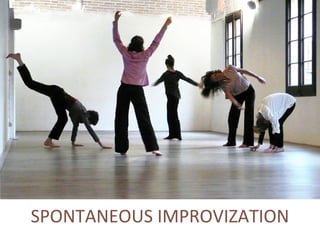
SPONTANEOUS	
  IMPROVIZATION	
  
Some	
  years	
  ago	
  I	
  had	
  the	
  opportunity	
  to	
  draw	
  a	
  
dancer	
  while	
  in	
  movement.	
  I	
  wanted	
  to	
  know	
  why	
  
the	
  a9tude	
  of	
  a	
  body	
  spoke	
  so	
  much	
  to	
  me	
  and	
  to	
  
understand	
  the	
  expressive	
  quali>es	
  of	
  line	
  
drawing.	
  	
  
In	
  2015	
  I	
  was	
  again	
  fortunate	
  to	
  be	
  able	
  to	
  draw	
  
dancers	
  who’s	
  movement	
  was	
  mainly	
  guided	
  by	
  
improvisa>on.	


Lately,	
  drawing	
  the	
  group	
  of	
  dancers	
  moving	
  in	
  an	
  
improvisa>onal	
  way,	
  I	
  too	
  had	
  to	
  be	
  ready	
  to	
  perform	
  
with	
  a	
  spirit	
  of	
  spontaneity	
  and	
  intui>on	
  	
  
This	
  >me	
  there	
  where	
  many	
  people	
  performing.	
  	
  
I	
  felt	
  that	
  these	
  new	
  drawing	
  sessions	
  would	
  further	
  
reinforce	
  what	
  I	
  had	
  previously	
  learned	
  and	
  internalized.	
  
I	
  thought	
  about	
  how	
  I	
  would	
  approach	
  the	
  challenge	
  this	
  
>me	
  around.	


I	
  imprint	
  an	
  image	
  on	
  to	
  my	
  memory.	
  Then	
  drawing	
  
rapidly,	
  generally	
  within	
  ten	
  to	
  fiIeen	
  seconds,	
  no	
  more	
  
than	
  thirty,	
  I	
  sketch	
  what	
  I	
  see	
  have	
  in	
  my	
  memory	
  
rather	
  than	
  from	
  direct	
  observa>on.	


Rapidity	
  is	
  important,	
  because	
  the	
  image	
  in	
  my	
  mind’s	
  
eye	
  will	
  dissolved	
  quickly,	
  being	
  replaced	
  by	
  the	
  next	
  
experience.	


I	
  wait,	
  ready	
  to	
  capture	
  a	
  brief	
  moment;	
  a	
  swiI	
  
expressive	
  movement	
  that	
  catches	
  my	
  eye	


A	
  few	
  seconds	
  to	
  	
  draw	
  what	
  I	
  have	
  commiMed	
  to	
  my	
  
memory	
  forces	
  me	
  to	
  iden>fy	
  the	
  main	
  expressive	
  line	
  
Exact	
  human	
  propor>ons	
  are	
  not	
  the	
  primary	
  goal.	
  I	
  am	
  
making	
  an	
  expressive	
  work,	
  whether	
  figura>ve	
  or	
  not	
  	
  
At	
  >mes	
  some	
  dancers	
  would	
  connect	
  with	
  each	
  other	
  
in	
  two’s,	
  three’s	
  or	
  even	
  more	
  	
  
Dancers	
  meld	
  into	
  each	
  other	
  crea>ng	
  combined	
  forms	
  
I	
  observe	
  how	
  one	
  person’s	
  movement	
  and	
  form	
  
can	
  be	
  a	
  result	
  of	
  the	
  interac>on	
  with	
  another	
  
dancer’s	
  posturing	
  
I	
  react	
  to	
  an	
  impulse;	
  a	
  sudden	
  realiza>on	
  of	
  what	
  I	
  
am	
  seeing.	
  In	
  this	
  case	
  the	
  geometry	
  of	
  the	
  body	
  in	
  
movement.	


A	
  sudden	
  realiza>on	
  sees	
  me	
  diverted	
  into	
  a	
  new	
  
direc>on.	
  The	
  animal	
  appears.	
  
My	
  reac>ons	
  are	
  spurred	
  not	
  only	
  by	
  the	
  formal	
  shapes	
  that	
  I	
  
see,	
  but	
  also	
  the	
  dancer’s	
  expressive	
  movement.	
  I	
  have	
  liMle	
  
>me	
  to	
  think;	
  just	
  react.	
  So,	
  only	
  on	
  comple>on	
  do	
  I	
  fully	
  see	
  
the	
  dancer’s	
  emo>ons	
  and	
  character.	


I	
  was	
  giIed	
  the	
  privilege	
  to	
  see	
  the	
  dancer’s	
  express	
  
their	
  very	
  personal	
  feelings	
  in	
  movement.	
  Improvisa>on	
  
comes	
  from	
  a	
  decision	
  to	
  liberate	
  emo>ons	
  and	
  so	
  I	
  had	
  
to	
  be	
  ready	
  for	
  the	
  unexpected.	


Acknowledgments	


I	
  would	
  like	
  to	
  thank	
  Einat	
  Tal	
  for	
  her	
  generous	
  
invita>on	
  	
  to	
  draw	
  the	
  improvisa>on	
  dance	
  groups	
  in	
  
Barcelona	
  and	
  Sant	
  Pere	
  de	
  Riudebitlles	
  in	
  Catalunya.	
  
Thanks	
  you	
  also	
  to	
  all	
  the	
  dancers	
  for	
  allowing	
  their	
  
work	
  to	
  be	
  experienced	
  by	
  others.	
  I	
  also	
  extend	
  a	
  
thank	
  you	
  Judit	
  Rodriguez	
  for	
  photographing	
  me	
  
drawing	
  at	
  the	
  Barcelona	
  session.	
  

Spontaneous improvization 2015

  • 1.
  • 2.
    Some  years  ago  I  had  the  opportunity  to  draw  a   dancer  while  in  movement.  I  wanted  to  know  why   the  a9tude  of  a  body  spoke  so  much  to  me  and  to   understand  the  expressive  quali>es  of  line   drawing.     In  2015  I  was  again  fortunate  to  be  able  to  draw   dancers  who’s  movement  was  mainly  guided  by   improvisa>on.            
  • 5.
    Lately,  drawing  the  group  of  dancers  moving  in  an   improvisa>onal  way,  I  too  had  to  be  ready  to  perform   with  a  spirit  of  spontaneity  and  intui>on    
  • 6.
    This  >me  there  where  many  people  performing.     I  felt  that  these  new  drawing  sessions  would  further   reinforce  what  I  had  previously  learned  and  internalized.   I  thought  about  how  I  would  approach  the  challenge  this   >me  around.    
  • 7.
    I  imprint  an  image  on  to  my  memory.  Then  drawing   rapidly,  generally  within  ten  to  fiIeen  seconds,  no  more   than  thirty,  I  sketch  what  I  see  have  in  my  memory   rather  than  from  direct  observa>on.      
  • 8.
    Rapidity  is  important,  because  the  image  in  my  mind’s   eye  will  dissolved  quickly,  being  replaced  by  the  next   experience.      
  • 9.
    I  wait,  ready  to  capture  a  brief  moment;  a  swiI   expressive  movement  that  catches  my  eye    
  • 10.
    A  few  seconds  to    draw  what  I  have  commiMed  to  my   memory  forces  me  to  iden>fy  the  main  expressive  line  
  • 11.
    Exact  human  propor>ons  are  not  the  primary  goal.  I  am   making  an  expressive  work,  whether  figura>ve  or  not    
  • 12.
    At  >mes  some  dancers  would  connect  with  each  other   in  two’s,  three’s  or  even  more    
  • 13.
    Dancers  meld  into  each  other  crea>ng  combined  forms  
  • 14.
    I  observe  how  one  person’s  movement  and  form   can  be  a  result  of  the  interac>on  with  another   dancer’s  posturing  
  • 15.
    I  react  to  an  impulse;  a  sudden  realiza>on  of  what  I   am  seeing.  In  this  case  the  geometry  of  the  body  in   movement.      
  • 16.
    A  sudden  realiza>on  sees  me  diverted  into  a  new   direc>on.  The  animal  appears.  
  • 17.
    My  reac>ons  are  spurred  not  only  by  the  formal  shapes  that  I   see,  but  also  the  dancer’s  expressive  movement.  I  have  liMle   >me  to  think;  just  react.  So,  only  on  comple>on  do  I  fully  see   the  dancer’s  emo>ons  and  character.      
  • 18.
    I  was  giIed  the  privilege  to  see  the  dancer’s  express   their  very  personal  feelings  in  movement.  Improvisa>on   comes  from  a  decision  to  liberate  emo>ons  and  so  I  had   to  be  ready  for  the  unexpected.        
  • 19.
    Acknowledgments     I  would  like  to  thank  Einat  Tal  for  her  generous   invita>on    to  draw  the  improvisa>on  dance  groups  in   Barcelona  and  Sant  Pere  de  Riudebitlles  in  Catalunya.   Thanks  you  also  to  all  the  dancers  for  allowing  their   work  to  be  experienced  by  others.  I  also  extend  a   thank  you  Judit  Rodriguez  for  photographing  me   drawing  at  the  Barcelona  session.