Spleen
Spleen
Dr Amit Gupta
Associate Professor
Dept of Surgery
Word "spleen" in English is "ill temper
Anatomy
Anatomy
 Largest reticuloendothelial organ in the body
 Intra-abdominal wedge shaped organ.
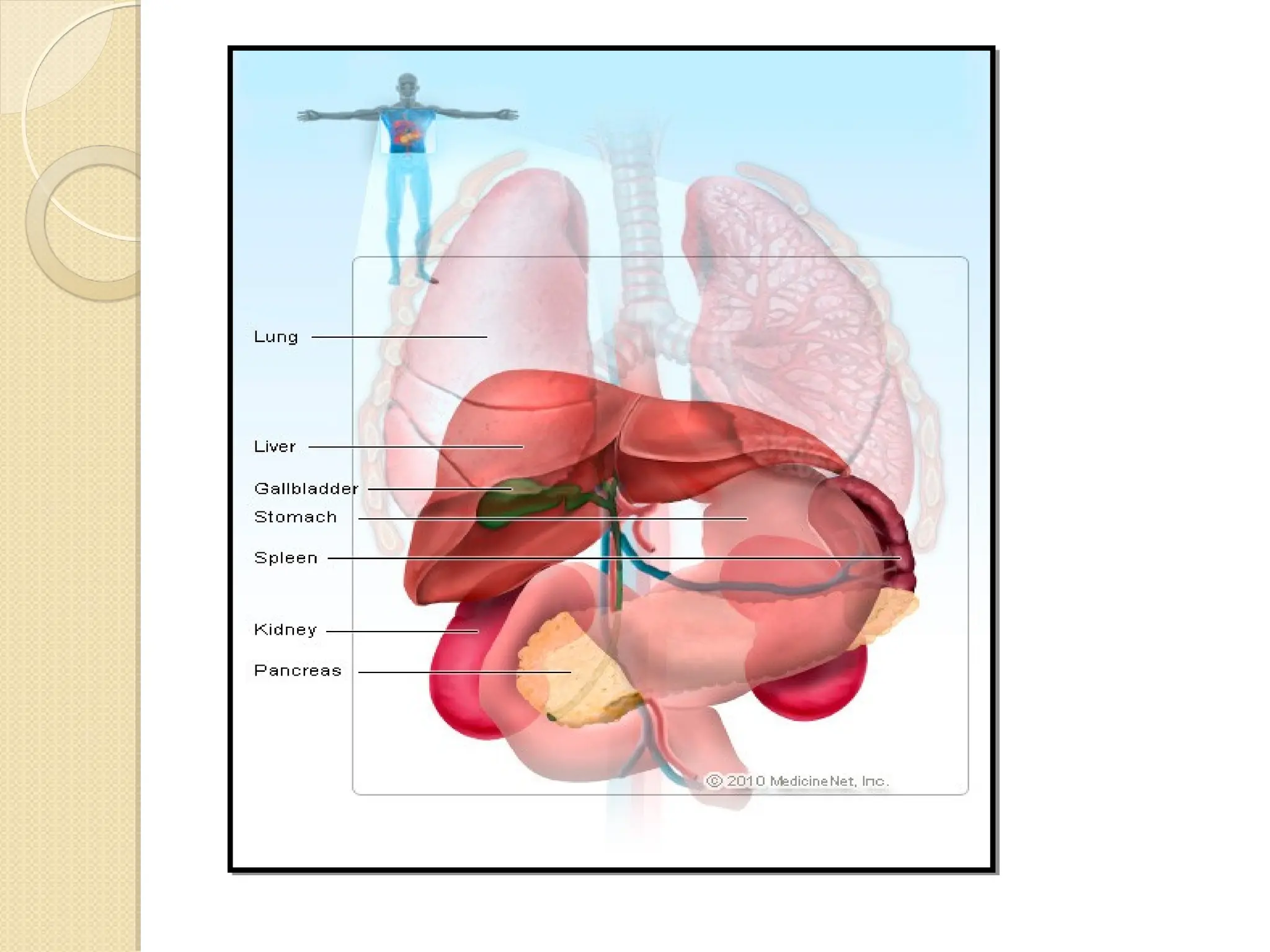
 Left hypochondrium & epigastrium.
 Soft , highly vascular.
 Variable size & weight
 Average 12.5 X 7.5 X 2.5 in size
 150 -230 gm in weight.
 It derives most of its blood from the splenic artery
 Small amount from short gastric vessels
 Venous drainage: splenic vein
Total splenic inflow of blood is approximately 250 to 300
mL/min
Physiology
 Filtration
 Host defence
 Storage
 Hematopoiesis
Congenital Anomalies
Complete absence is rare
associated with other congenital abnormalities such as situs
inversus and cardiac malformations.
Hypoplasia: more common finding
Accessory spleens (spleniculi) are common
Generally situated in the gastrosplenic ligament or the tail of
the pancreas,omentum or mesenteries of the small or large
intestine.
In splenectomy if an accessory spleen is overlooked, the
benefit of removal of the definitive spleen can be lost
Splenomegaly
Splenomegaly
 Means enlargement of spleen.
 Normal spleen not palpable.
◦ has to enlarge 2 time to be detectable.
 Enlarges from left hypochondrium to
right illiac fossa.
Examination
Examination
Examination
Examination
Examination
Examination
Classification Of Splenomegaly
 Alotaibi G et al. classification splenomegaly as:
 Moderate : 11–20 cm
 Severe : >20 cm
 Another classification acc. to extent below coastal
margin:
 Mild : <5 cm
 Moderate : 5-8 cm
 Severe : >8 cm
Splenomegaly Grading
Splenomegaly Grading (Hacket’s Grading)
(Hacket’s Grading)
Pathology
Pathology
Basically splenomegaly is due to:
Increased function
Abnormal blood flow
Infiltration
Increased Function
Increased Function
Removal of defective RBCs
 Spherocytosis
 Thalassemia
 Hemoglobinopathies
 Nutritional anemias
 Early sickle cell anemia
Increased Function
Immune hyperplasia
 Response to infection (viral, bacterial, fungal,parasitic)
 mononucleosis, AIDS, viral hepatitis
 subacute bacterial endocarditis, bacterial septicemia
 splenic abscess, typhoid fever
 brucellosis, leptospirosis, tuberculosis
 histoplasmosis
 malaria, leishmaniasis, trypanosomiasis
Increased Function
Immune hyperplasia
 Disordered immunoregulation
 Rheumatoid arthritis
 Systemic lupus erythematosus
 Serum sickness
 Autoimmune hemolytic anemia
 Sarcoidosis
Increased Function
Increased Function
Extramedullary hematopoiesis
Myelofibrosis
marrow infiltration by tumors, leukemias
marrow damage by radiation, toxins
Abnormal Blood Flow
Abnormal Blood Flow
Organ Failure
◦ cirrhosis
Vascular
◦ hepatic vein obstruction
◦ portal vein obstruction
◦ Budd–Chiari syndrome
◦ splenic vein obstruction
Infiltration
Infiltration
Metabolic diseases
◦ Gauchers disease
◦ Niemann–pick disease
◦ Hurler syndrome
◦ Mucopolysaccharidoses
◦ Amyloidosis
Infiltration
Infiltration
Benign and malignant “infiltrations”
 leukemias (acute, chronic, lymphoid, and myeloid)
 lymphomas (Hodgkins and non-Hodgkins)
 myeloproliferative disease
 metastatic tumors (commonly melanoma)
 histiocytosis X
 hemangioma, lymphangioma
 splenic cysts
 hamartomas
Mild Splenomegaly
Mild Splenomegaly
 Malaria
 Typhoid
 Disseminated TB
 Viral hepatitis
 Septicemia
 Thalessemia minor
 HIV
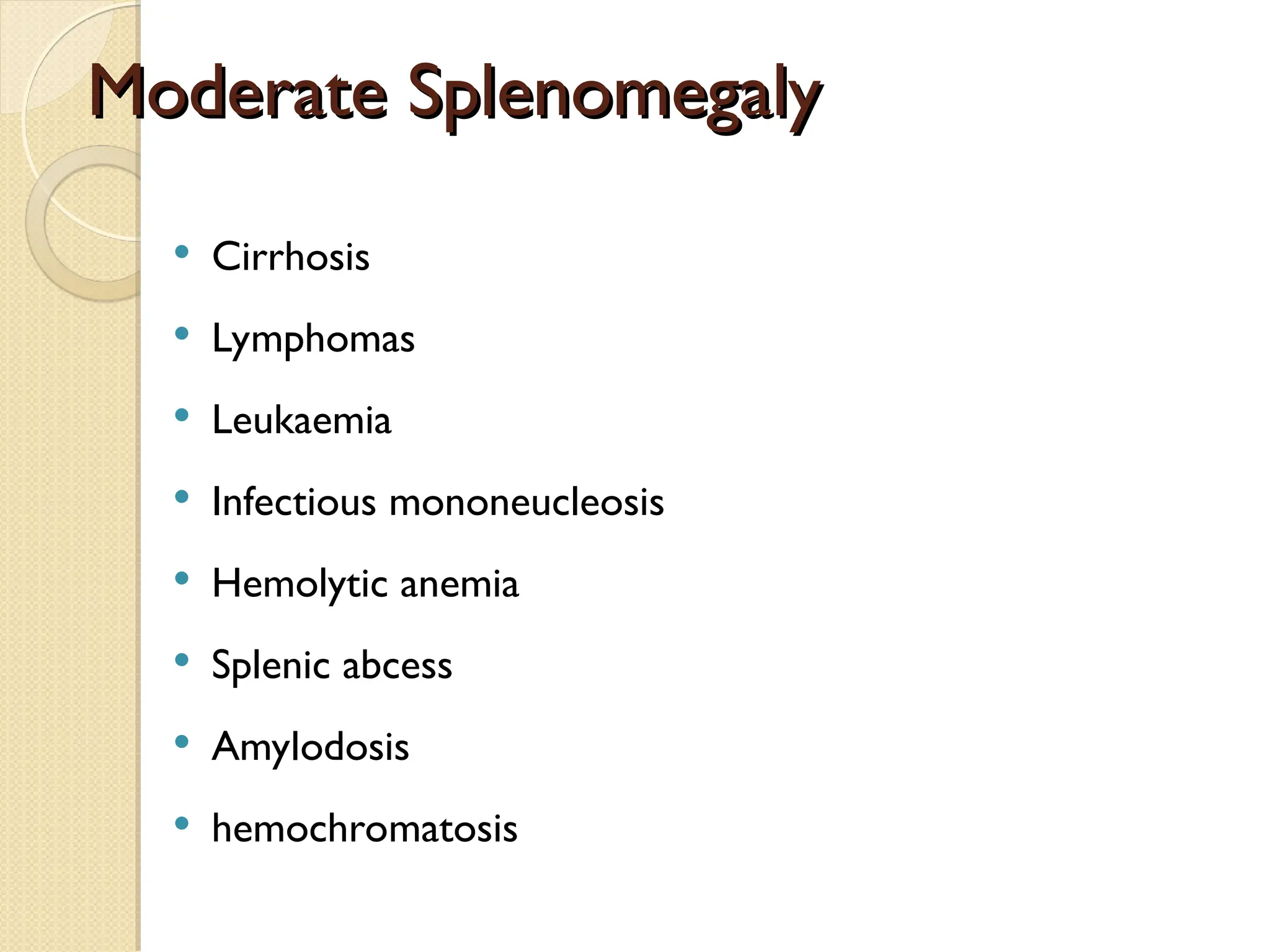
Moderate Splenomegaly
 Cirrhosis
 Lymphomas
 Leukaemia
 Infectious mononeucleosis
 Hemolytic anemia
 Splenic abcess
 Amylodosis
 hemochromatosis
Severe Splenomegaly
Severe Splenomegaly
 Chronic malaria
 Kala azar
 CML
 Portal hypertension
 Thalessemia major
 Infiltrative & metabolic disorders
Management
Management
Depends on cause
Various investigations as per clinical features &
epidemiology are employed
Basic investigations done are:
 CBC
 USG
 CECT scan
Treatment
Treatment
 Can be medical or surgical
 Medical management involves treatment of
cause if possible
 Surgical treatment is splenectomy
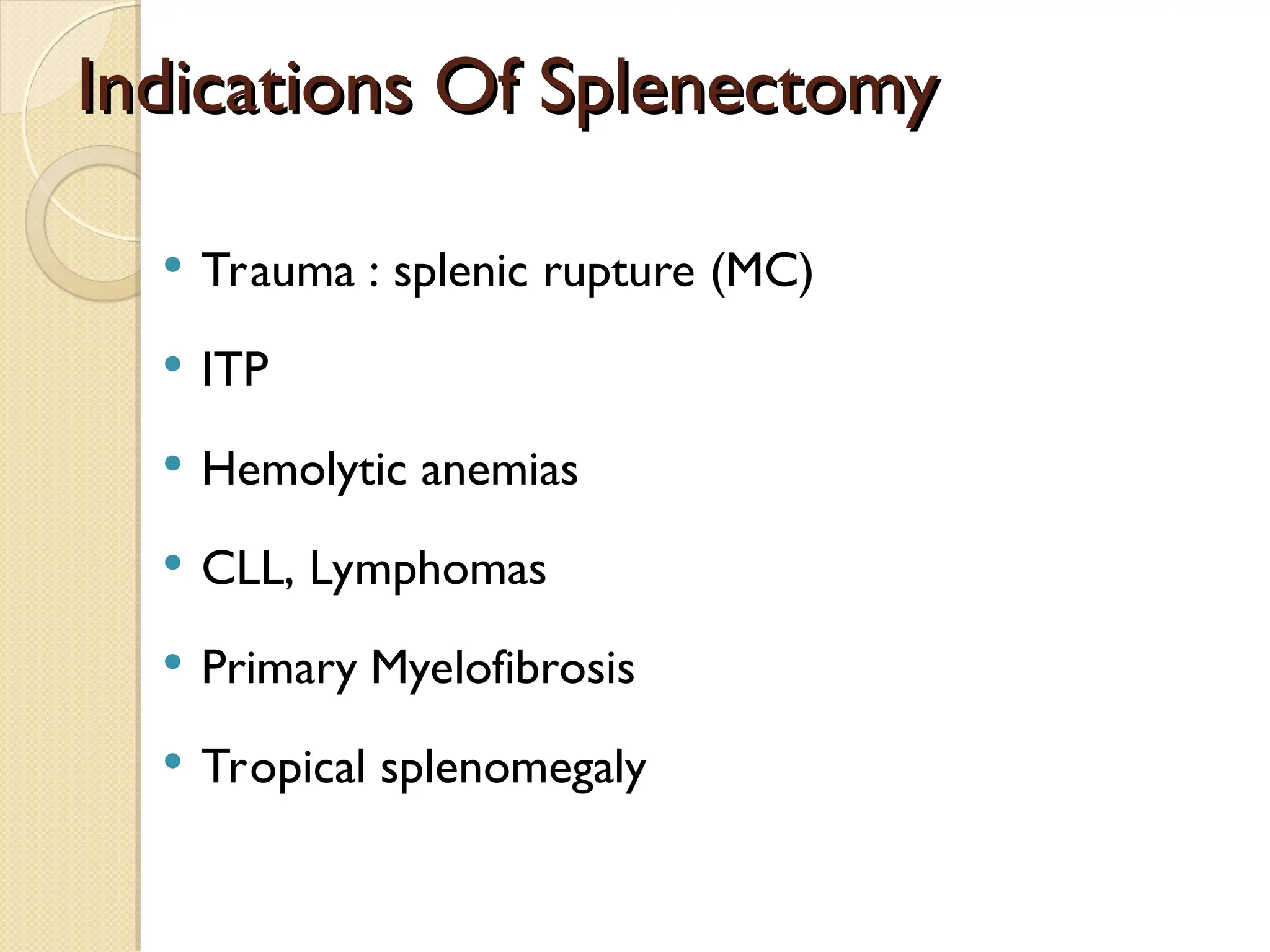
Indications Of Splenectomy
 Trauma : splenic rupture (MC)
 ITP
 Hemolytic anemias
 CLL, Lymphomas
 Primary Myelofibrosis
 Tropical splenomegaly
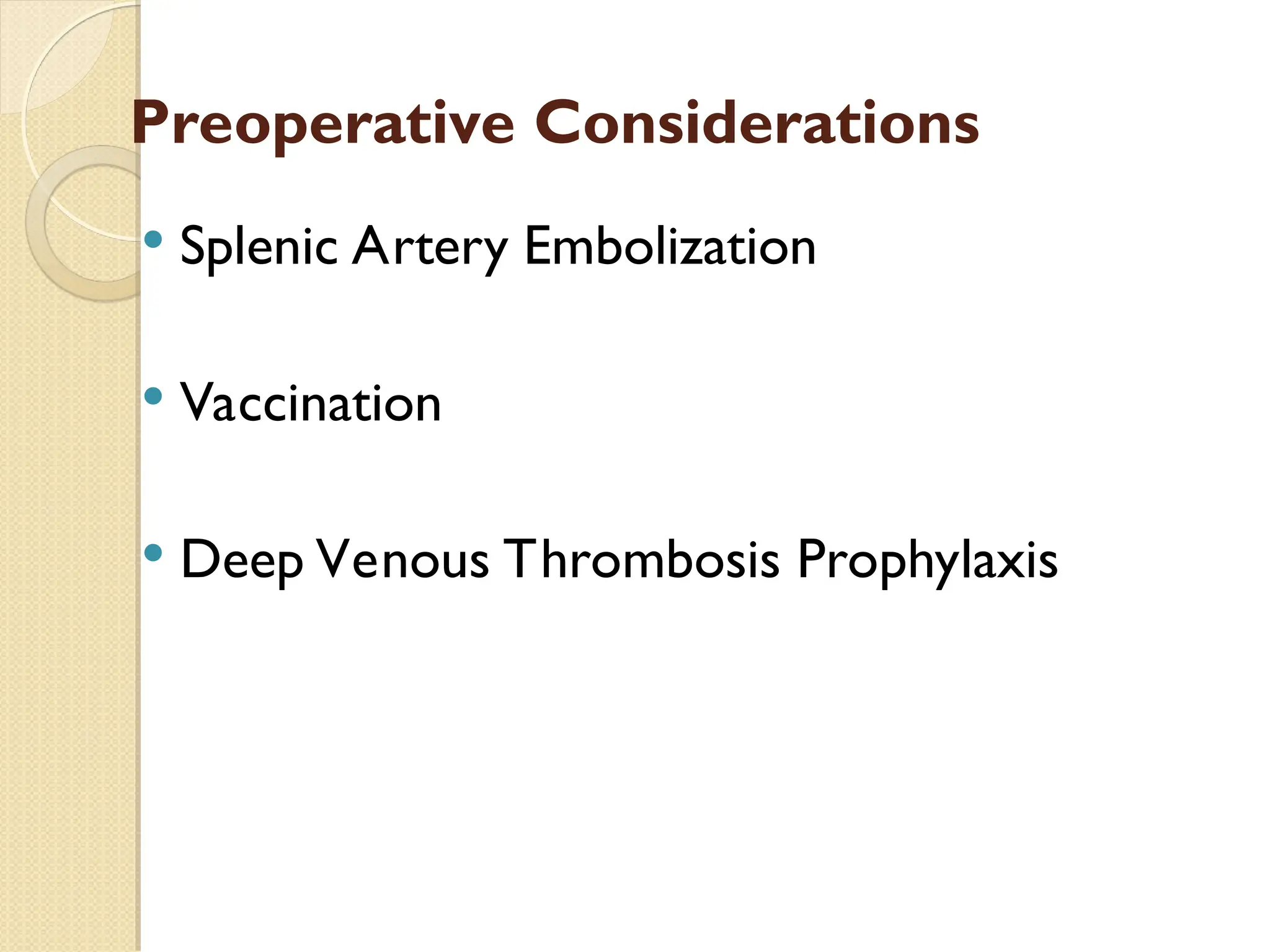
Preoperative Considerations
 Splenic Artery Embolization
 Vaccination
 Deep Venous Thrombosis Prophylaxis
Splenectomy Techniques
 Open Splenectomy Technique
 Laparoscopic Splenectomy
 Partial Splenectomy
Complications
 Pulmonary
Left lower lobe atelectasis, pleural effusion, pneumonia
 Hemorrhagic
 Infectious
Subphrenic abscess. Wound infection
 Pancreatic
Pancreatitis, pseudocyst, pancreatic fistula
 Thromboembolic
Overwhelming Post splenectomy Infection (OPSI)
loss of the ability to filter and phagocytose bacteria
loss of a significant source of antibody production
MC source of infection:Streptococcus pneumoniae
Others: H.influenzae type B, meningococcus, group A
streptococci , Babesia microti
spleen-gross anatomy - physiology---.ppt

spleen-gross anatomy - physiology---.ppt