Source of infection D-r Mitova MU-Sofia
Infectious disease epidemiology  is a fundamental part of the whole of epidemiology. In fact, the subject of epidemiology originally developed from the study of epidemics of infectious disease. Infectious disease epidemiology  is a science of Public Health that studies distribution of infectious disease.
Selected definitions: Infection The entry and development or multiplication  of an infectious agent in the body of man or animals. It also implies that the body responds in some way to defend itself against the invader, either in the form of an immune response or disease. An infection does not always cause illness.
There are several level of infection: Colonization  /e.g.S.aureus in the skin and normal nasopharynx/ Subclinical or inapparent infection  /e.g.polio/ Latent infection  /e.g.virus of herpes symplex/ Manifest or clinical infection
Infectious disease A clinically manifest disease of man or animal resulting from an infection. Contagious disease A disease that is transmitted through contact. Communicable disease All illness due to specific infectious agent or its toxic products capable of being directly or indirectly transmitted from man to man, animal to animal, or environment (through air, dust, soil, water, food etc.) to man or animal.
Contamination   The presence of an infectious agent on a body surface; also in or on clothes, bedding, toys, surgical instruments or dressings, or other inanimate articles or substances including water, milk and food. (Last's epidemiological definition)
Epidemic process The epidemic process defined as a chain of interrelated and interconnected infectious conditions in the population Communicable diseases are transmitted from the reservoir or source of infection to susceptible host. This is the medical model of epidemic process.
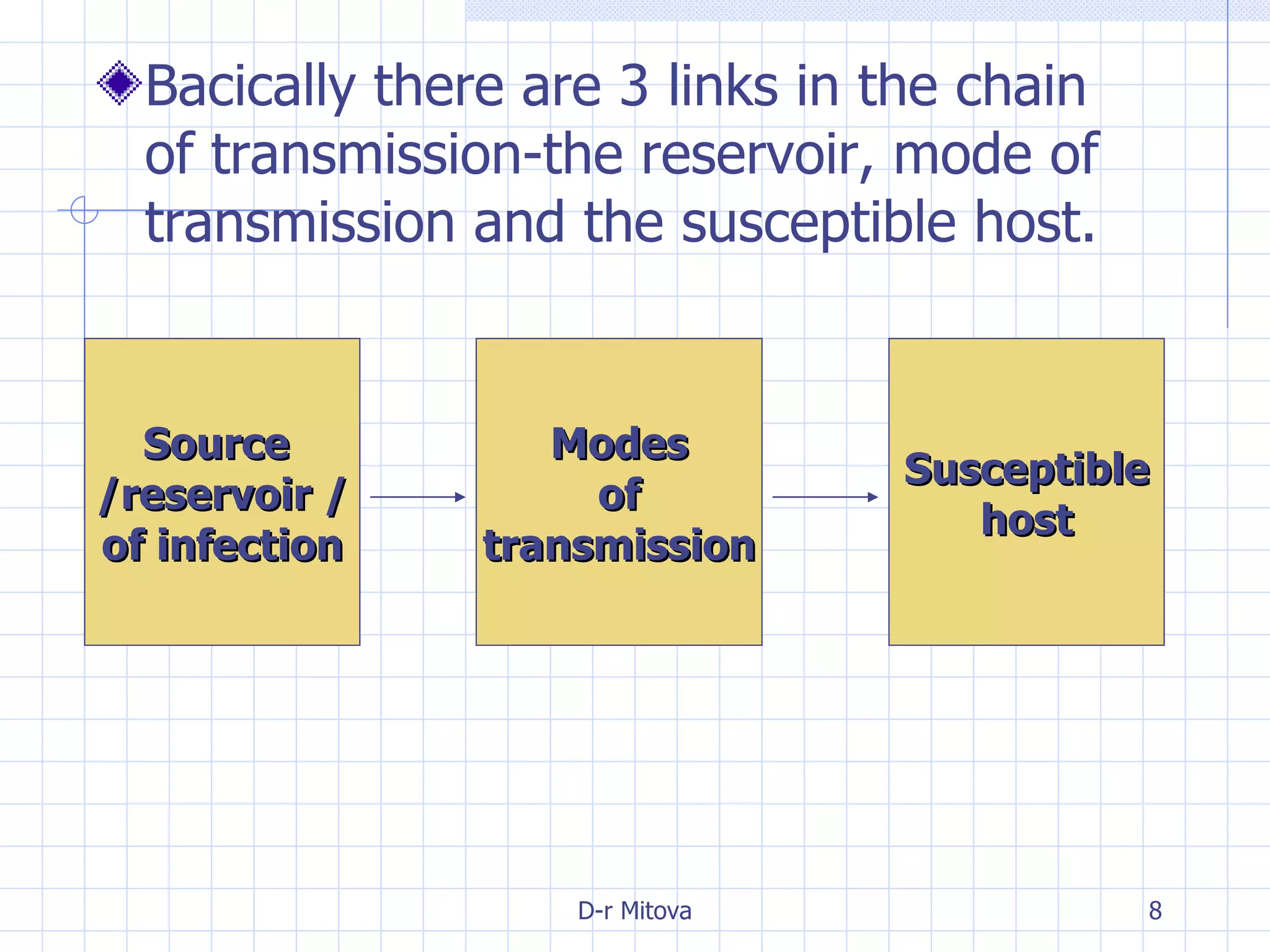
Bacically there are 3 links in the chain of transmission-the reservoir, mode of transmission and the susceptible host. Source  /reservoir / of infection Modes of transmission Susceptible host
Courses /types/ of the epidemic process: A disease is said to be  sporadic  when only a few cases occur here and there in a given region. Outbreak  defines as a small.usually localised epidemic.
Courses /types/ of the epidemic process: Epidemic (from Greek epi- upon + demos people)-  outbreak of disease that affects a much greater number of people than is usual for the locality or that spreads to regions where it is ordinarily not present. A disease that tends to be restricted to a particular region (endemic disease) can become epidemic if nonimmune persons are present in large numbers (as in time of war or during pilgrimages), if the infectious agent is more virulent than usual, or if distribution of the disease is more easily effected. Cholera and plague, endemic in parts of Asia, can become epidemic under the above conditions, as can dysentery and many other infections. Epidemics may also be caused by new disease agents in the human population, such as the Ebola virus
Courses /types/ of the epidemic process: A  pandemic  (from Greek  pan  all +  demos  people) is an epidemic (an outbreak of an infectious disease) that spreads worldwide, or at least across a large region. A worldwide epidemic is known as a  pandemic , e.g., the influenza pandemic of 1918 or the AIDS pandemic beginning in the 1980s.
Examples / Cholera  first pandemic 1816–1826. Previously restricted to the Indian subcontinent, the pandemic began in Bengal, then spread across India by 1820. It extended as far as China and the Caspian Sea before receding. The second pandemic (1829–1851) reached Europe, London in 1832, Ontario Canada and New York in the same year, and the Pacific coast of North America by 1834. The third pandemic (1852–1860) mainly affected Russia, with over a million deaths.
Examples / Cholera  The fourth pandemic (1863–1875) spread mostly in Europe and Africa. In 1866 there was an outbreak in North America. The sixth pandemic (1899–1923) had little effect in Europe because of advances in public health, but Russia was badly affected again. The seventh pandemic began in Indonesia in 1961, called El Tor after the strain, and reached Bangladesh in 1963, India in 1964, and the USSR in 1966.
Examples / Influenza The " Spanish flu ", 1918–1919.  An estimated 17 million died in India, 500,000 in the United States and 200,000 in the UK. The virus was recently reconstructed by scientists at the CDC studying remains preserved by the Alaskan permafrost. They identified it as   a type of H1N1 virus.
Courses /types/ of the epidemic process: In epidemiology, an infection is said to be  endemic  (from Greek  en - in or within +  demos  people) in a population when that infection is maintained in the population without the need for external inputs. For example, chickenpox is endemic in the UK, but malaria is not. Every year, there are a few cases of malaria acquired in the UK, but these do not lead to sustained transmission in the population due to the lack of a suitable vector (mosquitoes of the genus Anopheles).
SOURCE AND RESERVOIR The source of infection is defined as the person, animal, object or substance from which an infectious agent passes or disseminated to the host. A reservoir is defined as “any person, animal, arthropod, plant, soil or substance in which an infectious agent lives and multiplies, on which it depends primarily for survival, and where it reproduced itself in such manner that it can be transmitted to a susceptible host”. In short the reservoir is the natural habitual in which the organism metabolized and replicates.
In Bulgaria the source of infection is defined only as the person or animal in which an infectious agent live and multiplies and from which an infectious agent passes to the host, inanimate things and arthropods are defined as a vehicles of transmission.
HUMAN RESERVOIR By far the most important source or reservoir of infection for humans is man himself. He my be a case or carrier. Man is often described as him own enemy because most of the communicable disease of which man is heir to a contacted from human sources.
HUMAN RESERVOIR - CASE A  case  is defined as a person in the population or study group identified as having the particular disease, health disorder or condition under investigation. A variety of criteria ( clinical, biochemical, laboratory ) may be used to identify cases. Broadly, the presence of infection in the host may be clinical, subclinical or latent.
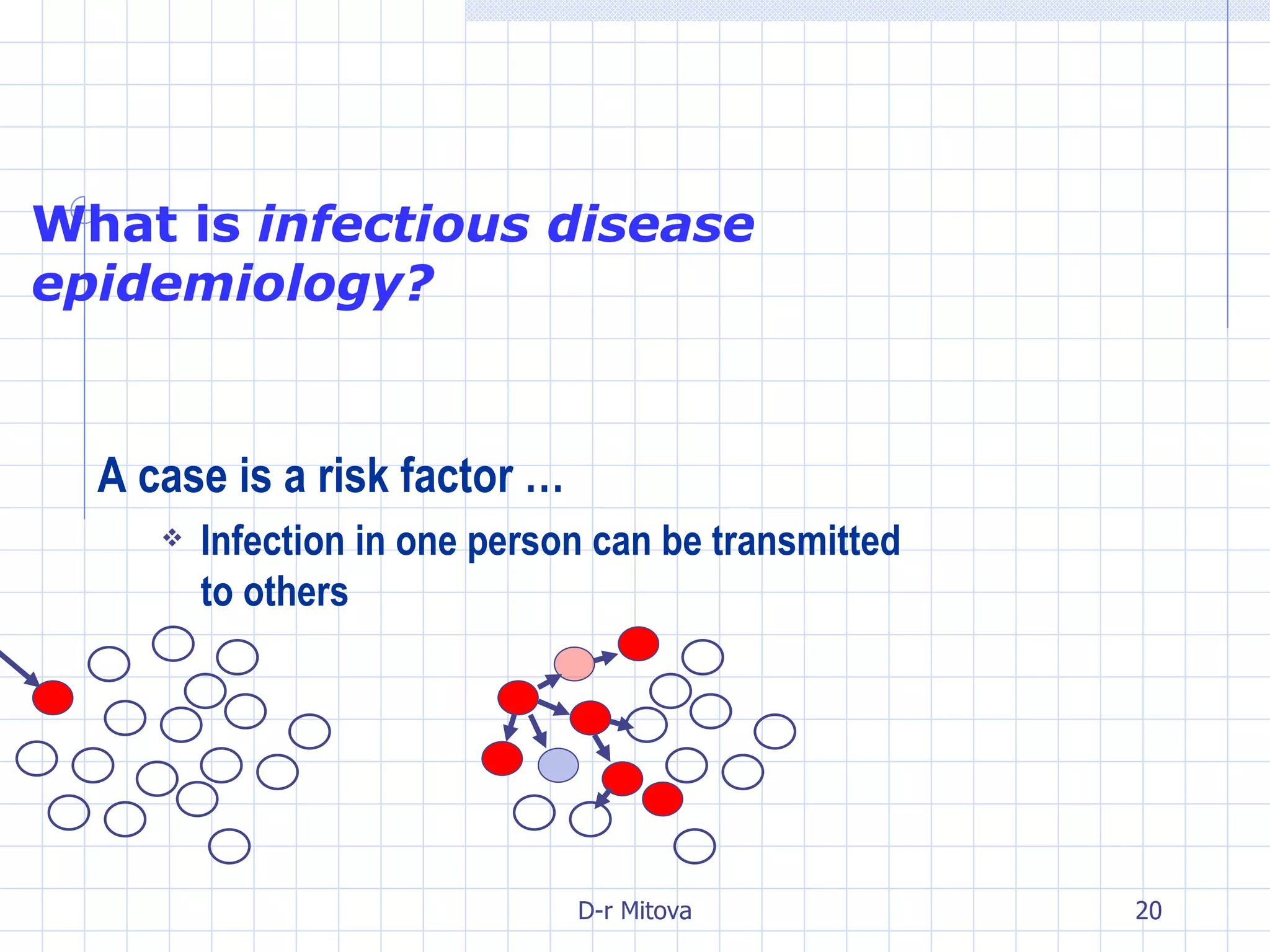
A case is a risk factor … Infection in one person can be transmitted to others What is  infectious disease epidemiology? ( www )
The clinical illness. The clinical illness  maybe mild or moderate, typical or atypical, severe or fatal. Epidemiologically, mild cases may be more important sources of infection than severe cases because they are ambulant and spread the infection wherever they go, whereas severe cases usually confined to bed.
2. The subclinical cases   are variously referred to as inapparent, covert, missed or abortive cases. They are equally important  sources of infection. The disease agent may multiply in the host but does not manifest itself by sign and symptoms. The disease agent is, eliminated and contaminates the environment in the same way as clinical cases.person who are thus sick contribute more than symptomatic patient to the transmission of infection to others and what is more, they do not appear in any of statistics  Subclinical cases play a dominant role in maintaining the chain of infection in the community. The latent infection must be distinguished from subclinical infection. In latent infection, the host does not shed the infectious agent.
The subclinical cases Subclinical infection can be detected only by laboratory tests. Barring a few(mesles, varicella), subclinical infection occurs in most infectious disease. In some disease(rubella, mumps, polio, hepatitis A and B, influenza, diphteria) a great deal of subclinical infection occurs.
Latent infection The term latent infection must be distinguished from subclinical infection. In latent infection, the host does not shed the infectious agent which lies dormant within the host without symptoms (and often without demonstrable presence in blood, tissues or bodily secretions of the host). For examples, latent infection occurs in herpes symplex, Brill-Zincer disease.
CARRIERS In some disease, either due to inadequate treatment or immune response, the disease agent is not completely eliminated, leading to a carrier state.  A carrier is defined as  an infected person or animal that harbors a specific infectious agent  in the  absence  of discernible clinical disease and serves as a potential source of infection for others.
CARRIERS As a rule carriers are less infectious than cases, but epidemiologically, they are more dangerous than cases because they escape recognition and continuing as they do live a normal life among population or community, they readily infect the susceptible individuals over a wider area and longer period of time under favorable conditions.the “Typhoid Mary” is a classic example of a carrier-cooker Mary who gave rise to more than 1300 cases in her life time.
The elements in a carrier state are: The presence in the body of disease agent The absence of recognizable symptoms and signs of disease The shedding of disease agent in the discharges or excretion.
  incubatory carriers : are those who shed the infectious agent during the incubation period. This usually occurs during the the last few days of incubation period. As for example: Measles-the period of communicability is 4 days before the rush. Mumps-usually 4-6 days before onset of symptoms Polio-7-10 days before onset of symptoms Hepatitis B-for a month before jaundice,about 6 weeks after exposure Carrier may be classified : BY TYPE
Carrier may be classified : BY TYPE convalescent carriers : that is those who continue to shed the disease agent during the period of convalescence(typhoid fever, cholera, diphteria, bacillary disentery). In the disease, clinical recovery does not coincide with bacteriological recovery.
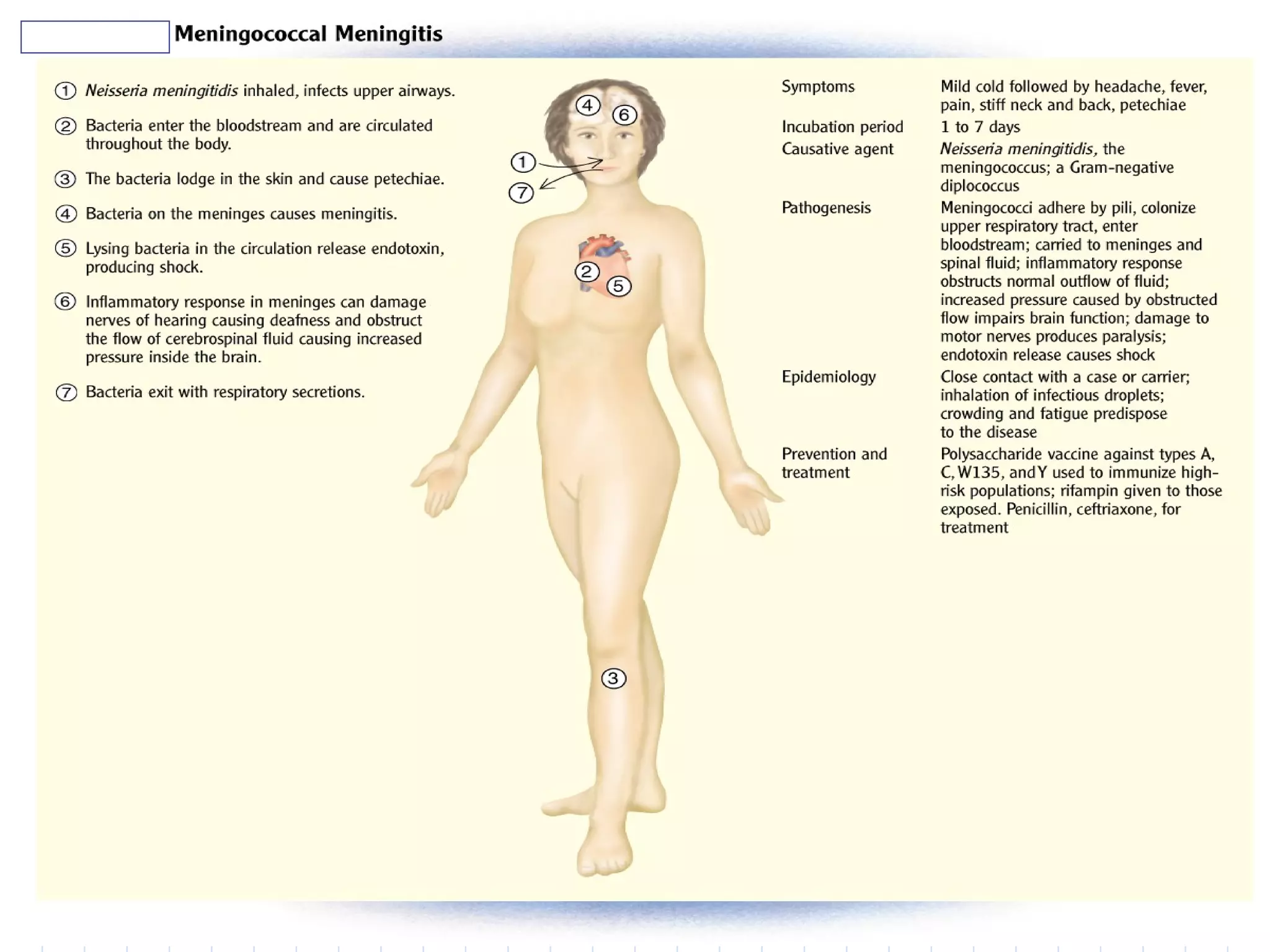
Carrier may be classified : BY TYPE healthy carriers : they are victims of subclinical infection who have developed carrier state without suffering from overt disease, but are nevertheless shedding the disease agent, e.g. poliomyelitis, cholera, meningococcal meningitis, salmonellosis, diphtheria.
BY DURATION Temporary carriers  are those who shed the infectious agent for short period of time. Chronic carriers  are those who excretes the infectious agent for indefinite periods e.g. typhoid fever, hepatitis B, dysentery, etc.They are known to reintroduce disease into areas which are otherwise free of infection.
Chronic carriers Chronic carriers are far more important sources of infection than cases. The longer the carrier state, the greater the risk of community. The duration of the carrier state varies with the disease. In typhoid fever and hepatitis B, the chronic carrier state may last for several years.In chronic dysentery it may last for year or longer. In diphtheria, the carrier state is associated with infected tonsils, in typhoid fever with gall bladder disease.
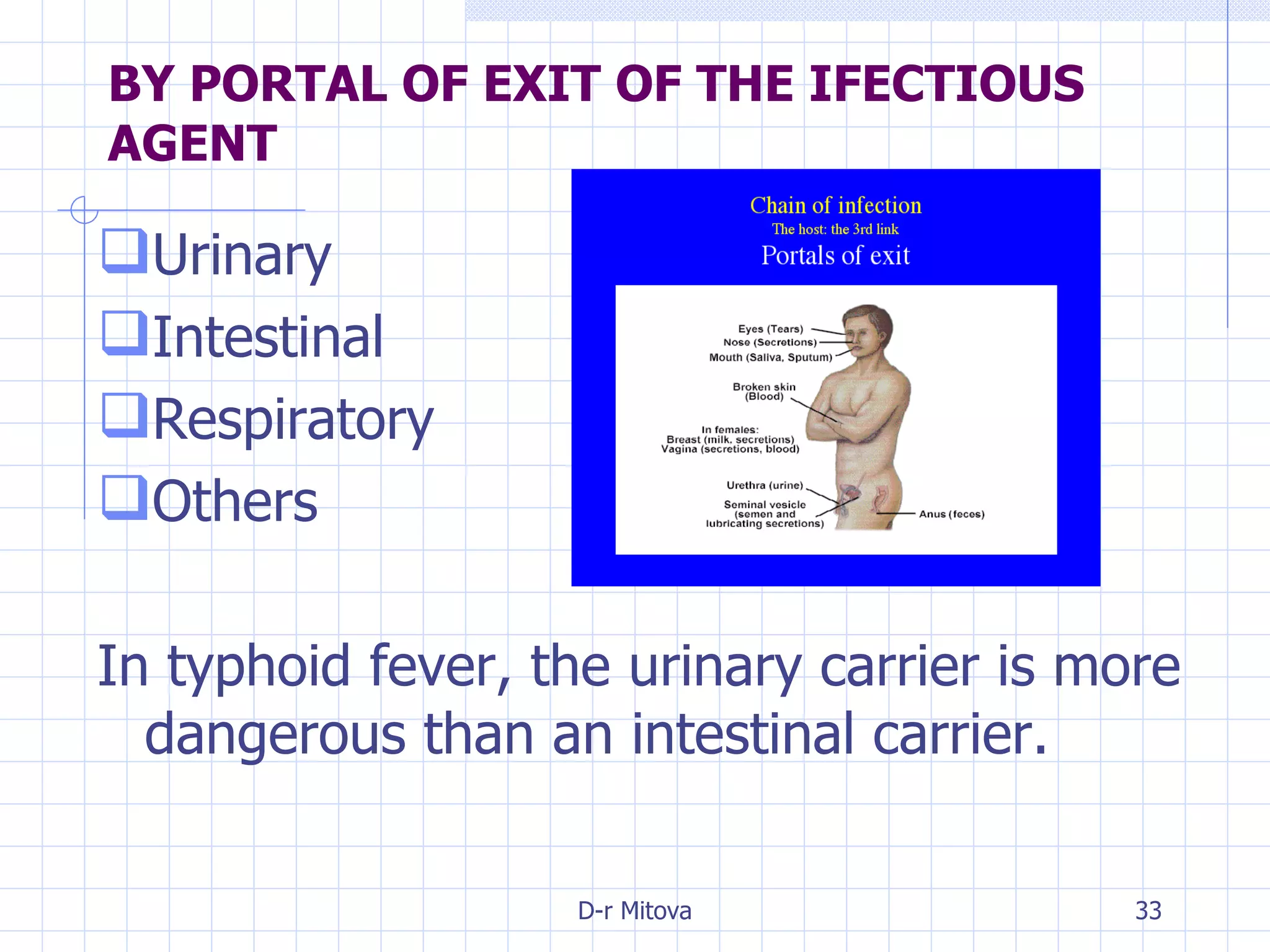
BY PORTAL OF EXIT OF THE IFECTIOUS AGENT Urinary Intestinal Respiratory Others  In typhoid fever, the urinary carrier is more dangerous than an intestinal carrier.
EARLY DIAGNOSIS IS NEEDED FOR: The treatment of patient For epidemiological investigation To study the time, place and person distribution For the institution of prevention and control  measures   The first step in the control of a communicable disease is its rapid identification.
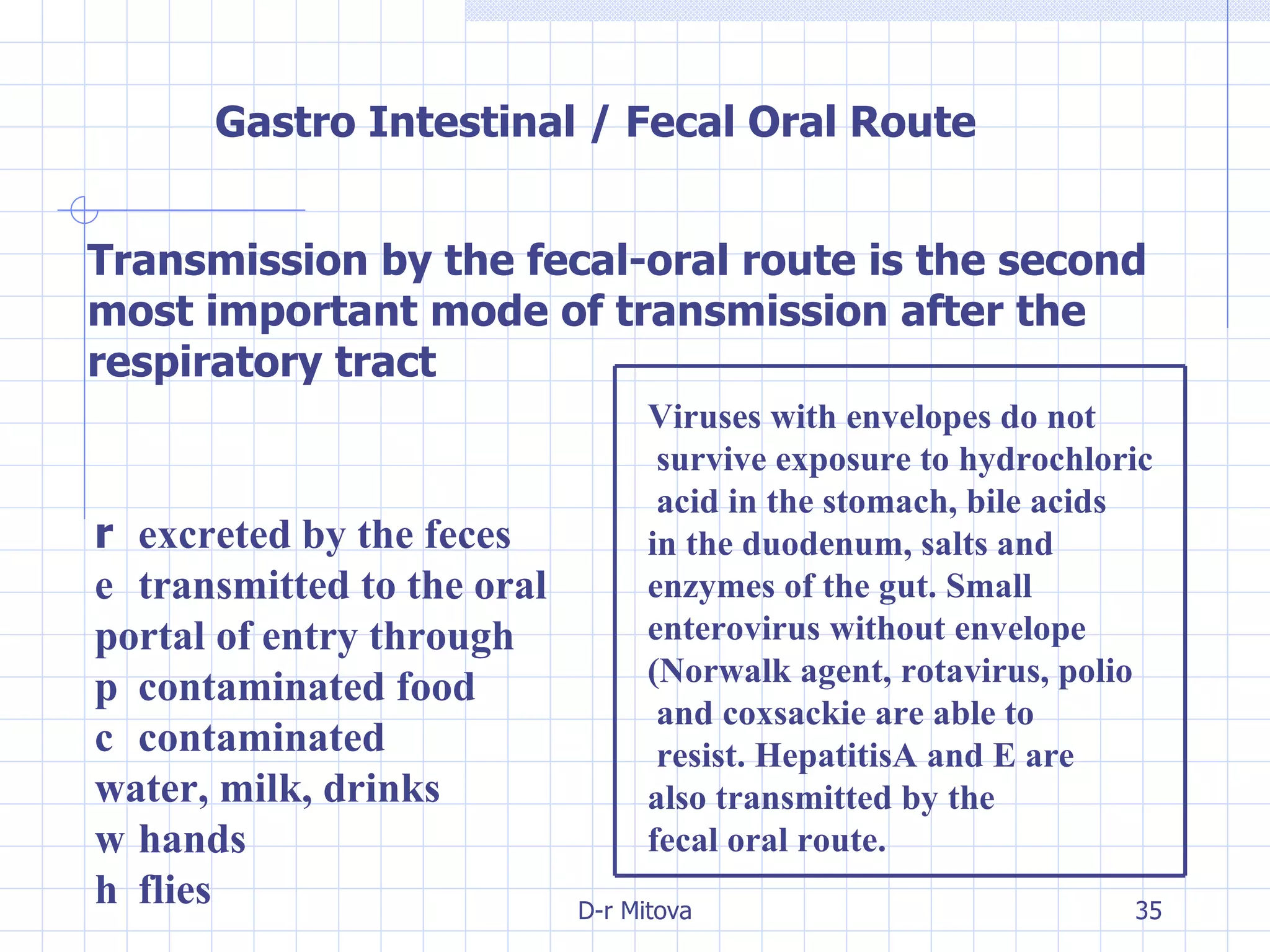
Gastro Intestinal / Fecal Oral Route Transmission by the fecal-oral route is the second most   important mode of transmission after the respiratory tract 􀁺  excreted by the feces 􀁺  transmitted to the oral portal of entry through 􀂃  contaminated food 􀂃  contaminated water, milk, drinks 􀂃  hands 􀂃  flies Viruses with envelopes do not survive   exposure to hydrochloric acid in the   stomach, bile acids  in the duodenum,   salts and  enzymes of the gut. Small enterovirus without envelope (Norwalk agent, rotavirus, polio and   coxsackie are able to resist. HepatitisA and E are  also transmitted by the fecal oral route.
Transmission by gastrointestinal route Fecal oral route 􀁺  Typhoid fever 􀁺  Shigella 􀁺  Cholera 􀁺  Polio 􀁺  Coxsackie, Echo, Reo 􀁺  Norwalk agent 􀁺  Rotavirus 􀁺  Hepatitis A, Hepatitis E
Intestinal diseases Human Pathogens   Enterobacteriaceae  as a group were originally divided into pathogens and nonpathogens based on their ability to cause diarrheal disease of humans. The pathogenic genera were  Salmonella  and  Shigella . However, it is now known that  E. coli  causes at least five types of gastrointestinal disease in humans. Pathogenicity in E. coli strains is due to the presence of one or more virulence factors, including invasiveness factors (invasins), heat-labile and heat-stable enterotoxins, verotoxins, and colonization factors or adhesins.
Intestinal diseases Yersinia enterocolitica  causes diarrhea, probably by a combination of invasiveness and the presence of a heat-stable enterotoxin. Strains of Klebsiella pneumoniae and Enterobacter cloacae isolated from patients with tropical sprue contained a heat-stable enterotoxin.
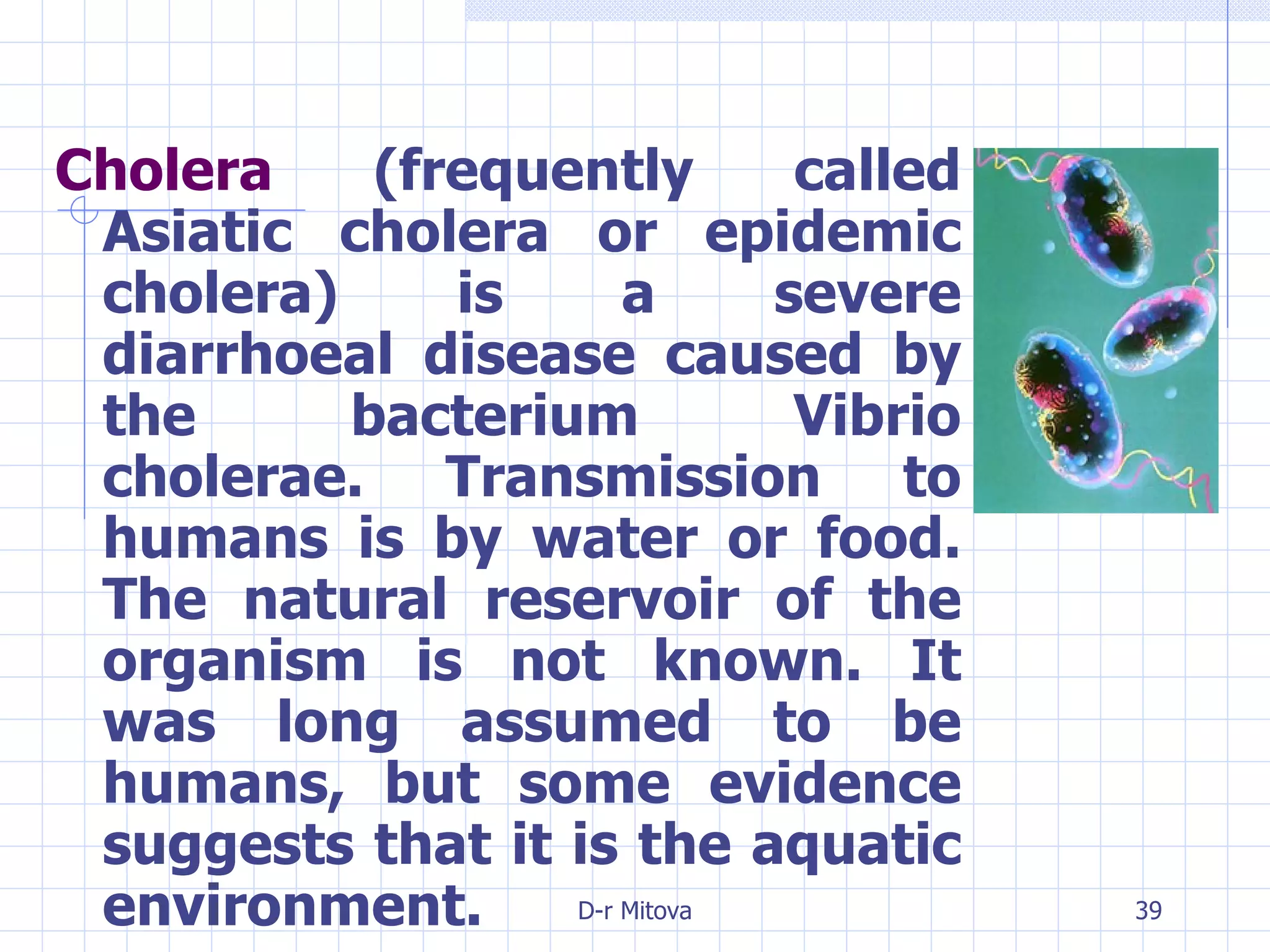
Cholera  (frequently called Asiatic cholera or epidemic cholera) is a severe diarrhoeal disease caused by the bacterium Vibrio cholerae. Transmission to humans is by water or food. The natural reservoir of the organism is not known. It was long assumed to be humans, but some evidence suggests that it is the aquatic environment.
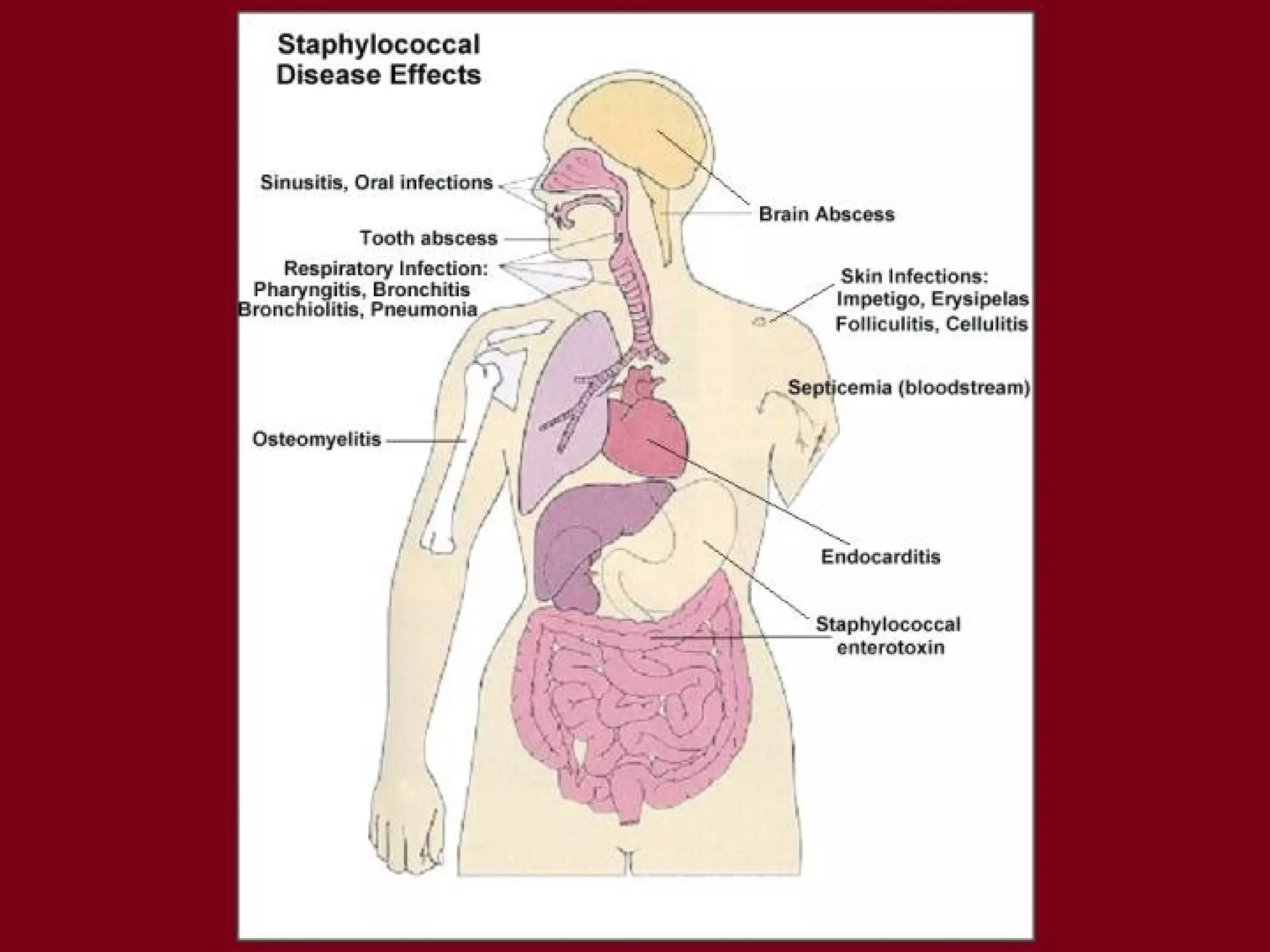
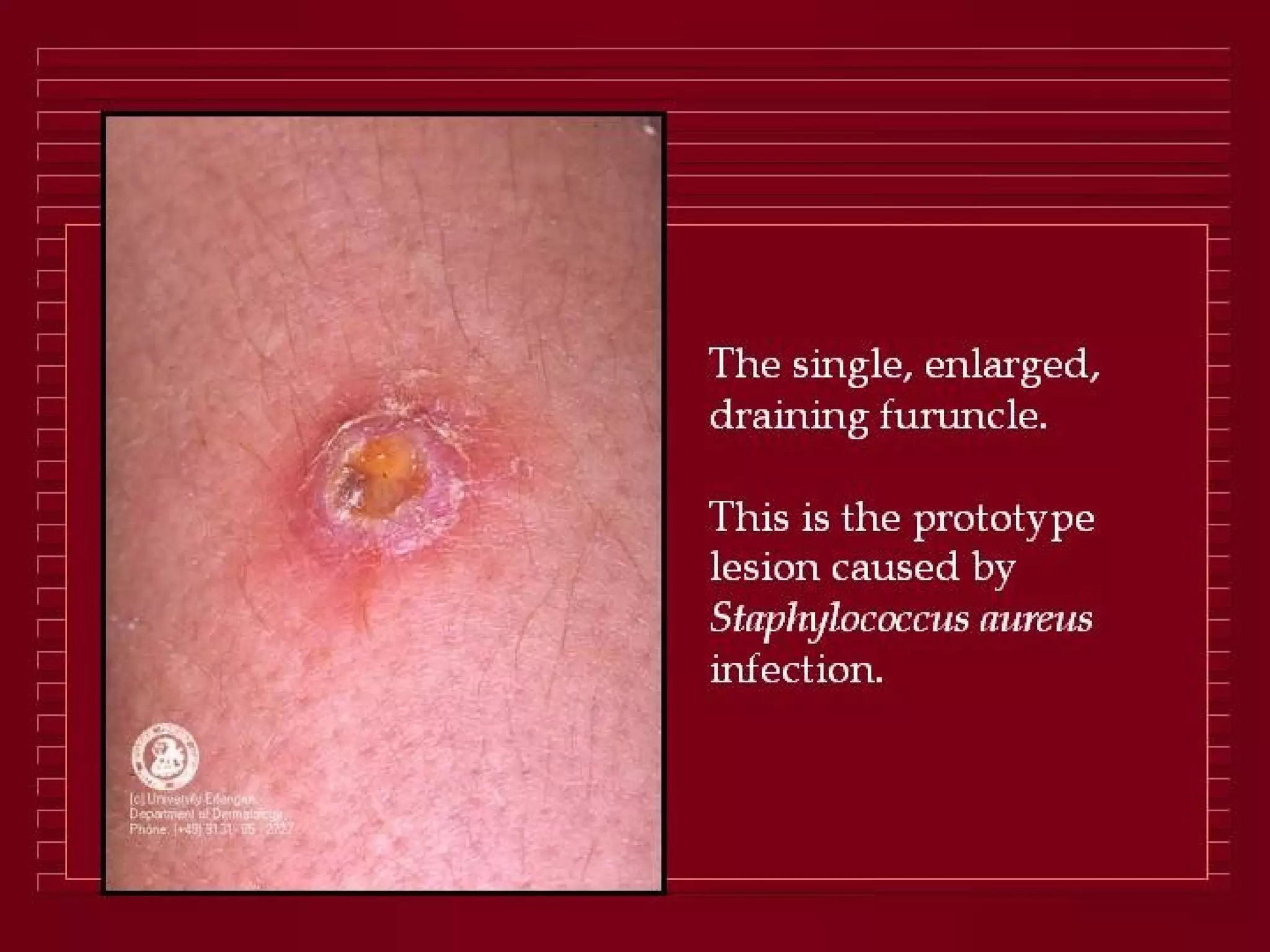
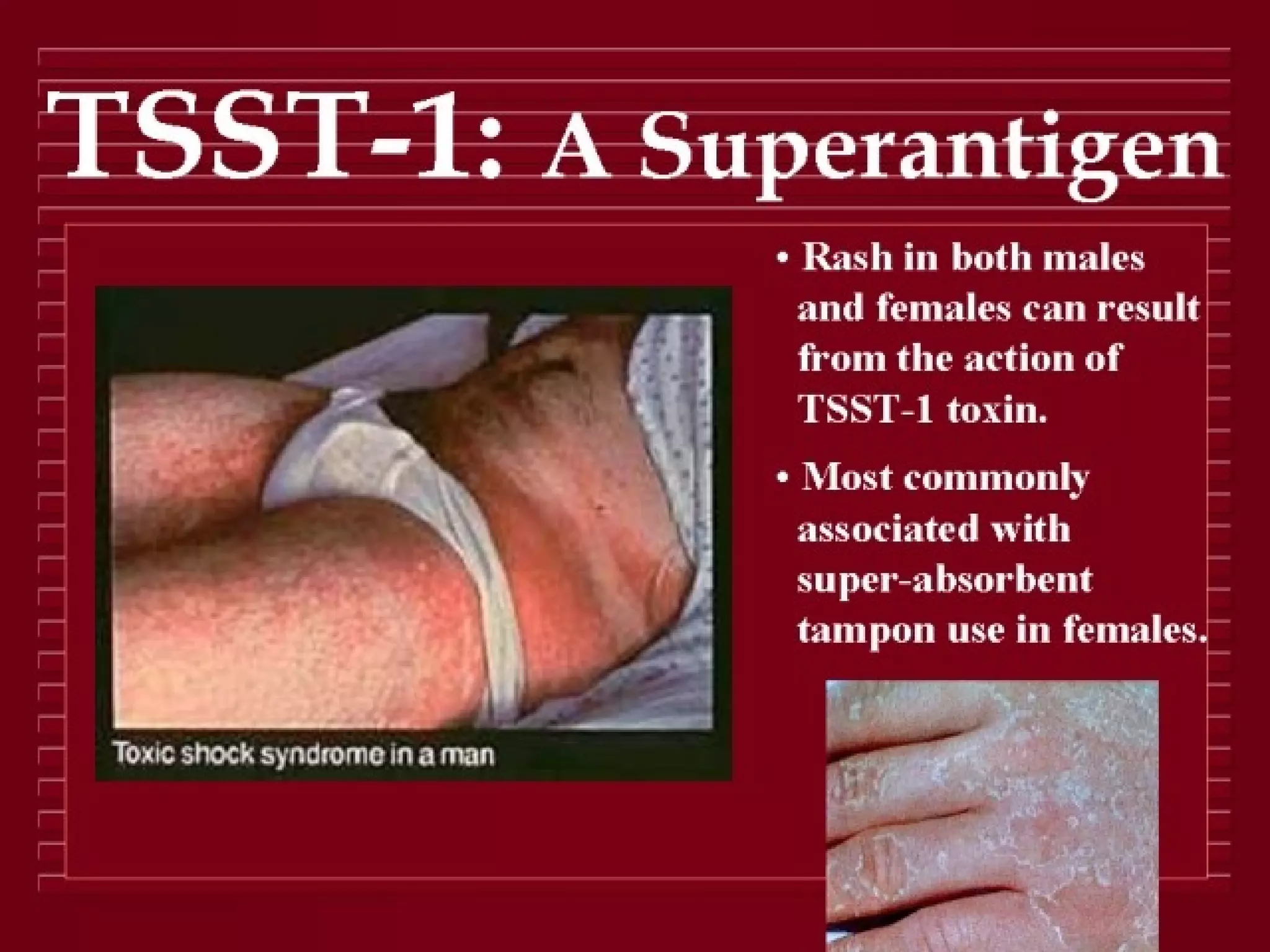
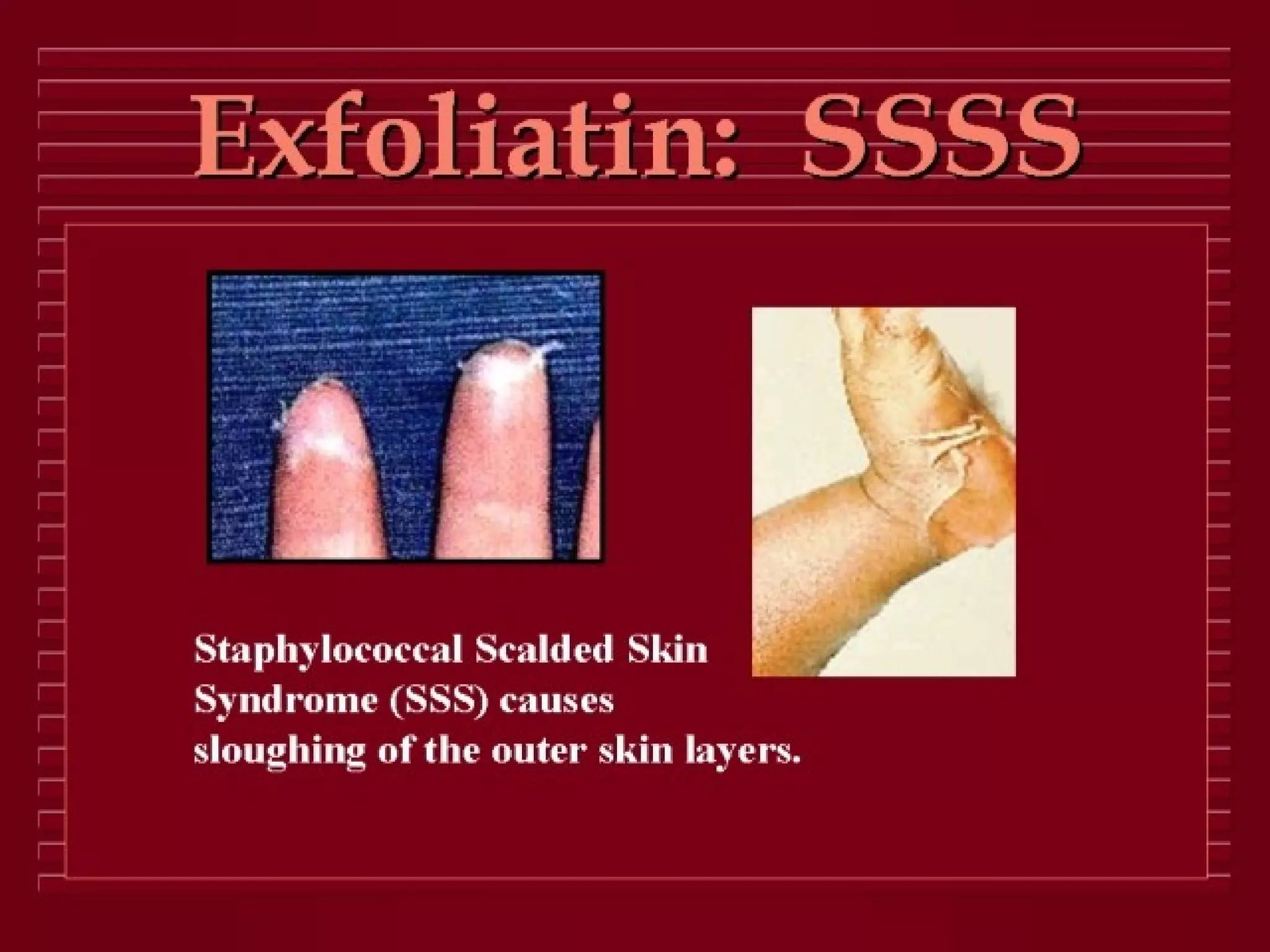
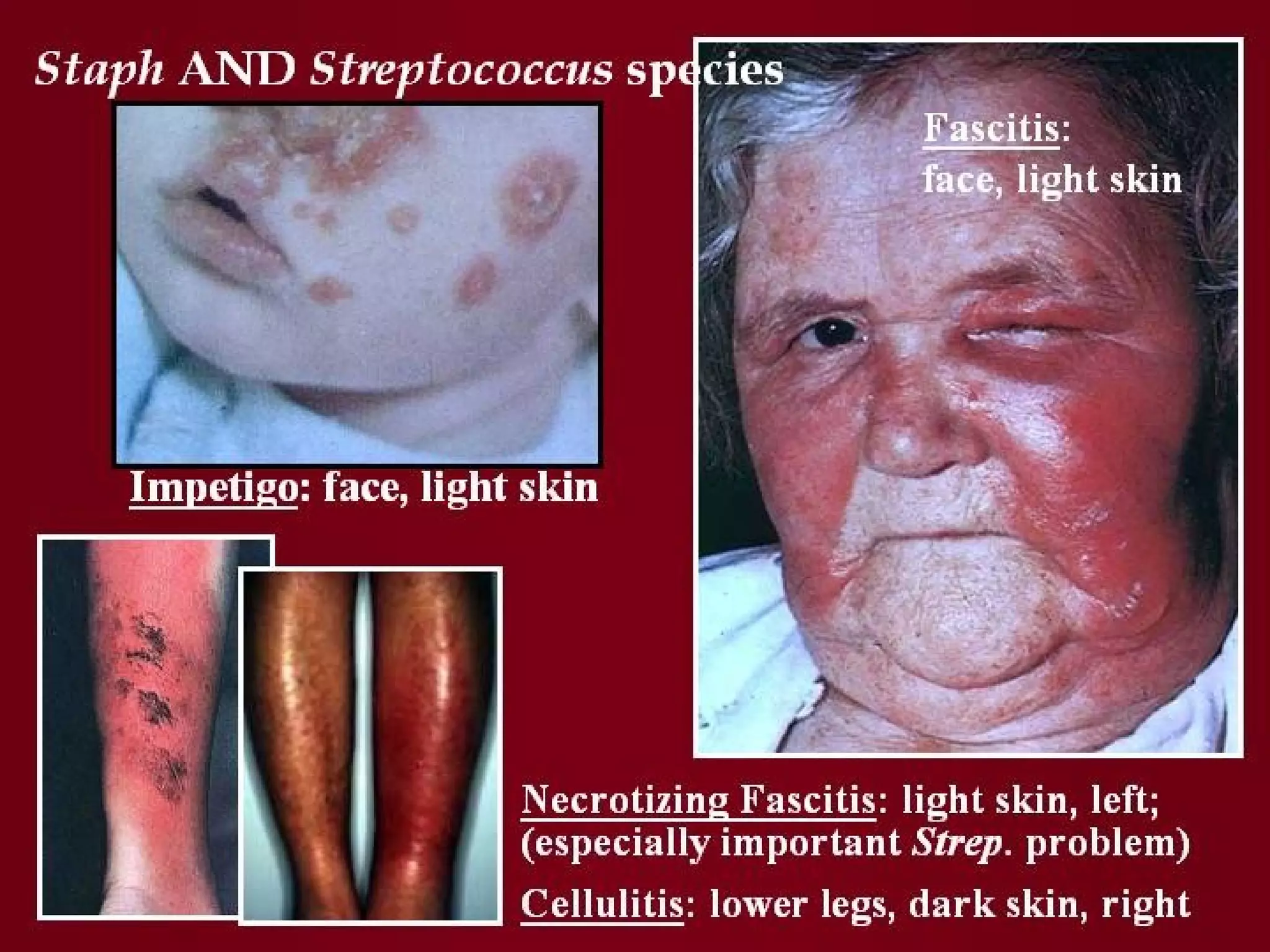
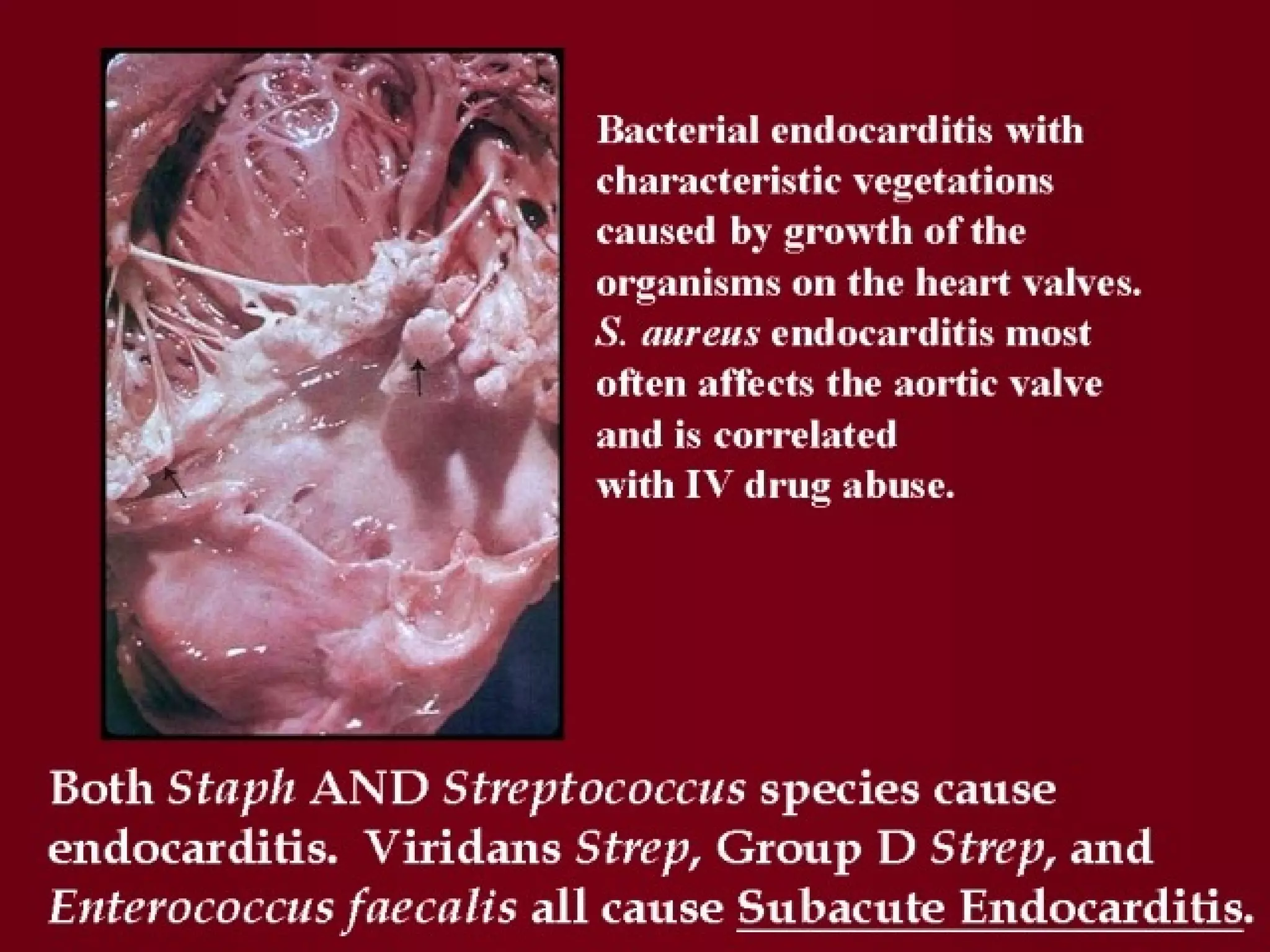
S. aureus causes  food poisoning by releasing enterotoxins into food , and toxic shock syndrome by release of superantigens into the blood stream.


Staphylococcal food poisoning  (staphyloenterotoxicosis; staphyloenterotoxemia) is the name of the condition caused by the enterotoxins which some strains of S. aureus produce. The onset of symptoms in staphylococcal food poisoning is usually rapid and in many cases acute, depending on individual susceptibility to the toxin, the amount of contaminated food eaten, the amount of toxin in the food ingested, and the general health of the victim. The most common symptoms are nausea, vomiting, retching, abdominal cramping, and prostration. Some individuals may not always demonstrate all the symptoms associated with the illness.  Recovery generally takes two days, However, it us not unusual for complete recovery to take three days and sometimes longer in severe cases.
Normal flora / FECES ANALYSIS Staphylococcus aureus /only the predominance of S. aureus and Candida/ Candida albicans E.coli Proteus Klebsiella Enterobacter Serratia Citrobacter Pseudomonas aeruginosa /exceptionally enteropathogenic, and in this case in a pure culture /
    Intestinal diseases   FECES ANALYSIS Collection of stools-A fresh specimen of stool should be collected for laboratory examination. Sample should be collected before the person is treated with antibiotics. After the stools been collected, there occurs within a few hours an acidification which is noxious for some bacteria species.The feces analysis should begin within 2 to 3 hours after the samples have been taken.
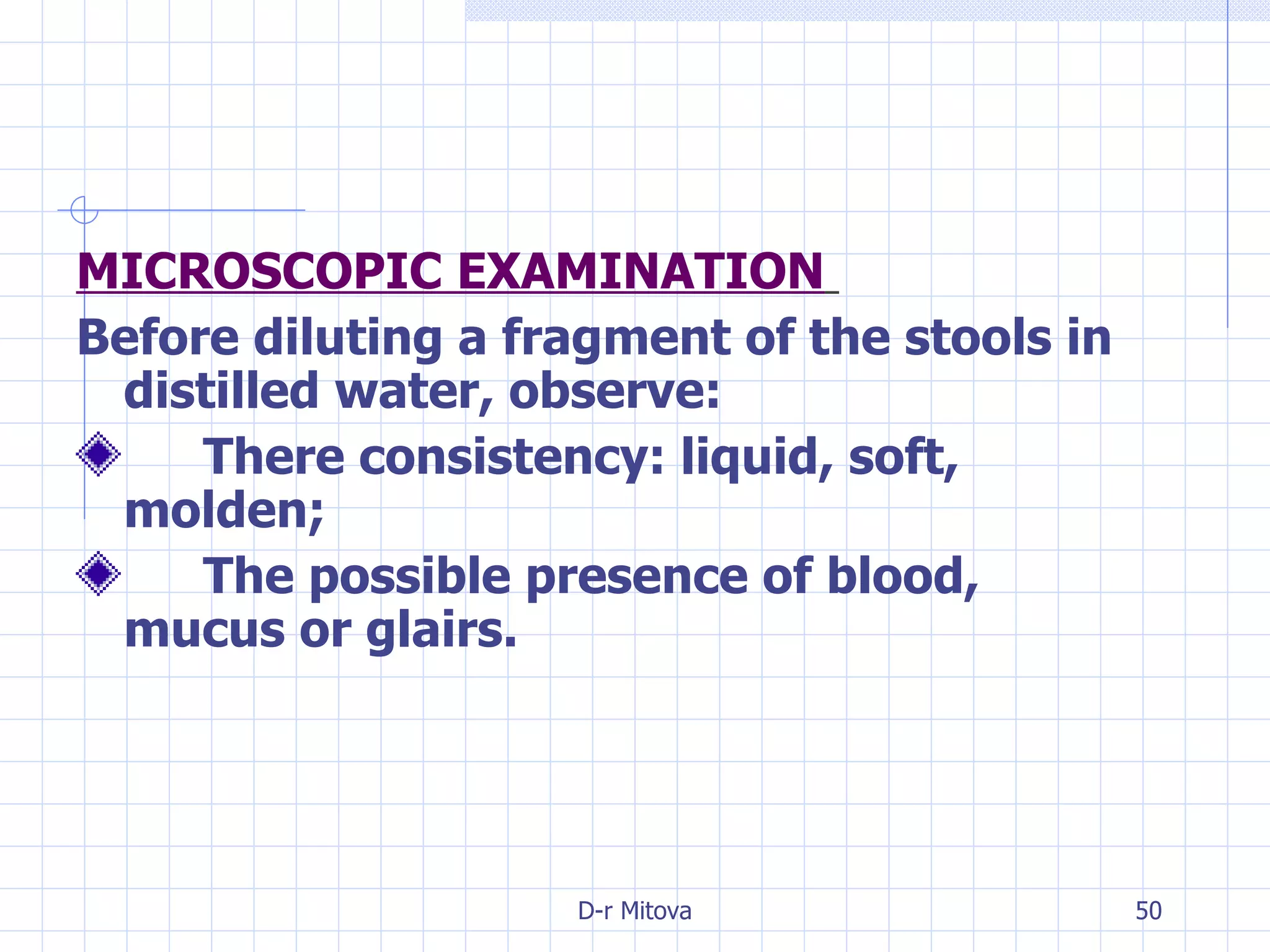
MICROSCOPIC EXAMINATION   Before diluting a fragment of the stools in distilled water, observe: There consistency: liquid, soft,  molden; The possible presence of blood,  mucus or glairs.
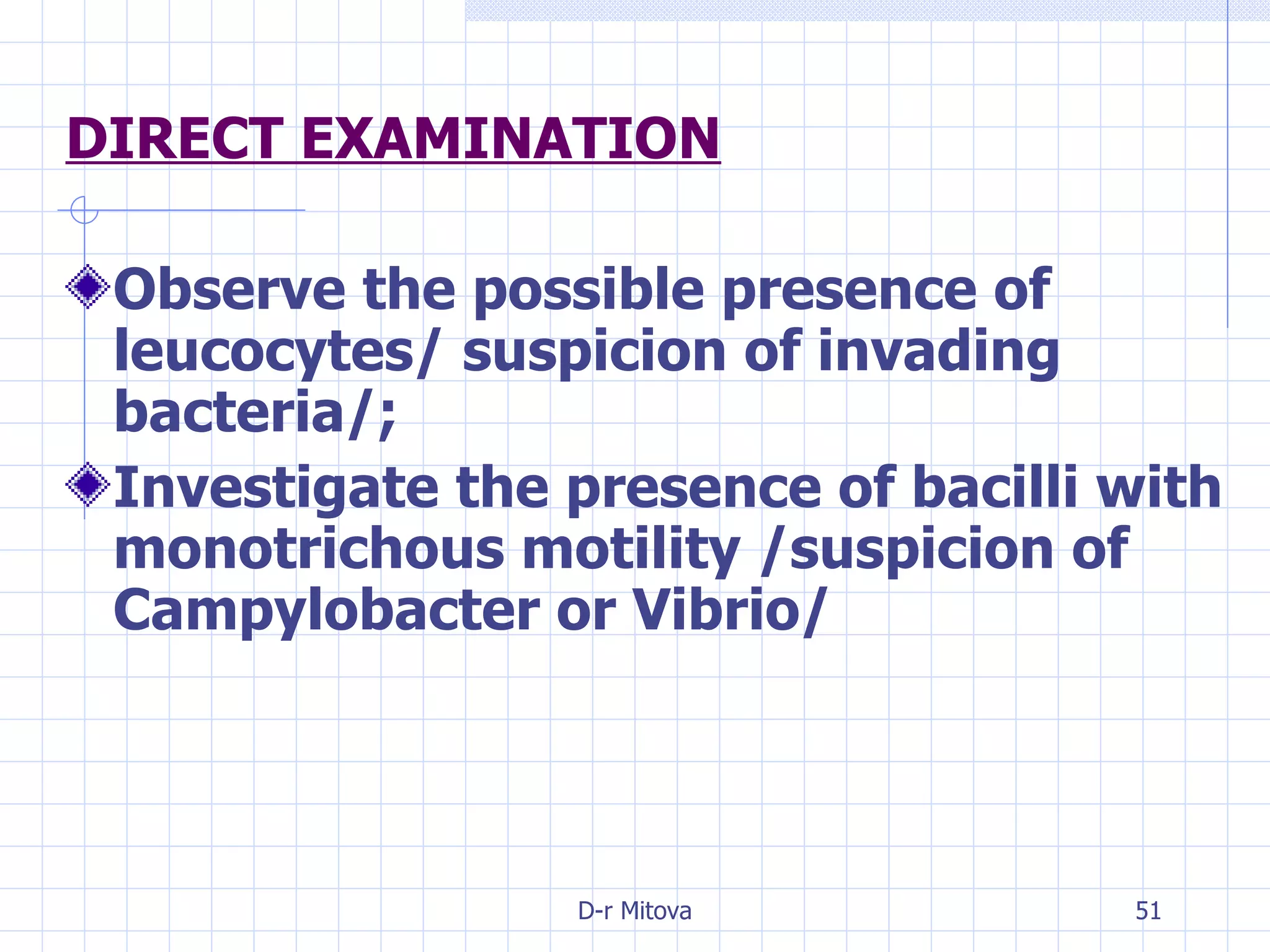
DIRECT EXAMINATION Observe the possible presence of leucocytes/ suspicion of invading bacteria/; Investigate the presence of bacilli with monotrichous motility /suspicion of Campylobacter or Vibrio/
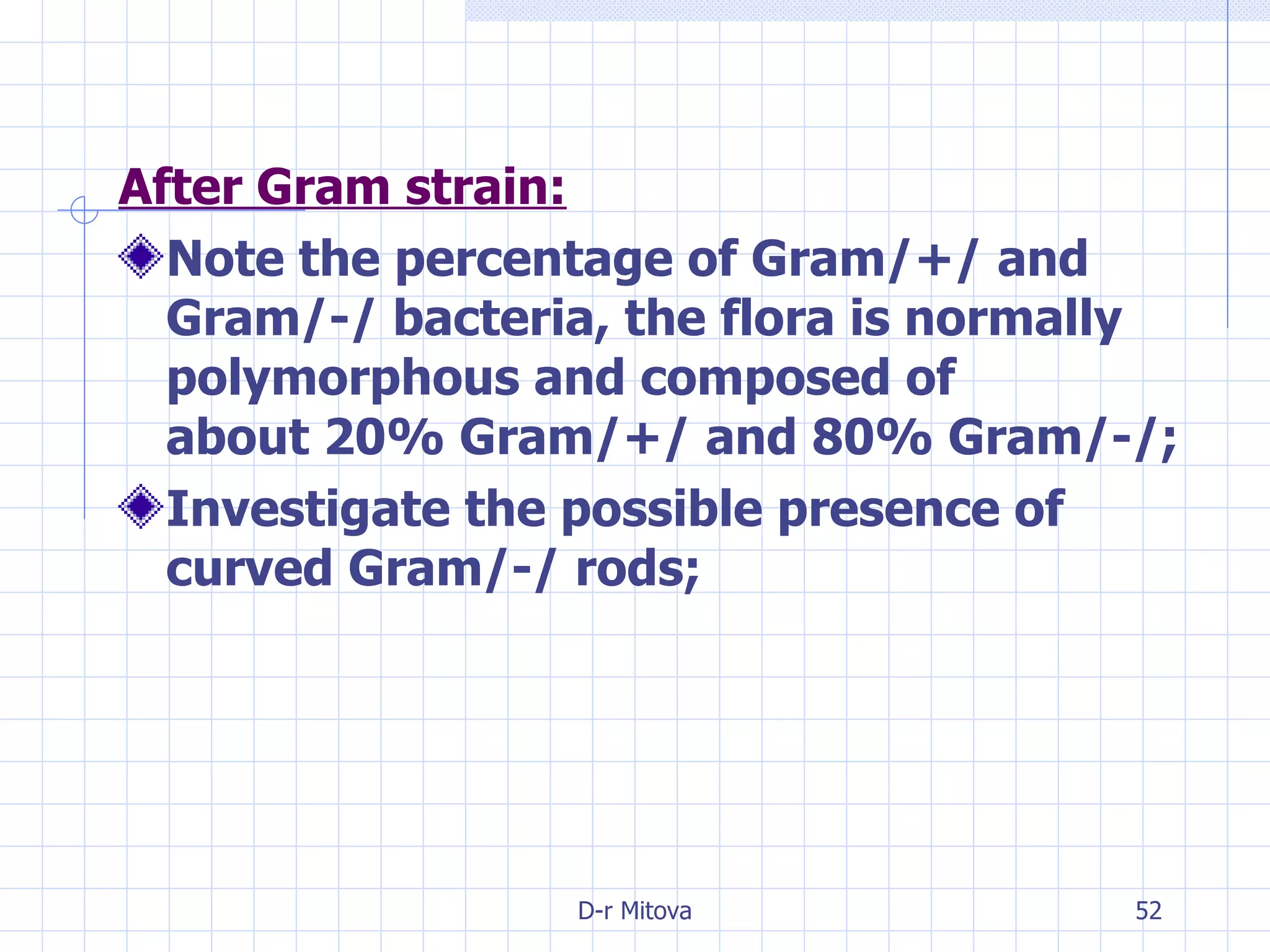
After Gram strain: Note the percentage of Gram/+/ and Gram/-/ bacteria, the flora is normally polymorphous and composed of about 20% Gram/+/ and 80% Gram/-/; Investigate the possible presence of curved Gram/-/ rods;
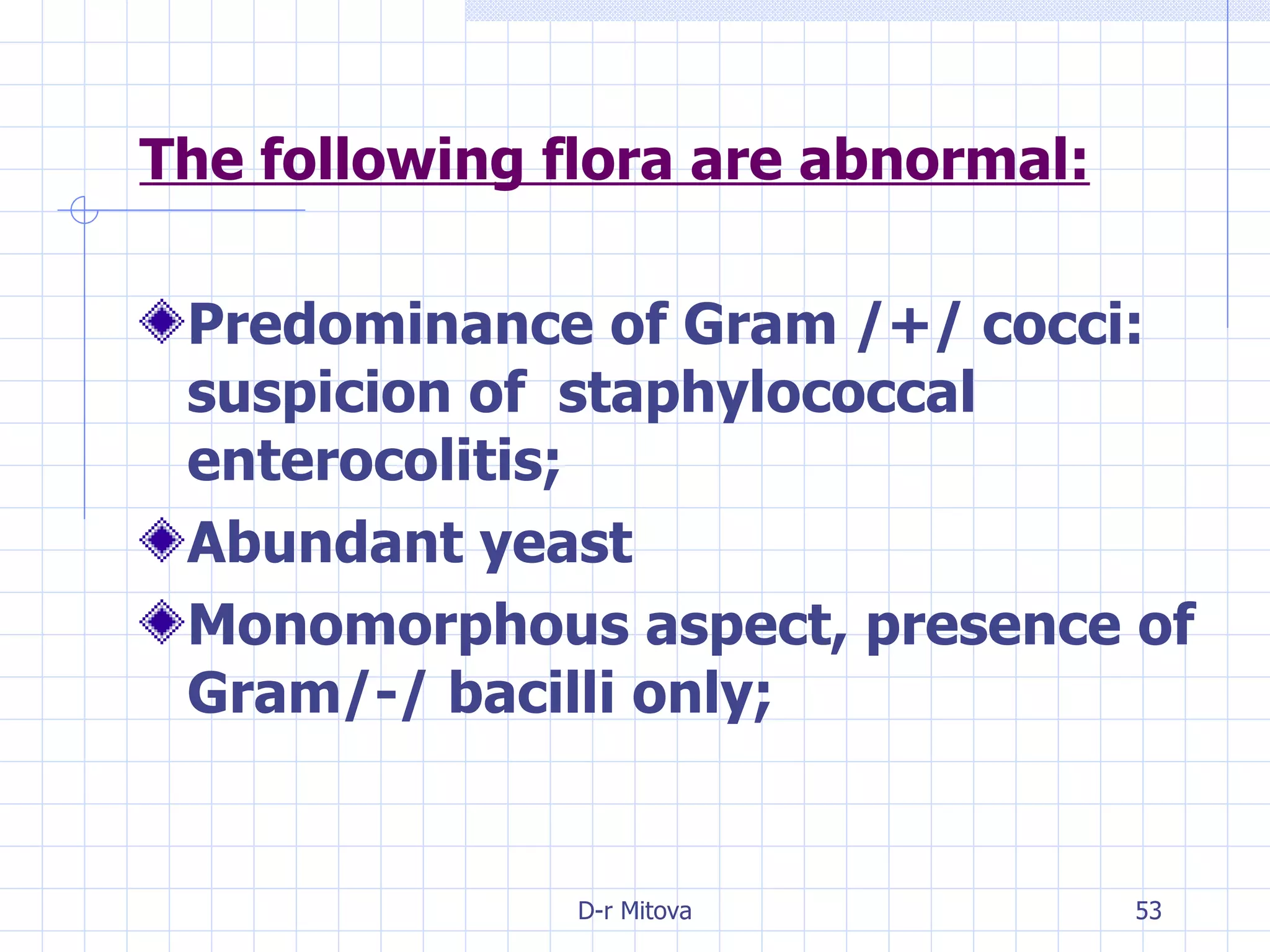
The following flora are abnormal: Predominance of Gram /+/ cocci: suspicion of  staphylococcal enterocolitis; Abundant yeast Monomorphous aspect, presence of Gram/-/ bacilli only;
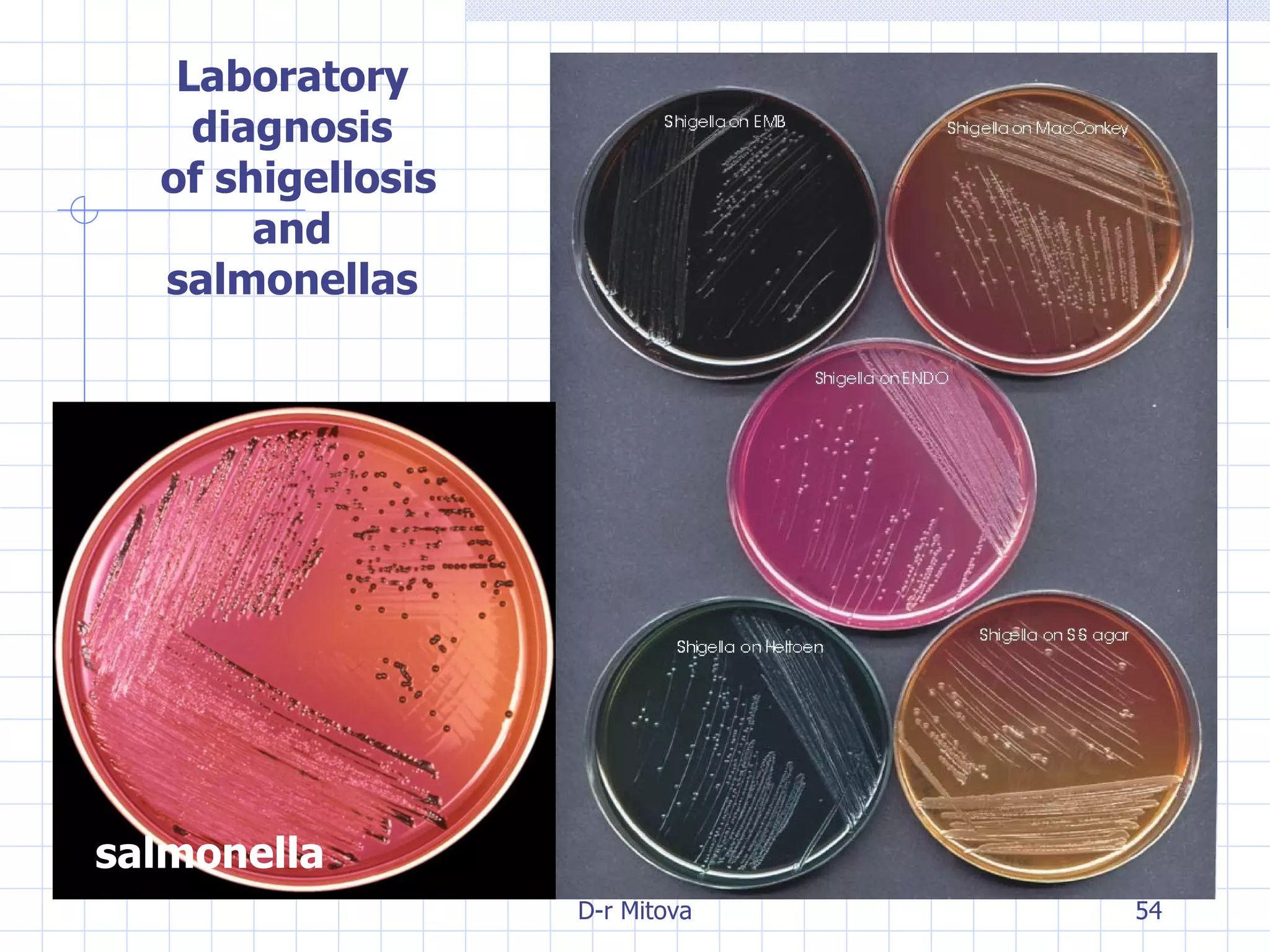
Laboratory diagnosis of shigellosis and salmonellas salmonella
Diagnosis of staphylococcal foodborne illness. Incriminated foods should be collected and examined for staphylococci. The presence of relatively large numbers of enterotoxigenic staphylococci is good circumstantial evidence that the food contains toxin.
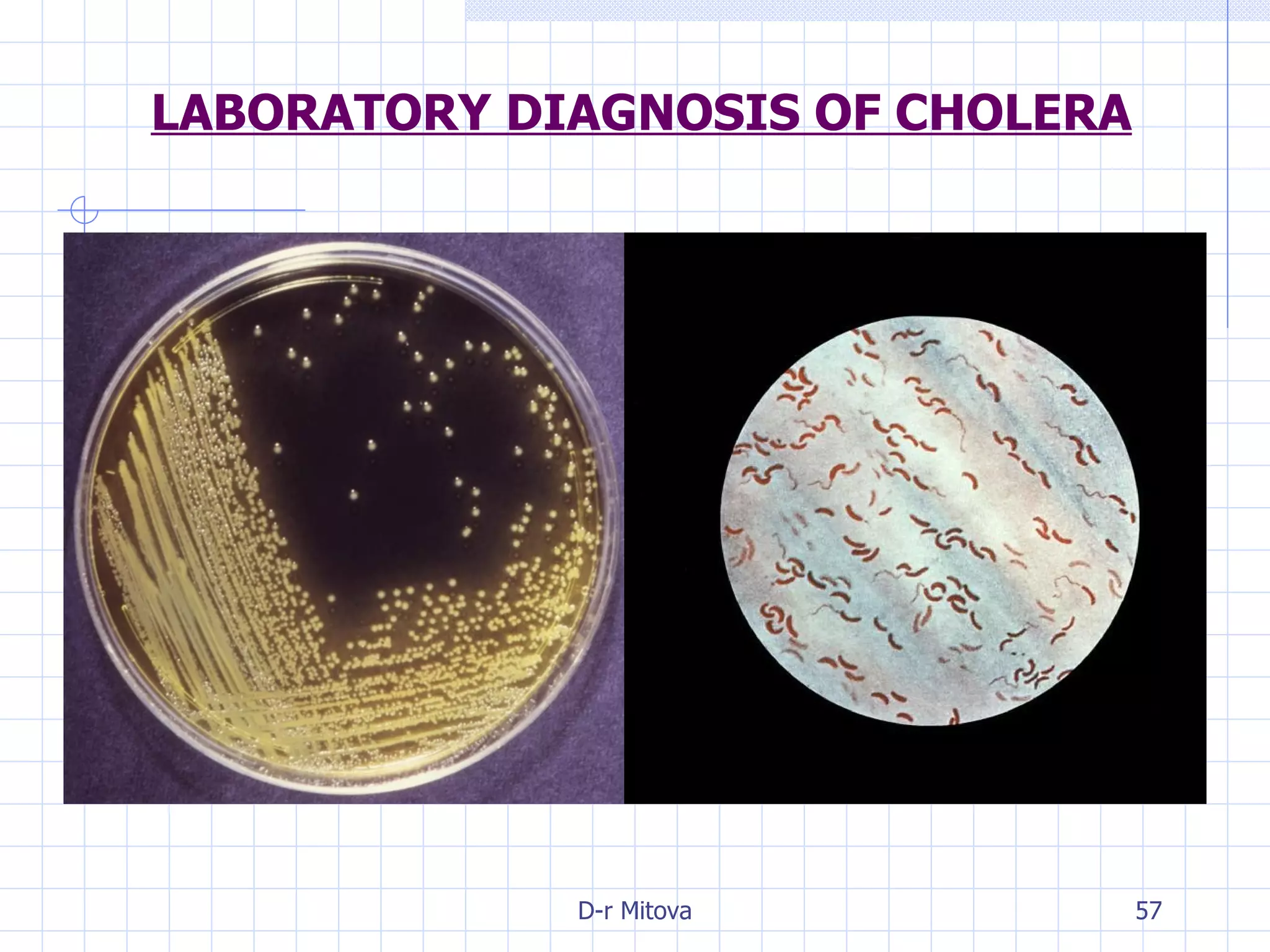
LABORATORY DIAGNOSIS OF CHOLERA  If a microscope with dark field illumination is available , it may be possible to diagnose about 80% of the cases within a few minutes , and more cases after 5-6 hours of incubation in alkaline peptone water . In the dark field , the vibrios evoke the image of many shooting stars in a dark sky. In motility cases on mixing with polyvalent anti-cholera serum , the organism are presumed to be cholera vibrios. Culture method:  Bile Salt Agar medium ; In liquid choleric stools , V. cholerae is a pure culture. In stools from healthy carriers, V. cholerae is found small quantities mixed with the commensal flora.
LABORATORY DIAGNOSIS OF CHOLERA
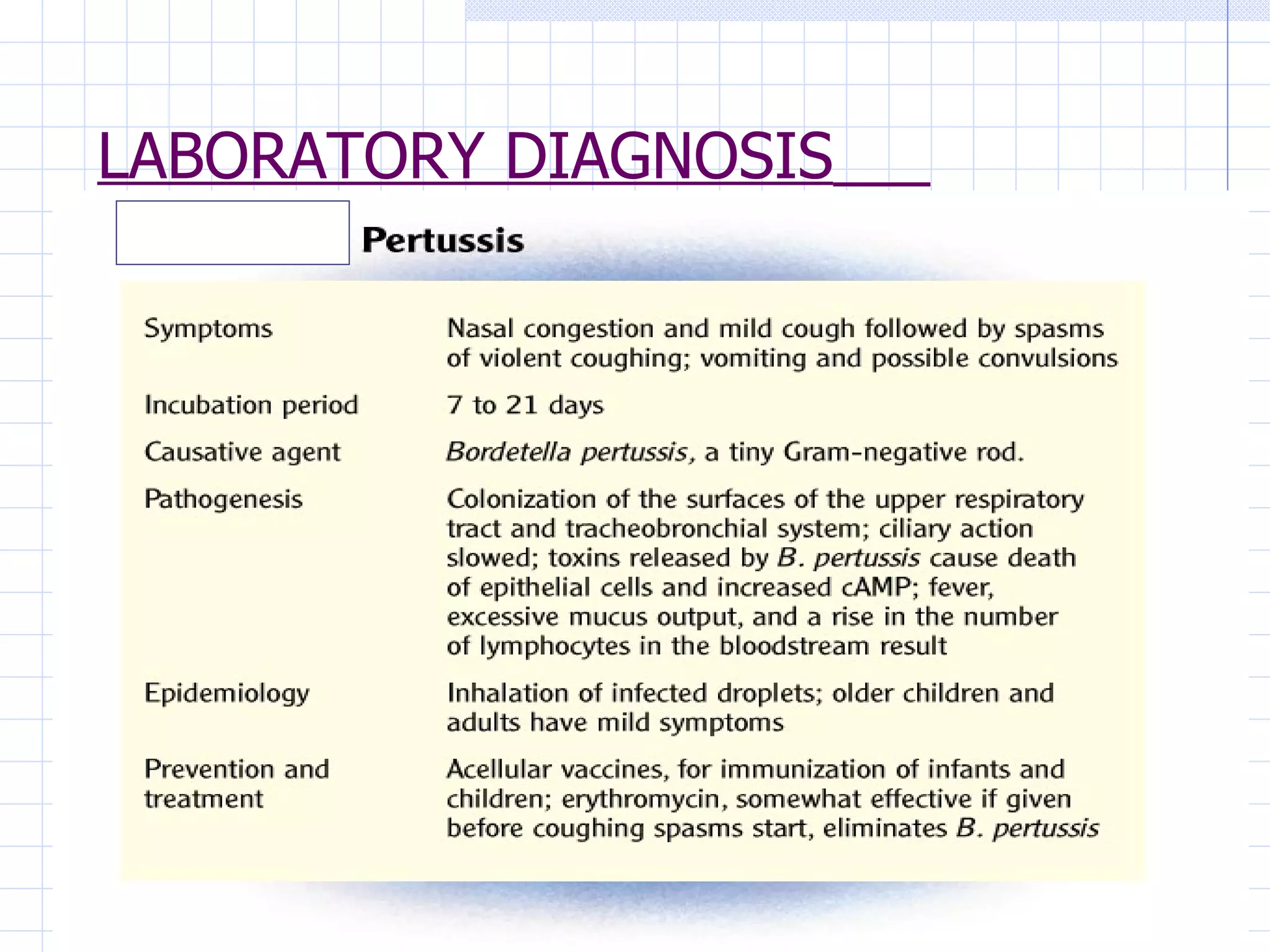
LABORATORY DIAGNOSIS
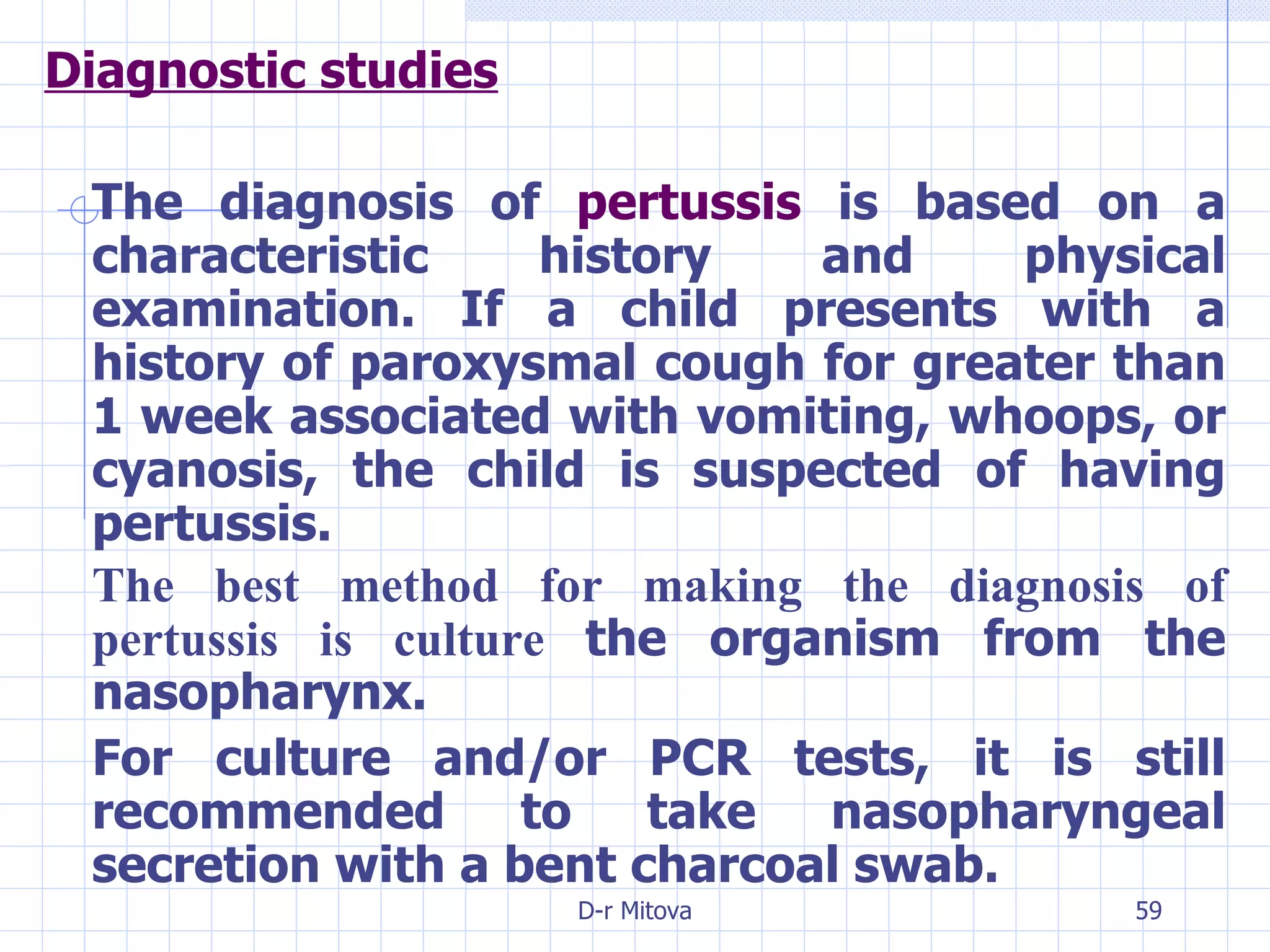
Diagnostic studies The diagnosis of  pertussis  is based on a characteristic history and physical examination. If a child presents with a history of paroxysmal cough for greater than 1 week associated with vomiting, whoops, or cyanosis, the child is suspected of having pertussis. The best method for making the diagnosis of pertussis is culture  the organism from the nasopharynx. For culture and/or PCR tests, it is still recommended to take nasopharyngeal secretion with a bent charcoal swab.
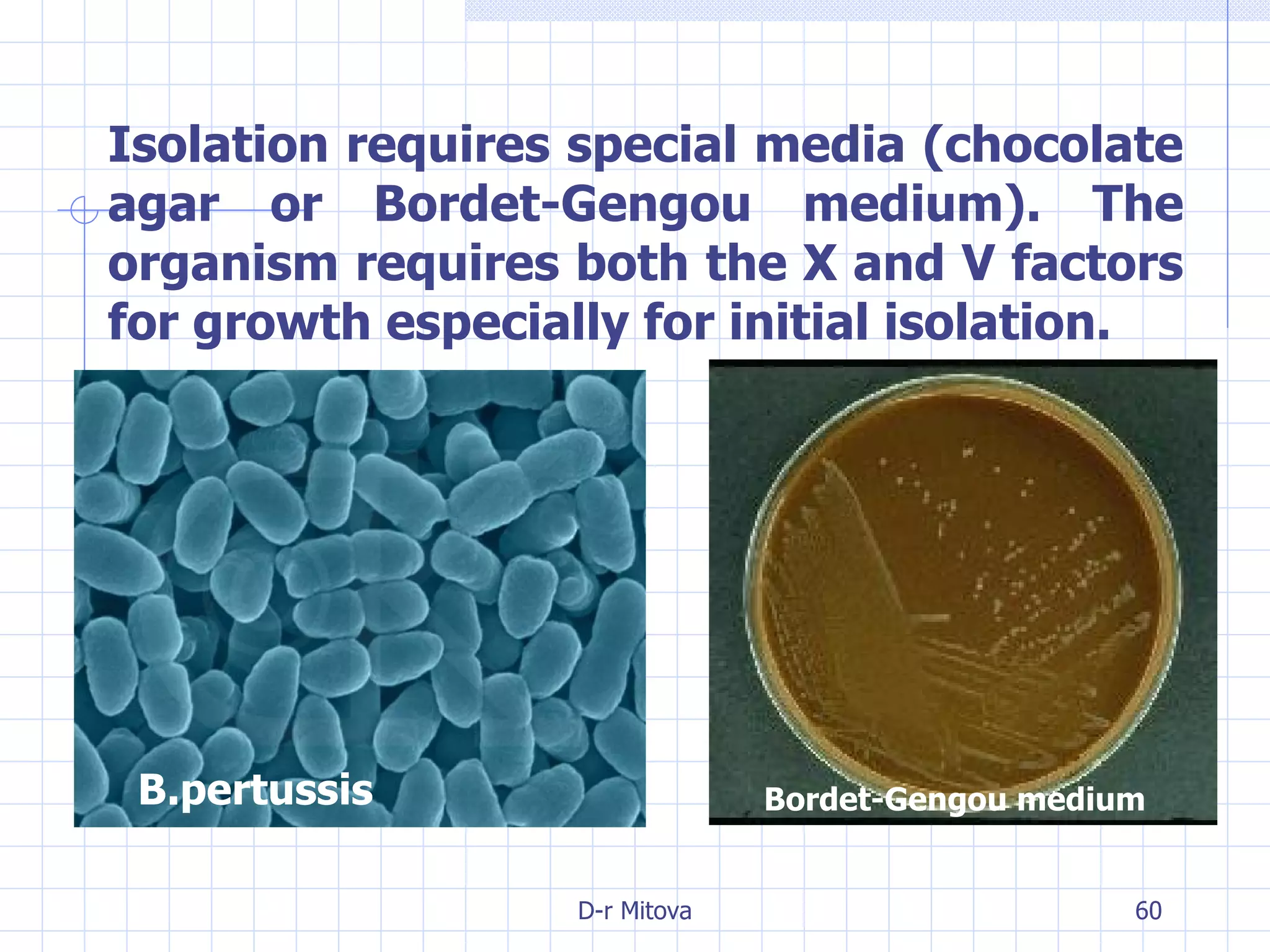
Isolation requires special media (chocolate agar or Bordet-Gengou medium). The organism requires both the X and V factors for growth especially for initial isolation. B.pertussis Bordet-Gengou medium
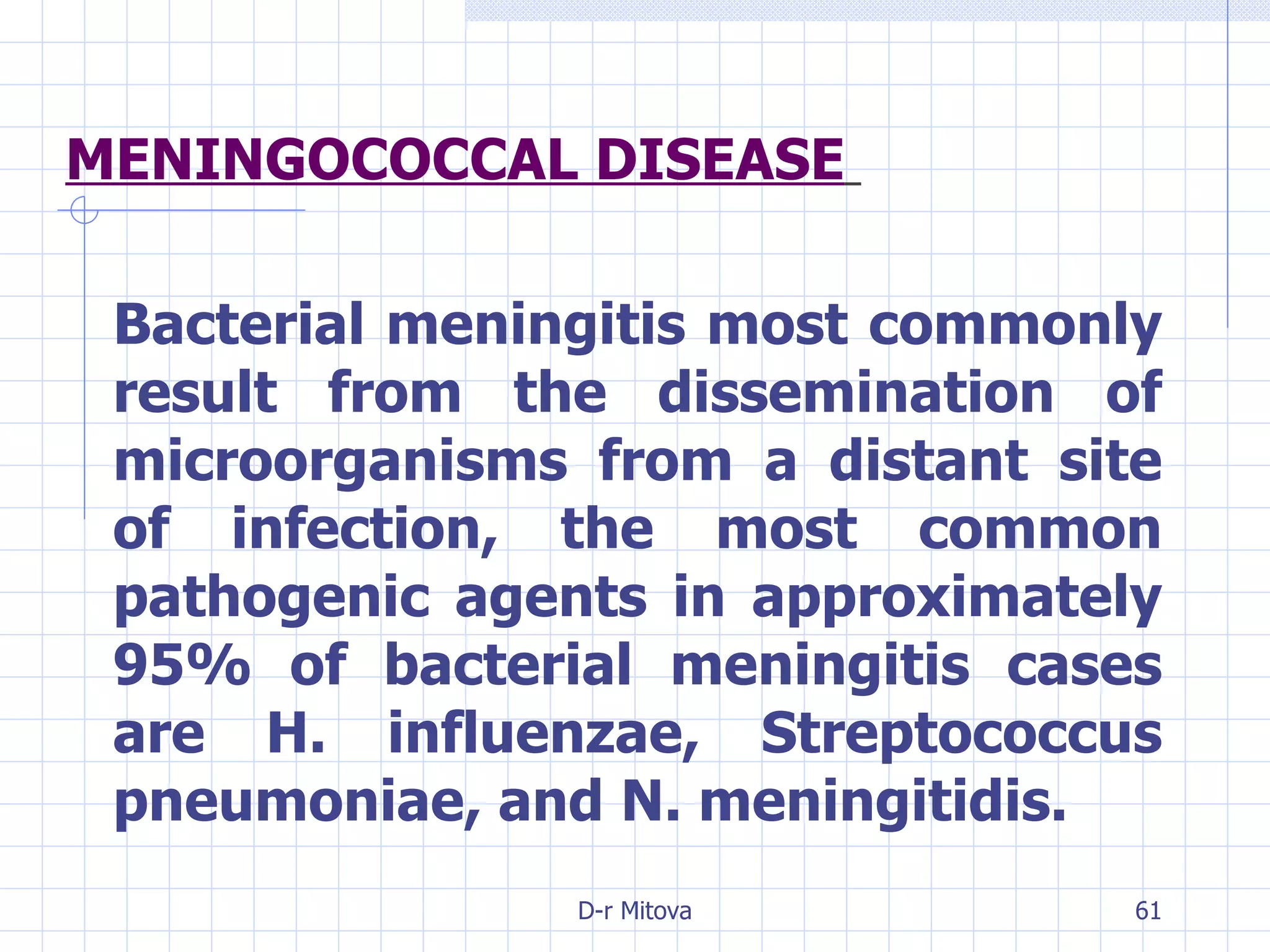
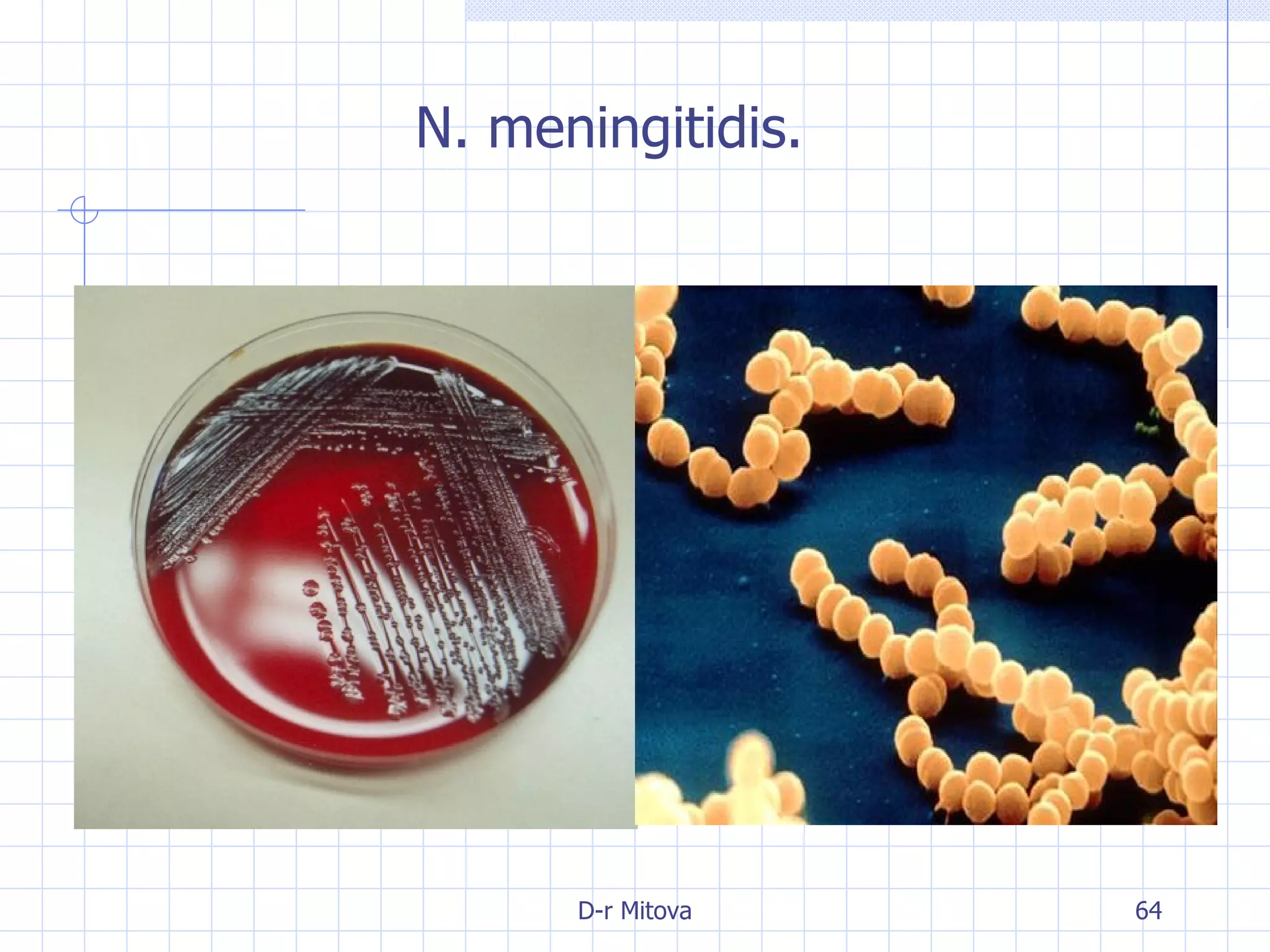
MENINGOCOCCAL DISEASE   Bacterial meningitis most commonly result from the dissemination of microorganisms from a distant site of infection, the most common pathogenic agents in approximately 95% of bacterial meningitis cases are H. influenzae, Streptococcus pneumoniae, and N. meningitidis.
 
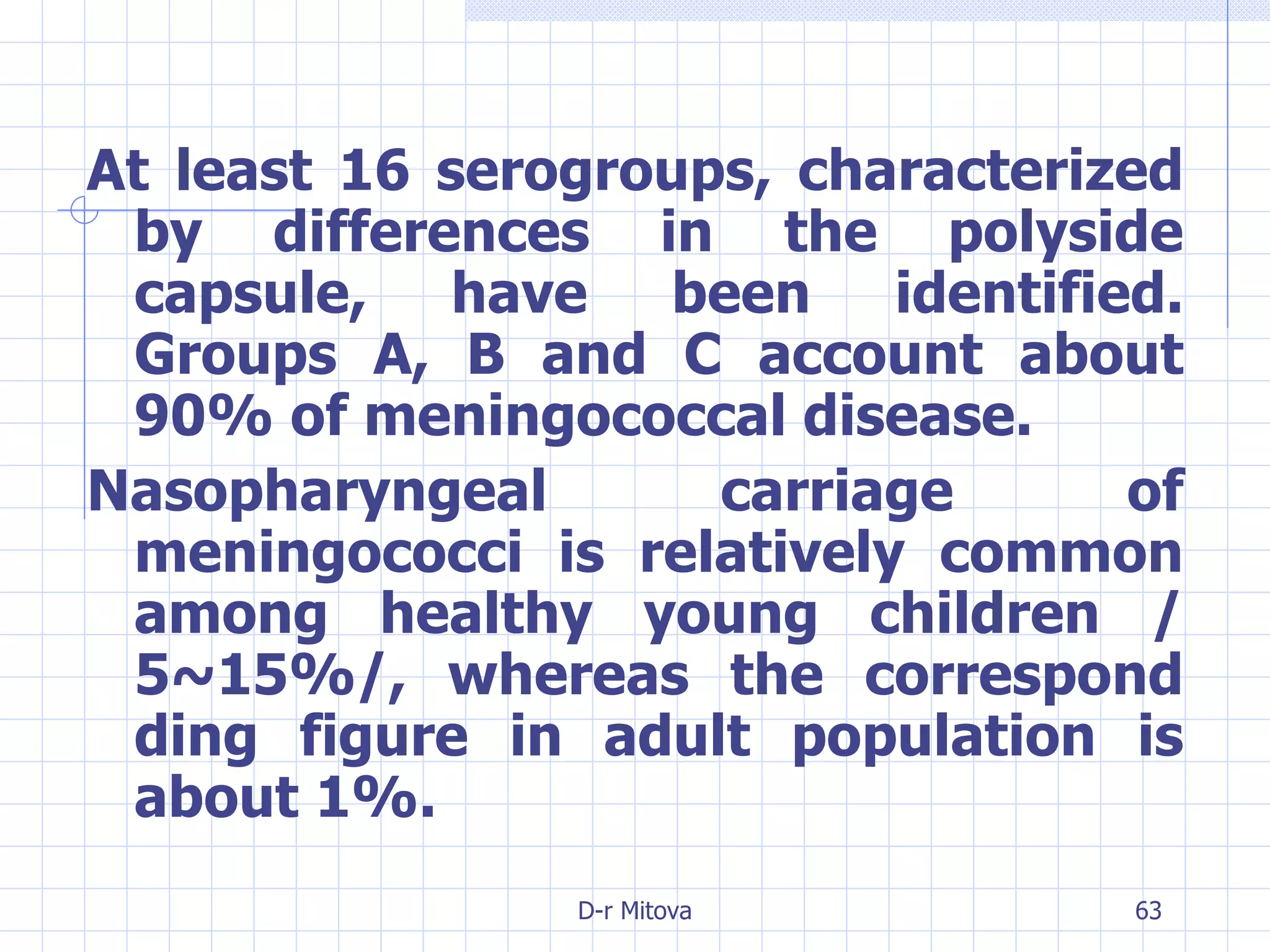
At least 16 serogroups, characterized by differences in the polyside capsule, have been identified. Groups A, B and C account about 90% of meningococcal disease. Nasopharyngeal carriage of meningococci is relatively common among healthy young children /5~15%/, whereas the correspond ding figure in adult population is about 1%.
N. meningitidis.
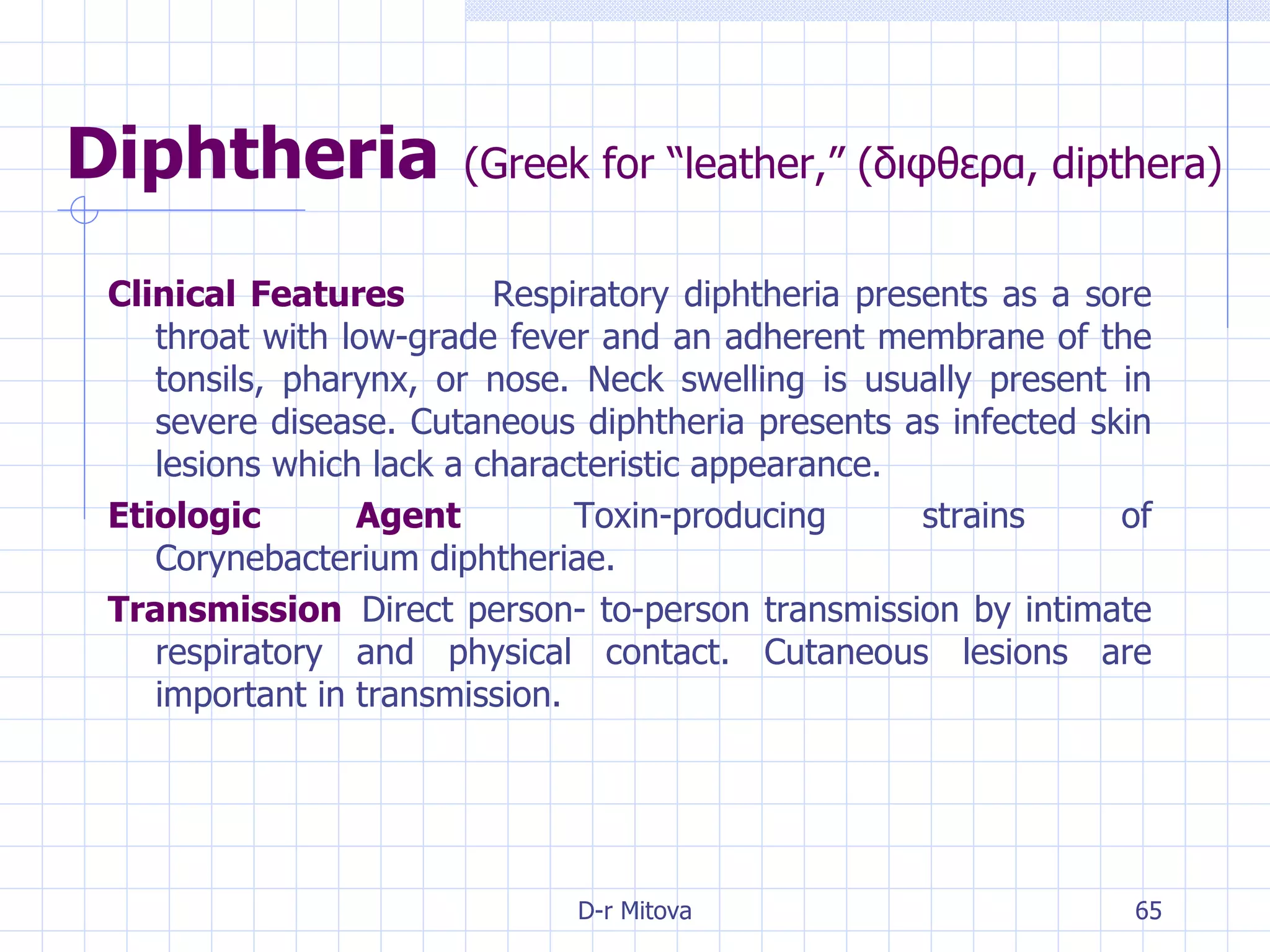
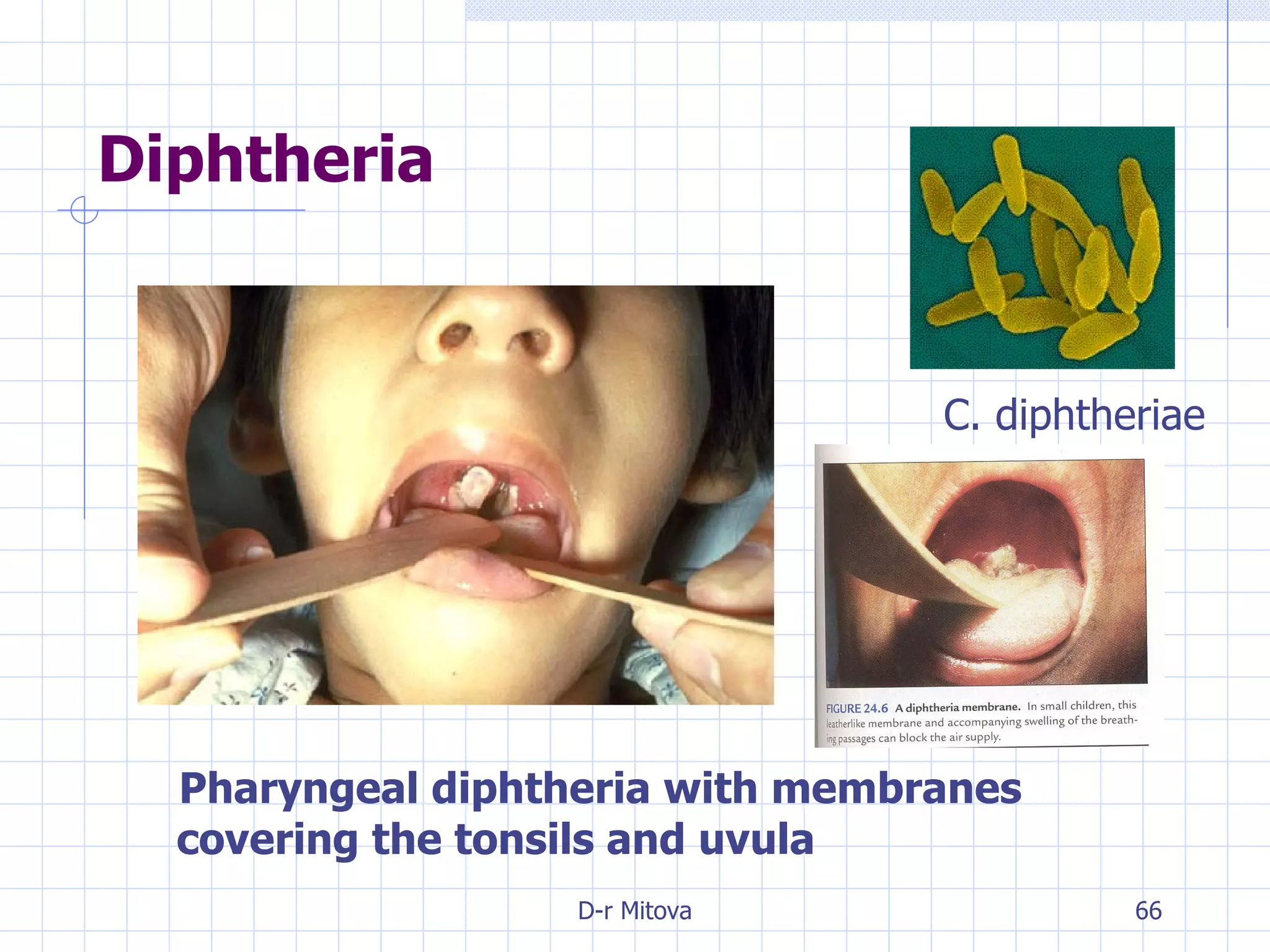
Diphtheria   ( Greek for “leather,” (διφθερα, dipthera) Clinical Features Respiratory diphtheria presents as a sore throat with low-grade fever and an adherent membrane of the tonsils, pharynx, or nose. Neck swelling is usually present in severe disease. Cutaneous diphtheria presents as infected skin lesions which lack a characteristic appearance.  Etiologic Agent Toxin-producing strains of Corynebacterium diphtheriae. Transmission Direct person- to-person transmission by intimate respiratory and physical contact. Cutaneous lesions are important in transmission.
Diphtheria Pharyngeal diphtheria with membranes covering the tonsils and uvula C. diphtheriae
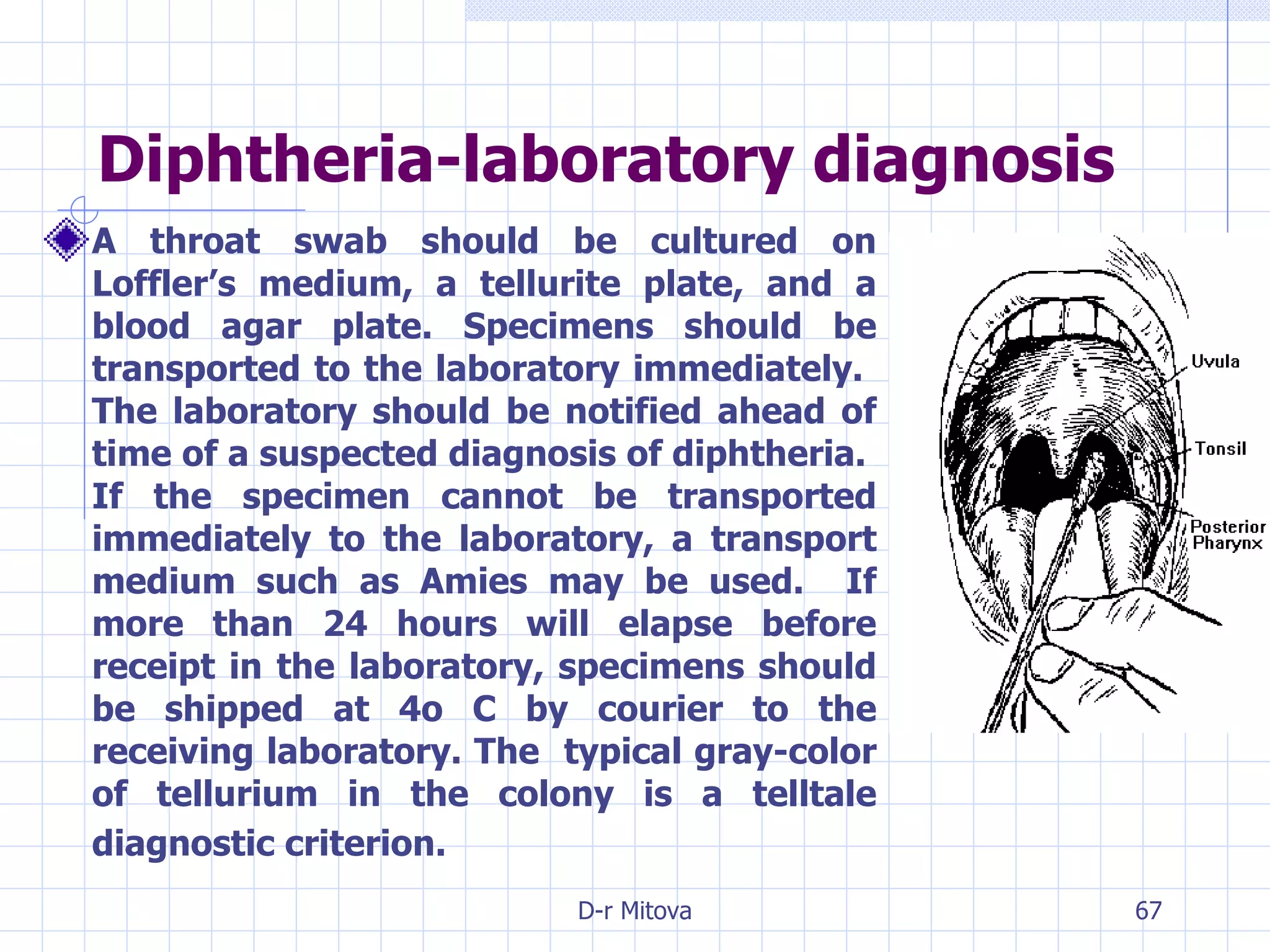
A throat swab should be cultured on Loffler’s medium, a tellurite plate, and a blood agar plate.  Specimens should be transported to the laboratory immediately.  The laboratory should be notified ahead of time of a suspected diagnosis of diphtheria.  If the specimen cannot be transported immediately to the laboratory, a transport medium such as Amies may be used.  If more than 24 hours will elapse before receipt in the laboratory, specimens should be shipped at 4o C by courier to the receiving laboratory.  The  typical gray-color of tellurium in the colony is a telltale diagnostic criterion.   Diphtheria-laboratory diagnosis
Viral hepatitis The term hepatitis refer to any condition in which the liver becomes inflamed and its cells degenerate and die. Viral causes of hepatitis Hepatitis A virus Hepatitis B virus Hepatitis C virus Hepatitis D virus Hepatitis E virus Others :Ebstein-barr virus, rubella, cytomegalovirus, herpes virus, varicella zoster and coxackie B; Bacterial causes of hepatitis include: many organisms that cause septicaemia, among them E. coli Chemical cause of hepatitis include
 
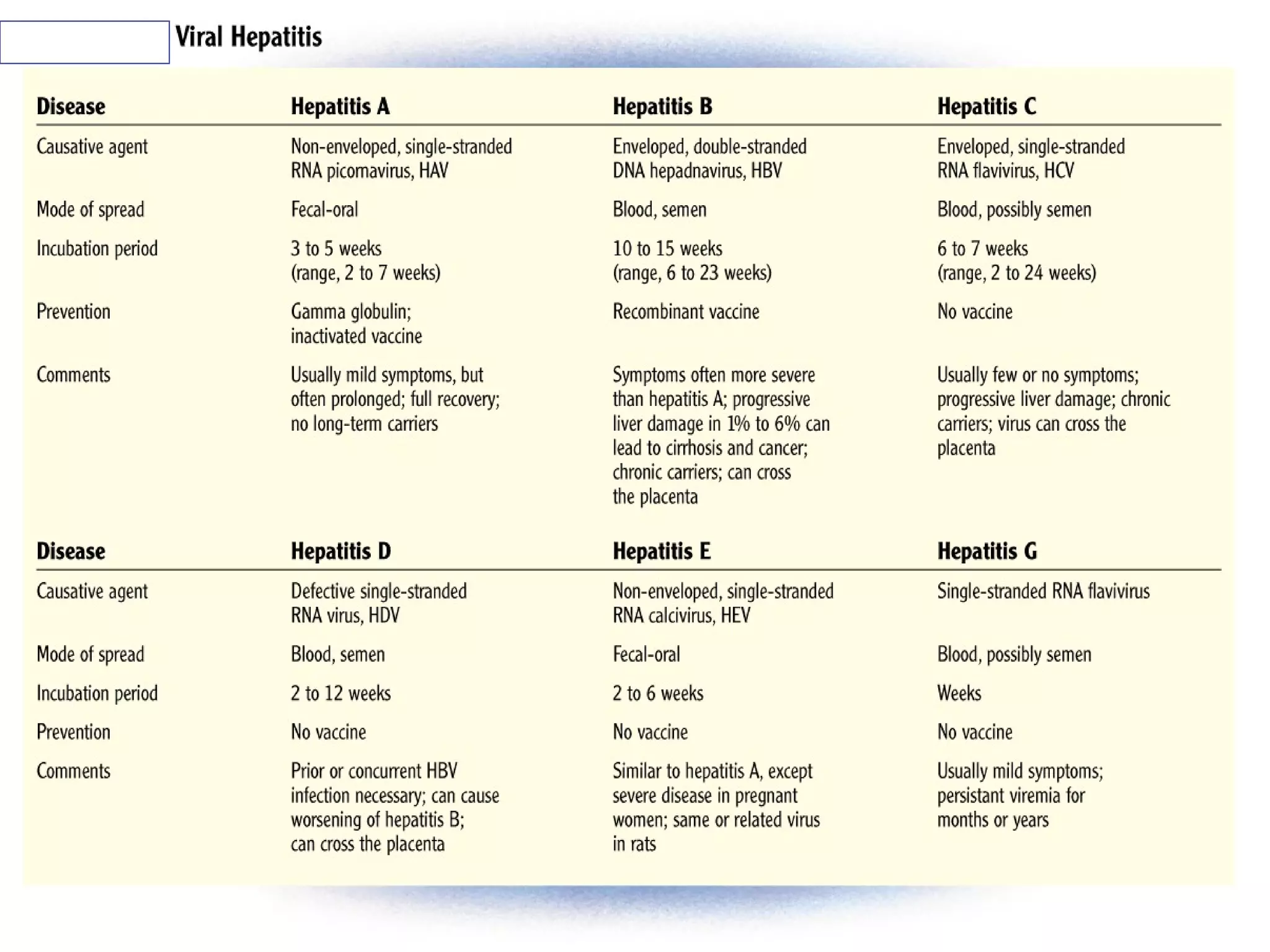
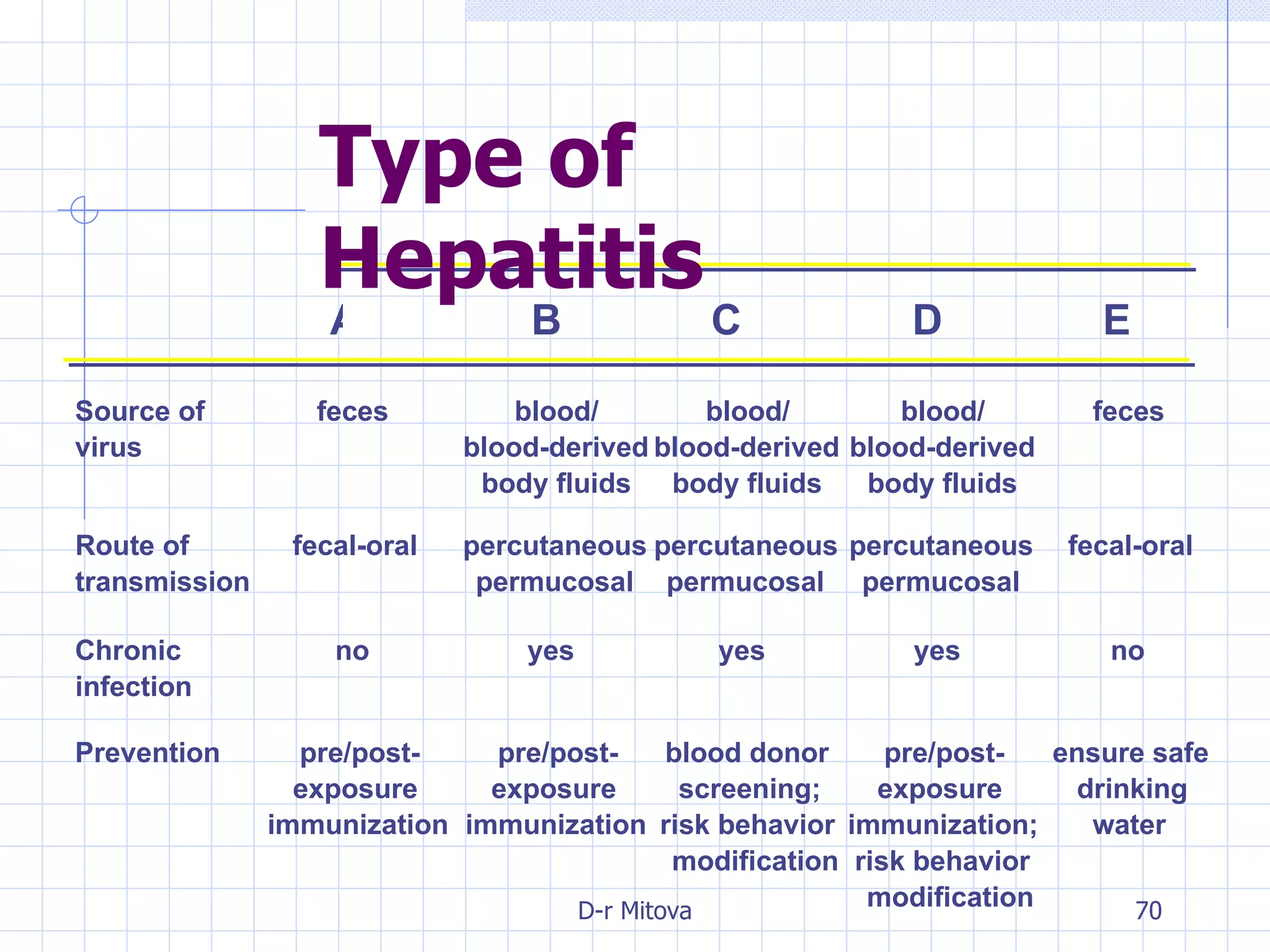
Source of virus feces blood/ blood-derived body fluids blood/ blood-derived body fluids blood/ blood-derived body fluids feces Route of transmission fecal-oral percutaneous permucosal percutaneous permucosal percutaneous permucosal fecal-oral Chronic infection no yes yes yes no Prevention pre/post- exposure immunization pre/post- exposure immunization blood donor screening; risk behavior modification pre/post- exposure immunization; risk behavior modification ensure safe drinking water Type of Hepatitis A B C D E
 
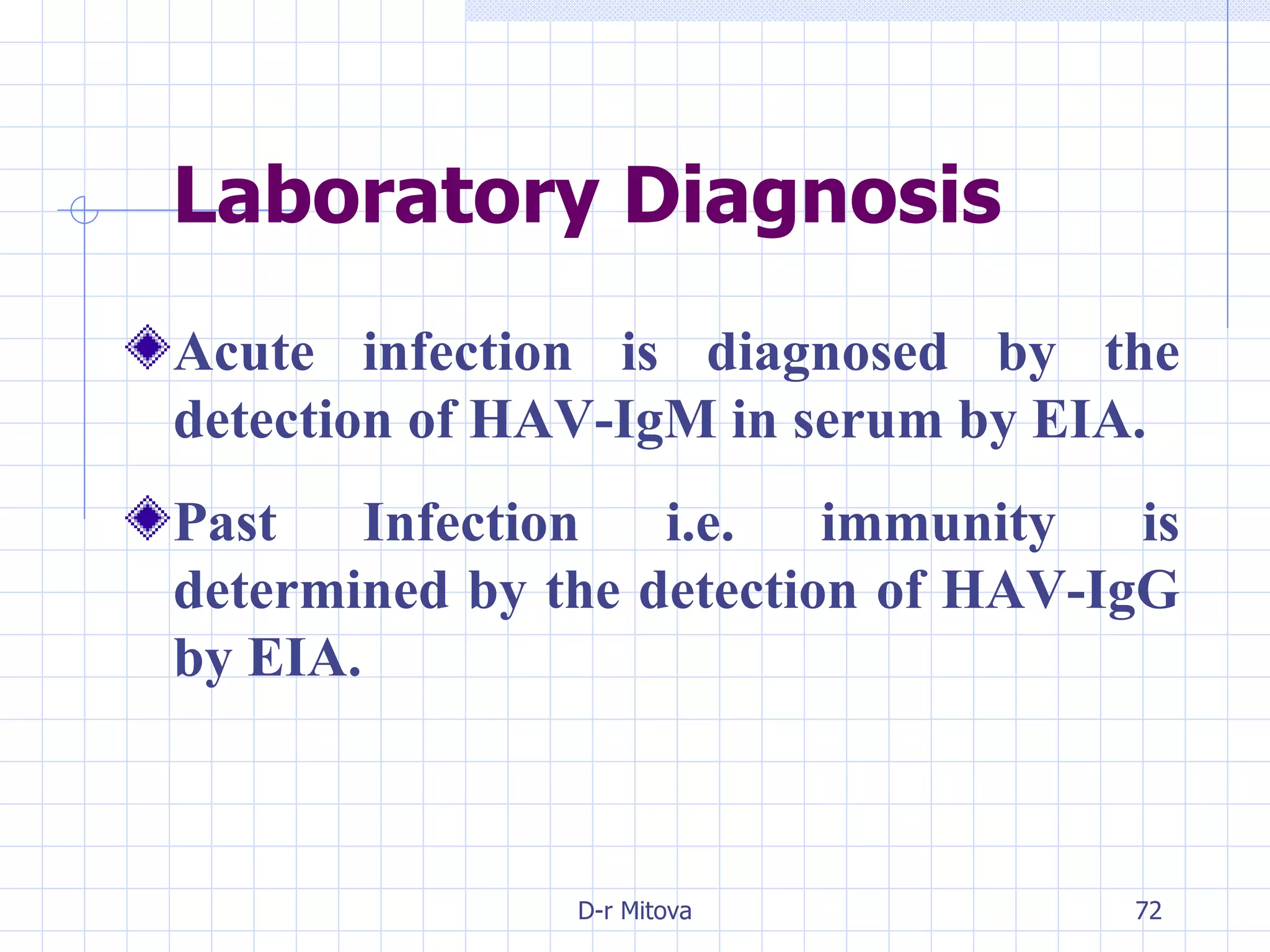
Laboratory Diagnosis Acute infection is diagnosed by the detection of HAV-IgM in serum by EIA. Past Infection i.e. immunity is determined by the detection of HAV-IgG by EIA.
 
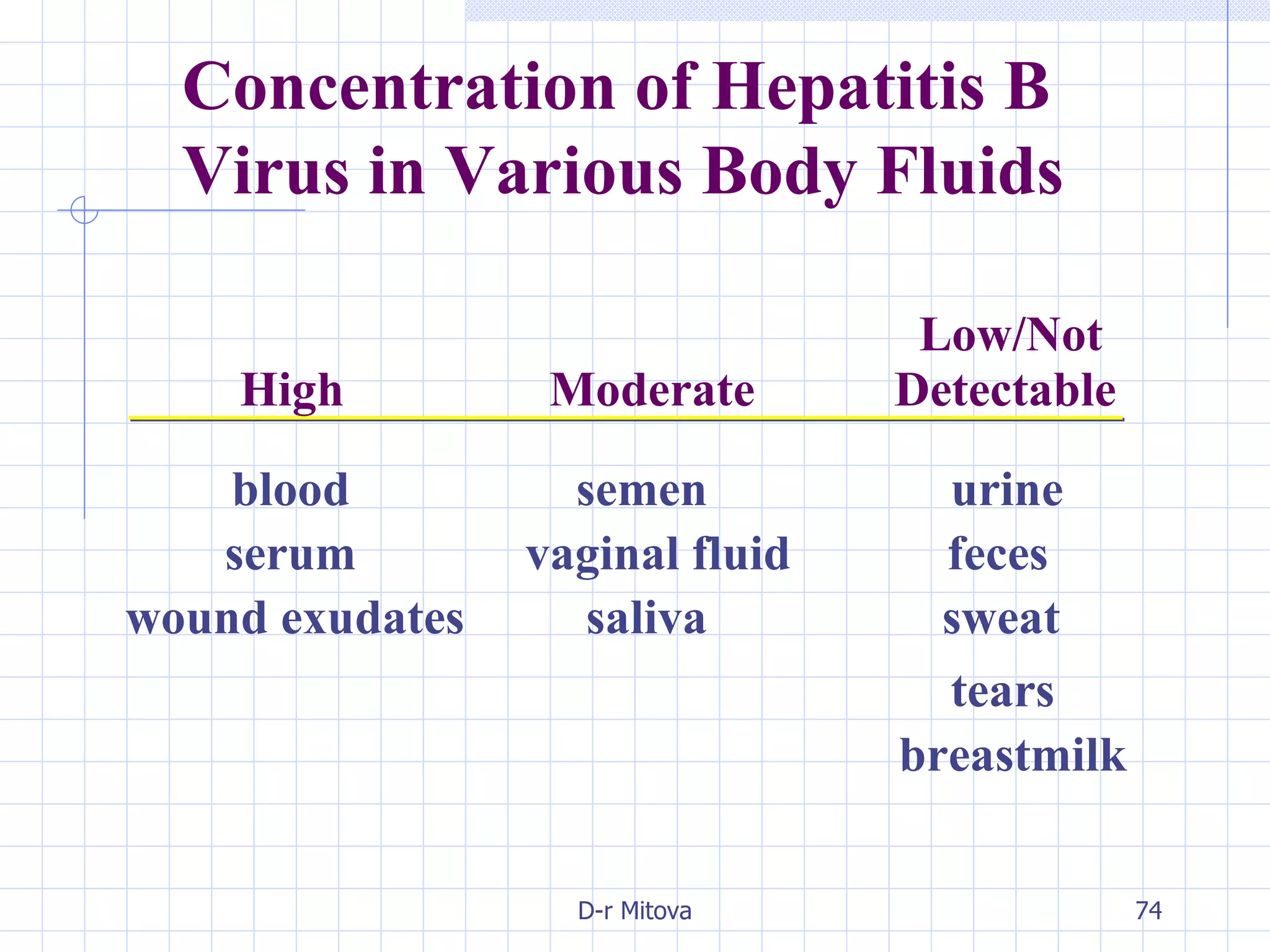
High Moderate Low/Not Detectable blood semen urine serum vaginal fluid feces wound exudates saliva sweat tears breastmilk Concentration of Hepatitis B Virus in Various Body Fluids
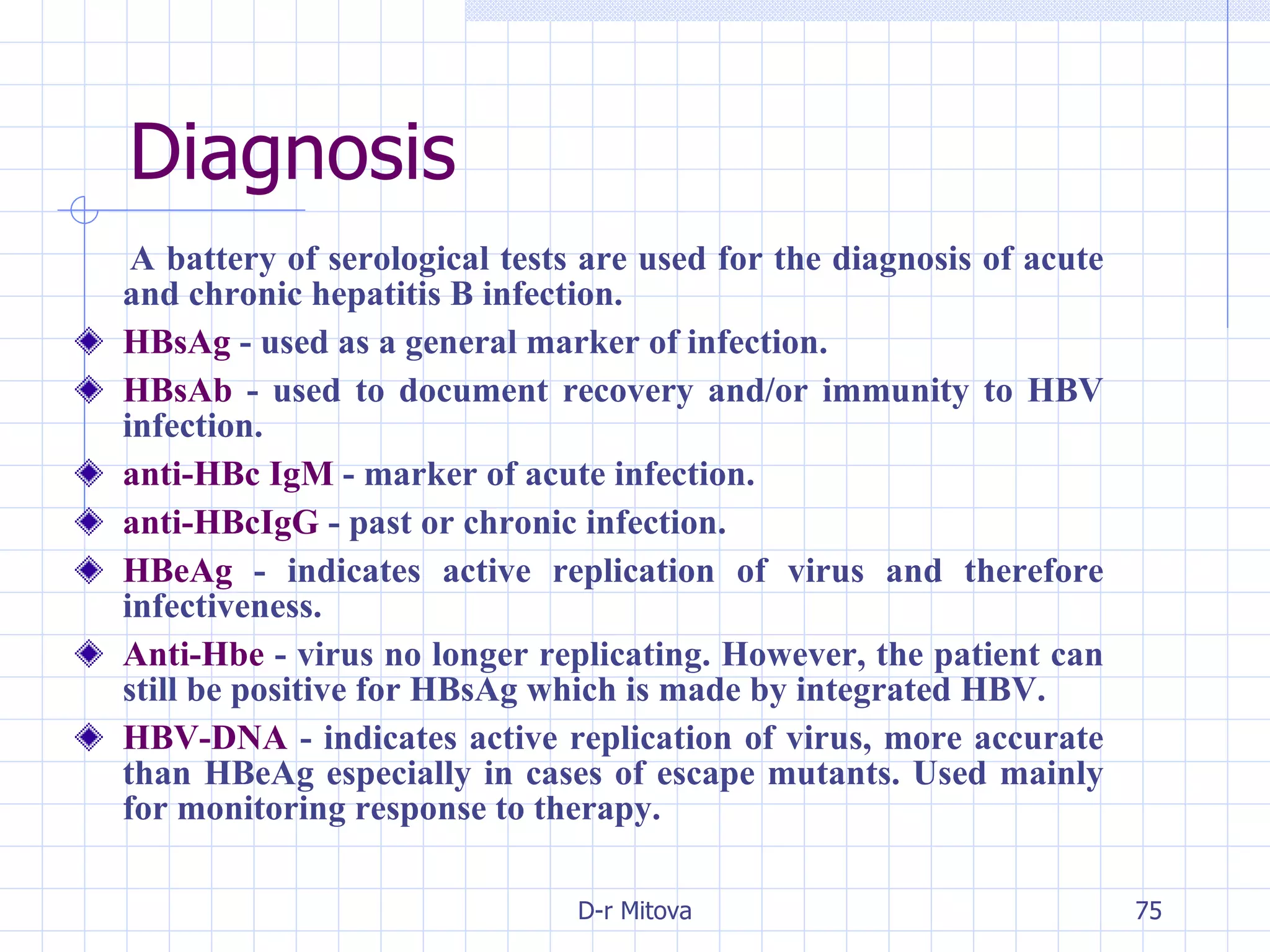
Diagnosis A battery of serological tests are used for the diagnosis of acute and chronic hepatitis B infection. HBsAg  - used as a general marker of infection. HBsAb  - used to document recovery and/or immunity to HBV infection.   anti-HBc IgM  - marker of acute infection. anti-HBcIgG  - past or chronic infection. HBeAg  - indicates active replication of virus and therefore infectiveness. Anti-Hbe  - virus no longer replicating. However, the patient can still be positive for HBsAg which is made by integrated HBV. HBV-DNA  - indicates active replication of virus, more accurate than HBeAg especially in cases of escape mutants. Used mainly for monitoring response to therapy.
 
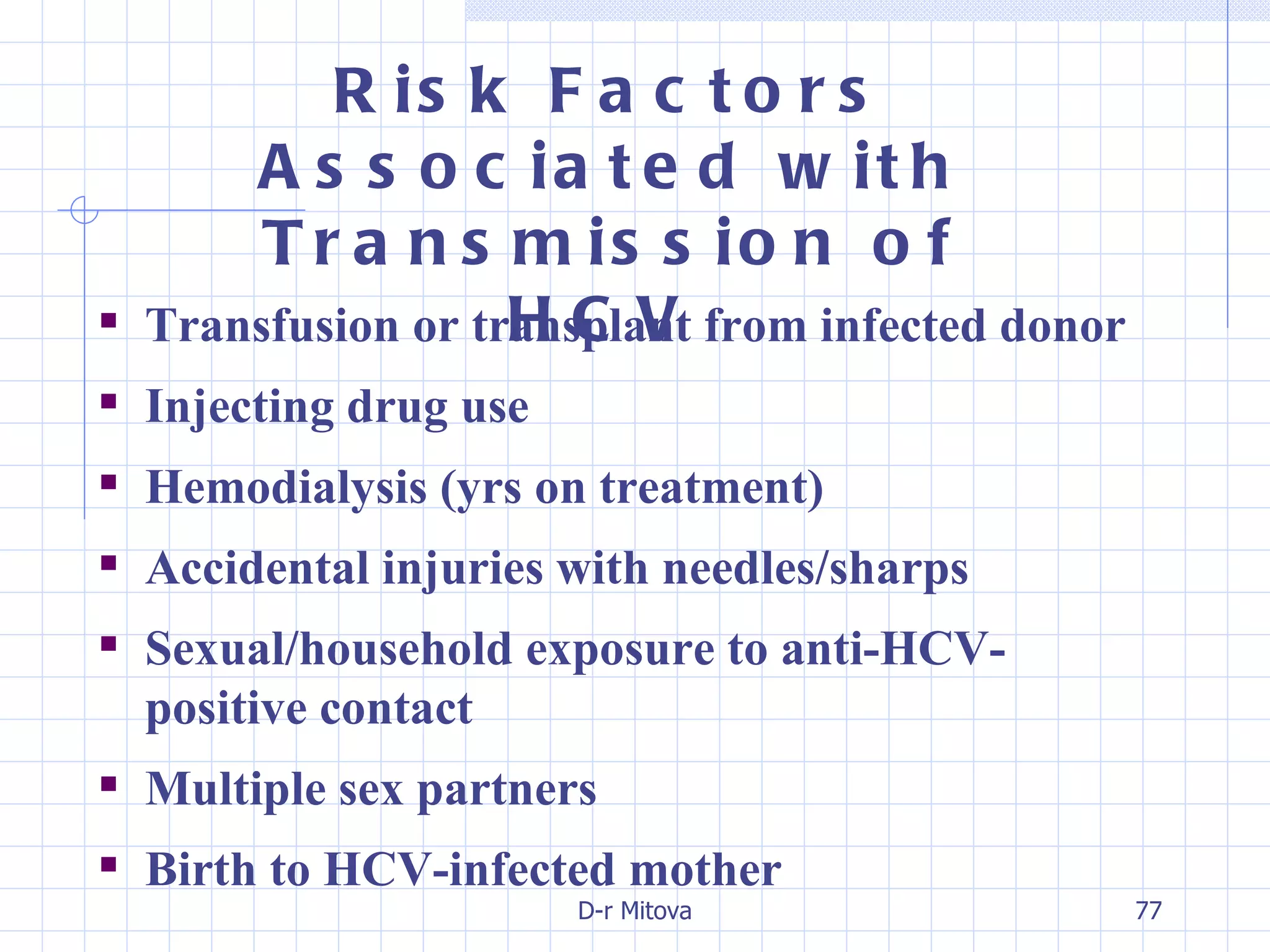
Transfusion or transplant from infected donor Injecting drug use Hemodialysis (yrs on treatment) Accidental injuries with needles/sharps Sexual/household exposure to anti-HCV-positive contact Multiple sex partners Birth to HCV-infected mother Risk Factors Associated with Transmission of HCV
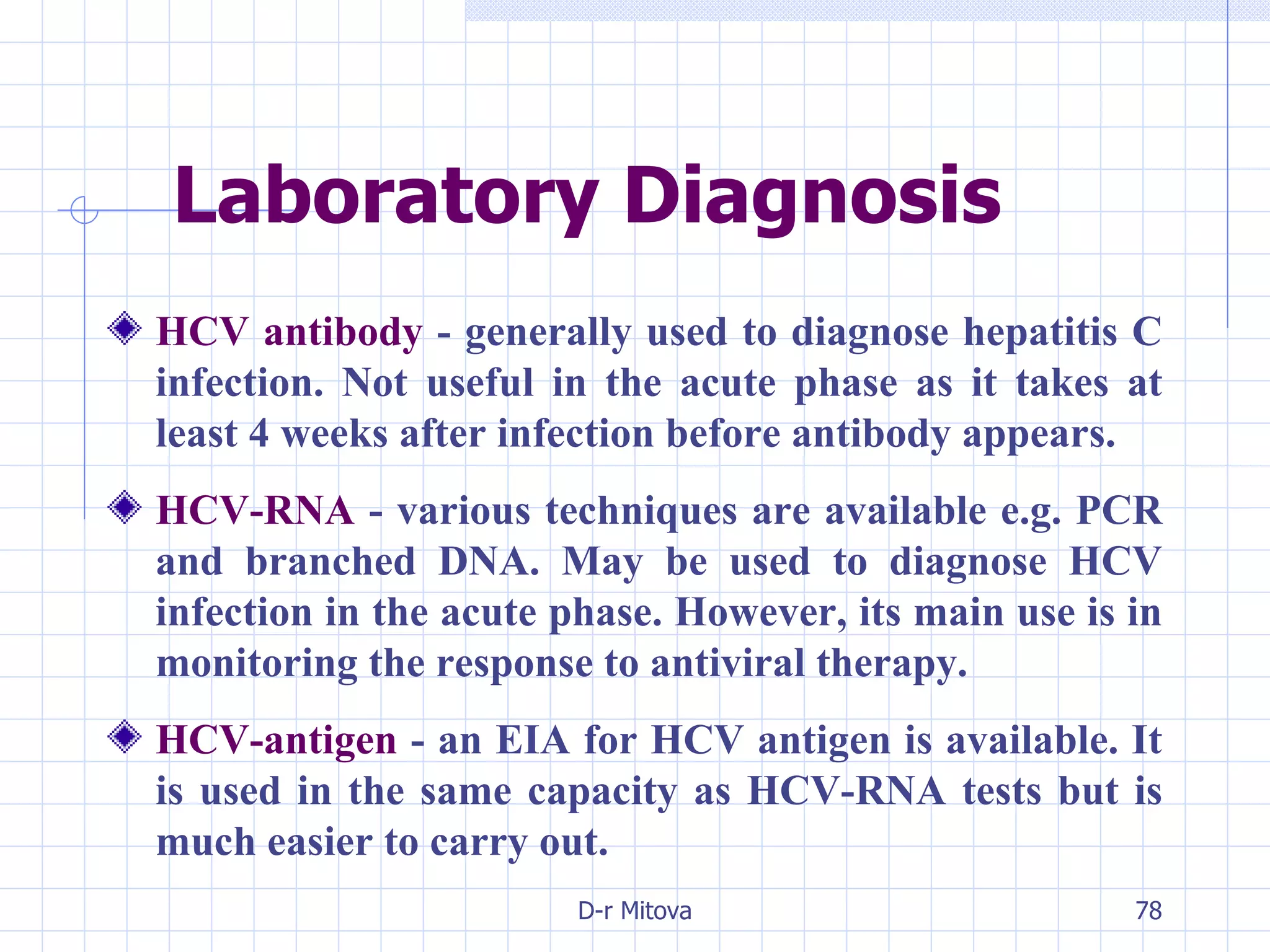
Laboratory Diagnosis HCV antibody  - generally used to diagnose hepatitis C infection. Not useful in the acute phase as it takes at least 4 weeks after infection before antibody appears. HCV-RNA   - various techniques are available e.g. PCR and branched DNA. May be used to diagnose HCV infection in the acute phase. However, its main use is in monitoring the response to antiviral therapy. HCV-antigen  - an EIA for HCV antigen is available. It is used in the same capacity as HCV-RNA tests but is much easier to carry out.
 
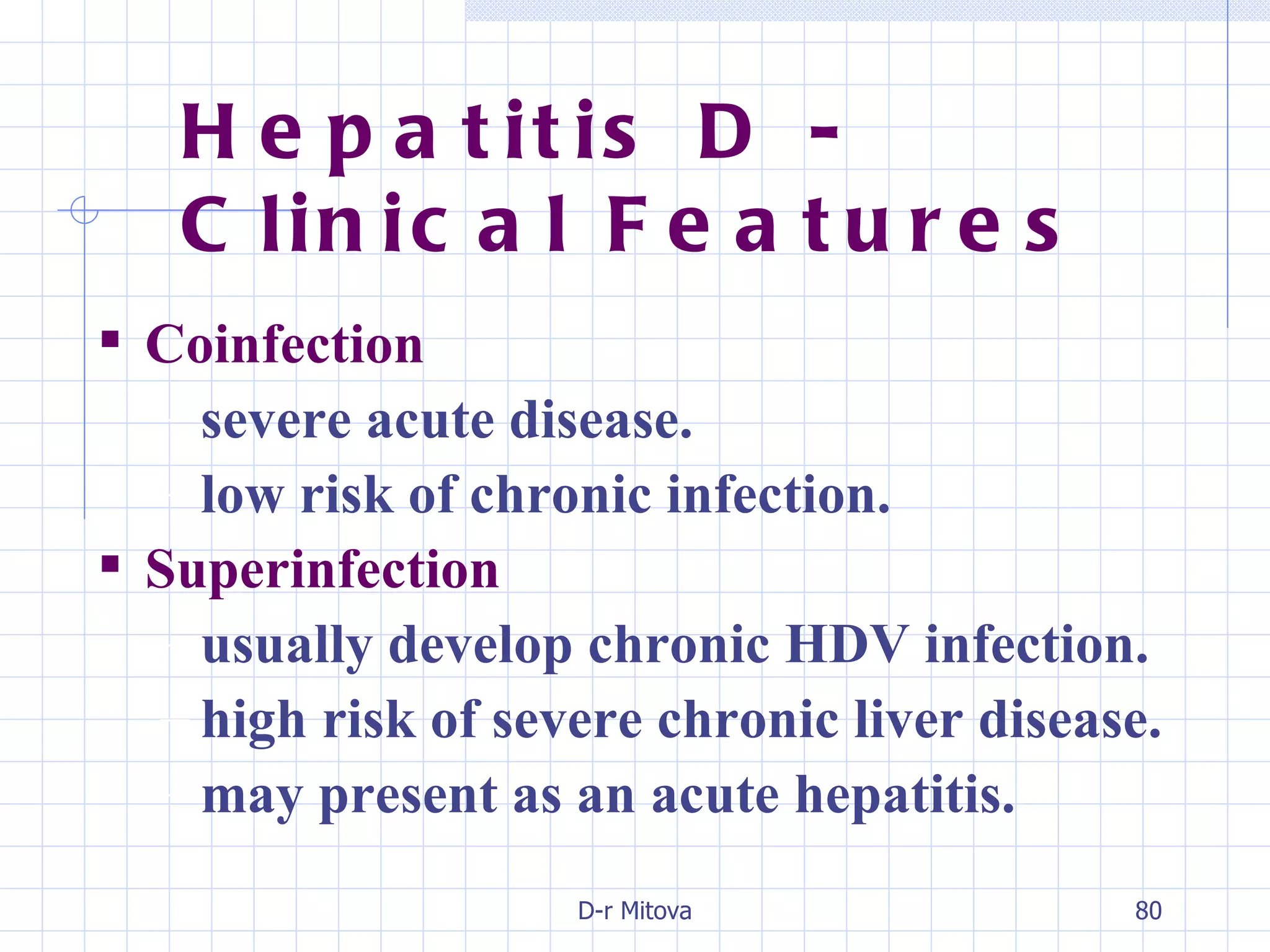
Coinfection severe acute disease. low risk of chronic infection. Superinfection usually develop chronic HDV infection. high risk of severe chronic liver disease. may present as an acute hepatitis. Hepatitis D - Clinical Features
 
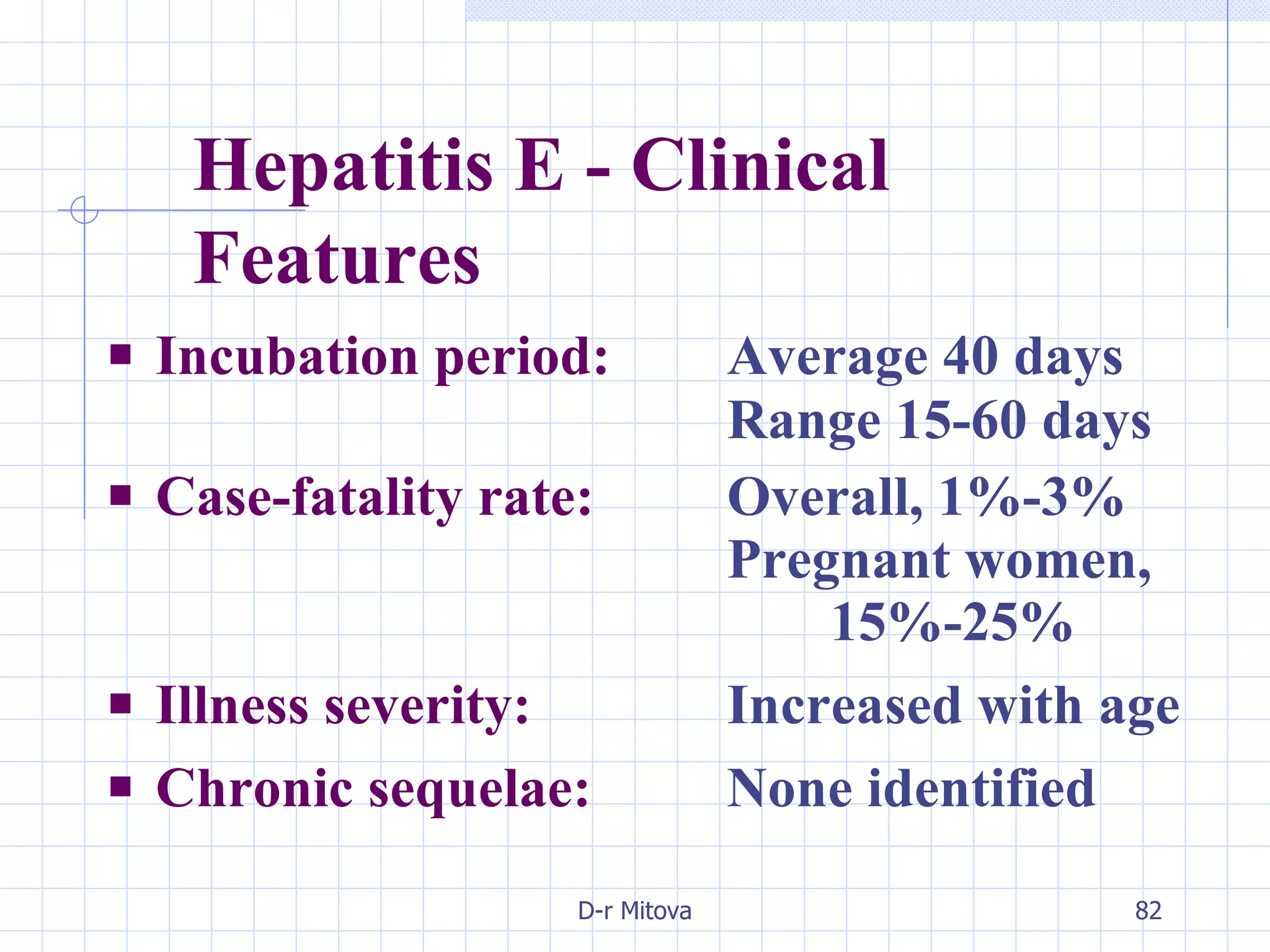
Incubation period: Average 40 days Range 15-60 days Case-fatality rate: Overall, 1%-3% Pregnant women,  15%-25% Illness severity: Increased with age Chronic sequelae: None identified Hepatitis E - Clinical Features
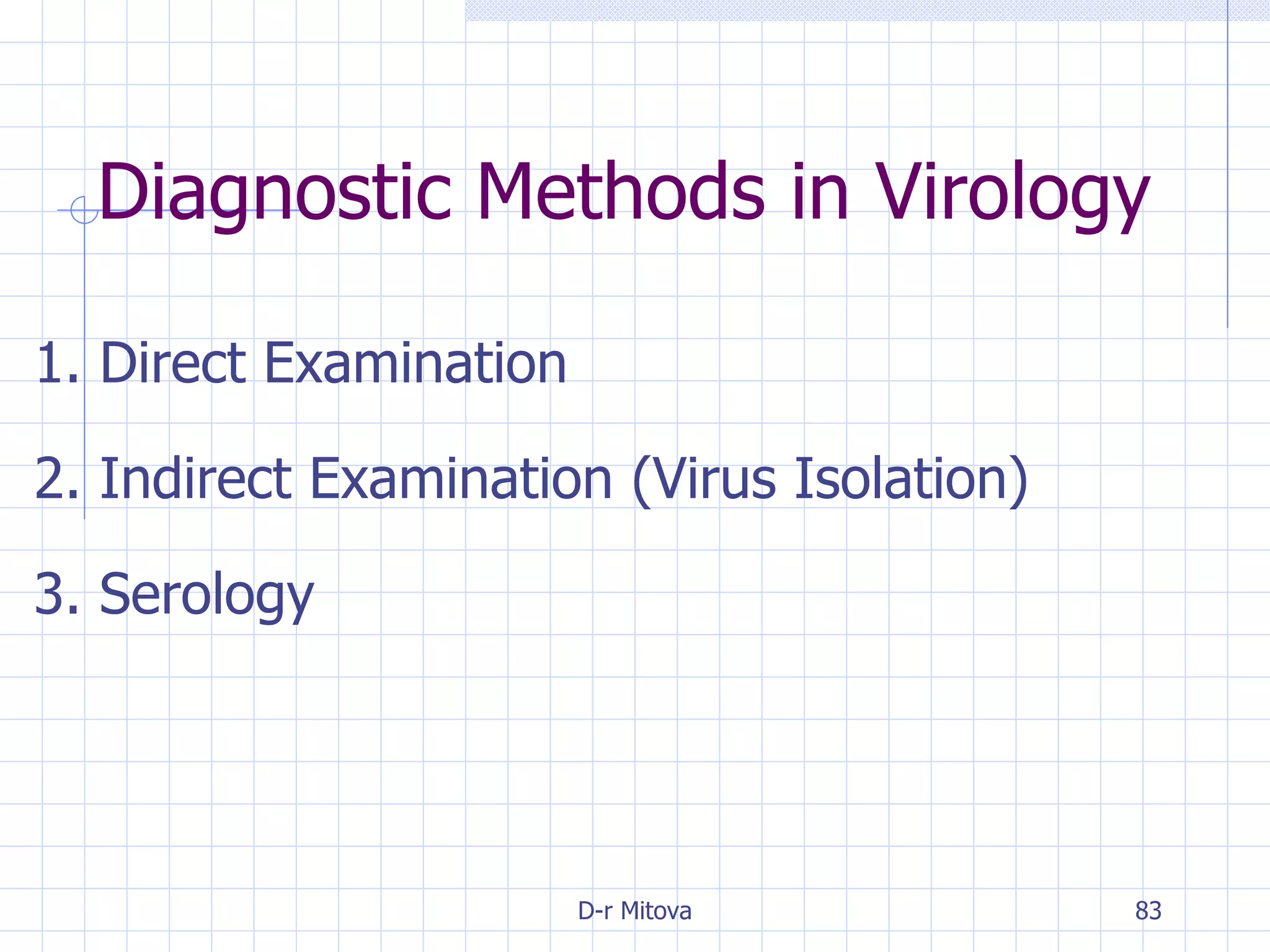
Diagnostic Methods in Virology 1. Direct Examination 2. Indirect Examination (Virus Isolation) 3. Serology
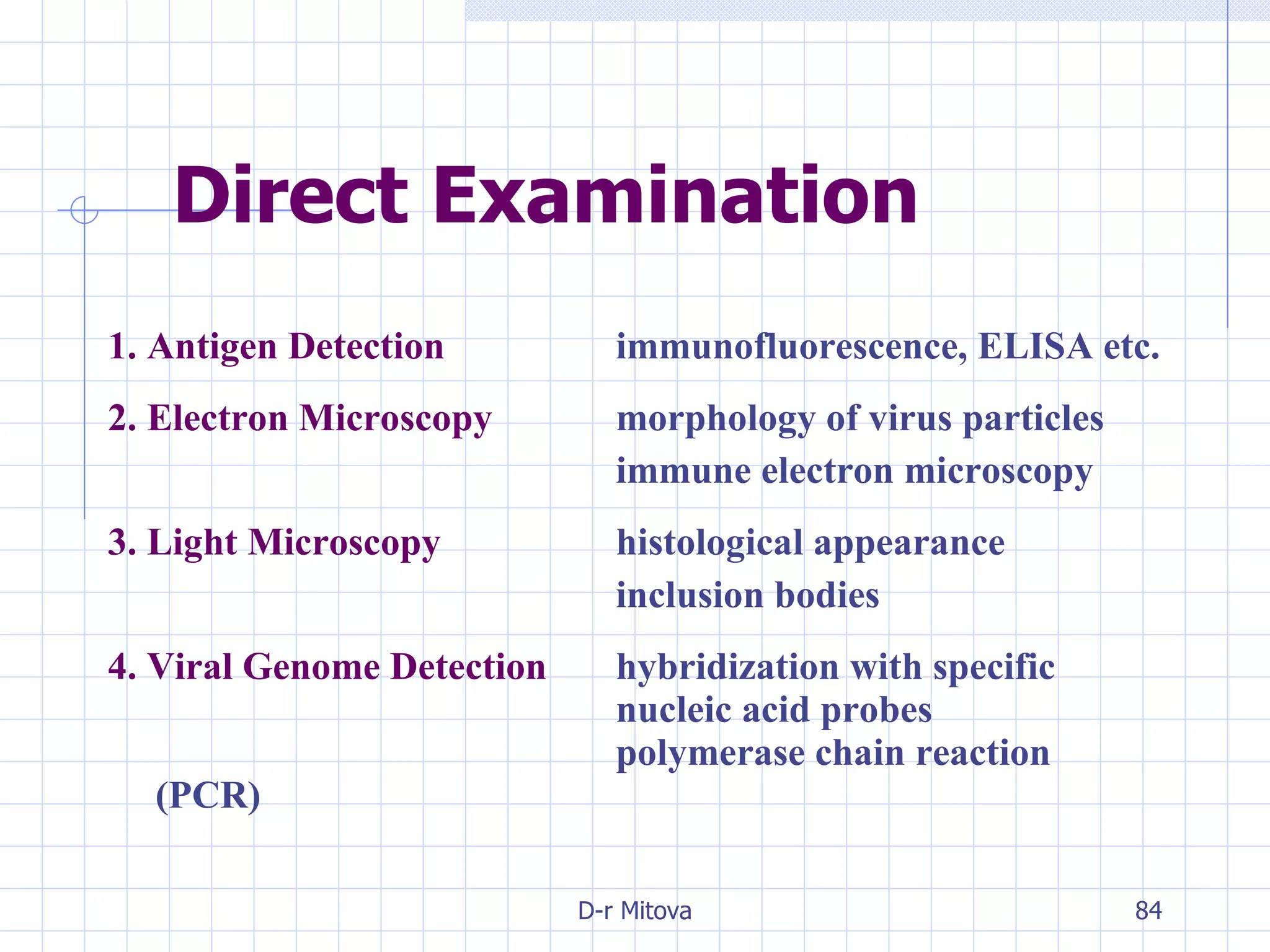
Direct Examination 1. Antigen Detection   immunofluorescence, ELISA etc. 2. Electron Microscopy   morphology of virus particles  immune electron microscopy 3. Light Microscopy   histological appearance inclusion bodies 4. Viral Genome Detection   hybridization with specific  nucleic acid probes  polymerase chain reaction (PCR)
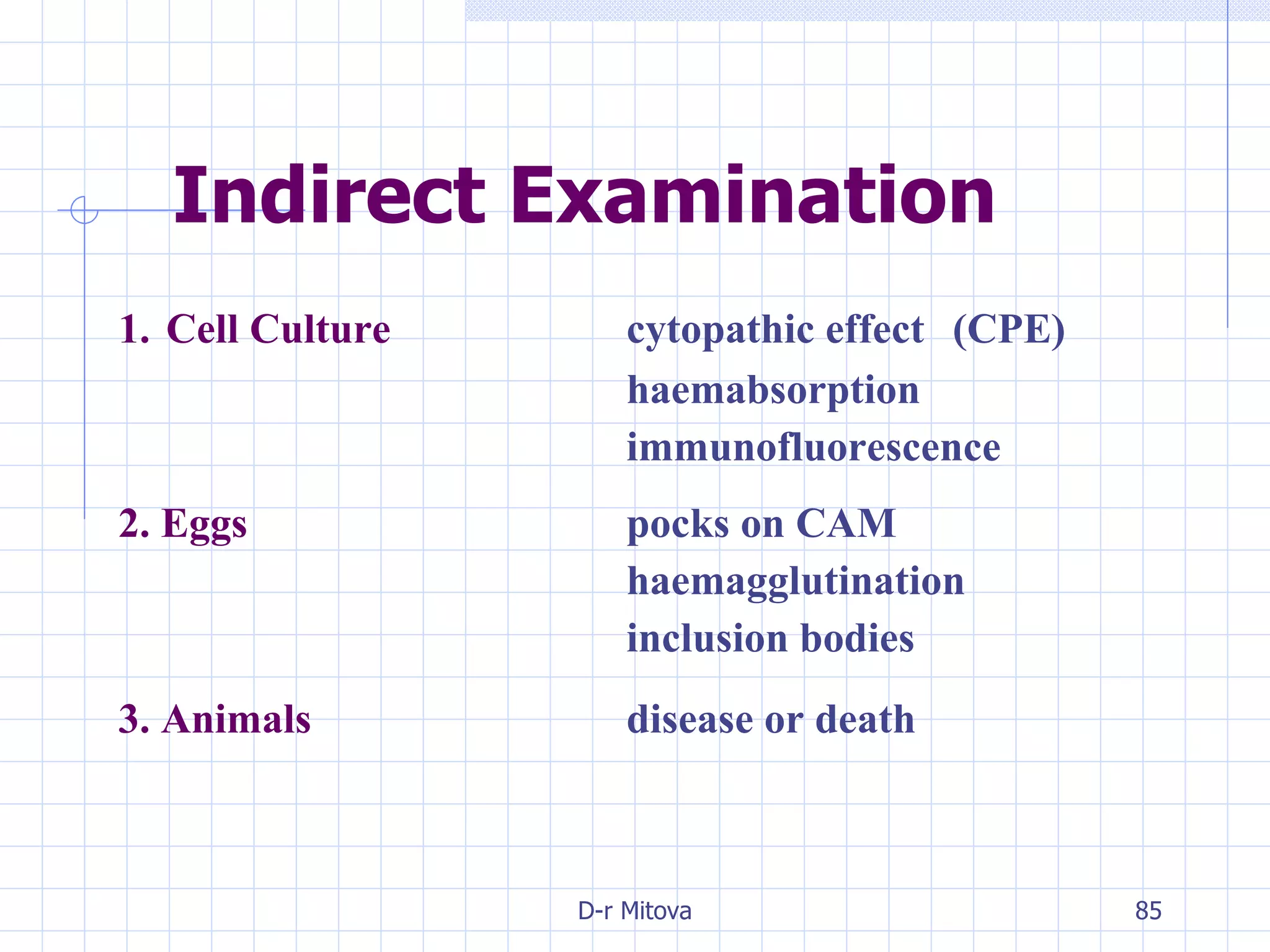
Indirect Examination 1. Cell Culture   cytopathic effect   (CPE)   haemabsorption   immunofluorescence 2. Eggs   pocks on CAM haemagglutination inclusion bodies 3. Animals   disease or death
Serology Detection of rising titres of antibody between acute and convalescent stages of infection, or the detection of IgM in primary infection.
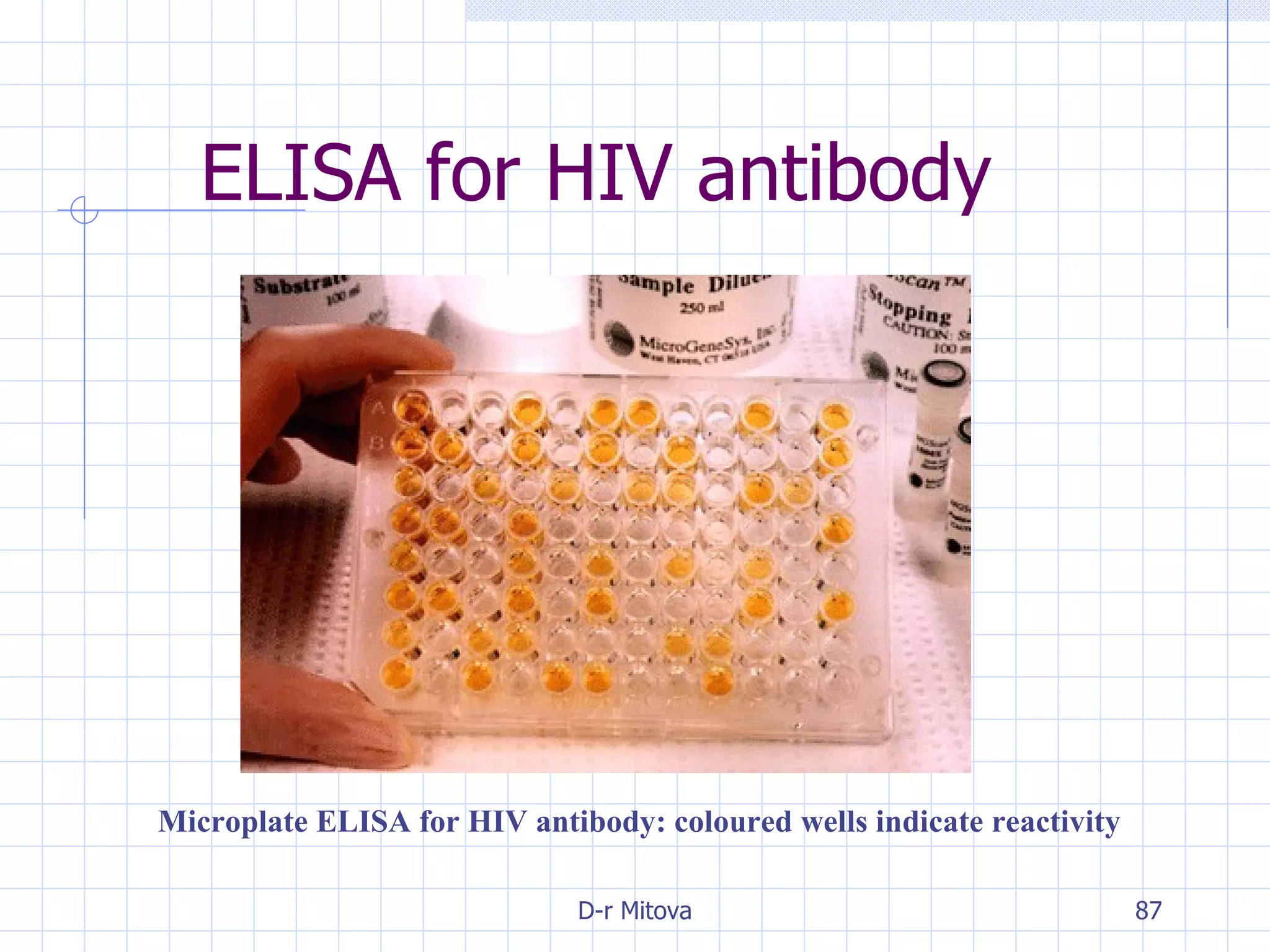
ELISA for HIV antibody Microplate ELISA for HIV antibody: coloured wells indicate reactivity
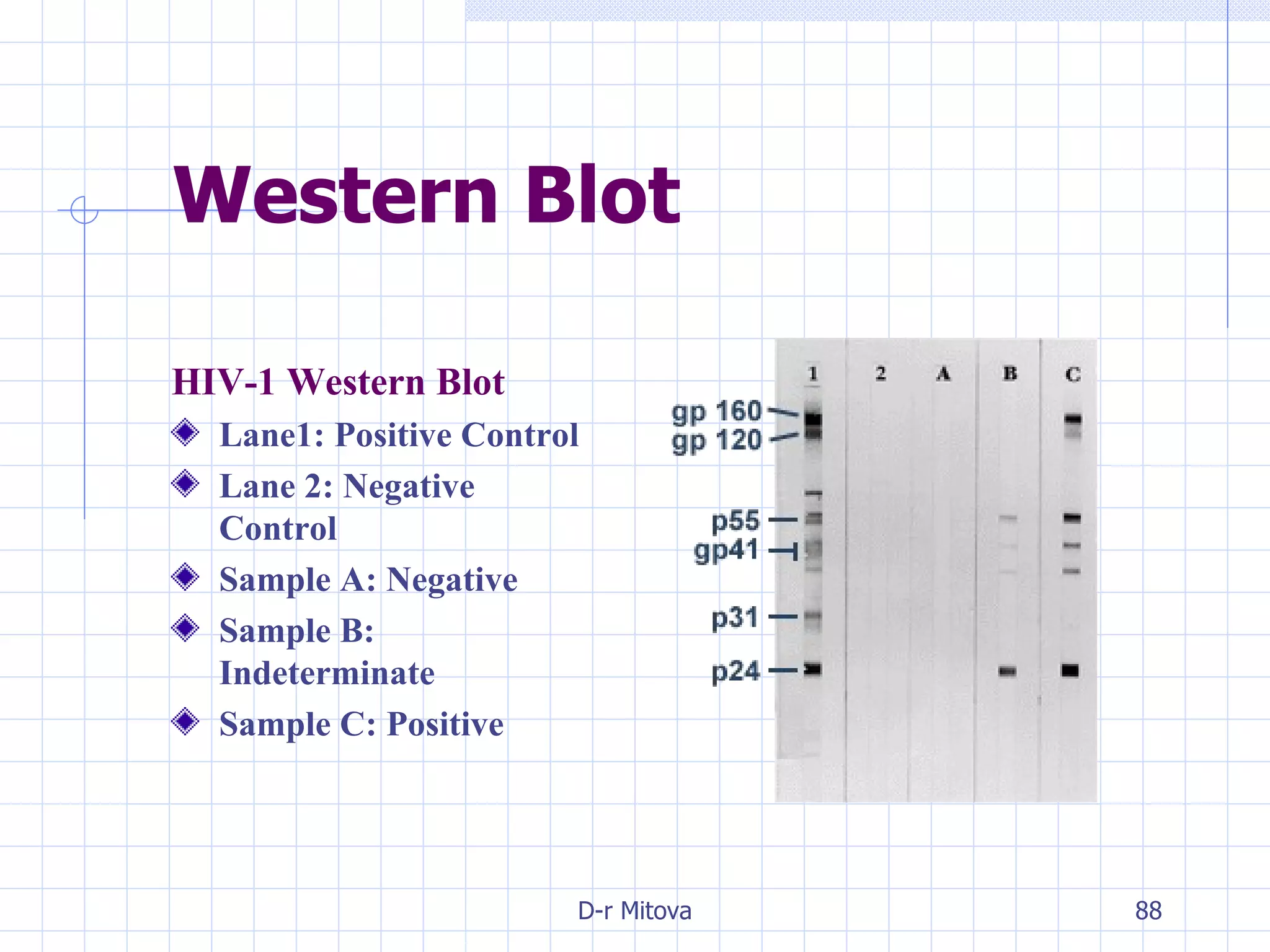
Western Blot HIV-1 Western Blot Lane1: Positive Control Lane 2: Negative Control Sample A: Negative Sample B: Indeterminate Sample C: Positive
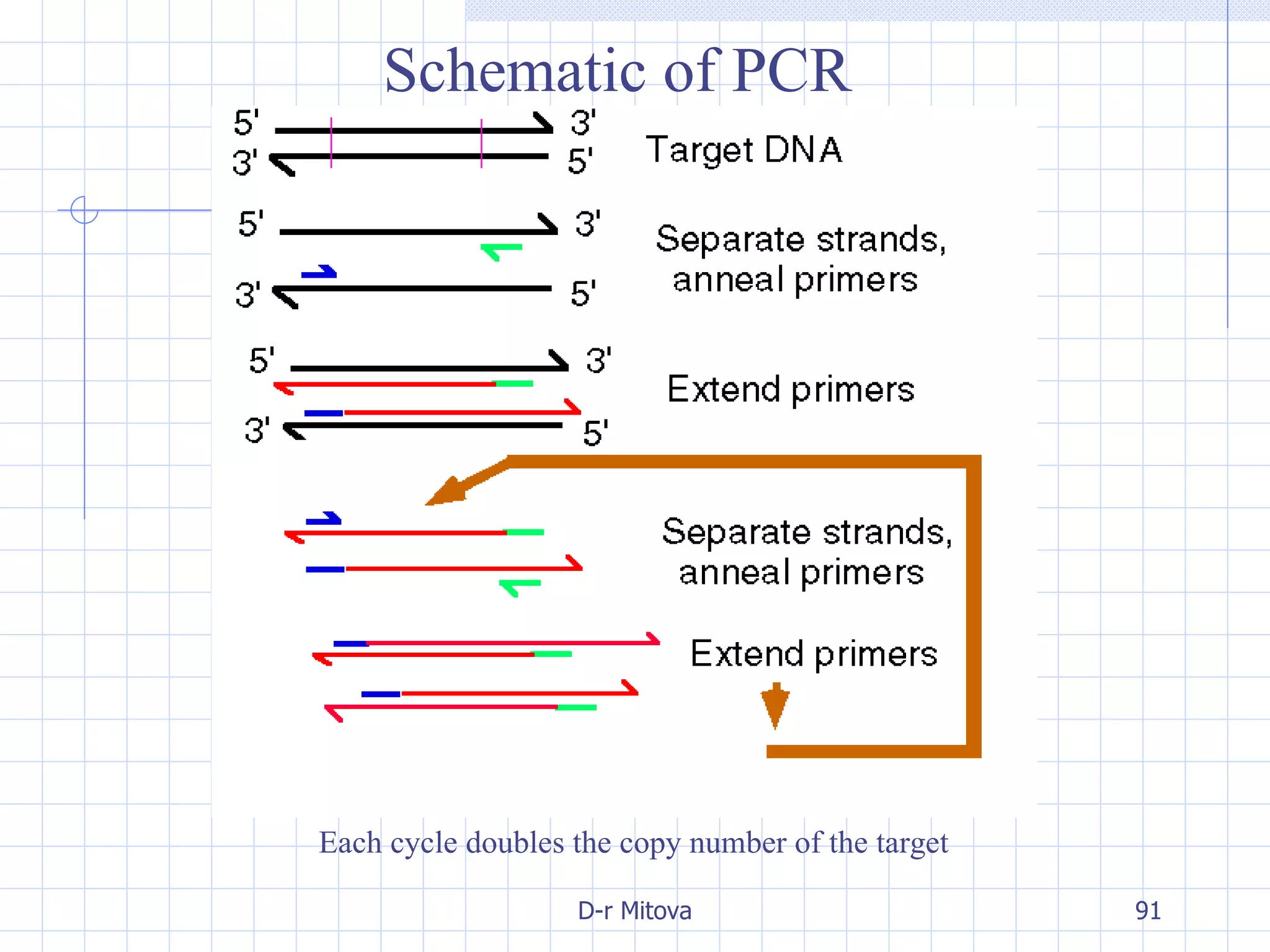
Polymerase Chain Reaction (1) PCR allows the in vitro amplification of specific target DNA sequences by a factor  of 10 6  and is thus an extremely sensitive technique.  It is based on an enzymatic  reaction involving the use of synthetic oligonucleotides flanking the target nucleic sequence  of interest.  These oligonucleotides act as primers for the  thermostable  Taq polymerase. Repeated cycles (usually 25 to 40) of  denaturation of  the  template DNA (at 94 o C), annealing of primers to  their  complementary sequences  (50 o C), and primer extension (72 o C) result in the exponential  production of the specific target fragment.  Further sensitivity and specificity may be obtained by the nested PCR. Detection and identification of the PCR product is usually carried out by agarose gel electrophoresis, hybridization with a specific oligonucleotide probe, restriction enzyme analysis, or DNA sequencing.
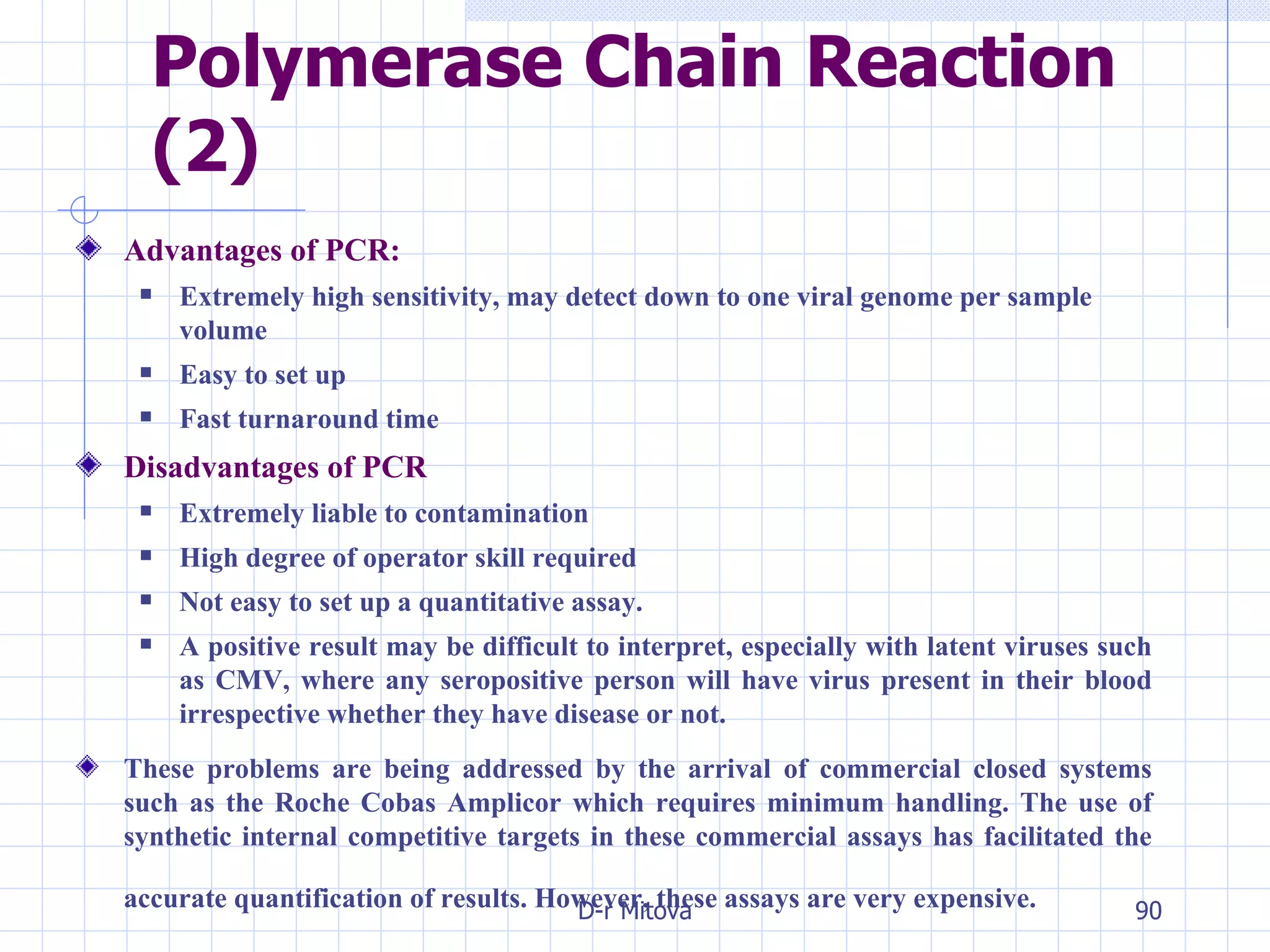
Polymerase Chain Reaction (2) Advantages of PCR: Extremely high sensitivity, may detect down to one viral genome per sample volume Easy to set up Fast turnaround time Disadvantages of PCR Extremely liable to contamination High degree of operator skill required Not easy to set up a quantitative assay. A positive result may be difficult to interpret, especially with latent viruses such as CMV, where any seropositive person will have virus present in their blood irrespective whether they have disease or not. These problems are being addressed by the arrival of commercial closed systems such as the Roche Cobas Amplicor which requires minimum handling. The use of synthetic internal competitive targets in these commercial assays has facilitated the accurate quantification of results. However, these assays are very expensive.
Schematic of PCR Each cycle doubles the copy number of the target
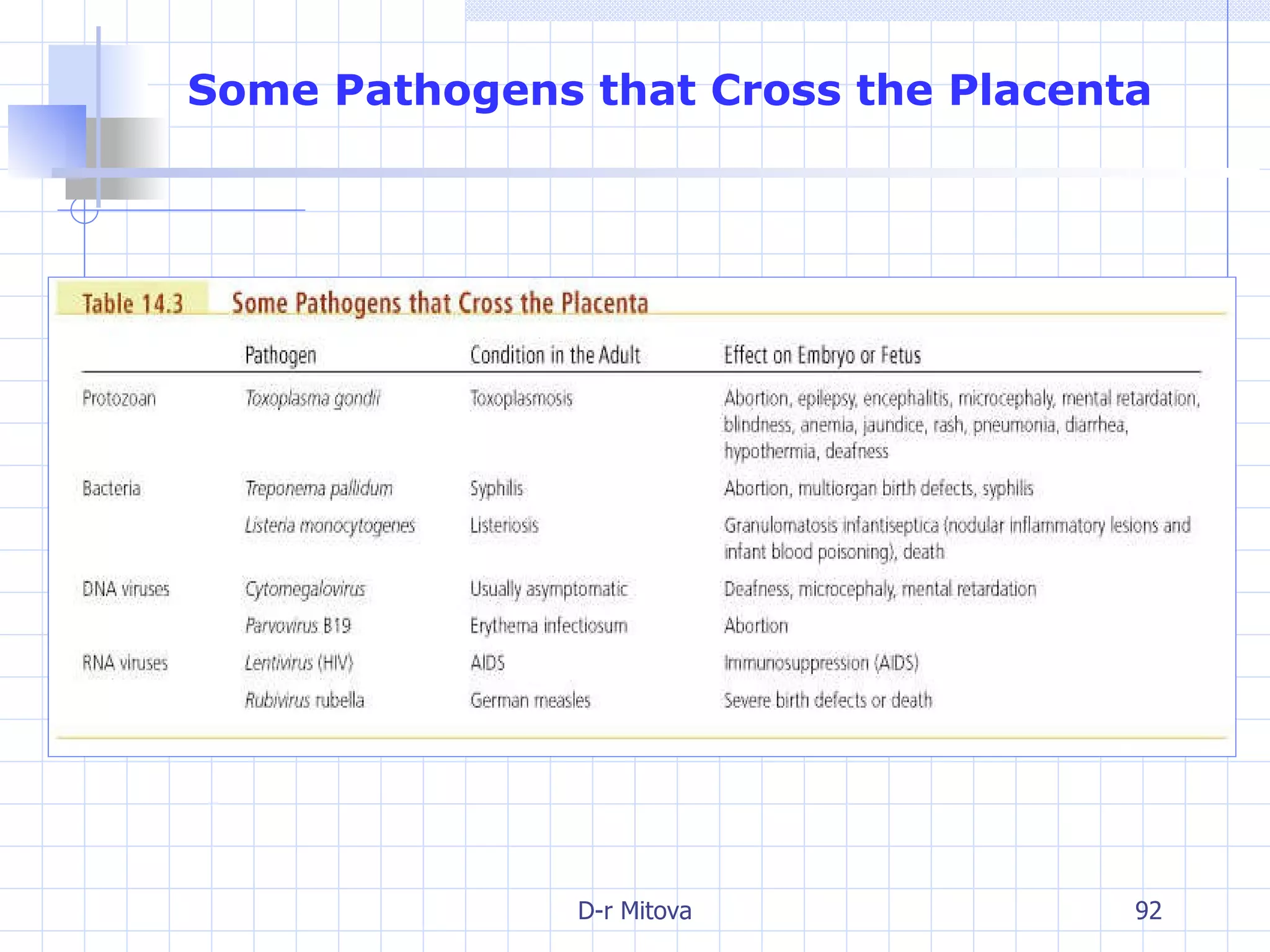
Some Pathogens that Cross the Placenta

Source of infection

  • 1.
    Source of infectionD-r Mitova MU-Sofia
  • 2.
    Infectious disease epidemiology is a fundamental part of the whole of epidemiology. In fact, the subject of epidemiology originally developed from the study of epidemics of infectious disease. Infectious disease epidemiology is a science of Public Health that studies distribution of infectious disease.
  • 3.
    Selected definitions: InfectionThe entry and development or multiplication of an infectious agent in the body of man or animals. It also implies that the body responds in some way to defend itself against the invader, either in the form of an immune response or disease. An infection does not always cause illness.
  • 4.
    There are severallevel of infection: Colonization /e.g.S.aureus in the skin and normal nasopharynx/ Subclinical or inapparent infection /e.g.polio/ Latent infection /e.g.virus of herpes symplex/ Manifest or clinical infection
  • 5.
    Infectious disease Aclinically manifest disease of man or animal resulting from an infection. Contagious disease A disease that is transmitted through contact. Communicable disease All illness due to specific infectious agent or its toxic products capable of being directly or indirectly transmitted from man to man, animal to animal, or environment (through air, dust, soil, water, food etc.) to man or animal.
  • 6.
    Contamination The presence of an infectious agent on a body surface; also in or on clothes, bedding, toys, surgical instruments or dressings, or other inanimate articles or substances including water, milk and food. (Last's epidemiological definition)
  • 7.
    Epidemic process Theepidemic process defined as a chain of interrelated and interconnected infectious conditions in the population Communicable diseases are transmitted from the reservoir or source of infection to susceptible host. This is the medical model of epidemic process.
  • 8.
    Bacically there are3 links in the chain of transmission-the reservoir, mode of transmission and the susceptible host. Source /reservoir / of infection Modes of transmission Susceptible host
  • 9.
    Courses /types/ ofthe epidemic process: A disease is said to be sporadic when only a few cases occur here and there in a given region. Outbreak defines as a small.usually localised epidemic.
  • 10.
    Courses /types/ ofthe epidemic process: Epidemic (from Greek epi- upon + demos people)- outbreak of disease that affects a much greater number of people than is usual for the locality or that spreads to regions where it is ordinarily not present. A disease that tends to be restricted to a particular region (endemic disease) can become epidemic if nonimmune persons are present in large numbers (as in time of war or during pilgrimages), if the infectious agent is more virulent than usual, or if distribution of the disease is more easily effected. Cholera and plague, endemic in parts of Asia, can become epidemic under the above conditions, as can dysentery and many other infections. Epidemics may also be caused by new disease agents in the human population, such as the Ebola virus
  • 11.
    Courses /types/ ofthe epidemic process: A pandemic (from Greek pan all + demos people) is an epidemic (an outbreak of an infectious disease) that spreads worldwide, or at least across a large region. A worldwide epidemic is known as a pandemic , e.g., the influenza pandemic of 1918 or the AIDS pandemic beginning in the 1980s.
  • 12.
    Examples / Cholera first pandemic 1816–1826. Previously restricted to the Indian subcontinent, the pandemic began in Bengal, then spread across India by 1820. It extended as far as China and the Caspian Sea before receding. The second pandemic (1829–1851) reached Europe, London in 1832, Ontario Canada and New York in the same year, and the Pacific coast of North America by 1834. The third pandemic (1852–1860) mainly affected Russia, with over a million deaths.
  • 13.
    Examples / Cholera The fourth pandemic (1863–1875) spread mostly in Europe and Africa. In 1866 there was an outbreak in North America. The sixth pandemic (1899–1923) had little effect in Europe because of advances in public health, but Russia was badly affected again. The seventh pandemic began in Indonesia in 1961, called El Tor after the strain, and reached Bangladesh in 1963, India in 1964, and the USSR in 1966.
  • 14.
    Examples / InfluenzaThe " Spanish flu ", 1918–1919. An estimated 17 million died in India, 500,000 in the United States and 200,000 in the UK. The virus was recently reconstructed by scientists at the CDC studying remains preserved by the Alaskan permafrost. They identified it as a type of H1N1 virus.
  • 15.
    Courses /types/ ofthe epidemic process: In epidemiology, an infection is said to be endemic (from Greek en - in or within + demos people) in a population when that infection is maintained in the population without the need for external inputs. For example, chickenpox is endemic in the UK, but malaria is not. Every year, there are a few cases of malaria acquired in the UK, but these do not lead to sustained transmission in the population due to the lack of a suitable vector (mosquitoes of the genus Anopheles).
  • 16.
    SOURCE AND RESERVOIRThe source of infection is defined as the person, animal, object or substance from which an infectious agent passes or disseminated to the host. A reservoir is defined as “any person, animal, arthropod, plant, soil or substance in which an infectious agent lives and multiplies, on which it depends primarily for survival, and where it reproduced itself in such manner that it can be transmitted to a susceptible host”. In short the reservoir is the natural habitual in which the organism metabolized and replicates.
  • 17.
    In Bulgaria thesource of infection is defined only as the person or animal in which an infectious agent live and multiplies and from which an infectious agent passes to the host, inanimate things and arthropods are defined as a vehicles of transmission.
  • 18.
    HUMAN RESERVOIR Byfar the most important source or reservoir of infection for humans is man himself. He my be a case or carrier. Man is often described as him own enemy because most of the communicable disease of which man is heir to a contacted from human sources.
  • 19.
    HUMAN RESERVOIR -CASE A case is defined as a person in the population or study group identified as having the particular disease, health disorder or condition under investigation. A variety of criteria ( clinical, biochemical, laboratory ) may be used to identify cases. Broadly, the presence of infection in the host may be clinical, subclinical or latent.
  • 20.
    A case isa risk factor … Infection in one person can be transmitted to others What is infectious disease epidemiology? ( www )
  • 21.
    The clinical illness.The clinical illness maybe mild or moderate, typical or atypical, severe or fatal. Epidemiologically, mild cases may be more important sources of infection than severe cases because they are ambulant and spread the infection wherever they go, whereas severe cases usually confined to bed.
  • 22.
    2. The subclinicalcases are variously referred to as inapparent, covert, missed or abortive cases. They are equally important sources of infection. The disease agent may multiply in the host but does not manifest itself by sign and symptoms. The disease agent is, eliminated and contaminates the environment in the same way as clinical cases.person who are thus sick contribute more than symptomatic patient to the transmission of infection to others and what is more, they do not appear in any of statistics Subclinical cases play a dominant role in maintaining the chain of infection in the community. The latent infection must be distinguished from subclinical infection. In latent infection, the host does not shed the infectious agent.
  • 23.
    The subclinical casesSubclinical infection can be detected only by laboratory tests. Barring a few(mesles, varicella), subclinical infection occurs in most infectious disease. In some disease(rubella, mumps, polio, hepatitis A and B, influenza, diphteria) a great deal of subclinical infection occurs.
  • 24.
    Latent infection Theterm latent infection must be distinguished from subclinical infection. In latent infection, the host does not shed the infectious agent which lies dormant within the host without symptoms (and often without demonstrable presence in blood, tissues or bodily secretions of the host). For examples, latent infection occurs in herpes symplex, Brill-Zincer disease.
  • 25.
    CARRIERS In somedisease, either due to inadequate treatment or immune response, the disease agent is not completely eliminated, leading to a carrier state. A carrier is defined as an infected person or animal that harbors a specific infectious agent in the absence of discernible clinical disease and serves as a potential source of infection for others.
  • 26.
    CARRIERS As arule carriers are less infectious than cases, but epidemiologically, they are more dangerous than cases because they escape recognition and continuing as they do live a normal life among population or community, they readily infect the susceptible individuals over a wider area and longer period of time under favorable conditions.the “Typhoid Mary” is a classic example of a carrier-cooker Mary who gave rise to more than 1300 cases in her life time.
  • 27.
    The elements ina carrier state are: The presence in the body of disease agent The absence of recognizable symptoms and signs of disease The shedding of disease agent in the discharges or excretion.
  • 28.
    incubatorycarriers : are those who shed the infectious agent during the incubation period. This usually occurs during the the last few days of incubation period. As for example: Measles-the period of communicability is 4 days before the rush. Mumps-usually 4-6 days before onset of symptoms Polio-7-10 days before onset of symptoms Hepatitis B-for a month before jaundice,about 6 weeks after exposure Carrier may be classified : BY TYPE
  • 29.
    Carrier may beclassified : BY TYPE convalescent carriers : that is those who continue to shed the disease agent during the period of convalescence(typhoid fever, cholera, diphteria, bacillary disentery). In the disease, clinical recovery does not coincide with bacteriological recovery.
  • 30.
    Carrier may beclassified : BY TYPE healthy carriers : they are victims of subclinical infection who have developed carrier state without suffering from overt disease, but are nevertheless shedding the disease agent, e.g. poliomyelitis, cholera, meningococcal meningitis, salmonellosis, diphtheria.
  • 31.
    BY DURATION Temporarycarriers are those who shed the infectious agent for short period of time. Chronic carriers are those who excretes the infectious agent for indefinite periods e.g. typhoid fever, hepatitis B, dysentery, etc.They are known to reintroduce disease into areas which are otherwise free of infection.
  • 32.
    Chronic carriers Chroniccarriers are far more important sources of infection than cases. The longer the carrier state, the greater the risk of community. The duration of the carrier state varies with the disease. In typhoid fever and hepatitis B, the chronic carrier state may last for several years.In chronic dysentery it may last for year or longer. In diphtheria, the carrier state is associated with infected tonsils, in typhoid fever with gall bladder disease.
  • 33.
    BY PORTAL OFEXIT OF THE IFECTIOUS AGENT Urinary Intestinal Respiratory Others In typhoid fever, the urinary carrier is more dangerous than an intestinal carrier.
  • 34.
    EARLY DIAGNOSIS ISNEEDED FOR: The treatment of patient For epidemiological investigation To study the time, place and person distribution For the institution of prevention and control measures The first step in the control of a communicable disease is its rapid identification.
  • 35.
    Gastro Intestinal /Fecal Oral Route Transmission by the fecal-oral route is the second most important mode of transmission after the respiratory tract 􀁺 excreted by the feces 􀁺 transmitted to the oral portal of entry through 􀂃 contaminated food 􀂃 contaminated water, milk, drinks 􀂃 hands 􀂃 flies Viruses with envelopes do not survive exposure to hydrochloric acid in the stomach, bile acids in the duodenum, salts and enzymes of the gut. Small enterovirus without envelope (Norwalk agent, rotavirus, polio and coxsackie are able to resist. HepatitisA and E are also transmitted by the fecal oral route.
  • 36.
    Transmission by gastrointestinalroute Fecal oral route 􀁺 Typhoid fever 􀁺 Shigella 􀁺 Cholera 􀁺 Polio 􀁺 Coxsackie, Echo, Reo 􀁺 Norwalk agent 􀁺 Rotavirus 􀁺 Hepatitis A, Hepatitis E
  • 37.
    Intestinal diseases HumanPathogens Enterobacteriaceae as a group were originally divided into pathogens and nonpathogens based on their ability to cause diarrheal disease of humans. The pathogenic genera were Salmonella and Shigella . However, it is now known that E. coli causes at least five types of gastrointestinal disease in humans. Pathogenicity in E. coli strains is due to the presence of one or more virulence factors, including invasiveness factors (invasins), heat-labile and heat-stable enterotoxins, verotoxins, and colonization factors or adhesins.
  • 38.
    Intestinal diseases Yersiniaenterocolitica causes diarrhea, probably by a combination of invasiveness and the presence of a heat-stable enterotoxin. Strains of Klebsiella pneumoniae and Enterobacter cloacae isolated from patients with tropical sprue contained a heat-stable enterotoxin.
  • 39.
    Cholera (frequentlycalled Asiatic cholera or epidemic cholera) is a severe diarrhoeal disease caused by the bacterium Vibrio cholerae. Transmission to humans is by water or food. The natural reservoir of the organism is not known. It was long assumed to be humans, but some evidence suggests that it is the aquatic environment.
  • 40.
    S. aureus causes food poisoning by releasing enterotoxins into food , and toxic shock syndrome by release of superantigens into the blood stream.
  • 41.
  • 42.
  • 43.
  • 44.
  • 45.
  • 46.
  • 47.
    Staphylococcal food poisoning (staphyloenterotoxicosis; staphyloenterotoxemia) is the name of the condition caused by the enterotoxins which some strains of S. aureus produce. The onset of symptoms in staphylococcal food poisoning is usually rapid and in many cases acute, depending on individual susceptibility to the toxin, the amount of contaminated food eaten, the amount of toxin in the food ingested, and the general health of the victim. The most common symptoms are nausea, vomiting, retching, abdominal cramping, and prostration. Some individuals may not always demonstrate all the symptoms associated with the illness. Recovery generally takes two days, However, it us not unusual for complete recovery to take three days and sometimes longer in severe cases.
  • 48.
    Normal flora /FECES ANALYSIS Staphylococcus aureus /only the predominance of S. aureus and Candida/ Candida albicans E.coli Proteus Klebsiella Enterobacter Serratia Citrobacter Pseudomonas aeruginosa /exceptionally enteropathogenic, and in this case in a pure culture /
  • 49.
    Intestinal diseases FECES ANALYSIS Collection of stools-A fresh specimen of stool should be collected for laboratory examination. Sample should be collected before the person is treated with antibiotics. After the stools been collected, there occurs within a few hours an acidification which is noxious for some bacteria species.The feces analysis should begin within 2 to 3 hours after the samples have been taken.
  • 50.
    MICROSCOPIC EXAMINATION Before diluting a fragment of the stools in distilled water, observe: There consistency: liquid, soft, molden; The possible presence of blood, mucus or glairs.
  • 51.
    DIRECT EXAMINATION Observethe possible presence of leucocytes/ suspicion of invading bacteria/; Investigate the presence of bacilli with monotrichous motility /suspicion of Campylobacter or Vibrio/
  • 52.
    After Gram strain:Note the percentage of Gram/+/ and Gram/-/ bacteria, the flora is normally polymorphous and composed of about 20% Gram/+/ and 80% Gram/-/; Investigate the possible presence of curved Gram/-/ rods;
  • 53.
    The following floraare abnormal: Predominance of Gram /+/ cocci: suspicion of staphylococcal enterocolitis; Abundant yeast Monomorphous aspect, presence of Gram/-/ bacilli only;
  • 54.
    Laboratory diagnosis ofshigellosis and salmonellas salmonella
  • 55.
    Diagnosis of staphylococcalfoodborne illness. Incriminated foods should be collected and examined for staphylococci. The presence of relatively large numbers of enterotoxigenic staphylococci is good circumstantial evidence that the food contains toxin.
  • 56.
    LABORATORY DIAGNOSIS OFCHOLERA If a microscope with dark field illumination is available , it may be possible to diagnose about 80% of the cases within a few minutes , and more cases after 5-6 hours of incubation in alkaline peptone water . In the dark field , the vibrios evoke the image of many shooting stars in a dark sky. In motility cases on mixing with polyvalent anti-cholera serum , the organism are presumed to be cholera vibrios. Culture method: Bile Salt Agar medium ; In liquid choleric stools , V. cholerae is a pure culture. In stools from healthy carriers, V. cholerae is found small quantities mixed with the commensal flora.
  • 57.
  • 58.
  • 59.
    Diagnostic studies Thediagnosis of pertussis is based on a characteristic history and physical examination. If a child presents with a history of paroxysmal cough for greater than 1 week associated with vomiting, whoops, or cyanosis, the child is suspected of having pertussis. The best method for making the diagnosis of pertussis is culture the organism from the nasopharynx. For culture and/or PCR tests, it is still recommended to take nasopharyngeal secretion with a bent charcoal swab.
  • 60.
    Isolation requires specialmedia (chocolate agar or Bordet-Gengou medium). The organism requires both the X and V factors for growth especially for initial isolation. B.pertussis Bordet-Gengou medium
  • 61.
    MENINGOCOCCAL DISEASE Bacterial meningitis most commonly result from the dissemination of microorganisms from a distant site of infection, the most common pathogenic agents in approximately 95% of bacterial meningitis cases are H. influenzae, Streptococcus pneumoniae, and N. meningitidis.
  • 62.
  • 63.
    At least 16serogroups, characterized by differences in the polyside capsule, have been identified. Groups A, B and C account about 90% of meningococcal disease. Nasopharyngeal carriage of meningococci is relatively common among healthy young children /5~15%/, whereas the correspond ding figure in adult population is about 1%.
  • 64.
  • 65.
    Diphtheria ( Greek for “leather,” (διφθερα, dipthera) Clinical Features Respiratory diphtheria presents as a sore throat with low-grade fever and an adherent membrane of the tonsils, pharynx, or nose. Neck swelling is usually present in severe disease. Cutaneous diphtheria presents as infected skin lesions which lack a characteristic appearance. Etiologic Agent Toxin-producing strains of Corynebacterium diphtheriae. Transmission Direct person- to-person transmission by intimate respiratory and physical contact. Cutaneous lesions are important in transmission.
  • 66.
    Diphtheria Pharyngeal diphtheriawith membranes covering the tonsils and uvula C. diphtheriae
  • 67.
    A throat swabshould be cultured on Loffler’s medium, a tellurite plate, and a blood agar plate. Specimens should be transported to the laboratory immediately. The laboratory should be notified ahead of time of a suspected diagnosis of diphtheria. If the specimen cannot be transported immediately to the laboratory, a transport medium such as Amies may be used. If more than 24 hours will elapse before receipt in the laboratory, specimens should be shipped at 4o C by courier to the receiving laboratory. The typical gray-color of tellurium in the colony is a telltale diagnostic criterion. Diphtheria-laboratory diagnosis
  • 68.
    Viral hepatitis Theterm hepatitis refer to any condition in which the liver becomes inflamed and its cells degenerate and die. Viral causes of hepatitis Hepatitis A virus Hepatitis B virus Hepatitis C virus Hepatitis D virus Hepatitis E virus Others :Ebstein-barr virus, rubella, cytomegalovirus, herpes virus, varicella zoster and coxackie B; Bacterial causes of hepatitis include: many organisms that cause septicaemia, among them E. coli Chemical cause of hepatitis include
  • 69.
  • 70.
    Source of virusfeces blood/ blood-derived body fluids blood/ blood-derived body fluids blood/ blood-derived body fluids feces Route of transmission fecal-oral percutaneous permucosal percutaneous permucosal percutaneous permucosal fecal-oral Chronic infection no yes yes yes no Prevention pre/post- exposure immunization pre/post- exposure immunization blood donor screening; risk behavior modification pre/post- exposure immunization; risk behavior modification ensure safe drinking water Type of Hepatitis A B C D E
  • 71.
  • 72.
    Laboratory Diagnosis Acuteinfection is diagnosed by the detection of HAV-IgM in serum by EIA. Past Infection i.e. immunity is determined by the detection of HAV-IgG by EIA.
  • 73.
  • 74.
    High Moderate Low/NotDetectable blood semen urine serum vaginal fluid feces wound exudates saliva sweat tears breastmilk Concentration of Hepatitis B Virus in Various Body Fluids
  • 75.
    Diagnosis A batteryof serological tests are used for the diagnosis of acute and chronic hepatitis B infection. HBsAg - used as a general marker of infection. HBsAb - used to document recovery and/or immunity to HBV infection. anti-HBc IgM - marker of acute infection. anti-HBcIgG - past or chronic infection. HBeAg - indicates active replication of virus and therefore infectiveness. Anti-Hbe - virus no longer replicating. However, the patient can still be positive for HBsAg which is made by integrated HBV. HBV-DNA - indicates active replication of virus, more accurate than HBeAg especially in cases of escape mutants. Used mainly for monitoring response to therapy.
  • 76.
  • 77.
    Transfusion or transplantfrom infected donor Injecting drug use Hemodialysis (yrs on treatment) Accidental injuries with needles/sharps Sexual/household exposure to anti-HCV-positive contact Multiple sex partners Birth to HCV-infected mother Risk Factors Associated with Transmission of HCV
  • 78.
    Laboratory Diagnosis HCVantibody - generally used to diagnose hepatitis C infection. Not useful in the acute phase as it takes at least 4 weeks after infection before antibody appears. HCV-RNA - various techniques are available e.g. PCR and branched DNA. May be used to diagnose HCV infection in the acute phase. However, its main use is in monitoring the response to antiviral therapy. HCV-antigen - an EIA for HCV antigen is available. It is used in the same capacity as HCV-RNA tests but is much easier to carry out.
  • 79.
  • 80.
    Coinfection severe acutedisease. low risk of chronic infection. Superinfection usually develop chronic HDV infection. high risk of severe chronic liver disease. may present as an acute hepatitis. Hepatitis D - Clinical Features
  • 81.
  • 82.
    Incubation period: Average40 days Range 15-60 days Case-fatality rate: Overall, 1%-3% Pregnant women, 15%-25% Illness severity: Increased with age Chronic sequelae: None identified Hepatitis E - Clinical Features
  • 83.
    Diagnostic Methods inVirology 1. Direct Examination 2. Indirect Examination (Virus Isolation) 3. Serology
  • 84.
    Direct Examination 1.Antigen Detection immunofluorescence, ELISA etc. 2. Electron Microscopy morphology of virus particles immune electron microscopy 3. Light Microscopy histological appearance inclusion bodies 4. Viral Genome Detection hybridization with specific nucleic acid probes polymerase chain reaction (PCR)
  • 85.
    Indirect Examination 1.Cell Culture cytopathic effect (CPE) haemabsorption immunofluorescence 2. Eggs pocks on CAM haemagglutination inclusion bodies 3. Animals disease or death
  • 86.
    Serology Detection ofrising titres of antibody between acute and convalescent stages of infection, or the detection of IgM in primary infection.
  • 87.
    ELISA for HIVantibody Microplate ELISA for HIV antibody: coloured wells indicate reactivity
  • 88.
    Western Blot HIV-1Western Blot Lane1: Positive Control Lane 2: Negative Control Sample A: Negative Sample B: Indeterminate Sample C: Positive
  • 89.
    Polymerase Chain Reaction(1) PCR allows the in vitro amplification of specific target DNA sequences by a factor of 10 6 and is thus an extremely sensitive technique. It is based on an enzymatic reaction involving the use of synthetic oligonucleotides flanking the target nucleic sequence of interest. These oligonucleotides act as primers for the thermostable Taq polymerase. Repeated cycles (usually 25 to 40) of denaturation of the template DNA (at 94 o C), annealing of primers to their complementary sequences (50 o C), and primer extension (72 o C) result in the exponential production of the specific target fragment. Further sensitivity and specificity may be obtained by the nested PCR. Detection and identification of the PCR product is usually carried out by agarose gel electrophoresis, hybridization with a specific oligonucleotide probe, restriction enzyme analysis, or DNA sequencing.
  • 90.
    Polymerase Chain Reaction(2) Advantages of PCR: Extremely high sensitivity, may detect down to one viral genome per sample volume Easy to set up Fast turnaround time Disadvantages of PCR Extremely liable to contamination High degree of operator skill required Not easy to set up a quantitative assay. A positive result may be difficult to interpret, especially with latent viruses such as CMV, where any seropositive person will have virus present in their blood irrespective whether they have disease or not. These problems are being addressed by the arrival of commercial closed systems such as the Roche Cobas Amplicor which requires minimum handling. The use of synthetic internal competitive targets in these commercial assays has facilitated the accurate quantification of results. However, these assays are very expensive.
  • 91.
    Schematic of PCREach cycle doubles the copy number of the target
  • 92.
    Some Pathogens thatCross the Placenta