SOAP vs. REST
SOAP to wash and REST to relax


           Antonio Loureiro Severien
                   FIB-UPC
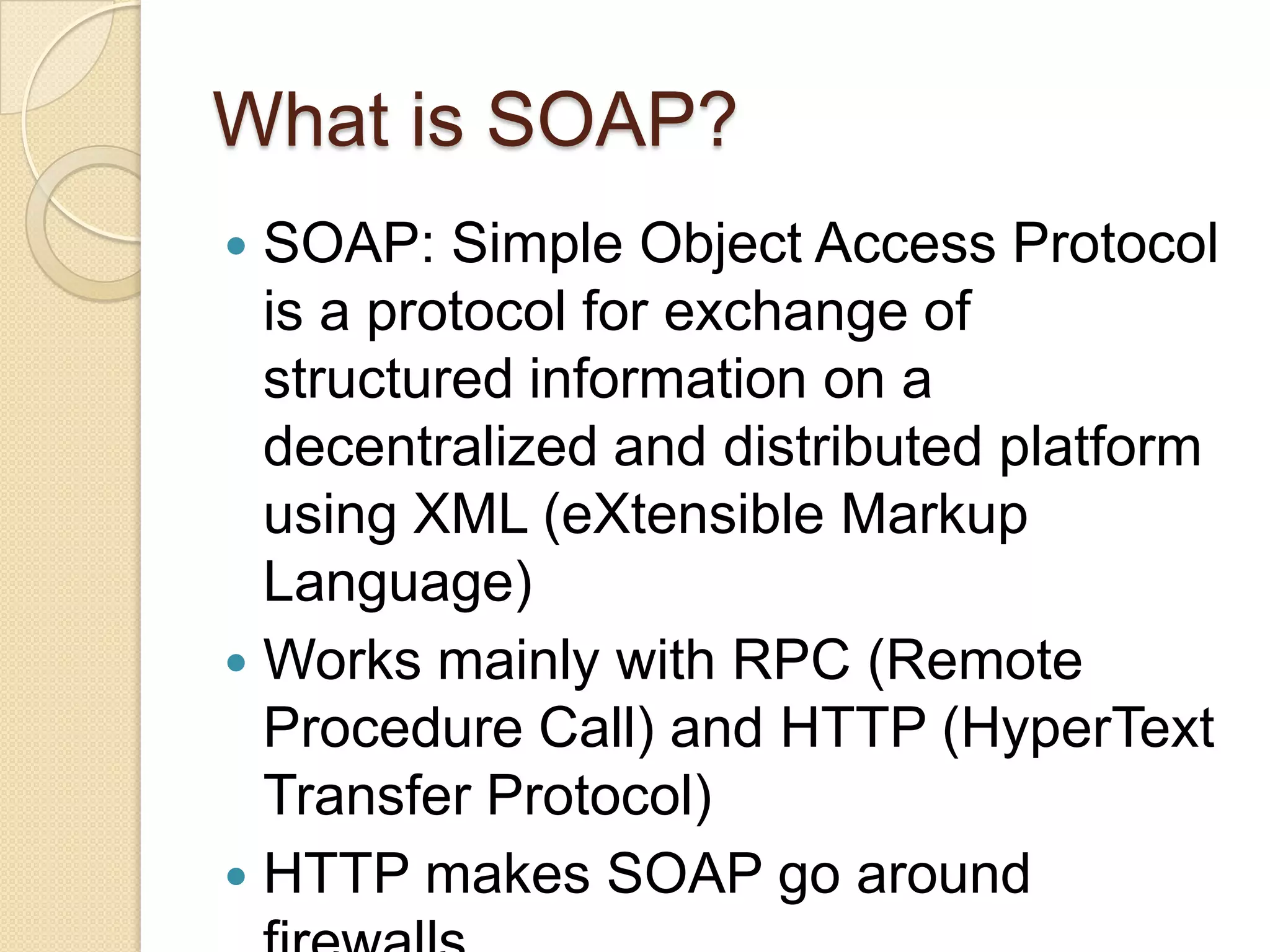
What is SOAP?
 SOAP: Simple Object Access Protocol
  is a protocol for exchange of
  structured information on a
  decentralized and distributed platform
  using XML (eXtensible Markup
  Language)
 Works mainly with RPC (Remote
  Procedure Call) and HTTP (HyperText
  Transfer Protocol)
 HTTP makes SOAP go around
SOAP structure
              3 parts message: Envelope, Header,
               Body
                         POST /InStock HTTP/1.1
ENVELOPE                 Host: www.example.org
                         Content-Type: application/soap+xml; charset=utf-8       HTT
HEADER                   Content-Length: 299
                         SOAPAction: "http://www.w3.org/2003/05/soap-envelope"
                                                                                 P

                         <?xml version="1.0"?>
                         <soap:Envelope
BODY
                              xmlns:soap="http://www.w3.org/2003/05/soap-envelope">
                          <soap:Header>
                          </soap:Header>
                          <soap:Body>
                           <m:GetStockPrice xmlns:m="http://www.example.org/stock">
 FAULT                      <m:StockName>IBM</m:StockName>
                           </m:GetStockPrice>
                          </soap:Body>
                         </soap:Envelope>
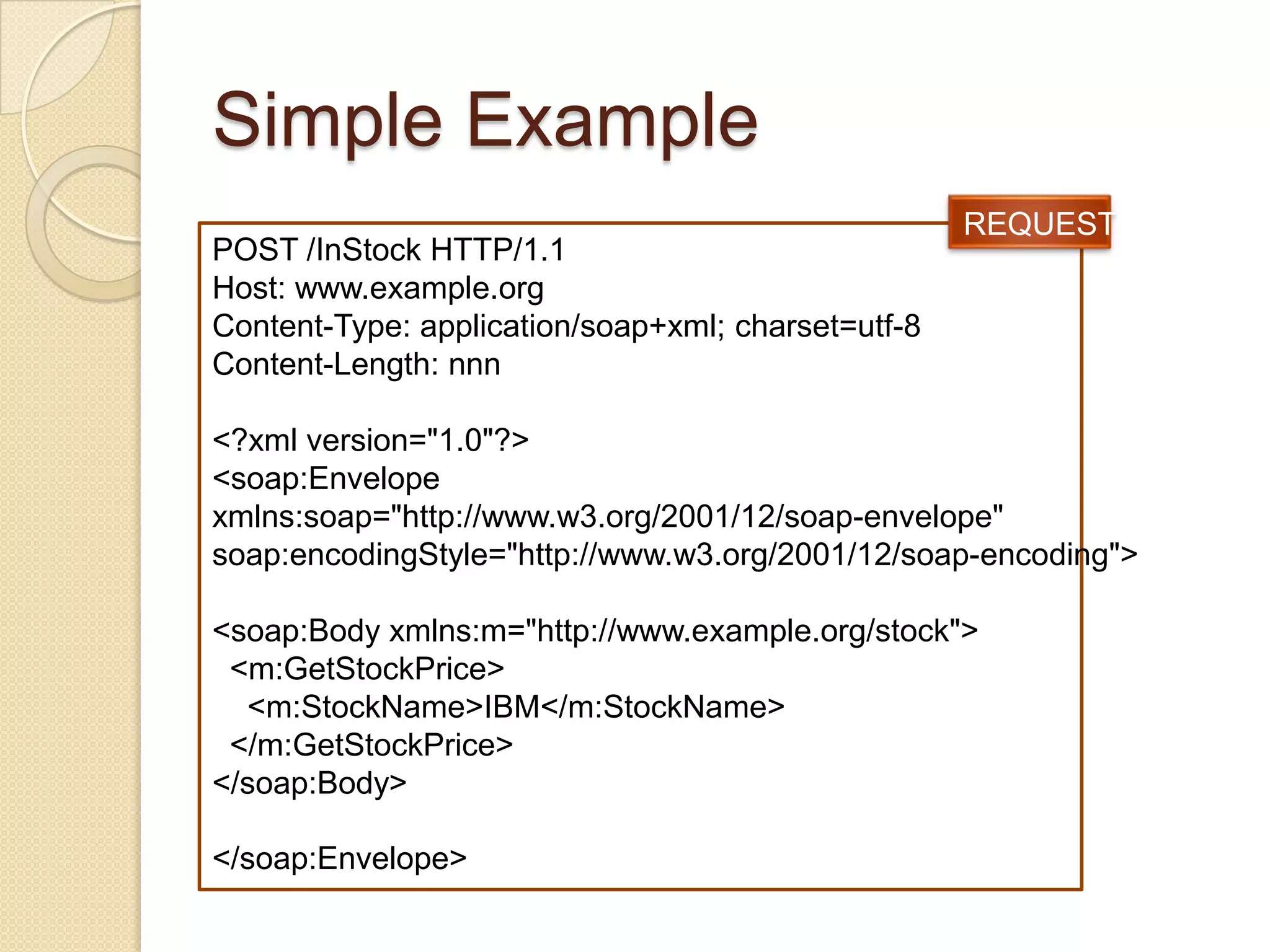
Simple Example
                                                    REQUEST
POST /InStock HTTP/1.1
Host: www.example.org
Content-Type: application/soap+xml; charset=utf-8
Content-Length: nnn

<?xml version="1.0"?>
<soap:Envelope
xmlns:soap="http://www.w3.org/2001/12/soap-envelope"
soap:encodingStyle="http://www.w3.org/2001/12/soap-encoding">

<soap:Body xmlns:m="http://www.example.org/stock">
 <m:GetStockPrice>
  <m:StockName>IBM</m:StockName>
 </m:GetStockPrice>
</soap:Body>

</soap:Envelope>
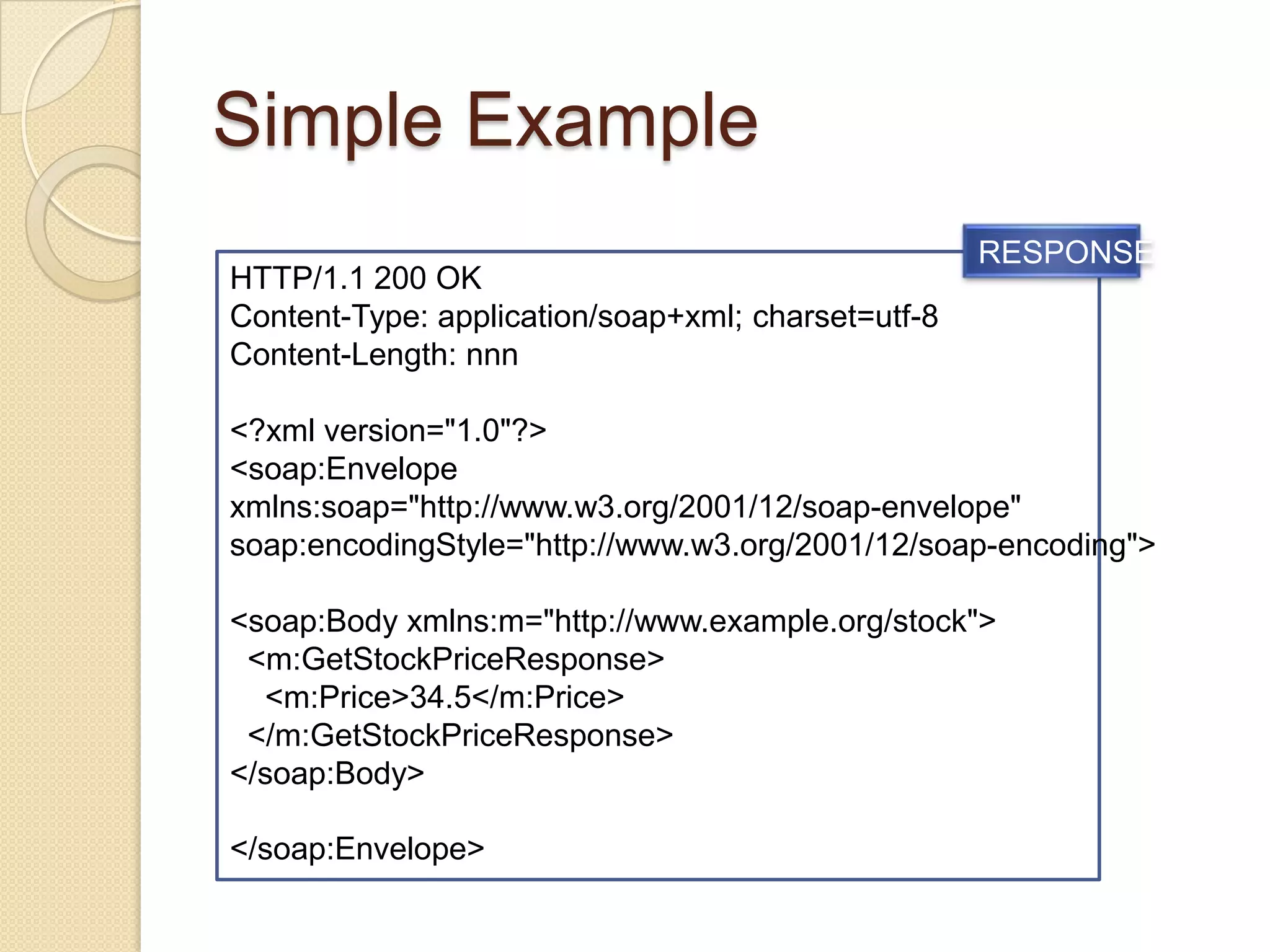
Simple Example
                                                    RESPONSE
HTTP/1.1 200 OK
Content-Type: application/soap+xml; charset=utf-8
Content-Length: nnn

<?xml version="1.0"?>
<soap:Envelope
xmlns:soap="http://www.w3.org/2001/12/soap-envelope"
soap:encodingStyle="http://www.w3.org/2001/12/soap-encoding">

<soap:Body xmlns:m="http://www.example.org/stock">
 <m:GetStockPriceResponse>
  <m:Price>34.5</m:Price>
 </m:GetStockPriceResponse>
</soap:Body>

</soap:Envelope>
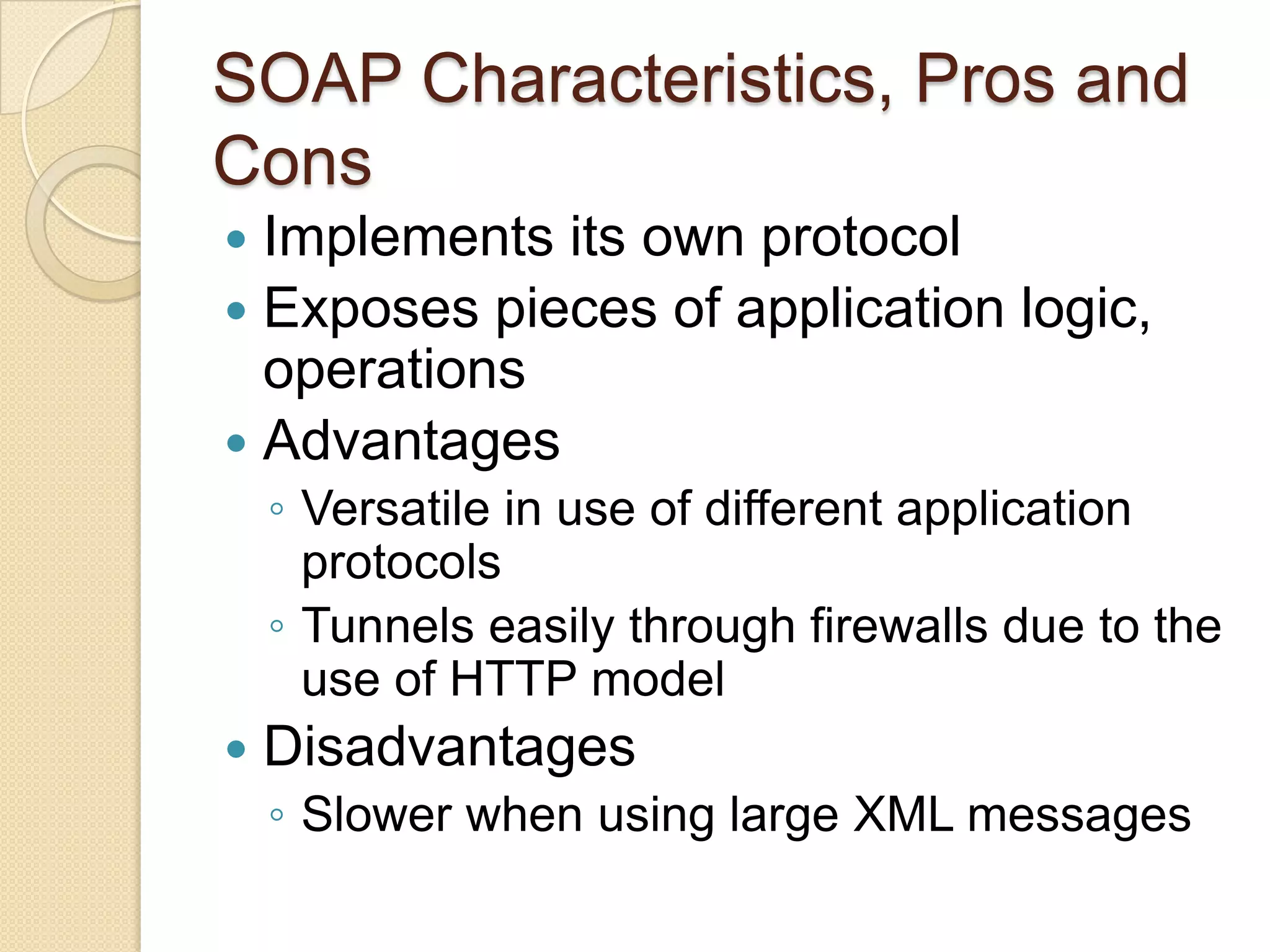
SOAP Characteristics, Pros and
Cons
 Implements its own protocol
 Exposes pieces of application logic,
  operations
 Advantages
    ◦ Versatile in use of different application
      protocols
    ◦ Tunnels easily through firewalls due to the
      use of HTTP model
   Disadvantages
    ◦ Slower when using large XML messages
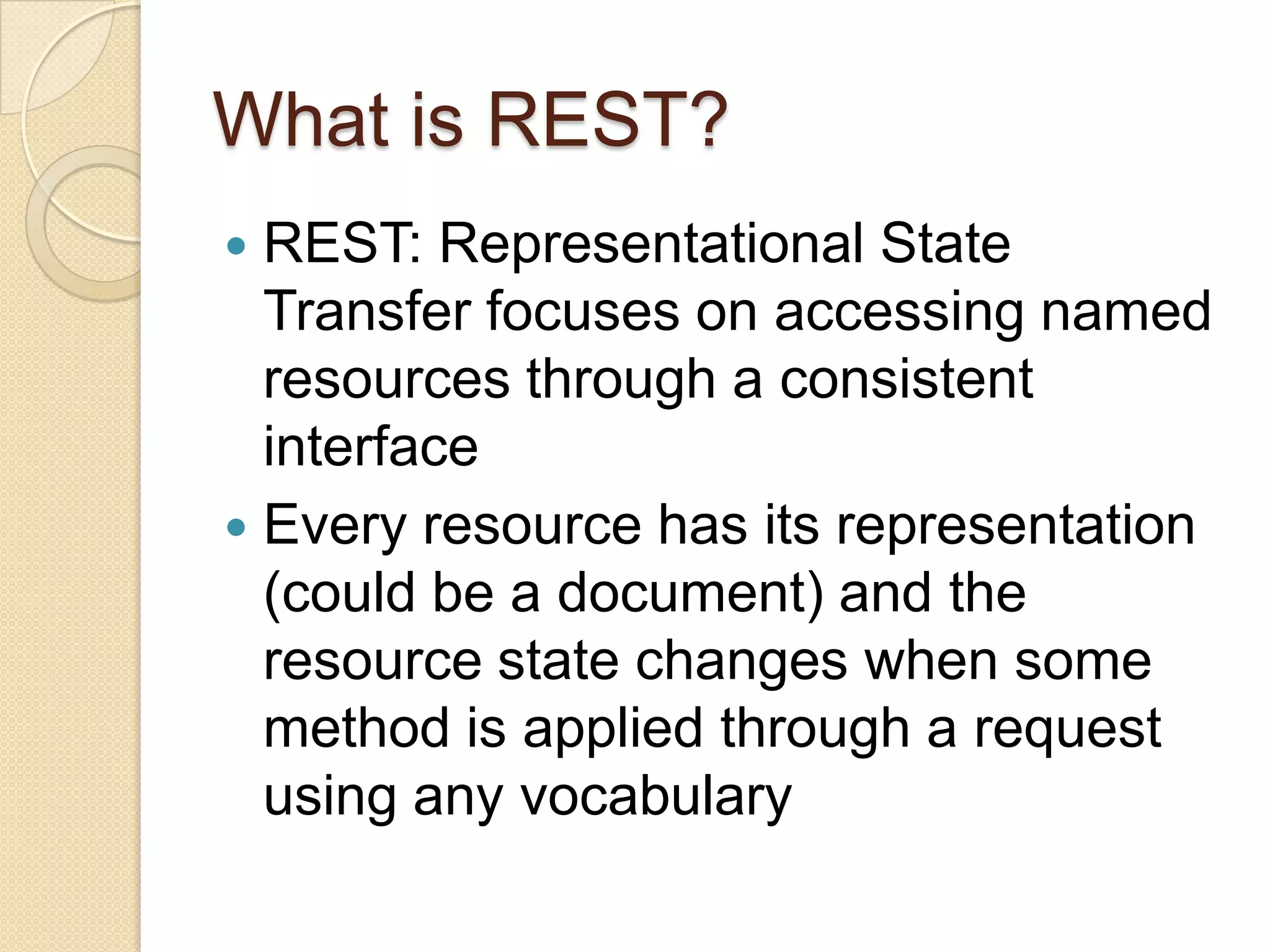
What is REST?
 REST: Representational State
  Transfer focuses on accessing named
  resources through a consistent
  interface
 Every resource has its representation
  (could be a document) and the
  resource state changes when some
  method is applied through a request
  using any vocabulary
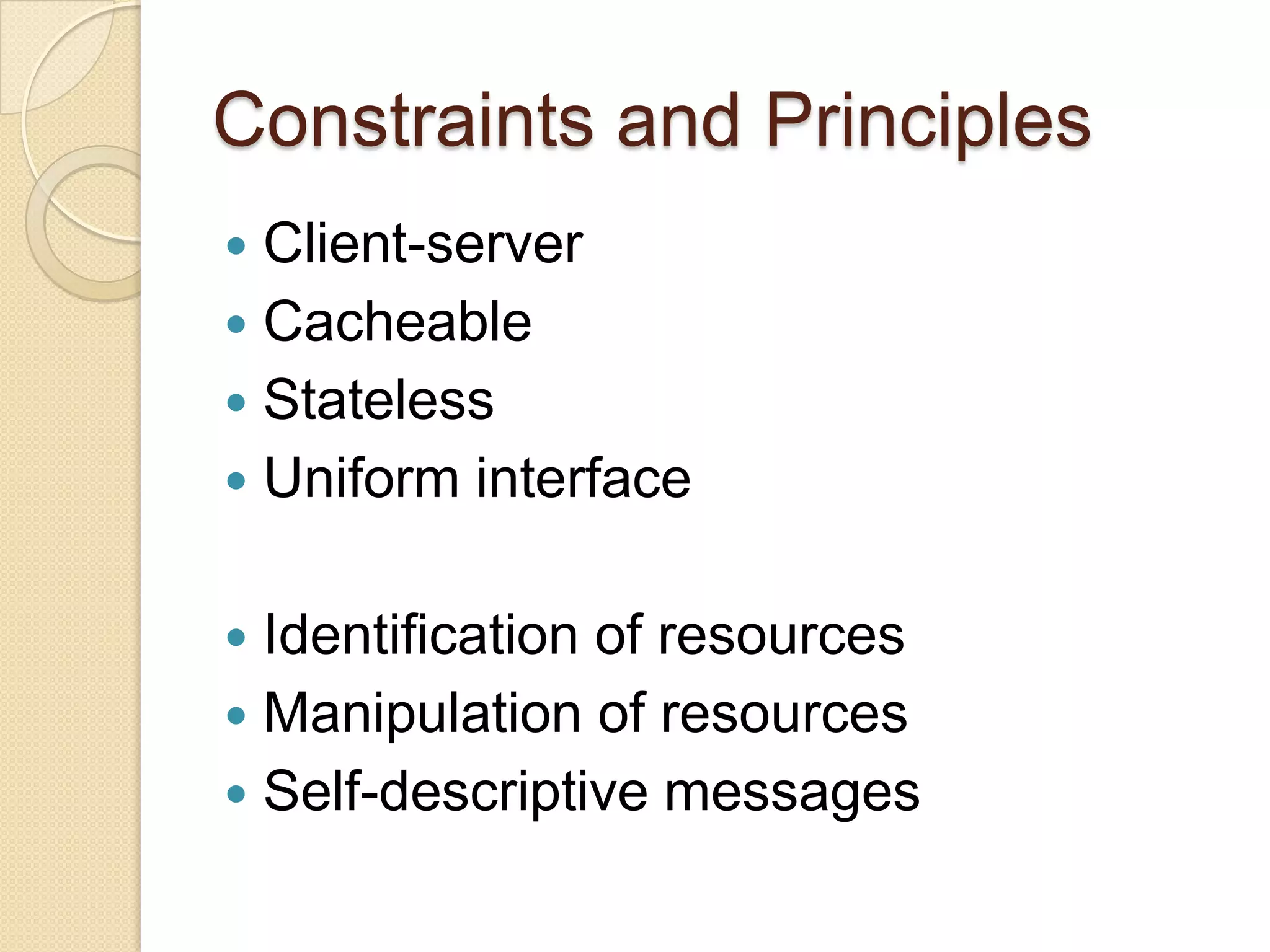
Constraints and Principles
 Client-server
 Cacheable
 Stateless
 Uniform interface


 Identification of resources
 Manipulation of resources
 Self-descriptive messages
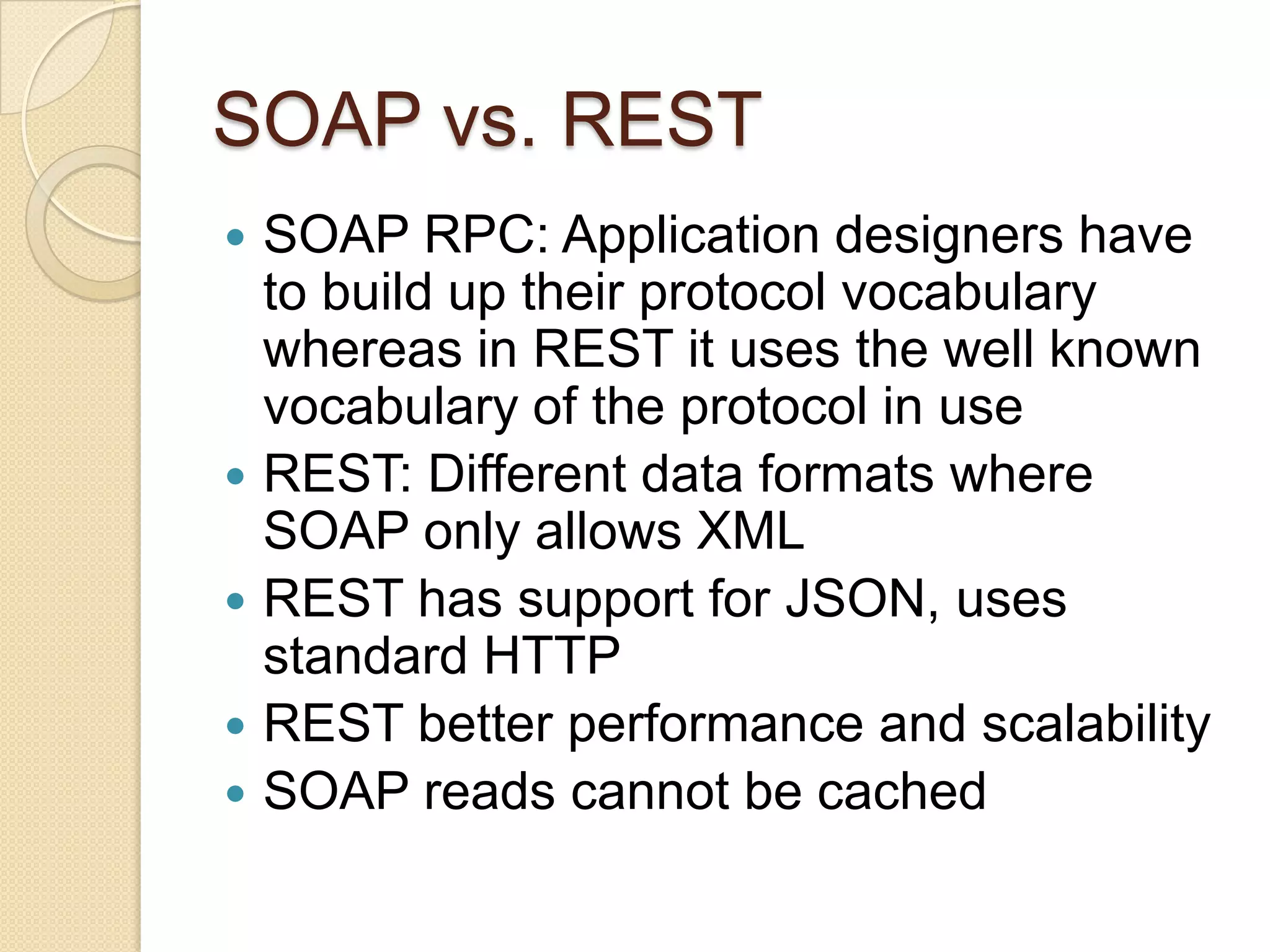
SOAP vs. REST
   SOAP RPC: Application designers have
    to build up their protocol vocabulary
    whereas in REST it uses the well known
    vocabulary of the protocol in use
   REST: Different data formats where
    SOAP only allows XML
   REST has support for JSON, uses
    standard HTTP
   REST better performance and scalability
   SOAP reads cannot be cached
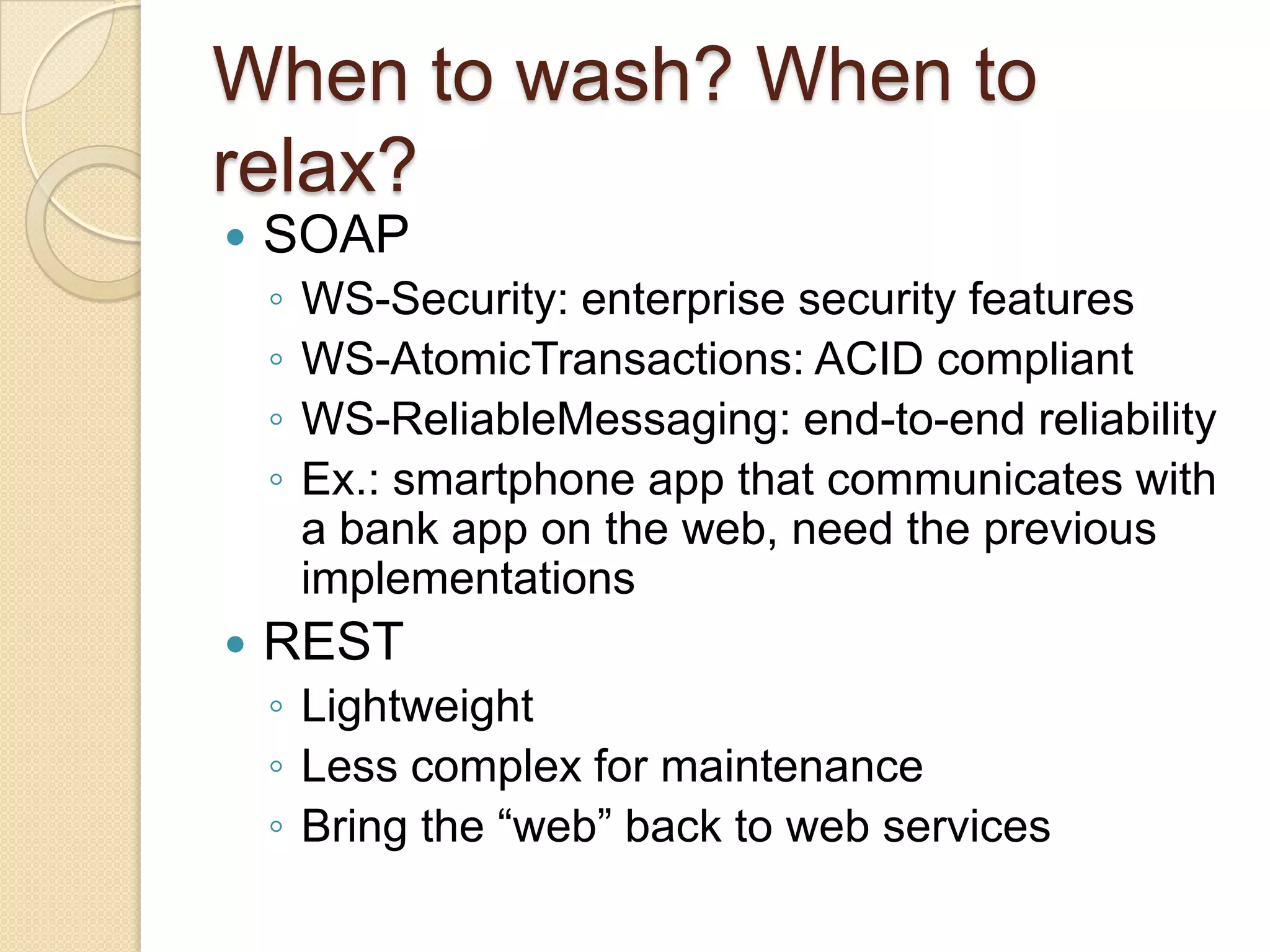
When to wash? When to
relax?
   SOAP
    ◦   WS-Security: enterprise security features
    ◦   WS-AtomicTransactions: ACID compliant
    ◦   WS-ReliableMessaging: end-to-end reliability
    ◦   Ex.: smartphone app that communicates with
        a bank app on the web, need the previous
        implementations
   REST
    ◦ Lightweight
    ◦ Less complex for maintenance
    ◦ Bring the “web” back to web services
Reference
   http://www.w3schools.com/soap/default.asp
   http://en.wikipedia.org/wiki/Representational_State
    _Transfer
   http://en.wikipedia.org/wiki/SOAP
   http://www.crummy.com/writing/RESTful-Web-
    Services/
   http://tomayko.com/writings/rest-to-my-wife

Soap vs rest

  • 1.
    SOAP vs. REST SOAPto wash and REST to relax Antonio Loureiro Severien FIB-UPC
  • 2.
    What is SOAP? SOAP: Simple Object Access Protocol is a protocol for exchange of structured information on a decentralized and distributed platform using XML (eXtensible Markup Language)  Works mainly with RPC (Remote Procedure Call) and HTTP (HyperText Transfer Protocol)  HTTP makes SOAP go around
  • 3.
    SOAP structure  3 parts message: Envelope, Header, Body POST /InStock HTTP/1.1 ENVELOPE Host: www.example.org Content-Type: application/soap+xml; charset=utf-8 HTT HEADER Content-Length: 299 SOAPAction: "http://www.w3.org/2003/05/soap-envelope" P <?xml version="1.0"?> <soap:Envelope BODY xmlns:soap="http://www.w3.org/2003/05/soap-envelope"> <soap:Header> </soap:Header> <soap:Body> <m:GetStockPrice xmlns:m="http://www.example.org/stock"> FAULT <m:StockName>IBM</m:StockName> </m:GetStockPrice> </soap:Body> </soap:Envelope>
  • 4.
    Simple Example REQUEST POST /InStock HTTP/1.1 Host: www.example.org Content-Type: application/soap+xml; charset=utf-8 Content-Length: nnn <?xml version="1.0"?> <soap:Envelope xmlns:soap="http://www.w3.org/2001/12/soap-envelope" soap:encodingStyle="http://www.w3.org/2001/12/soap-encoding"> <soap:Body xmlns:m="http://www.example.org/stock"> <m:GetStockPrice> <m:StockName>IBM</m:StockName> </m:GetStockPrice> </soap:Body> </soap:Envelope>
  • 5.
    Simple Example RESPONSE HTTP/1.1 200 OK Content-Type: application/soap+xml; charset=utf-8 Content-Length: nnn <?xml version="1.0"?> <soap:Envelope xmlns:soap="http://www.w3.org/2001/12/soap-envelope" soap:encodingStyle="http://www.w3.org/2001/12/soap-encoding"> <soap:Body xmlns:m="http://www.example.org/stock"> <m:GetStockPriceResponse> <m:Price>34.5</m:Price> </m:GetStockPriceResponse> </soap:Body> </soap:Envelope>
  • 6.
    SOAP Characteristics, Prosand Cons  Implements its own protocol  Exposes pieces of application logic, operations  Advantages ◦ Versatile in use of different application protocols ◦ Tunnels easily through firewalls due to the use of HTTP model  Disadvantages ◦ Slower when using large XML messages
  • 7.
    What is REST? REST: Representational State Transfer focuses on accessing named resources through a consistent interface  Every resource has its representation (could be a document) and the resource state changes when some method is applied through a request using any vocabulary
  • 8.
    Constraints and Principles Client-server  Cacheable  Stateless  Uniform interface  Identification of resources  Manipulation of resources  Self-descriptive messages
  • 9.
    SOAP vs. REST  SOAP RPC: Application designers have to build up their protocol vocabulary whereas in REST it uses the well known vocabulary of the protocol in use  REST: Different data formats where SOAP only allows XML  REST has support for JSON, uses standard HTTP  REST better performance and scalability  SOAP reads cannot be cached
  • 10.
    When to wash?When to relax?  SOAP ◦ WS-Security: enterprise security features ◦ WS-AtomicTransactions: ACID compliant ◦ WS-ReliableMessaging: end-to-end reliability ◦ Ex.: smartphone app that communicates with a bank app on the web, need the previous implementations  REST ◦ Lightweight ◦ Less complex for maintenance ◦ Bring the “web” back to web services
  • 11.
    Reference  http://www.w3schools.com/soap/default.asp  http://en.wikipedia.org/wiki/Representational_State _Transfer  http://en.wikipedia.org/wiki/SOAP  http://www.crummy.com/writing/RESTful-Web- Services/  http://tomayko.com/writings/rest-to-my-wife