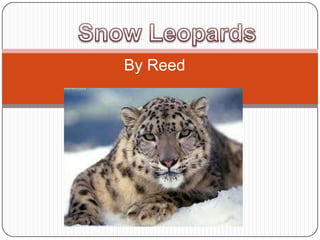
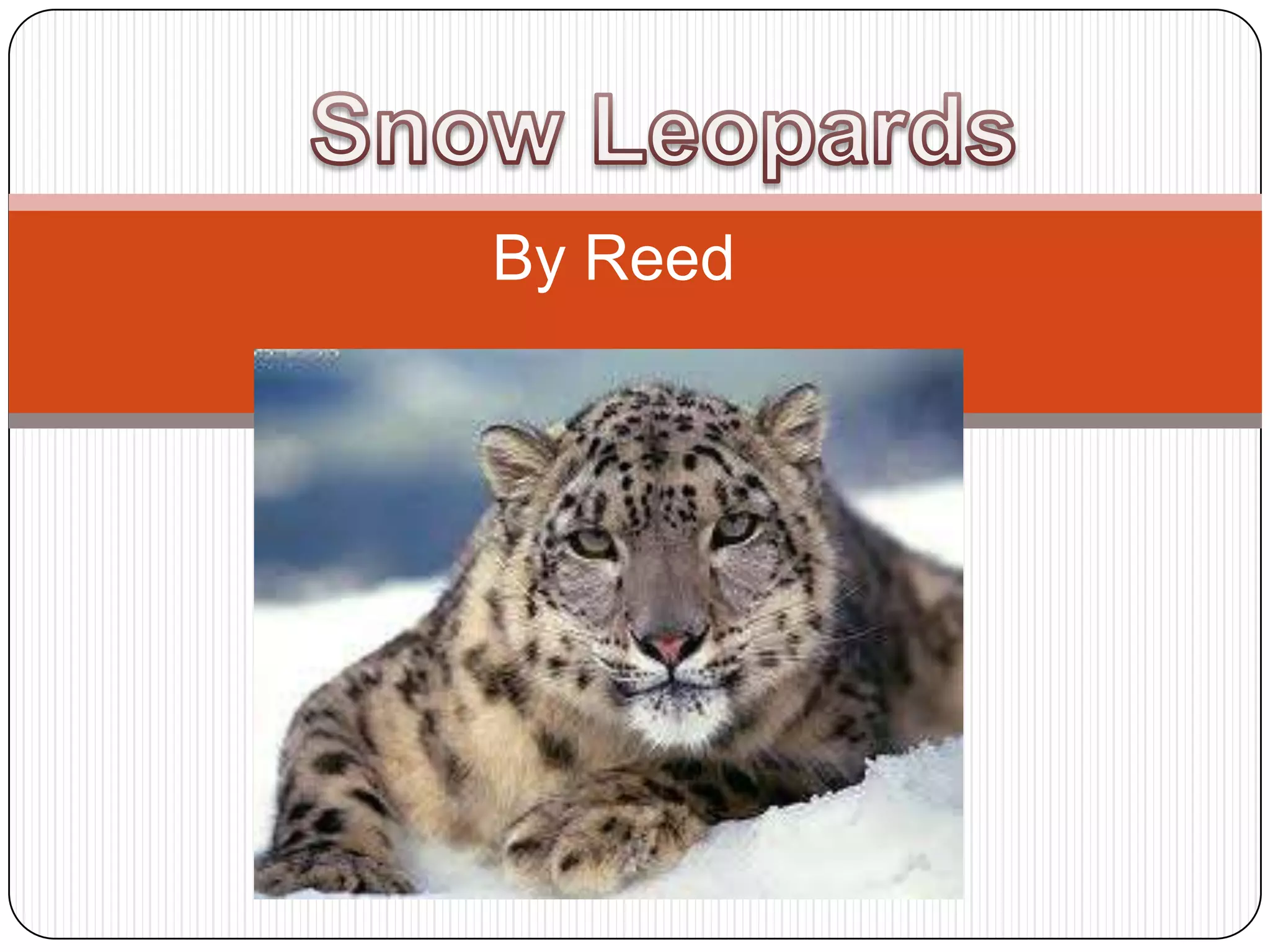
Snow LeopardsBy Reed
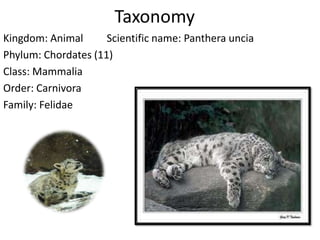
TaxonomyKingdom: Animal         Scientific name: PantheraunciaPhylum: Chordates (11)Class: MammaliaOrder: CarnivoraFamily: Felidae
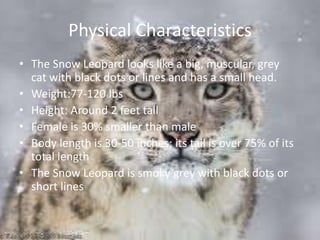
Physical Characteristics The Snow Leopard looks like a big, muscular, grey cat with black dots or lines and has a small head.Weight:77-120 lbsHeight: Around 2 feet tallFemale is 30% smaller than maleBody length is 30-50 inches; its tail is over 75% of its total lengthThe Snow Leopard is smoky grey with black dots or short lines
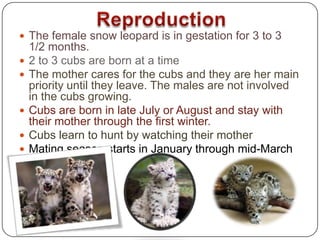
ReproductionThe female snow leopard is in gestation for 3 to 3 1/2 months.2 to 3 cubs are born at a timeThe mother cares for the cubs and they are her main priority until they leave. The males are not involved in the cubs growing.Cubs are born in late July or August and stay with their mother through the first winter.Cubs learn to hunt by watching their motherMating season starts in January through mid-March
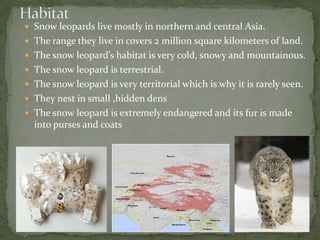
HabitatSnow leopards live mostly in northern and central Asia. The range they live in covers 2 million square kilometers of land.The snow leopard’s habitat is very cold, snowy and mountainous.The snow leopard is terrestrial. The snow leopard is very territorial which is why it is rarely seen.They nest in small ,hidden densThe snow leopard is extremely endangered and its fur is made into purses and coats
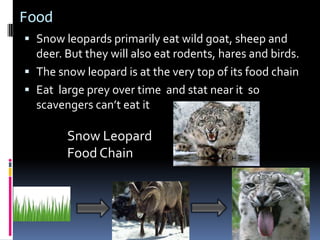
FoodSnow leopards primarily eat wild goat, sheep and deer. But they will also eat rodents, hares and birds.The snow leopard is at the very top of its food chainEat  large prey over time  and stat near it  so scavengers can’t eat itSnow Leopard Food Chain
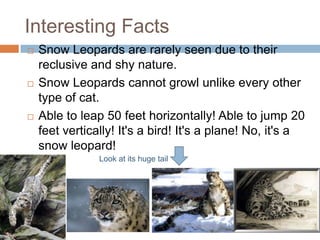
Interesting FactsSnow Leopards are rarely seen due to their reclusive and shy nature.Snow Leopards cannot growl unlike every other type of cat.Able to leap 50 feet horizontally! Able to jump 20 feet vertically! It's a bird! It's a plane! No, it's a snow leopard!Look at its huge tail
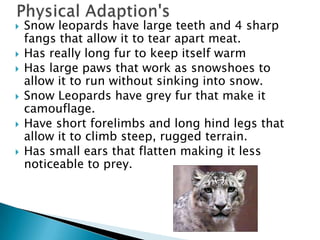
Physical Adaption'sSnow leopards have large teeth and 4 sharp fangs that allow it to tear apart meat.Has really long fur to keep itself warmHas large paws that work as snowshoes to allow it to run without sinking into snow.Snow Leopards have grey fur that make it camouflage.Have short forelimbs and long hind legs that allow it to climb steep, rugged terrain.Has small ears that flatten making it less noticeable to prey.
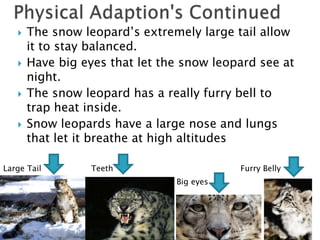
Physical Adaption's ContinuedThe snow leopard’s extremely large tail allow it to stay balanced.Have big eyes that let the snow leopard see at night.The snow leopard has a really furry bell to trap heat inside.Snow leopards have a large nose and lungs that let it breathe at high altitudesLarge TailTeethFurry BellyBig eyes
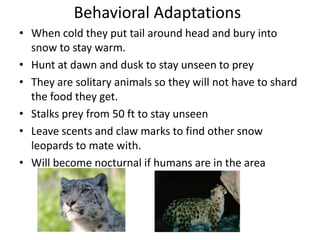
Behavioral AdaptationsWhen cold they put tail around head and bury into snow to stay warm.Hunt at dawn and dusk to stay unseen to preyThey are solitary animals so they will not have to shard the food they get.Stalks prey from 50 ft to stay unseen Leave scents and claw marks to find other snow leopards to mate with.Will become nocturnal if humans are in the area
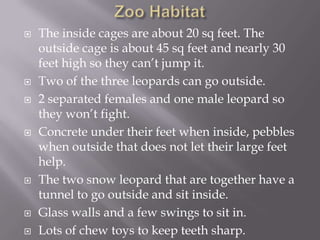
Zoo HabitatThe inside cages are about 20 sq feet. The outside cage is about 45 sq feet and nearly 30 feet high so they can’t jump it.Two of the three leopards can go outside.2 separated females and one male leopard so they won’t fight.Concrete under their feet when inside, pebbles when outside that does not let their large feet help.The two snow leopard that are together have a tunnel to go outside and sit inside.Glass walls and a few swings to sit in.Lots of chew toys to keep teeth sharp.
Zoo Habitat ContinuedLots if logs, wood, shelter and even small dens to maintain their solitary behavior.Vegetation to allow them to seem more in their environment.Glass walls inside, metal wiring on outside with ivy covering it.Drinking bowl in groundThe cage was very clean.The snow leopards were sitting on edges of rocks and the two other snow leopards were sitting in the tunnel.
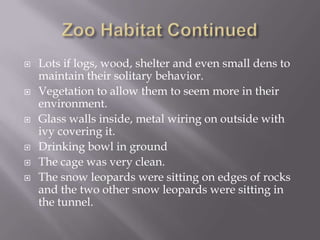
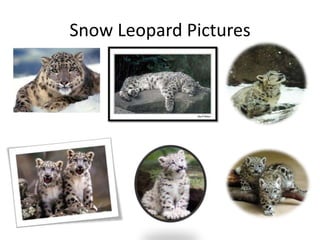
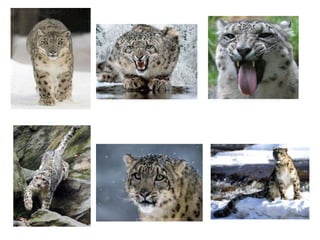
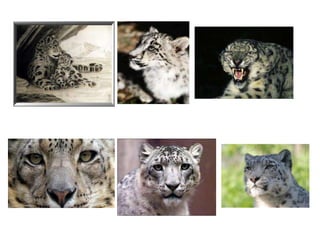
Snow Leopard Pictures
The End

Snow leopards[1]

  • 1.
  • 2.
    TaxonomyKingdom: Animal Scientific name: PantheraunciaPhylum: Chordates (11)Class: MammaliaOrder: CarnivoraFamily: Felidae
  • 3.
    Physical Characteristics TheSnow Leopard looks like a big, muscular, grey cat with black dots or lines and has a small head.Weight:77-120 lbsHeight: Around 2 feet tallFemale is 30% smaller than maleBody length is 30-50 inches; its tail is over 75% of its total lengthThe Snow Leopard is smoky grey with black dots or short lines
  • 4.
    ReproductionThe female snowleopard is in gestation for 3 to 3 1/2 months.2 to 3 cubs are born at a timeThe mother cares for the cubs and they are her main priority until they leave. The males are not involved in the cubs growing.Cubs are born in late July or August and stay with their mother through the first winter.Cubs learn to hunt by watching their motherMating season starts in January through mid-March
  • 5.
    HabitatSnow leopards livemostly in northern and central Asia. The range they live in covers 2 million square kilometers of land.The snow leopard’s habitat is very cold, snowy and mountainous.The snow leopard is terrestrial. The snow leopard is very territorial which is why it is rarely seen.They nest in small ,hidden densThe snow leopard is extremely endangered and its fur is made into purses and coats
  • 6.
    FoodSnow leopards primarilyeat wild goat, sheep and deer. But they will also eat rodents, hares and birds.The snow leopard is at the very top of its food chainEat large prey over time and stat near it so scavengers can’t eat itSnow Leopard Food Chain
  • 7.
    Interesting FactsSnow Leopardsare rarely seen due to their reclusive and shy nature.Snow Leopards cannot growl unlike every other type of cat.Able to leap 50 feet horizontally! Able to jump 20 feet vertically! It's a bird! It's a plane! No, it's a snow leopard!Look at its huge tail
  • 8.
    Physical Adaption'sSnow leopardshave large teeth and 4 sharp fangs that allow it to tear apart meat.Has really long fur to keep itself warmHas large paws that work as snowshoes to allow it to run without sinking into snow.Snow Leopards have grey fur that make it camouflage.Have short forelimbs and long hind legs that allow it to climb steep, rugged terrain.Has small ears that flatten making it less noticeable to prey.
  • 9.
    Physical Adaption's ContinuedThesnow leopard’s extremely large tail allow it to stay balanced.Have big eyes that let the snow leopard see at night.The snow leopard has a really furry bell to trap heat inside.Snow leopards have a large nose and lungs that let it breathe at high altitudesLarge TailTeethFurry BellyBig eyes
  • 10.
    Behavioral AdaptationsWhen coldthey put tail around head and bury into snow to stay warm.Hunt at dawn and dusk to stay unseen to preyThey are solitary animals so they will not have to shard the food they get.Stalks prey from 50 ft to stay unseen Leave scents and claw marks to find other snow leopards to mate with.Will become nocturnal if humans are in the area
  • 11.
    Zoo HabitatThe insidecages are about 20 sq feet. The outside cage is about 45 sq feet and nearly 30 feet high so they can’t jump it.Two of the three leopards can go outside.2 separated females and one male leopard so they won’t fight.Concrete under their feet when inside, pebbles when outside that does not let their large feet help.The two snow leopard that are together have a tunnel to go outside and sit inside.Glass walls and a few swings to sit in.Lots of chew toys to keep teeth sharp.
  • 12.
    Zoo Habitat ContinuedLotsif logs, wood, shelter and even small dens to maintain their solitary behavior.Vegetation to allow them to seem more in their environment.Glass walls inside, metal wiring on outside with ivy covering it.Drinking bowl in groundThe cage was very clean.The snow leopards were sitting on edges of rocks and the two other snow leopards were sitting in the tunnel.
  • 13.
  • 16.