Snort - an network intrusion
prevention and detection system
Student: Yue Jiang
Professor: Dr. Bojan Cukic
CS665 class presentation
Overview






What’s snort?
Snort architecture
Snort components
Detection engine and rules in snort
Possible research works in snort.
What’s snort?


NIDS:

A network intrusion detection system (NIDS)
is an intrusion detection system that tries to detect
malicious activity such as denial of service attacks, port
scans or even attempts to crack into computers by
monitoring network traffic.



Snort:



Snort:

an open source network intrusion prevention and
detection system. It uses a rule-based language combining
signature, protocol and anomaly inspection methods
the most widely deployed intrusion detection and
prevention technology and it has become the de facto
standard technology worldwide in the industry.
Snort
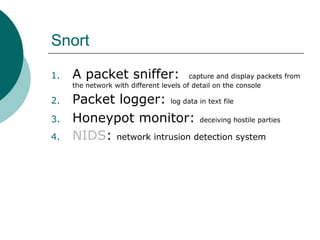
1.

A packet sniffer:

2.

Packet logger: log data in text file
Honeypot monitor: deceiving hostile parties
NIDS: network intrusion detection system

3.
4.

capture and display packets from
the network with different levels of detail on the console
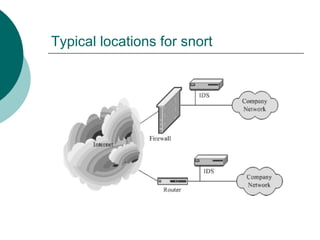
Typical locations for snort
Requirement of snort




lightweight NIDS
small, flexible
highly capable system
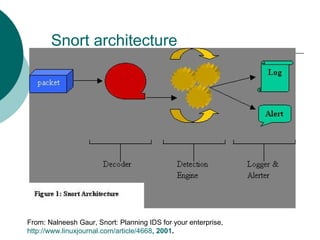
Snort architecture

From: Nalneesh Gaur, Snort: Planning IDS for your enterprise,
http://www.linuxjournal.com/article/4668, 2001.
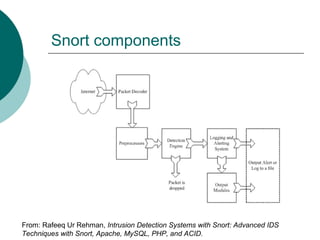
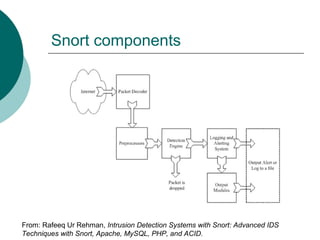
Snort components

From: Rafeeq Ur Rehman, Intrusion Detection Systems with Snort: Advanced IDS
Techniques with Snort, Apache, MySQL, PHP, and ACID.
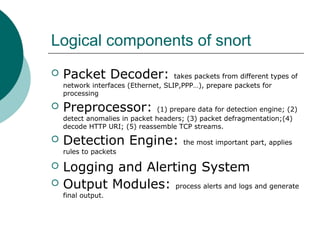
Logical components of snort


Packet Decoder:



Preprocessor:



Detection Engine:

takes packets from different types of
network interfaces (Ethernet, SLIP,PPP…), prepare packets for
processing
(1) prepare data for detection engine; (2)
detect anomalies in packet headers; (3) packet defragmentation;(4)
decode HTTP URI; (5) reassemble TCP streams.
the most important part, applies

rules to packets




Logging and Alerting System
Output Modules: process alerts and logs and generate
final output.
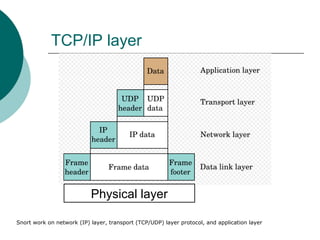
TCP/IP layer

Physical layer
Snort work on network (IP) layer, transport (TCP/UDP) layer protocol, and application layer
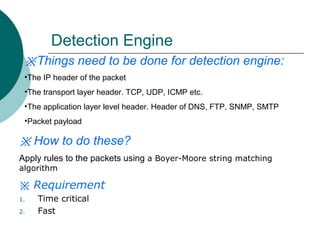
Detection Engine
※Things need to be done for detection engine:
•The IP header of the packet
•The transport layer header. TCP, UDP, ICMP etc.
•The application layer level header. Header of DNS, FTP, SNMP, SMTP
•Packet payload

※ How to do these?
Apply rules to the packets using a Boyer-Moore string matching
algorithm

※ Requirement
1.
2.

Time critical
Fast
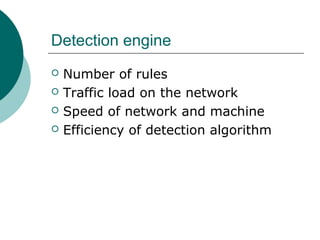
Detection engine





Number of rules
Traffic load on the network
Speed of network and machine
Efficiency of detection algorithm
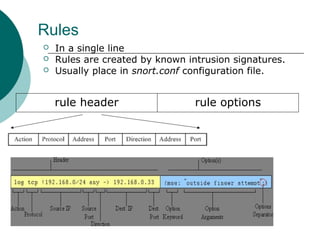
Rules




In a single line
Rules are created by known intrusion signatures.
Usually place in snort.conf configuration file.

rule header

rule options
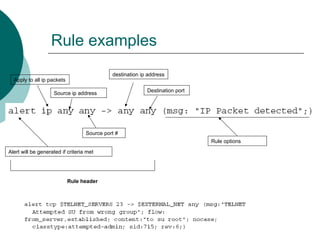
Rule examples
destination ip address

Apply to all ip packets
Source ip address

Destination port

Source port #
Rule options
Alert will be generated if criteria met

Rule header
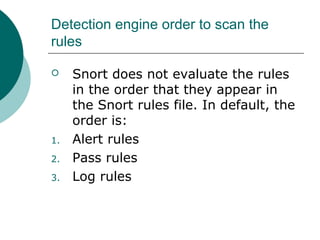
Detection engine order to scan the
rules


1.
2.
3.

Snort does not evaluate the rules
in the order that they appear in
the Snort rules file. In default, the
order is:
Alert rules
Pass rules
Log rules
Challenges with snort










Misuse detection –

avoid known

intrusions
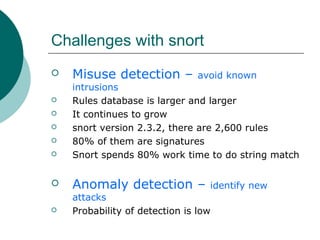
Rules database is larger and larger
It continues to grow
snort version 2.3.2, there are 2,600 rules
80% of them are signatures
Snort spends 80% work time to do string match

Anomaly detection –

identify new

attacks
Probability of detection is low
Snort components

From: Rafeeq Ur Rehman, Intrusion Detection Systems with Snort: Advanced IDS
Techniques with Snort, Apache, MySQL, PHP, and ACID.
Attempts to improve


Increasing preprocessing
ability --- offload partial work from detect
engine



Using hardware to reduce
workload - a hybrid
architecture --- software has more flexibility,
hardware has relatively higher throughput



Better detection algorithm
Possible ways?




Organize the well-known rules into
better data structure to achieve
better performance
A detector with acceptable detection
probability
Thank you !

Snort

  • 1.
    Snort - annetwork intrusion prevention and detection system Student: Yue Jiang Professor: Dr. Bojan Cukic CS665 class presentation
  • 2.
    Overview      What’s snort? Snort architecture Snortcomponents Detection engine and rules in snort Possible research works in snort.
  • 3.
    What’s snort?  NIDS: A networkintrusion detection system (NIDS) is an intrusion detection system that tries to detect malicious activity such as denial of service attacks, port scans or even attempts to crack into computers by monitoring network traffic.  Snort:  Snort: an open source network intrusion prevention and detection system. It uses a rule-based language combining signature, protocol and anomaly inspection methods the most widely deployed intrusion detection and prevention technology and it has become the de facto standard technology worldwide in the industry.
  • 4.
    Snort 1. A packet sniffer: 2. Packetlogger: log data in text file Honeypot monitor: deceiving hostile parties NIDS: network intrusion detection system 3. 4. capture and display packets from the network with different levels of detail on the console
  • 5.
  • 6.
    Requirement of snort    lightweightNIDS small, flexible highly capable system
  • 7.
    Snort architecture From: NalneeshGaur, Snort: Planning IDS for your enterprise, http://www.linuxjournal.com/article/4668, 2001.
  • 8.
    Snort components From: RafeeqUr Rehman, Intrusion Detection Systems with Snort: Advanced IDS Techniques with Snort, Apache, MySQL, PHP, and ACID.
  • 9.
    Logical components ofsnort  Packet Decoder:  Preprocessor:  Detection Engine: takes packets from different types of network interfaces (Ethernet, SLIP,PPP…), prepare packets for processing (1) prepare data for detection engine; (2) detect anomalies in packet headers; (3) packet defragmentation;(4) decode HTTP URI; (5) reassemble TCP streams. the most important part, applies rules to packets   Logging and Alerting System Output Modules: process alerts and logs and generate final output.
  • 10.
    TCP/IP layer Physical layer Snortwork on network (IP) layer, transport (TCP/UDP) layer protocol, and application layer
  • 11.
    Detection Engine ※Things needto be done for detection engine: •The IP header of the packet •The transport layer header. TCP, UDP, ICMP etc. •The application layer level header. Header of DNS, FTP, SNMP, SMTP •Packet payload ※ How to do these? Apply rules to the packets using a Boyer-Moore string matching algorithm ※ Requirement 1. 2. Time critical Fast
  • 12.
    Detection engine     Number ofrules Traffic load on the network Speed of network and machine Efficiency of detection algorithm
  • 13.
    Rules    In a singleline Rules are created by known intrusion signatures. Usually place in snort.conf configuration file. rule header rule options
  • 14.
    Rule examples destination ipaddress Apply to all ip packets Source ip address Destination port Source port # Rule options Alert will be generated if criteria met Rule header
  • 15.
    Detection engine orderto scan the rules  1. 2. 3. Snort does not evaluate the rules in the order that they appear in the Snort rules file. In default, the order is: Alert rules Pass rules Log rules
  • 16.
    Challenges with snort         Misusedetection – avoid known intrusions Rules database is larger and larger It continues to grow snort version 2.3.2, there are 2,600 rules 80% of them are signatures Snort spends 80% work time to do string match Anomaly detection – identify new attacks Probability of detection is low
  • 17.
    Snort components From: RafeeqUr Rehman, Intrusion Detection Systems with Snort: Advanced IDS Techniques with Snort, Apache, MySQL, PHP, and ACID.
  • 18.
    Attempts to improve  Increasingpreprocessing ability --- offload partial work from detect engine  Using hardware to reduce workload - a hybrid architecture --- software has more flexibility, hardware has relatively higher throughput  Better detection algorithm
  • 19.
    Possible ways?   Organize thewell-known rules into better data structure to achieve better performance A detector with acceptable detection probability
  • 20.