Download to read offline

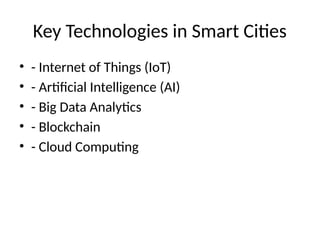
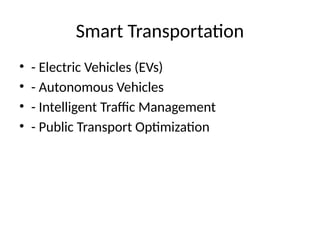
Smart Cities are urban areas that use digital technology and data to enhance the quality of life for citizens, improve the efficiency of services, and promote sustainable development. They integrate information and communication technologies (ICT) into infrastructure and services like transportation, energy, waste management, water supply, and public safety. Key Features of Smart Cities: Smart infrastructure: Intelligent roads, energy-efficient buildings, and IoT-based utilities. Efficient transportation: Real-time traffic monitoring, smart traffic signals, and integrated public transport systems. Environmental sustainability: Use of renewable energy, smart grids, and pollution monitoring. Data-driven governance: Digital platforms for citizen engagement, e-governance, and transparent decision-making. Enhanced public services: Smart healthcare, education, and emergency services. Examples of Technologies Used: Internet of Things (IoT) Big Data and Analytics Artificial Intelligence (AI) 5G and cloud computing Smart sensors and cameras Smart cities aim to create a safer, cleaner, and more livable urban environment by making services more responsive and resource use more efficient. Want a shorter version or a more detailed one for a project or presentation? Extra Here's an expanded 2000-word version of your smart cities description, suitable for a detailed report or presentation: --- Smart Cities: Shaping the Future of Urban Living Introduction The 21st century is witnessing rapid urbanization, with more than half of the world’s population now living in cities. As urban centers grow in population and complexity, they face challenges such as traffic congestion, pollution, inefficient resource usage, and increasing demands for public services. To address these issues and improve the quality of urban life, the concept of Smart Cities has emerged. A Smart City leverages digital technologies and data to enhance the efficiency of urban services, promote sustainability, and increase the well-being of its citizens. What is a Smart City? A Smart City is an urban area that uses digital technology, communication systems, and data analytics to manage resources more efficiently and deliver improved services to its residents. By integrating Information and Communication Technology (ICT) into city functions such as transportation, energy, healthcare, governance, and waste management, Smart Cities aim to be more sustainable, inclusive, and citizen-friendly. Smart Cities are not just about technology—they are about transforming the way cities operate and engage with their citizens. The use of real-time data and smart systems enables city authorities to respond quickly to challenges, optimize resource use, and plan more effectively for the future. Core Objectives of Smart Cities Smart Cities are built around several core objectives: Here’s a dedicated section on the Future of Smart Cities, elaborated further for your writeup: --- Future


