Key Technologies Driving Data Analytics for Smart
Cities
Introduction to Smart Cities and Data Analytics
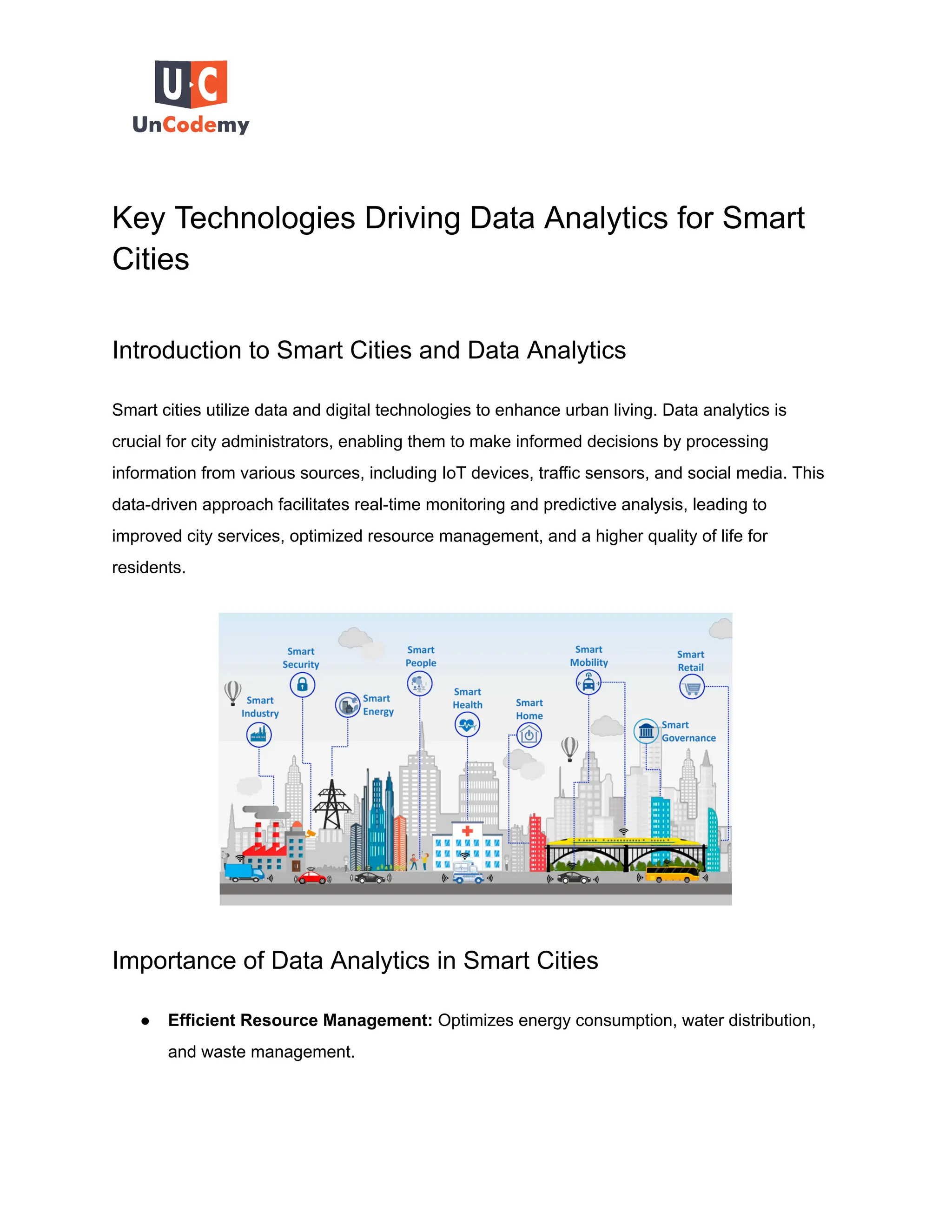
Smart cities utilize data and digital technologies to enhance urban living. Data analytics is
crucial for city administrators, enabling them to make informed decisions by processing
information from various sources, including IoT devices, traffic sensors, and social media. This
data-driven approach facilitates real-time monitoring and predictive analysis, leading to
improved city services, optimized resource management, and a higher quality of life for
residents.
Importance of Data Analytics in Smart Cities
● Efficient Resource Management: Optimizes energy consumption, water distribution,
and waste management.
● Real-Time Decision Making: Allows for quick responses to emergencies and
infrastructure issues.
● Enhanced Citizen Services: Improves healthcare, transportation, and public safety
solutions.
For those interested in contributing to smart city development, enrolling in a data analytics
training course in Noida, Delhi, Meerut, Chandigarh, Pune, and others across India can provide
essential skills and knowledge, paving the way for careers in this transformative field.
Internet of Things (IoT)
Role of IoT in Smart Cities
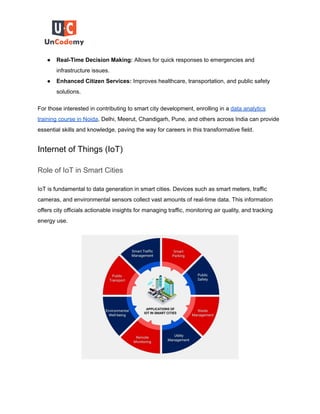
IoT is fundamental to data generation in smart cities. Devices such as smart meters, traffic
cameras, and environmental sensors collect vast amounts of real-time data. This information
offers city officials actionable insights for managing traffic, monitoring air quality, and tracking
energy use.
Key Benefits of IoT:
● Real-Time Data Collection: Provides instant access to critical data.
● Improved Infrastructure Monitoring: Tracks conditions like road damage or electrical
grid performance.
● Personalized Citizen Services: Enhances services such as smart lighting and parking.
Big Data Analytics
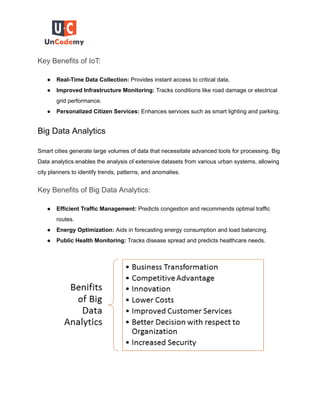
Smart cities generate large volumes of data that necessitate advanced tools for processing. Big
Data analytics enables the analysis of extensive datasets from various urban systems, allowing
city planners to identify trends, patterns, and anomalies.
Key Benefits of Big Data Analytics:
● Efficient Traffic Management: Predicts congestion and recommends optimal traffic
routes.
● Energy Optimization: Aids in forecasting energy consumption and load balancing.
● Public Health Monitoring: Tracks disease spread and predicts healthcare needs.
Artificial Intelligence and Machine Learning
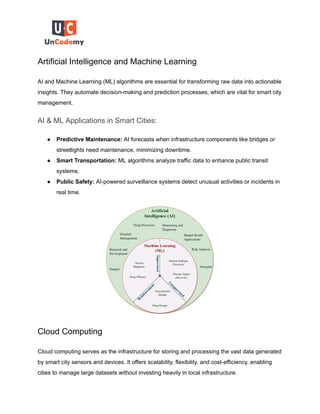
AI and Machine Learning (ML) algorithms are essential for transforming raw data into actionable
insights. They automate decision-making and prediction processes, which are vital for smart city
management.
AI & ML Applications in Smart Cities:
● Predictive Maintenance: AI forecasts when infrastructure components like bridges or
streetlights need maintenance, minimizing downtime.
● Smart Transportation: ML algorithms analyze traffic data to enhance public transit
systems.
● Public Safety: AI-powered surveillance systems detect unusual activities or incidents in
real time.
Cloud Computing
Cloud computing serves as the infrastructure for storing and processing the vast data generated
by smart city sensors and devices. It offers scalability, flexibility, and cost-efficiency, enabling
cities to manage large datasets without investing heavily in local infrastructure.
Key Benefits of Cloud Computing:
● Data Storage: Provides virtually unlimited storage capacity for city data.
● Cost Efficiency: Reduces the need for costly on-site hardware.
● Collaboration: Promotes cooperation among city departments through shared data
access.
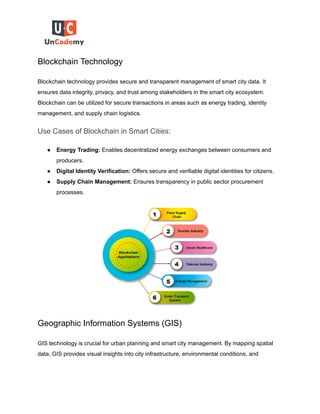
Edge Computing
While cloud computing is beneficial, edge computing is becoming increasingly vital in smart
cities due to the necessity for real-time processing. Edge computing allows data to be
processed closer to its source, reducing latency and enabling faster decision-making.
Benefits of Edge Computing in Smart Cities:
● Reduced Latency: Facilitates immediate processing of data from IoT devices.
● Enhanced Privacy: Limits the amount of data transmitted to centralized servers.
● Energy Efficiency: Lowers the energy costs associated with data transmission.
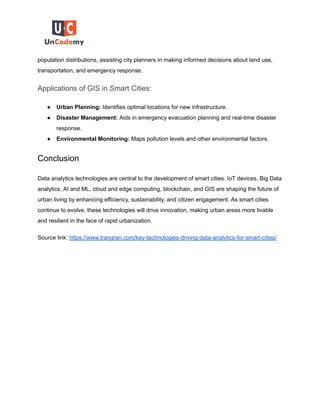
Blockchain Technology
Blockchain technology provides secure and transparent management of smart city data. It
ensures data integrity, privacy, and trust among stakeholders in the smart city ecosystem.
Blockchain can be utilized for secure transactions in areas such as energy trading, identity
management, and supply chain logistics.
Use Cases of Blockchain in Smart Cities:
● Energy Trading: Enables decentralized energy exchanges between consumers and
producers.
● Digital Identity Verification: Offers secure and verifiable digital identities for citizens.
● Supply Chain Management: Ensures transparency in public sector procurement
processes.
Geographic Information Systems (GIS)
GIS technology is crucial for urban planning and smart city management. By mapping spatial
data, GIS provides visual insights into city infrastructure, environmental conditions, and
population distributions, assisting city planners in making informed decisions about land use,
transportation, and emergency response.
Applications of GIS in Smart Cities:
● Urban Planning: Identifies optimal locations for new infrastructure.
● Disaster Management: Aids in emergency evacuation planning and real-time disaster
response.
● Environmental Monitoring: Maps pollution levels and other environmental factors.
Conclusion
Data analytics technologies are central to the development of smart cities. IoT devices, Big Data
analytics, AI and ML, cloud and edge computing, blockchain, and GIS are shaping the future of
urban living by enhancing efficiency, sustainability, and citizen engagement. As smart cities
continue to evolve, these technologies will drive innovation, making urban areas more livable
and resilient in the face of rapid urbanization.
Source link: https://www.trangran.com/key-technologies-driving-data-analytics-for-smart-cities/

Key Technologies Driving Data Analytics for Smart Cities

  • 1.
    Key Technologies DrivingData Analytics for Smart Cities Introduction to Smart Cities and Data Analytics Smart cities utilize data and digital technologies to enhance urban living. Data analytics is crucial for city administrators, enabling them to make informed decisions by processing information from various sources, including IoT devices, traffic sensors, and social media. This data-driven approach facilitates real-time monitoring and predictive analysis, leading to improved city services, optimized resource management, and a higher quality of life for residents. Importance of Data Analytics in Smart Cities ● Efficient Resource Management: Optimizes energy consumption, water distribution, and waste management.
  • 2.
    ● Real-Time DecisionMaking: Allows for quick responses to emergencies and infrastructure issues. ● Enhanced Citizen Services: Improves healthcare, transportation, and public safety solutions. For those interested in contributing to smart city development, enrolling in a data analytics training course in Noida, Delhi, Meerut, Chandigarh, Pune, and others across India can provide essential skills and knowledge, paving the way for careers in this transformative field. Internet of Things (IoT) Role of IoT in Smart Cities IoT is fundamental to data generation in smart cities. Devices such as smart meters, traffic cameras, and environmental sensors collect vast amounts of real-time data. This information offers city officials actionable insights for managing traffic, monitoring air quality, and tracking energy use.
  • 3.
    Key Benefits ofIoT: ● Real-Time Data Collection: Provides instant access to critical data. ● Improved Infrastructure Monitoring: Tracks conditions like road damage or electrical grid performance. ● Personalized Citizen Services: Enhances services such as smart lighting and parking. Big Data Analytics Smart cities generate large volumes of data that necessitate advanced tools for processing. Big Data analytics enables the analysis of extensive datasets from various urban systems, allowing city planners to identify trends, patterns, and anomalies. Key Benefits of Big Data Analytics: ● Efficient Traffic Management: Predicts congestion and recommends optimal traffic routes. ● Energy Optimization: Aids in forecasting energy consumption and load balancing. ● Public Health Monitoring: Tracks disease spread and predicts healthcare needs.
  • 4.
    Artificial Intelligence andMachine Learning AI and Machine Learning (ML) algorithms are essential for transforming raw data into actionable insights. They automate decision-making and prediction processes, which are vital for smart city management. AI & ML Applications in Smart Cities: ● Predictive Maintenance: AI forecasts when infrastructure components like bridges or streetlights need maintenance, minimizing downtime. ● Smart Transportation: ML algorithms analyze traffic data to enhance public transit systems. ● Public Safety: AI-powered surveillance systems detect unusual activities or incidents in real time. Cloud Computing Cloud computing serves as the infrastructure for storing and processing the vast data generated by smart city sensors and devices. It offers scalability, flexibility, and cost-efficiency, enabling cities to manage large datasets without investing heavily in local infrastructure.
  • 5.
    Key Benefits ofCloud Computing: ● Data Storage: Provides virtually unlimited storage capacity for city data. ● Cost Efficiency: Reduces the need for costly on-site hardware. ● Collaboration: Promotes cooperation among city departments through shared data access. Edge Computing While cloud computing is beneficial, edge computing is becoming increasingly vital in smart cities due to the necessity for real-time processing. Edge computing allows data to be processed closer to its source, reducing latency and enabling faster decision-making. Benefits of Edge Computing in Smart Cities: ● Reduced Latency: Facilitates immediate processing of data from IoT devices. ● Enhanced Privacy: Limits the amount of data transmitted to centralized servers. ● Energy Efficiency: Lowers the energy costs associated with data transmission.
  • 6.
    Blockchain Technology Blockchain technologyprovides secure and transparent management of smart city data. It ensures data integrity, privacy, and trust among stakeholders in the smart city ecosystem. Blockchain can be utilized for secure transactions in areas such as energy trading, identity management, and supply chain logistics. Use Cases of Blockchain in Smart Cities: ● Energy Trading: Enables decentralized energy exchanges between consumers and producers. ● Digital Identity Verification: Offers secure and verifiable digital identities for citizens. ● Supply Chain Management: Ensures transparency in public sector procurement processes. Geographic Information Systems (GIS) GIS technology is crucial for urban planning and smart city management. By mapping spatial data, GIS provides visual insights into city infrastructure, environmental conditions, and
  • 7.
    population distributions, assistingcity planners in making informed decisions about land use, transportation, and emergency response. Applications of GIS in Smart Cities: ● Urban Planning: Identifies optimal locations for new infrastructure. ● Disaster Management: Aids in emergency evacuation planning and real-time disaster response. ● Environmental Monitoring: Maps pollution levels and other environmental factors. Conclusion Data analytics technologies are central to the development of smart cities. IoT devices, Big Data analytics, AI and ML, cloud and edge computing, blockchain, and GIS are shaping the future of urban living by enhancing efficiency, sustainability, and citizen engagement. As smart cities continue to evolve, these technologies will drive innovation, making urban areas more livable and resilient in the face of rapid urbanization. Source link: https://www.trangran.com/key-technologies-driving-data-analytics-for-smart-cities/