How IoT Technology is
Revolutionizing
Manufacturing Efficiency
and Problem Solving
Unlocking new levels of productivity and innovation by
leveraging IoT to address manufacturing challenges and
streamline operations.
Get Started
Presented By: Olivia Wilson
INTRODUCTION
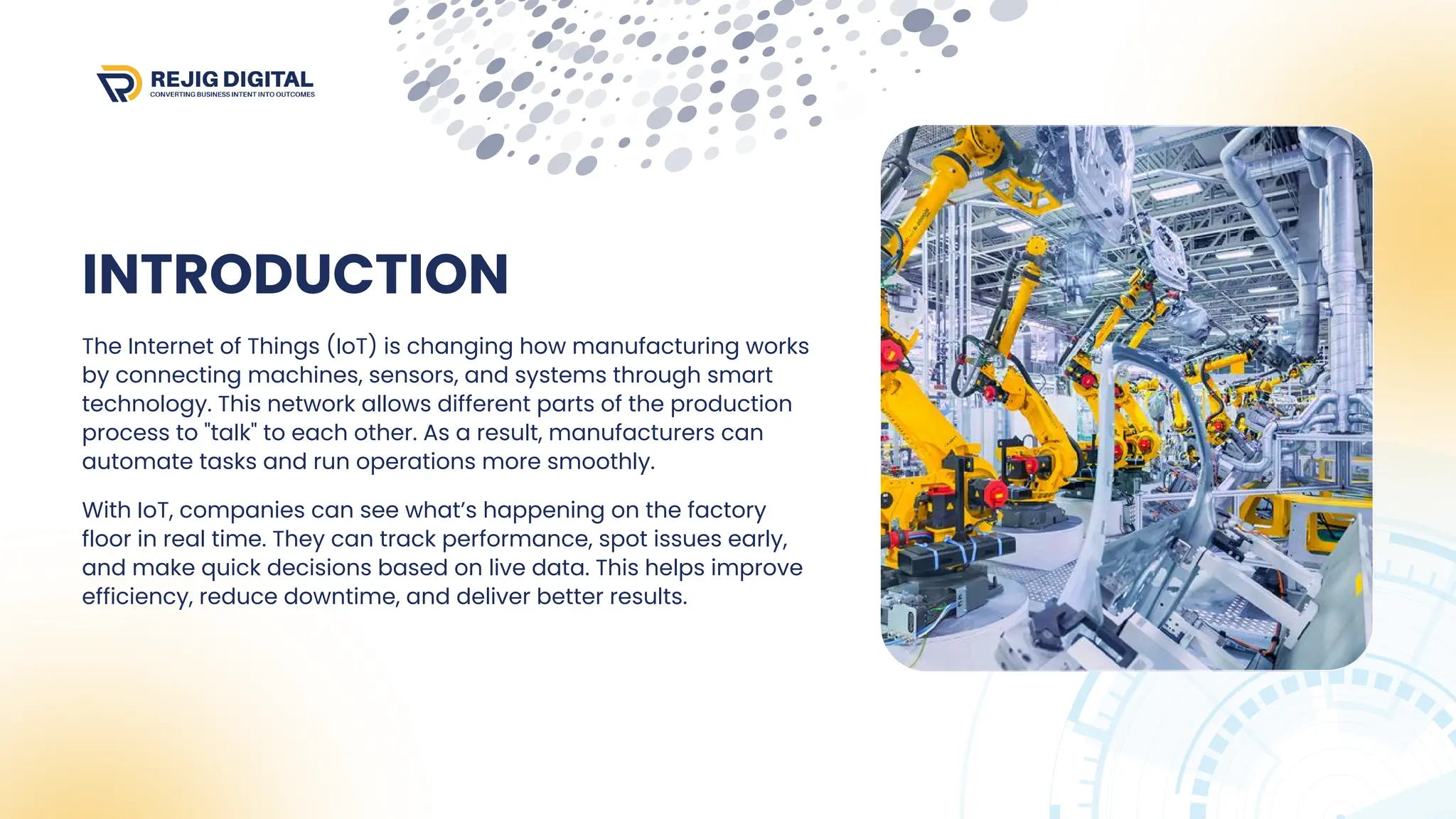
The Internet of Things (IoT) is changing how manufacturing works
by connecting machines, sensors, and systems through smart
technology. This network allows different parts of the production
process to "talk" to each other. As a result, manufacturers can
automate tasks and run operations more smoothly.
With IoT, companies can see what’s happening on the factory
floor in real time. They can track performance, spot issues early,
and make quick decisions based on live data. This helps improve
efficiency, reduce downtime, and deliver better results.
WHAT IS IOT IN
MANUFACTURING?
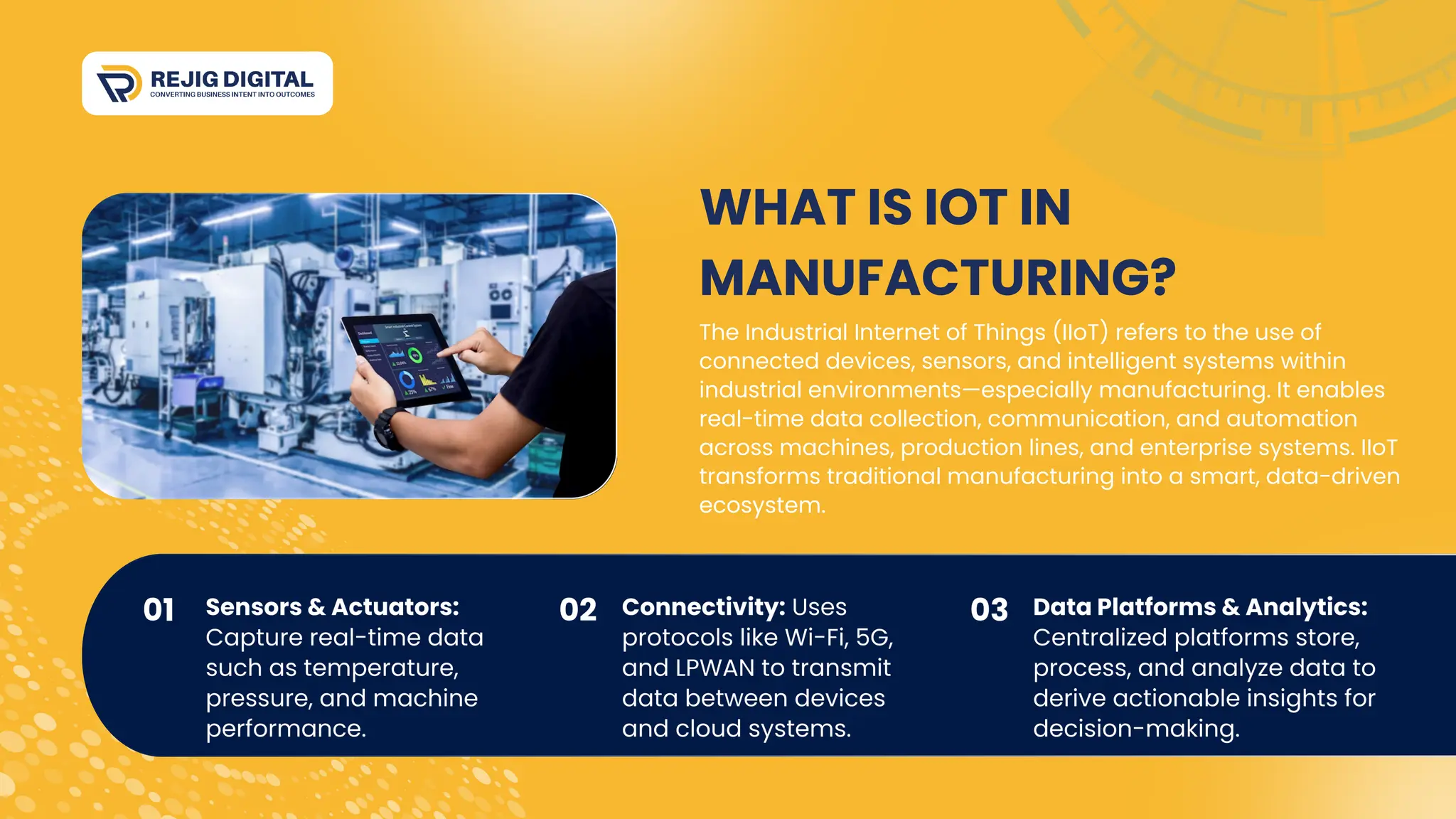
The Industrial Internet of Things (IIoT) refers to the use of
connected devices, sensors, and intelligent systems within
industrial environments—especially manufacturing. It enables
real-time data collection, communication, and automation
across machines, production lines, and enterprise systems. IIoT
transforms traditional manufacturing into a smart, data-driven
ecosystem.
In today’s competitive industrial landscape,
manufacturers are expected to deliver greater
efficiency, consistent quality, and rapid adaptability.
Achieving these goals depends on real-time insights
and data-driven operations.
TRADITIONAL
MANUFACTURING
PAIN POINTS
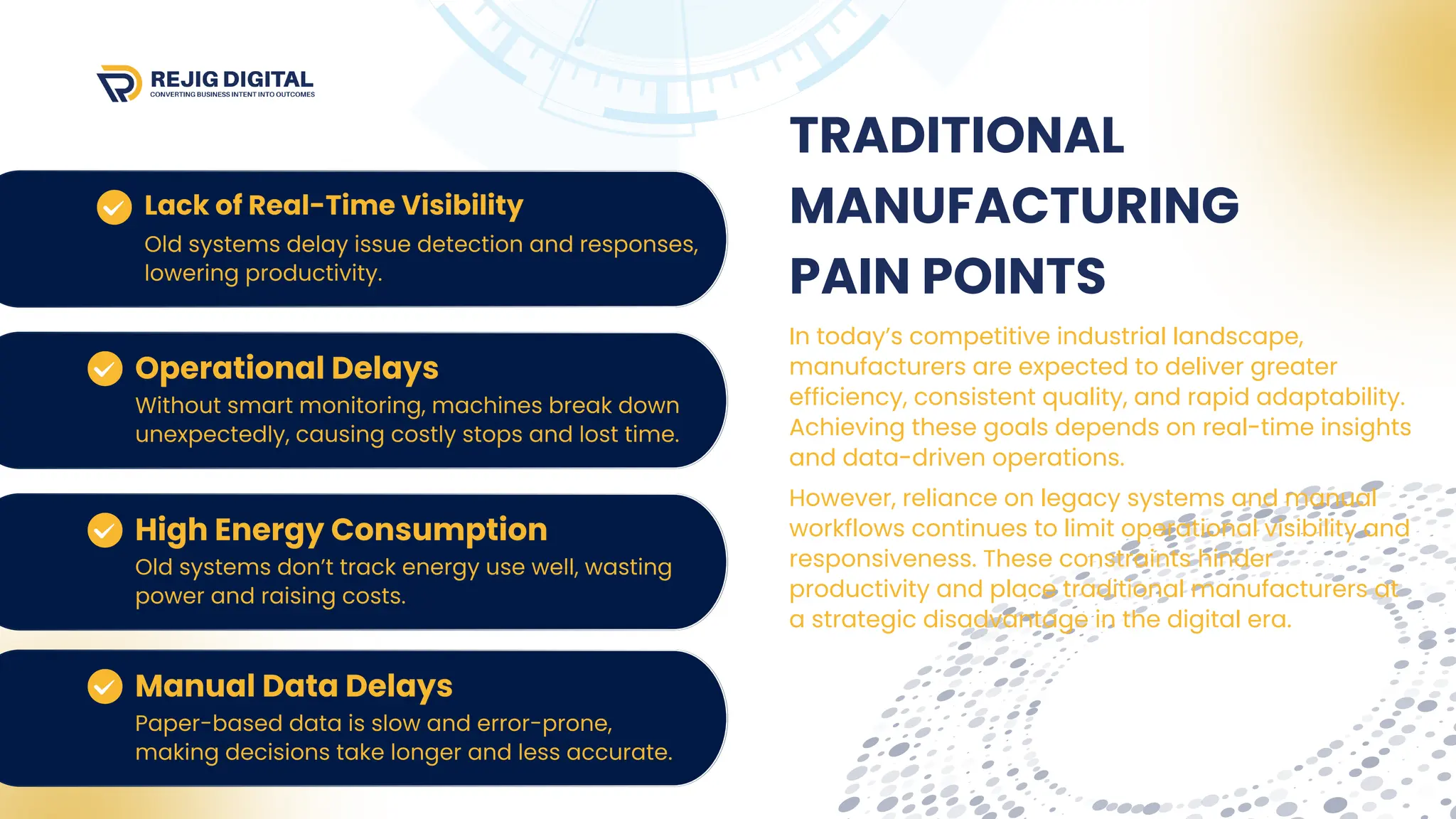
However, reliance on legacy systems and manual
workflows continues to limit operational visibility and
responsiveness. These constraints hinder
productivity and place traditional manufacturers at
a strategic disadvantage in the digital era.
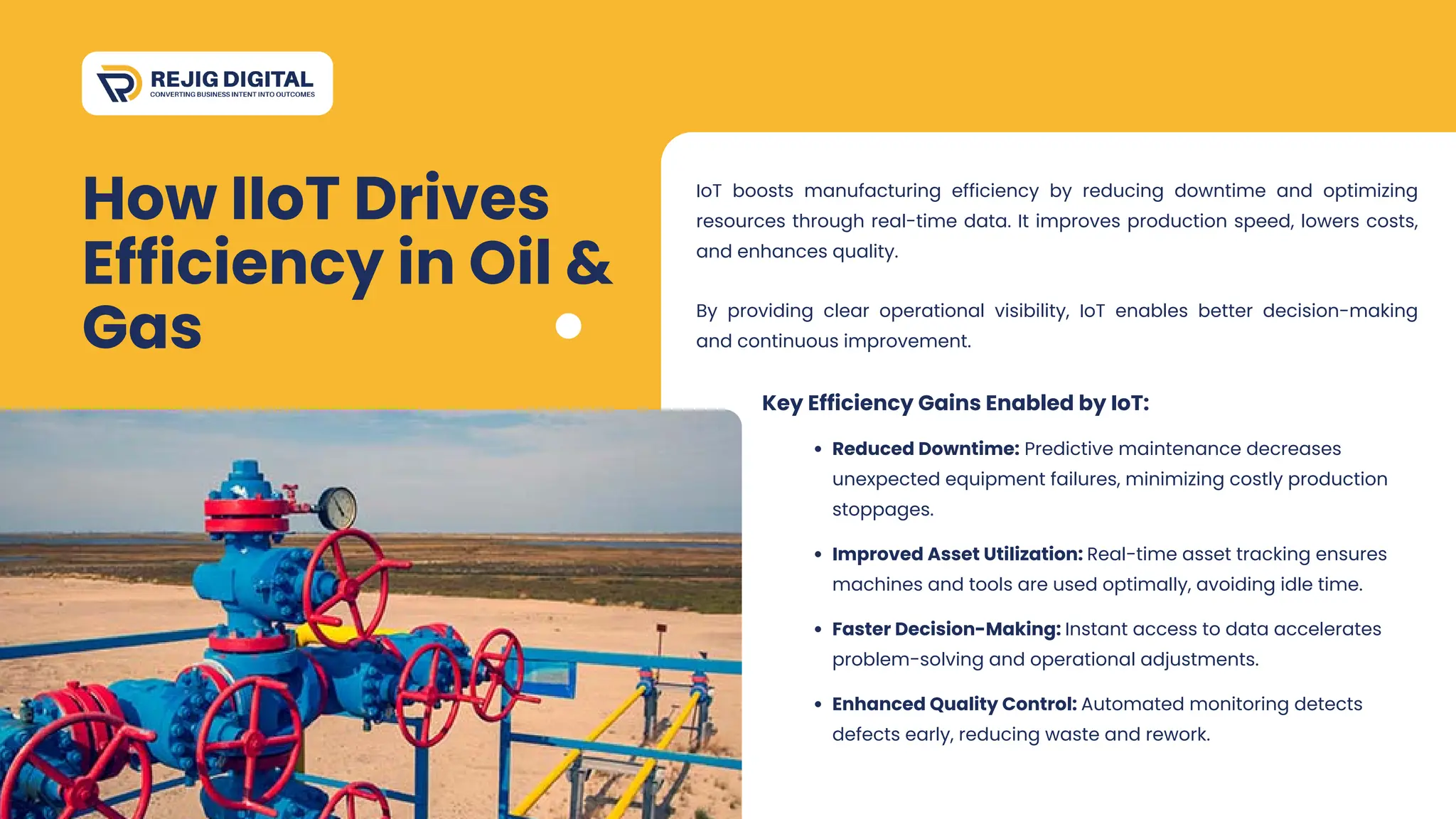
How IIoT Drives
Efficiency in Oil &
Gas
By providing clear operational visibility, IoT enables better decision-making
and continuous improvement.
IoT boosts manufacturing efficiency by reducing downtime and optimizing
resources through real-time data. It improves production speed, lowers costs,
and enhances quality.
Reduced Downtime: Predictive maintenance decreases
unexpected equipment failures, minimizing costly production
stoppages.
Key Efficiency Gains Enabled by IoT:
Improved Asset Utilization: Real-time asset tracking ensures
machines and tools are used optimally, avoiding idle time.
Faster Decision-Making: Instant access to data accelerates
problem-solving and operational adjustments.
Enhanced Quality Control: Automated monitoring detects
defects early, reducing waste and rework.
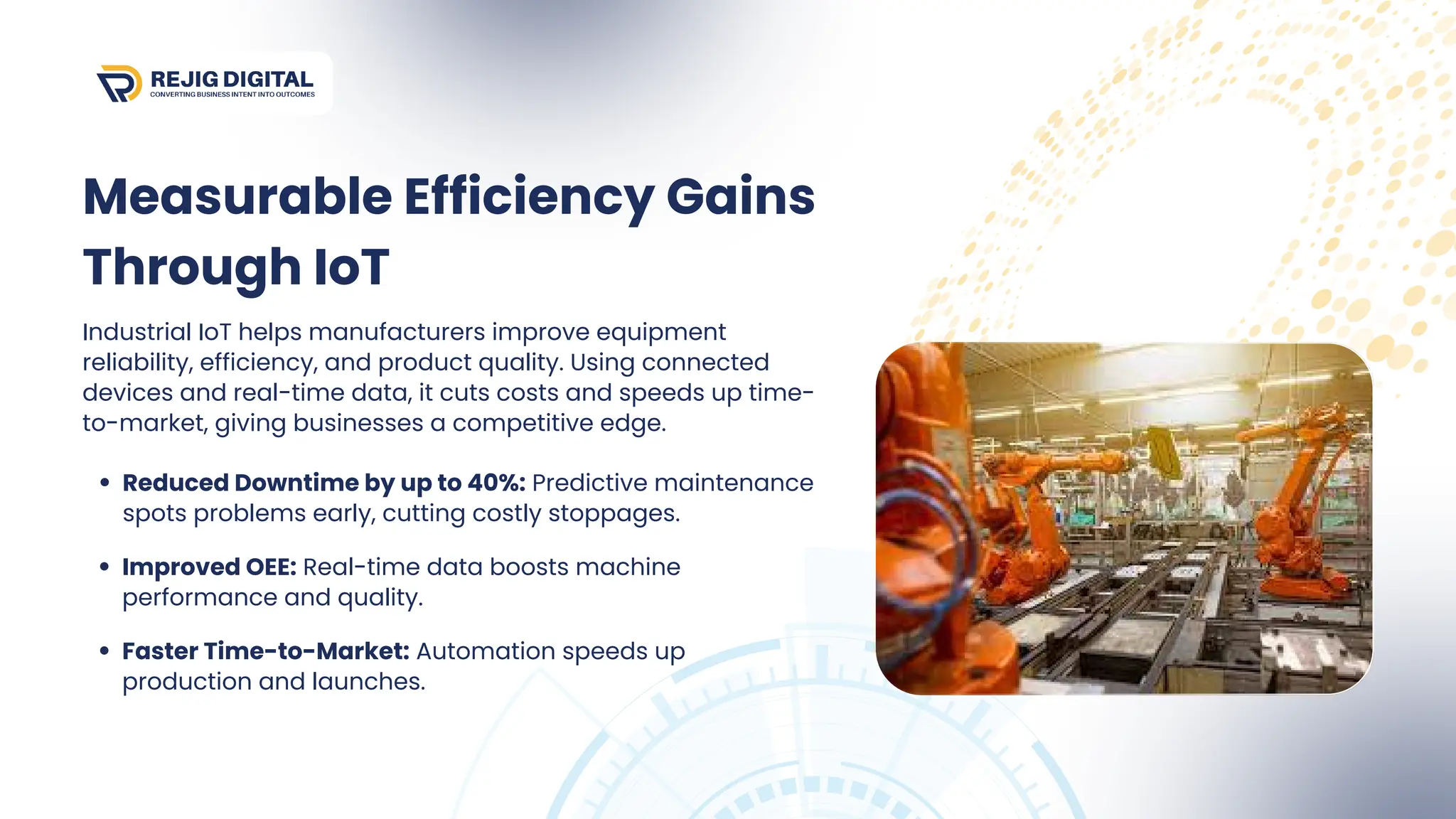
Industrial IoT helps manufacturers improve equipment
reliability, efficiency, and product quality. Using connected
devices and real-time data, it cuts costs and speeds up time-
to-market, giving businesses a competitive edge.
Reduced Downtime by up to 40%: Predictive maintenance
spots problems early, cutting costly stoppages.
Improved OEE: Real-time data boosts machine
performance and quality.
Faster Time-to-Market: Automation speeds up
production and launches.
Measurable Efficiency Gains
Through IoT
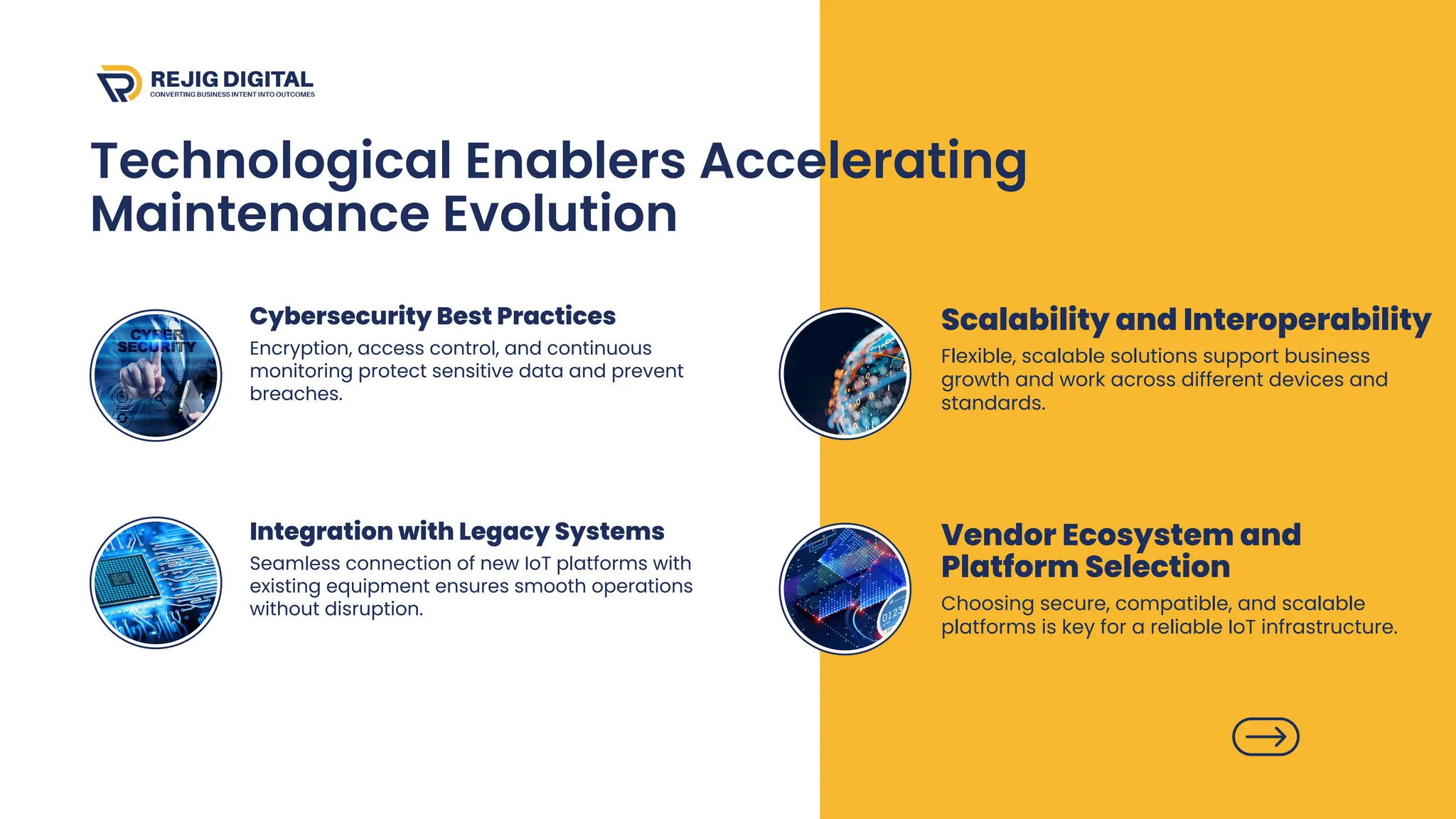
Technological Enablers Accelerating
Maintenance Evolution
Cybersecurity Best Practices
Encryption, access control, and continuous
monitoring protect sensitive data and prevent
breaches.
Scalability and Interoperability
Flexible, scalable solutions support business
growth and work across different devices and
standards.
Integration with Legacy Systems
Seamless connection of new IoT platforms with
existing equipment ensures smooth operations
without disruption.
Vendor Ecosystem and
Platform Selection
Choosing secure, compatible, and scalable
platforms is key for a reliable IoT infrastructure.
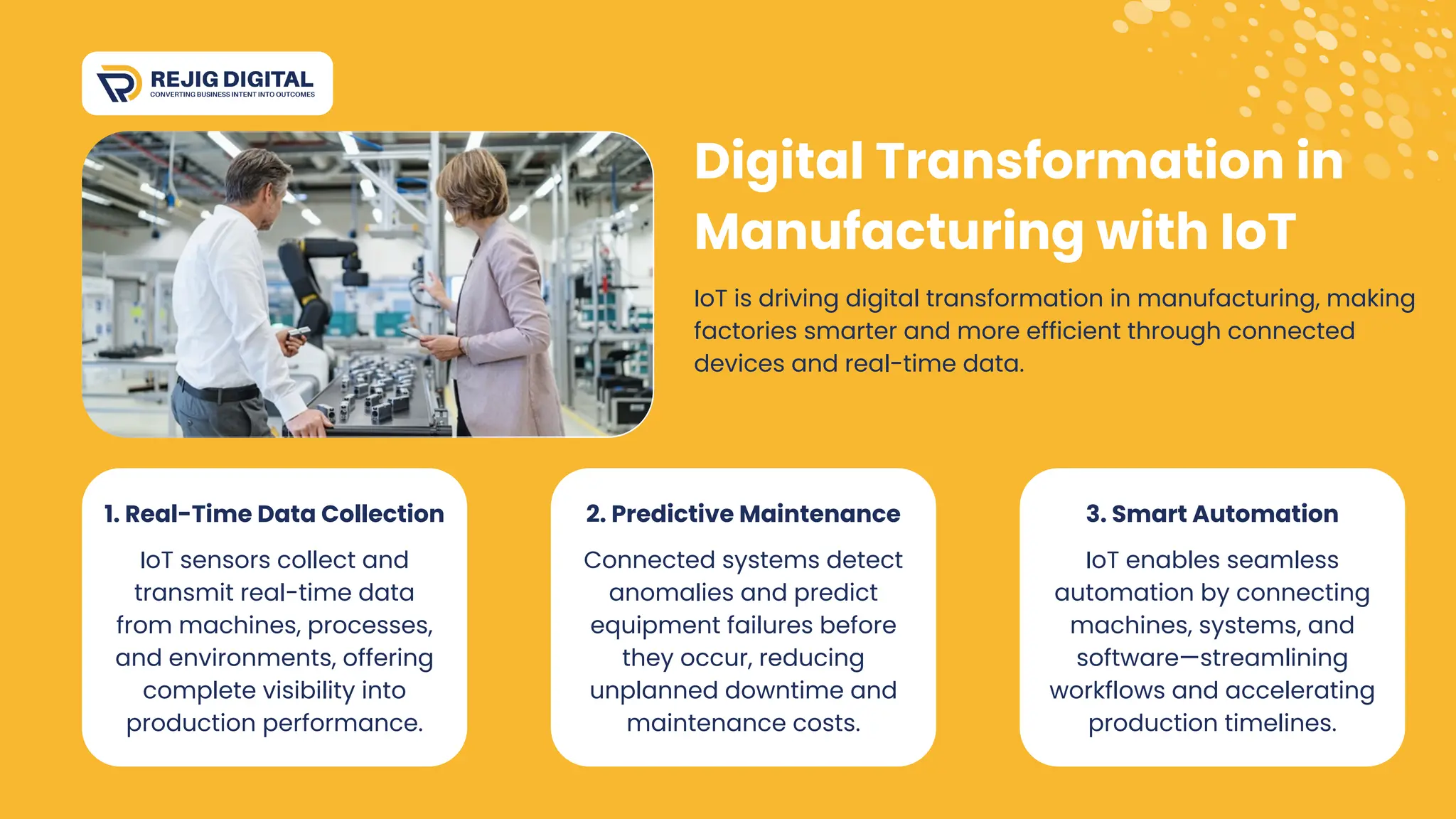
IoT is driving digital transformation in manufacturing, making
factories smarter and more efficient through connected
devices and real-time data.
Digital Transformation in
Manufacturing with IoT
1. Real-Time Data Collection
IoT sensors collect and
transmit real-time data
from machines, processes,
and environments, offering
complete visibility into
production performance.
2. Predictive Maintenance
Connected systems detect
anomalies and predict
equipment failures before
they occur, reducing
unplanned downtime and
maintenance costs.
3. Smart Automation
IoT enables seamless
automation by connecting
machines, systems, and
software—streamlining
workflows and accelerating
production timelines.
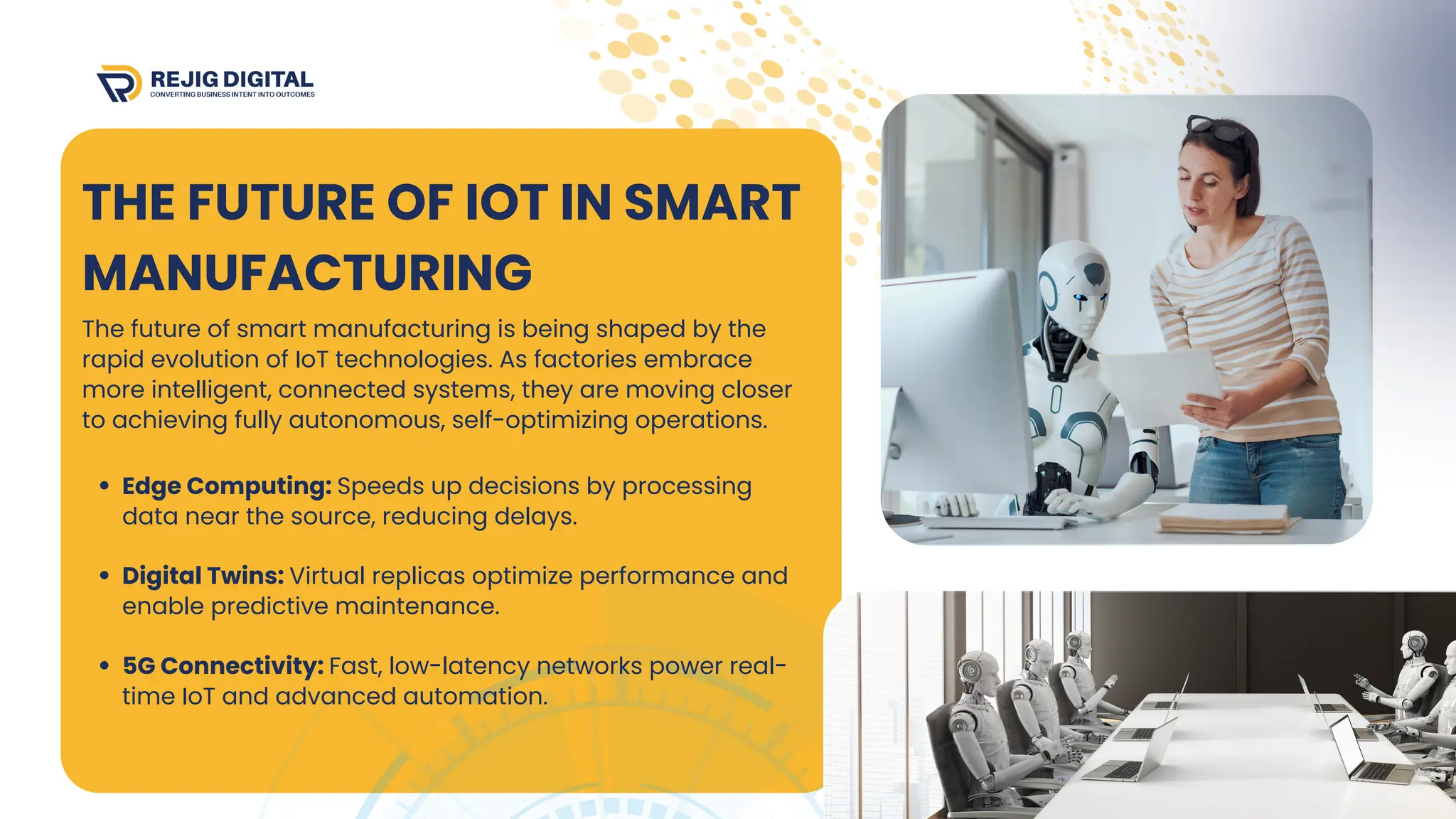
THE FUTURE OF IOT IN SMART
MANUFACTURING
The future of smart manufacturing is being shaped by the
rapid evolution of IoT technologies. As factories embrace
more intelligent, connected systems, they are moving closer
to achieving fully autonomous, self-optimizing operations.
Edge Computing: Speeds up decisions by processing
data near the source, reducing delays.
Digital Twins: Virtual replicas optimize performance and
enable predictive maintenance.
5G Connectivity: Fast, low-latency networks power real-
time IoT and advanced automation.
Quality Control: IoT Solution: Real-time inspection via sensors & vision systems. Ensures
consistent product quality with instant detection of defects.
HOW IOT SOLVES COMMON MANUFACTURING
CHALLENGES
Unplanned Downtime: IoT Solution: Predictive alerts & condition monitoring Prevents
equipment failure by detecting issues early and enabling proactive maintenance.
Inefficient Resource Use: IoT Solution: Smart metering & automated tracking. Optimizes
energy and material usage, reducing waste and costs.
Edge Security
Protects data directly on devices, reducing risk before it
enters the broader network.
Encryption & Authentication
Secures data transmission and ensures access is
limited to verified users and devices.
Network Segmentation
Isolates critical systems from general operations to
contain potential cyber threats.
Regular Firmware & Security Updates
Keeps systems secure by patching vulnerabilities with
timely updates and fixes.
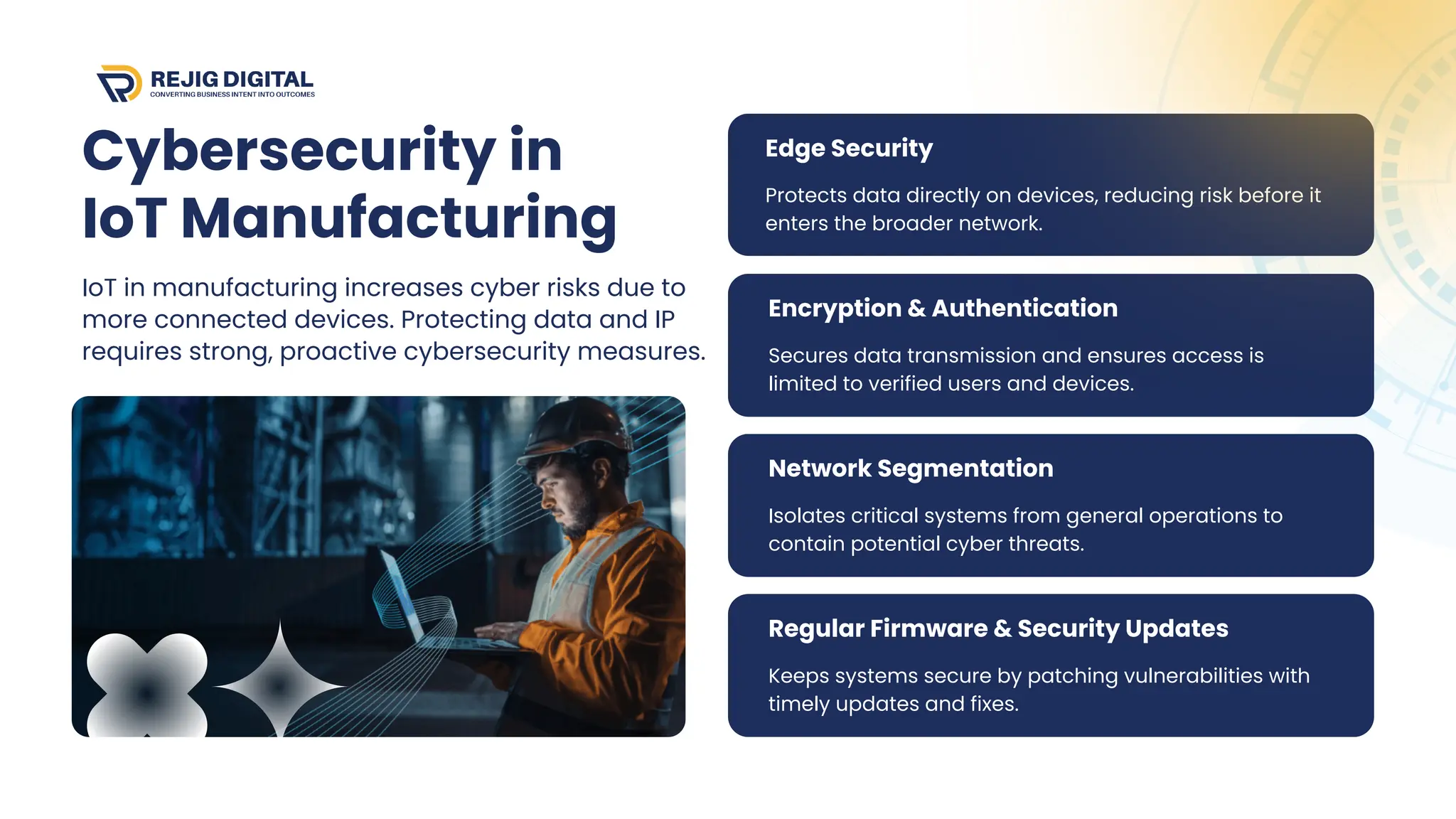
Cybersecurity in
IoT Manufacturing
IoT in manufacturing increases cyber risks due to
more connected devices. Protecting data and IP
requires strong, proactive cybersecurity measures.
THANK YOU!
Embracing IoT in manufacturing is not just a technological shift—it’s a strategic
advantage. From predictive maintenance and real-time quality control to
enhanced safety and cybersecurity, IoT is transforming the way factories operate.

Smart Manufacturing with IoT: Solving Challenges and Driving Efficiency

  • 1.
    How IoT Technologyis Revolutionizing Manufacturing Efficiency and Problem Solving Unlocking new levels of productivity and innovation by leveraging IoT to address manufacturing challenges and streamline operations. Get Started Presented By: Olivia Wilson
  • 2.
    INTRODUCTION The Internet ofThings (IoT) is changing how manufacturing works by connecting machines, sensors, and systems through smart technology. This network allows different parts of the production process to "talk" to each other. As a result, manufacturers can automate tasks and run operations more smoothly. With IoT, companies can see what’s happening on the factory floor in real time. They can track performance, spot issues early, and make quick decisions based on live data. This helps improve efficiency, reduce downtime, and deliver better results.
  • 3.
    WHAT IS IOTIN MANUFACTURING? The Industrial Internet of Things (IIoT) refers to the use of connected devices, sensors, and intelligent systems within industrial environments—especially manufacturing. It enables real-time data collection, communication, and automation across machines, production lines, and enterprise systems. IIoT transforms traditional manufacturing into a smart, data-driven ecosystem.
  • 4.
    In today’s competitiveindustrial landscape, manufacturers are expected to deliver greater efficiency, consistent quality, and rapid adaptability. Achieving these goals depends on real-time insights and data-driven operations. TRADITIONAL MANUFACTURING PAIN POINTS However, reliance on legacy systems and manual workflows continues to limit operational visibility and responsiveness. These constraints hinder productivity and place traditional manufacturers at a strategic disadvantage in the digital era.
  • 5.
    How IIoT Drives Efficiencyin Oil & Gas By providing clear operational visibility, IoT enables better decision-making and continuous improvement. IoT boosts manufacturing efficiency by reducing downtime and optimizing resources through real-time data. It improves production speed, lowers costs, and enhances quality. Reduced Downtime: Predictive maintenance decreases unexpected equipment failures, minimizing costly production stoppages. Key Efficiency Gains Enabled by IoT: Improved Asset Utilization: Real-time asset tracking ensures machines and tools are used optimally, avoiding idle time. Faster Decision-Making: Instant access to data accelerates problem-solving and operational adjustments. Enhanced Quality Control: Automated monitoring detects defects early, reducing waste and rework.
  • 6.
    Industrial IoT helpsmanufacturers improve equipment reliability, efficiency, and product quality. Using connected devices and real-time data, it cuts costs and speeds up time- to-market, giving businesses a competitive edge. Reduced Downtime by up to 40%: Predictive maintenance spots problems early, cutting costly stoppages. Improved OEE: Real-time data boosts machine performance and quality. Faster Time-to-Market: Automation speeds up production and launches. Measurable Efficiency Gains Through IoT
  • 7.
    Technological Enablers Accelerating MaintenanceEvolution Cybersecurity Best Practices Encryption, access control, and continuous monitoring protect sensitive data and prevent breaches. Scalability and Interoperability Flexible, scalable solutions support business growth and work across different devices and standards. Integration with Legacy Systems Seamless connection of new IoT platforms with existing equipment ensures smooth operations without disruption. Vendor Ecosystem and Platform Selection Choosing secure, compatible, and scalable platforms is key for a reliable IoT infrastructure.
  • 8.
    IoT is drivingdigital transformation in manufacturing, making factories smarter and more efficient through connected devices and real-time data. Digital Transformation in Manufacturing with IoT 1. Real-Time Data Collection IoT sensors collect and transmit real-time data from machines, processes, and environments, offering complete visibility into production performance. 2. Predictive Maintenance Connected systems detect anomalies and predict equipment failures before they occur, reducing unplanned downtime and maintenance costs. 3. Smart Automation IoT enables seamless automation by connecting machines, systems, and software—streamlining workflows and accelerating production timelines.
  • 9.
    THE FUTURE OFIOT IN SMART MANUFACTURING The future of smart manufacturing is being shaped by the rapid evolution of IoT technologies. As factories embrace more intelligent, connected systems, they are moving closer to achieving fully autonomous, self-optimizing operations. Edge Computing: Speeds up decisions by processing data near the source, reducing delays. Digital Twins: Virtual replicas optimize performance and enable predictive maintenance. 5G Connectivity: Fast, low-latency networks power real- time IoT and advanced automation.
  • 10.
    Quality Control: IoTSolution: Real-time inspection via sensors & vision systems. Ensures consistent product quality with instant detection of defects. HOW IOT SOLVES COMMON MANUFACTURING CHALLENGES Unplanned Downtime: IoT Solution: Predictive alerts & condition monitoring Prevents equipment failure by detecting issues early and enabling proactive maintenance. Inefficient Resource Use: IoT Solution: Smart metering & automated tracking. Optimizes energy and material usage, reducing waste and costs.
  • 11.
    Edge Security Protects datadirectly on devices, reducing risk before it enters the broader network. Encryption & Authentication Secures data transmission and ensures access is limited to verified users and devices. Network Segmentation Isolates critical systems from general operations to contain potential cyber threats. Regular Firmware & Security Updates Keeps systems secure by patching vulnerabilities with timely updates and fixes. Cybersecurity in IoT Manufacturing IoT in manufacturing increases cyber risks due to more connected devices. Protecting data and IP requires strong, proactive cybersecurity measures.
  • 12.
    THANK YOU! Embracing IoTin manufacturing is not just a technological shift—it’s a strategic advantage. From predictive maintenance and real-time quality control to enhanced safety and cybersecurity, IoT is transforming the way factories operate.