Smart Guide to smarter
energy management
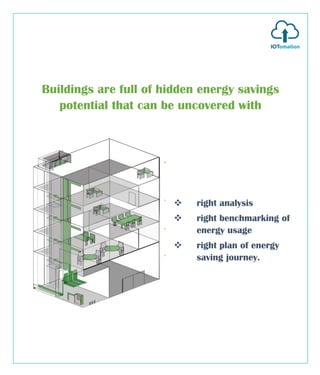
Buildings are full of hidden energy savings
potential that can be uncovered with
❖ right analysis
❖ right benchmarking of
energy usage
❖ right plan of energy
saving journey.
Would you be able to manage all these
tasks in high-end spreadsheet?
Answer is: “No”.
The truth about spreadsheet:
It is no longer viable or smart enough to have
teams spend their precious time manually
filling in data. Scanning each bill for their
biggest cost drivers, and hoping the graphs
make sense as they present findings to
executives and finance teams.
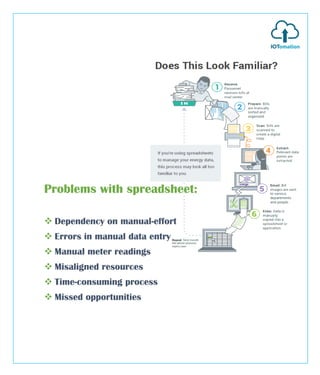
Problems with spreadsheet:
❖ Dependency on manual-effort
❖ Errors in manual data entry
❖ Manual meter readings
❖ Misaligned resources
❖ Time-consuming process
❖ Missed opportunities
And time is money – you
cannot afford to waste....
The biggest barrier to energy management
success is the ability to make a business
case for energy management tools and
technologies.
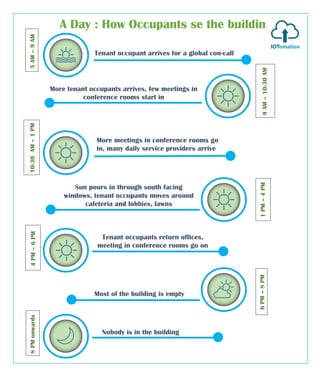
Tenant occupant arrives for a global con-call
More tenant occupants arrives, few meetings in
conference rooms start in
More meetings in conference rooms go
in, many daily service providers arrive
Sun pours in through south facing
windows, tenant occupants moves around
cafeteria and lobbies, lawns
Tenant occupants return offices,
meeting in conference rooms go on
Most of the building is empty
Nobody is in the building
5AM–9AM
9AM–10:30AM
10:30AM–1PM
1PM–4PM
4PM–6PM
6PM–8PM
8PMonwards
A Day : How Occupants se the buildings
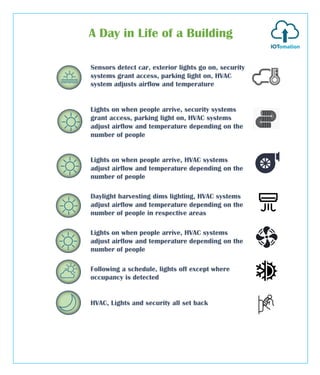
Sensors detect car, exterior lights go on, security
systems grant access, parking light on, HVAC
system adjusts airflow and temperature
Lights on when people arrive, security systems
grant access, parking light on, HVAC systems
adjust airflow and temperature depending on the
number of people
Lights on when people arrive, HVAC systems
adjust airflow and temperature depending on the
number of people
Daylight harvesting dims lighting, HVAC systems
adjust airflow and temperature depending on the
number of people in respective areas
Lights on when people arrive, HVAC systems
adjust airflow and temperature depending on the
number of people
Following a schedule, lights off except where
occupancy is detected
HVAC, Lights and security all set back
A Day in Life of a Building
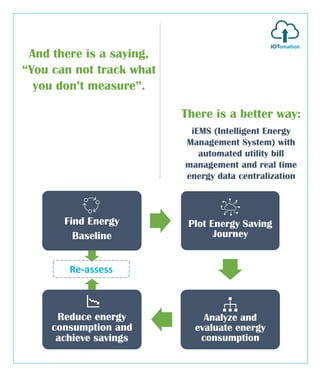
And there is a saying,
“You can not track what
you don’t measure”.
There is a better way:
iEMS (Intelligent Energy
Management System) with
automated utility bill
management and real time
energy data centralization
Find Energy
Baseline
Plot Energy Saving
Journey
Analyze and
evaluate energy
consumption
Reduce energy
consumption and
achieve savings
Re-assess
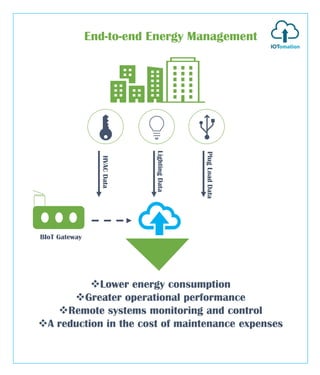
LightingData
PlugLoadData
❖Lower energy consumption
❖Greater operational performance
❖Remote systems monitoring and control
❖A reduction in the cost of maintenance expenses
BIoT Gateway
HVACData
End-to-end Energy Management

Smart Guide to Smarter Energy Management

  • 1.
    Smart Guide tosmarter energy management
  • 2.
    Buildings are fullof hidden energy savings potential that can be uncovered with ❖ right analysis ❖ right benchmarking of energy usage ❖ right plan of energy saving journey.
  • 3.
    Would you beable to manage all these tasks in high-end spreadsheet? Answer is: “No”.
  • 4.
    The truth aboutspreadsheet: It is no longer viable or smart enough to have teams spend their precious time manually filling in data. Scanning each bill for their biggest cost drivers, and hoping the graphs make sense as they present findings to executives and finance teams.
  • 5.
    Problems with spreadsheet: ❖Dependency on manual-effort ❖ Errors in manual data entry ❖ Manual meter readings ❖ Misaligned resources ❖ Time-consuming process ❖ Missed opportunities
  • 6.
    And time ismoney – you cannot afford to waste.... The biggest barrier to energy management success is the ability to make a business case for energy management tools and technologies.
  • 7.
    Tenant occupant arrivesfor a global con-call More tenant occupants arrives, few meetings in conference rooms start in More meetings in conference rooms go in, many daily service providers arrive Sun pours in through south facing windows, tenant occupants moves around cafeteria and lobbies, lawns Tenant occupants return offices, meeting in conference rooms go on Most of the building is empty Nobody is in the building 5AM–9AM 9AM–10:30AM 10:30AM–1PM 1PM–4PM 4PM–6PM 6PM–8PM 8PMonwards A Day : How Occupants se the buildings
  • 8.
    Sensors detect car,exterior lights go on, security systems grant access, parking light on, HVAC system adjusts airflow and temperature Lights on when people arrive, security systems grant access, parking light on, HVAC systems adjust airflow and temperature depending on the number of people Lights on when people arrive, HVAC systems adjust airflow and temperature depending on the number of people Daylight harvesting dims lighting, HVAC systems adjust airflow and temperature depending on the number of people in respective areas Lights on when people arrive, HVAC systems adjust airflow and temperature depending on the number of people Following a schedule, lights off except where occupancy is detected HVAC, Lights and security all set back A Day in Life of a Building
  • 9.
    And there isa saying, “You can not track what you don’t measure”. There is a better way: iEMS (Intelligent Energy Management System) with automated utility bill management and real time energy data centralization Find Energy Baseline Plot Energy Saving Journey Analyze and evaluate energy consumption Reduce energy consumption and achieve savings Re-assess
  • 10.
    LightingData PlugLoadData ❖Lower energy consumption ❖Greateroperational performance ❖Remote systems monitoring and control ❖A reduction in the cost of maintenance expenses BIoT Gateway HVACData End-to-end Energy Management