Smart Cities and Digital Transformation: Building
Future-Ready Urban Spaces
Introducti
on
Smart cities leverage technology and data to improve urban
services and quality of life.
Cities using digital tools and IoT to enhance efficiency,
sustainability, and citizen well-being.
It drives innovation, efficiency, and sustainability in modern
urban planning.
Smart Infrastructure: Utilizes IoT, sensors, and AI to optimize urban
systems.
Smart Governance: Enhances e-Governance and citizen engagement
through digital tools.
Smart Economy: Promotes digital payments and fintech solutions for
economic growth.
Key Components of Smart
Cities
Global Urbanization
Trends
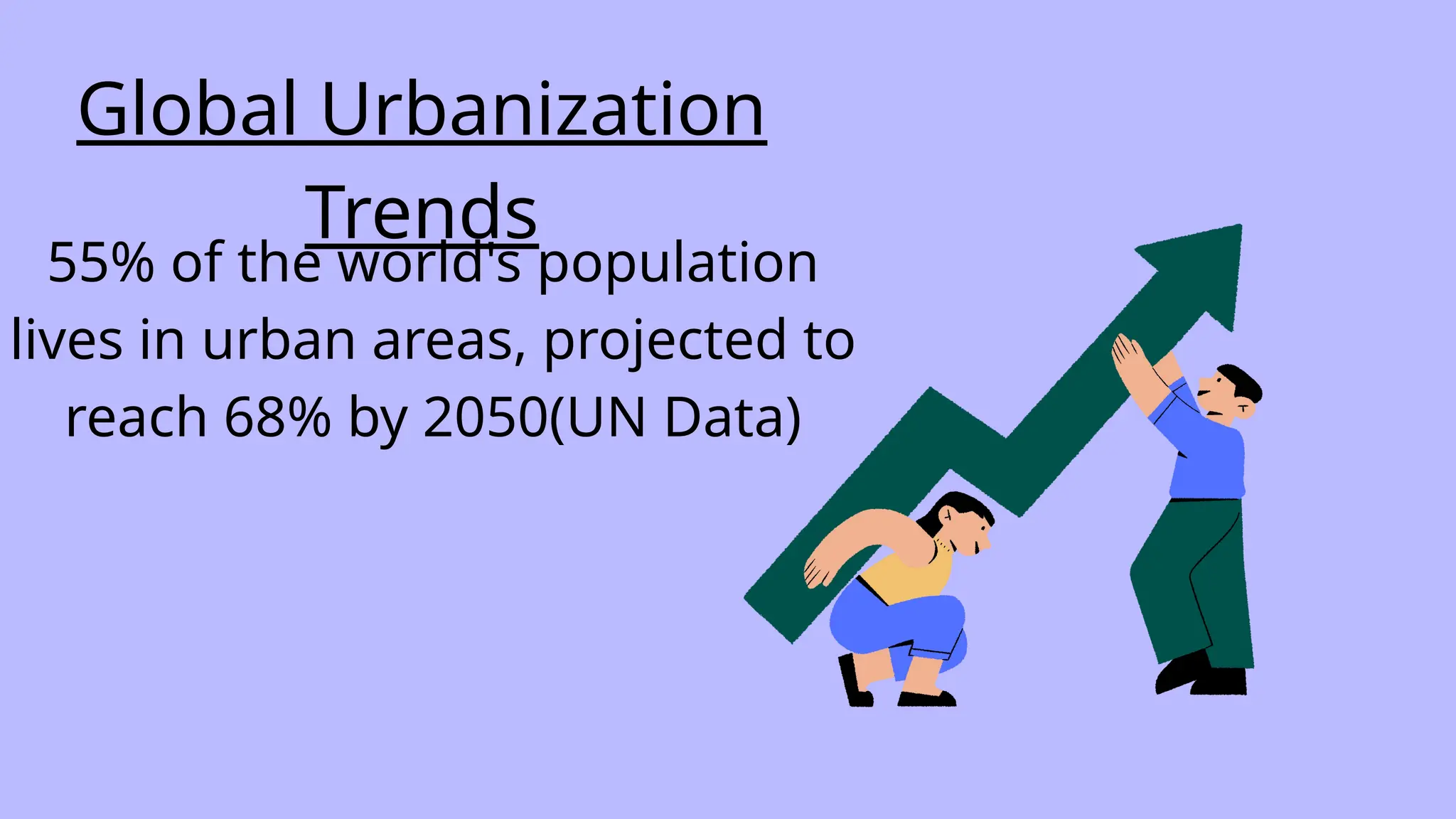
55% of the world's population
lives in urban areas, projected to
reach 68% by 2050(UN Data)
Key Technologies in Smart Cities
• IoT, AI, Big Data, Cloud Computing,
Blockchain
• Smart sensors and real-time data analytics
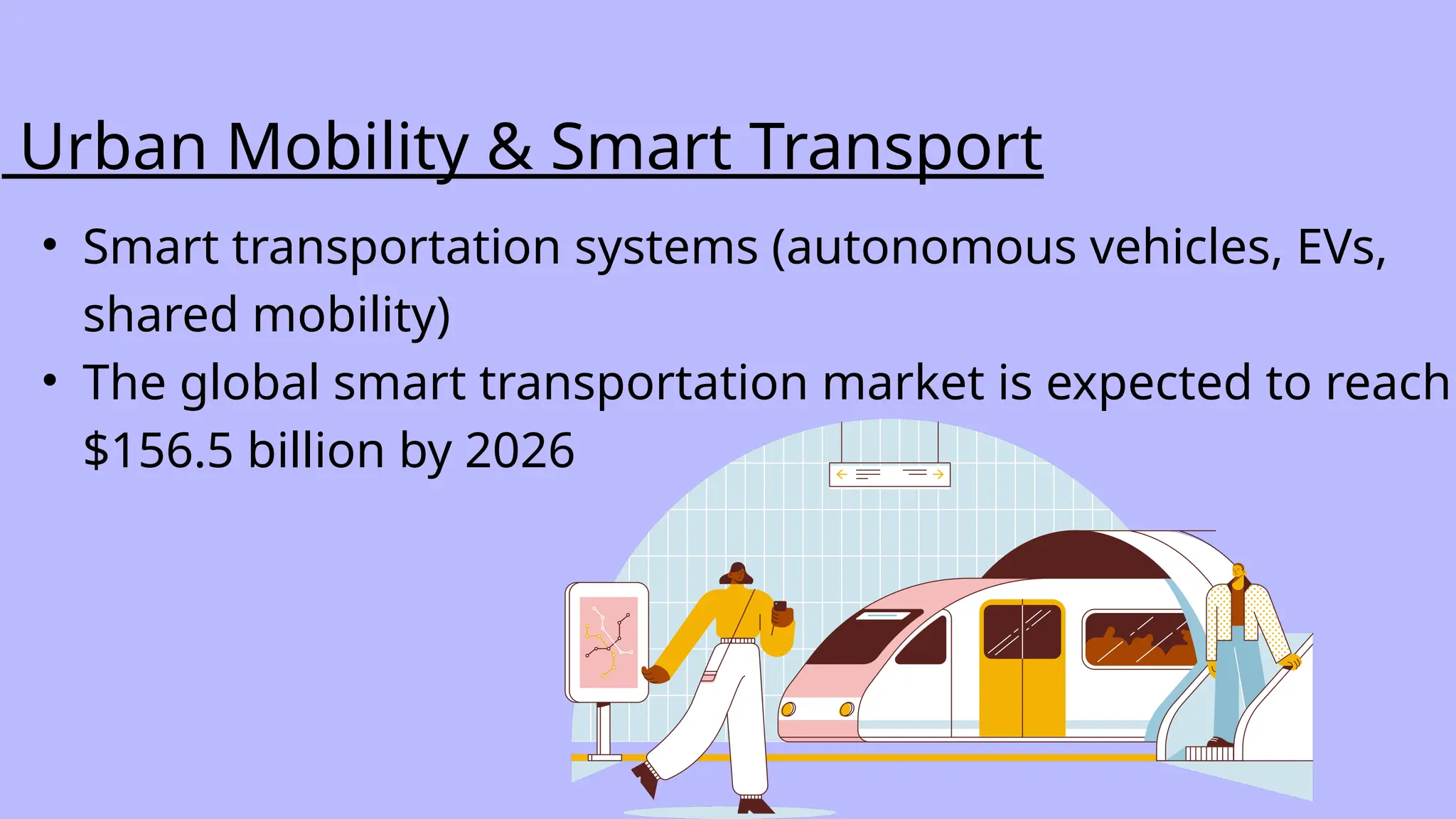
• Smart transportation systems (autonomous vehicles, EVs,
shared mobility)
• The global smart transportation market is expected to reach
$156.5 billion by 2026
Urban Mobility & Smart Transport
Sustainable Urban
Development
• Energy-efficient buildings, smart grids, waste management
• Cities account for 75% of global CO2 emissions, smart solutions can
reduce emissions by 15% by 2030
Smart Governance & Public
Services
• Digital government services (e-Government, open data
platforms)
• Public safety and smart law enforcement
Energy Efficiency and Smart Grids
• Key Elements: Renewable energy integration, smart
metering, automated energy management.
• Smart grid technology market size projected to reach $93
billion by 2027 (Fortune Business Insights).
Sustainability and Environmental
Impact
• Smart waste management, green buildings, carbon footprint
reduction.
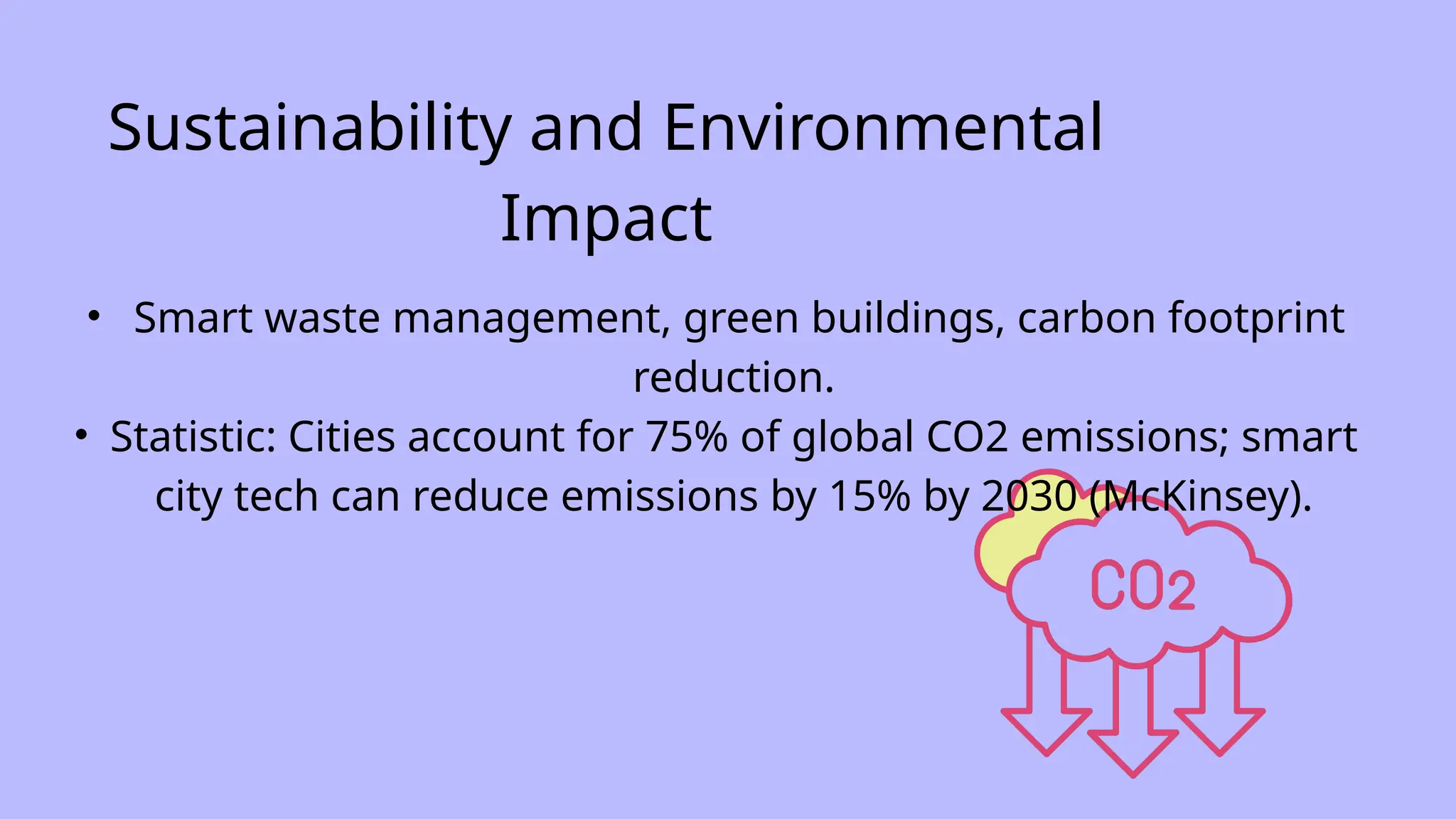
• Statistic: Cities account for 75% of global CO2 emissions; smart
city tech can reduce emissions by 15% by 2030 (McKinsey).
Challenges in Building Smart
Cities
• Barriers: Financial constraints, lack of skilled workforce, cybersecurity
threats.
• 70% of smart city projects face delays due to lack of coordination and
planning (McKinsey).
• Recap: Smart cities integrate technology, sustainability,
and governance to improve urban living.
• Future Outlook: AI-driven urban systems, 5G-enabled
services, resilient and adaptive cities.
Conclusion and Future
Vision
THANK YOU

Smart Cities and Digital Transformation: Building Future-Ready Urban Spaces

  • 1.
    Smart Cities andDigital Transformation: Building Future-Ready Urban Spaces
  • 2.
    Introducti on Smart cities leveragetechnology and data to improve urban services and quality of life. Cities using digital tools and IoT to enhance efficiency, sustainability, and citizen well-being. It drives innovation, efficiency, and sustainability in modern urban planning.
  • 3.
    Smart Infrastructure: UtilizesIoT, sensors, and AI to optimize urban systems. Smart Governance: Enhances e-Governance and citizen engagement through digital tools. Smart Economy: Promotes digital payments and fintech solutions for economic growth. Key Components of Smart Cities
  • 4.
    Global Urbanization Trends 55% ofthe world's population lives in urban areas, projected to reach 68% by 2050(UN Data)
  • 5.
    Key Technologies inSmart Cities • IoT, AI, Big Data, Cloud Computing, Blockchain • Smart sensors and real-time data analytics
  • 6.
    • Smart transportationsystems (autonomous vehicles, EVs, shared mobility) • The global smart transportation market is expected to reach $156.5 billion by 2026 Urban Mobility & Smart Transport
  • 7.
    Sustainable Urban Development • Energy-efficientbuildings, smart grids, waste management • Cities account for 75% of global CO2 emissions, smart solutions can reduce emissions by 15% by 2030
  • 8.
    Smart Governance &Public Services • Digital government services (e-Government, open data platforms) • Public safety and smart law enforcement
  • 9.
    Energy Efficiency andSmart Grids • Key Elements: Renewable energy integration, smart metering, automated energy management. • Smart grid technology market size projected to reach $93 billion by 2027 (Fortune Business Insights).
  • 10.
    Sustainability and Environmental Impact •Smart waste management, green buildings, carbon footprint reduction. • Statistic: Cities account for 75% of global CO2 emissions; smart city tech can reduce emissions by 15% by 2030 (McKinsey).
  • 11.
    Challenges in BuildingSmart Cities • Barriers: Financial constraints, lack of skilled workforce, cybersecurity threats. • 70% of smart city projects face delays due to lack of coordination and planning (McKinsey).
  • 12.
    • Recap: Smartcities integrate technology, sustainability, and governance to improve urban living. • Future Outlook: AI-driven urban systems, 5G-enabled services, resilient and adaptive cities. Conclusion and Future Vision
  • 13.