   Smart card, or integrated circuit card (ICC), is any
    pocket sized card with embedded integrated
    circuits.

                                OR

    A smart card is any card with a capability to relate
    information to a particular application such as:
    ›   Magnetic Stripe Cards
    ›   Optical Cards
    ›   Memory Cards
    ›   Microprocessor Cards
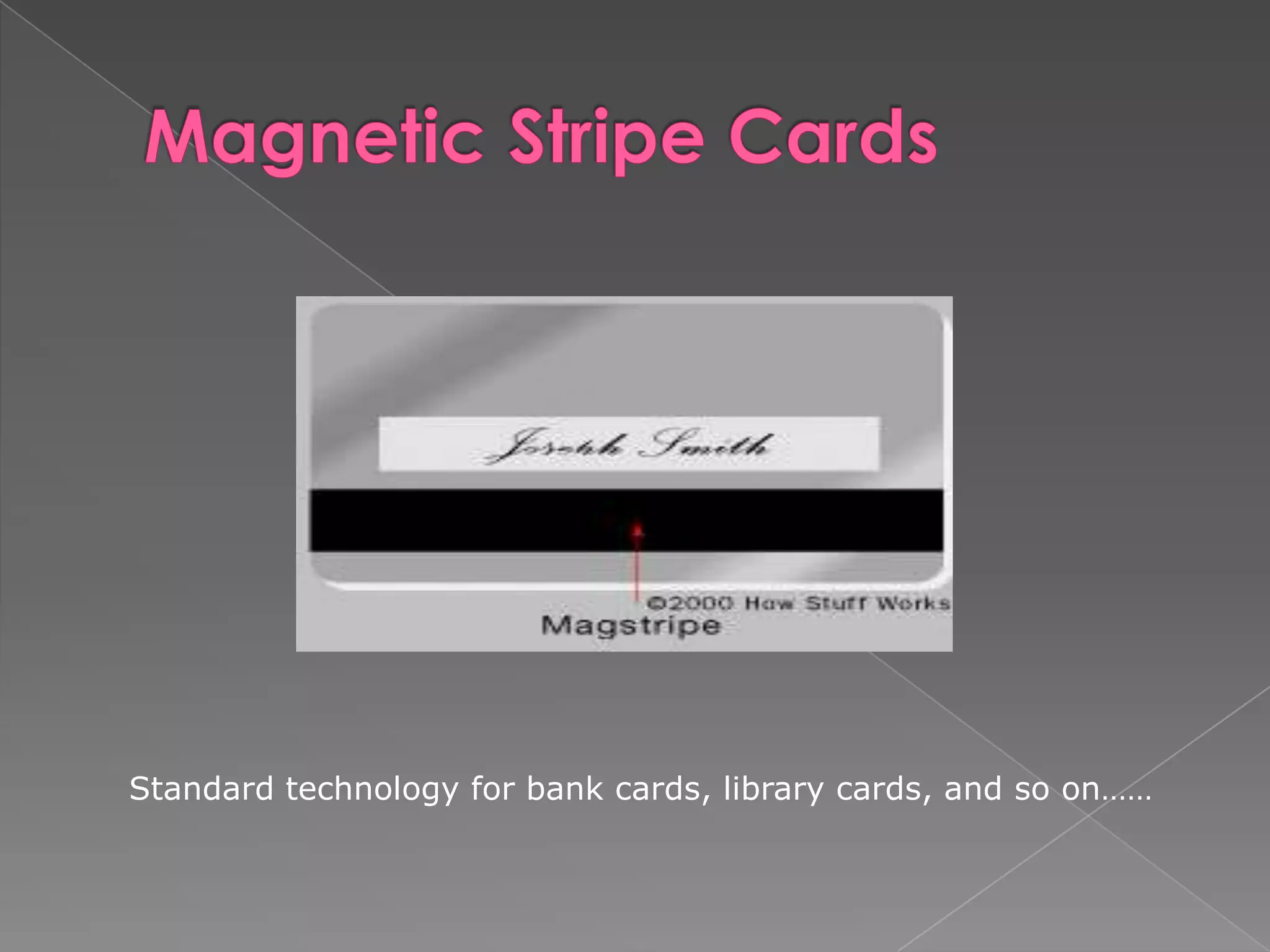
Standard technology for bank cards, library cards, and so on……
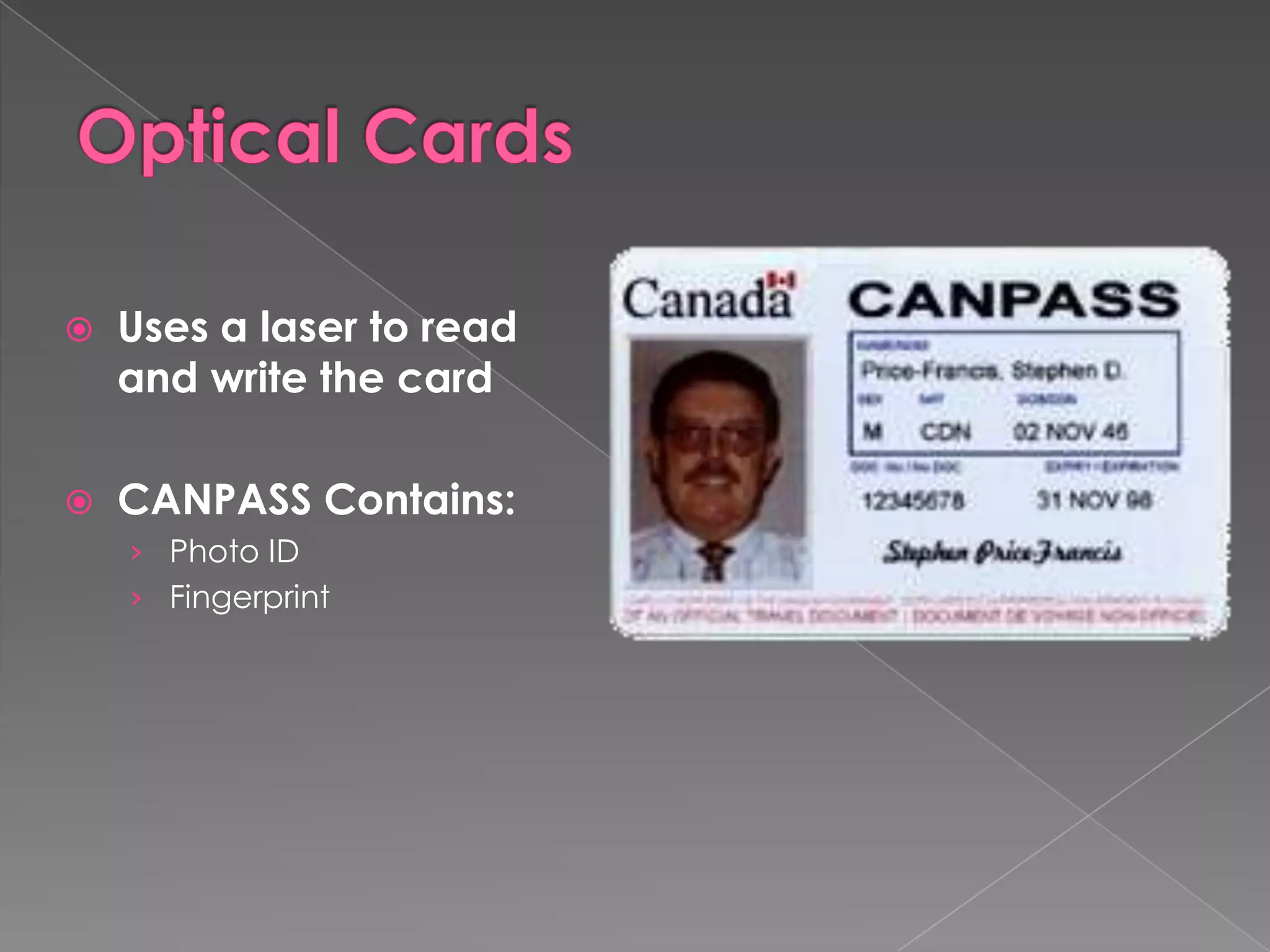
   Uses a laser to read
    and write the card

   CANPASS Contains:
    › Photo ID
    › Fingerprint
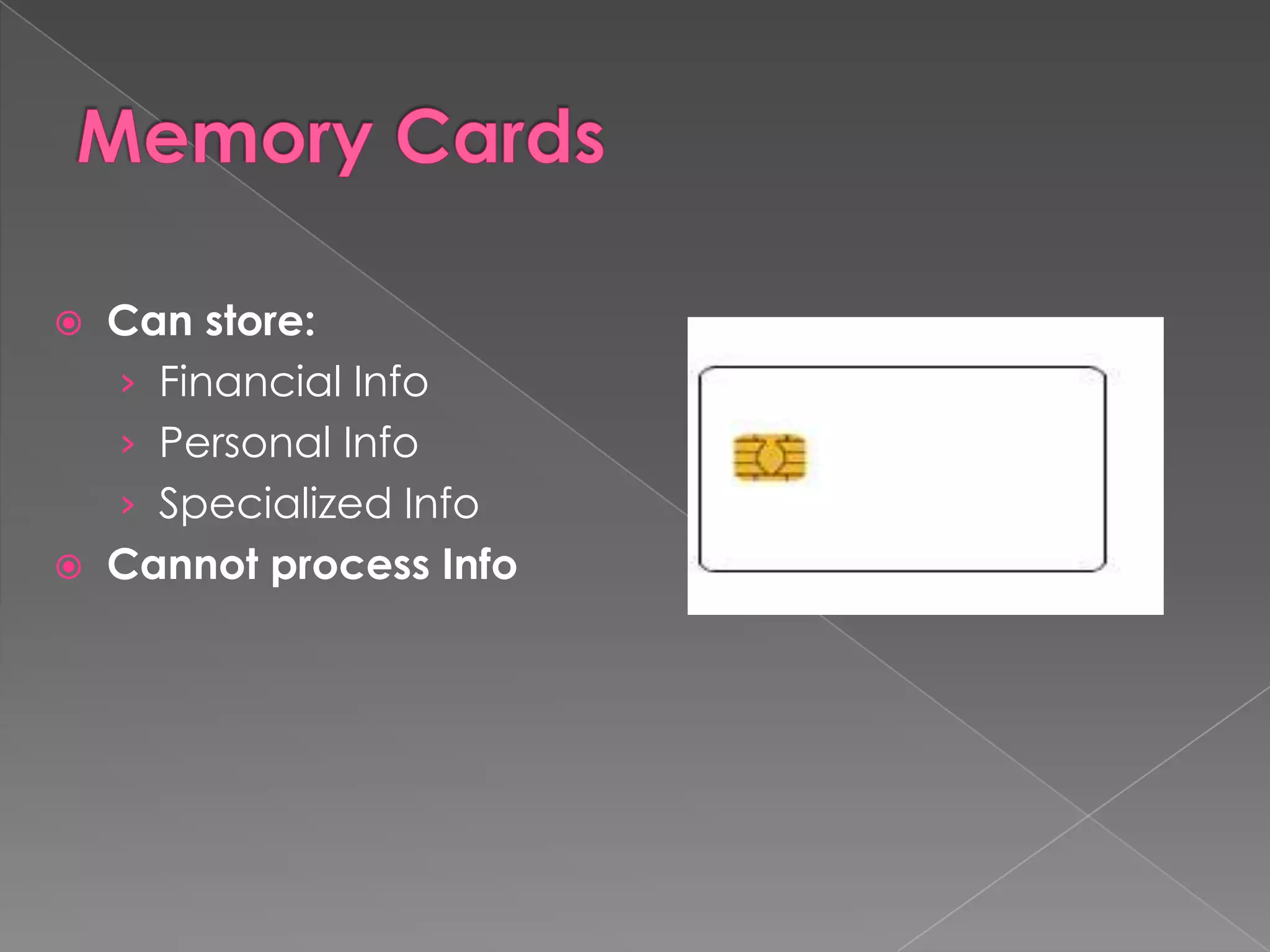
 Can store:
  › Financial Info
  › Personal Info
  › Specialized Info
 Cannot process Info
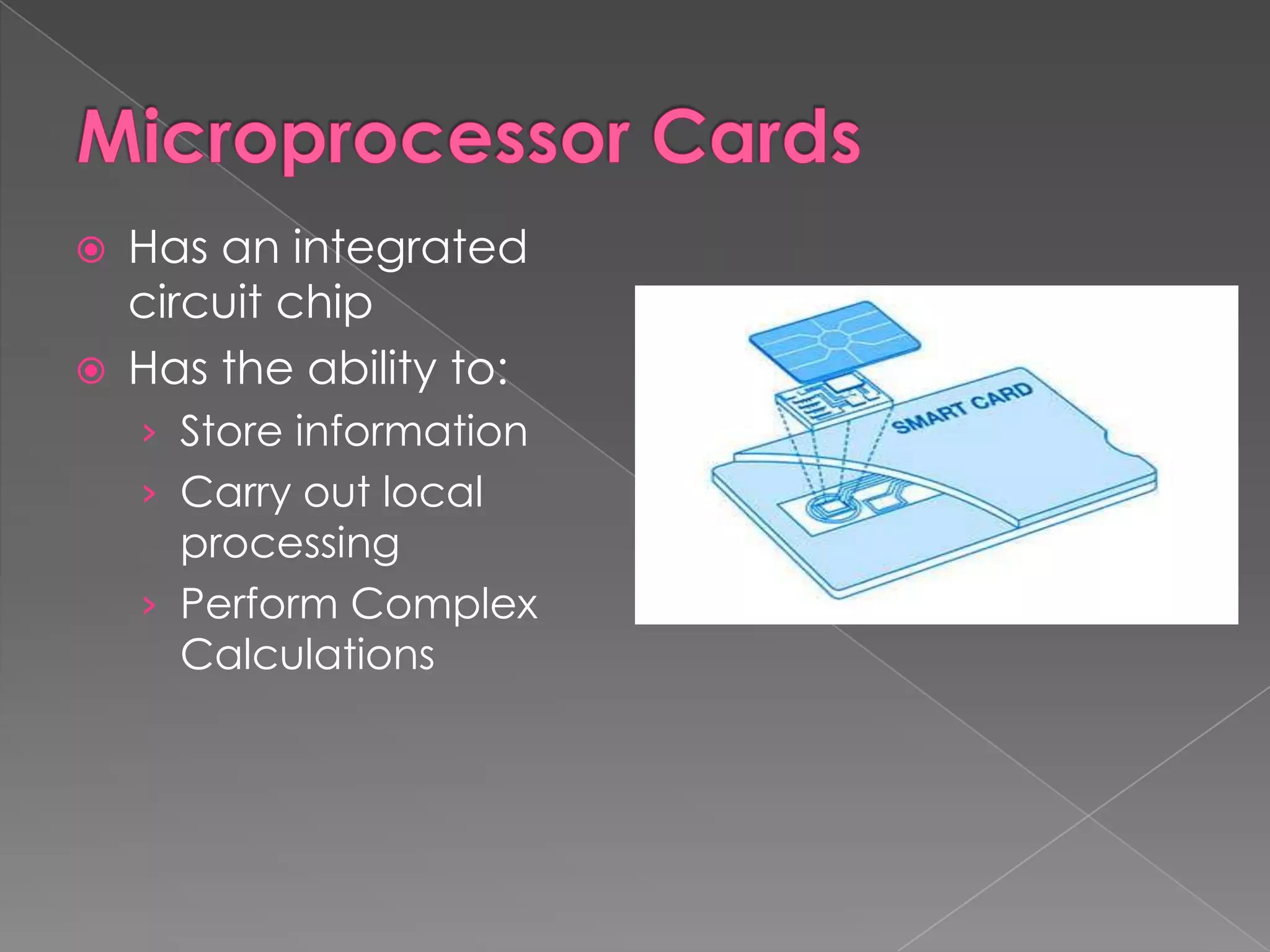
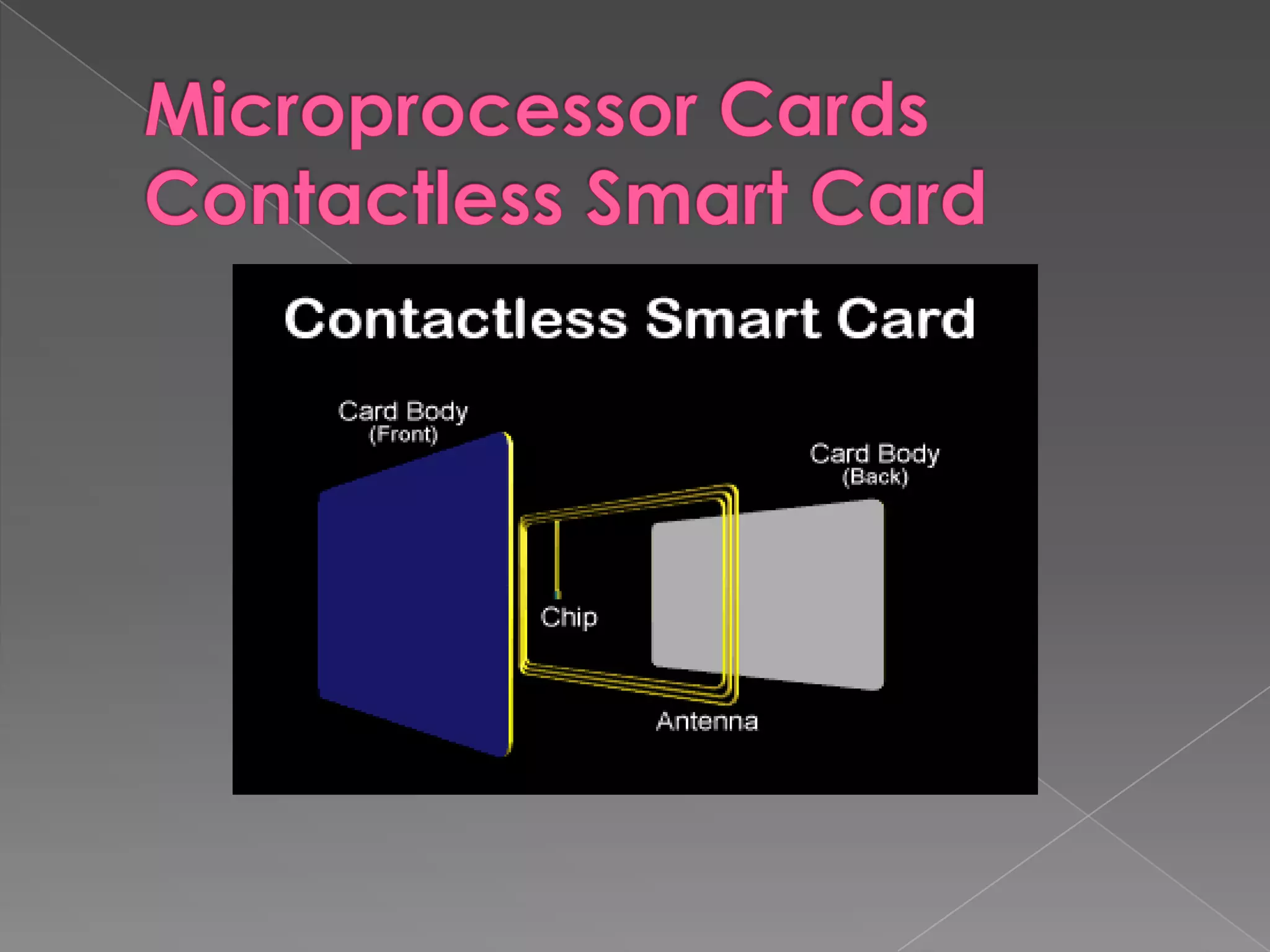
   Has an integrated
    circuit chip
   Has the ability to:
    › Store information
    › Carry out local
      processing
    › Perform Complex
      Calculations
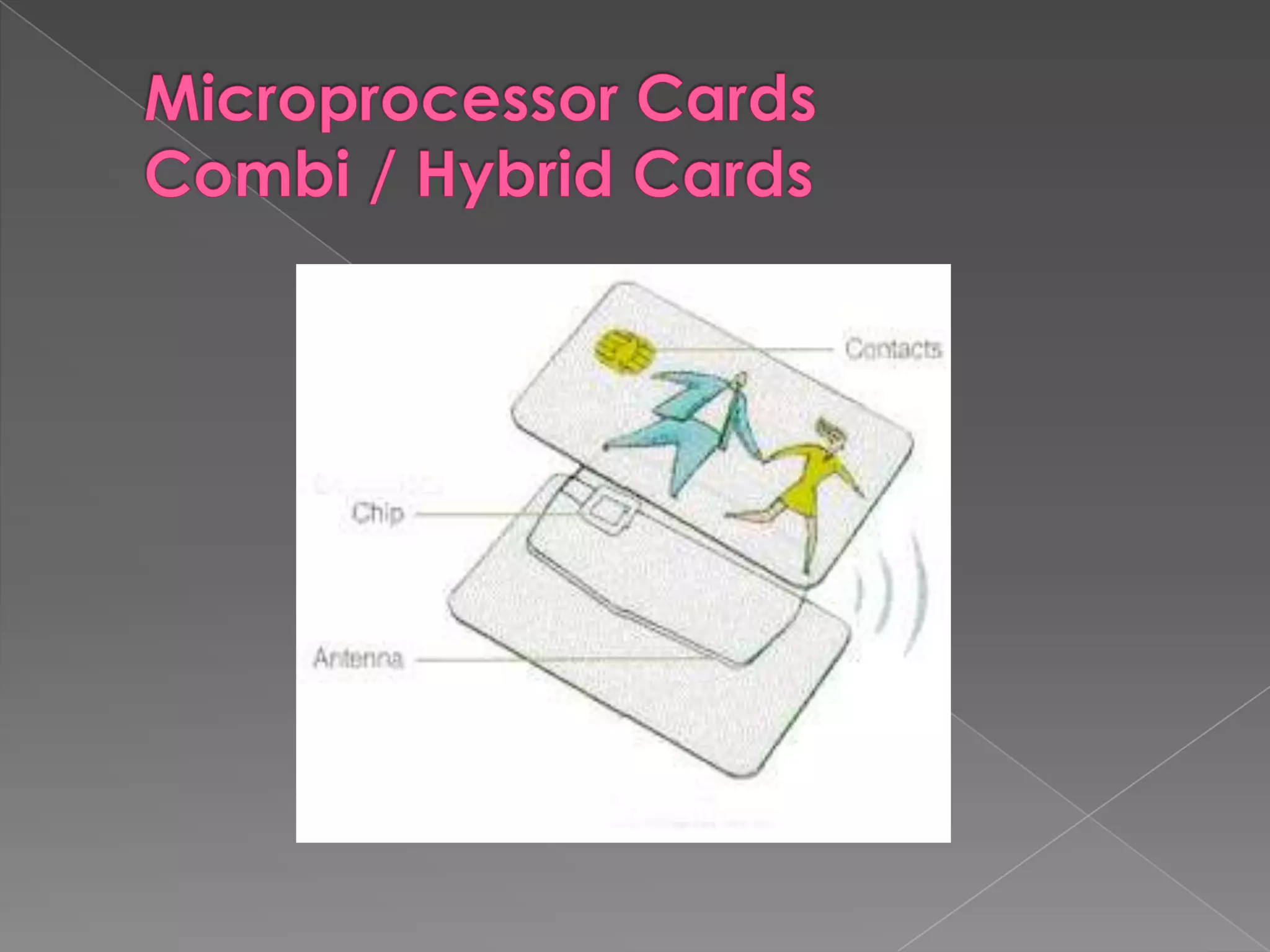
   Hybrid Card
    › Has two chips: contact and contactless
      interface.
    › The two chips are not connected.


   Combi Card
    › Has a single chip with a contact and contactless
      interface.
    › Can access the same chip via a contact or
      contactless interface, with a very high level of
      security.
   Commercial Applications
     › Banking/payment
     › Identification
     › Ticketing
     › Parking and toll collection
     › Universities use smart cards for ID purposes and
       at the the library, vending machines, copy
       machines, and other services on campus.

   Mobile Telecommunications
     › SIM cards used on cell phones
     › Over 300,000,000 GSM phones with smart
       cards
     › Contains mobile phone security, subscription
       information, phone number on the network,
       billing information, and frequently called
       numbers.
   Information Technology
     › Secure logon and authentication of users to PCs and networks
     › Encryption of sensitive data


   Other Applications
    › Over 4 million small dish TV satellite receivers in the US use a smart
       card as its removable security element and subscription
       information.
    › Pre-paid, reloadable telephone cards
    › Health Care, stores the history of a patient
    › Fast ticketing in public transport, parking, and road tolling in
       many countries
In comparison to it’s predecessor, the magnetic strip card,
   smart
cards have many advantages including:

› Life of a smart card is longer
› A single smart card can house multiple applications. Just one
  card can be used as your license, passport, credit card, ATM
  card, ID Card, etc.
› Smart cards cannot be easily replicated and are, as a general
  rule much more secure than magnetic stripe cards
› Data on a smart card can be protected against unauthorized
  viewing. As a result of this confidential data, PINs and passwords
  can be stored on a smart card. This means, merchants do not
  have to go online every time to authenticate a transaction.
• chip is tamper-resistant
   - information stored on the card can be PIN code and/or read-
   write protected
   - capable of performing encryption
   - each smart card has its own, unique serial number
• capable of processing, not just storing information
   - Smart cards can communicate with computing devices
   through a smart card reader
   - information and applications on a card can be updated
   without having to issue new cards
• A smart card carries more information than can be
   accommodated on a magnetic stripe card. It can make a
   decision, as it has relatively powerful processing capabilities that
   allow it to do more than a magnetic stripe card (e.g., data
   encryption).
+ NOT tamper proof
+ Can be lost/stolen
+ Lack of user mobility – only possible if user has smart card
   reader every he goes
+ Has to use the same reader technology
+ Can be expensive
+ Working from PC – software based token will be better
+ No benefits to using a token on multiple PCs to using a
   smart card
+ Still working on bugs
Smart card technologya

Smart card technologya

  • 2.
    Smart card, or integrated circuit card (ICC), is any pocket sized card with embedded integrated circuits. OR  A smart card is any card with a capability to relate information to a particular application such as: › Magnetic Stripe Cards › Optical Cards › Memory Cards › Microprocessor Cards
  • 3.
    Standard technology forbank cards, library cards, and so on……
  • 4.
    Uses a laser to read and write the card  CANPASS Contains: › Photo ID › Fingerprint
  • 5.
     Can store: › Financial Info › Personal Info › Specialized Info  Cannot process Info
  • 6.
    Has an integrated circuit chip  Has the ability to: › Store information › Carry out local processing › Perform Complex Calculations
  • 10.
    Hybrid Card › Has two chips: contact and contactless interface. › The two chips are not connected.  Combi Card › Has a single chip with a contact and contactless interface. › Can access the same chip via a contact or contactless interface, with a very high level of security.
  • 12.
    Commercial Applications › Banking/payment › Identification › Ticketing › Parking and toll collection › Universities use smart cards for ID purposes and at the the library, vending machines, copy machines, and other services on campus.  Mobile Telecommunications › SIM cards used on cell phones › Over 300,000,000 GSM phones with smart cards › Contains mobile phone security, subscription information, phone number on the network, billing information, and frequently called numbers.
  • 13.
    Information Technology › Secure logon and authentication of users to PCs and networks › Encryption of sensitive data  Other Applications › Over 4 million small dish TV satellite receivers in the US use a smart card as its removable security element and subscription information. › Pre-paid, reloadable telephone cards › Health Care, stores the history of a patient › Fast ticketing in public transport, parking, and road tolling in many countries
  • 14.
    In comparison toit’s predecessor, the magnetic strip card, smart cards have many advantages including: › Life of a smart card is longer › A single smart card can house multiple applications. Just one card can be used as your license, passport, credit card, ATM card, ID Card, etc. › Smart cards cannot be easily replicated and are, as a general rule much more secure than magnetic stripe cards › Data on a smart card can be protected against unauthorized viewing. As a result of this confidential data, PINs and passwords can be stored on a smart card. This means, merchants do not have to go online every time to authenticate a transaction.
  • 15.
    • chip istamper-resistant - information stored on the card can be PIN code and/or read- write protected - capable of performing encryption - each smart card has its own, unique serial number • capable of processing, not just storing information - Smart cards can communicate with computing devices through a smart card reader - information and applications on a card can be updated without having to issue new cards • A smart card carries more information than can be accommodated on a magnetic stripe card. It can make a decision, as it has relatively powerful processing capabilities that allow it to do more than a magnetic stripe card (e.g., data encryption).
  • 16.
    + NOT tamperproof + Can be lost/stolen + Lack of user mobility – only possible if user has smart card reader every he goes + Has to use the same reader technology + Can be expensive + Working from PC – software based token will be better + No benefits to using a token on multiple PCs to using a smart card + Still working on bugs