+

SMART Board Application
“Sentence or Fragment?”
Shannon O’Keefe
+

Why incorporate this SMART Board
Lesson?


During my field experience, I read over several student essays
and it seemed that many students didn’t know the difference
between sentences and fragments
+

Other ways to teach this
difference…


I could use any of the following to teach my
students:


Handouts



Worksheets



Lecture



However, I feel that a more interactive approach
would be the most beneficial because hands-on
learning can help new ideas stick



Plus, you don’t want students to get bored…
+

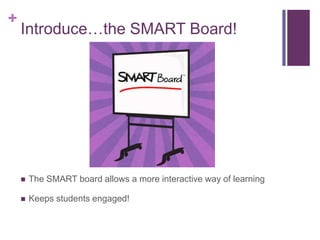
Introduce…the SMART Board!



The SMART board allows a more interactive way of learning



Keeps students engaged!
+

Using the SMART Board to teach the
“Sentence or Fragment?” Lesson


The lesson described on SMART Exchange USA is fairly
straightforward


It has only one screen with two bags:


One titled “Sentence”



One titled “Fragment”



Students would come up to the board (hopefully volunteering!) and
drag the example sentences or fragments into the appropriate bag



As a class, we would go over why each decision was right or wrong


As a bonus, for those fragments on the board, we would discuss
ways to make them complete sentences and tips on spotting
fragments
+

Why would it be effective?


Gets students up out of their seats



Asks for volunteers



Provides the opportunity for further student involvement in the
explanation of why the fragment is considered a fragment in the
first place and allows them to fix the fragment on their own
+

SMART Exchange USA


http://exchange.smarttech.com/details.html?id=47d6b44c-dce14dd3-9cb1-c0d69f58e1d6

Smart board

  • 1.
    + SMART Board Application “Sentenceor Fragment?” Shannon O’Keefe
  • 2.
    + Why incorporate thisSMART Board Lesson?  During my field experience, I read over several student essays and it seemed that many students didn’t know the difference between sentences and fragments
  • 3.
    + Other ways toteach this difference…  I could use any of the following to teach my students:  Handouts  Worksheets  Lecture  However, I feel that a more interactive approach would be the most beneficial because hands-on learning can help new ideas stick  Plus, you don’t want students to get bored…
  • 4.
    + Introduce…the SMART Board!  TheSMART board allows a more interactive way of learning  Keeps students engaged!
  • 5.
    + Using the SMARTBoard to teach the “Sentence or Fragment?” Lesson  The lesson described on SMART Exchange USA is fairly straightforward  It has only one screen with two bags:  One titled “Sentence”  One titled “Fragment”  Students would come up to the board (hopefully volunteering!) and drag the example sentences or fragments into the appropriate bag  As a class, we would go over why each decision was right or wrong  As a bonus, for those fragments on the board, we would discuss ways to make them complete sentences and tips on spotting fragments
  • 6.
    + Why would itbe effective?  Gets students up out of their seats  Asks for volunteers  Provides the opportunity for further student involvement in the explanation of why the fragment is considered a fragment in the first place and allows them to fix the fragment on their own
  • 7.