Shape Safety in Tensor Programming is Easy for a
Theorem Prover
Project: https://github.com/tribbloid/shapesafe
Content: https://github.com/tribbloid/shapesafe-demo
-- Peng Cheng - tribbloid@{github | twitter}
1
About Me
Maintainer of DataPassports, Computing Engine ... 2015 ~
Only read Scala 'cause of Apache Spark
Only read type theory 'cause math seems more stable than programming
Not a Python fan, but only use PyTorch 'cause it is not TensorFlow
Maintainer of splain plugin ... 2021 ~
Partially integrated with scala compiler 2.13.6+ -Vimplicit -Vtype-diff
2
Overview
Why type-safe linear algebra?
How to push it to extreme?
Why scala?
What's next?
3
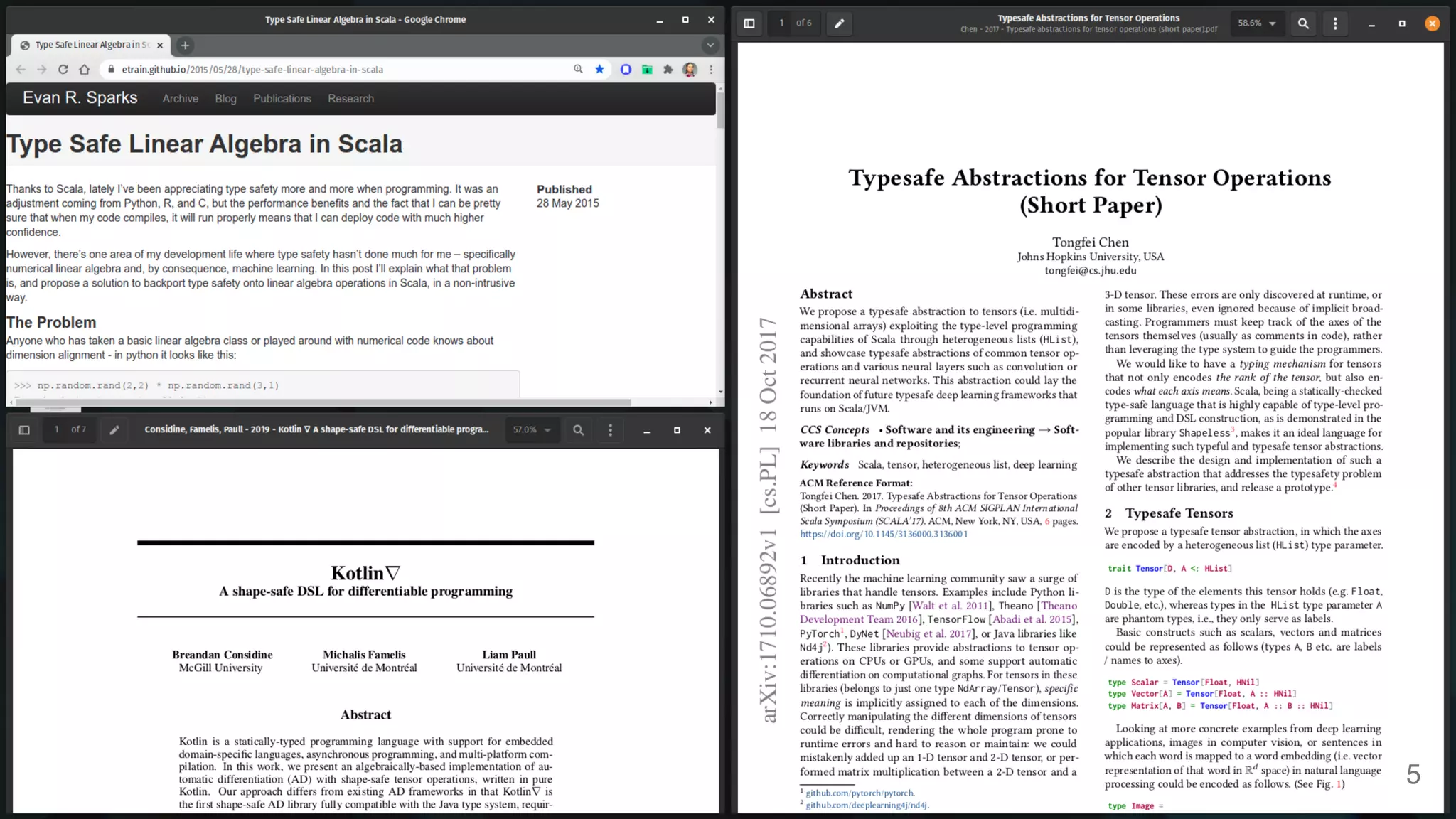
Why type-safe linear algebra?
4
5
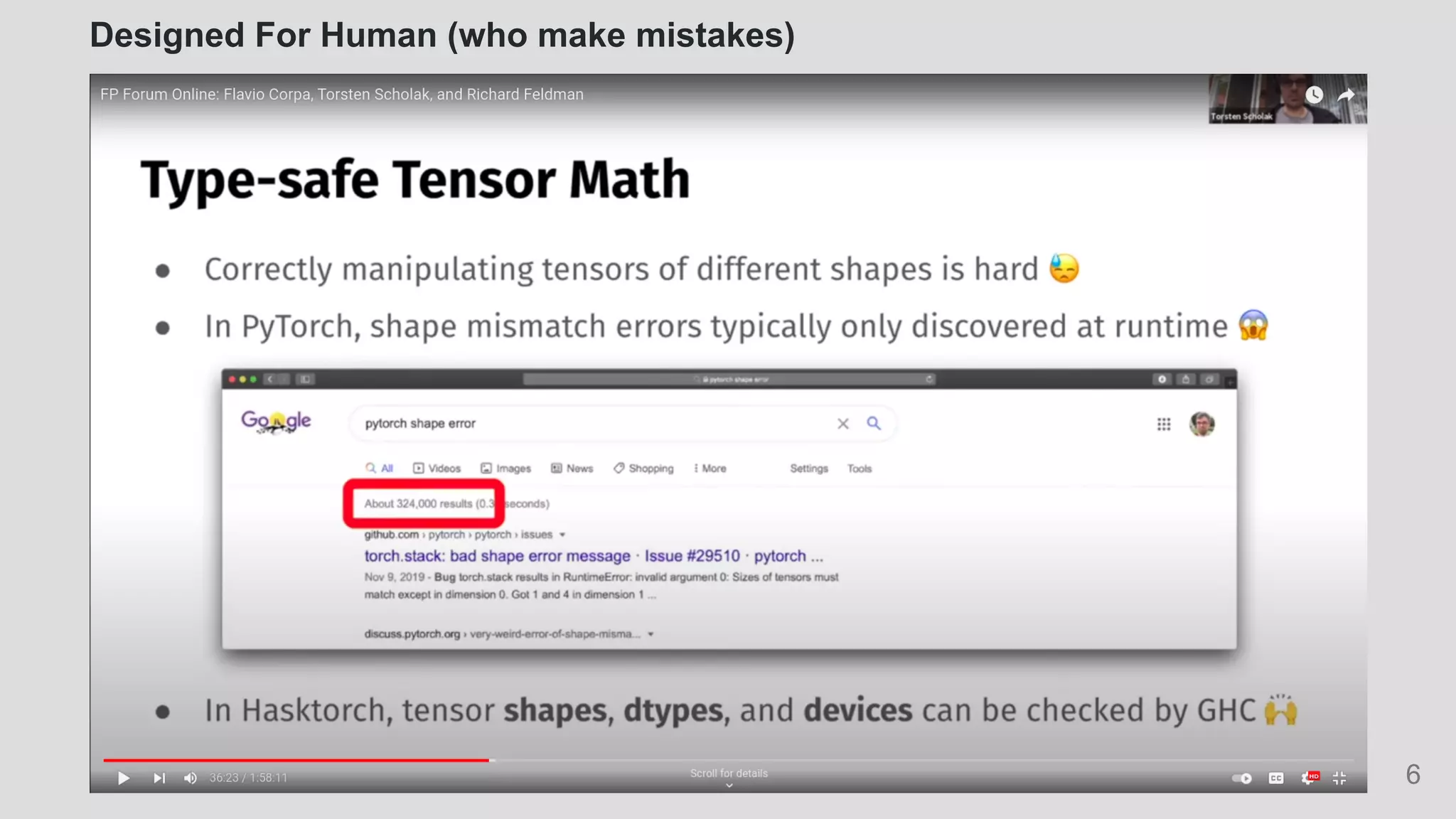
Designed For Human (who make mistakes)
6
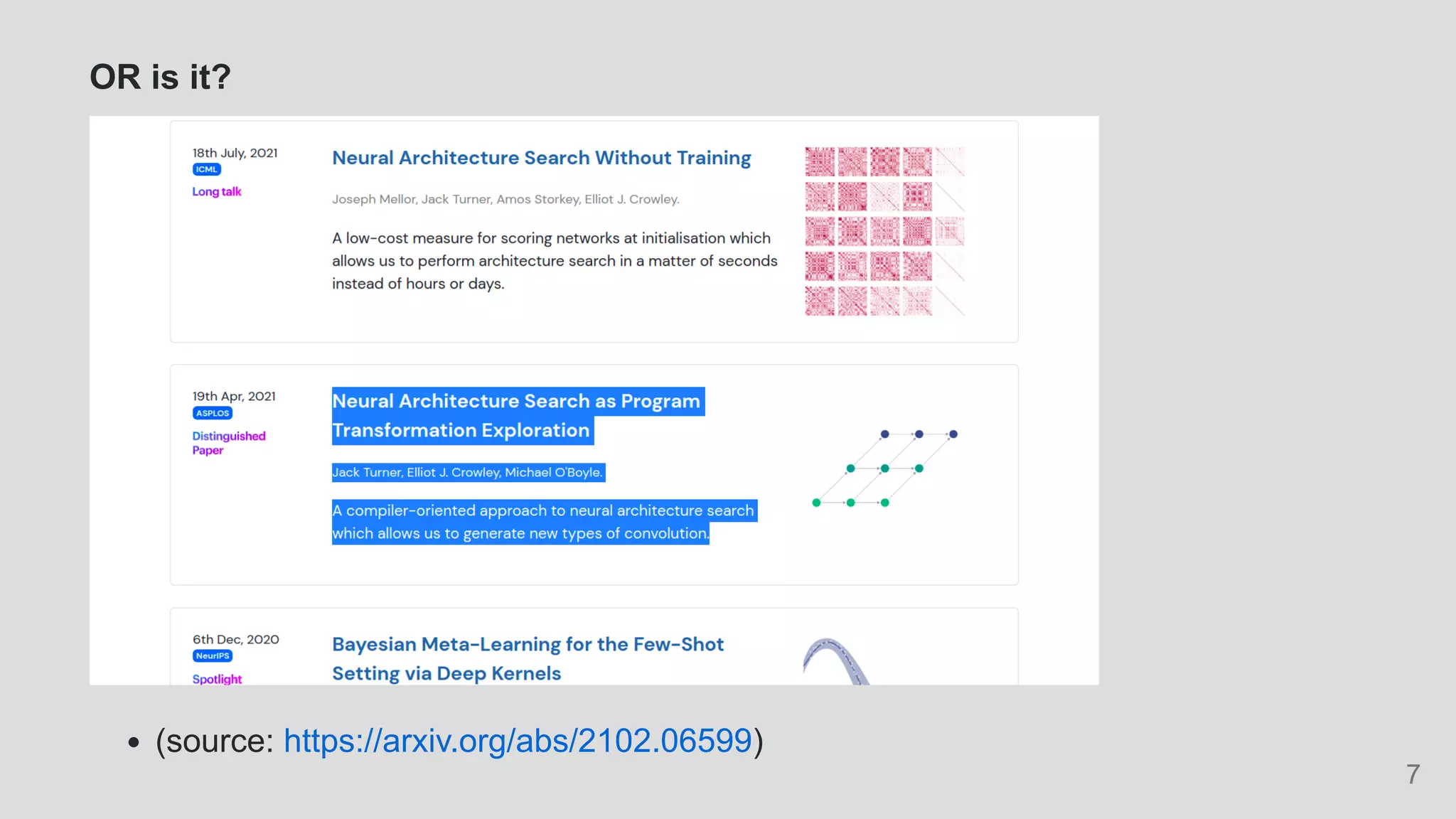
OR is it?
(source: https://arxiv.org/abs/2102.06599)
7
How to push it to extreme?
8
Curry-Howard(-Lambek) isomorphism
proof system
functional programming 

(since 1930)
Proposition
type P <: Any (in MLTT) 

type P <: Prop (in CiC)
Proposition type P[_ <: A] , a: {type P}
Inductive Proposition type ::[HEAD, TAIL <: P] <: P
9
... with quantiifiers
proof system functional programming (since 1970)
def p[AS <: A with Singleton](a: AS): P[AS] , 

def p[AS <: A with Singleton](a: AS): AS#P , 

def p(a: A): a.P
def p[B]: P {val b <: B, type P}
Axiom def axiom[X](.): P[X]{.}
Theorem def theorem[X](., lemma1: X => X#L1): P[X]{.}
10
... in shapesafe impl
proof system functional programming (after -expansion)
def p[AS <: A with Singleton]: AS |- P[AS] , 

def p[AS <: A with Singleton]: AS |- AS#P
def p[B]: P {val b <: B, type P}
Axiom def axiom[X]: X |- P[X]{.}
Theorem def theorem[X](lemma1: X => X#L1): X |- P[X]{.}
11
Scala 2.10 - 2015
class Matrix[A,B](val mat: DenseMatrix[Double]) {

def *[C](other: Matrix[B,C]): Matrix[A,C] = new Matrix[A,C](mat*other.mat)

}

class N

class D

class K

val x = new Matrix[N,D](DenseMatrix.rand(100,10))

val y = new Matrix[N,K](DenseMatrix.rand(100,2))

val z1 = x * x //Does not compile!

val z2 = x.t * y //Compiles! Returns a Matrix[D,K]

12
Scala 3.1 - 2021
import scala.compiletime.ops.int._

class Matrix[A, B]():

def *[C](other: Matrix[B, C]): Matrix[A, C] = new Matrix[A, C]()

def conv[C, D](other: Matrix[C, D]): Matrix[A - C + 1, B - D + 1] =

new Matrix[A - C + 1, B - D + 1]()

val x = new Matrix[100, 100]()

val y = new Matrix[3, 3]()

val w = x.conv(y)

val z1 = w * new Matrix[100, 1]() //Does not compile!

val z2 = w * new Matrix[98, 1]() //Compiles!

13
Extreme 1
Weird operands (Seriously, who is going to write compile-time type evaluation for
einsum?)
type EinSum[Matrix[N1 -> D1, N2 -> D2]] = {

if (N1 =:= N2) {

if (D1 =:= D2) {

Matrix[N1 -> D1]

}

else {

error(...)

}

}

else {

Matrix[N1 -> D1, N2 -> D2]

}

}

14
Extreme 2
Symbolic reasoning ( p.apply + =:= can only go in 1 direction)
class Matrix[A, B]():

def +(other: Matrix[A, B]): Matrix[A, B]

def transpose: Matrix[B, A]

def flatten: Matrix[A * B, 1]

type A <: Int

type B <: Int

val m = new Matrix[A, B]()

m.flatten + (m.transpose.flatten) // Oops

15
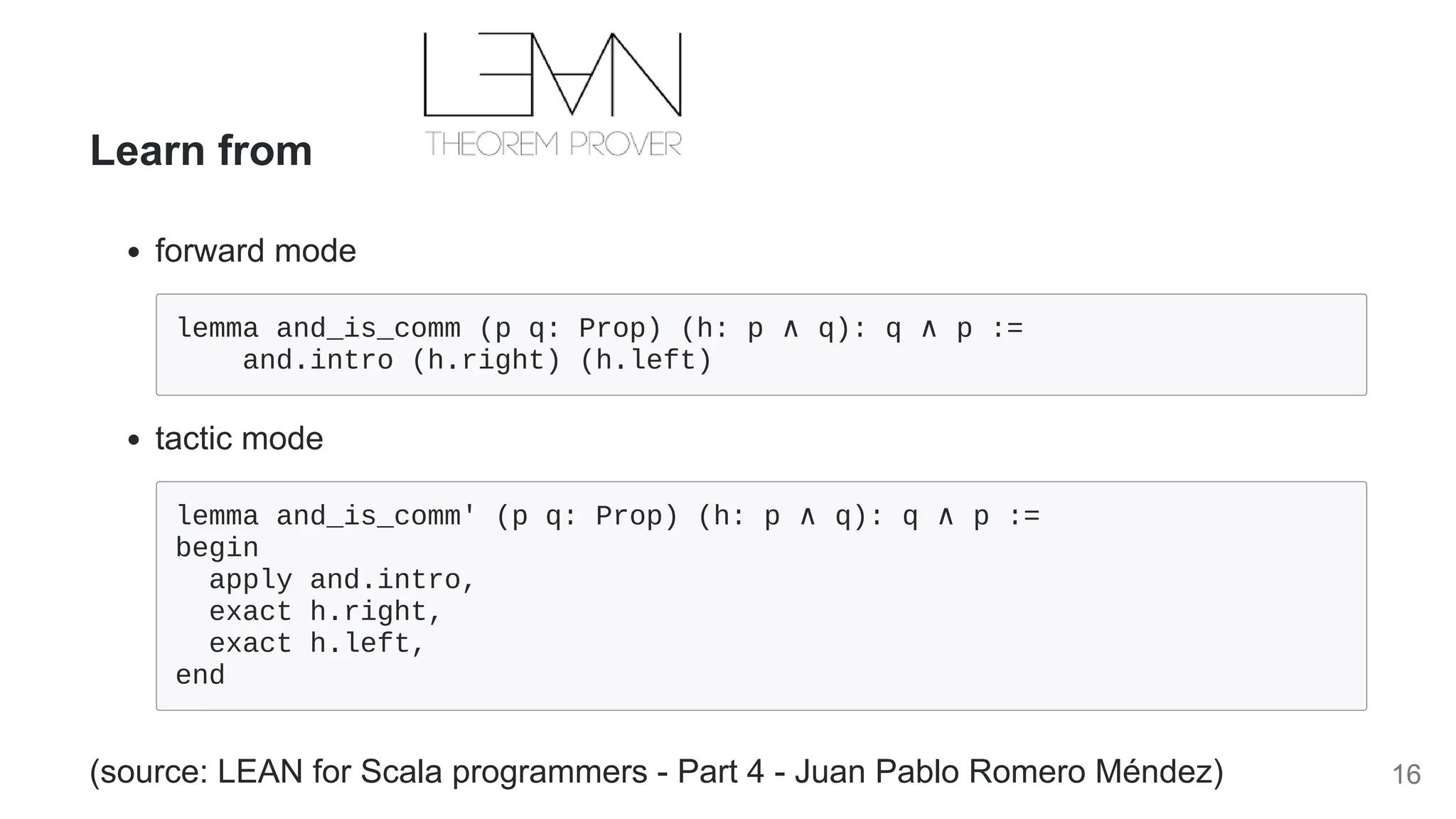
Learn from
forward mode
lemma and_is_comm (p q: Prop) (h: p ∧ q): q ∧ p := 

and.intro (h.right) (h.left)

tactic mode
lemma and_is_comm' (p q: Prop) (h: p ∧ q): q ∧ p := 

begin

apply and.intro,

exact h.right,

exact h.left,

end

(source: LEAN for Scala programmers - Part 4 - Juan Pablo Romero Méndez) 16
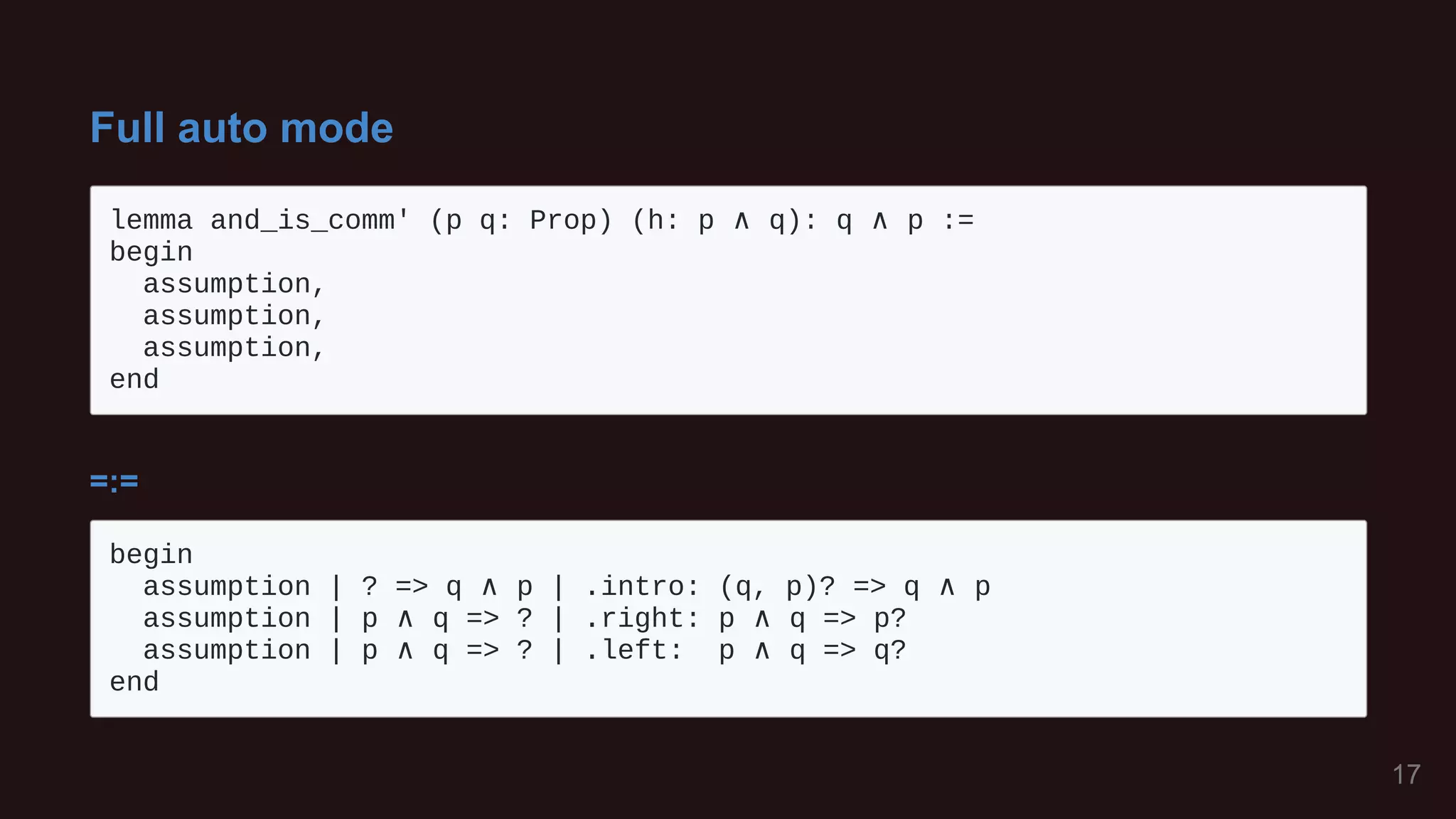
Full auto mode
lemma and_is_comm' (p q: Prop) (h: p ∧ q): q ∧ p := 

begin

assumption,

assumption,

assumption,

end

=:=
begin

assumption | ? => q ∧ p | .intro: (q, p)? => q ∧ p

assumption | p ∧ q => ? | .right: p ∧ q => p?

assumption | p ∧ q => ? | .left: p ∧ q => q?

end

17
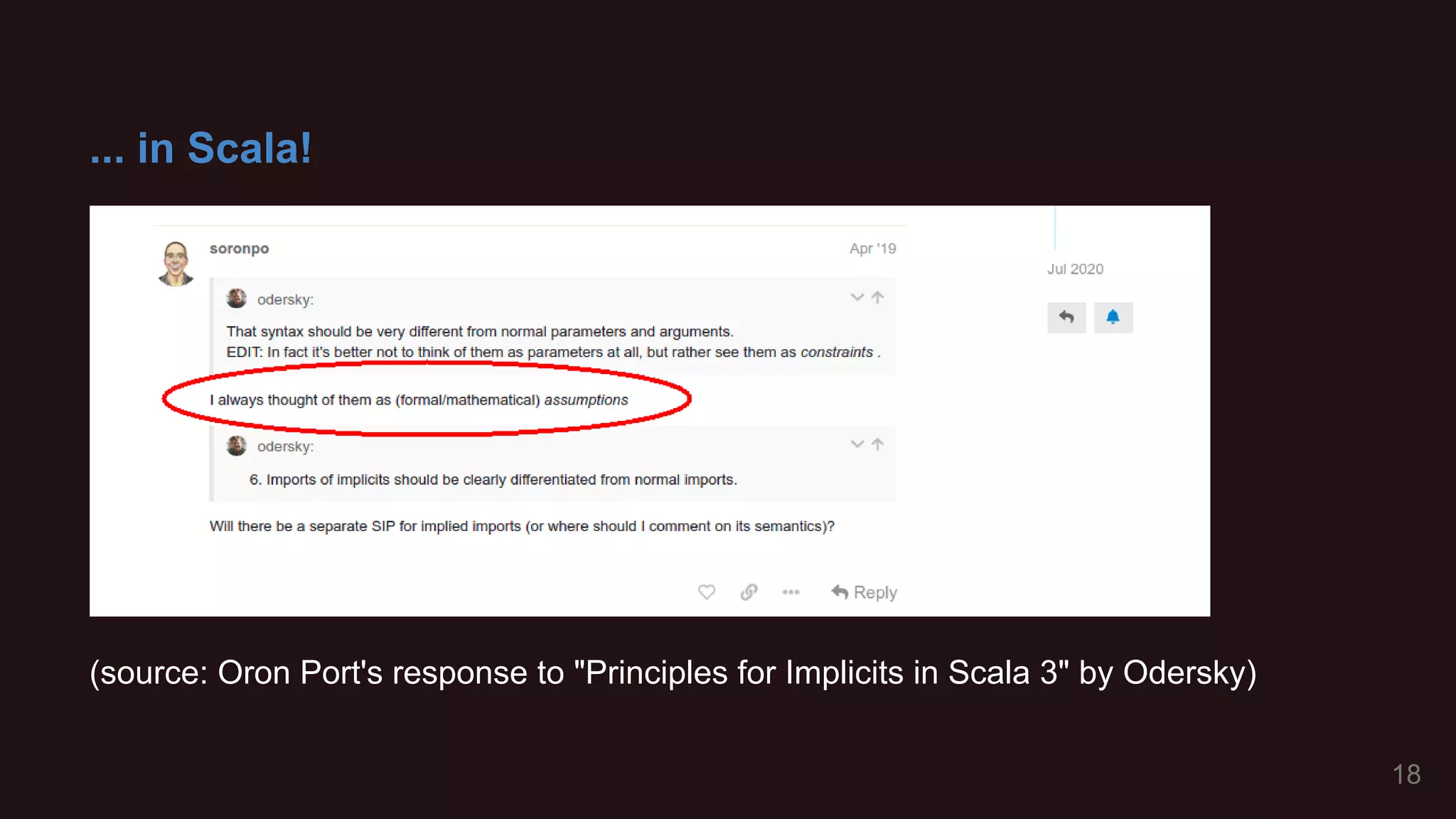
... in Scala!
(source: Oron Port's response to "Principles for Implicits in Scala 3" by Odersky)
18
Curry-Howard isomorphism, rewritten
proof system functional programming (full auto!)
def p[AS <: A with Singleton]: AS |- P[AS] , 

def p[AS <: A with Singleton]: AS |- AS#P
def p[BS <: B](implicit b: BS): BS |- BS#P
Axiom def axiom[X]: X |- P[X]{.}
Theorem
def theorem[X](implicit lemma1: X => X#L1): X |-
P[X]{.}
19
<Life Coding>
20
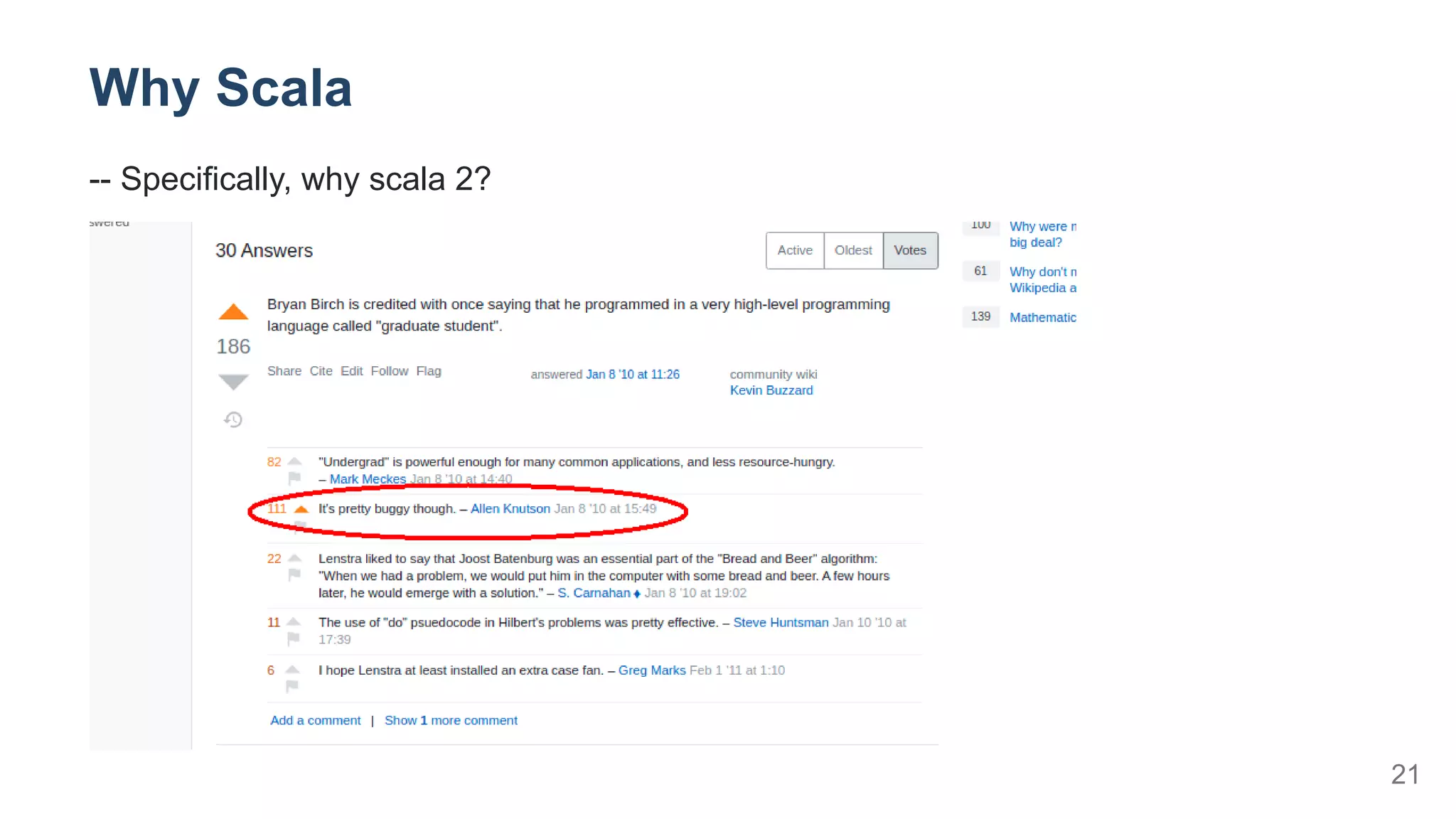
Why Scala
-- Specifically, why scala 2?
21
Stack of AI-HPC-Hardware co-evolution
/ More Abstract
Distributed Computing --- Apache {Spark | Flink}
[ SOME Deep Learning Library? ]
IR/Multi-stage Compilation --- reflection, LMS
Hardware Design --- CHISEL / SpinalHDL
/ More Concrete
22
But try to avoid ...
Diverging implicit
Circular reference def theorem[A](using a: A): A
Expanding reference def theorem[A <: F[_], B](using a: F[A, B]): A
Summoning proof on long algebraic data type
SquashByName[ / ]#On[

SquashByName[ / ]#On[

SquashByName[ + ]#On[

SquashByName[ - ]#On[

SquashByName[ / ]#On[

SquashByName[ + ]#On[

SquashByName[ - ]#On[

SquashByName[ / ]#On[

SquashByName[ + ]#On[

SquashByName[ - ]#On[

1024 >< 1024 |<<- (i >< j) >< (3 >< 3 |<<- (i >< j))...
23
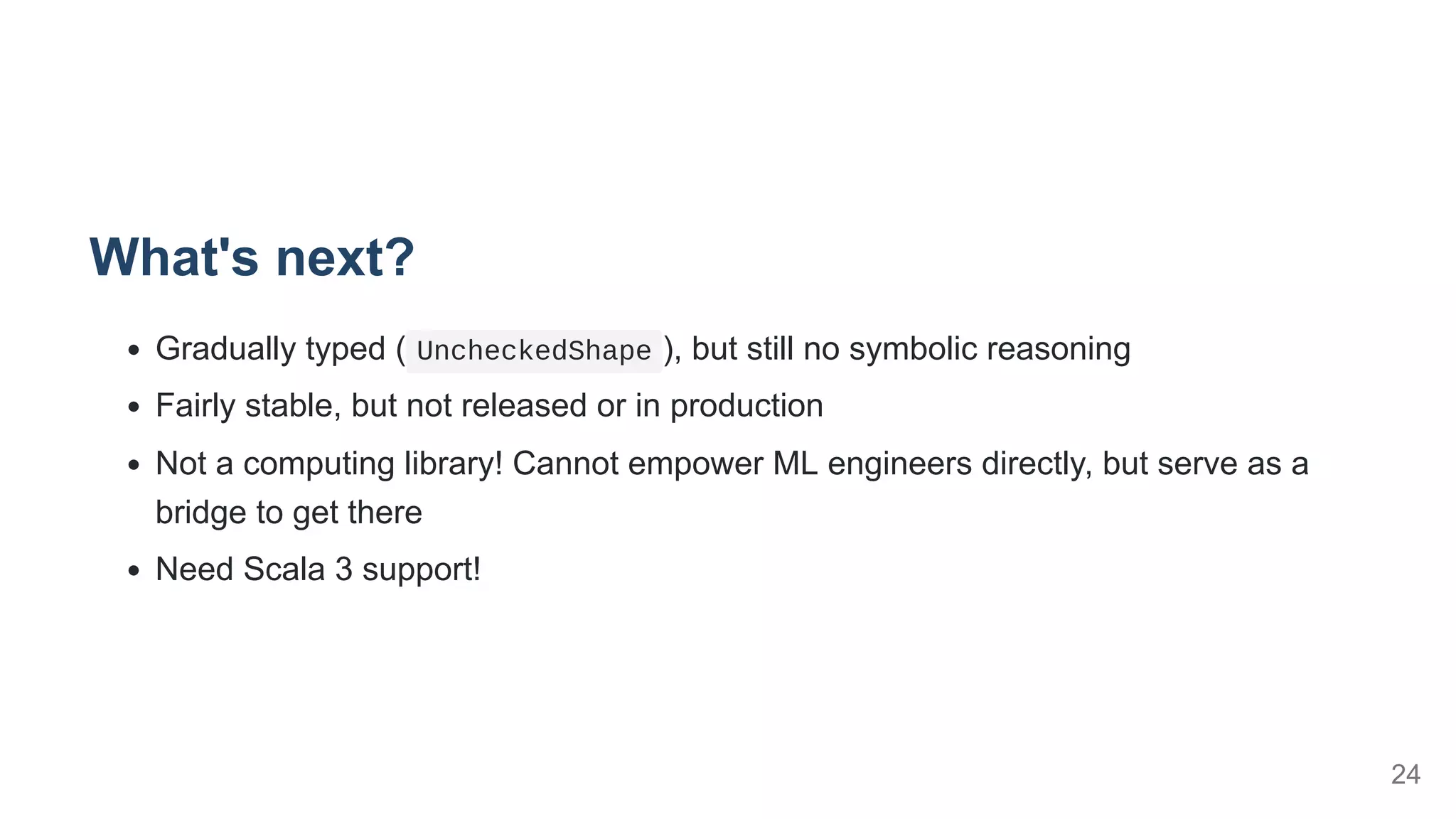
What's next?
Gradually typed ( UncheckedShape ), but still no symbolic reasoning
Fairly stable, but not released or in production
Not a computing library! Cannot empower ML engineers directly, but serve as a
bridge to get there
Need Scala 3 support!
24
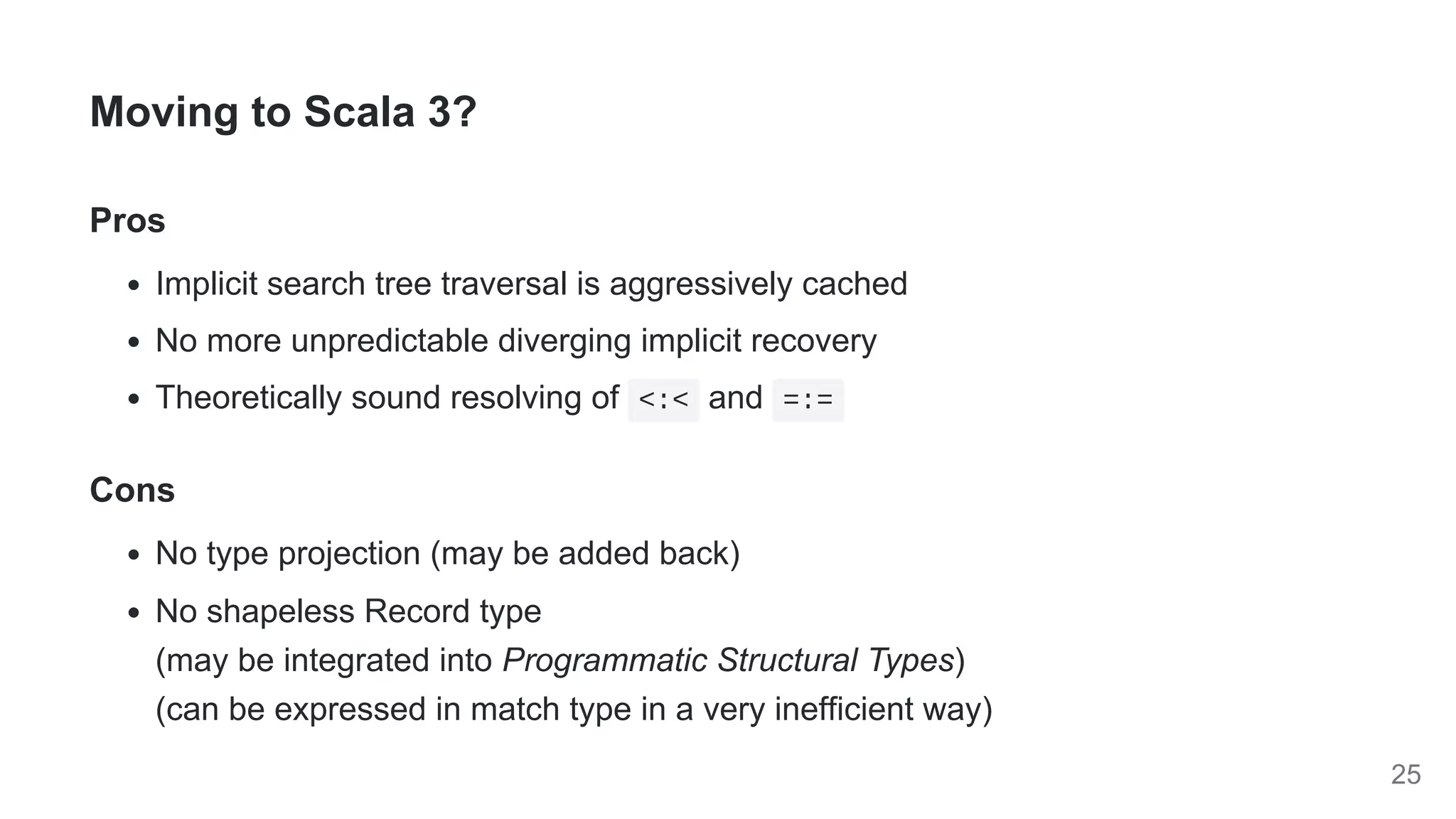
Moving to Scala 3?
Pros
Implicit search tree traversal is aggressively cached
No more unpredictable diverging implicit recovery
Theoretically sound resolving of <:< and =:=
Cons
No type projection (may be added back)
No shapeless Record type

(may be integrated into Programmatic Structural Types)

(can be expressed in match type in a very inefficient way)
25
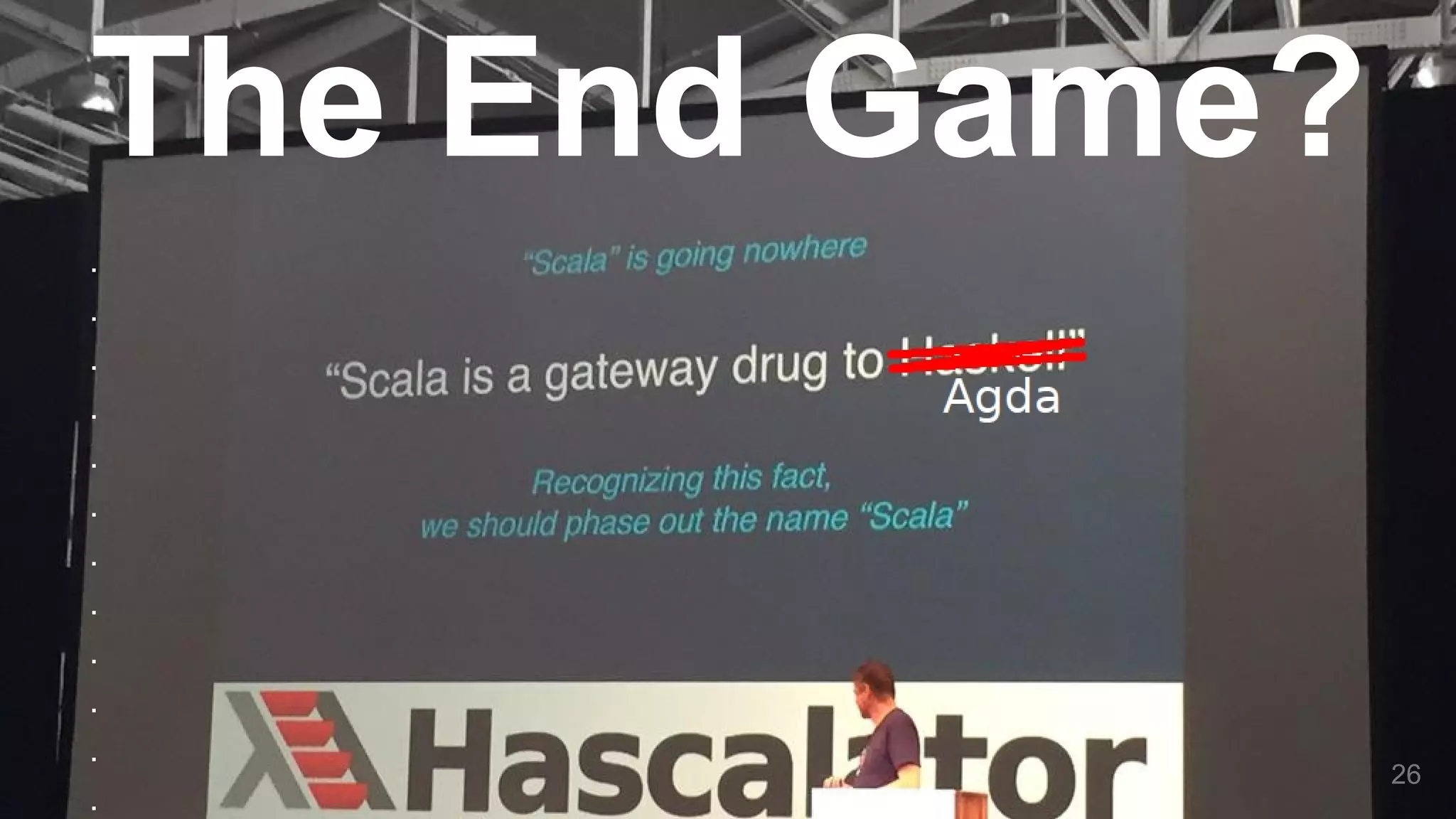
The End Game?
.

.

.

.

.

.

.

.

.

.

.

.
26
Proudly Supported By
™, the Data Privacy & Trust Company
We are hiring! Looking for a director of engineering
Splain Open-Source Team
Looking for scala compiler guru / type theorist as technical advisor
1.0.0RC is close, looking for test users
27

Shape Safety in Tensor Programming is Easy for a Theorem Prover -SBTB 2021

  • 1.
    Shape Safety inTensor Programming is Easy for a Theorem Prover Project: https://github.com/tribbloid/shapesafe Content: https://github.com/tribbloid/shapesafe-demo -- Peng Cheng - tribbloid@{github | twitter} 1
  • 2.
    About Me Maintainer ofDataPassports, Computing Engine ... 2015 ~ Only read Scala 'cause of Apache Spark Only read type theory 'cause math seems more stable than programming Not a Python fan, but only use PyTorch 'cause it is not TensorFlow Maintainer of splain plugin ... 2021 ~ Partially integrated with scala compiler 2.13.6+ -Vimplicit -Vtype-diff 2
  • 3.
    Overview Why type-safe linearalgebra? How to push it to extreme? Why scala? What's next? 3
  • 4.
  • 5.
  • 6.
    Designed For Human(who make mistakes) 6
  • 7.
    OR is it? (source:https://arxiv.org/abs/2102.06599) 7
  • 8.
    How to pushit to extreme? 8
  • 9.
    Curry-Howard(-Lambek) isomorphism proof system functionalprogramming (since 1930) Proposition type P <: Any (in MLTT) type P <: Prop (in CiC) Proposition type P[_ <: A] , a: {type P} Inductive Proposition type ::[HEAD, TAIL <: P] <: P 9
  • 10.
    ... with quantiifiers proofsystem functional programming (since 1970) def p[AS <: A with Singleton](a: AS): P[AS] , def p[AS <: A with Singleton](a: AS): AS#P , def p(a: A): a.P def p[B]: P {val b <: B, type P} Axiom def axiom[X](.): P[X]{.} Theorem def theorem[X](., lemma1: X => X#L1): P[X]{.} 10
  • 11.
    ... in shapesafeimpl proof system functional programming (after -expansion) def p[AS <: A with Singleton]: AS |- P[AS] , def p[AS <: A with Singleton]: AS |- AS#P def p[B]: P {val b <: B, type P} Axiom def axiom[X]: X |- P[X]{.} Theorem def theorem[X](lemma1: X => X#L1): X |- P[X]{.} 11
  • 12.
    Scala 2.10 -2015 class Matrix[A,B](val mat: DenseMatrix[Double]) { def *[C](other: Matrix[B,C]): Matrix[A,C] = new Matrix[A,C](mat*other.mat) } class N class D class K val x = new Matrix[N,D](DenseMatrix.rand(100,10)) val y = new Matrix[N,K](DenseMatrix.rand(100,2)) val z1 = x * x //Does not compile! val z2 = x.t * y //Compiles! Returns a Matrix[D,K] 12
  • 13.
    Scala 3.1 -2021 import scala.compiletime.ops.int._ class Matrix[A, B](): def *[C](other: Matrix[B, C]): Matrix[A, C] = new Matrix[A, C]() def conv[C, D](other: Matrix[C, D]): Matrix[A - C + 1, B - D + 1] = new Matrix[A - C + 1, B - D + 1]() val x = new Matrix[100, 100]() val y = new Matrix[3, 3]() val w = x.conv(y) val z1 = w * new Matrix[100, 1]() //Does not compile! val z2 = w * new Matrix[98, 1]() //Compiles! 13
  • 14.
    Extreme 1 Weird operands(Seriously, who is going to write compile-time type evaluation for einsum?) type EinSum[Matrix[N1 -> D1, N2 -> D2]] = { if (N1 =:= N2) { if (D1 =:= D2) { Matrix[N1 -> D1] } else { error(...) } } else { Matrix[N1 -> D1, N2 -> D2] } } 14
  • 15.
    Extreme 2 Symbolic reasoning( p.apply + =:= can only go in 1 direction) class Matrix[A, B](): def +(other: Matrix[A, B]): Matrix[A, B] def transpose: Matrix[B, A] def flatten: Matrix[A * B, 1] type A <: Int type B <: Int val m = new Matrix[A, B]() m.flatten + (m.transpose.flatten) // Oops 15
  • 16.
    Learn from forward mode lemmaand_is_comm (p q: Prop) (h: p ∧ q): q ∧ p := and.intro (h.right) (h.left) tactic mode lemma and_is_comm' (p q: Prop) (h: p ∧ q): q ∧ p := begin apply and.intro, exact h.right, exact h.left, end (source: LEAN for Scala programmers - Part 4 - Juan Pablo Romero Méndez) 16
  • 17.
    Full auto mode lemmaand_is_comm' (p q: Prop) (h: p ∧ q): q ∧ p := begin assumption, assumption, assumption, end =:= begin assumption | ? => q ∧ p | .intro: (q, p)? => q ∧ p assumption | p ∧ q => ? | .right: p ∧ q => p? assumption | p ∧ q => ? | .left: p ∧ q => q? end 17
  • 18.
    ... in Scala! (source:Oron Port's response to "Principles for Implicits in Scala 3" by Odersky) 18
  • 19.
    Curry-Howard isomorphism, rewritten proofsystem functional programming (full auto!) def p[AS <: A with Singleton]: AS |- P[AS] , def p[AS <: A with Singleton]: AS |- AS#P def p[BS <: B](implicit b: BS): BS |- BS#P Axiom def axiom[X]: X |- P[X]{.} Theorem def theorem[X](implicit lemma1: X => X#L1): X |- P[X]{.} 19
  • 20.
  • 21.
  • 22.
    Stack of AI-HPC-Hardwareco-evolution / More Abstract Distributed Computing --- Apache {Spark | Flink} [ SOME Deep Learning Library? ] IR/Multi-stage Compilation --- reflection, LMS Hardware Design --- CHISEL / SpinalHDL / More Concrete 22
  • 23.
    But try toavoid ... Diverging implicit Circular reference def theorem[A](using a: A): A Expanding reference def theorem[A <: F[_], B](using a: F[A, B]): A Summoning proof on long algebraic data type SquashByName[ / ]#On[ SquashByName[ / ]#On[ SquashByName[ + ]#On[ SquashByName[ - ]#On[ SquashByName[ / ]#On[ SquashByName[ + ]#On[ SquashByName[ - ]#On[ SquashByName[ / ]#On[ SquashByName[ + ]#On[ SquashByName[ - ]#On[ 1024 >< 1024 |<<- (i >< j) >< (3 >< 3 |<<- (i >< j))... 23
  • 24.
    What's next? Gradually typed( UncheckedShape ), but still no symbolic reasoning Fairly stable, but not released or in production Not a computing library! Cannot empower ML engineers directly, but serve as a bridge to get there Need Scala 3 support! 24
  • 25.
    Moving to Scala3? Pros Implicit search tree traversal is aggressively cached No more unpredictable diverging implicit recovery Theoretically sound resolving of <:< and =:= Cons No type projection (may be added back) No shapeless Record type (may be integrated into Programmatic Structural Types) (can be expressed in match type in a very inefficient way) 25
  • 26.
  • 27.
    Proudly Supported By ™,the Data Privacy & Trust Company We are hiring! Looking for a director of engineering Splain Open-Source Team Looking for scala compiler guru / type theorist as technical advisor 1.0.0RC is close, looking for test users 27