S E R I A L A N A L Y S I S O F
G E N E E X P R E S S I O N
( S A G E )
PRESENTED BY:
A SHWINI.R
B.SC+M.SC -BIOTECH
A MITY INSTITUTE OF
BIOTECHNOLOGY
Serial Analysis of Gene Expression (SAGE)
• Serial analysis of gene expression (SAGE) is an approach that allows
rapid and detailed analysis of overall gene expression patterns.
• SAGE method allows for a quantitative and simultaneous analysis of
a large number transcripts in any particular cells or tissues, without
prior knowledge of the genes.
• This method takes advantage of the 3’-portion of mRNA as the gene
tag, but of much shorter form (9–10 bp).These tags can be serially
connected before cloning into a plasmid vector.
• Since the resulting plasmid clones contain multiple tags, sequences
of several dozens of mRNAs can be obtained by a single sequencing
reaction.
• A short sequence tag (10-14bp) contains sufficient
information to uniquely identify a transcript provided
that that the tag is obtained from a unique position
within each transcript;
• Sequence tags can be linked together to from long serial
molecules that can be cloned and sequenced; and
• Quantitation of the number of times a particular tag is
observed provides the expression level of the
corresponding transcript.
• Linking the tags together allows for rapid sequencing
analysis of multiple transcripts.
• By linking the tags together, only one sequencing event is
required to sequence every transcript within the cell.
• Makes the task of DNA expression profiling a much
easier
SAGE Principle
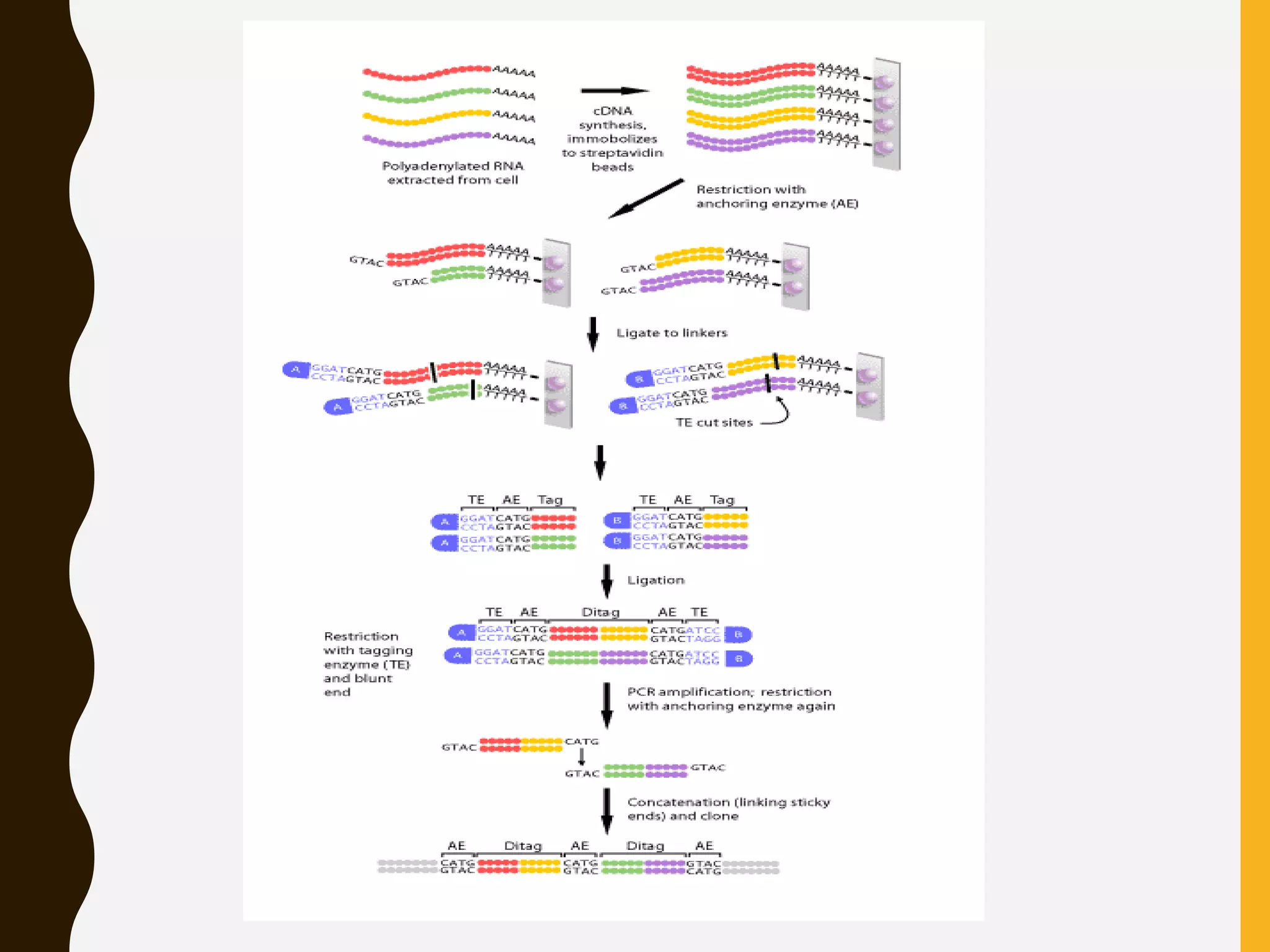
SAGE Flowchart
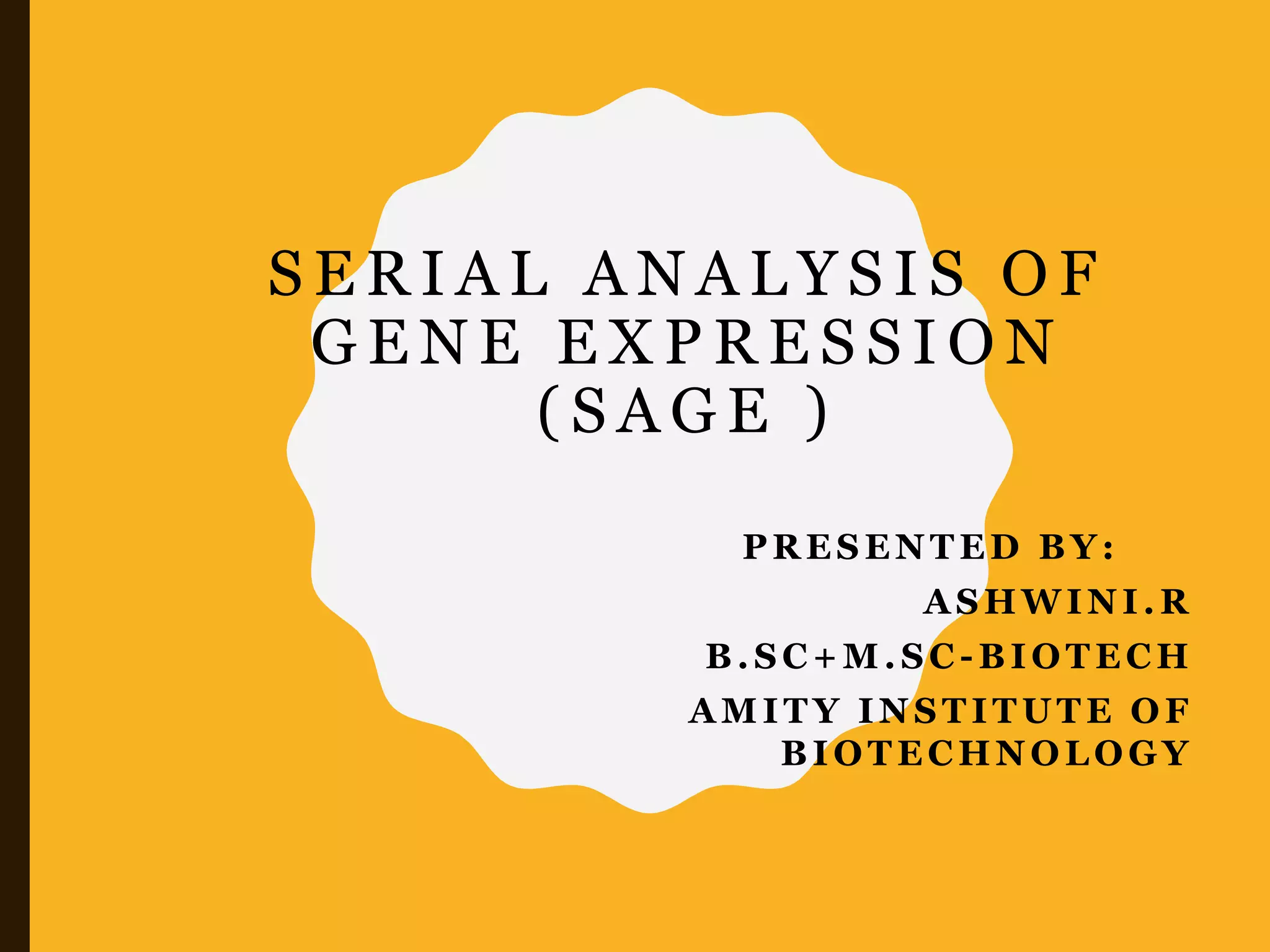
1. Isolate mRNA.
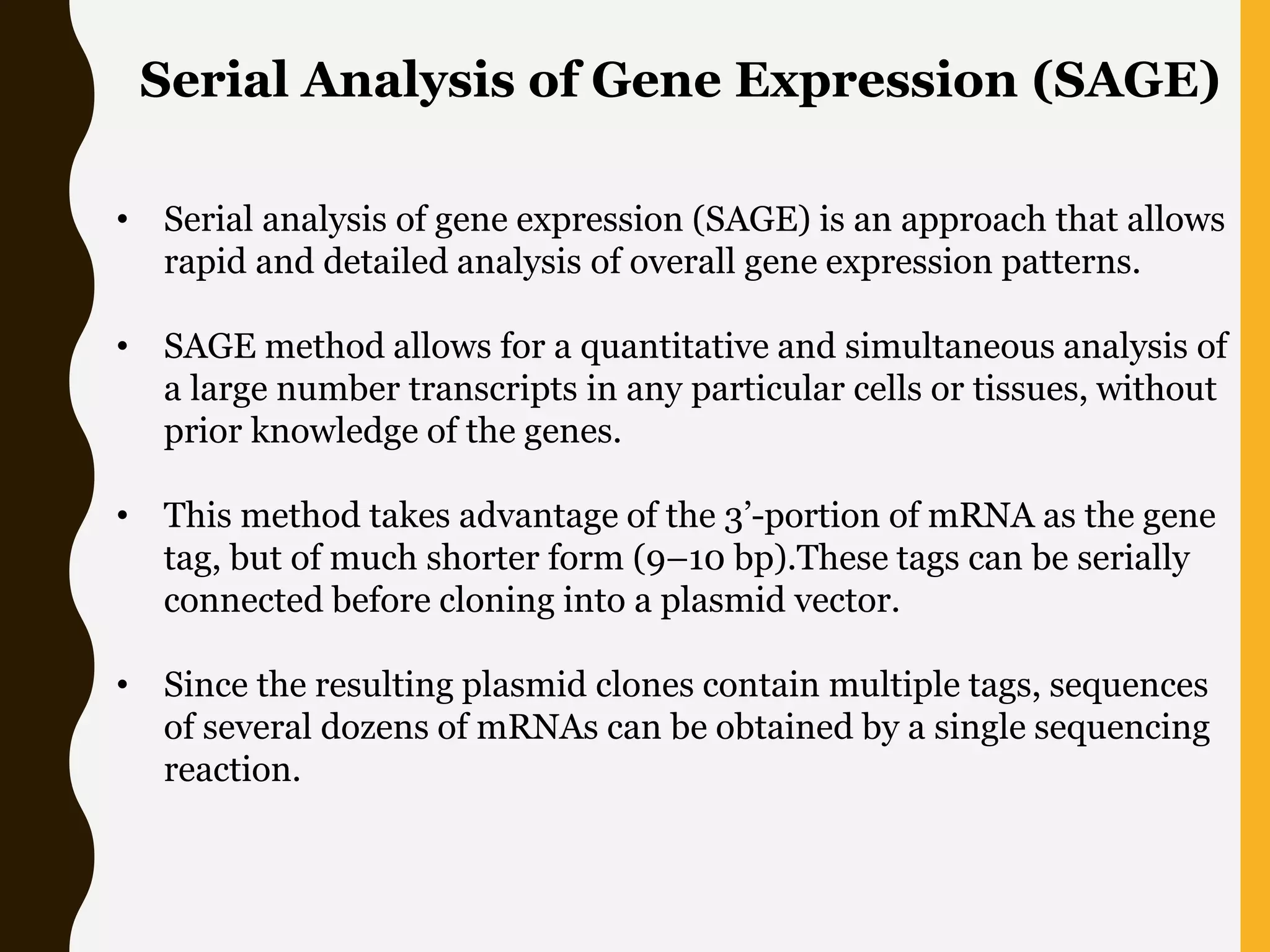
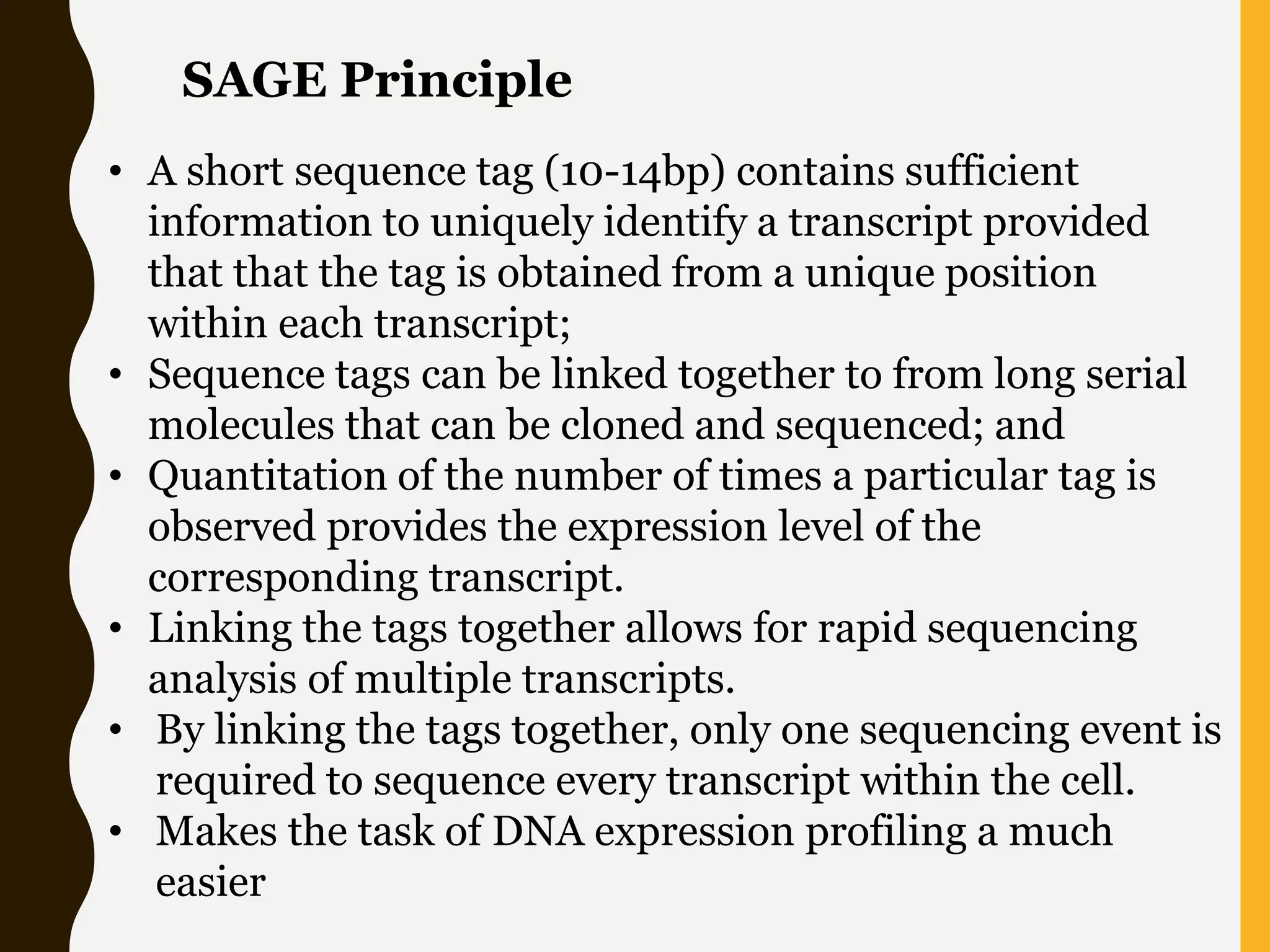
2. (a) Add biotin-labeled dT primer
(b) Synthesize ds cDNA.
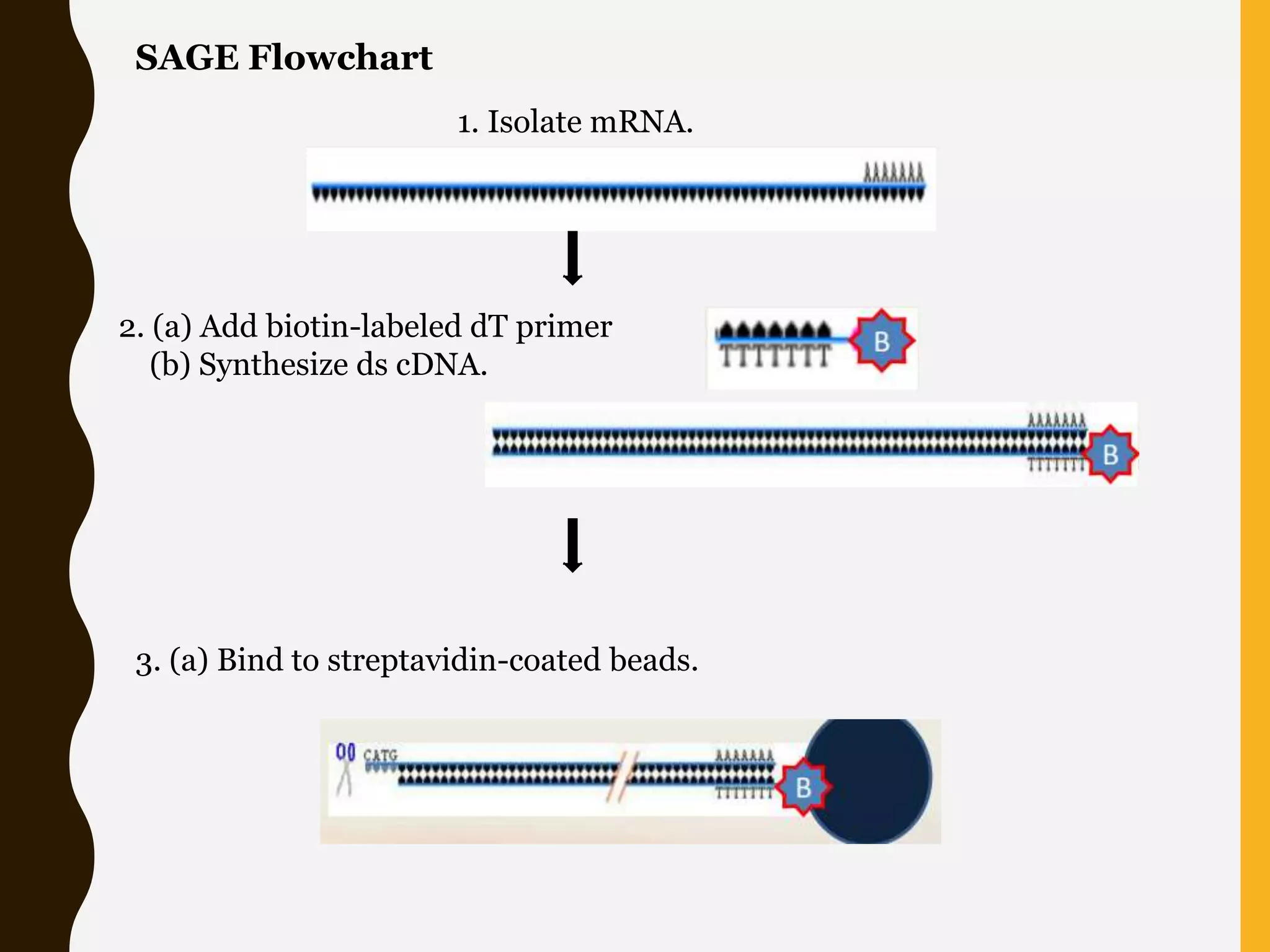
3. (a) Bind to streptavidin-coated beads.
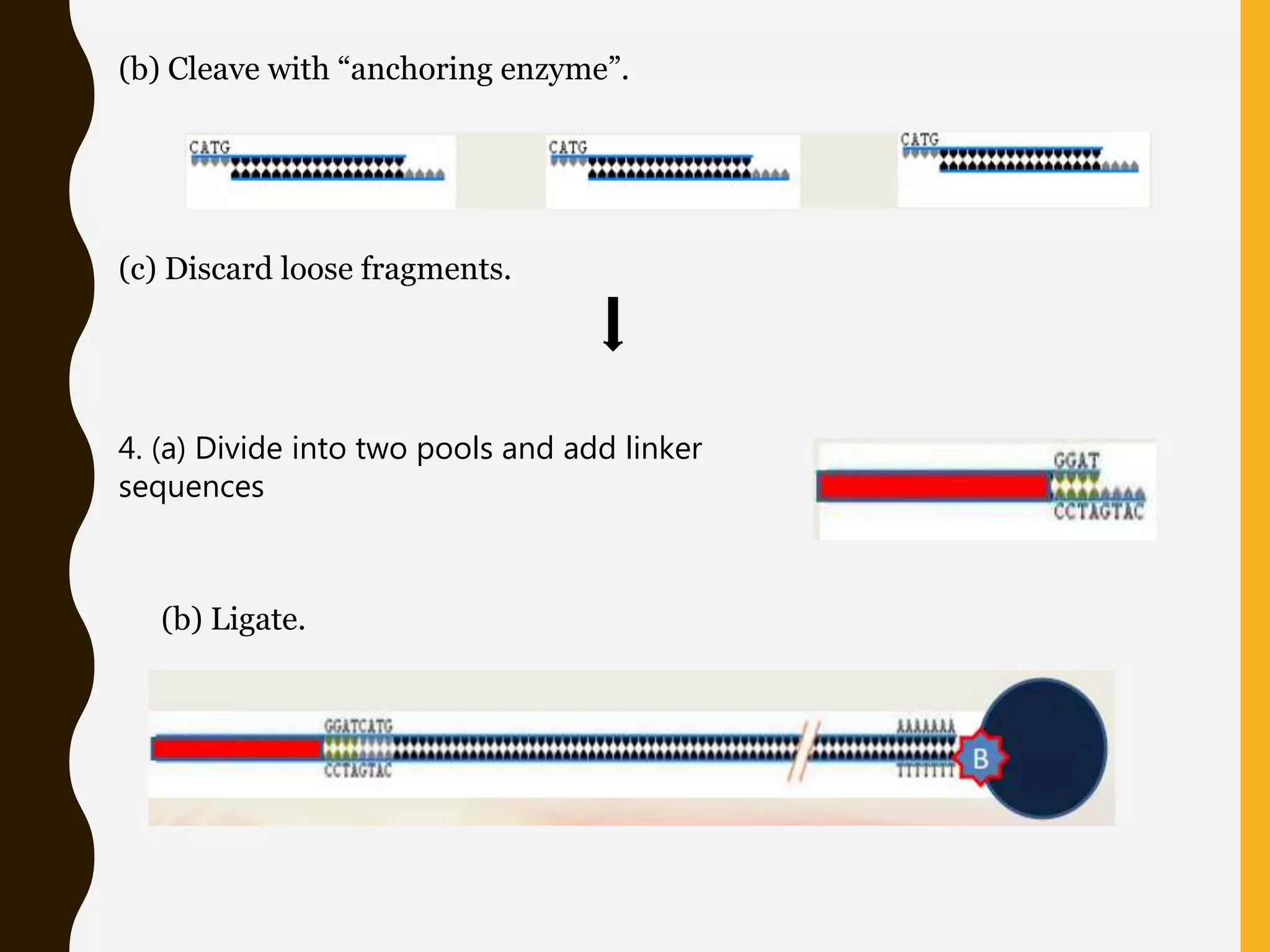
(b) Cleave with “anchoring enzyme”.
(c) Discard loose fragments.
4. (a) Divide into two pools and add linker
sequences
(b) Ligate.
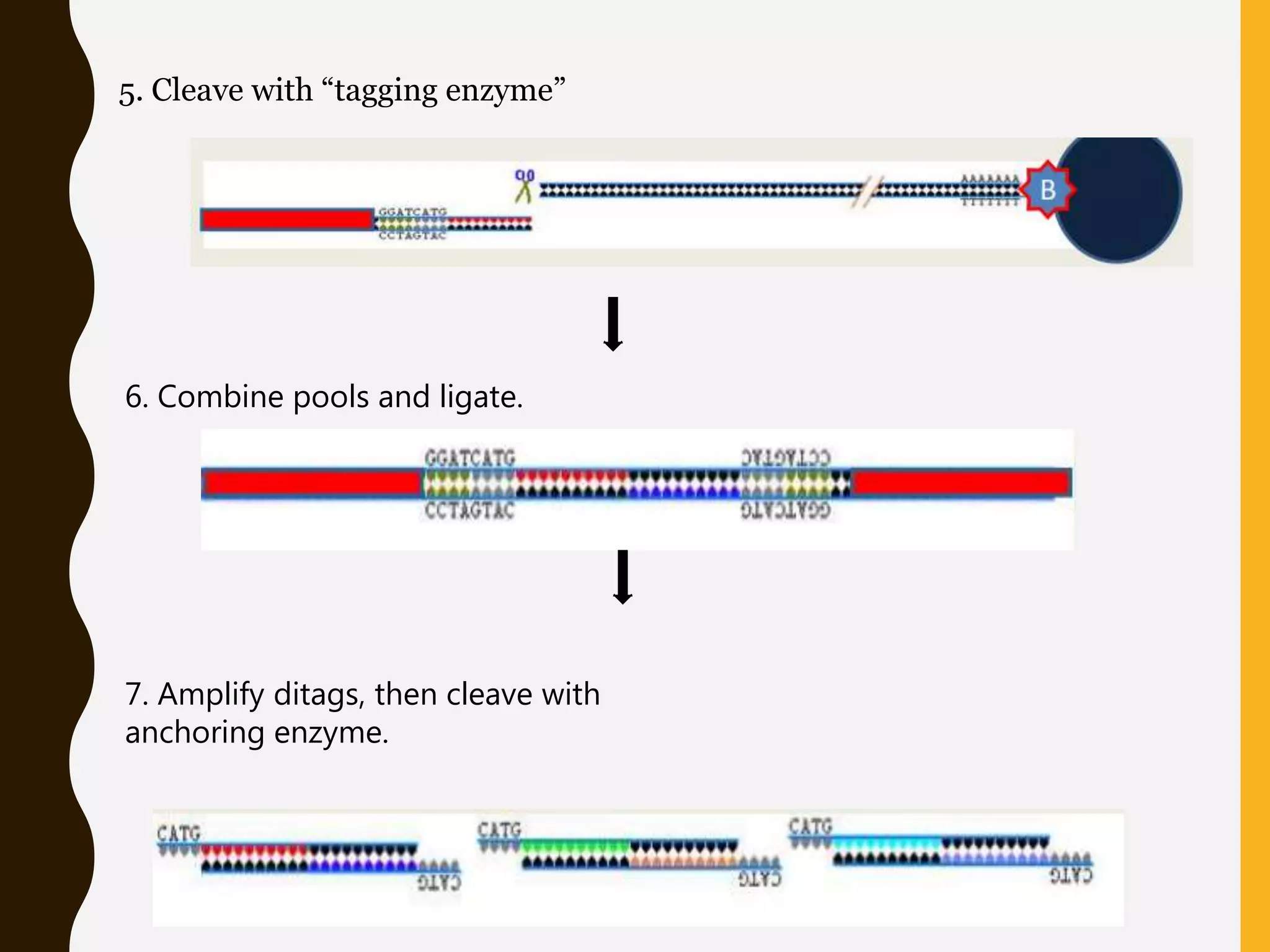
5. Cleave with “tagging enzyme”
6. Combine pools and ligate.
7. Amplify ditags, then cleave with
anchoring enzyme.
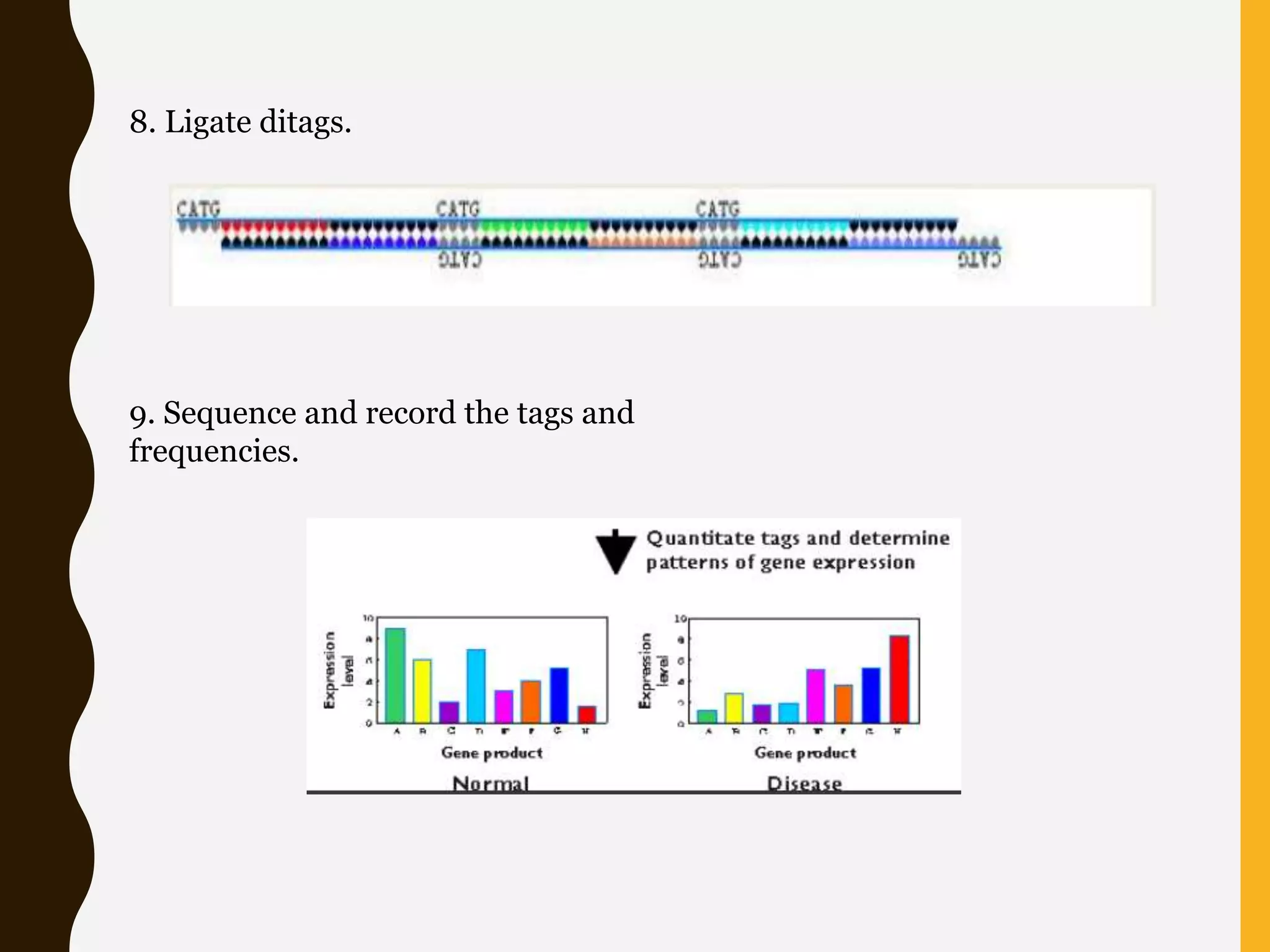
8. Ligate ditags.
9. Sequence and record the tags and
frequencies.
Advantages:
• mRNA sequence does not need to be known
prior, so genes of variants which are not known
can be discovered.
• Its more accurate as it involves direct counting
of the number of transcripts.
Disadvantages:
• Length of gene tag is extremely short (13 or 14bp),
so if the tag is derived from an unknown gene, it is
difficult to analyze with such a short sequence.
• Type II restriction enzyme does not yield same
length fragments.
• mRNA levels and protein expression do not are
always correlate.

Serial analysis of gene expression

  • 1.
    S E RI A L A N A L Y S I S O F G E N E E X P R E S S I O N ( S A G E ) PRESENTED BY: A SHWINI.R B.SC+M.SC -BIOTECH A MITY INSTITUTE OF BIOTECHNOLOGY
  • 2.
    Serial Analysis ofGene Expression (SAGE) • Serial analysis of gene expression (SAGE) is an approach that allows rapid and detailed analysis of overall gene expression patterns. • SAGE method allows for a quantitative and simultaneous analysis of a large number transcripts in any particular cells or tissues, without prior knowledge of the genes. • This method takes advantage of the 3’-portion of mRNA as the gene tag, but of much shorter form (9–10 bp).These tags can be serially connected before cloning into a plasmid vector. • Since the resulting plasmid clones contain multiple tags, sequences of several dozens of mRNAs can be obtained by a single sequencing reaction.
  • 3.
    • A shortsequence tag (10-14bp) contains sufficient information to uniquely identify a transcript provided that that the tag is obtained from a unique position within each transcript; • Sequence tags can be linked together to from long serial molecules that can be cloned and sequenced; and • Quantitation of the number of times a particular tag is observed provides the expression level of the corresponding transcript. • Linking the tags together allows for rapid sequencing analysis of multiple transcripts. • By linking the tags together, only one sequencing event is required to sequence every transcript within the cell. • Makes the task of DNA expression profiling a much easier SAGE Principle
  • 4.
    SAGE Flowchart 1. IsolatemRNA. 2. (a) Add biotin-labeled dT primer (b) Synthesize ds cDNA. 3. (a) Bind to streptavidin-coated beads.
  • 5.
    (b) Cleave with“anchoring enzyme”. (c) Discard loose fragments. 4. (a) Divide into two pools and add linker sequences (b) Ligate.
  • 6.
    5. Cleave with“tagging enzyme” 6. Combine pools and ligate. 7. Amplify ditags, then cleave with anchoring enzyme.
  • 7.
    8. Ligate ditags. 9.Sequence and record the tags and frequencies.
  • 9.
    Advantages: • mRNA sequencedoes not need to be known prior, so genes of variants which are not known can be discovered. • Its more accurate as it involves direct counting of the number of transcripts. Disadvantages: • Length of gene tag is extremely short (13 or 14bp), so if the tag is derived from an unknown gene, it is difficult to analyze with such a short sequence. • Type II restriction enzyme does not yield same length fragments. • mRNA levels and protein expression do not are always correlate.